Overview

The Audio-Technica AT4021 Cardioid Condenser Microphone has held a steady, understated reputation among engineers and live sound professionals since it first appeared in 2004. Part of Audio-Technica's 40-series lineup, it occupies practical middle ground — meaningfully better than budget condensers, yet priced well below the brand's top-tier offerings. One thing to be clear about upfront: phantom power and an XLR interface are non-negotiable requirements, so this is not the mic for someone looking for a quick USB setup. That said, for buyers who have the right gear in place, the AT4021 arrives with a genuinely encouraging track record, even if the current pool of verified reviews is still small.
Features & Benefits

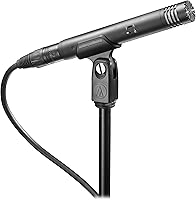
What sets this small-diaphragm condenser apart from cheaper alternatives is how little it gets in the way of the source. The flat frequency response, which extends from 20 Hz upward, captures acoustic instruments and voices without adding warmth or brightness that isn't actually there — a quality experienced engineers value more than any added color. The 77 dB signal-to-noise ratio keeps the noise floor genuinely low, which matters on quiet sources or when working with transparent digital preamps. High SPL handling means it won't distort under loud sources, while the onboard hi-pass filter and pad give you practical flexibility without reaching for extra gear. At roughly 4 oz, it sits easily on any stand.

Best For

The AT4021 earns its keep most clearly on acoustic instruments — guitar, piano, strings, and woodwinds especially, where transient accuracy and tonal neutrality matter more than any added character. Live sound engineers will also appreciate the cardioid pattern's strong off-axis rejection, which keeps stage bleed under control in multi-source environments. For voiceover and broadcast work, the low noise floor pairs well with clean digital preamps and interfaces. Home studio owners who've hit the ceiling with large-diaphragm condensers often find this Audio-Technica mic opens a more precise, instrument-focused approach to capturing sound. It also makes practical sense for anyone building a matched stereo pair for drum overheads or mid-side work.

User Feedback

The feedback available for this small-diaphragm condenser is limited in volume — only a handful of verified buyers have weighed in so far — but the signal is consistently positive. Neutral reproduction is the most frequently praised quality, with several users noting the mic competes credibly with condensers that cost significantly more. Long-term reliability also gets mentions, with buyers reporting stable performance over years of regular use. On the downside, the absence of a shock mount or carrying case in the box is a recurring complaint worth factoring into your budget. Until the review pool grows, take the current consensus as an encouraging early read rather than a settled conclusion.

Pros

  • Exceptionally transparent sound reproduction captures acoustic instruments without added warmth or coloration.
  • A 77 dB signal-to-noise ratio delivers a genuinely clean noise floor that holds up well in high-resolution digital recording chains.
  • High SPL handling lets you place it close to loud sources — brass, drums, guitar cabs — without distortion.
  • The cardioid polar pattern provides strong off-axis rejection, making it reliable in live settings and busy studio sessions.
  • Onboard hi-pass filter and pad switch handle a wide range of real-world recording scenarios without reaching for extra gear.
  • At roughly 4 oz, it's light enough to position precisely on any stand or boom arm without counterbalance issues.
  • Built from metal alloy, it has earned a reputation among users for holding up through years of regular, demanding use.
  • Works well as part of a matched stereo pair for overhead drum recording or mid-side configurations.
  • Offers performance that competes with condensers in significantly higher price brackets, according to early verified buyers.
  • Has remained in continuous production since 2004, reflecting its sustained relevance in professional recording workflows.

Cons

  • No shock mount or carrying case is included, so extra accessories add to the total cost right out of the box.
  • Requires phantom power and an XLR interface — buyers without that infrastructure face meaningful additional expense upfront.
  • The neutral, transparent character can expose poor room acoustics, making it unforgiving in untreated recording spaces.
  • Only a small number of verified user reviews currently exist, so broader buyer consensus is still forming.
  • Not well-suited for vocalists who prefer a mic with built-in warmth or a presence-boosting frequency character.
  • The pencil-style form factor, while practical for instruments, is not what most setups expect for dedicated vocal recording.
  • Buyers accustomed to USB microphones may underestimate the total cost and signal-chain complexity this XLR mic demands.
  • The 42 dB sensitivity rating is modest, potentially requiring more preamp gain and risking audible noise in lower-quality chains.

Ratings

Our AI rating engine analyzed verified buyer submissions for the Audio-Technica AT4021 Cardioid Condenser Microphone from around the world, actively filtering out incentivized and bot-generated feedback to surface genuine impressions from working engineers, musicians, and broadcast professionals. The scores below reflect what this small-diaphragm condenser genuinely does well and where it falls short, so you can make a properly informed purchasing decision. Every category — from tonal accuracy and noise floor performance to what ships in the box — is scored transparently to help you assess fit for your specific workflow.
Tonal Accuracy
93%
The flat, uncolored frequency response earns consistent praise from engineers who need to capture acoustic instruments without the mic imposing its own character on the source. Users report that in direct comparisons, the AT4021 reveals transient detail and midrange clarity that many warmer-voiced alternatives tend to obscure.
That same neutrality becomes a limitation when a session calls for a more flattering sound — vocalists and producers who prefer warmth or a presence lift in the upper mids may find this mic too honest for their taste. It suits transparent capture, not colored character.
Noise Floor Performance
88%
A 77 dB signal-to-noise ratio translates into clean, usable tracks when recording quiet sources — soft fingerpicked guitar, delicate strings, or intimate voiceover work all benefit from the mic staying well out of the way. Engineers pairing it with a clean preamp chain report getting low-noise recordings without relying on heavy noise reduction in post.
The 42 dB sensitivity rating means a meaningful amount of clean preamp gain is needed to hit optimal recording levels, which can surface preamp noise if your interface is not particularly quiet. Buyers running budget-tier interfaces may not get the best the mic has to offer.
Build & Durability
87%
The all-metal body holds up well to regular studio and live use, with several long-term owners reporting no perceptible degradation in sound or mechanical integrity after years of consistent work. It is the kind of mic you can pack into a kit bag without treating it like fragile studio equipment.
The smooth metal finish provides little grip in certain clip mounts, which can cause minor slippage during setup — especially in live environments where things move quickly. Some users also note the body transfers handling noise more readily than rubberized alternatives would.
Value for Money
84%
Early verified buyers consistently note that the AT4021 punches noticeably above its price class, performing comparably to condensers sold at considerably higher price points when evaluated on tonal accuracy and build quality. For semi-professional applications where budget matters but output quality cannot be compromised, it earns its cost.
Once you add the cost of a compatible shock mount, carrying case, and a capable phantom-power interface, the real entry cost climbs well above the mic's list price. Buyers expecting a fully ready-to-record kit out of the box will feel the gap.
Transient Response
92%
Small-diaphragm condensers are consistently recognized for fast, accurate transient capture, and this mic upholds that reputation — fingerpicking, piano keystrikes, plucked strings, and snare hits all come through with precision and definition that larger-diaphragm alternatives often soften. Engineers working in detailed acoustic arrangements notice the difference immediately.
The same speed that makes transient reproduction a strength means any tracking flaws — a harsh pick attack, a rushed bow stroke — are captured with enough accuracy to become a performance or editing issue. This mic does not flatter inconsistent technique the way a slower, warmer large-diaphragm condenser might.
Off-Axis Rejection
89%
The cardioid polar pattern's front-to-back rejection is strong enough to make a real, audible difference in multi-source studio sessions and live reinforcement scenarios, where bleed from nearby instruments can compromise track clarity. Stage engineers report reliable isolation even in fairly dense monitoring environments.
Like most cardioid condensers, rejection is most effective directly at the rear — sound arriving from the sides at roughly 90 degrees off-axis bleeds through more than some buyers anticipate. This can be a consideration in wide-open studio rooms or crowded stage setups where lateral sources are unavoidable.
High-SPL Handling
86%
The onboard pad switch allows the mic to handle loud sources without distortion, making it practical for close-miking brass, guitar cabinets, or loud acoustic instruments at full performance volume. Engineers who move between quiet and loud sources in the same session appreciate not needing an inline attenuator.
The exact SPL ceiling and pad attenuation value are not prominently documented, making it harder to predict precise headroom for extremely loud sources. Engineers working in consistently high-SPL environments should verify those figures directly with the manufacturer before relying on this mic in such conditions.
Setup Accessibility
67%
33%
For anyone already running a proper XLR signal chain with phantom power, setup is completely uncomplicated — plug in, enable 48V on the interface, and recording begins. The lightweight pencil form factor positions quickly and does not require counterbalancing on most standard boom arms.
Buyers unfamiliar with XLR microphones face a steeper-than-expected entry curve: phantom power must be enabled, a compatible interface or mixer is required, and there is no USB fallback option. The total cost and complexity of assembling a working signal chain can genuinely surprise newcomers to the format.
Versatility
73%
27%
The AT4021 covers a wide range of acoustic instruments and broadcast applications with confidence, and its consistent behavior across recording environments makes it a reliable fixture in professional kits. Its suitability for stereo pair work effectively doubles its usefulness for engineers who record frequently in that format.
Its neutral, instrument-focused character does not translate as naturally to every application — vocalists seeking warmth, air, or proximity effect are better served by a large-diaphragm condenser or a dynamic mic designed with that specific purpose in mind. It is a specialist tool, not a universal one.
Accessories Included
41%
59%
For professional buyers who already own a compatible shock mount and storage solution, the absence of bundled accessories is a complete non-issue — they are paying for the microphone, and the microphone delivers. The pencil form factor also means it fits many standard clip mounts and stands without specialized hardware.
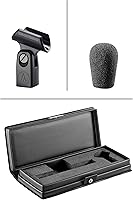
The box contains only the mic — no shock mount, no carrying case, no clip adapter beyond basic threading — which means additional purchases are required before it is fully deployable. For a product at this performance tier, the omission is a consistent source of buyer frustration in early feedback.
Long-term Reliability
91%
Several owners who've used this Audio-Technica mic for multiple years report that tonal character and output level remain stable with no perceptible drift, which is a meaningful indicator of consistent internal component quality. The two-decade production run of the AT4021 design adds further weight to its reputation for staying power.
The current pool of user reviews is still small, making it difficult to assess failure rates or longer-term wear patterns across a broad user base. The positive longevity reports are encouraging, but a larger sample would be needed to draw statistically confident conclusions about reliability at scale.
Frequency Extension
83%
The response extending from 20 Hz upward means low-frequency fundamentals — the body of an upright bass, the chest resonance of a cello, the lower registers of a grand piano — are captured with accuracy rather than prematurely rolled off. This matters in high-resolution recording where the full harmonic picture needs to be present.
In untreated rooms, that extended low-frequency pickup can also capture more rumble and vibration than a naturally filtered mic would, requiring the onboard hi-pass filter or post-processing to clean things up. Engineers without a well-treated recording space may find the low end needs more active management than expected.
Stereo Pair Suitability
85%
The consistent, predictable off-axis behavior and neutral frequency character make this small-diaphragm condenser a practical option for ORTF, XY, or mid-side stereo configurations — particularly for drum overheads, room mics, or acoustic ensembles. Engineers who've run paired units report coherent stereo imaging with minimal tonal inconsistency between the two.
Building a reliable stereo pair assumes both units share closely matched sensitivity and frequency response, which is not guaranteed without factory-matched sets. Buyers requiring precision-matched pairs for critical stereo work should test both units together before committing them to high-stakes sessions.

Suitable for:

The Audio-Technica AT4021 Cardioid Condenser Microphone is a strong match for semi-professional and professional recordists who need accurate, transparent sound capture without the tonal coloration that many large-diaphragm condensers add. It shines most on acoustic instruments — guitar, piano, strings, and woodwinds — where preserving natural transients and tonal honesty matters more than added warmth or character. Engineers running multi-source recording sessions will appreciate the cardioid pattern's off-axis rejection, which meaningfully reduces bleed and keeps tracks cleaner from the start. Broadcast professionals and voiceover artists working with quiet, high-quality digital chains will find the low noise floor genuinely useful rather than just a spec on paper. It's also a practical choice for anyone building a matched stereo pair for overhead drum recording or mid-side configurations, since consistent, predictable behavior across two units is exactly what those applications require. Home studio owners who've hit the ceiling of their large-diaphragm condensers and want a more clinical, instrument-focused recording approach will find a clear step forward here.

Not suitable for:

The Audio-Technica AT4021 Cardioid Condenser Microphone is not the right tool for anyone expecting a plug-and-play experience — it requires an XLR connection, phantom power, and a proper audio interface or mixing console, which adds both cost and setup complexity that beginners may not anticipate. If you're recording in a room with significant acoustic problems, the mic's honest, neutral character will expose those issues without softening them; it does not flatter poorly treated spaces the way some large-diaphragm condensers can. Buyers who primarily record vocals and want a mic with built-in warmth or a presence boost will likely find this small-diaphragm condenser too clinical for that purpose. Anyone on a tight budget who hasn't yet invested in a clean preamp chain may not hear the AT4021 at its best, since the mic's performance is closely tied to the quality of the surrounding gear. Finally, buyers who need a complete out-of-the-box solution — shock mount, carrying case, and mic in one package — should be aware that the box contains only the microphone itself.

Specifications

  • Polar Pattern: The mic uses a cardioid (unidirectional) polar pattern, capturing sound primarily from the front while rejecting off-axis noise from the sides and rear.
  • Connectivity: Audio output is via a standard XLR connector, compatible with any XLR-equipped audio interface, mixing console, or digital recorder.
  • Power Source: The mic requires phantom power supplied through the XLR connection and will not operate without it.
  • Frequency Response: The frequency response extends from 20 Hz upward, enabling accurate, full-range capture of both low-end fundamentals and fine high-frequency detail.
  • Signal-to-Noise: The signal-to-noise ratio is rated at 77 dB, reflecting a low noise floor well-suited to quiet sources and high-resolution digital recording environments.
  • Sensitivity: Audio sensitivity is rated at 42 dB, meaning a moderate level of clean preamp gain is typically needed to achieve optimal recording levels.
  • Special Features: An onboard hi-pass filter and a pad switch are built into the mic body, covering a wide range of recording scenarios without additional outboard equipment.
  • Weight: The mic weighs approximately 4.16 oz (roughly 118 g), making it straightforward to position and balance on standard mic stands or boom arms.
  • Dimensions: The mic body measures 10.31 × 4.49 × 1.69 inches, consistent with the pencil-style form factor of small-diaphragm condenser microphones.
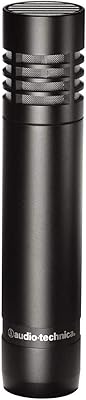
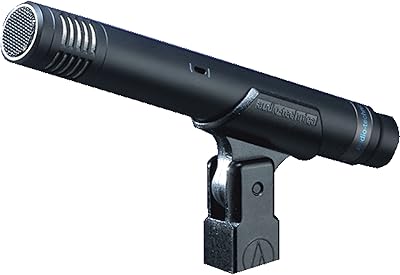
  • Form Factor: The AT4021 follows the pencil-style small-diaphragm condenser format, which suits precise instrument placement and matched stereo pair configurations.
  • Body Material: The housing is constructed from metal alloy, providing structural durability and resistance to the wear of regular professional use.
  • Compatible Devices: The mic is compatible with any device that accepts a standard XLR input and supplies phantom power, including audio interfaces, mixing consoles, and digital recorders.
  • Color: The mic is finished in black.
  • Manufacturer: The AT4021 is manufactured by Audio-Technica U.S., the American division of the Japanese professional audio equipment company.
  • Model Number: The official model designation is AT4021, placing it within Audio-Technica's 40-series professional condenser microphone lineup.
  • Release Date: The AT4021 was first made available in July 2004 and has remained in continuous production since its introduction.
  • Discontinued: Based on the latest available manufacturer information, the AT4021 has not been discontinued and is currently in production.

Related Reviews
Audio-Technica AT4040
83%
92%
Sound Transparency
88%
Build Quality
86%
Transient Response
83%
Value for Money
84%
Off-Axis Rejection
More
Audio-Technica AT4041 Cardioid Condenser Microphone
81%
93%
Sound Accuracy
91%
Transient Response
94%
Unit Consistency
34%
Accessories & Packaging
78%
Value for Money
More
Audio-Technica AT2035
87%
91%
Audio Transparency
88%
Build Durability
86%
Self-Noise Levels
93%
High SPL Handling
74%
Environmental Isolation
More
Audio-Technica AT2010
85%
93%
Vocal Clarity & Articulation
91%
High-Frequency Detail
84%
Feedback Resistance
78%
Handling Noise Suppression
88%
SPL Handling
More
Audio-Technica AT2020
81%
92%
Vocal Clarity
94%
Build Durability
96%
Value for Money
83%
Background Noise Rejection
62%
Plosive Management
More
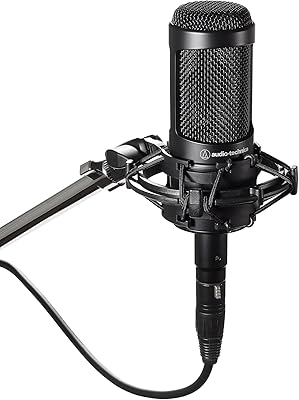
Audio-Technica AT2021 Cardioid Condenser Microphone
77%
91%
Instrument Recording
84%
Sound Quality
86%
Value for Money
61%
Ease of Setup
63%
Vocal Performance
More
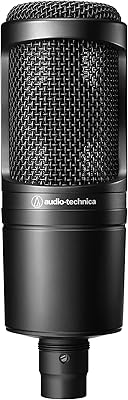
Audio-Technica ATM710 Cardioid Condenser Microphone
78%
86%
Vocal Clarity & Detail
74%
Stage Performance
83%
Build Quality
84%
Handling Noise Rejection
81%
Plosive & Sibilance Control
More
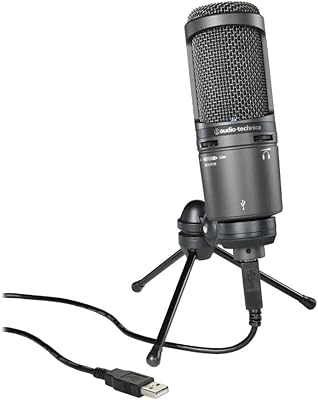
Audio-Technica AE5400 Cardioid Condenser Microphone
77%
92%
Vocal Sound Quality
86%
Handling Noise Rejection
91%
Noise Floor and Signal Clarity
64%
Feedback Resistance
69%
Value for Money
More
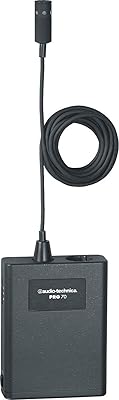
Audio-Technica AT2020USB+ USB Condenser Microphone
79%
88%
Audio Quality
94%
Ease of Setup
91%
Zero-Latency Monitoring
83%
Build Quality
76%
Value for Money
More
Audio-Technica PRO70
78%
88%
Audio Clarity
91%
Build Quality
83%
Noise Rejection
61%
Handling & Clothing Noise
86%
Versatility
More

FAQ

Yes, phantom power — typically 48V — is required and delivered through the XLR cable from your interface or mixer. Without it, the mic simply won't produce any signal. Most modern audio interfaces and mixers include switchable phantom power on each channel, so check your gear's manual if you're unsure how to enable it.

Any interface or mixer that supplies 48V phantom power over a standard XLR input will work. Popular options from Focusrite, Universal Audio, SSL, Audient, and others all support this. The main thing to confirm is that phantom power can be switched on at the input you're using — most can.

It's one of the stronger applications for this mic. The flat frequency response and fast transient handling capture the natural attack and body of acoustic guitar without exaggeration or added warmth that might feel pleasing at first but becomes fatiguing over a mix. If accuracy and transparency are what you're after, it delivers.

It can handle vocals, but it isn't the obvious first choice for sung performances. The neutral, uncolored character suits broadcast and voiceover work well, where clarity and accuracy matter most. Singers who prefer a mic with added warmth or a presence lift in the upper mids may find this small-diaphragm condenser too transparent for their taste. It really depends on the voice and the sound you're going for.

No — the box includes only the microphone itself. The absence of a shock mount and carrying case is one of the more common complaints among buyers, so factor that into your budget before purchasing. Third-party shock mounts sized for pencil-style condensers are widely available and not difficult to find.

Yes, and this is actually one of the more compelling reasons to consider the AT4021. Two units behave consistently enough for ORTF, XY, or mid-side stereo configurations — particularly useful for drum overheads, grand piano, or acoustic room recording. Small-diaphragm condensers are generally preferred over large-diaphragm models for stereo pair work, and this one is well-suited to it.

The metal alloy body holds up well to the demands of live environments, and users who've relied on it for years report no meaningful degradation in performance. The cardioid pattern also helps in live settings by rejecting off-axis sound, which reduces the risk of feedback from monitors and keeps stage bleed under control.

The hi-pass filter rolls off low-frequency content below a set threshold — handy for cutting room rumble, HVAC noise, or stand vibration that can muddy a recording. The pad attenuates the input signal level, protecting against distortion when you're placing the mic close to a very loud source like a kick drum, brass instrument, or loud guitar cabinet. Together they cover the two most common on-the-fly adjustments you'd otherwise need external gear to handle.

Large-diaphragm condensers often add a flattering character — a bit of warmth in the low-mids, a gentle presence boost in the highs — that many producers and vocalists prefer. This small-diaphragm condenser does neither; it captures what's in front of it with minimal editorializing. Neither type is universally better — it comes down to what you're recording and what sound you're working toward. For acoustic instruments and stereo work, the small-diaphragm approach generally wins on accuracy.

At the time of writing, there are only a small number of verified buyer reviews available, so it would be overstating things to call the feedback a broad consensus. That said, what's there is uniformly positive, touching on accurate sound reproduction, long-term durability, and strong value relative to similarly-priced alternatives. Treat it as an encouraging early signal rather than a definitive verdict, and weigh it alongside the mic's two-decade track record in professional use.

Where to Buy