Sekonic L-308X Flashmate Light Meter
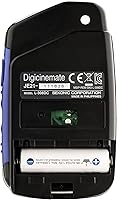
Overview
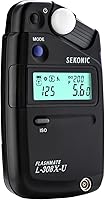
The Sekonic L-308X Flashmate Light Meter has earned its position near the top of the photographic light meter category for straightforward reasons — it covers both still photography and video workflows in a single compact body. That kind of versatility is rare at this price tier. Whether you're dialing in a portrait studio or balancing ambient light on a video shoot, this light meter delivers reliable, repeatable readings without demanding a steep learning curve. It's not the most feature-rich meter Sekonic makes, but for photographers and videographers who want accurate exposure control without overcomplicating their kit, it hits a genuinely practical sweet spot.
Features & Benefits
What sets the Flashmate apart in daily use is its tenth-of-a-stop accuracy across both ambient and flash readings — a level of precision that matters when you're building consistent lighting setups and cannot afford exposure drift between shots. Three shooting modes serve distinct workflows: Photo Mode for traditional still shooters, HD Cine Mode for DSLR and mirrorless video work with frame-rate-aware control, and Cine Mode for cinema cameras requiring shutter angle selection. The ambient EV range spans 0 to 19.9, with flash f/stops from f/1.0 to f/90.9. Both corded and cordless flash measurement are supported, and the whole unit runs on standard AAA batteries — no proprietary power hassles on set.
Best For
This handheld meter makes the most sense for portrait and studio photographers who shoot with flash and need consistent exposures across an entire session, not just a rough ballpark. It suits DSLR and mirrorless videographers who want exposure tied to frame rates rather than guessing off a monitor. Film students and indie cinema shooters will appreciate access to shutter angle metering without paying for a flagship unit. If you've been relying purely on your camera's histogram and want more deliberate lighting control, this is a logical, low-friction starting point. On location, its slim profile and broad measurement range handle everything from available light to multi-strobe setups without complaint.
User Feedback
Among buyers who've put this light meter through sustained real-world use, consistent praise centers on long-term build reliability — several users report accurate performance after years of regular fieldwork. Beginners find the interface approachable once they spend time with the manual, while working professionals note the controls become second nature quickly. The criticism that surfaces most often is the absence of built-in radio triggering; if you're running a PocketWizard or similar wireless system, you'll need to sync via the corded port or measure manually. Compared to compact alternatives like the Lumu or budget Kenko options, most buyers feel the Flashmate justifies its place through measurement consistency and multi-mode versatility, even if it trails Sekonic's pricier models on connectivity.
Pros
- Tenth-of-a-stop accuracy makes it dependable for flash-heavy studio work where small exposure errors compound.
- Three distinct shooting modes — Photo, HD Cine, and Cine — cover still and video workflows in one device.
- Both corded and cordless flash measurement work reliably across a wide range of studio and on-location setups.
- The broad flash f/stop range (f/1.0 to f/90.9) accommodates everything from bare speedlights to powerful strobes.
- Runs on standard AAA batteries, so you are never hunting for a proprietary charger mid-shoot.
- Compact and lightweight enough to pocket easily without adding meaningful bulk to a camera bag.
- Long-term build quality earns consistent praise from users who have relied on this light meter for years.
- The interface becomes intuitive quickly, particularly for photographers already familiar with exposure fundamentals.
- Ranked among the top sellers in its category, reflecting sustained real-world trust across a broad user base.
- Covers an ambient EV range of 0 to 19.9, handling everything from dim interior available light to bright outdoor sun.
Cons
- No built-in radio receiver means wireless flash triggering requires a separate corded sync or manual workaround.
- Beginners who have never used an incident meter before will need to invest time in the manual to get started.
- The flash shutter speed ceiling of 1/500s can feel restrictive when shooting flash outdoors with fast lenses.
- No spot metering capability, which limits usefulness for photographers who work in contrasty, mixed-light conditions.
- Users stepping up from a smartphone metering app may find the physical controls less immediately intuitive.
- Compared to higher-tier Sekonic models, connectivity options are noticeably sparse for complex multi-strobe setups.
- The display, while functional, lacks the modern backlighting quality that some competing meters now offer.
- No carrying case or protective pouch is included in the box, which feels like an oversight at this price point.
Ratings
The scores below reflect an AI-driven analysis of verified global user reviews for the Sekonic L-308X Flashmate Light Meter, with spam, incentivized, and bot-generated feedback actively filtered out before scoring. Each category captures both the genuine strengths buyers celebrate and the real friction points that surface after extended use. Nothing here is smoothed over — the numbers reflect what actual photographers and videographers experience in the field.
Measurement Accuracy
Flash Metering Performance
Ease of Use
Build Quality
Shooting Mode Versatility
Portability
Battery Practicality
Value for Money
Display Readability
Wireless Connectivity
Incident Metering Range
Cine Mode Functionality
Manual & Documentation
Long-Term Reliability
Suitable for:
The Sekonic L-308X Flashmate Light Meter is a strong fit for portrait and studio photographers who shoot with flash and need consistent, repeatable exposure across an entire session rather than relying on post-shoot corrections. It also serves DSLR and mirrorless videographers well, particularly those who want frame-rate-aware exposure control that a camera's built-in metering simply cannot provide. Film students and indie cinema shooters will find the dedicated Cine Mode — with shutter angle selection — genuinely useful for matching professional workflows without investing in a high-end flagship meter. If you're making the shift from histogram-only shooting to deliberate, metered lighting, this handheld meter offers a clear, manageable entry point. On-location shooters will appreciate that it handles both ambient and flash in a single, pocketable unit without requiring proprietary batteries or chargers.
Not suitable for:
Photographers who rely heavily on wireless radio flash triggering systems — PocketWizard, Godox, or similar — will find the Sekonic L-308X Flashmate Light Meter limiting, since it lacks built-in radio receiver support and requires either a corded sync connection or a manual triggering workaround. Shooters who need radio-integrated metering should look at Sekonic's higher-tier models, which carry that functionality natively. This light meter is also not the right tool for professionals operating at the very top of the industry who demand advanced features like spot metering or integrated wireless triggering across multiple strobe systems simultaneously. Buyers looking purely for a digital incident meter for video-only workflows may also find the breadth of still-photography-focused options more than they need. Finally, those who prefer a smartphone-based metering solution — despite the trade-offs in accuracy — may find this handheld meter's physical form factor and manual controls less convenient than a clip-on accessory.
Specifications
- Dimensions: The meter measures 4.3 x 2.5 x 0.9 inches, making it slim enough to slip into a jacket pocket or a small camera bag pocket.
- Weight: At 3.52 ounces, this light meter adds almost no meaningful load to a shooting kit.
- Battery Type: Powered by 2 standard AAA batteries, which are widely available and require no proprietary charging solution.
- Accuracy: Readings are accurate to one-tenth of a stop for both ambient and electronic flash measurements.
- Ambient EV Range: At ISO 100, the ambient exposure value range spans EV 0 to EV 19.9, covering dim interior light through bright outdoor sun.
- Flash F/Stop Range: Flash measurements cover f/1.0 through f/90.9, accommodating speedlights, monolights, and high-powered studio strobes alike.
- Shutter Speed Range: In ambient mode, the shutter speed range runs from 60 seconds to 1/8000s; in flash mode, from 1 second to 1/500s.
- Shooting Modes: Three distinct modes are available: Photo Mode for still photographers, HD Cine Mode for DSLR and mirrorless video, and Cine Mode for cinema-grade cameras with shutter angle control.
- Flash Triggering: Supports both corded (PC sync port) and cordless flash measurement, but does not include a built-in radio receiver for wireless triggering systems.
- Model Number: The official model number is 401-305, used for warranty registration and service identification.
- Manufacturer: Manufactured by Sekonic and distributed in the United States by MacGroup.
- Availability: This product has been commercially available since February 2018 and is not discontinued.
- Market Rank: Holds a Best Sellers Rank of #10 in the Photographic Light Meters category on Amazon, reflecting sustained buyer demand.
- Measurement Type: Functions as an incident light meter, measuring the light falling onto a subject rather than light reflected from it.
- ISO Range: Compatible with a broad ISO range suitable for modern digital sensors and traditional film stocks across all three shooting modes.
Related Reviews
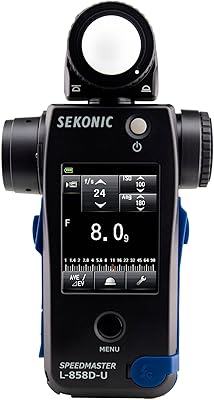
Sekonic Speedmaster L-858D-U Light Meter
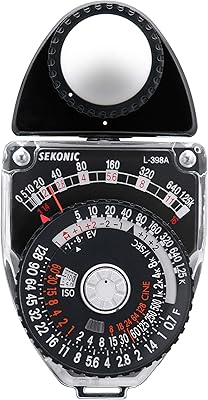
Sekonic L-398A Studio Deluxe III Light Meter
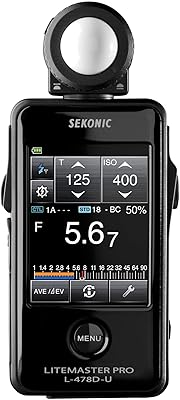
Sekonic LiteMaster Pro L-478D-U Light Meter
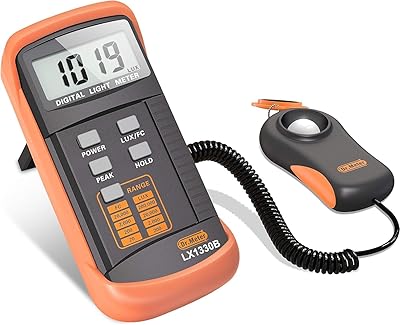
Dr.meter LX1330B Digital Lux Meter
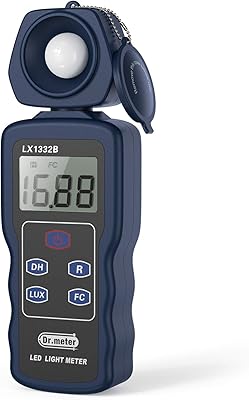
Dr.meter 1332B Digital Light Meter
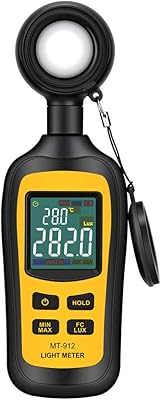
URCERI SMT912 Digital Lux Light Meter
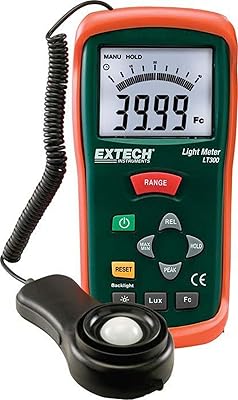
Extech LT300 Light Meter
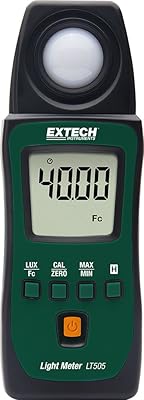
Extech LT505 Pocket Light Meter
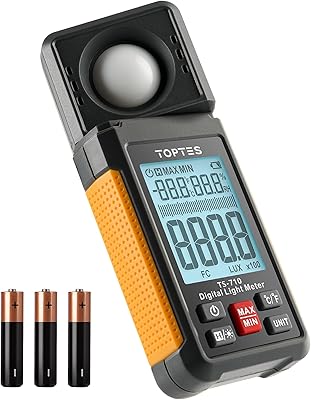
TopTes TS-710 Lux Light Meter