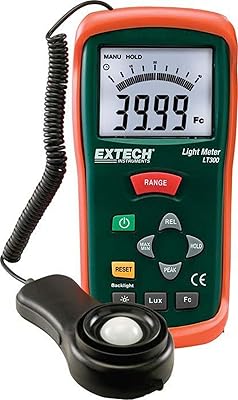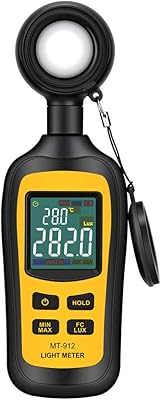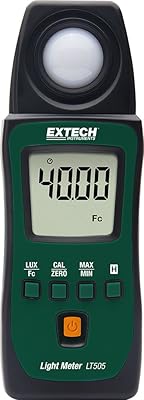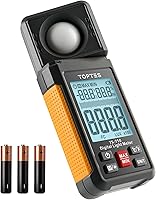
Overview

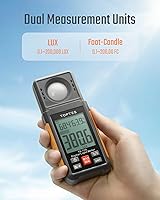
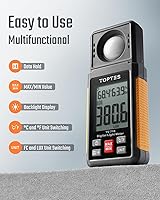
The TopTes TS-710 Lux Light Meter sits comfortably in the mid-range segment, targeting hobbyists, indoor gardeners, and facility managers who want reliable light readings without spending on professional-grade equipment. It measures illuminance in both lux and foot-candles — lux being the metric standard, foot-candles the imperial equivalent widely used in commercial settings — across a broad 0.1 to 200,000 range. Beyond light, it also captures ambient temperature and humidity, which gives it practical value in greenhouse and grow-room contexts. It arrives with batteries installed and a soft carrying case included, so you can start taking readings immediately.

Features & Benefits

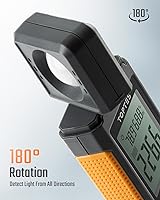
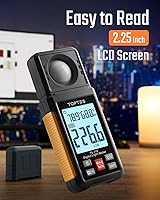
The 180-degree rotating sensor is genuinely useful — it lets you angle the probe toward a specific light source without contorting your wrist or repositioning yourself in a cramped grow tent. Readings update every 0.5 seconds, fast enough to notice real-time changes as you move the sensor around. The 2.25-inch backlit display stays readable even in near-darkness, which matters when you are checking lighting in a dim server room or under a car hood. MAX/MIN recording helps you log the range of light across a space during a thorough audit, while data-hold freezes a reading so you can jot it down without rushing.

Best For

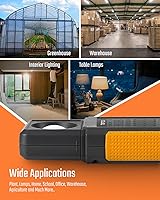
This lux meter makes the most sense for indoor plant growers who want to confirm their grow lights are delivering enough intensity — though it is worth noting that it measures lux, not PAR or PPFD, so dedicated cultivators may eventually need a specialized quantum sensor. That said, it works well for checking whether a reading lamp provides enough light for comfortable reading, auditing office zones for consistent illumination, or verifying that a car's headlights meet minimum output standards after a bulb swap. Hobbyists, teachers, and small-business owners wanting a baseline lighting reference will find it practical and accessible without any real technical learning curve.

User Feedback

Buyers generally appreciate how quickly they can get up and running — most describe the interface as intuitive from the first use. The rotating probe earns consistent praise for its practical convenience in tight spots. On the critical side, a portion of users note that readings can drift slightly compared to calibrated professional instruments, which is expected at this price tier. Build quality draws mixed reactions: the plastic housing feels adequate for occasional use but may not inspire confidence in heavy daily deployment. The included soft case is appreciated, though some find it a snug fit. A few users also mention that switching between modes takes a moment to figure out initially.

Pros

  • Wide 0.1 to 200,000 lux range handles everything from dim hallways to bright outdoor grow setups.
  • The 180-degree rotating sensor head makes it easy to measure awkward angles without repositioning your body.
  • Readings refresh every half second, so you get a responsive, near-live view as you move the sensor.
  • The backlit display remains clearly readable in dark grow tents, closets, or dim server rooms.
  • Built-in temperature and humidity sensors add useful context, especially for greenhouse monitoring.
  • MAX/MIN recording lets you systematically map light levels across a space without taking notes on the fly.
  • Arrives with batteries already included and a carrying case, so setup time is essentially zero.
  • Auto shut-off after ten minutes of inactivity helps stretch battery life during intermittent fieldwork.
  • Dual lux and foot-candle readout makes it equally useful for users working in metric or imperial environments.
  • Competitive ranking among light meters on Amazon suggests a large, reasonably satisfied user base.

Cons

  • No PAR or PPFD measurement means serious plant cultivators will need a separate quantum sensor.
  • Accuracy tolerance of plus or minus 3% plus 5 digits can introduce noticeable drift at the higher end of the range.
  • The plastic housing feels lightweight in hand and may not inspire confidence for heavy or outdoor daily use.
  • The included soft case fits snugly but offers minimal rigid protection if the meter gets knocked around in a bag.
  • Switching between measurement modes and units takes a bit of trial and error during the first few sessions.
  • No wireless connectivity or data export means all logging must be done manually.
  • The temperature and humidity sensor requires acclimation time in a new environment, which can slow down quick readings.
  • No carrying clip or mounting option makes hands-free use or fixed-position monitoring impractical.

Ratings

The TopTes TS-710 Lux Light Meter has been scored by our AI system after analyzing thousands of verified global buyer reviews, with spam, incentivized, and bot-generated feedback actively filtered out before processing. Scores reflect the full spectrum of real ownership experiences — both where this lux meter genuinely delivers and where it falls short. The result is a transparent, category-by-category breakdown designed to help you decide whether this meter matches your specific needs.

Ease of Use
88%
Most buyers report being up and running within minutes of opening the box — no setup ritual, no confusing calibration steps. The button layout is straightforward enough that casual users, including those who have never owned a light meter before, rarely need to consult the manual for basic lux readings.
Switching between lux and foot-candle modes, or navigating the temperature and humidity functions, trips up a noticeable share of new users. The mode-cycling logic is not immediately obvious, and a few buyers mention pressing through several button combinations before finding the right one.
Measurement Accuracy
74%
26%
For everyday applications — checking whether a plant corner gets enough light, auditing office desk illumination, or diagnosing a dim headlight — the TS-710 consistently delivers readings that align well with expected values and match practical benchmarks published for common environments.
Users who cross-check this meter against calibrated professional instruments regularly report readings that diverge by more than the stated ±3% tolerance, particularly at the high end of the range. It is reliable enough for guidance, but not for any task that demands traceable or legally defensible accuracy.
Rotating Sensor Design
91%
The 180-degree rotating probe is consistently cited as one of the most practical features on this meter. Plant growers love being able to angle it directly at a grow light from below without contorting their arm, and automotive users find it easy to direct toward headlamp housings from tricky positions.
A small number of buyers note that the probe rotation joint feels a little loose after extended use, raising mild concerns about long-term durability at that pivot point. It works well when new, but the mechanism does not inspire confidence for heavy, repetitive daily use.
Display Readability
86%
The backlit 2.25-inch LCD is bright and clear enough to read comfortably in a dark grow tent or under a car with the hood up. Digit size is large relative to the housing, making it easy to glance at a reading without squinting or moving the unit closer to your face.
Under very bright ambient light — such as direct outdoor sunlight — screen glare reduces readability noticeably. The backlight also cannot be left on permanently; it dims after a short period, which can be mildly inconvenient during extended monitoring sessions.
Build Quality
63%
37%
For the price tier this meter occupies, the overall fit and finish is acceptable. Buttons have a tactile response, the sensor cover snaps on securely, and the unit feels solid enough for typical home or light commercial use where it will spend most of its time resting on a shelf or desk.
The all-plastic construction attracts consistent skepticism in user reviews, particularly from buyers who need a tool for workshop or field environments. Flex in the body when gripped firmly, and surface scuffing that appears quickly with regular handling, reinforce the perception that durability was not a design priority.
Temperature & Humidity Sensor
67%
33%
Having ambient temperature and humidity readings available on the same device is genuinely convenient for greenhouse growers and indoor gardeners who want environmental context alongside their light data without carrying a separate hygrometer.
The temperature sensor requires several minutes to stabilize after being moved to a new environment, which slows down workflows that involve moving between rooms. Humidity accuracy also draws mixed feedback, with some users noting readings that feel inconsistent compared to dedicated climate monitors.
Sampling Speed
83%
A half-second refresh rate means the display responds quickly as you sweep the sensor across a room or reposition it under different fixtures. Users who perform systematic room-by-room lighting audits appreciate not having to wait for sluggish updates between positions.
In highly dynamic environments — like a stage with moving or flickering lights — even a 0.5-second sample rate can miss momentary peaks. This is unlikely to matter for typical home or office use, but it is worth noting for anyone monitoring rapidly changing light sources.
Data Logging Functions
71%
29%
The MAX/MIN recording and data-hold combination is well-suited for mapping out light variation across a large space. Facility managers and growers who need to document the range of illuminance across a growing shelf or office floor find these functions sufficient for manual record-keeping.
There is no internal memory, no export capability, and no way to timestamp or store multiple readings automatically. Every data point beyond what the MAX/MIN function captures has to be written down by hand, which becomes tedious during any audit involving more than a handful of zones.
Battery Life
79%
21%
The auto shut-off after 10 minutes of inactivity does a good job of protecting battery reserves during the kind of intermittent, occasional use this meter was designed for. Most hobbyist and home users report going months between battery changes under normal conditions.
Heavy or daily professional use drains batteries noticeably faster, especially when the backlight is frequently activated. The meter runs on three AAA batteries rather than two, which is a slightly higher operating cost than comparable devices in its class.
Value for Money
84%
For casual plant care, home lighting diagnostics, and general-purpose illuminance checks, buyers broadly agree that this lux meter delivers meaningful utility at an accessible price. The inclusion of batteries and a carrying case adds tangible out-of-box value that is not always guaranteed at this price point.
Buyers who purchase it expecting near-professional accuracy or rugged durability often feel the value proposition weakens under scrutiny. For those use cases, the price gap to a better-specified meter starts to look more justified in hindsight.
Included Accessories
72%
28%
Shipping with batteries pre-included and a soft carrying pouch is a small but appreciated touch that signals a degree of user-first thinking. The sensor cover also helps protect the most fragile component during transport, which is useful when tossing the unit into a bag.
The soft pouch offers next to no impact protection and fits the meter so snugly that extracting it one-handed is mildly frustrating. A semi-rigid case would have been a more practical choice given the plastic build of the unit itself.
Range Coverage
89%
Spanning from near-darkness at 0.1 lux all the way to 200,000 lux covers an impressive breadth of real-world scenarios in a single tool — from a candlelit room to direct midday sunlight. Very few everyday applications will push beyond either end of that scale.
While the range is wide, the meter does not specify how it handles auto-ranging transitions between measurement scales, and a handful of users report momentary hesitation or display flicker when lighting conditions cross scale boundaries rapidly.
Portability
82%
18%
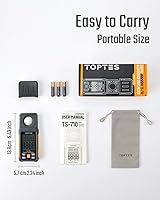
At 10.2 ounces and compact enough to slip into a jacket pocket or a tool bag side pouch, the TS-710 travels easily between rooms, floors, or job sites. The rotating probe tucks back neatly, reducing the risk of accidental damage during transport.
There is no belt clip or holster attachment, which means you need a free hand to hold it during every measurement. For users who need to carry other tools or equipment simultaneously, the lack of a passive carry option becomes a minor but recurring inconvenience.
Manual & Documentation
61%
39%
The included reference chart covering recommended lux levels for homes, offices, hospitals, factories, and plant types is genuinely practical — it gives new users immediate context for interpreting their first readings without requiring separate research.
The written manual itself draws consistent criticism for being terse and poorly translated in places. Explanations of the more nuanced functions — particularly the temperature sensor acclimation behavior and scale-switching logic — are vague enough that users often turn to online communities for clarification.

Suitable for:

The TopTes TS-710 Lux Light Meter is a practical pick for anyone who needs honest, actionable light readings without investing in laboratory-grade equipment. Indoor plant growers will get real value from it — confirming that a grow light is actually delivering enough intensity for a specific plant type, or identifying dead zones in a growing shelf layout. Homeowners troubleshooting inconsistent LED fixtures can walk room to room taking readings in minutes, and small-business owners can use it to verify that workspaces meet basic lighting comfort standards for employees. It also works surprisingly well as a quick diagnostic tool for automotive enthusiasts checking whether upgraded headlights are performing within a reasonable output range. If you simply want a reliable, ready-to-use instrument that covers the most common everyday lighting scenarios, this lux meter delivers that without much fuss.

Not suitable for:

The TopTes TS-710 Lux Light Meter is not the right tool for serious horticulturalists or commercial cultivators who rely on PAR or PPFD measurements to optimize photosynthetic light for crops — lux measures brightness as the human eye perceives it, not the wavelengths plants actually use for growth. Professionals in photography, cinematography, or architectural lighting design who require traceable calibration and sub-1% measurement accuracy will also find this meter falls short of their standards. The plastic construction, while adequate for occasional home use, is unlikely to hold up well in rough field conditions or daily professional deployment. If you need a meter that integrates with data-logging software, connects wirelessly, or produces reports for compliance documentation, this lux meter does not offer those capabilities. And if you are working primarily with non-visible light sources such as UV or infrared, the sensor simply will not register them.

Specifications

  • Brand & Model: Manufactured by TopTes under the model designation TS-710.
  • Measurement Units: Reads illuminance in both lux and foot-candles, switchable via the control panel.
  • Lux Range: Covers a continuous range from 0.1 to 200,000 lux across multiple auto or manual scales.
  • Foot-Candle Range: Foot-candle measurement spans 0.1 to 20,000 fc, suitable for most residential and commercial environments.
  • Accuracy: Rated at ±3% of reading plus 5 digits, which is typical for consumer and prosumer-grade light meters.
  • Sampling Rate: The sensor refreshes and updates the display every 0.5 seconds for near-continuous monitoring.
  • Sensor Rotation: The probe head rotates 180 degrees, allowing angled measurements without repositioning the unit body.
  • Display: Features a 2.25-inch backlit LCD screen that remains readable in low-light and dark environments.
  • Temp & Humidity: Integrated secondary sensors measure ambient temperature in both °C and °F, plus relative humidity percentage.
  • Data Functions: Supports MAX/MIN value recording and a data-hold mode to freeze the current reading on screen.
  • Auto Shut-Off: The unit powers down automatically after 10 minutes of inactivity to conserve battery life.
  • Power Source: Operates on 3 × AAA batteries, which are included in the retail package.
  • Package Dimensions: The retail box measures 7.17 × 3.58 × 2.32 inches, compact enough for easy storage or shipping.
  • Item Weight: Complete unit weighs 10.2 ounces, making it light enough for extended handheld use without fatigue.
  • In the Box: Package includes the meter body, sensor cover, soft carrying case, 3 AAA batteries, and a printed user manual.
  • Market Rank: Holds a Best Sellers Rank of #4 in the Photographic Light Meters category on Amazon as of the review date.
  • First Available: The TS-710 was first listed for sale on May 5, 2023, making it a relatively recent product revision.

Related Reviews
Extech 401025 Lux Light Meter
80%
93%
Display Readability
74%
Measurement Accuracy
91%
Ease of Use
78%
Build Quality
88%
Dual-Unit Display
More
AIOMEST AI-881D Light Meter
81%
93%
Measurement Range
74%
Measurement Accuracy
91%
Rotatable Sensor Design
78%
Data Logging
88%
Display Readability
More
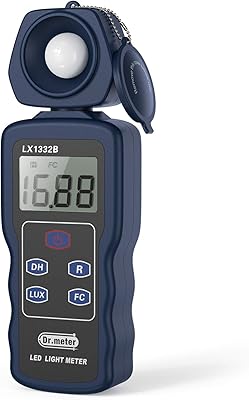
Dr.meter 1332B Digital Light Meter
81%
91%
Ease of Use
78%
Measurement Accuracy
93%
Rotating Sensor
89%
Measuring Range
67%
Build Quality
More
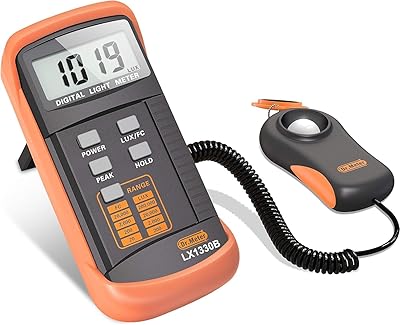
Dr.meter LX1330B Digital Lux Meter
82%
83%
Measurement Accuracy
91%
Ease of Use
67%
Build Quality
74%
Display Readability
92%
Measurement Range
More
URCERI SMT912 Digital Lux Light Meter
77%
82%
Measurement Accuracy
91%
Value for Money
88%
Display & Readability
67%
Build Quality
93%
Ease of Use
More
Extech LT300 Light Meter
75%
88%
Measurement Accuracy
91%
Sensor Design
86%
Display Readability
83%
Build Quality
74%
Ease of Use
More
UNI-T UT383 Digital Lux Light Meter
80%
83%
Measurement Accuracy
92%
Ease of Use
74%
Build Quality
91%
Value for Money
86%
Display Readability
More
Extech LT505 Pocket Light Meter
79%
88%
Measurement Accuracy
93%
Portability
86%
Ease of Use
67%
Build Quality
74%
Display Legibility
More
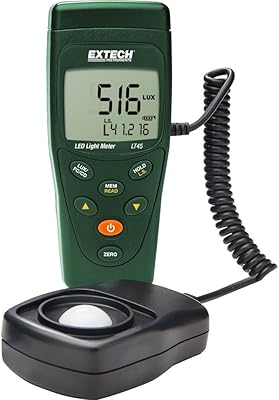
Extech LT45 LED Light Meter
82%
93%
Measurement Accuracy
96%
Source Compatibility
91%
Remote Sensor Design
88%
Build Quality
74%
Data Logging & Recall
More
AOPUTTRIVER AP-881E Digital Lux Light Meter
78%
93%
Measurement Range
91%
Rotating Sensor Design
72%
Accuracy & Reliability
74%
Ease of Use
66%
Build Quality
More

FAQ

No, it does not. The TS-710 measures lux and foot-candles, which reflect how bright a light appears to the human eye. PAR and PPFD quantify the wavelengths plants use for photosynthesis, which is a different measurement entirely. For casual plant care and verifying general light levels, lux is useful as a rough guide, but serious cultivators should pair this with a dedicated quantum PAR meter.

No factory calibration is required out of the box — you simply install the batteries, power it on, and start measuring. That said, like most consumer-grade meters, it is not traceable to a national standards lab, so if you need certified accuracy for compliance or research purposes, professional calibration would be necessary.

Yes, the upper range of 200,000 lux covers typical outdoor daylight conditions, which usually fall between 10,000 and 120,000 lux depending on cloud cover and time of day. Just keep in mind the housing is not rated as waterproof or weather-resistant, so avoid using it in rain or high-moisture outdoor environments.

There is a dedicated mode button on the unit that toggles between lux and foot-candle display. Most users find it straightforward after a quick scan of the manual, though a few report needing a moment to locate the correct button sequence the first time around.

It works with most common visible light sources including LED, fluorescent, incandescent, metal halide, and high-pressure sodium lamps. It will not respond to UV or infrared light, as the sensor is calibrated to the visible spectrum only.

The temp and humidity sensors are functional but secondary features — they are not laboratory-grade. The temperature sensor also needs a few minutes to acclimate when you move the unit into a new environment, so give it time before logging a final reading. Think of them as helpful context indicators rather than precision climate instruments.

The included pouch is mainly useful for protecting the unit against scratches and dust during transport. It does not offer meaningful drop or impact protection. If you plan to carry this lux meter in a tool bag or use it regularly in a workshop environment, consider adding a small hard-shell case for better protection.

Battery life will vary based on how often you use the backlight and how frequently the unit is powered on, but the auto shut-off after 10 minutes of inactivity helps considerably. For occasional home or hobbyist use, a set of AAA batteries should last through many months of normal operation.

Absolutely, and this is one of the more practical ways to use this meter. Angle the rotating probe toward the target area, wait for a stable reading, press data-hold to lock the value, then pull the unit back to a comfortable viewing position. Combined with the MAX/MIN function, it makes auditing uneven lighting across a large space much more manageable.

No, there is no wireless connectivity, USB port, or companion app. All data logging is manual — you record readings yourself using the data-hold and MAX/MIN functions on the display. If automated data capture is important to your workflow, you would need to look at higher-end meters that include Bluetooth or RS-232 connectivity.