Overview
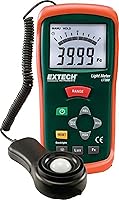
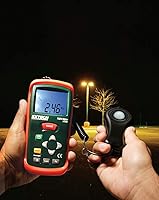
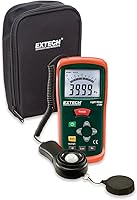
The Extech LT300 Light Meter occupies a firm spot in the professional tier of handheld lux meters — this is not something you pick up on a whim. Extech has a long track record in the test and measurement world, and the LT300 reflects that credibility. It handles lighting assessments across photography, horticulture, commercial buildings, and workplace safety audits with equal competence. What genuinely separates it from cheaper options is the remote sensor design, which lets you position the pickup precisely where the light lands, not just wherever your hand happens to fall.
Features & Benefits
The analog bargraph display is one of those features you don't fully appreciate until you're tracking a shifting light source in real time — it communicates trends at a glance in a way raw digits simply can't. The backlit LCD keeps everything readable even when you're measuring in near-darkness, which is exactly the condition you're often assessing. The photo diode sensor sits on a coiled 12-inch cable that extends to 24 inches, letting you hold the meter at eye level while the sensor reads the actual target surface. A color correction filter compensates for differences between LED, fluorescent, and natural light, and peak mode catches brief intensity spikes that a steady reading would miss entirely.
Best For
This lux meter earns its place with photographers who need to verify balanced lighting before a shoot, and cinematographers who are matching illuminance across scenes. Facility managers conducting compliance audits for workplace lighting standards will find the accuracy appropriate for formal documentation. Horticulturalists running artificial grow lighting rely on tools like this to map intensity across a canopy and catch uneven coverage before it affects yields. Architects and building inspectors also put it to regular use evaluating daylight versus artificial source contributions. If you're stepping up from a basic single-range meter and need professional-grade data, the LT300 is the logical move.
User Feedback
Professionals who use this light meter regularly tend to stick with it. The most consistent praise focuses on reading consistency across varied environments — users report it holds steady across repeated tests without noticeable drift. The cable sensor arrangement comes up repeatedly as a genuine practical advantage. On the downside, several buyers find the included manual frustratingly sparse for a tool with this level of nuance, and a number of users wish the LT300 offered data logging or a USB output for exporting measurements. Battery compartment access has drawn some minor complaints. For buyers who can justify the investment, the meter's sustained standing in its category points to real, long-term user confidence.
Pros
- The remote sensor cable lets you position the pickup precisely without your hand or body casting shadows on the measurement point.
- A backlit LCD means you can actually read results in the low-light conditions you are actively measuring.
- The analog bargraph makes it easy to track shifting or dynamic light sources at a glance.
- Color correction filter improves accuracy across LED, fluorescent, and natural light sources — not just one type.
- Peak mode catches brief intensity spikes that a time-averaged reading would miss entirely.
- Relative mode lets you compare readings against a set baseline, which is useful for scene-matching and uniformity checks.
- At roughly 7 ounces, this lux meter is light enough to carry comfortably through a full day of field work.
- Extech has a strong track record in professional test equipment, and the LT300 reflects that build standard.
- The meter has maintained a top ranking in its category for years, reflecting consistent satisfaction among serious buyers.
- Battery is included out of the box, so you can put it to work immediately.
Cons
- No data logging means every reading has to be recorded manually, which slows down multi-point audits considerably.
- The included manual is thin and leaves users to figure out several functions through trial and error.
- No USB or wireless output makes integrating measurements into reports or spreadsheets more cumbersome than it should be.
- The battery compartment design has frustrated some users, with complaints about accessibility and overall feel.
- The price point puts it out of reach for buyers who only need occasional, casual light checks.
- No carrying case is included, which feels like an oversight for a field instrument at this price level.
- The coiled sensor cable, while useful, can snag or tangle in tight spaces during extended use.
- There is no auto-ranging transparency in the display that clearly signals when you are near a range boundary.
Ratings
The Extech LT300 Light Meter has built a strong reputation over nearly two decades of professional use, and our AI-driven scoring reflects that track record — drawing on verified buyer feedback from global sources while actively filtering out incentivized reviews and bot activity. Scores are calibrated to surface both what this lux meter genuinely excels at and where it falls short, so you get an honest picture before committing to the investment.
Measurement Accuracy
Sensor Design
Display Readability
Build Quality
Ease of Use
Portability
Data Output & Connectivity
Value for Money
Manual & Documentation
Battery Performance
Measurement Modes
Repeatability
Brand Reliability
Suitable for:
The Extech LT300 Light Meter is the right tool for anyone whose work genuinely depends on accurate, repeatable illuminance data. Photographers and cinematographers who need to verify and match lighting levels across a set will appreciate the precision and the flexibility of the remote sensor cable, which keeps the meter body out of the frame while the sensor reads exactly where the light falls. Facility managers responsible for workplace lighting compliance — whether for OSHA standards or local building codes — need a tool they can cite with confidence, and the LT300 holds up to that professional scrutiny. Horticulturalists using artificial grow lighting will find it particularly useful for mapping intensity uniformity across a canopy, catching dead zones before they affect plant development. Architects, interior designers, and building inspectors evaluating the balance between natural and artificial light in a space also fall squarely in the target audience. Essentially, if you use illuminance measurements as part of your professional workflow rather than occasional curiosity, this light meter delivers the reliability and feature depth that justifies the investment.
Not suitable for:
The Extech LT300 Light Meter is a harder sell for anyone who only needs a rough light reading a few times a year. Casual hobbyists, smartphone photographers, or homeowners trying to figure out where to position a houseplant are likely overpaying for capabilities they will rarely use. The meter does not offer data logging or USB connectivity, which means users who need to export or archive measurement records will have to record readings manually — a real limitation for anyone running systematic multi-point audits. The included documentation has drawn repeated criticism for being too sparse to guide new users through the instrument's full functionality, so buyers without prior experience using professional lux meters may face a steeper-than-expected learning curve. If your primary need is a quick, casual check rather than precision field work, a lower-cost option would serve you just as well without the financial commitment.
Specifications
- Manufacturer: Made by Extech Instruments, a well-regarded brand in professional test and measurement equipment.
- Model Number: The model designation is LT300, a handheld lux and foot-candle meter in Extech's instrument lineup.
- Dimensions: The body measures 3 x 1.57 x 5.9 inches, making it compact enough for one-handed field use.
- Weight: The unit weighs approximately 7.05 ounces, light enough to carry through extended measurement sessions without fatigue.
- Display: Features a large LCD screen with an analog bargraph that allows users to track light level trends at a glance.
- Backlight: The LCD includes a built-in backlight so readings remain visible when measuring in dim or near-dark environments.
- Sensor Type: Uses a precision photo diode with a color correction filter to deliver consistent accuracy across different light source types.
- Sensor Cable: The remote sensor connects via a 12-inch coiled cable that can be extended to 24 inches for flexible positioning.
- Color Correction: An included color correction filter compensates for spectral differences between fluorescent, LED, incandescent, and natural daylight sources.
- Measurement Modes: Supports relative mode for baseline comparisons and peak hold mode for capturing brief or transient light intensity spikes.
- Power Source: Operates on one product-specific battery, which is included in the box so the meter is ready to use immediately.
- Connectivity: No USB, wireless, or data-logging output is available; all readings must be recorded manually.
- Category Rank: Holds a top-25 ranking in the Photographic Light Meters category on Amazon, reflecting sustained long-term buyer satisfaction.
- Availability: The LT300 is not discontinued and remains in active production as of the time of this review.
- First Released: The meter was first made available in February 2007, giving it a long track record of real-world professional use.
Related Reviews
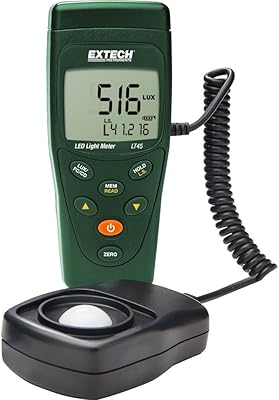
Extech LT45 LED Light Meter
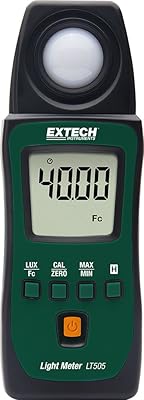
Extech LT505 Pocket Light Meter
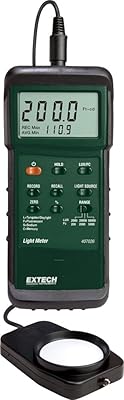
Extech 407026 Light Meter
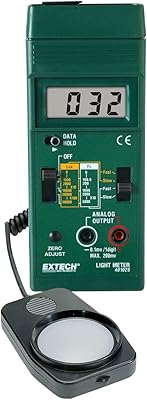
Extech 401025 Lux Light Meter
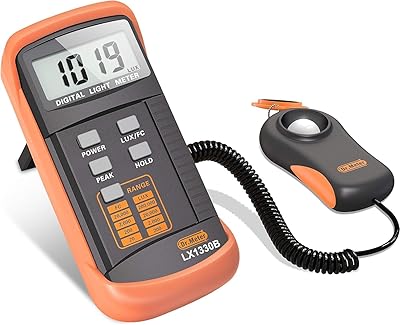
Dr.meter LX1330B Digital Lux Meter
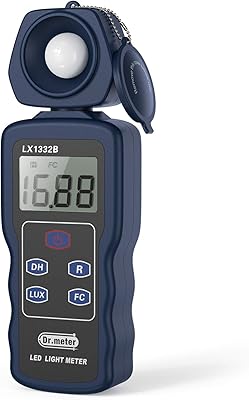
Dr.meter 1332B Digital Light Meter
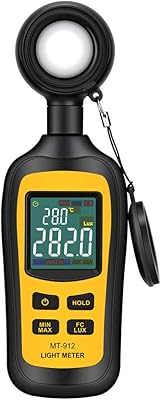
URCERI SMT912 Digital Lux Light Meter
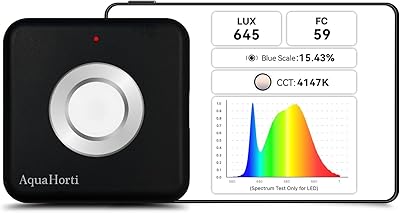
AquaHorti AH-300 Light Meter
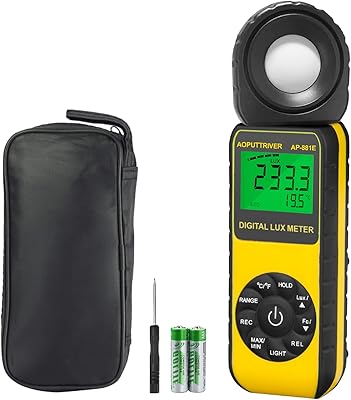
AOPUTTRIVER AP-881E Digital Lux Light Meter