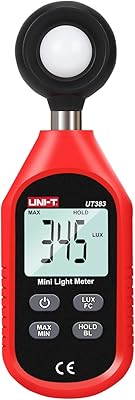
AquaHorti AH-300 Light Meter


Overview
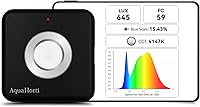
The AquaHorti AH-300 Light Meter is a compact, app-connected device from De-Power that launched in mid-2024, aimed at indoor growers and LED lighting hobbyists who want real measurement data without spending on professional-grade equipment. It tracks LUX, foot candles, CCT, and blue light irradiance, with all readings flowing through a smartphone app rather than a built-in screen. One critical point to flag upfront: this LED measurement tool is calibrated for 450nm phosphor-excited white LEDs only. It will not reliably read HPS, CMH, halogen, fluorescent, or grow lights using 660nm diodes. If your setup falls outside that range, this is not the right instrument.
Features & Benefits
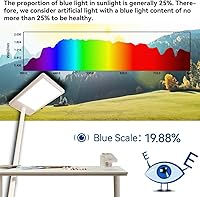
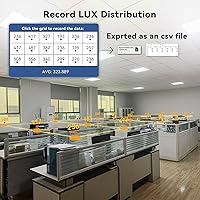
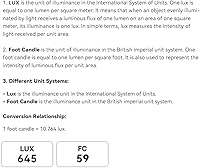
The AH-300 spans a LUX range of 2 to 180,000, broad enough to cover everything from soft ambient lighting to high-output LED panels in commercial grow rooms. CCT readings let you confirm whether a fixture is actually delivering its advertised color temperature, which matters when comparing multiple lights side by side. The blue light irradiance output in W/m² is a practical tool for desk workers monitoring eye strain or sleep disruption, not just a marketing checkbox. LUX distribution mapping is arguably the most underrated feature here, helping pinpoint uneven coverage zones before they affect plant growth or photo shoots. CSV export rounds out a genuinely useful feature set.
Best For
This light meter makes the most sense for indoor growers running white LED panels who want to fine-tune intensity across vegetative and flowering stages with actual numbers. Hobbyist lighting designers mapping uniformity across a grow tent or small studio will also get solid use from it. Health-conscious desk workers curious about their daily blue light exposure will find the W/m² readout genuinely actionable. Photographers doing ambient consistency checks and anyone migrating from older HID or fluorescent fixtures to modern white LEDs can use the baseline data to guide their upgrades. It is not a fit for specialized grow rigs using deep-red or multi-spectrum diodes.
User Feedback
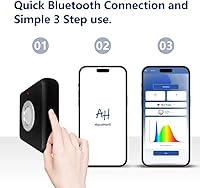
Most buyers describe the app pairing experience as quick once you follow the three-step flow, though a few noted the interface feels less refined than expected. Accuracy earns mostly favorable comments at this price tier, with some users acknowledging slight discrepancies versus higher-end reference meters — worth noting if precision is non-negotiable for your work. The CSV export gets genuine appreciation from growers doing repeated lighting audits over time. Portability is a recurring positive, with the light footprint and included batteries making it easy to move between spaces. The most consistent criticism involves the spectrum limitation: buyers who purchased it for non-white LED environments felt the product description did not communicate that restriction clearly enough.
Pros
- LUX range of 2 to 180,000 covers everything from soft ambient setups to high-output LED panels
- CCT measurement lets you verify actual color temperature rather than trusting fixture spec sheets
- Blue light irradiance in W/m² gives desk workers and growers a concrete, actionable number
- LUX distribution mapping helps identify uneven light zones before they hurt your plants or photos
- CSV export makes it easy to track lighting data across multiple sessions or share results with others
- Three-step app setup keeps the learning curve low even for first-time light meter users
- Compact size and included AAA batteries mean you can move it between spaces without any setup hassle
- Solid value for hobbyists who want more than a basic lux meter without paying professional-grade prices
Cons
- Fully dependent on a smartphone app, which is a dealbreaker if you prefer a standalone display
- Spectrum testing only works with 450nm phosphor-excited white LEDs, ruling out many popular grow light types
- Accuracy may show slight variance compared to calibrated reference meters, which matters in precision applications
- App interface has been described by some users as functional but not particularly polished
- No mention of third-party calibration certification, which limits its use in professional or scientific contexts
- Bluetooth connectivity can occasionally require re-pairing, adding minor friction during measurement sessions
- Users with HPS, CMH, or multi-spectrum grow lights get almost no benefit from the spectrum feature
- Limited brand track record as a mid-2024 launch means long-term reliability data is still thin
Ratings
The AquaHorti AH-300 Light Meter has been scored by our AI system after analyzing verified purchase reviews from buyers worldwide, with spam, bot activity, and incentivized feedback actively filtered out before scoring. The results below reflect the full picture — where this LED measurement tool genuinely delivers and where real buyers have run into friction. Scores are category-specific and weighted against competing products in the same price tier.
Measurement Accuracy
App Experience
LUX Range & Versatility
Spectrum Test Capability
CSV Export & Data Logging
Blue Light Measurement
Build Quality & Portability
Value for Money
Setup & Ease of Use
LUX Distribution Mapping
App Connectivity Stability
Battery Life & Power
Documentation & Support
Suitable for:
The AquaHorti AH-300 Light Meter is a practical pick for indoor growers running white LED panels who want real data to back their lighting decisions rather than relying on guesswork or manufacturer specs. If you are in the vegetative or flowering stage and need to know whether your canopy is receiving consistent, adequate intensity, this light meter gives you LUX distribution mapping that most tools at this price point simply do not offer. Hobbyist lighting designers setting up grow tents, photography studios, or home office environments will find the combination of LUX, foot candle, and CCT readings genuinely useful for identifying uneven coverage. Health-conscious users who want to quantify how much blue light their desk lamp or monitor setup is emitting will appreciate the W/m² readout, which goes beyond what most apps or basic meters can provide. Anyone transitioning from HID or fluorescent fixtures to modern white LEDs can use the baseline readings to verify that the upgrade is actually delivering the expected intensity. The CSV export feature makes it especially valuable for users who track lighting data over multiple grow cycles or want to document their setup for others.
Not suitable for:
Growers using multi-spectrum or deep-red LED fixtures should stop before purchasing, because the AquaHorti AH-300 Light Meter is explicitly designed for white LEDs driven by 450nm phosphor-excited chips — it will not deliver reliable spectrum readings for lights built around 420nm chips, 660nm diodes, HPS, CMH, halogen, or fluorescent sources. If your operation relies on any of those light types, the spectrum test function is effectively off the table, which removes one of the device's key differentiators. Buyers who prefer a standalone meter with a built-in screen will also find this a frustrating fit, since all readings route through a smartphone app — no phone, no data. Professionals or researchers who need laboratory-grade accuracy should look at dedicated spectroradiometers or higher-tier calibrated meters, as the AH-300 sits in the hobbyist tier where minor variances from reference readings are expected. If you run a large commercial facility and need measurements validated against industry standards, this tool is better treated as a secondary cross-check than a primary instrument.
Specifications
- Brand: Manufactured by De-Power and sold under the AquaHorti brand, launched in July 2024.
- Model: The device carries the model designation AH-300.
- LUX Range: Measures light intensity from as low as 2 lux up to a maximum of 180,000 lux.
- Measurements: Captures LUX, foot candles, correlated color temperature (CCT), blue light irradiance in W/m², and blue light percentage in white light.
- Spectrum Support: Spectrum analysis is compatible only with white LEDs driven by 450nm phosphor-excited chips.
- Unsupported Sources: Not compatible with 420nm chip LEDs, 660nm grow LEDs, HPS, CMH, halogen, or fluorescent light sources for spectrum testing.
- Blue Light Unit: Blue light irradiance is expressed in watts per square meter (W/m²) for precise exposure quantification.
- Data Export: Measurement data can be exported as a CSV file through the companion smartphone app.
- Connectivity: Communicates with a smartphone via the companion app, with Bluetooth as the implied wireless protocol.
- App Setup: The app-based measurement workflow is completed in three steps, designed to minimize setup time for new users.
- Power Source: Runs on 2 AAA batteries, which are included in the box.
- Dimensions: The device measures 3.98 x 3.62 x 1.34 inches, making it compact enough to carry between lighting zones.
- Weight: Weighs 4.94 ounces, light enough for comfortable single-handed use during mapping sessions.
- LUX Distribution: Includes a LUX distribution mapping feature to help users identify intensity hot spots or coverage gaps across a lit area.
- Availability: First made available for purchase on Amazon in July 2024.
Related Reviews
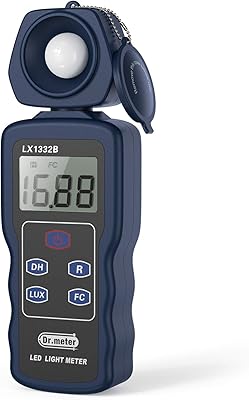
Dr.meter 1332B Digital Light Meter
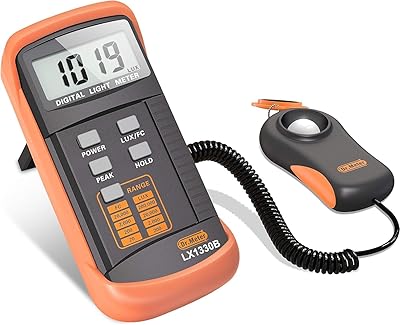
Dr.meter LX1330B Digital Lux Meter
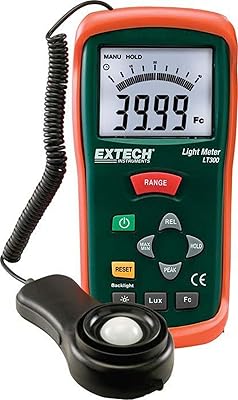
Extech LT300 Light Meter
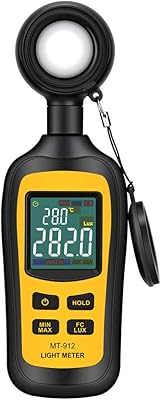
URCERI SMT912 Digital Lux Light Meter
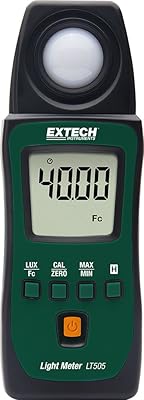
Extech LT505 Pocket Light Meter
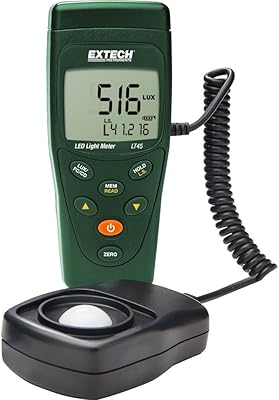
Extech LT45 LED Light Meter
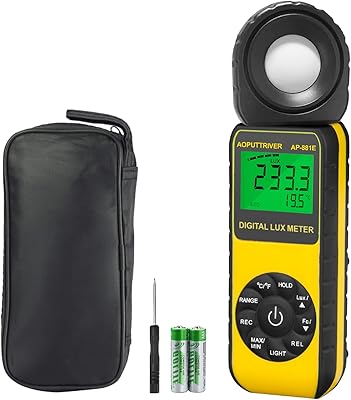
AOPUTTRIVER AP-881E Digital Lux Light Meter
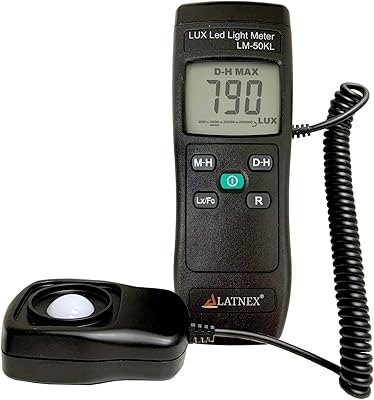
LATNEX LM-50KL Digital Lux Light Meter
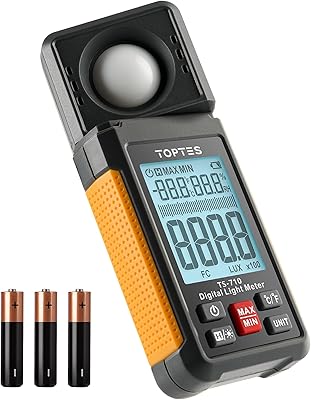
TopTes TS-710 Lux Light Meter