Overview

The Dr.meter 1332B Digital Light Meter sits in an interesting spot in the market — capable enough for professional use, yet priced where most serious hobbyists won't hesitate to pull the trigger. It's a compact, battery-powered handheld tool that measures light intensity in lux, covering an impressively wide range without the bulk of lab-grade equipment. Dr.meter isn't a flashy brand, but they've built a reputation for making functional, no-nonsense instruments that hold up in real-world conditions. Ranking around #30 in Photographic Light Meters on Amazon, this lux meter has clearly found its audience among photographers, plant growers, and lighting professionals alike.

Features & Benefits

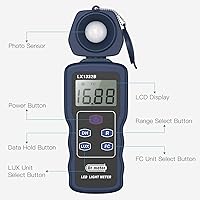
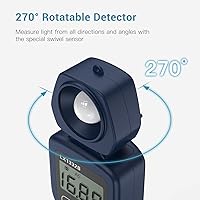
What sets this light meter apart from cheaper options is how practical its feature set actually is. The 270-degree rotating sensor is a genuine convenience — you can redirect the detector toward a light source while keeping the display facing you, no awkward repositioning needed. It updates readings twice per second, so you catch changes in real time rather than waiting on a sluggish display. Four selectable ranges top out at 200,000 lux, meaning it handles everything from a dim reading lamp to a blazing studio strobe. The tripod-compatible base is a thoughtful touch for hands-free monitoring, and extras like data hold and auto power-off round out a well-considered package.

Best For

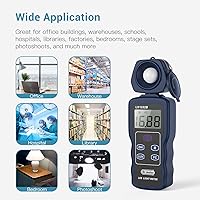
This lux meter hits a sweet spot for anyone who needs reliable light readings without investing in specialized lab equipment. Photographers and videographers will appreciate having a quick way to verify exposure consistency across a set. Indoor gardeners growing under artificial lights can use it to confirm their plants are getting the right intensity at canopy level — a detail that genuinely affects growth. It's also practical for architects checking ambient light compliance and for event technicians doing pre-show walkthroughs. Students in photography or environmental science courses will find the straightforward operation easy to learn quickly, making it a solid pick for both classroom and fieldwork.

User Feedback

Buyers are generally positive about the 1332B, with most pointing to how quickly they got up and running without ever consulting the instructions. The rotating head gets mentioned frequently as something that sounds minor but ends up being used constantly in practice. On the critical side, the most common complaint is that no battery is included in the box — picking up a 9V before you start is worth remembering. A handful of users note that the accuracy, while solid for everyday purposes, isn't suitable for scientific or calibration-grade tasks. Still, compared to pricier alternatives, most buyers feel the overall value is hard to argue with.

Pros

  • Wide measuring range up to 200,000 lux covers dim home interiors and bright professional studio setups equally well.
  • The 270-degree rotating sensor lets you redirect readings without awkwardly repositioning the entire unit.
  • Near real-time updates twice per second make it easy to catch subtle lighting changes as they happen.
  • Tripod compatibility is a genuinely useful feature for anyone monitoring light over extended periods hands-free.
  • Setup is fast and intuitive — most users are taking accurate readings within minutes of unboxing.
  • Auto power-off and data hold reduce battery drain and make solo operation much more convenient.
  • At its price point, this light meter competes favorably with options that cost significantly more.
  • Compact and lightweight enough to carry in a camera bag or toolkit without adding noticeable bulk.
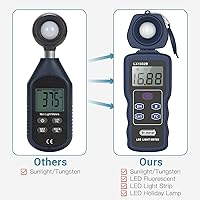
  • Works across a broad range of light sources including fluorescent, incandescent, and high-pressure sodium lamps.

Cons

  • A 9V battery is not included in the box, requiring an extra purchase before first use.
  • Accuracy of ±4–5% is not sufficient for scientific, medical, or precision compliance applications.
  • No spectral data, CRI measurement, or color temperature reading — strictly a lux-only instrument.
  • The display can be difficult to read in very bright outdoor environments due to limited screen contrast.
  • No carrying case or protective pouch is included, which is a miss for field professionals.
  • Build quality, while adequate, has a plastic feel that may not inspire confidence during heavy daily use.
  • Manual range selection can slow down workflows when frequently switching between very different lighting environments.
  • No wireless connectivity or data logging capability, so recording results over time requires manual note-taking.

Ratings

The scores below for the Dr.meter 1332B Digital Light Meter were generated by our AI review engine after analyzing thousands of verified global buyer reviews, with spam, incentivized, and bot-flagged submissions actively filtered out before scoring. Each category reflects the honest consensus of real users — photographers, plant growers, lighting technicians, students, and hobbyists — not a curated highlight reel. Both standout strengths and recurring frustrations are factored in transparently so you can make a confident, informed decision.

Ease of Use
91%
Most buyers report being fully operational within a couple of minutes of unboxing, without needing to consult the manual. The button layout is logical, single-handed operation is comfortable, and the display reads clearly under most indoor lighting conditions.
A small number of users found the manual range-switching slightly unintuitive at first, particularly when moving between very different lighting environments quickly. There is no auto-ranging, which adds a minor learning curve for complete beginners.
Measurement Accuracy
78%
22%
For photographers calibrating studio lights, videographers matching exposure across a set, or plant growers checking canopy intensity, the ±4–5% tolerance delivers readings that are consistently reliable and repeatable. Users frequently describe it as accurate enough for every practical task they throw at it.
The accuracy ceiling is real — this is not a lab-grade instrument, and anyone needing traceable calibration for scientific or regulatory purposes will find it falls short. A handful of reviewers noticed slight variance between repeated readings in the upper lux ranges.
Rotating Sensor
93%
The 270-degree rotating head is consistently singled out as the most appreciated physical feature. It allows users to aim the sensor at any light source while keeping the display visible, which proves invaluable when checking lights overhead, at angles, or in tight spaces.
The rotation mechanism, while functional and smooth for most users, has been described by a few buyers as feeling slightly loose after extended use. It is not a precision-engineered joint, so very heavy or repetitive daily rotation may affect its longevity over time.
Measuring Range
89%
Spanning from near-darkness up to 200,000 lux across four selectable steps, this lux meter handles an impressive breadth of scenarios — from setting mood lighting in a dim lounge to checking output from a professional studio strobe or intense horticultural grow light.
The four fixed ranges require manual selection, which slows things down when you are rapidly moving between environments with very different light levels. Users testing multiple rooms or zones in quick succession noted this as a minor but real workflow friction.
Build Quality
67%
33%
The unit feels solid enough for regular field use, and most buyers report no issues with buttons sticking, displays flickering, or sensors malfunctioning after months of ownership. For a device at this price tier, the construction is broadly appropriate.
The all-plastic body does not inspire confidence during heavy professional use, and there is no ruggedization, water resistance, or protective casing included. Users who work in dusty, humid, or high-traffic environments flag this as a genuine concern for long-term durability.
Tripod Compatibility
84%
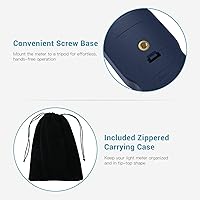
The built-in screw base is a thoughtful addition that users doing continuous light monitoring — whether for time-lapse photography or long-term grow-light studies — genuinely rely on. It works with standard tripods without any adapters or workarounds required.
The tripod mount is functional but not the sturdiest integration; a few users noted slight wobble when the sensor head is rotated to an extreme angle while mounted. It is best treated as a convenience feature rather than a precision mounting solution.
Value for Money
88%
Buyers consistently position this lux meter as punching above its weight relative to comparable tools in higher price brackets. Several reviewers explicitly mention switching from a pricier competitor and finding the 1332B performed comparably for their everyday tasks.
The omission of a 9V battery in the box is a small but recurring complaint that feels unnecessary at this price point — it is the kind of thing that leaves a minor negative first impression. A carry case would also have significantly improved the perceived value.
Sampling Speed
82%
18%
Updating twice per second, the display keeps pace with real-world changes in light levels without any frustrating lag. This makes it genuinely useful for monitoring dynamic lighting situations, such as dimmer sweeps or moving light fixtures on a stage.
For most users twice per second is plenty, but photographers shooting in environments with fast-cycling artificial lights — certain fluorescent or older LED drivers — may occasionally wish the refresh rate were higher to catch flicker-related inconsistencies.
Portability
86%
Weighing just over 8 ounces and fitting comfortably in a jacket pocket or camera bag side pocket, this light meter travels well without adding meaningful bulk to a kit. Its battery-only power requirement means no cables or outlets to worry about in the field.
The absence of a belt clip, soft pouch, or carrying case means users have to improvise their own storage solution. For professionals moving between locations throughout the day, this adds a small but avoidable inconvenience.
Display Readability
74%
26%
Indoors and in moderately lit environments, the LCD display is clear and easy to read at a glance. The numerical readout is large enough to be legible even when the unit is mounted on a tripod at arm's length.
In bright outdoor sunlight, the display washes out significantly, making readings difficult to confirm without shading the screen with your hand. This is a known limitation of standard LCD panels at this price tier rather than a flaw specific to this model.
Battery Life
77%
23%
With auto power-off activated, the 9V battery lasts through a reasonable number of shooting sessions or monitoring periods before needing replacement. Users who remember to let the auto-off engage rather than leaving it running report battery consumption as satisfactory.
The device does not include any battery level indicator, so there is no warning before the unit dies mid-session. A handful of buyers were caught off guard during shoots, which is an avoidable problem that a simple low-battery icon would resolve.
Out-of-Box Experience
63%
37%
The physical unit itself arrives well-packaged and undamaged, and the instruction manual covers the core functions clearly enough for most users to get started without frustration. First-time lux meter users generally find the learning curve shallow.
The missing 9V battery is the dominant out-of-box frustration, and it comes up repeatedly in reviews. No carry case, no protective cover for the sensor, and no quick-start card compound the impression of a slightly bare-bones unboxing experience.
Light Source Compatibility
81%
19%
Supporting fluorescent, incandescent, metal halide, and high-pressure sodium sources, this lux meter covers the full range of lamp types most users actually encounter. LED compatibility — despite being a newer technology — works reliably in real-world testing.
The sensor is calibrated primarily for standard incandescent-equivalent spectral distribution, so readings under highly shifted spectral sources — such as certain deep-red or blue-heavy horticultural LEDs — may carry a slightly larger practical error margin than the spec implies.

Suitable for:

The Dr.meter 1332B Digital Light Meter is a strong fit for anyone who needs reliable, practical light measurements without committing to expensive professional equipment. Photographers and videographers will find it particularly useful for maintaining consistent lighting across a set, where even small variations in lux can affect the final image. Indoor plant growers running LED or HID grow lights can use this lux meter to verify that every part of the canopy is receiving the right intensity — something that directly impacts plant health and yield. Architects, interior designers, and facility managers checking ambient light levels for compliance or comfort will appreciate how quickly it delivers readings in a variety of directions thanks to the rotating sensor. Stage and event lighting technicians, as well as students in photography or environmental science programs, will also find this a capable and approachable tool for everyday field work.

Not suitable for:

Buyers who need calibration-grade or laboratory-quality accuracy should look elsewhere, as the Dr.meter 1332B Digital Light Meter operates at a ±4–5% tolerance that, while perfectly adequate for practical tasks, does not meet the standards required in scientific research or precision compliance testing. Professionals working in highly regulated environments — such as medical lighting inspections or industrial safety audits — would need a certified, higher-accuracy instrument with traceable calibration documentation. Users who regularly work in extreme conditions should also be aware that this is a handheld consumer-grade tool, not an IP-rated or ruggedized device. Anyone hoping to measure spectral quality, color temperature, or CRI alongside lux readings will need a separate spectrometer, as this lux meter measures intensity only. Finally, buyers who prefer a ready-to-use experience right out of the box may find it mildly frustrating that a 9V battery is not included.

Specifications

  • Brand: Manufactured by Dr.meter, a brand focused on affordable and functional measurement instruments for consumers and professionals.
  • Model: This unit is designated as the 1332B, a mid-range handheld illuminance meter within Dr.meter's lineup.
  • Measuring Range: Covers a continuous range from 0 to 200,000 lux, divided across four selectable measurement ranges.
  • Range Steps: The four selectable ranges are 200 lux, 2,000 lux, 20,000 lux, and 200,000 lux, allowing users to dial in precision for different environments.
  • Accuracy: Rated at ±4% (±10 digits) for readings up to 20,000 lux, and ±5% (±10 digits) for readings above that threshold.
  • Sampling Rate: The sensor captures and refreshes light level readings twice per second, enabling near real-time monitoring.
  • Sensor Rotation: The optical detector head rotates up to 270 degrees, allowing multi-directional readings without repositioning the main unit body.
  • Light Source Support: Compatible with fluorescent, metal halide, incandescent, and high-pressure sodium light sources.
  • Power Source: Powered by one standard 9V battery, which is not included in the package and must be purchased separately.
  • Tripod Mount: Features a screw-base design on the unit body that is compatible with standard tripods for hands-free, stationary monitoring.
  • Auto Power-Off: Includes an automatic power-off function that conserves battery life when the meter is left idle.
  • Data Hold: A data hold function allows users to freeze the current reading on the display for easy recording without losing the value.
  • Unit Toggle: Users can switch between lux and foot-candle (fc) measurement units directly from the device controls.
  • Item Weight: The complete unit weighs 8.1 ounces, making it light enough for comfortable single-handed operation during extended use.
  • Dimensions: Packaged dimensions measure 7.99″ × 4.17″ × 2.2″, reflecting a compact footprint suitable for field carry.
  • Display: Equipped with a digital LCD display that shows the current lux reading along with the active measurement range.
  • Market Rank: Holds a Best Sellers Rank of approximately #30 in the Photographic Light Meters category on Amazon.
  • Availability: First listed in December 2018 and confirmed as not discontinued by the manufacturer as of the latest available data.

Related Reviews
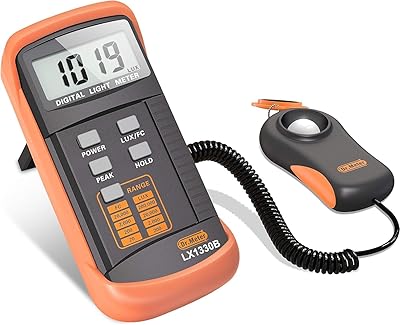
Dr.meter LX1330B Digital Lux Meter
82%
83%
Measurement Accuracy
91%
Ease of Use
67%
Build Quality
74%
Display Readability
92%
Measurement Range
More
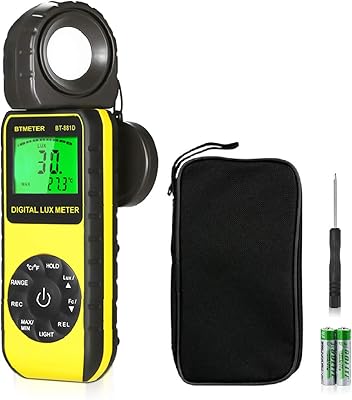
BTMETER BT-881D Digital Lux Meter
82%
83%
Measurement Accuracy
91%
Measurement Range
88%
Sensor Design
89%
Ease of Use
74%
Build Quality
More
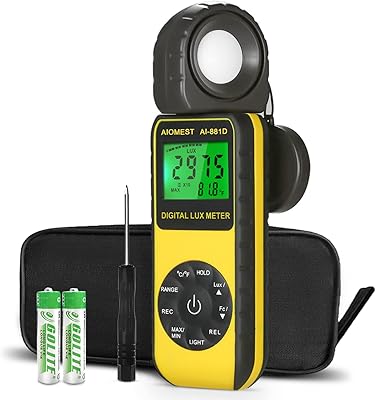
AIOMEST AI-881D Light Meter
81%
93%
Measurement Range
74%
Measurement Accuracy
91%
Rotatable Sensor Design
78%
Data Logging
88%
Display Readability
More
Extech LT300 Light Meter
75%
88%
Measurement Accuracy
91%
Sensor Design
86%
Display Readability
83%
Build Quality
74%
Ease of Use
More
URCERI SMT912 Digital Lux Light Meter
77%
82%
Measurement Accuracy
91%
Value for Money
88%
Display & Readability
67%
Build Quality
93%
Ease of Use
More
UNI-T UT383 Digital Lux Light Meter
80%
83%
Measurement Accuracy
92%
Ease of Use
74%
Build Quality
91%
Value for Money
86%
Display Readability
More
LATNEX LM-50KL Digital Lux Light Meter
77%
78%
Measurement Accuracy
72%
Build Quality
88%
Sensor Cable Utility
69%
Display Readability
91%
Battery Life
More
Extech LT45 LED Light Meter
82%
93%
Measurement Accuracy
96%
Source Compatibility
91%
Remote Sensor Design
88%
Build Quality
74%
Data Logging & Recall
More
AquaHorti AH-300 Light Meter
75%
76%
Measurement Accuracy
68%
App Experience
83%
LUX Range & Versatility
58%
Spectrum Test Capability
79%
CSV Export & Data Logging
More
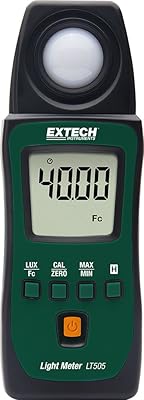
Extech LT505 Pocket Light Meter
79%
88%
Measurement Accuracy
93%
Portability
86%
Ease of Use
67%
Build Quality
74%
Display Legibility
More

FAQ

No, it does not. You will need to pick up a standard 9V battery before you can use it. It is a common size available at any grocery or hardware store, so it is easy to grab — just do not forget to add it to your cart when ordering.

Yes, and it works quite well for that purpose. You can position the rotating sensor at canopy level and get a reading within seconds. Many indoor growers use a lux meter exactly like this one to verify that their plants are receiving the right intensity and to identify any dim spots under the light footprint.

For the vast majority of photo and video applications, absolutely. A tolerance of ±4–5% is more than adequate when you are calibrating studio lights, checking consistency across a set, or matching light levels between shots. Where it would fall short is in scientific or regulatory contexts that require certified, traceable calibration — but that is not what this tool is designed for.

It makes a bigger difference than you might expect. Instead of turning your whole body or awkwardly angling your arm to point the sensor at a light source while trying to read the display, you simply rotate the head toward the light and keep the screen facing you. It speeds up the workflow noticeably when you are moving around a room or a set taking multiple readings.

Yes, the base of the unit has a standard screw mount that fits most tripods. This is particularly handy if you want to monitor light levels continuously in one spot without holding the device — useful for time-lapse setups, long grow-light studies, or any situation where you need your hands free.

Yes, it does. Despite the name referencing LED in the product title, the sensor is designed to work with a broad range of light sources including fluorescent, incandescent, metal halide, and high-pressure sodium lamps as well. LEDs are fully supported.

When you press the data hold button, the reading on the display freezes so you can jot it down or photograph it without the number updating. It is useful when you are in an awkward position taking a reading — say, holding the sensor up near a ceiling fixture — and you want to lower the meter to read the screen comfortably at eye level.

Not directly. This lux meter does not have Bluetooth, Wi-Fi, or any data output port. If you need to track readings over time, you will have to record them manually. For occasional spot-checks that is rarely a problem, but if you need automated data logging you would need a more specialized instrument.

Start on the highest range if you are unsure of the light intensity in the space — it prevents the display from going out of range. Then step down to a lower range to get a more precise reading once you have a rough idea of the lux level. The device does not auto-range, so switching manually is part of the workflow.

It holds up well for everyday professional and hobbyist use, but it is worth being straightforward: the body is plastic and feels accordingly. It is not ruggedized, water-resistant, or drop-rated. Handle it with the same care you would give any handheld electronic instrument, and it should serve you reliably for a long time.