Sekonic L-398A Studio Deluxe III Light Meter
Overview
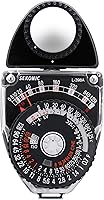
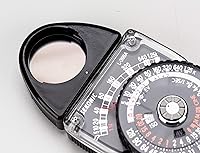
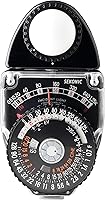
The Sekonic L-398A Studio Deluxe III Light Meter has been a trusted name in professional photography for over two decades, and its staying power is no accident. Built around an amorphous silicon photosensor, this analog light meter operates entirely without batteries — a rare and genuinely useful distinction when you're deep in a shoot and far from a power source. It occupies a specific niche: a precision analog tool that purists, cinematographers, and dedicated film shooters gravitate toward when they want reliable, fuss-free incident metering. The swivel incident dome is a thoughtful practical touch. Be clear about expectations, though — this is not an entry-level meter, and it rewards photographers who already understand exposure fundamentals.
Features & Benefits
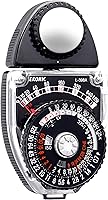
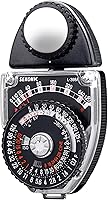
The core appeal of the L-398A comes down to its battery-free operation. The amorphous silicon sensor generates its own current from ambient light, meaning there are no dead batteries to ruin a shoot. The analog needle display gives you an instant look at a full range of aperture and shutter combinations simultaneously — something digital meters with sequential menus can't replicate as quickly. The swivel dome head lets you redirect the incident sphere toward your light source without awkward repositioning of the whole unit. Weighing just 11.2 ounces and measuring roughly 4.4 inches tall, this Sekonic meter is genuinely portable and handles both studio strobes and continuous natural light with equal composure.
Best For
This analog light meter is built for a fairly specific kind of shooter, and that's not a criticism. Film photographers — whether working with 35mm, medium format, or large format — will find it a natural fit, particularly when shooting in situations where battery reliability is a real concern. Studio photographers running strobes or tungsten lights benefit from its quick incident readings without hunting through menus. Directors of photography who prefer an analog workflow on set will appreciate its no-nonsense approach. Photography educators will find real value in it for teaching exposure principles in a tactile, visual way. If you need spot metering or flash sync, look elsewhere — this Sekonic meter simply doesn't offer those.
User Feedback
Long-term owners consistently highlight two things: accuracy that holds up over years of regular use, and the peace of mind that comes from never needing to hunt for a battery mid-shoot. Build longevity comes up repeatedly — many photographers report using the L-398A for well over a decade without issue. On the critical side, experienced users note the lack of flash metering and spot metering, which limits versatility compared to modern digital options. The analog dial takes a short adjustment period if you're coming from a digital background. Still, the majority of buyers frame it as a lifetime investment rather than a tool they'll ever replace — which says a lot about its reliability.
Pros
- Operates entirely without batteries, eliminating dead-meter emergencies during long or remote shoots.
- Amorphous silicon sensor delivers consistent accuracy across a wide range of lighting temperatures and conditions.
- Analog needle display shows multiple aperture and shutter combinations simultaneously — no menu-digging required.
- Swivel incident dome lets you redirect toward any light source without repositioning your whole hand.
- Compact and light enough at 11.2 ounces to carry comfortably on location without adding meaningful bag weight.
- Build quality is well above average — many users report reliable performance after 10 to 20 years of regular use.
- Covers the full EV range needed for both studio strobes and natural light environments.
- Straightforward analog interface speeds up the metering workflow once you are comfortable reading the scale.
- Still in active production, so repair support and replacement parts remain accessible.
- Holds its value well over time, making it a financially sound long-term investment for serious photographers.
Cons
- No flash metering capability, which rules it out for photographers who shoot with strobes in a triggering workflow.
- Lacks spot metering, making it a poor fit for reflective or contrast-heavy metering situations.
- The analog dial has a learning curve that can frustrate photographers transitioning from digital meters.
- No digital display, data logging, or app integration for photographers who prefer connected workflows.
- A lithium battery is listed in some product specs despite the battery-free sensor claim, which creates unnecessary confusion for buyers.
- Incident-only metering limits versatility for photographers who need multiple metering modes in a single tool.
- At its price point, competing digital meters offer significantly broader feature sets for similar or lower cost.
- No backlit display, which makes low-light reading of the dial dial more challenging without additional lighting.
- Purely mechanical design means repairs, if ever needed, require a specialist rather than a simple software reset.
- Not well-suited to fast-paced or unpredictable shooting environments where quick adaptability matters more than precision.
Ratings
The scores below reflect an AI-driven analysis of verified global user reviews for the Sekonic L-398A Studio Deluxe III Light Meter, with spam, incentivized, and bot-generated feedback actively filtered out to ensure accuracy. Ratings are calibrated to surface both what this analog meter genuinely excels at and where real buyers have hit friction — no inflated averages, no buried complaints. Whether you are considering it as a primary tool or a specialist addition to your kit, these scores are designed to help you make a clear-eyed decision.
Build Quality
Measurement Accuracy
Battery Independence
Ease of Use
Feature Set
Portability
Analog Display Readability
Swivel Head Usability
Long-Term Reliability
Value for Money
Studio Lighting Compatibility
Film Photography Suitability
Packaging & Accessories
Manufacturer Support
Suitable for:
The Sekonic L-398A Studio Deluxe III Light Meter is purpose-built for photographers and cinematographers who work deliberately and value accuracy over convenience features. Film shooters — whether they favor 35mm, medium format, or large format — will get the most from this meter, since it integrates naturally into a manual, analog workflow without introducing any digital dependencies. Studio photographers who work with continuous lighting or strobes and want fast, reliable incident readings without navigating on-screen menus will find it fits their rhythm well. Directors of photography and camera assistants on controlled sets will appreciate how quickly the analog dial communicates a full range of exposure options at a glance. Photography educators who teach exposure fundamentals using hands-on methods will also find it a compelling classroom tool — the physical needle response makes the relationship between light and exposure genuinely visible in a way a digital readout cannot replicate.
Not suitable for:
Photographers who need flash metering, spot metering, or wireless triggering capabilities should look elsewhere — the Sekonic L-398A Studio Deluxe III Light Meter simply does not offer those functions, and no workaround changes that reality. Beginners who are still working through the basics of manual exposure may find the analog dial intimidating without a solid foundation in reading EV scales and translating them to aperture and shutter pairings. Hybrid shooters who switch between flash-heavy portrait work and natural light photography will likely find the meter too limited for the full scope of their needs. Wildlife, sports, or event photographers who rely on spot or reflective metering for dynamic, fast-moving subjects will find incident-only metering impractical in the field. If your workflow depends heavily on digital integration, in-camera metering confirmation, or app connectivity, this analog meter will feel like a step backward.
Specifications
- Dimensions: The meter measures 2.3 x 4.4 x 1.3 inches, keeping it compact enough to pocket or slip into a camera bag side pouch.
- Weight: At 11.2 ounces, the L-398A is light enough for extended handheld use without causing fatigue during long shoots.
- Photosensor Type: An amorphous silicon photosensor powers the meter passively using ambient light, requiring no battery for core metering functions.
- Battery Requirement: No battery is needed for the meter's primary incident metering operation; the sensor is entirely self-powered by incoming light.
- Display Type: Readings are shown on an analog needle dial that simultaneously displays a full range of aperture and shutter speed combinations.
- Metering Mode: The L-398A measures incident light only, using a hemisphere dome to capture light falling on the subject rather than reflected from it.
- Dome Head: A swivel incident dome head can be repositioned independently, allowing the photographer to aim it at the light source while keeping the dial in full view.
- EV Range: The meter covers a broad exposure value range suitable for measuring both studio strobe setups and natural ambient light conditions.
- Color: The unit is finished in black with a matte housing designed to minimize reflections during use in studio environments.
- Manufacturer: Manufactured by Sekonic Corporation, a Japanese optical instruments company with a long-standing reputation in professional light metering equipment.
- Model Number: The official model number is 401-399, used to identify this specific variant within Sekonic's product lineup.
- Availability: The L-398A has not been discontinued and remains in active production as of the most recent manufacturer records.
- Market Rank: The meter holds a best sellers rank of #31 in the Photographic Light Meters category on Amazon, reflecting consistent professional demand.
- First Available: This model was first made available for purchase in October 2001, demonstrating an unusually long and stable product lifecycle.
- Flash Metering: The L-398A does not support flash or strobe trigger metering; it is designed exclusively for continuous and ambient incident light measurement.
- Spot Metering: Spot metering is not a feature of this meter; it measures only incident light using the hemispherical dome and does not support reflective readings.
Related Reviews
Sekonic L-308X Flashmate Light Meter
Sekonic Speedmaster L-858D-U Light Meter
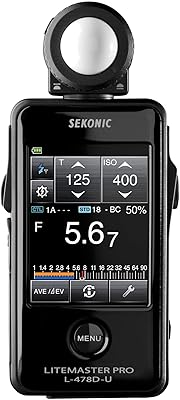
Sekonic LiteMaster Pro L-478D-U Light Meter
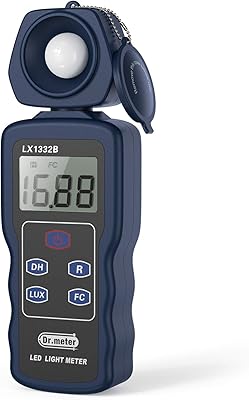
Dr.meter 1332B Digital Light Meter
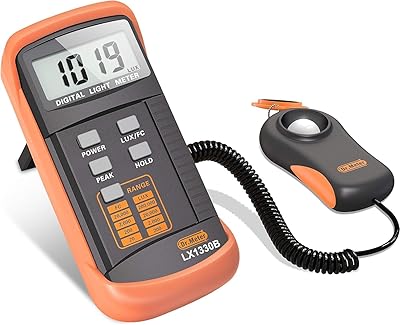
Dr.meter LX1330B Digital Lux Meter
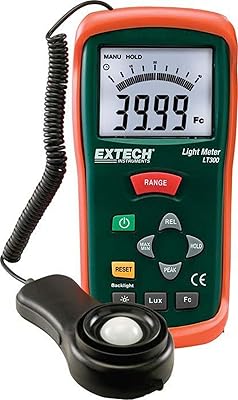
Extech LT300 Light Meter
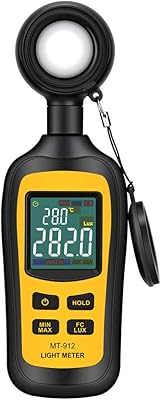
URCERI SMT912 Digital Lux Light Meter
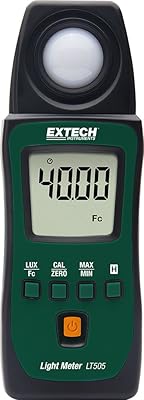
Extech LT505 Pocket Light Meter
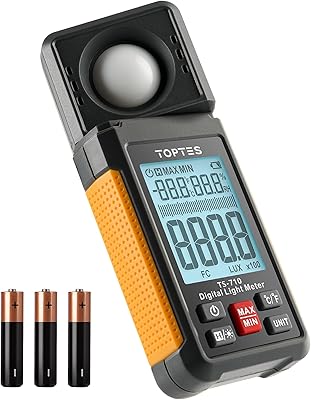
TopTes TS-710 Lux Light Meter