Overview

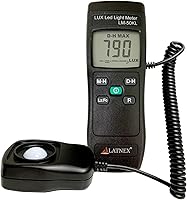
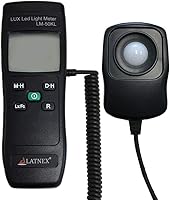
The LATNEX LM-50KL Digital Lux Light Meter sits comfortably in the mid-range tier — capable enough for professional work, yet accessible to serious hobbyists who need reliable data rather than guesswork. What immediately sets it apart from cheaper alternatives is the calibration certificate included in the box, a meaningful assurance that the unit has been verified against a known standard before it ships. The measurement range spans 200 to 200,000 lux, covering everything from dimly lit museum corridors to bright outdoor locations. That said, casual home users simply checking whether a desk lamp is bright enough may find this lux meter more instrument than they actually need.

Features & Benefits

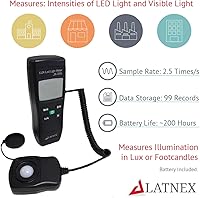
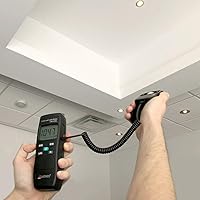
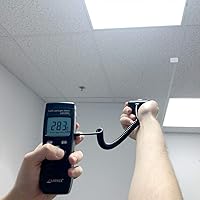
The 1.5-meter sensor cable is arguably the most practical design decision on this light meter — it lets you position the sensor directly at the subject while keeping the readout somewhere you can actually see it, a real advantage when measuring light levels above a suspended ceiling or inside a narrow shelf unit. The backlit LCD with data hold lets you freeze a reading and write it down without chasing a number that keeps changing. Battery life clocks in around 200 hours on a single 9V, and the built-in overload indicator prevents you from inadvertently trusting a reading that has exceeded the meter's working range.

Best For

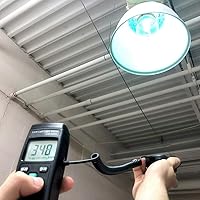
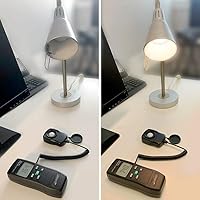
This lux meter earns its place across several professional workflows. Photographers and videographers use it to dial in exposure before a shoot, removing the guesswork that comes from relying solely on camera meters. Facility managers in offices, schools, or warehouses will appreciate having a documented lux reading they can reference during lighting compliance audits. Museum and gallery staff will find the measurement range well-suited for verifying that sensitive exhibits are not over-illuminated. The LM-50KL is also a surprisingly useful tool for indoor plant growers who want to quantify exactly what their grow lights are delivering at canopy level.

User Feedback

Buyers consistently highlight accuracy and ease of use as the main draws, with many noting that readings track closely with professional reference meters straight out of the box. The cable-mounted sensor earns particular praise from users working in tight or awkward spaces. On the critical side, a handful of reviewers report that readings can drift slightly after extended use — worth noting, since the calibration certificate reflects factory conditions, not long-term performance. Some buyers also flag that the buttons feel plasticky and that display legibility drops in very bright ambient light. The included 1-year warranty and tech support soften those concerns for most, though the 4.0 rating signals a solid but imperfect track record.

Pros

  • Broad measurement range of 200 to 200,000 lux handles everything from dim corridors to brightly lit outdoor spaces.
  • The included calibration certificate gives facility managers and compliance-focused buyers a useful paper trail.
  • A 1.5-meter sensor cable lets you position the sensor exactly where you need it without repositioning the whole unit.
  • Data hold function makes it easy to freeze a reading and record it without rushing.
  • Battery life of roughly 200 hours means you are unlikely to run out of power mid-job.
  • Comes field-ready with a carrying case, 9V battery, and tech support included in the box.
  • Overload and low battery indicators help prevent silent measurement errors in the field.
  • Reads accurately across LED, fluorescent, and other visible-spectrum light sources without mode switching.
  • At its price point, the build quality and feature set outpace most similarly priced competitors.
  • One-year manufacturer warranty provides reasonable coverage for professional use.

Cons

  • Some users report calibration drift after extended use, meaning long-term accuracy is not guaranteed without recalibration.
  • Button tactile feedback feels plasticky and cheap relative to the overall asking price.
  • Display can wash out in very bright ambient light, making readings harder to confirm outdoors.
  • The wired sensor, while useful, adds bulk and a potential failure point compared to integrated sensor designs.
  • No backlight auto-off feature means users need to manually manage display settings to preserve battery.
  • Readings can show minor inconsistency when compared side-by-side with higher-end reference meters.
  • The carrying case, while included, is basic and offers limited protection for frequent field transport.
  • No Bluetooth or data logging means all readings must be recorded manually, which is slow during large audits.

Ratings

The scores below were generated by AI after analyzing verified buyer reviews from around the world, with spam, bot-submitted, and incentivized feedback actively filtered out before scoring. Based on that analysis, the LATNEX LM-50KL Digital Lux Light Meter earns a solid mid-range standing — genuinely capable in the right hands, with a few real-world friction points that keep it from being a unanimous recommendation. Both the strengths and the frustrations are reflected honestly in each category.

Measurement Accuracy
78%
22%
For day-to-day professional tasks — auditing office lighting, calibrating a studio shoot, or checking grow light coverage — this lux meter delivers readings that most users describe as consistent and trustworthy. The factory calibration certificate reassures buyers that the unit has been verified before it ships, which adds confidence when starting out.
A notable subset of users who cross-checked readings against certified reference instruments found minor discrepancies, particularly after months of regular use. The calibration certificate covers factory conditions only, so long-term drift is a real possibility that buyers should plan for if precision remains critical over time.
Build Quality
72%
28%
The main body feels solid and functional, and the carrying case offers decent protection during transport between job sites. For a battery-powered handheld instrument in this price tier, the overall construction is competitive and holds up reasonably well under regular indoor professional use.
The buttons are a common complaint — they feel noticeably cheap and plasticky relative to the unit's asking price, with a mushy tactile response that some users find frustrating when taking repeated readings. The wired sensor connection point is also a potential weak spot with heavy daily use over time.
Sensor Cable Utility
88%
The 1.5-meter wired sensor is one of the most genuinely praised design choices on this light meter, and for good reason. Photographers measuring light above a subject, facility managers reaching inside ceiling fixtures, and plant growers positioning the sensor at canopy level all report that the cable makes a real practical difference versus a fixed integrated sensor.
The cable itself, while generously long, is not particularly ruggedized and could be vulnerable to kinking or connector wear under heavy rotation use. A few users also noted that managing the cable in tight spaces occasionally becomes awkward when both hands are needed for other tasks.
Display Readability
69%
31%
Under standard indoor lighting — which covers the majority of use cases this meter is designed for — the backlit LCD is clear and large enough to read without squinting. The data hold function means users can freeze a reading and walk away to record it without rushing, which reduces eye strain during longer audits.
In bright ambient conditions, such as well-lit industrial floors or any outdoor setting, the display washes out enough to make readings harder to confirm quickly. There is no auto-brightness adjustment, so users working in variable lighting environments have to manage expectations around display legibility.
Battery Life
91%
A rated battery life of approximately 200 hours on a single 9V is a genuine strength, and real-world user feedback largely backs up that figure under normal intermittent use. Facility managers conducting multi-day audits and photographers using the meter across multiple shoots consistently report not worrying about battery levels mid-job.
The meter does not offer any power-saving auto-shutoff feature, which means users who forget to turn it off between readings will drain the battery faster than the rated figure suggests. There is no rechargeable option or USB power input, so having a spare 9V on hand is wise for intensive continuous-use scenarios.
Ease of Use
83%
Out of the box, this light meter is straightforward to operate — switch it on, position the sensor, and read the number. The data hold function in particular gets consistent praise from buyers who are taking readings solo without an assistant to write down numbers, making the workflow noticeably smoother in the field.
The button layout and mode-switching logic are not immediately intuitive for first-time lux meter users, and the included documentation is fairly minimal. New users working in foot-candles versus lux sometimes report needing a few minutes to get comfortable with toggling between units correctly.
Value for Money
74%
26%
Compared to bare-bones budget meters with no calibration documentation and shorter sensor cables, the LM-50KL offers a meaningfully better package for professionals who need at least some accountability in their readings. The included carrying case, battery, and calibration certificate make the price feel more justified than the hardware alone might suggest.
At this price point, buyers expecting lab-grade accuracy or premium build quality will feel the gap between expectation and reality. A few reviewers explicitly noted that the button quality and display brightness do not match what the price implies, which creates a perception issue even when core measurement performance is adequate.
Calibration & Documentation
81%
19%
Receiving a physical calibration certificate in the box is a meaningful differentiator in this segment, particularly for buyers who need to demonstrate instrument traceability for workplace compliance purposes. Museum staff, safety inspectors, and facility managers all cite this as a factor that justified choosing this meter over unverified alternatives.
The certificate documents factory accuracy at the point of manufacture, not ongoing performance — a distinction that matters for anyone using the meter in a compliance-sensitive role over an extended period. There is no information in the packaging about recommended recalibration intervals, leaving users to make that judgment on their own.
Portability
79%
21%
At around 15 ounces and with a protective case included, this light meter is easy to carry between locations and fits comfortably in a gear bag alongside photography or inspection equipment. The battery-only power source means no cables or adapters to manage on the go.
The wired external sensor, while functionally valuable, adds a layer of bulk compared to compact integrated-sensor meters. Users who need to move quickly between many measurement points in a large facility may find the cable management slightly disruptive to their workflow pace.
Light Source Compatibility
86%
Compatibility across LED, fluorescent, and all visible-spectrum light sources means this lux meter does not need to be swapped out as facilities upgrade their lighting to modern LED systems. Photographers working with mixed light sources in hybrid studio and natural light setups also benefit from not needing a correction mode.
The meter does not measure UV or infrared output, which limits its usefulness for buyers specifically interested in UV exposure near sensitive artwork or materials — those users may need a supplementary instrument. Some plant growers looking for true PAR or PPFD data will also find lux measurements an imperfect proxy.
Data Logging & Connectivity
38%
62%
For users who only need spot readings and are comfortable recording numbers manually, the absence of data logging is not a problem, and the data hold function partially offsets the inconvenience by letting you capture one reading at a time without a second person present.
There is no Bluetooth, USB output, or any form of data logging on this meter, which is a real limitation for anyone conducting large-scale audits across dozens of measurement points. In 2024, competitors at similar price points are beginning to offer app connectivity, making this omission feel increasingly dated.
Out-of-Box Readiness
89%
Everything needed to start measuring immediately is in the box — battery installed, case included, calibration certificate enclosed. Users consistently note that setup time is essentially zero, which matters when you are deploying the meter on a job site rather than at a comfortable desk.
The instruction manual is described by several buyers as thin and lacking in practical guidance, particularly around interpreting readings in specific professional contexts. Users unfamiliar with lux meters generally would benefit from a more thorough quick-start guide than what is currently provided.
After-Sales Support
77%
23%
The 1-year warranty and access to technical support are frequently mentioned in positive reviews as factors that reduce purchase anxiety, especially for buyers who are spending meaningfully on a measurement instrument for professional use. LATNEX appears responsive to support inquiries based on buyer reports.
The warranty period of one year is standard rather than generous for a professional instrument at this price, and some users have noted that the support documentation available online is limited. Buyers who encounter calibration drift or sensor issues after the warranty period have limited recourse beyond third-party labs.

Suitable for:

The LATNEX LM-50KL Digital Lux Light Meter is a strong fit for anyone who needs dependable, documented light measurements across a range of professional or semi-professional settings. Photographers and videographers will get the most immediate value, using it to confirm consistent light levels across a set rather than relying on camera metering alone. Facility and compliance managers in offices, schools, warehouses, or hospitals will appreciate the included calibration certificate, which adds a layer of documentation credibility when lighting audits are required. Museum and gallery professionals monitoring illumination near sensitive artwork or artifacts will find the 200 to 200,000 lux range more than adequate for their needs. Serious indoor plant growers tracking what their grow lights actually deliver at canopy level will also find it genuinely useful. In short, if your work or hobby regularly demands accurate, repeatable light data, this lux meter is built for you.

Not suitable for:

The LATNEX LM-50KL Digital Lux Light Meter is not the right tool for every buyer, and it is worth being honest about where it falls short. If you need lab-grade accuracy for scientific research or highly regulated industrial compliance, a certified professional instrument with traceable calibration and a known drift specification would be a more defensible choice. The calibration certificate confirms factory accuracy, not long-term stability, so buyers expecting this light meter to stay perfectly calibrated over years of heavy use without recalibration may be disappointed. Casual home users who simply want to know if a room feels bright enough will find the feature set and price point excessive for that purpose — a basic smartphone app or a much cheaper meter would serve them just as well. The physical build, while functional, does not match the durability standards of ruggedized field instruments, so buyers working in harsh industrial environments should think carefully before committing.

Specifications

  • Brand: Manufactured by LATNEX, a brand focused on environmental measurement instruments.
  • Model: The model designation is LM-50KL, a mid-range digital lux and foot-candle meter.
  • Measurement Range: Measures light intensity from 200 to 200,000 lux or the equivalent foot-candle values.
  • Sensor Cable: Includes a wired external sensor on a 1.5-meter cable for flexible remote positioning.
  • Display: Features a large backlit digital LCD screen for clear reading in varied lighting conditions.
  • Data Hold: Equipped with a data hold function that freezes the current reading on screen for easy manual recording.
  • Battery: Powered by one 9V battery, which is included in the box at the time of purchase.
  • Battery Life: Rated for approximately 200 hours of operation on a single 9V battery under typical use conditions.
  • Safety Indicators: Built-in overload indication and low battery warning alert the user to unreliable or interrupted measurement conditions.
  • Calibration: Each unit ships with a factory calibration certificate verifying accuracy against a known standard at the time of production.
  • Warranty: Covered by a 1-year manufacturer warranty, with technical support available after purchase.
  • Included Items: Package contains the meter unit, wired sensor, 9V battery, carrying case, and calibration certificate.
  • Weight: The complete unit weighs approximately 15.1 ounces, making it manageable for extended field use.
  • Dimensions: Packaged dimensions measure 10.39″ x 5.08″ x 3.11″ for shipping and storage reference.
  • Light Sources: Compatible with LED white light, fluorescent lighting, and all other visible-spectrum light wavelengths.
  • Power Source: Entirely battery-powered with no AC adapter or USB charging option included or required.
  • Water Resistance: Not water resistant and is intended for indoor use only under normal environmental conditions.
  • Carrying Case: A protective carrying case is included to store and transport the meter and its accessories safely.

Related Reviews
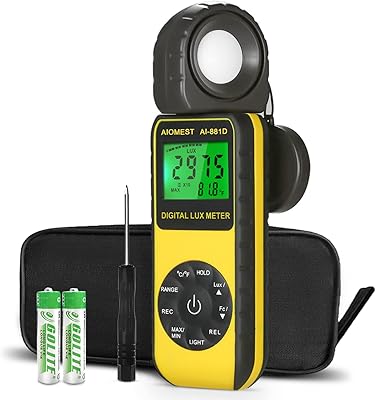
AIOMEST AI-881D Light Meter
81%
93%
Measurement Range
74%
Measurement Accuracy
91%
Rotatable Sensor Design
78%
Data Logging
88%
Display Readability
More
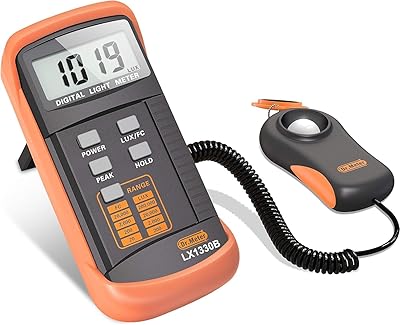
Dr.meter LX1330B Digital Lux Meter
82%
83%
Measurement Accuracy
91%
Ease of Use
67%
Build Quality
74%
Display Readability
92%
Measurement Range
More
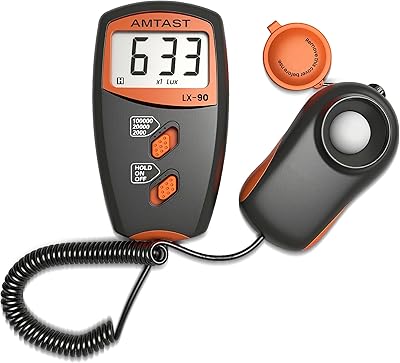
AMTAST LX-90 Digital Lux Meter
76%
88%
Sensor Design
74%
Measurement Accuracy
91%
Ease of Use
83%
Display & Readability
58%
Build Quality
More
Extech 401025 Lux Light Meter
80%
93%
Display Readability
74%
Measurement Accuracy
91%
Ease of Use
78%
Build Quality
88%
Dual-Unit Display
More
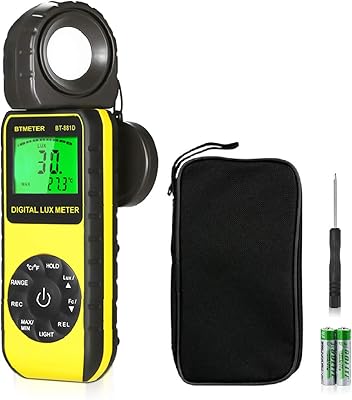
BTMETER BT-881D Digital Lux Meter
82%
83%
Measurement Accuracy
91%
Measurement Range
88%
Sensor Design
89%
Ease of Use
74%
Build Quality
More
LATNEX PM-120W Digital VHF UHF Power SWR Meter and Frequency Counter
86%
89%
Performance
92%
Ease of Use
88%
Accuracy
85%
Battery Life
90%
Portability
More
Dr.meter 1332B Digital Light Meter
81%
91%
Ease of Use
78%
Measurement Accuracy
93%
Rotating Sensor
89%
Measuring Range
67%
Build Quality
More
URCERI SMT912 Digital Lux Light Meter
77%
82%
Measurement Accuracy
91%
Value for Money
88%
Display & Readability
67%
Build Quality
93%
Ease of Use
More
Extech LT300 Light Meter
75%
88%
Measurement Accuracy
91%
Sensor Design
86%
Display Readability
83%
Build Quality
74%
Ease of Use
More
UNI-T UT383 Digital Lux Light Meter
80%
83%
Measurement Accuracy
92%
Ease of Use
74%
Build Quality
91%
Value for Money
86%
Display Readability
More

FAQ

For most standard workplace audits — offices, schools, warehouses — the LM-50KL will give you readings that are reliable enough to document and act on. Keep in mind that the included calibration certificate reflects factory-set accuracy, not ongoing drift, so if you are submitting readings to a regulatory body with strict tolerances, you may want to have the unit professionally recalibrated periodically to stay defensible.

Technically yes, but with some caveats. The measurement range tops out at 200,000 lux, which covers most outdoor shade and overcast conditions comfortably, but direct bright sunlight can exceed that ceiling and trigger the overload indicator. The unit is also not water resistant, so avoid using it in rain or high-humidity outdoor environments.

The sensor sits at the end of a 1.5-meter cable that plugs into the main handheld unit. You hold the meter where you can read the display and position the sensor head wherever you need the measurement — above a ceiling tile, inside a display case, or at plant canopy level. It is a genuinely practical design that you will appreciate the first time you need to measure something above your head.

Yes, it reads in both lux and foot-candles and you can switch between them depending on which unit your project or compliance standard requires. One foot-candle is roughly equal to 10.76 lux, so both scales cover the same physical range — just expressed differently.

LATNEX rates battery life at around 200 hours, and users generally find that figure credible under normal intermittent use. If you are running continuous measurements across long facility audits, you will burn through that faster, but for typical spot-checking across a workday, a single 9V battery should last a long time.

Yes, and this is worth confirming because some cheaper lux meters are optimized for fluorescent sources and underperform with LED. This light meter is designed to measure LED white light and all visible wavelengths, so you should get consistent results across modern LED fixtures without needing any correction factor.

No, there is no user-accessible calibration adjustment on this unit. If you suspect drift after extended use, the practical options are to contact LATNEX technical support, send it out to a third-party calibration lab, or cross-check readings against a known reference meter to gauge how far off it has gotten.

Under typical indoor lighting the backlit LCD is clear and easy to read. A handful of users have noted that in very bright ambient light — strong sunlight or highly illuminated industrial spaces — the display can wash out a bit. It is not a dealbreaker, but it is something to be aware of if most of your work happens in very bright environments.

You get the main meter unit, the wired external sensor, a 9V battery already included, a protective carrying case, and the factory calibration certificate. It is genuinely ready to use out of the box without needing to source any additional accessories.

It is a popular choice for exactly that use case. While it measures in lux rather than PAR (photosynthetically active radiation), many indoor growers use lux as a practical proxy to compare output levels across different grow lights and adjust positioning. Just be aware that lux and PAR are not the same metric, so you cannot directly convert lux readings to PPFD without a conversion factor specific to your light source.