Overview

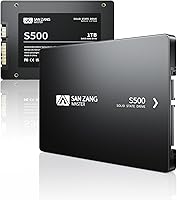
The SAN ZANG MASTER S500 2TB SATA SSD arrived on the market in November 2024, stepping into one of the most crowded categories in consumer storage. For a brand most buyers haven't heard of before, it has climbed quickly — landing inside the top 250 internal SSDs on Amazon with over 100 ratings averaging 4.5 stars. That's worth paying attention to, though not uncritically. This is a SATA III drive, not NVMe, so raw throughput isn't the story here. The real pitch is straightforward: 2TB of storage at a price point that makes upgrading an older machine feel like an easy call rather than a big commitment.

Features & Benefits

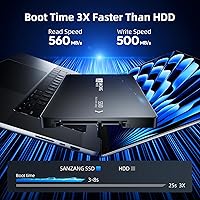
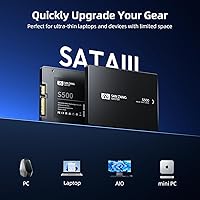
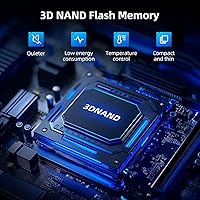
At its core, the S500 drive runs on a SATA III 6Gb/s interface with a rated sequential read speed of 560 MB/s — perfectly capable for everyday computing tasks like booting Windows, launching apps, or handling large file transfers. The 3D NAND flash underneath is the right technology choice at this tier: it packs more data per chip while consuming less power than older planar NAND designs. The 7mm slim profile means it slots into thin laptops and compact chassis without any hassle, and backward compatibility with SATA II makes it a drop-in replacement for older hardware. Built-in support for TRIM and SMART monitoring helps maintain performance and flag potential issues before they become real problems.

Best For

This 2TB upgrade drive makes the most sense for anyone still running a spinning hard drive in a laptop or desktop — the speed difference when jumping to any SSD is significant, regardless of brand. It's also a solid pick for NAS enclosure builds or DIY portable SSD projects, where the 2.5-inch form factor and shock resistance are practical advantages. Cross-platform support across Windows, Linux, and Mac OS means there's no compatibility headache to navigate. What it isn't well-suited for is a primary drive in a performance-oriented system — if your machine has an M.2 NVMe slot available, this SATA SSD is better used as secondary storage for bulk files.

User Feedback

Early buyers report a largely positive experience, with installation being a common highlight — most describe it as a straightforward swap that non-technical users can handle. Boot time improvements are frequently mentioned as the most noticeable real-world benefit. Packaging gets a few nods too, which matters for a brand still building its reputation. On the flip side, some buyers note that long-term reliability remains an open question — the drive only launched in late 2024, so multi-year endurance data simply doesn't exist yet. A handful of reviewers mention wanting more detail on write speeds. The 3-year warranty is consistently cited as a confidence booster, though feedback on customer support responsiveness is sparse so far.

Pros

  • Replacing an old spinning hard drive with this SATA SSD delivers a dramatic, immediately noticeable improvement in boot and load times.
  • At 2TB capacity, it offers substantial storage room for the price tier it occupies.
  • The 7mm slim form factor fits cleanly into thin laptops and compact enclosures without spacers or modifications.
  • Backward compatibility with SATA II makes the S500 drive a true plug-and-play upgrade for older hardware.
  • 3D NAND flash improves power efficiency, which matters for laptop users watching battery life.
  • Built-in TRIM and SMART support helps the drive maintain performance over time and gives monitoring tools something to work with.
  • The 3-year warranty provides a reasonable safety net for a brand that is still building its reputation.
  • Works across Windows, Linux, and Mac OS without extra drivers or formatting headaches.
  • Early buyer reviews consistently praise how straightforward the installation process is, even for non-technical users.

Cons

  • The brand launched in late 2024, meaning there is essentially no long-term reliability or endurance data to reference yet.
  • Write speed specifications are not clearly published, which makes it harder to evaluate real-world sustained performance.
  • With only around 100 ratings so far, the review base is too small to draw statistically confident conclusions about quality consistency.
  • SATA III throughput is a hard ceiling — no firmware update or configuration change will push it past what the interface allows.
  • Customer support responsiveness is largely untested based on available buyer feedback.
  • No published TBW (terabytes written) rating makes it difficult to estimate how long the drive will last under heavy write workloads.
  • SAN ZANG MASTER has limited brand recognition, which could complicate warranty claims or support escalations down the line.
  • Not suitable as a primary drive in any system that has NVMe capability, limiting its role in modern builds.

Ratings

The scores below reflect our AI-driven analysis of verified global buyer reviews for the SAN ZANG MASTER S500 2TB SATA SSD, with spam, bot-generated, and incentivized feedback actively filtered out before any scoring was applied. Each category is assessed independently to give you a transparent picture of where this drive genuinely delivers and where it falls short. Both the enthusiastic praise and the legitimate frustrations from real users are factored into every number you see here.

Value for Money
88%
Buyers consistently point to the cost-per-gigabyte ratio as the S500 drive's strongest argument. Getting 2TB of SSD storage at this price tier is genuinely hard to argue with for anyone upgrading from a spinning hard drive, and most reviewers feel the performance they received was fair or better than expected for what they paid.
A few buyers noted that established brands with longer track records offer similar pricing, making the value case slightly less clear-cut than it first appears. Without published write speed or TBW ratings, it is harder to be certain you are getting a durable drive rather than just a cheap one.
Read Speed Performance
81%
19%
Users replacing old HDDs with this SATA SSD describe the difference as immediately obvious — boot times that previously stretched past a minute now land around 8 to 10 seconds. For everyday tasks like opening applications, browsing files, or loading a browser with a dozen tabs, the 560 MB/s read speed feels responsive and capable.
Reviewers who came from NVMe systems or tested the drive with benchmarking tools noted that real-world sequential speeds occasionally fall a few percent short of the 560 MB/s ceiling. Heavy multi-file transfer tasks expose the upper limit of what the SATA III interface can deliver, and that ceiling is a fixed hardware constraint.
Installation Ease
92%
Across a wide range of buyer profiles — from IT professionals to complete beginners — installation is the most uniformly praised aspect of this drive. The standard 2.5-inch form factor and 7mm height mean it fits without adapters in the vast majority of laptops and desktops, and buyers report the physical swap taking under 15 minutes.
No cloning software or installation guide is included in the box, which caught some less experienced buyers off guard. A handful of reviewers had to spend extra time sourcing free cloning tools online before they could migrate their existing data without starting from scratch.
Compatibility
89%
The backward compatibility with SATA II has been a genuine selling point for buyers using older hardware that would otherwise struggle to find a modern drop-in upgrade. Windows, Linux, and Mac OS users have all reported clean plug-and-play experiences without driver hunting or BIOS adjustments.
A small number of reviewers encountered fit issues with specific ultra-thin laptop chassis that required a spacer frame not included in the package. Buyers with proprietary storage configurations in certain older Lenovo and HP models also flagged that compatibility is worth double-checking before purchasing.
Brand Reliability
61%
39%
The 3-year warranty and the stated lifetime technical support have given many early buyers enough confidence to go ahead with the purchase. The drive's rapid climb to a top-250 BSR ranking within months of its November 2024 launch suggests that early users are not returning it at high rates, which is a reasonable early signal.
SAN ZANG MASTER is an unknown quantity in a market where Samsung, Crucial, and Western Digital have years of endurance data to back up their claims. There is simply no multi-year reliability track record to cite here, and that absence is a real consideration for anyone putting important data on this drive long-term.
Write Speed Performance
67%
33%
For typical home and office workloads — saving documents, downloading files, occasional large transfers — the drive handles writes without obvious lag or stuttering. Users moving moderate-sized folders reported the experience felt smooth and consistent enough for their everyday needs.
The brand has not disclosed a sequential write speed rating, which is an unusual omission for a storage product at this tier. Benchmark-minded buyers who tested write performance found it respectable but unremarkable, and the absence of a published TBW figure makes it genuinely difficult to assess how the drive will hold up under sustained heavy writes over time.
Build Quality
78%
22%
The drive feels solid for its weight class, and the absence of moving parts gives it an inherent physical resilience that spinning drives simply cannot match. Several buyers who installed it in portable external enclosures commented that it survived being carried around daily without any performance changes.
The enclosure itself is plastic rather than metal, which raises some minor questions about long-term heat dissipation under sustained workloads. The drive does not include any temperature management specification in its published documentation, leaving that as an open variable for buyers using it in NAS enclosures where drives run continuously.
Packaging & Unboxing
83%
Packaging quality was called out positively in a noticeable portion of early reviews — buyers noted that the drive arrived well-protected and undamaged, which matters for a device that can be affected by electrostatic discharge or physical impact during shipping.
Beyond adequate protection, the packaging offers little in terms of accessories or documentation. There is no antistatic wrist strap, no installation guide, and no software included, which leaves the out-of-box experience feeling basic compared to some competing drives at a similar price point.
Long-Term Durability
54%
46%
The 3D NAND architecture is a sound technology choice for endurance relative to older planar NAND designs, and SMART and bad block management features do provide a meaningful layer of data protection against cell degradation over time.
The drive has only been on the market since late 2024, so there is no real-world multi-year durability data available from actual users. This is not a criticism of the drive itself, but it is an honest gap — and without TBW figures, buyers who write large amounts of data regularly are making a purchase on limited information.
Thermal Management
63%
37%
For intermittent desktop and laptop use — the most common deployment for this type of drive — buyers have not flagged overheating as a problem. The low power draw of the 3D NAND design contributes to keeping thermals manageable under typical workloads.
No thermal throttling thresholds or operating temperature range has been published by the manufacturer, which is a gap for buyers planning to run this 2TB upgrade drive continuously inside a NAS enclosure or in an enclosed chassis with limited airflow. Extended sustained workloads remain an untested scenario for this specific model.
OS & Software Support
86%
Verified buyers on Windows, Linux, and Mac OS have all reported straightforward experiences — the drive is recognized immediately without extra configuration, which is exactly what you want from a storage upgrade. Linux users in particular appreciated that there were no firmware or compatibility surprises.
There is no companion software for health monitoring, firmware updates, or secure erase functions, unlike drives from established brands that bundle their own utilities. Buyers who want a one-stop monitoring solution will need to rely on third-party tools like CrystalDiskInfo or similar alternatives.
NAS & Enclosure Use
74%
26%
The 7mm form factor fits cleanly into the most common 2.5-inch NAS bays and USB enclosures, and buyers who have deployed the S500 drive in this way report it working reliably for file serving and media streaming workloads. The shock resistance is a practical benefit for enclosures that get moved occasionally.
The drive has not been officially validated or certified for any specific NAS ecosystem, which means buyers using it in brand-managed NAS environments like Synology or QNAP do so without manufacturer backing. Continuous 24/7 operation endurance is unverified for this model, and that is a genuine risk for always-on NAS deployments.
Customer Support
57%
43%
The listing prominently features a 3-year warranty and lifetime technical support, and buyers who have not needed to use either are reassured by the presence of these commitments on paper. The warranty term is competitive for a drive in this price tier.
There is very little documented evidence of what the support experience actually looks like in practice — very few reviews describe a support interaction, positive or negative. For a new brand, the gap between stated support policy and real-world responsiveness is a legitimate unknown that buyers should factor in before committing.

Suitable for:

The SAN ZANG MASTER S500 2TB SATA SSD is built for a very specific and common upgrade scenario: someone with an older laptop or desktop that's still running on a spinning hard drive and desperately needs a speed boost without a full system replacement. If your machine has a 2.5-inch SATA bay — which covers the vast majority of laptops manufactured before 2018 and many budget models since — this drive slots right in with no adapter or configuration required. It's equally practical for home users who need a high-capacity secondary drive for media storage, or for small business owners archiving files on a NAS device. DIY enthusiasts building a portable external SSD using a 2.5-inch enclosure will also find the slim 7mm profile and shock resistance genuinely useful. Cross-platform compatibility with Windows, Linux, and Mac OS means it works across mixed-device households without any friction.

Not suitable for:

The SAN ZANG MASTER S500 2TB SATA SSD is the wrong choice for anyone building or upgrading a modern performance system. If your motherboard has an available M.2 NVMe slot, using a SATA drive as your primary boot drive is a meaningful step backward in throughput — NVMe drives routinely deliver three to five times the sequential read speeds. Power users who regularly work with large video files, run virtual machines, or do anything that hammers sustained write speeds will likely hit the ceiling of what SATA III can offer. The brand is also too new to have a meaningful long-term reliability track record, so buyers who prioritize proven durability data over early review scores should consider established names in the category. Finally, anyone expecting enterprise-grade endurance ratings or detailed TBW specifications published upfront may find the available documentation frustratingly thin.

Specifications

  • Storage Capacity: The drive provides 2TB of raw NAND storage, with actual usable capacity slightly less depending on the operating system and formatting overhead.
  • Interface: Uses a SATA III 6Gb/s interface and is backward compatible with SATA II and SATA I connections.
  • Read Speed: Sequential read speed is rated at 560 MB/s under optimal conditions using the SATA III interface.
  • Flash Type: Built on 3D NAND flash technology, which stacks memory cells vertically to improve density, endurance, and energy efficiency.
  • Form Factor: Standard 2.5-inch form factor with a 7mm height profile, compatible with slim laptops and compact desktop bays.
  • Weight: The drive weighs 2.39 ounces, making it light enough for portable enclosure builds without adding meaningful bulk.
  • Package Size: The retail package measures 5 x 3.5 x 0.75 inches, containing the drive and basic documentation.
  • OS Compatibility: Compatible with Windows, Linux, and Mac OS without requiring additional drivers or third-party software for basic operation.
  • Device Compatibility: Designed for use in laptops, desktops, all-in-one PCs, and 2.5-inch NAS or external enclosures.
  • Supported Features: Supports SMART diagnostics, NCQ (Native Command Queuing), TRIM, and advanced power management for sustained reliability.
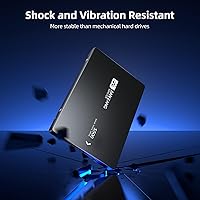
  • Shock Resistance: The absence of moving parts makes the drive inherently resistant to physical shock and vibration compared to traditional hard drives.
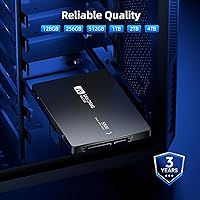
  • Warranty: Covered by a 3-year manufacturer warranty with lifetime technical support included according to the product listing.
  • Model Number: The official model identifier is SANZANG-S500-2TB-RD-EP, used for warranty registration and support inquiries.
  • Launch Date: The drive first became available in November 2024, making it a recent entrant in the internal SSD market.
  • Power Management: Advanced power management support helps reduce idle power draw, which is particularly relevant for laptop deployments.
  • Bad Block Management: Includes built-in smart bad block management to reroute data away from degraded NAND cells and protect data integrity.

Related Reviews
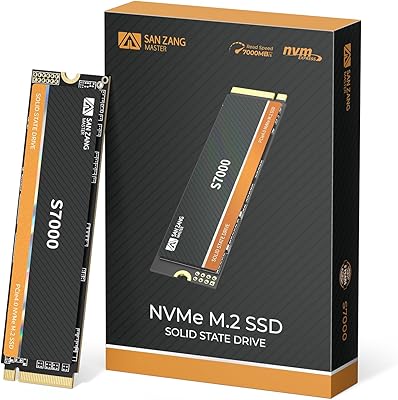
SAN ZANG MASTER S7000 2TB SSD
88%
94%
Performance
97%
Read Speed
86%
Write Speed
91%
Thermal Management
89%
Ease of Installation
More
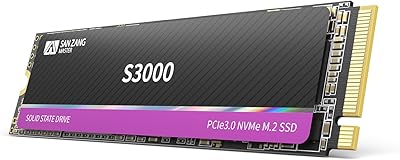
SAN ZANG MASTER S3000 2TB M.2 NVMe SSD
87%
92%
Performance
87%
Value for Money
90%
Build Quality
88%
Ease of Installation
85%
Thermal Management
More
SAN ZANG MASTER S7000 1TB SSD
88%
93%
Performance
94%
Speed (Read/Write)
88%
Ease of Installation
72%
Thermal Management
90%
Durability & Reliability
More
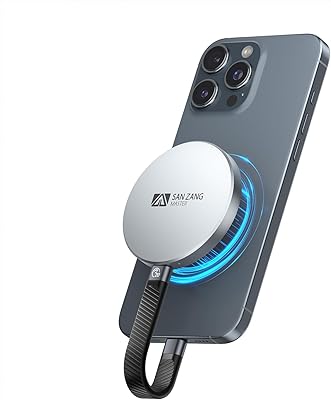
SAN ZANG MASTER SQ20 1TB Portable SSD
77%
93%
Portability & Form Factor
81%
Magnetic Connection Design
67%
Transfer Speed Performance
88%
Storage Capacity (1TB)
71%
Build Quality & Durability
More
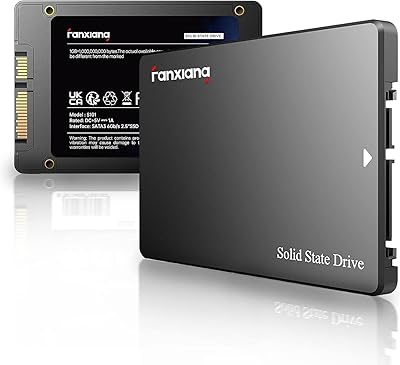
fanxiang S101 2TB SATA SSD
88%
88%
Read/Write Speed
91%
Durability (3D NAND TLC)
93%
Installation Ease
89%
Value for Money
90%
Compatibility (OS Support)
More
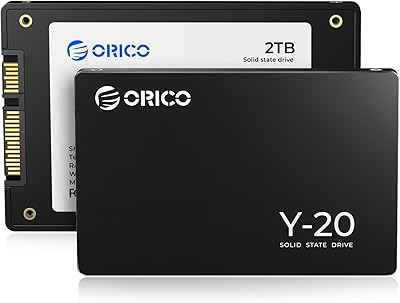
ORICO Y20 2TB SATA SSD
75%
91%
Value for Money
78%
Read & Write Speed
74%
Installation Ease
76%
Build Quality
63%
Long-Term Reliability
More
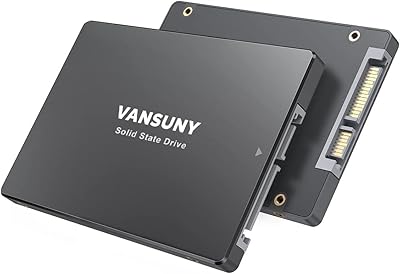
Vansuny 2TB SATA III Internal SSD
75%
91%
Value for Money
84%
Read/Write Performance
89%
Installation Ease
88%
Compatibility
57%
Brand Trust
More
RAOYI 2TB Internal SSD SATA III
88%
88%
Performance
91%
Read Speed
84%
Write Speed
86%
Durability & Build Quality
89%
Heat Dissipation
More
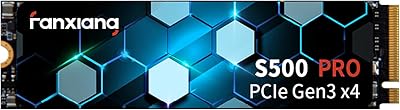
Fanxiang S500 Pro 2TB NVMe M.2 SSD
83%
93%
Value for Money
88%
Sequential Read Speed
67%
Sustained Write Performance
94%
Installation Experience
76%
Thermal Management
More
Ediloca ES106 2TB Internal SSD
77%
83%
Read/Write Performance
88%
Value for Money
79%
Installation Experience
76%
Build & Durability
67%
Long-Term Reliability
More

FAQ

Yes, it will. The drive is backward compatible with SATA II, so it will install and function without any adapter. Just keep in mind that the connection will operate at SATA II speeds rather than the full SATA III rated speed, so real-world performance will be somewhat lower than the 560 MB/s figure on the box.

If you are doing a fresh OS installation, the setup process will handle partitioning and formatting for you. If you are cloning an existing drive, you will want to use cloning software first, then swap the drives. The S500 drive ships unformatted, so there is no need to wipe anything before getting started.

Absolutely, and it is actually one of the better use cases for this drive. The 7mm slim profile fits the vast majority of USB enclosures on the market, and the lack of moving parts means it handles being carried around without worrying about vibration damage. Just make sure your enclosure supports SATA connections rather than NVMe.

Yes, it works with Mac OS. You may need to reformat the drive using Disk Utility to APFS or Mac OS Extended if you are using it as a secondary drive, since it will likely arrive formatted for Windows. For a direct HDD replacement in an older Mac with a 2.5-inch bay, the process is straightforward.

If your machine has an open M.2 NVMe slot, that interface will give you significantly higher speeds and is the better choice for a primary boot drive. However, if your device only has a 2.5-inch SATA bay — which is very common in older laptops and many budget systems — then this SATA SSD is the right fit, and the speed improvement over a spinning hard drive will still be very noticeable in everyday use.

The manufacturer has not published an official sequential write speed specification, which is a gap worth noting. Based on what is typical for 3D NAND SATA drives at this tier, write speeds are generally in the 480 to 520 MB/s range, but without a confirmed figure from the brand, that estimate should be taken cautiously.

A TBW (terabytes written) rating has not been published for this drive, which makes it harder to estimate lifespan under heavy write workloads. For typical home or office use — mostly reading data, occasional writes — SATA SSDs generally last many years. That said, the brand is new and has no long-term track record yet, so this is a fair area of uncertainty to keep in mind.

Based on available product information, no cloning software or physical installation tools are included in the box. You will need to source your own cloning software — there are free options widely available — and have a basic screwdriver on hand for most laptop installations.

Yes, the 2.5-inch form factor is compatible with NAS enclosures that accept SATA drives. It is a reasonable choice for a low-power, quiet NAS build where the priority is storage capacity over peak throughput. Just verify that your specific NAS model supports 2.5-inch SATA SSDs, as some older units are optimized for 3.5-inch HDDs.

The product comes with a 3-year warranty and the brand states lifetime technical support is available. For warranty claims, you would typically contact the manufacturer directly using the model number SANZANG-S500-2TB-RD-EP. Since the brand is relatively new, the responsiveness of their support process has not been widely documented yet, so it is worth keeping your purchase receipt and any correspondence organized.