Overview

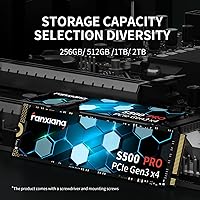
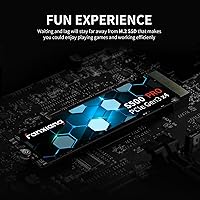
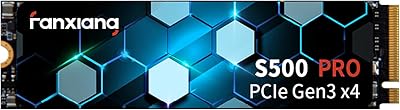
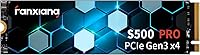
The Fanxiang S500 Pro 2TB NVMe M.2 SSD enters a crowded budget storage market with a straightforward pitch: two terabytes of NVMe speed without a premium price tag. Fanxiang is a value-oriented Chinese brand that has quietly built a following on Amazon by offering specs that punch above their cost tier. This drive uses the standard M.2 2280 form factor over a PCIe 3.0 x4 interface, slotting into virtually any modern laptop or desktop motherboard without compatibility headaches. A small but notable physical detail is the included graphite heat-dissipation sticker, which helps manage temperatures during heavier workloads. Expectations should stay grounded: this is a capable everyday drive, not a rival to Gen4 flagships.
Features & Benefits

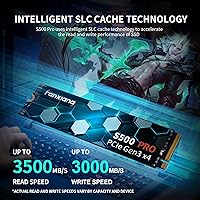
The S500 Pro 2TB relies on dynamic SLC caching to reach its headline sequential read speeds of up to 3,500 MB/s and writes approaching 3,000 MB/s — figures that hold up well during short, bursty transfers like booting an OS or loading a game. When sustained writes push past the cache boundary, speeds drop to the native TLC rate, which is normal behavior for drives in this class and worth understanding upfront. The 3D NAND TLC provides a sensible balance of density and endurance. Particularly notable at this price point is the 1,280 TBW rating, which is significantly higher than many budget competitors where 600 to 700 TBW is more typical. A 3-year warranty rounds out the package.

Best For

This fanxiang drive makes the most sense for builders and upgraders who need substantial storage capacity without a large outlay. If your system is locked to a PCIe 3.0 slot, paying more for a Gen4 drive delivers no real benefit — the S500 Pro 2TB fills that role competently. Students and remote workers replacing a slow hard drive or aging SATA SSD will notice a meaningful jump in day-to-day responsiveness. It also works well as a secondary storage drive for media archives, video project folders, or large game libraries where raw capacity matters more than peak write throughput. Less ideal for sustained professional video workflows that push large sequential writes continuously.

User Feedback

Across thousands of reviews, the consensus is broadly positive, with most buyers praising how painless the installation is — the bundled screwdriver is a small inclusion that earns genuine appreciation. Real-world speeds tend to land close to advertised figures for typical use patterns. The most consistent criticism involves cache saturation: users moving very large files in a single operation report a noticeable speed drop once the SLC buffer fills, which is worth factoring in before buying. A smaller group of long-term owners has raised questions about firmware support and brand continuity — a reasonable concern with any emerging value label. Out-of-box reliability, however, appears solid across the majority of reported experiences.

Pros

  • Two terabytes of NVMe storage at a price point that makes larger established brands look hard to justify.
  • Sequential read speeds consistently land close to the 3,500 MB/s advertised figure in real-world testing.
  • A 1,280 TBW endurance rating is notably generous for a budget drive — many rivals in this class offer less than half that figure.
  • The included graphite thermal sticker provides passive heat management without needing an aftermarket heatsink.
  • Ships with a mounting screw and screwdriver, so first-time builders can install it without a separate hardware run.
  • Broad OS compatibility covers Windows 7 through 11 and macOS 10.9 and later, with no driver gymnastics required.
  • The M.2 2280 form factor fits virtually every modern laptop and desktop with an available NVMe slot.
  • A 3-year warranty offers a reasonable safety net given the drive sits in the value tier.
  • Out-of-box reliability has been consistently reported as solid across a large base of buyer reviews.
  • Build quality and packaging quality exceed what most buyers expect at this price level.

Cons

  • Sustained write speeds drop noticeably once large transfers exhaust the SLC cache buffer, which can frustrate heavy file-movers.
  • Fanxiang has a limited brand history compared to established storage names, raising questions about long-term firmware and support continuity.
  • No companion software or health-monitoring utility is bundled, leaving drive management to third-party tools.
  • TLC NAND without a large dedicated DRAM cache can show latency spikes under mixed random workloads.
  • Buyers on Gen4 platforms gain nothing from this drive and would be better served by a faster interface option.
  • The graphite sticker alone is insufficient for sustained thermal management in tight chassis with poor airflow.
  • Long-term user data on multi-year reliability remains limited given the brand's relatively recent market entry.
  • No official independent benchmark data is published by the manufacturer, making pre-purchase verification harder.

Ratings

The Fanxiang S500 Pro 2TB NVMe M.2 SSD has been scored by our AI rating engine after processing thousands of verified global buyer reviews, with spam, bot activity, and incentivized feedback actively filtered out before analysis. Scores reflect the full spectrum of real-world experience — from first-time installers to long-term daily users — and capture both where this fanxiang drive genuinely delivers and where it falls short of expectations. No category has been softened; the numbers reflect what buyers actually report.
Value for Money
93%
Buyers consistently flag this as one of the strongest arguments for the S500 Pro 2TB: two terabytes of NVMe storage at a price that undercuts many well-known competitors by a meaningful margin. For users replacing a slow hard drive or an aging SATA SSD, the performance-per-dollar ratio feels genuinely compelling rather than a compromise.
A handful of reviewers note that rival budget brands occasionally run promotions that close the price gap, making the value case situational rather than permanent. A small number of buyers who later experienced issues felt the savings were offset by uncertainty around warranty claim follow-through.
Sequential Read Speed
88%
Real-world sequential read performance lands close to the advertised 3,500 MB/s figure for most users running standard benchmarks, and day-to-day tasks like booting Windows or launching large applications feel noticeably snappier compared to SATA drives. Gamers moving large asset files report load times that are hard to distinguish from drives costing significantly more.
Speeds are cache-dependent, and a subset of users running back-to-back large reads in quick succession report figures that drift below peak numbers once thermal or cache conditions shift. The gap between cached and uncached read performance is wider than some buyers anticipated based on the headline spec.
Sustained Write Performance
67%
33%
For everyday writing tasks — saving project files, installing games, copying moderate-sized folders — the dynamic SLC cache keeps things feeling fast and responsive. Users doing routine PC work rarely encounter the cache ceiling in normal sessions, and short burst writes are handled cleanly.
The most common technical complaint across reviews involves sustained write slowdowns: once the SLC cache fills during a large sequential write — moving a 50GB or 100GB folder in one go — speeds drop sharply to native TLC rates. Video editors or users doing large batch file transfers report this as a real and frustrating limitation rather than a theoretical one.
Installation Experience
94%
The installation process earns some of the most enthusiastic feedback across all categories. The included mounting screw and screwdriver remove a friction point that catches many first-time builders off guard, and multiple reviewers specifically called out the tool inclusion as a genuinely thoughtful detail. The physical installation itself takes minutes.
A small number of laptop users ran into clearance issues with the graphite sticker adding marginal height in very tight M.2 slots, requiring them to remove it before fitting. This is uncommon but worth checking against your specific chassis specs before installing.
Thermal Management
76%
24%
The factory-applied graphite heat-dissipation sticker provides a measurable benefit in open desktop builds and well-ventilated laptops, with users reporting the drive staying within comfortable operating temperatures during moderate workloads. For a budget drive to include any form of thermal mitigation at all is above category norms.
In compact or poorly ventilated cases — slim ultrabooks or mini-ITX builds with restricted airflow — the graphite sticker alone proves insufficient during sustained heavy loads, and some users report throttling under those conditions. It is a passive solution with clear limits rather than a substitute for proper chassis airflow.
Build Quality & Finish
81%
19%
Packaging and physical build quality consistently surprised buyers who expected budget-tier cutting corners. The PCB feels solid, the sticker is cleanly applied, and the overall presentation is closer to mid-range drive aesthetics than the barebones look common at this price point.
Some long-term users note that the fanxiang brand does not publish detailed component sourcing or controller specifications, making it harder to independently assess material quality beyond surface impressions. A minority of reviewers remain uncertain whether build consistency is maintained across production batches.
Compatibility
89%
The M.2 2280 form factor and PCIe 3.0 x4 interface cover an enormous range of systems, and buyers across a wide variety of laptops, desktop motherboards, and all-in-one PCs report clean plug-and-play recognition. Windows and macOS both detect the drive without driver installation or BIOS changes in most cases.
Users on PCIe 4.0 platforms occasionally express disappointment that the drive cannot leverage their faster interface, and a small number of older systems with unusual M.2 slot configurations required BIOS updates before the drive was recognized reliably.
Endurance & Longevity
79%
21%
The 1,280 TBW rating stands out as a genuine differentiator at this price tier — many budget competitors offer 600 to 800 TBW for comparable capacities, making this drive a more credible long-term option on paper. For typical home and office use patterns, the endurance ceiling is unlikely to be reached within the warranty period.
Because fanxiang is a relatively young brand, independent multi-year reliability data remains sparse, and some long-term owners have raised concerns about firmware updates and ongoing support. The TBW figure is manufacturer-stated and has not been widely verified through independent stress testing at scale.
Brand Reliability & Support
61%
39%
The 3-year warranty is a reasonable commitment for a value-tier brand and gives buyers a formal recourse path. Many short-term owners report no issues whatsoever and describe their experience with the drive as unremarkable in the best possible sense — it simply works.
A recurring concern among longer-term users involves the difficulty of assessing fanxiang’s track record and the uncertainty around warranty claim responsiveness. The brand does not yet have the service infrastructure or documented support history of established storage names, which remains a legitimate hesitation for buyers storing important data.
Benchmark Performance Accuracy
82%
18%
Unusually for a budget drive, real-world benchmark results reported by users tend to land reasonably close to the advertised specifications for sequential workloads, which reduces the gap between marketing claims and actual experience. Buyers who ran CrystalDiskMark tests shortly after installation generally came away satisfied.
Random read and write performance figures, which matter more for operating system responsiveness and database-style workloads, receive less attention in the marketing materials and tend to be less impressive than the headline sequential numbers suggest. Users running mixed workloads may notice the difference.
Noise & Vibration
97%
As a solid-state drive with no moving parts, this NVMe SSD operates in complete silence under all workloads, which users upgrading from mechanical hard drives consistently describe as a welcome quality-of-life improvement. Vibration resistance also means no data risk from minor physical shocks during transport.
There is effectively no user-facing downside in this category — the only theoretical note is that the absence of audible feedback means users have no acoustic cue if the drive encounters an issue, making health-monitoring software slightly more relevant as a precaution.
OS & Software Compatibility
86%
Broad support across Windows 7 through 11 and macOS 10.9 and later means this fanxiang drive covers nearly every platform a typical buyer might be running, including older systems that still see regular use in home and small-office environments. No driver installation is required on any supported platform.
There is no bundled drive management or health-monitoring utility, which puts the onus on users to source their own diagnostic tools. Buyers unfamiliar with third-party options like CrystalDiskInfo may not monitor drive health at all, which is a missed opportunity for a brand still building trust.
Packaging & Unboxing
83%
Several reviewers mentioned that the unboxing experience felt more considered than expected at this price, with secure packaging that arrived without damage and a clean presentation that reinforced confidence in the product before installation even began. The included accessories were individually bagged and easy to locate.
A small number of buyers received units where the graphite sticker had minor air bubbles or edge lifting, which does not affect function but creates a less polished first impression. Packaging materials are functional but not environmentally minimal, which some eco-conscious buyers noted.

Suitable for:

The Fanxiang S500 Pro 2TB NVMe M.2 SSD is a strong fit for budget-conscious buyers who want a meaningful storage upgrade without crossing into premium pricing territory. PC builders working with older platforms are a natural audience — if your motherboard tops out at PCIe 3.0, this drive extracts every bit of available bandwidth without leaving performance on the table. Students and remote workers swapping out a sluggish hard drive or an entry-level SATA SSD will notice a real improvement in boot times and application responsiveness in daily use. Gamers who prioritize library size over raw loading-speed bragging rights will appreciate fitting a large collection onto a single fast drive. It also works well as a secondary drive for media storage, video editing project archives, or large game folders where capacity is the primary concern and sustained write endurance is less critical.
Not suitable for:

The Fanxiang S500 Pro 2TB NVMe M.2 SSD is not the right call for buyers who regularly push large sequential writes — think video editors rendering multi-gigabyte files continuously or data hoarders doing frequent full-drive transfers. Once sustained writes exhaust the dynamic SLC cache, speeds fall back to native TLC rates, which lag well behind the headline figures. Users on Gen4-capable platforms who want to future-proof their build or maximize throughput for demanding creative workloads should look at established brands offering Gen4 drives with stronger firmware ecosystems. Those who place heavy value on long-term brand accountability and firmware update support may also find comfort elsewhere, as fanxiang does not yet carry the track record of tier-one storage manufacturers. If reliability over a five-year-plus horizon is non-negotiable for mission-critical data, pairing this drive with a solid backup strategy is a minimum requirement.
Specifications

  • Capacity: This drive offers 2TB of usable storage, suitable for large game libraries, media collections, and general-purpose system use.
  • Interface: It connects via PCIe 3.0 x4 using the NVMe protocol, delivering substantially faster throughput than SATA-based solid state drives.
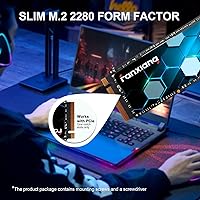
  • Form Factor: The M.2 2280 format measures 3.15 x 0.87 x 0.08 inches, fitting the most common M.2 slot found in modern laptops and desktops.
  • Sequential Read: Peak sequential read speed reaches up to 3,500 MB/s under optimal burst conditions using dynamic SLC cache.
  • Sequential Write: Peak sequential write speed reaches up to 3,000 MB/s during cached burst transfers before native TLC rates apply.
  • NAND Type: The drive uses 3D NAND TLC flash memory, balancing storage density, cost efficiency, and reasonable write endurance.
  • Cache Technology: A dynamic SLC cache layer accelerates short-burst read and write operations typical of everyday computing workloads.
  • Endurance Rating: The rated endurance is 1,280 TBW (terabytes written), which is notably high relative to most competing budget drives in this capacity class.
  • Thermal Feature: A factory-applied graphite heat-dissipation sticker provides passive thermal management during sustained read and write operations.
  • Weight: The drive weighs 0.32 oz, making it lightweight enough for ultra-thin laptops and compact desktop builds without mechanical bulk.
  • Warranty: Fanxiang covers this drive with a 3-year limited warranty, providing baseline protection for a value-tier product.
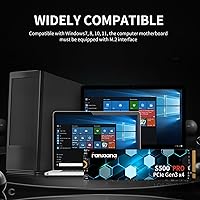
  • OS Compatibility: Compatible operating systems include Windows 7, 8, 10, and 11, as well as macOS 10.9 and all later versions.
  • Device Compatibility: The drive is designed for installation in laptops, desktops, and all-in-one computers equipped with an M.2 NVMe slot.
  • Accessories: The retail package includes a mounting screw and a small screwdriver, enabling a complete installation without sourcing additional hardware.
  • Operating Temp: The drive is rated to operate within a temperature range of 0 to 70 degrees Celsius under normal usage conditions.

Related Reviews
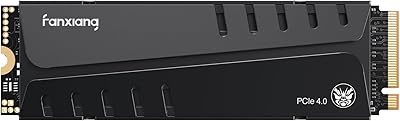
fanxiang S770 2TB NVMe M.2 SSD
79%
88%
Sequential Read Speed
91%
PS5 Compatibility
86%
Value for Money
83%
Thermal Management
74%
Build Quality
More
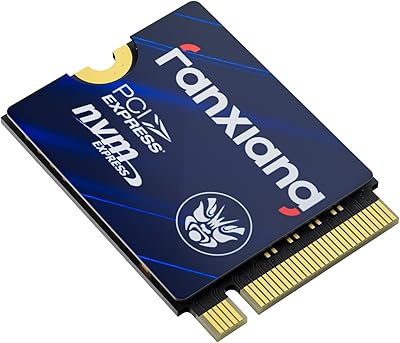
HP FX900 Pro 2TB M.2 NVMe SSD
89%
94%
Performance
96%
Read Speed
88%
Write Speed
85%
Thermal Management
90%
Compatibility
More
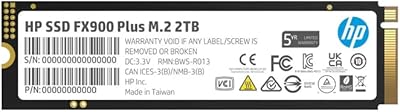
fanxiang S630 2TB M.2 2230 NVMe SSD
87%
89%
Performance
90%
Speed (Read/Write)
88%
Thermal Management
85%
Ease of Installation
92%
Build Quality
More
Samsung 960 PRO 2TB PCIe NVMe M.2 SSD
88%
94%
Performance
92%
Speed (Read/Write)
89%
Reliability
88%
Ease of Installation
85%
Software (Samsung Magician)
More
Corsair MP600 PRO NH 2TB PCIe Gen4 x4 NVMe M.2 SSD
88%
94%
Performance for Gaming
92%
Write Speed
94%
Read Speed
88%
Ease of Installation
89%
Compatibility with Desktops
More
SanDisk 2TB SSD Plus M.2 NVMe SSD
86%
89%
Performance
92%
Ease of Installation
88%
Reliability
91%
Value for Money
90%
Capacity
More
Fanxiang S500 Pro 1TB NVMe SSD
86%
88%
Performance
91%
Value for Money
85%
Reliability
92%
Read Speed
88%
Write Speed
More
Vansuny 2TB NVMe M.2 SSD
86%
95%
Performance
88%
Installation Ease
78%
Thermal Management
92%
Storage Capacity
94%
Speed for Gaming
More
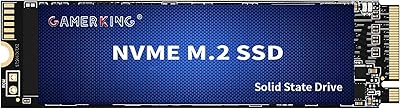
GAMERKING 2TB M.2 NVMe SSD
85%
91%
Performance (Read/Write Speeds)
72%
Thermal Management
88%
Ease of Installation
94%
Compatibility with PS5
87%
Value for Money
More
WD_BLACK SN850P 2TB NVMe SSD
86%
93%
Read Speed Performance
96%
PS5 Compatibility & Licensing
94%
Installation Experience
88%
Heatsink Quality & Thermal Management
71%
Value for Money
More

FAQ

As long as your laptop has an M.2 slot that supports NVMe (PCIe), the S500 Pro 2TB should fit without issue. The 2280 size — 22mm wide, 80mm long — is the most common M.2 dimension used by laptop manufacturers. Check your laptop’s manual or manufacturer spec sheet to confirm your slot supports PCIe rather than SATA-only M.2, since those are not interchangeable.

Yes, it will work in a PCIe 4.0 slot, but it will run at Gen3 speeds — not Gen4. The slot is backward compatible, so there are no compatibility issues, but you won’t see any speed advantage from your Gen4 platform. If your board is Gen4 and raw throughput matters to you, a native Gen4 drive would be a better match.

The drive uses a portion of its TLC NAND as a faster pseudo-SLC buffer for burst operations. Once that buffer is saturated — which happens during very large, continuous writes like moving a 100GB folder — speeds step down to the native TLC write rate, which is considerably slower than the headline figure. For typical everyday use like copying documents, installing apps, or moving moderate-sized files, you’ll rarely hit that ceiling.

It’s genuinely above average. Many budget 2TB NVMe drives are rated between 600 and 800 TBW, so 1,280 TBW represents a meaningful endurance advantage on paper. For a typical home or office user writing 50GB per day, that translates to well over 60 years of theoretical drive life — endurance is unlikely to be the reason this drive fails prematurely for most buyers.

No additional drivers are required on Windows 10, Windows 11, or modern macOS versions — the operating system detects it automatically. If you’re installing it as a boot drive, you’ll need to clone your existing OS or perform a fresh installation. Fanxiang does not bundle proprietary drive management software, so you’d need a third-party tool like CrystalDiskInfo if you want to monitor drive health.

It is functional rather than decorative — the graphite layer helps draw heat away from the controller and NAND during sustained workloads. You can technically remove it, but there’s little reason to do so unless it conflicts with your chassis clearance. If your motherboard already has an M.2 heatsink or your case has good airflow, thermal performance will be more than adequate either way.

Yes. The drive is fully compatible with Windows 11, and its NVMe interface makes it a capable and fast boot drive. Just make sure your system BIOS supports NVMe booting — virtually all modern systems do — and that Secure Boot and TPM requirements for Windows 11 are met on the motherboard side, which is unrelated to the drive itself.

No, the PS5 requires an M.2 NVMe SSD with PCIe Gen4 speeds to meet Sony’s minimum requirements, and this fanxiang drive runs on Gen3. Physically it might fit the slot, but the console will reject it during setup. You’ll need a certified Gen4 drive for that use case.

It’s about as straightforward as M.2 installation gets. Slide the drive into the slot at an angle, press it flat, and secure it with the included screw — the whole process takes a few minutes. Fanxiang even includes a small screwdriver in the box, which is a thoughtful touch that removes one common first-timer frustration. A YouTube video walking through M.2 installation is worth watching once if you’ve never done it before.

It’s a fair concern. Fanxiang is a value-tier brand without the long track record of established names like Samsung, WD, or Crucial, and independent long-term reliability data is still limited. That said, early buyer feedback across thousands of reviews has been consistently positive for out-of-box reliability. The 3-year warranty provides some protection, but for irreplaceable data — on any drive, from any brand — maintaining a backup is non-negotiable.