Overview

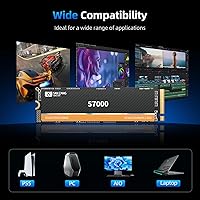
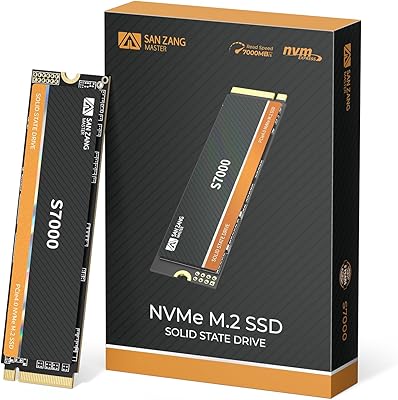
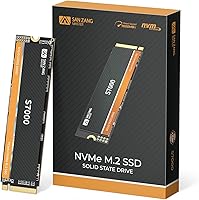
The SAN ZANG MASTER S7000 2TB NVMe SSD enters a crowded mid-range market where buyers are increasingly willing to look beyond household names for genuine value. SAN ZANG MASTER is not a brand most storage enthusiasts will recognize immediately, but that skepticism is worth setting aside long enough to examine what the drive actually offers. Built around the standard M.2 2280 form factor, it fits comfortably into the vast majority of modern desktops, laptops, and PS5 expansion slots. It also ships with a bundled heatsink, which bare-drive competitors at similar price points typically omit. Peak specs are impressive on paper, though real-world throughput will depend heavily on your platform and workload.
Features & Benefits

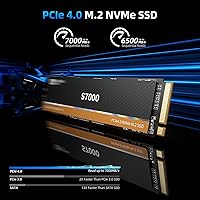
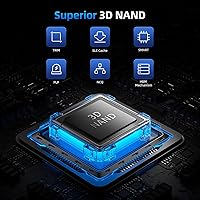
Running on a PCIe Gen 4x4 interface, this Gen 4 NVMe drive advertises sequential read speeds of up to 7000 MB/s and writes approaching 6500 MB/s — figures that place it firmly in the upper tier of consumer NVMe performance. The 3D NAND flash pairs with an SLC cache layer that helps maintain strong speeds during typical file transfers and application loads. It is worth noting that once the SLC cache fills under heavy sustained writes — think large video exports or bulk backups — throughput can drop noticeably. TRIM support and Native Command Queuing help preserve long-term drive health. The five-year warranty and stated lifetime technical support round out a solid overall value proposition for a drive in this price bracket.

Best For

The S7000 2TB is a practical pick for PC builders who want Gen 4 performance without paying a premium for established brand names like Samsung or WD. PS5 owners will appreciate the included heatsink — though it is worth confirming the heatsink profile clears your PS5 bay cover before purchasing, since fitment can vary by model. Content creators handling large video files or RAW photo libraries will benefit from the high peak speeds, keeping in mind the cache ceiling on very large sequential writes. Laptop users with a PCIe 4.0 slot stand to gain a meaningful speed improvement over any SATA drive they are replacing. Gamers chasing faster load times on a sensible budget will find this M.2 SSD a compelling option.

User Feedback

With around 124 ratings and a 4.4-star average at the time of writing, early buyer sentiment leans positive, though the sample size remains modest for a drive launched in mid-2024. Buyers frequently praise straightforward installation and the perceived speed difference compared to older SATA drives, with the heatsink quality earning consistent mentions as a welcome inclusion. On the other side, some users flag a gap between advertised peak figures and real-world benchmark results — a common reality with SLC-cached drives. The lack of monitoring software is noted occasionally by more hands-on buyers. A handful of reviewers raise questions about long-term reliability, which is a fair concern given the brand's limited track record. Early signals are encouraging, but more time in the field is needed before drawing firm conclusions.

Pros

  • Gen 4 PCIe interface delivers read speeds up to 7000 MB/s, rivaling pricier name-brand alternatives.
  • 2TB capacity offers plenty of room for games, media, and work files without frequent management.
  • Heatsink is included in the box, a practical addition that many similarly priced bare drives skip.
  • M.2 2280 form factor ensures broad compatibility across desktops, laptops, and PS5 expansion slots.
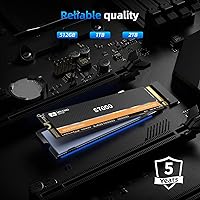
  • Five-year warranty provides meaningful long-term coverage for a mid-range storage purchase.
  • Stated lifetime technical support adds a layer of reassurance when buying from a lesser-known brand.
  • Early buyers consistently praise how straightforward the installation process is, even for first-timers.
  • TRIM support and Native Command Queuing help maintain drive health and responsiveness over time.
  • The S7000 2TB hits a competitive price point that makes Gen 4 performance accessible without overspending.
  • SLC caching helps sustain strong speeds across typical everyday read and write workloads.

Cons

  • Sustained write speeds can drop sharply once the SLC cache fills, which matters for large continuous transfers.
  • The brand has a short market history and a limited independent review base to validate long-term reliability.
  • No companion software is available for drive health monitoring or firmware management.
  • Real-world benchmark results frequently fall short of the advertised peak speed figures.
  • With only around 124 ratings at time of writing, there is not yet enough community data to draw firm reliability conclusions.
  • A handful of buyers have noted uncertainty around heatsink fitment with certain PS5 bay cover configurations.
  • Brand recognition is low, which can complicate resale value or warranty claim confidence for some buyers.
  • Buyers locked into PCIe 3.0 systems will see a fraction of the advertised performance, making the upgrade harder to justify.

Ratings

The scores below reflect an AI-driven analysis of verified buyer reviews for the SAN ZANG MASTER S7000 2TB NVMe SSD, sourced globally and filtered to exclude incentivized, bot-generated, and outlier feedback. Each category is scored independently to give you a transparent, realistic picture of where this drive earns its praise and where real users have run into friction. Both the highlights and the honest shortcomings are represented here.

Sequential Read Performance
83%
Buyers running PCIe Gen 4 systems consistently report a noticeable jump in file transfer speeds and application load times compared to their previous Gen 3 or SATA drives. For gaming and media consumption, where large sequential reads dominate, the drive holds up well against branded competitors at higher price points.
A portion of users benchmarking the drive found sequential read results landing closer to 6400 to 6700 MB/s rather than the advertised 7000 MB/s ceiling, which is a common variance tied to platform and thermal conditions. Those expecting to hit peak numbers consistently may find the gap frustrating.
Sustained Write Speed
61%
39%
For everyday workloads like installing games, saving project files, or moving moderate-sized folders, the SLC cache keeps write speeds feeling fast and responsive. Users doing typical home or office tasks rarely notice any slowdown during normal sessions.
Once the SLC write cache is saturated during large continuous transfers — think multi-gigabyte video exports or bulk library migrations — sustained write throughput drops substantially, a limitation several technically aware buyers called out explicitly. This is not a flaw unique to this drive, but it is a real constraint worth understanding before buying.
Value for Money
88%
The combination of Gen 4 interface speeds, 2TB capacity, an included heatsink, and a five-year warranty at this price tier is genuinely competitive. PC builders and PS5 upgraders in particular noted they struggled to find a comparable bundled package from established brands without spending meaningfully more.
A small segment of buyers felt the value proposition weakens if real-world speeds consistently fall short of advertised figures, since the headline specs are a major part of what justifies the price over cheaper Gen 3 alternatives. Brand unfamiliarity also means resale value is lower than equivalent-spec drives from Samsung or WD.
Installation Experience
91%
Installation feedback is among the most consistently positive aspects of this drive across all reviewer types. First-time builders and seasoned upgraders alike praised the straightforward physical install, and the included heatsink attached without issues for the vast majority of desktop users.
A handful of PS5 users noted that the heatsink's profile required extra care to fit cleanly under the console bay cover, and a few reported needing to remove it entirely. Laptop users with tight M.2 bays similarly found the heatsink incompatible with their chassis clearance.
Heatsink Quality
79%
21%
Including a heatsink in the box is a genuine differentiator at this price point, and most desktop users found it functional and solidly built for its size. During extended gaming sessions or large file operations, the heatsink visibly contributes to keeping temperatures in a manageable range.
The heatsink is practical for open desktop setups but creates real compatibility complications for compact builds, laptops, and some PS5 configurations. A few buyers also noted the mounting mechanism felt less refined than aftermarket heatsink options available separately.
Thermal Management
74%
26%
With the heatsink installed in a well-ventilated desktop case, thermal throttling during moderate workloads is largely a non-issue, and users doing gaming or creative work found the drive maintained consistent performance across typical session lengths.
In confined environments — small form factor cases, laptops running without the heatsink, or PS5 setups — thermal performance depends heavily on ambient conditions and chassis airflow. A small number of users reported throttling under sustained heavy workloads in warm environments.
Compatibility
82%
18%
The M.2 2280 form factor is one of the most universally supported sizes in modern computing, and buyers across a wide range of desktop and laptop platforms reported clean, error-free detection on first boot. PS5 compatibility is also broadly confirmed across user reports.
PCIe 3.0 system owners who installed the drive found performance significantly constrained, getting only a fraction of the drive's rated speed. A small number of users also reported needing BIOS updates on older motherboards for the drive to be recognized reliably at Gen 4 speeds.
Brand Reliability Confidence
58%
42%
The five-year warranty and stated lifetime technical support are meaningful commitments that helped skeptical buyers feel more comfortable taking a chance on an unfamiliar name. A number of early adopters reported positive experiences contacting support when they had setup questions.
Brand obscurity is the most commonly cited hesitation in negative or neutral reviews, and with only around 124 ratings as of mid-2024, there simply is not enough long-term data to assess failure rates with confidence. Buyers who prioritize proven multi-year reliability records from established manufacturers will find this a genuine sticking point.
Software & Ecosystem
41%
59%
For users who prefer a plug-and-play experience without any additional software to install or manage, the absence of companion utilities is actually a non-issue — the drive works immediately without any setup beyond physical installation.
Buyers who want built-in tools to monitor drive health, track temperatures, or manage firmware updates are left without any manufacturer solution and must rely on third-party utilities like CrystalDiskInfo. This is a notable gap compared to Samsung, WD, and Seagate drives that offer dedicated management software.
Random Read & Write (Daily Responsiveness)
76%
24%
For day-to-day computing tasks — launching applications, booting the operating system, opening large project files — the drive feels snappy and responsive, which is where random I/O performance matters most to ordinary users.
Detailed benchmark results from technically oriented buyers show random 4K performance metrics that, while adequate, do not fully match the premium implied by the sequential speed figures. Users coming from high-end Gen 4 drives with strong controllers may notice the difference in heavily multitasked environments.
Packaging & Presentation
72%
28%
Most buyers found the packaging adequate and the drive arrived well-protected, with the heatsink neatly included without taking up excessive space in the box. The overall unboxing experience felt appropriate for the price tier.
A few buyers noted the packaging and printed materials felt generic and gave limited confidence in the brand's quality control narrative. There are no bundled accessories beyond the heatsink, such as a mounting screw, which some users found was missing and had to source separately.
Long-Term Durability Outlook
63%
37%
The 3D NAND architecture and five-year warranty indicate a reasonable design lifespan for mainstream use, and early buyers who have had the drive for several months report no issues with stability or data integrity under normal workloads.
The drive's long-term track record simply does not exist yet in any meaningful volume, given its June 2024 market debut and limited review pool. Buyers storing irreplaceable data should treat this as an unverified quantity and maintain robust backups regardless of drive brand or warranty length.
Warranty & Support Terms
81%
19%
A five-year hardware warranty is on par with or better than several more established competitors in this storage category, and the addition of stated lifetime technical support is a commitment that gives budget-conscious buyers meaningful long-term reassurance.
The practical experience of making a warranty claim with SAN ZANG MASTER is not yet well-documented in the review community, leaving some uncertainty about how smoothly the process actually works in practice. Buyers in regions with limited local distributor support may face additional friction.

Suitable for:

The SAN ZANG MASTER S7000 2TB NVMe SSD is a strong fit for budget-conscious PC builders who want genuine Gen 4 performance without paying flagship-brand prices for everyday tasks. Gamers running modern titles will appreciate the fast load times that a high-throughput NVMe drive enables, and 2TB of capacity means there is room for a sizable game library without constantly juggling storage. PS5 owners looking to expand beyond the console's internal drive will find the included heatsink a practical bonus, though it is worth double-checking that the heatsink profile fits cleanly under the PS5 bay cover before committing. Content creators who regularly transfer moderately large files — video projects, photo libraries, design assets — will benefit from the strong peak read and write speeds during burst workloads. Laptop users with a PCIe 4.0 M.2 slot will also see a meaningful real-world improvement over any aging SATA drive they are replacing.
Not suitable for:

Buyers who depend on moving very large files continuously — think raw 4K video editing pipelines or large database backups that run for extended periods — should approach the SAN ZANG MASTER S7000 2TB NVMe SSD with measured expectations, since sustained write performance can drop once the SLC cache is saturated, a common limitation in this drive category. Professionals running mission-critical workloads where drive failure carries serious consequences may prefer a brand with a longer, independently verified reliability track record before trusting their data to a newer market entrant. Users who rely on manufacturer companion software for drive health monitoring and firmware updates will find the absence of any such utility frustrating. Those who prioritize buying from brands with large, established communities and extensive long-term user data will find the relatively small review pool and short market history a genuine concern. Finally, systems limited to PCIe 3.0 slots can still use this M.2 SSD, but will not come close to realizing the drive's headline speeds, making it a poor value proposition in that specific scenario.
Specifications

  • Capacity: The drive provides 2TB of raw storage, with actual usable capacity slightly lower depending on the operating system and formatting overhead.
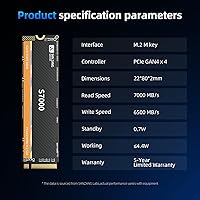
  • Interface: It connects via a PCIe Gen 4x4 interface, delivering up to four lanes of fourth-generation bandwidth for high-throughput data transfers.
  • Protocol: The drive uses the NVMe protocol, which is designed specifically for flash storage and significantly reduces latency compared to older AHCI-based drives.
  • Form Factor: Built in the M.2 2280 form factor, measuring 22mm wide and 80mm long, which fits the vast majority of modern motherboards and laptops.
  • Sequential Read: Rated sequential read speed reaches up to 7000 MB/s under optimal conditions using the PCIe Gen 4 interface.
  • Sequential Write: Rated sequential write speed reaches up to 6500 MB/s, though sustained performance will vary once the SLC write cache is saturated.
  • NAND Type: The drive uses 3D NAND flash memory paired with an SLC caching layer to balance speed and endurance across typical workloads.
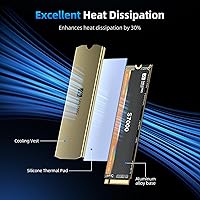
  • Heatsink: A heatsink is included in the package to help manage thermal output during extended read and write sessions.
  • Compatible Devices: Officially compatible with desktop PCs, laptops, and the PlayStation 5 expansion slot, provided the system supports M.2 NVMe drives.
  • Warranty: SAN ZANG MASTER covers this drive with a five-year limited warranty against manufacturing defects.
  • Tech Support: The manufacturer states that lifetime technical support is available, separate from the hardware warranty period.
  • Item Weight: The drive and heatsink together weigh approximately 2.47 ounces, making it lightweight enough for mobile systems as well as desktop builds.
  • Special Features: The drive supports TRIM for ongoing performance maintenance and Native Command Queuing to manage multiple read/write requests efficiently.
  • Color: The drive and included heatsink are finished in black, a neutral aesthetic that suits most build styles.
  • Availability Date: The S7000 series became available on Amazon in June 2024, making it a relatively recent entry in the consumer NVMe market.

Related Reviews

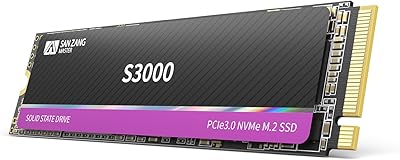
SAN ZANG MASTER S3000 2TB NVMe SSD
75%
88%
Value for Money
83%
Read Performance
67%
Write Performance
74%
Thermal Management
91%
Installation Ease
More
SAN ZANG MASTER S7000 1TB SSD
88%
93%
Performance
94%
Speed (Read/Write)
88%
Ease of Installation
72%
Thermal Management
90%
Durability & Reliability
More
SAN ZANG MASTER S500 2TB SATA SSD
75%
88%
Value for Money
81%
Read Speed Performance
92%
Installation Ease
89%
Compatibility
61%
Brand Reliability
More
SAN ZANG MASTER SQ20 1TB Portable SSD
77%
93%
Portability & Form Factor
81%
Magnetic Connection Design
67%
Transfer Speed Performance
88%
Storage Capacity (1TB)
71%
Build Quality & Durability
More
SanDisk 2TB SSD Plus M.2 NVMe SSD
86%
89%
Performance
92%
Ease of Installation
88%
Reliability
91%
Value for Money
90%
Capacity
More
RONGSHU RP7000 2TB NVMe SSD
78%
88%
Read/Write Performance
91%
Value for Money
93%
PS5 Compatibility
74%
Thermal Management
67%
Endurance & Longevity
More
ORICO X7000 2TB NVMe SSD
79%
88%
Read & Write Performance
84%
PS5 Compatibility
91%
Thermal Management
93%
Installation Ease
82%
Value for Money
More
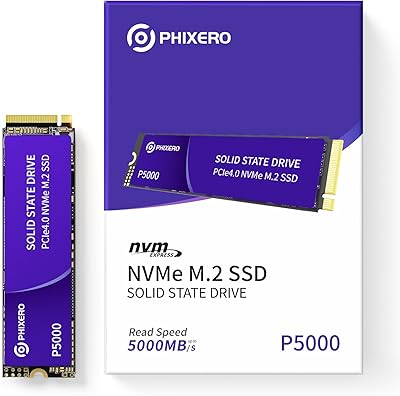
PHIXERO P5000 2TB NVMe SSD
88%
93%
Performance (Speed)
88%
Build Quality
90%
Heat Management
85%
Ease of Installation
92%
Compatibility
More
ORICO e7400 2TB M.2 NVMe SSD
81%
91%
Sequential Speed
78%
Random Read/Write
86%
Thermal Management
83%
PS5 Compatibility
88%
Value for Money
More
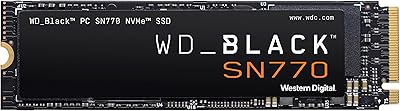
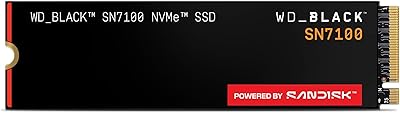
WD_BLACK SN7100 2TB NVMe SSD
85%
93%
Read & Write Performance
88%
Gaming Load Times
86%
Power Efficiency
84%
Thermal Management
91%
Value for Money
More

FAQ

Yes, the M.2 2280 form factor is compatible with the PS5 expansion slot. However, you should verify that the included heatsink's thickness does not conflict with your specific PS5 model's bay cover before installing, as clearance can be tight on some console revisions.

You can physically install it, since M.2 2280 is a universal form factor. That said, a PCIe 3.0 slot will cap the drive's speed well below its rated potential, so the performance advantage over other Gen 3 drives will be minimal. It will still function correctly, just not at its best.

In most slim laptops, yes. Many laptops have very little clearance above the M.2 slot, and the heatsink may not fit. The drive works perfectly fine without it in those cases, since laptops typically manage heat through their chassis design.

For typical tasks like installing games, copying files, or loading applications, you are unlikely to notice the cache limit at all. The SLC cache handles these bursts efficiently. Where it matters is during very large, continuous writes — such as copying hundreds of gigabytes in one session — where speeds can dip once the cache fills. Casual users will rarely encounter this.

The SAN ZANG MASTER S7000 2TB NVMe SSD is backed by a five-year warranty and stated lifetime technical support, which is a reasonable commitment from any manufacturer. The brand is a newer entrant without the decades-long track record of names like Samsung or Western Digital, so if brand heritage is your primary concern, that is worth factoring in. Early buyer feedback has been mostly positive, but the sample size is still small.
No, there is no companion software included or available for download. If you want to track drive health, temperature, or firmware status, you will need to use a third-party tool like CrystalDiskInfo on Windows, which works with most NVMe drives.

Advertised speeds of 7000 MB/s read and 6500 MB/s write reflect best-case sequential performance measured under controlled conditions. In everyday use, you should expect somewhat lower figures depending on your motherboard, CPU, and workload type. Random read and write speeds, which matter more for everyday responsiveness, will be lower than the sequential numbers suggest.

Most users report that the heatsink attaches straightforwardly, typically using thermal pads and a simple clip or screw mechanism. No special tools are required beyond what you would normally use for M.2 installation, usually just a small Phillips-head screwdriver.

It works well in both roles. As a boot drive, you will benefit from fast system startup and application launch times. As a secondary drive for game storage or media files, the large capacity and high read speeds make it a solid choice. There is no functional difference in how the drive performs based on which role it fills.

You would need to contact SAN ZANG MASTER directly to initiate a warranty claim. As with any storage device, it is strongly recommended to keep backups of important data regardless of warranty coverage, since warranties cover hardware replacement but not data recovery.