Overview

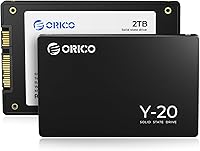
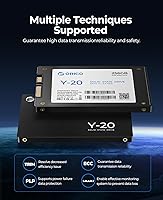
The ORICO Y20 2TB SATA SSD launched in late 2023 and quickly carved out a respectable position among budget-friendly internal drives, climbing to #77 in Amazon's Internal SSD category. Built around a standard 2.5-inch form factor and SATA III interface, it fits squarely into the upgrade market — think aging laptops, older desktops, or compact NAS builds where an NVMe slot simply isn't available. This is not a cutting-edge speed demon; SATA III has a hard ceiling, and this drive stays within those boundaries. What it does offer is a 3-year warranty and solid per-gigabyte value, which matter considerably when buying storage on a tighter budget.

Features & Benefits

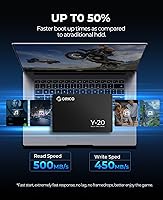
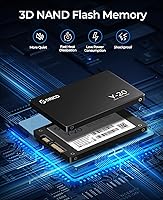
This internal solid state drive uses 3D NAND flash rather than older planar NAND, which translates to better cell density and improved write endurance over time. Peak sequential reads hit 500MB/s with writes close behind at 480MB/s — respectable figures for SATA class, though real-world sustained performance can dip depending on workload and host system. Because there are no spinning platters, it runs silently, draws minimal power, and handles an occasional bump without concern. OS coverage spans Windows XP through Windows 11, macOS, and Linux, and backward compatibility with SATA II ports means older systems are not left out of the equation.

Best For

This 2TB SATA drive makes the most sense as an upgrade path for anyone still running a spinning hard drive in an older laptop or desktop. The jump from HDD to SSD is dramatic — boot times drop sharply, apps open faster, and daily use feels far more responsive. Students and casual users get a capable daily driver without paying NVMe premiums. NAS builders seeking affordable bulk capacity will find it equally practical, as will anyone building a DIY external solution with a basic enclosure. It also fits well as a secondary storage drive, holding game libraries or media archives where raw write speed is not the priority.

User Feedback

With a 4.5-star average across over 1,600 ratings, buyer sentiment leans clearly positive. The most consistent praise centers on straightforward installation and the dramatic improvement over whatever hard drive it replaced — not surprising given the HDD-to-SSD gap. Value per gigabyte comes up repeatedly as a key reason buyers chose it. On the critical side, some users report initial confusion when the drive does not appear in File Explorer; it requires manual initialization before first use, which can catch less experienced upgraders off guard. A smaller group raises questions about long-term batch consistency, so reliability over multi-year use remains something worth tracking independently.

Pros

  • Two terabytes of SSD storage at a per-gigabyte cost that is difficult to beat in this form factor
  • Replacing a hard drive with this ORICO SSD produces a noticeable, immediate boost in system responsiveness
  • 3D NAND flash improves endurance and data retention compared to older NAND generations
  • Silent operation and zero moving parts reduce wear and noise compared to any mechanical drive
  • Broad OS compatibility covers everything from legacy Windows XP builds to modern macOS and Linux systems
  • Backward compatibility with SATA II ports means the drive works in a wide range of older hardware
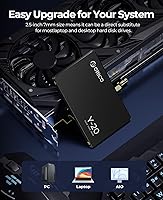
  • The 2.5-inch form factor fits laptops, desktops, and external enclosures without adapters
  • A 3-year warranty provides meaningful coverage assurance for a budget-tier storage purchase
  • Strong Amazon sales rank and over 1,600 ratings suggest consistent availability and broad buyer confidence
  • Shockproof construction makes this internal solid state drive suitable for portable enclosure use

Cons

  • SATA III throughput has a hard ceiling, so this drive cannot compete with NVMe options on raw speed
  • The drive must be manually initialized before first use, which is not communicated clearly enough out of the box
  • Long-term reliability data is limited given the relatively recent November 2023 launch date
  • Real-world sustained write speeds can fall below the advertised 480MB/s figure under heavier workloads
  • Batch-to-batch consistency questions have surfaced in user feedback, raising quality control concerns
  • ORICO is a newer name in storage compared to established brands, which may affect buyer confidence for critical use
  • No included cloning software or migration tool means additional setup steps for users replacing an existing drive
  • Sustained workloads like large file transfers may expose thermal throttling behavior not reflected in spec sheets

Ratings

The ORICO Y20 2TB SATA SSD scores below are produced by our AI rating system after analyzing verified global buyer reviews, with spam, incentivized, and bot-flagged submissions actively filtered out before any scoring is applied. This analysis reflects real-world usage patterns across a wide range of buyers — from students swapping out old laptop drives to NAS builders seeking affordable bulk capacity — and does not shy away from the trade-offs this internal solid state drive brings to the table.

Value for Money
91%
At 2TB capacity in the SATA class, this ORICO SSD consistently earns praise for its cost-per-gigabyte ratio, which holds up well against comparable drives at this tier. Buyers upgrading aging systems repeatedly highlight that the performance gain relative to what they spent feels like a strong, well-justified trade.
A handful of buyers note that slightly pricier alternatives from more established storage brands occasionally go on sale at comparable per-gigabyte rates, narrowing the value gap. Those who needed cloning software or an enclosure on top found the total upgrade cost higher than the drive price alone suggested.
Read & Write Speed
78%
22%
For everyday computing — booting Windows, launching applications, transferring large photo libraries — this 2TB SATA drive delivers a noticeably faster experience than any mechanical hard drive. Most users report that the drive performs close to its 500MB/s rated ceiling under light-to-moderate workloads.
Sustained write speeds under heavier loads, such as copying large batches of files or running extended disk-intensive tasks, tend to fall below the advertised 480MB/s figure. Buyers who compared benchmarks directly against NVMe drives were sometimes disappointed, though that comparison is arguably unfair given the interface difference.
Installation Ease
74%
26%
The physical installation process gets consistent praise — the drive slots directly into standard 2.5-inch bays with no surprises, and most users with any prior DIY experience had it seated and screwed in within minutes. The compact, lightweight build also makes it easy to handle during the swap.
The mandatory initialization step before first use trips up a meaningful number of buyers who expected the drive to appear in File Explorer immediately. Several reviews specifically mention frustration when the drive seemed invisible after installation, pointing to a gap in out-of-box guidance that ORICO has not fully addressed.
Build Quality
76%
24%
The casing feels solid for the price tier, and the absence of moving parts means there is nothing to rattle, seize, or wear mechanically over time. Buyers using it inside portable external enclosures report no issues with the physical construction under regular carry and handling conditions.
The drive does not have the premium, dense feel of higher-end branded SSDs, and some users noted the casing shows minor cosmetic scuffs out of the packaging. At this price point it is not a dealbreaker, but it does signal the budget positioning of the build materials.
Long-Term Reliability
63%
37%
3D NAND flash technology provides a measurable endurance advantage over older planar NAND designs, and the 3-year warranty gives buyers a reasonable safety net for the mid-term. Early adopters from the November 2023 launch have largely reported trouble-free operation through their first year of use.
The drive is still relatively young in market terms, which means multi-year endurance data simply does not exist yet at scale. A recurring theme in critical reviews involves uncertainty about batch-to-batch consistency, with a small but vocal group reporting early failures that raise questions about quality control uniformity across production runs.
Compatibility
88%
Support for Windows XP through Windows 11, macOS, and Linux covers an unusually wide range of operating environments, making this ORICO SSD a practical option for mixed-OS households or businesses maintaining legacy hardware. Backward compatibility with SATA II interfaces extends its reach even further into older machines.
The drive is not compatible with systems that lack a SATA bay entirely, which disqualifies modern ultrabooks and thin-and-light laptops that have moved exclusively to M.2 slots. A small number of macOS users also reported needing to reformat from exFAT before the drive worked correctly in their specific setups.
Thermal Performance
69%
31%
Under typical workloads — file storage, system drive duties, light media use — this internal solid state drive runs cool and draws minimal power, which is a genuine benefit in thermally tight laptop chassis. No buyers reported heat-related slowdowns during casual day-to-day usage.
Under sustained heavy write loads, some users who monitored drive temperatures with tools like CrystalDiskInfo observed temperatures creeping into ranges that can trigger throttling. This is less an indictment of the drive specifically and more a reminder that SATA SSDs in general are not designed with prolonged intensive write workloads in mind.
Packaging & Presentation
71%
29%
The drive arrives securely packaged with adequate protective foam to prevent transit damage, and most buyers report it arriving in perfect physical condition. The no-frills unboxing is consistent with the drive's budget positioning and does not attempt to oversell the experience.
No accessories are included — no mounting screws, no SATA cable, no cloning software, and no USB adapter — which means first-time upgraders may face unexpected additional purchases before they can complete the swap. For a drive targeting budget buyers, this lean approach to the package contents is a notable omission.
NAS Suitability
72%
28%
For home NAS builds where throughput demands are modest and the priority is maximizing storage capacity per dollar, this 2TB SATA drive slots in as a sensible and cost-effective option. Several NAS-focused buyers praised how the low power draw fits well inside always-on enclosures.
The drive lacks NAS-specific optimizations found in purpose-built NAS drives, such as vibration compensation or workload rate adjustments. Buyers running multi-bay NAS setups with heavy simultaneous read-write operations may find the drive underperforms relative to drives explicitly rated for that environment.
External Enclosure Use
83%
Pairing this ORICO SSD with a standard 2.5-inch USB enclosure creates a reliable and affordable portable backup solution that buyers have adopted enthusiastically. The shockproof construction adds useful durability for drives that move around in bags and backpacks regularly.
Transfer speeds in this configuration are capped by the USB interface of the enclosure, not the drive itself, so buyers expecting SSD speeds over USB 3.0 may still feel limited by the enclosure bottleneck. Choosing a high-quality enclosure is as important as the drive choice here.
OS Setup Experience
66%
34%
Once properly initialized, the drive integrates cleanly with all supported operating systems and is recognized without additional drivers or configuration. Linux users in particular appreciated the plug-and-configure simplicity after the initial setup step.
The initialization requirement is not clearly communicated, creating a friction point that leads some buyers to incorrectly assume the drive is defective and initiate returns. A simple setup guide in the package could resolve the majority of these support issues before they occur.
Warranty & Support
74%
26%
A 3-year warranty is a genuine differentiator at this price point and provides a reasonable coverage window for buyers concerned about long-term value protection. ORICO's technical support team receives generally positive marks for responsiveness in warranty claim situations.
Support response times can vary depending on region and volume, and some international buyers report slower resolution cycles than domestic purchasers. The warranty also does not cover data recovery, which is worth factoring in if the drive is being used for anything beyond secondary or backup storage.

Suitable for:

The ORICO Y20 2TB SATA SSD is purpose-built for buyers who need a meaningful performance upgrade without committing to premium storage pricing. It fits best in older laptops and desktops that still run spinning hard drives — systems where a SATA SSD swap delivers a dramatic, day-one improvement in boot times and application responsiveness. Students and casual home users will find the cost-per-gigabyte ratio hard to argue with at this capacity tier. NAS builders who want affordable bulk storage without needing NVMe throughput will also find this 2TB SATA drive a practical and well-sized option. DIY enthusiasts pairing a bare SATA drive with an external enclosure for portable backup duties get solid utility here as well.

Not suitable for:

The ORICO Y20 2TB SATA SSD is the wrong tool for anyone building or upgrading a modern system with an available M.2 slot and NVMe support — the performance gap is substantial, and spending differently there buys far more speed. Video editors, game developers, or any workload that hammers sustained write speeds will likely run into the real-world throughput limits that any SATA drive carries by design. Buyers with zero storage experience should also be aware that this internal solid state drive requires manual initialization on first use, and skipping that step leads to the drive appearing invisible to the operating system — a frustrating surprise if you are not expecting it. Long-term reliability data for this relatively young drive is still accumulating, so those who need proven multi-year endurance figures for mission-critical data may want to lean toward more established brands. Finally, anyone whose system lacks a SATA port entirely, or who is working in an ultrabook with no accessible drive bay, will find this 2TB SATA drive physically incompatible from the start.

Specifications

  • Capacity: The drive provides 2TB of usable storage, formatted capacity will be slightly lower due to standard binary conversion.
  • Form Factor: Built in the 2.5-inch form factor, compatible with standard laptop drive bays, desktop drive cages, and 2.5-inch external enclosures.
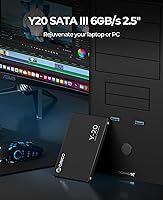
  • Interface: Uses a SATA III 6Gb/s interface and is backward compatible with SATA II ports at reduced speeds.
  • Read Speed: Maximum sequential read speed is rated at 500MB/s under controlled internal testing conditions.
  • Write Speed: Maximum sequential write speed is rated at 480MB/s, though sustained workloads may produce lower real-world figures.
  • NAND Type: Utilizes 3D NAND flash memory, which stacks cells vertically to improve density, endurance, and data retention versus planar NAND.
  • Installation: Designed for internal installation; compatible with desktops, laptops, gaming consoles, and NAS devices with a SATA bay.
  • OS Support: Supports Windows XP SP2 and above, Windows Vista SP1 and above, Windows 8 through 11 (32-bit and 64-bit), macOS, and Linux.
  • Warranty: Backed by a 3-year manufacturer warranty with ongoing technical support available from ORICO.
  • Dimensions: Physical dimensions measure 5.04 x 3.39 x 0.75 inches, consistent with the standard 2.5-inch drive specification.
  • Weight: The drive weighs 0.5 ounces, making it among the lightest storage upgrades available for portable systems.
  • Color: Available in black with a standard brushed casing typical of 2.5-inch internal SSD construction.
  • Power Draw: As a solid state drive with no moving parts, it consumes significantly less power than mechanical hard drives, benefiting laptop battery life.
  • Shock Resistance: The absence of mechanical components provides inherent shockproof and vibration-resistant characteristics suited for mobile or enclosure use.
  • Brand & Model: Manufactured by Shenzhen ORICO Technologies Co., Ltd., sold under the model designation Y20-2T.
  • Release Date: First became available on Amazon in November 2023, with a sales rank of #77 in Internal Solid State Drives as of early ratings data.

Related Reviews
ORICO M.2 2280 SATA SSD 2TB
86%
88%
Overall Performance
93%
Ease of Installation
90%
Value for Money
85%
Compatibility with Devices
82%
Data Transfer Speed
More
ORICO e7400 2TB M.2 NVMe SSD
81%
91%
Sequential Speed
78%
Random Read/Write
86%
Thermal Management
83%
PS5 Compatibility
88%
Value for Money
More
ORICO C10 2TB External SSD
88%
91%
Performance
89%
Build Quality
92%
Portability
90%
Compatibility
80%
Value for Money
More
ORICO X7000 2TB NVMe SSD
89%
93%
Performance
96%
Read Speed
90%
Write Speed
89%
Cooling Efficiency
91%
Compatibility with PS5
More
ORICO S500PRO 512GB 2.5″ SATA SSD
79%
91%
Value for Money
83%
Real-World Speed
88%
Build Quality
93%
Installation Experience
86%
PS4 Compatibility
More
ORICO S500PRO 4TB SATA SSD
86%
91%
Performance
88%
Build Quality
90%
Value for Money
89%
Installation Ease
75%
Reliability Under Load
More
ORICO J10 256GB M.2 NVMe Internal SSD
76%
83%
Read Speed Performance
61%
Write Speed & Cache Behavior
88%
Heatsink Quality
74%
Compatibility
79%
Value for Money
More
ORICO 2TB mSATA SSD ZH10
83%
92%
Value for Money
90%
Installation Process
88%
Speed Performance
75%
Compatibility with Older Devices
85%
Power Efficiency
More
fanxiang S101 2TB SATA SSD
88%
88%
Read/Write Speed
91%
Durability (3D NAND TLC)
93%
Installation Ease
89%
Value for Money
90%
Compatibility (OS Support)
More
ORICO S500PRO 1TB SATA SSD
87%
91%
Performance
94%
Read Speed
88%
Write Speed
89%
Ease of Installation
85%
Build Quality
More

FAQ

This is the most common issue new buyers run into. A brand-new SSD ships unformatted and uninitialized, which means Windows will not show it in File Explorer until you manually set it up. Open Disk Management, find the unallocated drive, initialize it, create a new volume, and format it. The whole process takes about two minutes once you know where to look.

Yes, this 2TB SATA drive is backward compatible with SATA II interfaces. You will not hit the full 500MB/s read speeds since SATA II tops out around 300MB/s, but the performance improvement over a mechanical hard drive will still be very noticeable.

Absolutely. SATA SSDs are more than capable for booting and running Windows 11 smoothly. Boot times typically fall in the 10 to 20 second range, which is a significant step up from any spinning hard drive. If you are coming from an HDD, the difference will feel dramatic.

Yes, but no cloning software is included in the package, so you will need a third-party tool. Macrium Reflect Free and Clonezilla are both reliable free options. You will also need a USB-to-SATA adapter or enclosure to connect both drives simultaneously during the cloning process.

It does. The drive is compatible with macOS and will work as an internal upgrade in older MacBook Pros or Mac Minis that use 2.5-inch SATA bays, as well as in external enclosures. Just note that you will need to format it as APFS or Mac OS Extended using Disk Utility before use.

For budget-focused NAS setups where you need bulk storage at a low cost per gigabyte, this internal solid state drive is a reasonable choice. It is not purpose-built for NAS workloads the way certain drives are, but for light home use, media storage, or personal backups, it handles the job well.

The gap is real and worth understanding before you buy. NVMe drives can hit 3,000 to 7,000MB/s on modern systems, while this SATA drive tops out around 500MB/s. For everyday tasks like browsing, documents, and even most gaming, you may not notice the difference day-to-day. For large file transfers or video editing, the speed gap becomes more apparent.

ORICO backs this 2TB SATA drive with a 3-year warranty and offers technical support for claims. You would need to contact ORICO directly to initiate a replacement or support request. As with any storage device, keeping a backup of important data is strongly recommended regardless of warranty coverage.

Yes, and it works quite well for that purpose. Pick up any 2.5-inch SATA USB enclosure, slide the drive in, and it functions as a portable external drive. Speeds will be limited by the enclosure's USB interface rather than the drive itself, but for portable backups and file transfers it is a practical setup.

For the majority of everyday users, 2TB is genuinely comfortable — it holds a large photo library, a substantial game collection, years of documents, and still leaves room to grow. If you are archiving raw video footage or building a large media server, you may eventually want more, but for typical home or student use 2TB is a solid starting point.

Where to Buy