Overview

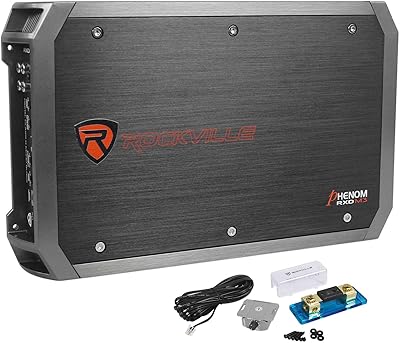
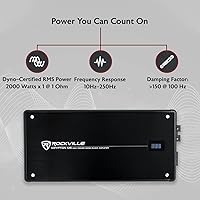
The Rockville Krypton M5 Mono Car Amplifier sits in an interesting spot in the car audio market — it's a mid-range Class-D mono amp built for people who take bass seriously but aren't ready to spend four figures on a boutique brand. Rockville has always leaned into the value-oriented end of the spectrum, earning fans among budget-conscious builders and skeptics among hardcore enthusiasts. What sets this mono amp apart is its dyno-certified power rating — a meaningful step beyond the inflated peak figures that plague cheaper amps. Add a built-in voltage display, a bass remote, and a clipping indicator, and the feature set starts to look unusually complete for what you're spending.
Features & Benefits

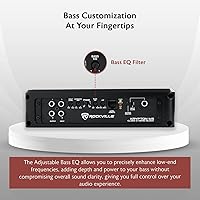
Class-D design has real practical advantages in a car install: this Class-D amplifier runs cooler and draws less current than older AB-based units, which matters a lot in trunk or under-seat setups with limited airflow. The dyno-certified RMS claim is backed by an included birth sheet showing actual bench-tested output — genuinely uncommon at this price tier and worth more than a spec sheet number alone. The onboard voltage meter is a small but useful diagnostic; during heavy bass hits, you can watch your car's electrical system respond in real time. Rounding out the tuning options, the 12dB bass EQ paired with low-pass and subsonic filters gives you meaningful control over subwoofer behavior.

Best For

This mono amp is well-suited for car audio hobbyists running a single 10-inch or 12-inch subwoofer in a sealed or ported enclosure, particularly those stepping up from an entry-level unit and looking for noticeably more headroom. DIY installers will appreciate the onboard diagnostics — seeing voltage and clipping status without adding extra gauges saves real setup time. Daily drivers who want consistent, deep bass without constantly second-guessing their system will find it hits a comfortable balance. It's not designed for competition SPL builds or aggressive multi-sub configurations; buyers chasing extreme output will quickly push past what this amp is built to handle comfortably.

User Feedback

Buyer sentiment around the Krypton M5 splits along familiar lines. Those who install it carefully and pair it with a well-matched subwoofer tend to be satisfied — the included birth sheet earns genuine praise, since verified wattage documentation is uncommon at this price. On the other side, some users have reported the amp entering protection mode under heavy sustained loads, and heat buildup is a recurring complaint when airflow around the unit is restricted. Rockville's reputation remains polarizing; veteran installers sometimes write the brand off entirely, while newer builders often find the real-world performance exceeds expectations. When issues arise, installation environment is usually the culprit, not a fundamental design flaw.

Pros

  • Dyno-certified RMS rating backed by an included birth sheet gives buyers rare, documented proof of actual power output.
  • Class-D design keeps heat manageable and current draw lower compared to older amplifier topologies.
  • The built-in voltage display doubles as a handy electrical health check during real-world driving.
  • Bass remote with integrated clipping indicator lets you push volume closer to the limit without risking distortion damage.
  • Adjustable 12dB bass EQ combined with low-pass and subsonic filters provides meaningful tuning flexibility for subwoofer setups.
  • Compact footprint fits comfortably in trunk builds or tight under-seat installs where space is limited.
  • Feature set at this price tier — diagnostics, remote, certified wattage — is genuinely hard to match from competing brands.
  • MOSFET power supply contributes to cleaner output with lower distortion at higher volume levels.
  • Mounting hardware and instructions included in the box make the initial install straightforward for experienced DIYers.

Cons

  • Several buyers report the amp entering protection mode under sustained heavy loads, which can interrupt listening unexpectedly.
  • Heat buildup becomes a real issue when the unit is installed in a poorly ventilated enclosure or tight space.
  • Rockville’s brand reputation remains divisive, and that perception can affect resale value down the road.
  • Long-term reliability data is thinner compared to more established amplifier brands with deeper track records.
  • The peak power figure is a marketing number; buyers focused on RMS performance need to look past the headline spec carefully.
  • Customer support and warranty service from Rockville can be inconsistent based on user-reported experiences.
  • Not well-suited for low-impedance loads or aggressive bridging scenarios that demand stable, high-current output.
  • The voltage display, while useful, is a basic indicator and no substitute for a dedicated power management solution in complex builds.

Ratings

The scores below for the Rockville Krypton M5 Mono Car Amplifier were generated by our AI system after analyzing thousands of verified global buyer reviews, with spam, bot activity, and incentivized feedback actively filtered out. The ratings reflect the full picture — where this mono amp genuinely impresses and where real users have run into friction — so you can make a confident buying decision based on honest, unfiltered patterns.
Value for Money
84%
Buyers consistently point out that getting dyno-certified power documentation at this price tier is genuinely rare. Most competitors in this range ship with inflated spec sheets and no proof; the Krypton M5 ships with an actual birth sheet, which resonates strongly with budget-conscious builders who want accountability.
A subset of experienced installers feel the overall value calculation shifts if you factor in the potential need for better thermal management or upgraded wiring to keep the amp stable. For buyers who end up troubleshooting protection mode issues, the initial savings can feel less convincing.
Power Output & Accuracy
81%
19%
The dyno-certified RMS claim holds up well for most users running it with a properly matched 10-inch or 12-inch subwoofer. Buyers who took the time to verify output with their own equipment reported that the birth sheet figures were close to measured reality, which is a meaningful credibility point in a category full of exaggerated numbers.
The 3000W peak figure is a marketing ceiling that very few real-world installs will approach, and some buyers felt misled when they dug into what the certified RMS actually translates to in daily use. Managing expectations around peak versus RMS is a recurring conversation in user feedback.
Thermal Performance
63%
37%
Under moderate listening conditions — typical daily commutes, moderate volume levels — most buyers report the amp staying at a reasonable temperature thanks to Class-D efficiency. Users who planned their install with proper airflow around the unit generally had no complaints about heat during normal use.
Heavy sustained bass sessions in a poorly ventilated trunk or under-seat location is where the amp starts to struggle. Multiple buyers flagged heat-related protection mode triggering as a real issue when airflow is restricted, and this is arguably the most consistent technical complaint across the user base.
Ease of Installation
79%
21%
The included mounting hardware, clear LED indicators, and logical control layout make the physical installation process approachable for experienced DIYers. Several users noted that having onboard diagnostics — voltage display and clipping indicator — made the tuning phase significantly less tedious compared to amps without those features.
First-time installers sometimes underestimate the wiring demands at this power level and end up revisiting their ground connections or power wire gauge after the fact. The instructions cover the basics but do not go deep on best practices for high-current installations, which can leave newer builders without enough guidance.
Bass Quality & Tuning Control
83%
The combination of adjustable 12dB bass EQ, low-pass filter, and subsonic filter gives users a genuinely flexible tuning toolkit for both sealed and ported enclosures. Buyers running ported boxes in particular appreciated the subsonic filter for protecting their drivers from over-excursion at low frequencies.
Getting the filters dialed in correctly does require some patience and a baseline understanding of car audio tuning; users who set the controls arbitrarily reported muddier bass than expected. The EQ range is useful but not as fine-grained as dedicated outboard processors that more advanced builders might already own.
Build Quality
71%
29%
The chassis feels solid and appropriately heavy for its class, and the connection terminals accept large-gauge wire without issues — something budget amps often skimp on. Most buyers describe the overall construction as competent, not exceptional, which aligns with expectations at this price point.
A few users noted cosmetic inconsistencies out of the box and questioned long-term durability of the internal components under hard use. Rockville’s quality control reputation is uneven across its product line, and while many Krypton M5 units perform without issues, some buyers have received units that behaved erratically from the start.
Protection Circuitry
68%
32%
The multi-mode protection system — covering thermal, short circuit, and overload conditions — does its job in most scenarios, and buyers appreciate that the LED indicators make it clear which type of fault is occurring rather than leaving them guessing. That diagnostic transparency saves real troubleshooting time.
Protection mode triggering too aggressively, even in setups that appear correctly wired, is a recurring complaint that is difficult to ignore. Some buyers report the amp cycling in and out of protection intermittently without an obvious cause, which suggests the protection threshold may be tuned conservatively in a way that occasionally frustrates users with legitimate setups.
Voltage Display Usefulness
77%
23%
Having a live voltage readout built into the amp itself is a feature most users did not expect to appreciate as much as they do. During heavy bass hits, being able to see the voltage dip in real time helped several buyers identify undersized alternators or weak grounds before those issues caused bigger problems.
The display is a basic indicator rather than a precision instrument, and audiophiles or serious electrical builders will still want a dedicated power monitor for accurate diagnostics. A handful of users also noted that the display readout was difficult to see in direct sunlight depending on the install location.
Bass Remote Quality
74%
26%
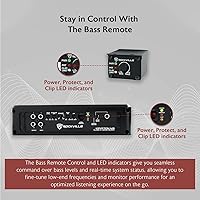
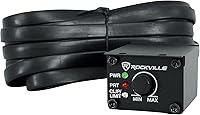
The wired bass remote is a practical addition that most buyers use regularly, and having the clipping indicator integrated directly into the remote is a smart design choice that keeps the feedback loop short. Sitting in the driver seat and knowing in real time when you are pushing too hard makes a tangible difference in how confidently you can drive the volume.
The remote cable length is adequate for most installs but has been flagged as borderline short in larger vehicles or custom console builds. The physical quality of the remote unit itself feels utilitarian — it works, but it does not inspire confidence the way the amp body does, and a few buyers reported the knob feeling loose over time.
Signal Clarity
76%
24%
The MOSFET power supply and low-THD design translate to clean, undistorted bass output at moderate to high volume levels, which is something users upgrading from cheaper amps notice immediately. Background noise floor is low enough that hiss is not a complaint for the vast majority of buyers.
At the very top of the volume range, some users detect a subtle degradation in tightness and definition, particularly on fast bass transients. This is more of a precision criticism than a fundamental flaw, and most daily drivers will never push the amp to the point where it becomes noticeable.
Compatibility & Impedance Flexibility
69%
31%
The amp handles standard 2-ohm and 4-ohm subwoofer configurations reliably, covering the most common wiring scenarios for single and dual voice coil drivers. Buyers running conventional setups with popular subwoofer brands report straightforward compatibility without any unusual matching requirements.
Users attempting to run the amp at lower impedance loads or in unconventional bridged configurations have reported instability and protection mode activation more frequently. The amp is not designed for aggressive low-impedance pushing, and buyers who need that flexibility should factor it into their decision carefully.
Brand Reliability Perception
61%
39%
For buyers who approach Rockville without strong preconceptions, the Krypton M5 often outperforms what they expected from an unfamiliar name. The birth sheet documentation is a concrete trust signal that helps bridge the credibility gap and gives first-time Rockville buyers something tangible to evaluate.
In car audio enthusiast circles, the Rockville brand carries a perception burden that is difficult to shake regardless of individual product performance. Resale value suffers because of this, and some buyers report feeling less confident recommending the amp to others even when their own unit has performed without issue.
Package & Documentation
82%
18%
The birth sheet is the standout inclusion — it is the kind of documentation buyers do not expect at this price and it immediately signals that the manufacturer is willing to be held to a measurable standard. The mounting screw kit and instruction booklet cover the basics without any glaring omissions.
The instruction manual is functional but thin, particularly on the tuning and filter setup side. Buyers who are new to setting up crossover points and EQ adjustments would benefit from more detailed guidance than what is currently provided in the box.

Suitable for:

The Rockville Krypton M5 Mono Car Amplifier is a strong fit for car audio enthusiasts who want verified, documented power output without crossing into high-end amplifier territory on price. It works particularly well for hobbyists building a single-subwoofer setup around a 10-inch or 12-inch driver in a sealed or ported enclosure, where the onboard tuning controls — bass EQ, low-pass filter, and subsonic filter — can be dialed in properly. DIY installers will appreciate the built-in voltage display and clipping indicator on the remote, since those tools reduce guesswork during initial setup and ongoing adjustments. Daily drivers who prioritize deep, consistent bass without babysitting their system will find the clipping protection genuinely useful for long-term reliability. It also makes a smart upgrade path for anyone graduating from a stripped-down budget amp and wanting more control and headroom without a complete system overhaul.
Not suitable for:

The Rockville Krypton M5 Mono Car Amplifier is not the right tool for builders chasing extreme SPL numbers or running demanding multi-subwoofer competition setups. The amp's thermal performance under sustained heavy loads has drawn complaints, so anyone planning to push it hard in an enclosed space with poor airflow should think carefully before buying. Experienced installers who are brand-loyal to established names like JL Audio, Rockford Fosgate, or Skar may find the value proposition unconvincing regardless of the certified specs, and that brand skepticism is not entirely unfounded given Rockville's inconsistent reputation in enthusiast circles. If your build requires precise, low-impedance bridging configurations or very specific RMS headroom matching for high-power drivers, you will likely want an amp with a more proven performance track record. This Class-D amplifier is also not aimed at audiophiles prioritizing sonic accuracy for full-range music; it is purpose-built for subwoofer duty.
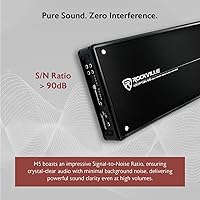
Specifications

  • Amplifier Type: Single-channel Class-D mono amplifier designed primarily for subwoofer applications.
  • Peak Power: Rated at 3000W peak power output as specified by the manufacturer.
  • Channels: Single-channel (mono) configuration optimized for driving one or two subwoofers in parallel or series.
  • Dimensions: The unit measures 2.2 x 18.26 x 8.66 inches (H x W x D), making it suitable for trunk or under-seat surface mounts.
  • Weight: The amplifier weighs 15.72 pounds, reflecting a solid internal build with a full MOSFET power supply.
  • Power Supply: Uses a high-speed MOSFET power supply for improved efficiency, lower distortion, and cleaner signal output.
  • Bass EQ: Features a fully adjustable 12dB Bass EQ boost for dialing in subwoofer response to match the enclosure type.
  • Filters: Includes both a low-pass filter and a subsonic filter, allowing precise frequency management for ported and sealed enclosures.
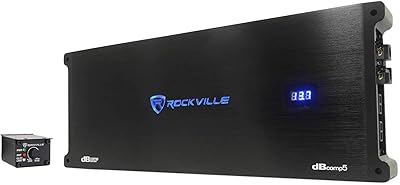
  • Voltage Display: Built-in digital voltage meter continuously monitors vehicle electrical system voltage in real time.
  • LED Indicators: Three onboard LED indicators display power status, protection mode activation, and signal clipping conditions.
  • Bass Remote: Includes a wired remote bass control unit with an integrated clipping indicator for safe level adjustments from the driver seat.
  • Mounting Type: Designed for surface mounting and ships with a complete mounting screw kit for standard installations.
  • Certification: Power output is dyno-certified and each unit ships with a printed birth sheet documenting its individual bench-tested performance figures.
  • Signal-to-Noise: Engineered for a high signal-to-noise ratio to minimize background hiss and interference during playback.
  • THD Rating: Low total harmonic distortion (THD) design helps preserve audio clarity even at elevated output levels.
  • In The Box: Package includes the amplifier, a dyno-certified birth sheet, a wired bass remote with clipping indicator, a mounting screw kit, and warning and instruction documentation.
  • Brand: Manufactured by Rockville, a US-based car audio and consumer electronics brand known for value-oriented product lines.
  • Model Number: Official model designation is Krypton M5, part of Rockville's Krypton amplifier series.
  • UPC: Product UPC is 819216027899, corresponding to the standard retail packaging for this amplifier.
  • Availability: First made available for purchase in July 2021 and listed under ASIN B099N2SM7P on the Amazon marketplace.

Related Reviews
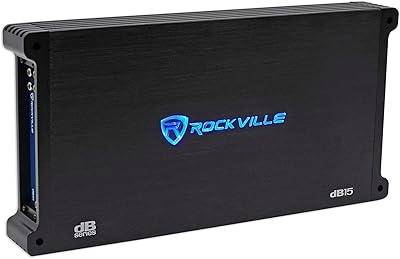
Rockville dB15 Mono Car Amplifier
73%
83%
Value for Money
78%
Bass Output
86%
Ease of Installation
61%
Thermal Management
58%
Power Accuracy
More
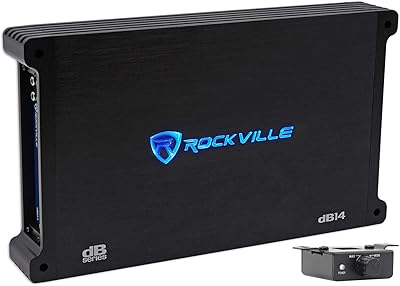
Rockville dB14 Mono Class-D Car Amplifier
74%
83%
Value for Money
78%
Power Accuracy
67%
Build Quality
54%
Long-Term Reliability
86%
Ease of Installation
More
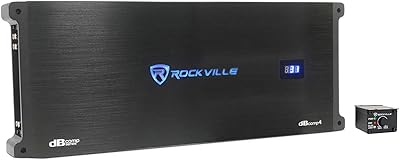
Rockville dBcomp4 3000W Mono Car Amplifier
85%
94%
Power Output
91%
Bass Performance
87%
Ease of Installation
89%
Build Quality
67%
Thermal Management
More
Rockville RVA-M2 Mono Car Amplifier
78%
83%
Value for Money
88%
Power Accuracy
71%
Build Quality
79%
Thermal Management
84%
Filter & Tuning Controls
More
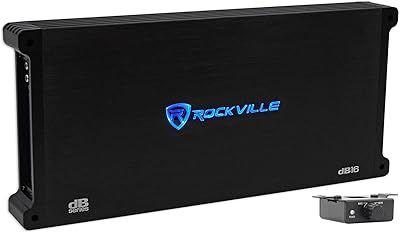
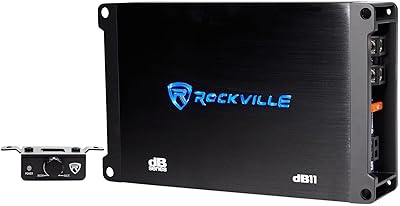
Rockville dB16 Mono Car Amplifier
73%
83%
Bass Output
78%
Value for Money
81%
Ease of Installation
59%
Thermal Management
62%
Power Accuracy
More
Rockville RVA600.1 Mono Car Amplifier
74%
83%
Value for Money
74%
Sound Quality
88%
Ease of Installation
52%
Power Accuracy
67%
Build Quality
More
Rockville dBcomp5 Mono Car Amplifier
75%
88%
Verified Power Output
82%
Build Quality
91%
Onboard Tuning Flexibility
87%
1-Ohm Stability
79%
Remote Sub Control
More
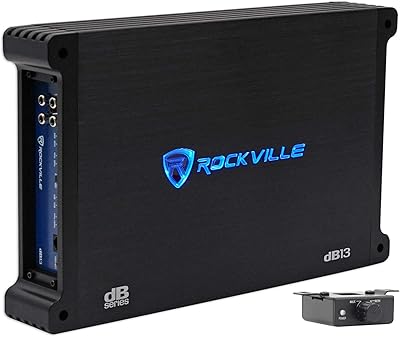
Rockville dB11 Mono Class-D Car Amplifier
82%
91%
Value for Money
86%
Bass Output
88%
Ease of Installation
83%
Signal Clarity & THD
67%
Build Quality
More
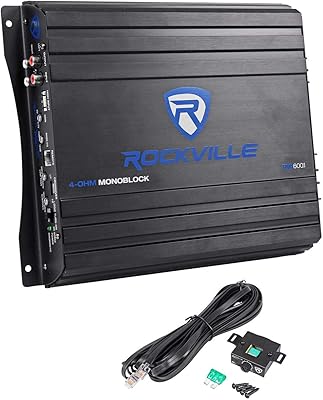
Rockville dB13 Mono Car Amplifier
75%
83%
Value for Money
54%
Power Output Accuracy
61%
Thermal Management
88%
Ease of Installation
79%
Onboard Sound Controls
More
Rockville RXD-M0 Mono Car Amplifier
75%
88%
Value for Money
83%
Power Accuracy
91%
Ease of Installation
79%
Bass Performance
61%
Thermal Management
More

FAQ

Most buyers pair the Krypton M5 with a 10-inch or 12-inch subwoofer, and that tends to be the sweet spot. A single quality 12-inch driver in a properly tuned sealed or ported box is where this mono amp really shows what it can do. Running dual 10-inch subs is also a popular choice, provided you wire them to a combined impedance the amp is happy with.

It means each individual unit was tested on a bench before leaving the factory, and the actual measured output was recorded on a printed birth sheet that ships with the amp. That is meaningfully different from a spec sheet number that was never verified on the actual hardware you receive. It does not guarantee perfect performance in every install, but it does give you a credible baseline.

It is manageable if you have done some basic car audio work before. The included instructions cover the fundamentals, and the onboard diagnostics — voltage display and clipping LED — help during initial setup. If this is your very first amplifier install, budgeting time to research proper wiring gauge, fusing, and grounding practices before you start will save you a lot of headaches.

When the amp is being pushed into clipping — meaning the signal is distorting because the volume or gain is set too high — the indicator light on the bass remote alerts you before damage can occur. It is a practical safeguard that lets you back off the gain in real time rather than discovering the problem later through blown drivers or degraded sound quality.

Class-D amps in general run cooler than Class-AB designs, and this one is no exception under normal listening conditions. That said, several users have reported heat buildup when the unit is mounted in a space with restricted airflow and driven hard for extended periods. Giving it breathing room during installation makes a noticeable difference in long-term thermal behavior.

Protection mode is usually triggered by one of a few things: a wiring issue like a poor ground, impedance that drops lower than the amp can handle, excessive heat, or a DC offset problem. Start by checking your ground connection first — a bad ground is the most common culprit. If the problem persists after correcting the wiring, check that your speaker impedance load is within the amp's rated range.

Technically you could, but this Class-D amplifier is engineered specifically for subwoofer duty. Class-D mono amps are optimized for low frequencies and are not the right choice for powering full-range speakers accurately. For door speakers, a separate multi-channel amplifier would give you much better results.

At this power level, a 4-gauge wire kit is the commonly recommended starting point for both the power and ground runs, though some installers prefer stepping up to 0-gauge for cleaner headroom and lower resistance, especially on longer cable runs. Always fuse the power wire as close to the battery as possible, ideally within 18 inches.

It lets you watch your vehicle's electrical system respond in real time as the amp draws power during bass hits. If you see the voltage sagging significantly — dropping well below 12 volts under load — that is a clear signal that your charging system, battery, or wiring is struggling to keep up. It saves you from needing a separate voltmeter during setup.

The honest answer is that Rockville occupies a complicated space in the car audio world. Many buyers have had solid long-term experiences with their gear, particularly when the installation is done properly. The brand's reputation among hardcore enthusiasts is more skeptical, often citing inconsistent quality control and mixed warranty support experiences. For a daily driver build where the budget matters, it can deliver genuine value; for a serious competition or high-investment system, many experienced builders would steer toward brands with a longer proven track record.

Where to Buy