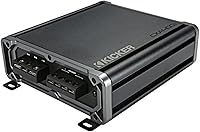
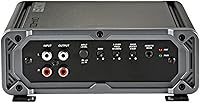
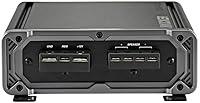
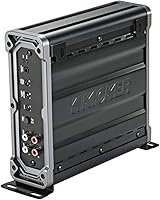
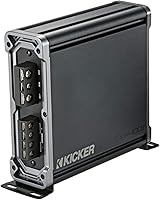
Overview

The Kicker CXA400.1 Mono Car Amplifier occupies a practical sweet spot in the mid-range mono amp category — enough power for a real bass build without the premium price tag of flagship options. It runs on Class D topology, which means it stays cooler and draws less current than older designs, a real advantage if you're tucking it under a seat or into a cramped trunk. Rated at 150W RMS into 4 ohms and 300W RMS into 2 ohms, the numbers are modest but honest for the tier. The chassis measures 13 x 10 x 8 inches and weighs under 5 pounds — compact enough to fit most install scenarios without major compromise.

Features & Benefits

What separates the CXA400.1 from cheaper alternatives is its onboard subsonic filter, fixed at 25Hz with a steep 24dB/octave rolloff. That's not a marketing checkbox — it actively prevents your woofer cone from overextending on frequencies it can't reproduce, which matters during loud, sustained bass. The signal-to-noise ratio exceeds 95dB, so background hiss stays out of the picture even when pushing the gain hard. Input sensitivity spans 125mV to 5V on the low-level side and up to 40V high-level, meaning it works with a factory radio as easily as an aftermarket deck. A variable low-pass crossover and an onboard bass boost round out the controls without overcomplicating installation.

Best For

This Kicker amplifier is a natural fit for anyone building a single-subwoofer system or upgrading weak head unit output without rewiring the entire car. If you're running a dual-voice-coil sub, wiring it to a 2-ohm load squeezes more output from the amp — worth knowing before you buy. Space-constrained installs benefit most: the compact body fits under most passenger seats or in smaller trunk enclosures without much fuss. Pair it with a mid-size ported box in a sedan or a sealed enclosure in an SUV and you'll get a solid, predictable result. Use at least 8-gauge power wire and set gain carefully — ideally with a multimeter, not by ear — to protect both the amp and your woofer.

User Feedback

With 53 ratings and a 4.3-star average, feedback on this mono amp is encouraging but limited — that sample size isn't large enough to call it definitive. Buyers consistently praise clean, controlled bass and a straightforward install process, particularly those connecting it to a factory stereo. Compatibility with OEM head units gets specific positive mentions, which lines up with the amp's wide sensitivity range. On the critical side, a handful of reviewers question whether the wattage figures fully hold up under real-world conditions — a fair concern at this price tier. A few users also flag that terminal build quality feels adequate rather than impressive, worth considering if you're building a long-term system.

Pros

  • Class D design runs efficiently and stays cool even in confined install spaces.
  • Works directly with factory head units via high-level inputs, skipping the need for extra adapters in many installs.
  • The built-in subsonic filter actively protects your woofer from over-excursion on deep, damaging frequencies.
  • Signal-to-noise ratio above 95dB keeps the audio clean and free of background hiss at high gain settings.
  • Onboard bass boost and variable low-pass crossover cover basic tuning needs without extra hardware.
  • Compact chassis at 13 x 10 x 8 inches fits under seats or in tight trunk builds without major compromise.
  • Straightforward installation process gets consistently positive feedback, even from first-time builders.
  • Honest mid-range power output makes it a practical choice for a single-sub daily driver setup.

Cons

  • Rated wattage figures are modest, and real-world output may fall short of expectations for high-demand subwoofers.
  • Only a 1-year manufacturer warranty, which is shorter than some competing amps in the same price range.
  • Terminal and connector build quality feels functional but not robust enough for high-vibration or long-term installs.
  • The review pool is relatively small at 53 ratings, making it harder to assess long-term reliability with confidence.
  • No remote bass knob included in the box — a common convenience feature that competitors sometimes bundle at this tier.
  • Limited to a single-channel mono output, ruling it out entirely for anyone needing stereo or multi-zone amplification.
  • Onboard processing controls lack the precision that buyers pairing this amp with a demanding or exotic driver may need.

Ratings

Our AI-generated scores for the Kicker CXA400.1 Mono Car Amplifier were produced by analyzing verified buyer reviews from multiple global sources, with spam, incentivized, and bot-flagged submissions actively filtered out before scoring. Each category reflects the honest distribution of real user sentiment — strengths and frustrations weighted equally — so you get a transparent picture of where this amp genuinely delivers and where it falls short.

Sound Clarity
86%
Buyers consistently describe the bass output as clean and tight rather than muddy, which matters most during daily highway drives where low-frequency detail can easily get lost in road noise. The signal-to-noise performance holds up well even when the gain is pushed toward the upper end of its range.
A small but vocal segment of users note that the CXA400.1 can sound slightly compressed at sustained high volumes, particularly when paired with a larger ported enclosure expecting more headroom. Those coming from higher-wattage amplifiers may find the overall dynamic range less satisfying.
Power Output Accuracy
71%
29%
For a mid-range mono amp, most users report that the rated figures feel realistic at 2 ohms — enough to make a noticeable, satisfying difference over a factory head unit powering a subwoofer passively. Daily drivers running a single 10-inch or 12-inch sub find the output more than adequate.
This is the most debated category in user reviews. A recurring concern is that the 4-ohm power figure feels conservative in practice, and some users question whether the peak ratings used in marketing reflect sustained RMS output under real conditions. Buyers expecting competition-level output will be disappointed.
Installation Ease
91%
First-time installers repeatedly highlight how straightforward the wiring layout is, with clearly labeled terminals and enough input flexibility to accommodate both OEM and aftermarket source units without extra hardware in most cases. The high-level inputs remove a common barrier for beginners working with factory radios.
The included documentation is basic, and users who aren't already familiar with concepts like gain structure or impedance matching may need to supplement with online resources. A few reviewers mention that the terminal screws feel slightly undersized for heavier gauge wire.
Build Quality
67%
33%
The chassis feels solid enough for typical daily installs, and the heatsink design does a reasonable job dissipating heat during normal use. Most buyers who installed it cleanly and set gain correctly report no mechanical issues over months of regular listening.
At this price tier, the terminal block and connector housing quality draws the most criticism — several users describe the binding posts as feeling plasticky rather than solid. For a high-vibration environment like a truck or off-road vehicle, the overall hardware robustness feels like a potential weak point over time.
Thermal Performance
78%
22%
Class D efficiency means this Kicker amplifier runs noticeably cooler than comparable Class A/B units, and most users in sedan or SUV trunk installs report warm but manageable temperatures even after extended listening sessions on long drives.
In poorly ventilated enclosures or under-seat installs with minimal airflow, thermal throttling has been reported after sustained high-volume use. Users who mount it flush against a carpeted surface without a gap describe occasional protection circuit activations during summer months.
Subsonic Filter
88%
Buyers with ported enclosures specifically call out the subsonic filter as a practical safety net that noticeably tightens up low-end performance by cutting the inaudible rumble that otherwise wastes power and stresses the woofer cone. It works as intended with no audible artifacts in the useful bass range.
The filter frequency is fixed at 25Hz with no adjustment, which limits flexibility for unusual enclosure tunings or for those who want to experiment with very low filter points. More advanced users would prefer a variable subsonic control, which some competing amps at this price point do offer.
Crossover Flexibility
74%
26%
The variable low-pass crossover gives enough range to tune the amp appropriately for both sealed and ported enclosures without requiring an outboard processor. For a standard single-sub system, it handles the basics well and integrates cleanly with most head units.
The crossover control lacks the precision markings that experienced installers prefer when trying to dial in an exact rolloff point by ear. Users accustomed to parametric or fully adjustable crossover networks will find the onboard controls a bit rudimentary for critical tuning work.
OEM Compatibility
89%
The wide high-level input range is a genuine strength here — buyers keeping their factory radio report that the direct speaker-wire connection works reliably across a broad range of OEM systems, including some DSP-equipped factory setups. This significantly lowers the cost and complexity of the overall install.
A subset of users with more sophisticated OEM audio systems — particularly those with factory-amplified outputs from brands like Bose or Harman — report inconsistent signal levels that required additional signal processing. It is not a universal plug-and-play solution for every factory system on the market.
Value for Money
82%
18%
For buyers building a first proper subwoofer system, this mono amp offers a solid feature set at a price that leaves enough budget for a quality driver and enclosure. The inclusion of a subsonic filter and variable crossover at this tier is genuinely good value compared to stripped-down competitors.
When benchmarked purely on watts-per-dollar against newer Class D options from brands like Skar or Rockford Fosgate in the same price bracket, the CXA400.1 looks slightly less competitive on raw output. The value proposition depends heavily on trusting the Kicker brand name and build pedigree.
Compact Form Factor
84%
At just under 5 pounds and with a footprint manageable enough for most trunk or under-seat scenarios, users appreciate not having to sacrifice significant cargo space or perform complex fabrication work to fit this amp into a daily driver.
The 8-inch height dimension does rule out some of the tightest under-seat locations, particularly in compact cars or vehicles with low seat-rail clearance. A handful of users had to get creative with mounting angles or relocated the amp to the trunk as a result.
Bass Boost Control
69%
31%
For casual users who want a quick way to add a bit of extra punch without investing in a separate bass processor, the onboard boost control is a convenient option that works well for everyday listening adjustments.
The boost is fixed to the amplifier chassis with no remote knob included, making it impractical to adjust while driving. More experienced installers tend to bypass it entirely in favor of head unit EQ adjustments, viewing the onboard boost as a feature best left untouched after initial setup.
Warranty & Support
72%
28%
Kicker has a generally well-regarded reputation for honoring legitimate warranty claims without excessive bureaucracy, and users who experienced genuine product defects within the coverage window report resolution experiences that were notably better than many budget-tier competitors.
One year of coverage is shorter than the two-year warranties increasingly common among competing mid-range amp brands, and the warranty explicitly excludes installation-related damage — a clause that catches some buyers off guard when claims are denied for wiring issues outside the unit itself.
Long-Term Reliability
73%
27%
The majority of buyers who install the CXA400.1 correctly, maintain reasonable gain settings, and provide adequate ventilation report consistent operation over one to two years of regular daily use without protection circuit issues or component failures.
The review pool of 53 ratings is too small to draw strong long-term reliability conclusions with high confidence. A few accounts of units failing after the warranty period — particularly in hotter climates or in vehicles without climate-controlled storage — introduce enough uncertainty to temper optimism.

Suitable for:

The Kicker CXA400.1 Mono Car Amplifier is a strong match for DIY car audio builders who want a genuine upgrade over a factory head unit without committing to a high-cost, multi-component system. If you're running a single subwoofer — whether in a ported box in a sedan trunk or a sealed enclosure under an SUV rear seat — this amp delivers enough clean, controlled power to make a real difference. It's particularly well-suited for anyone still using an OEM stereo, thanks to its high-level input support that accepts speaker-level signal directly without a line output converter in most cases. Budget-conscious builders who prioritize efficient use of install space will appreciate the compact chassis, and the onboard subsonic filter and crossover mean you don't need extra signal processors to get a well-tuned result. It rewards buyers who take the time to set the gain properly and match it to a sensible subwoofer load.

Not suitable for:

The Kicker CXA400.1 Mono Car Amplifier is not the right tool for anyone chasing serious output from multiple subwoofers or planning a high-power competition-style build. At 300W RMS into 2 ohms, the real-world headroom is honest but limited — buyers expecting to push a large, power-hungry woofer to its thermal limits will likely find this amp holding things back before the speaker does. It also won't satisfy audiophiles who want fine-grained signal control, since the onboard processing is functional rather than elaborate. The build quality of the terminals and housing feels adequate for the price tier but may not inspire confidence in a long-term, high-vibration install environment. If you're already running an aftermarket head unit with a dedicated bass processor, the onboard boost and crossover may feel redundant rather than useful.

Specifications

  • Amplifier Type: Single-channel Class D mono amplifier designed specifically for subwoofer duty.
  • Power at 4 Ohm: Rated at 150W RMS into a 4-ohm load under standard conditions.
  • Power at 2 Ohm: Rated at 300W RMS into a 2-ohm load, making it compatible with most dual-voice-coil subwoofer wiring configurations.
  • Signal-to-Noise: Signal-to-noise ratio exceeds 95dB (A-weighted, referenced to rated power), keeping background hiss inaudible at normal listening levels.
  • Subsonic Filter: Fixed subsonic filter at 25Hz with a steep 24dB/octave rolloff slope to protect woofers from damaging infrasonic frequencies.
  • Low-Level Input: Low-level (RCA) input sensitivity ranges from 125mV to 5V, covering signals from virtually any aftermarket head unit.
  • High-Level Input: High-level speaker input sensitivity spans 1V to 40V, enabling direct connection to factory OEM head unit speaker outputs.
  • Crossover: Variable low-pass crossover is included onboard, allowing the installer to dial in the frequency cutoff point to suit the subwoofer and enclosure combination.
  • Bass Boost: Onboard bass boost control lets you add low-frequency emphasis at the amplifier without requiring a separate signal processor.
  • Dimensions: The chassis measures 13 x 10 x 8 inches, providing a manageable footprint for under-seat or trunk installs.
  • Weight: The unit weighs 4.69 pounds, light enough to mount cleanly in most standard install locations.
  • Warranty: Covered by a 1-year limited manufacturer warranty from Kicker against defects in materials and workmanship.
  • Model Number: The official model designation is 46CXA4001T, used for warranty registration and parts identification.
  • Topology: Class D switching topology delivers higher energy efficiency and lower heat output compared to Class A/B designs at equivalent power levels.
  • Channel Count: Single mono output channel; this amplifier is not intended for full-range stereo or multi-channel use.

Related Reviews
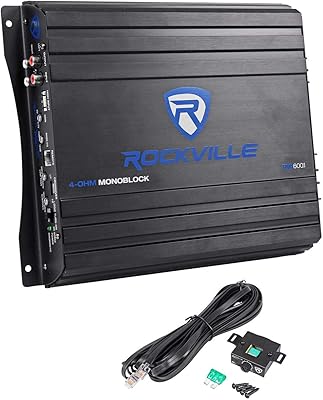
Rockville RVA600.1 Mono Car Amplifier
74%
83%
Value for Money
74%
Sound Quality
88%
Ease of Installation
52%
Power Accuracy
67%
Build Quality
More
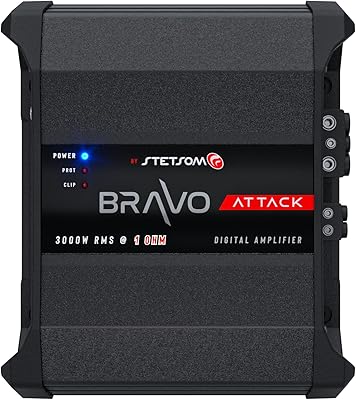
Stetsom Bravo Attack 3000.1 Mono Car Amplifier
86%
92%
Power Output
84%
Thermal Performance
88%
Ease of Installation
85%
Sound Quality
90%
Bass Control
More
Stinger MT-1500.1 Monoblock Car Amplifier
74%
83%
Bass Output Performance
57%
Rated vs Real-World Power
74%
Build Quality
62%
Heat Management
88%
Ease of Installation
More
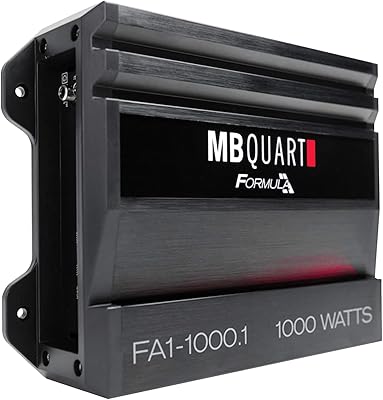
MB Quart FA1-1000.1 Mono Car Amplifier
78%
88%
Installation Ease
81%
Bass Output Quality
62%
Power Accuracy
67%
Thermal Performance
84%
Crossover Flexibility
More
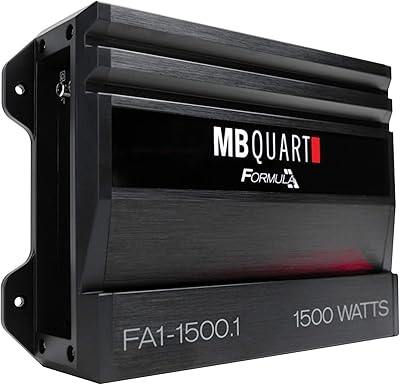
MB Quart FA1-1500.1 Mono Channel Car Audio Amplifier
84%
91%
Sound Quality
88%
Power Delivery
87%
Durability & Build Quality
85%
Ease of Setup & Installation
65%
Thermals (Heat Management)
More
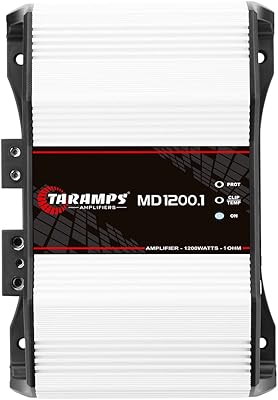
Taramp's MD 1200.1 1-Channel 1200W RMS Car Audio Amplifier
86%
93%
Power Output
89%
Sound Quality
91%
Installation Ease
85%
Build Quality
65%
Thermal Performance
More
Kicker CXA1800.1 Amplifier
85%
92%
Power Output
88%
Sound Quality
89%
Energy Efficiency
91%
Value for Money
84%
Ease of Installation
More
Rockville dB14 Mono Class-D Car Amplifier
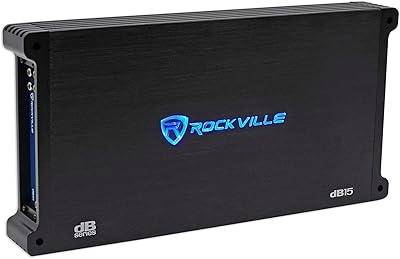
74%
83%
Value for Money
78%
Power Accuracy
67%
Build Quality
54%
Long-Term Reliability
86%
Ease of Installation
More
Rockville dB15 Mono Car Amplifier
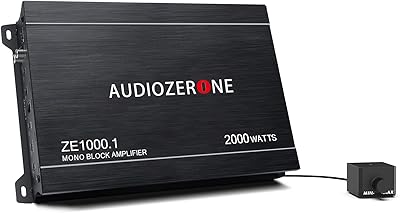
73%
83%
Value for Money
78%
Bass Output
86%
Ease of Installation
61%
Thermal Management
58%
Power Accuracy
More
Audiozerone ZE1000.1 Monoblock Car Amplifier
75%
91%
Value for Money
88%
Bass Output
74%
Thermal Management
83%
1-Ohm Stability
63%
Build Quality
More

FAQ

In most cases, yes. The CXA400.1 accepts high-level speaker inputs up to 40V, which covers the output range of the vast majority of OEM head units. You simply tap into the existing speaker wires running to a rear speaker and feed them into the high-level inputs. Some factory systems with complex DSP or amplified outputs may still benefit from a quality LOC, but for a standard factory radio this direct connection usually works well.

For this power range, 8-gauge OFC (oxygen-free copper) power and ground wire is the standard recommendation and will handle the current draw without voltage drop issues. If you're running a longer cable path — say, more than 15 feet from the battery — stepping up to 4-gauge gives you extra headroom. Always fuse the power wire within 18 inches of the battery using an inline fuse rated appropriately for your wire gauge.

Kicker doesn't publish an official 1-ohm power rating for this specific model, which is worth noting. While some Class D amps in this lineup have 1-ohm stability, running this unit at 1 ohm without confirmed manufacturer specs risks thermal protection triggering or long-term stress on the output stage. Stick to a 2-ohm or 4-ohm load for reliable, worry-free operation.

Start with the gain turned fully down, then play a bass-heavy track at about 75% of your head unit's maximum volume. Slowly turn the gain up until you hear the bass start to distort or sound strained, then back it off slightly. This method won't be as precise as using a multimeter to measure output voltage against a target, but it avoids the most common mistake of over-driving the amp and clipping the signal.

The subsonic filter cuts frequencies below 25Hz at a sharp 24dB-per-octave slope. Those ultra-low frequencies are mostly inaudible but can cause your woofer cone to over-extend, generating heat and mechanical stress without producing any useful bass. Leaving the filter active is generally the right call for almost any ported or sealed subwoofer enclosure — it protects the driver with no audible downside.

At 13 x 10 x 8 inches, it fits under many rear bench seats in sedans and under the rear seats of most full-size SUVs and trucks. Front seat clearance is tighter and depends heavily on the vehicle. Before mounting, measure the available height clearance carefully and remember to leave an inch or two of airflow room around the chassis — Class D runs cool, but sealed enclosures can still build heat over time.

You can run two subs if you wire them in a configuration that presents a 2-ohm or 4-ohm combined load to the amplifier. For example, two 4-ohm subs wired in parallel give you a 2-ohm load, which this amp is rated to handle. What you can't do is expect the same per-driver performance you'd get from a higher-wattage amp — at 300W into 2 ohms, you're splitting roughly 150W between two speakers, which may feel underwhelming for larger woofers.

No, a remote bass knob is not included in the box. The onboard bass boost control is fixed to the amp chassis itself, so you'd need to reach into your install location to adjust it. If convenient bass level control from the driver's seat matters to you, check whether Kicker sells a compatible remote knob accessory separately before committing to this model.

Class D designs like this one run noticeably cooler than older Class A/B amps at similar power levels. Under typical daily listening conditions — moderate to loud volumes with normal bass content — the chassis stays warm but not hot to the touch. Sustained high-volume use in a poorly ventilated enclosure can cause the thermal protection circuit to kick in and temporarily reduce output, so good airflow around the unit is worth planning for during installation.

The warranty covers manufacturing defects in parts and workmanship for one year from the date of purchase. It does not cover damage from improper installation, incorrect impedance loading, or physical abuse. Kicker has a generally solid reputation for customer support in the car audio space — their warranty process is straightforward, and replacement units for legitimate defect claims are typically handled without excessive friction. Keep your purchase receipt and register the product if Kicker's site offers that option.

Where to Buy