Overview

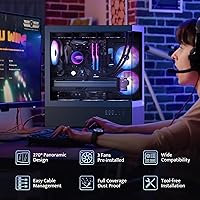
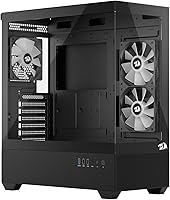
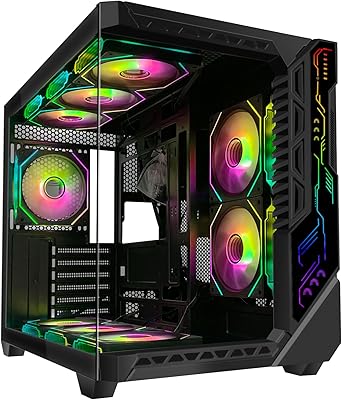
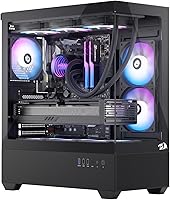
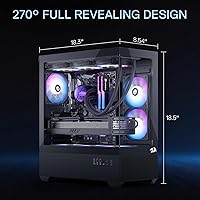
The Redragon CA606 ATX Mid Tower PC Case arrived in late 2024 as a clear statement from a brand better known for mice and keyboards: affordable doesn't have to mean boring. This gaming case targets builders who want their rig to turn heads without spending premium-tier money. The 270° panoramic glass design wraps two sides of the chassis in tempered glass, giving it a distinctly modern look that most opaque competitors at this price simply can't match. It ships with three 120mm fans already installed, which means you're not immediately hunting for extras before your first boot. ATX, Micro-ATX, and Mini-ITX boards all fit, keeping the options wide open.
Features & Benefits

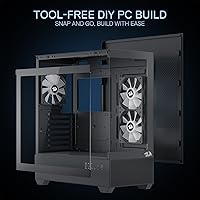
The honeycomb mesh panels on the top and side aren't just for looks — they move air effectively, whether you're running a traditional air cooler or a liquid loop. You can fit a GPU stretching nearly 16 inches long and a CPU tower almost 6.5 inches tall, which covers most modern hardware without issue. The panel pops off tool-free thanks to a snap-on mechanism, and a magnetic dust filter sits on top to catch debris before it settles on your fans. Cable routing is helped along by a bottom-mounted PSU bay, which separates power cables from the main chamber. Two USB 3.0 ports on the front handle day-to-day needs adequately.

Best For

This mid-tower case hits a sweet spot for first-time PC builders who want something that looks sharp on a desk without going over budget. If you're coming from an older beige box or a fully closed case, the wide glass coverage will feel like a real upgrade. Builders planning to run a high-end modern GPU — the kind that tends to run long — will appreciate the generous internal clearance. The three included fans also mean you can get up and running on day one without an immediate accessory run. It's less suited, though, for anyone prioritizing near-silent operation or needing extensive front-panel connectivity beyond two USB ports.

User Feedback

Early buyers are generally positive, with the panoramic glass panels drawing consistent praise as the standout feature for the price. The steel chassis also holds up well in feedback — people aren't reporting flex or flimsy construction. That said, this is still a modest sample of ratings, so long-term durability conclusions should come with some caution. The sticking points tend to cluster around a couple of areas: cable management space gets cramped with a larger PSU, and the bundled instructions leave some builders piecing things together on their own. The included fans do the job, but expect some noise at higher speeds. A 4.2-star average reflects a solid debut, not a perfect one.

Pros

  • Three 120mm fans come pre-installed, so your build is functional on day one without extra spending.
  • The 270-degree tempered glass coverage is genuinely striking for this price tier — components look great from multiple angles.
  • Generous internal clearance handles even the longest modern triple-fan graphics cards without modification.
  • Honeycomb mesh panels on the top and sides give the chassis real passive airflow potential.
  • The steel frame feels solid and does not flex or creak during assembly or transport.
  • A magnetic top dust filter snaps off and rinses clean in seconds, making maintenance painless.
  • Tool-free snap-on panels make opening the case for upgrades or cable tidying quick and hassle-free.
  • Broad motherboard compatibility across ATX, Micro-ATX, and Mini-ITX keeps your future upgrade options wide open.
  • The bottom PSU shroud does a good job of hiding power cables from the glass-facing side of the build.
  • Early buyer ratings average 4.2 out of 5, reflecting a generally positive reception for a recently launched product.

Cons

  • Stock fans get noticeably loud when temperatures rise, which is a real issue in quiet home office or bedroom setups.
  • There is no USB-C port on the front panel — a meaningful omission given how common Type-C peripherals have become.
  • Cable management space behind the motherboard tray is tight, especially with bulky non-modular PSU cables.
  • The included instruction manual is thin and vague, leaving first-time builders to rely on outside resources.
  • Only 67 ratings exist at time of writing, making long-term durability conclusions genuinely uncertain.
  • Bottom and side intake areas have no dust filtration, so dust management is incomplete without aftermarket additions.
  • Interior edge finishing is rough in spots, which can be an issue when routing cables or installing components by hand.
  • Drive bay capacity is limited for builders planning storage arrays beyond one or two drives.
  • The front I/O offers only two USB ports total, which feels lean compared to similarly priced competing cases.
  • Achieving the chassis's full thermal potential requires aftermarket fan upgrades that add to the overall build cost.

Ratings

The Redragon CA606 ATX Mid Tower PC Case has been evaluated by our AI rating system after analyzing verified global buyer reviews, with spam, bot submissions, and incentivized feedback actively filtered out. Scores reflect honest consensus across real builders — from first-time assemblers to experienced enthusiasts — and do not shy away from the friction points that came up repeatedly. Both what this chassis gets right and where it falls short are represented transparently below.
Build Quality
78%
22%
The steel chassis feels sturdy enough for a mid-range build, and buyers consistently report no worrying flex when carrying or adjusting the case. Panel fitment is generally tight, and the tempered glass arrives without visible defects in most units reported.
A handful of buyers noted that some interior edges and standoffs felt roughly finished, which can be an issue during initial motherboard installation. At this price tier, minor inconsistencies in panel alignment are not uncommon and a few users experienced exactly that.
Airflow Performance
74%
26%
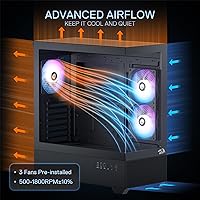
The honeycomb mesh panels on the top and side genuinely help move air through the chassis, and builders running mid-range air coolers reported temperatures staying comfortably in check. Having three fans pre-installed means airflow is functional from day one without extra spending.
The included fans are not high-static-pressure units, so builders with dense radiators or power-hungry GPUs may want to swap them out for better performers. At full speed the airflow improves, but it comes at a noise cost that some users found uncomfortable in quiet rooms.
Tempered Glass & Aesthetics
88%
The 270-degree glass coverage is legitimately impressive for this market segment, giving builders a wide window into their components from multiple angles. Reviewers upgrading from older opaque cases consistently called the visual transformation dramatic and well worth it.
Glass panels of this size are inherently fingerprint magnets, and wiping them down becomes a regular maintenance ritual. A small number of buyers also noted that the glass has a faint tint under certain lighting that slightly mutes the brightness of RGB components behind it.
Value for Money
83%
When you factor in three pre-installed fans and dual tempered glass panels, the overall package punches noticeably above its price point. Builders on a strict budget rarely get this level of visual impact without compromising on basic structural integrity.
Buyers who compared it closely against similarly priced competitors found that some rivals offer slightly better cable management infrastructure for the same spend. The value equation is strong but not unbeatable, particularly if you end up replacing the stock fans early.
Cable Management
61%
39%
The bottom PSU shroud does a solid job of hiding power cables from the main chamber view, and the routed channels behind the motherboard tray are usable for standard builds. Builders using modular PSUs with thinner cables reported a reasonably tidy end result.
Users running large non-modular PSUs ran into real trouble — the gap behind the motherboard tray is tight and forcing thick cable bundles through it is genuinely frustrating. A few builders noted that the included cable ties and anchors are minimal, requiring additional accessories to achieve a clean look.
Fan Noise Levels
63%
37%
At lower RPM settings, the stock fans are quiet enough to go unnoticed during general use and light gaming sessions. Builders who connected them to a motherboard fan controller and kept speeds moderate reported a reasonable acoustic experience.
When the system heats up and fan speeds ramp up, the noise becomes noticeable — these are not silent-optimized fans. For anyone building a PC that sits on a desk in a quiet bedroom or home office environment, swapping the stock fans for quieter aftermarket options is a realistic recommendation.
Component Clearance
86%
The GPU bay accommodates even the longest triple-fan graphics cards on the market without requiring removal of drive cages or workarounds. CPU cooler clearance is equally generous, handling most large tower coolers without interference from the side panel.
Radiator mounting options are solid, but builders going with a triple-fan top radiator should double-check RAM height compatibility, as tall heatspreaders can cause fitment conflicts. The clearance specs are excellent on paper and mostly deliver in practice, though tight edge cases do exist.
Ease of Assembly
72%
28%
The snap-on tool-free panel system makes opening and closing the case genuinely convenient during iterative builds or upgrades. Standoff placement is pre-threaded for ATX layouts, which removes one common frustration for newer builders.
The included instruction manual received consistent criticism for being sparse and difficult to follow, particularly around front-panel header routing and radiator mounting. First-time builders may find themselves relying on YouTube walkthroughs more than the documentation to complete the build confidently.
Dust Filtration
71%
29%
The magnetic top filter is a practical inclusion — it snaps off without tools, rinses clean under water, and goes back on without fuss. Its fine mesh density does meaningfully reduce dust accumulation on top-mounted fans and radiators compared to cases with no filter at all.
Bottom and side intake areas lack equivalent filtration, meaning dust still enters through those paths and settles on components over time. Builders in dusty environments will likely need to add aftermarket mesh or foam filters to those areas to achieve comprehensive dust control.
Front I/O & Connectivity
58%
42%
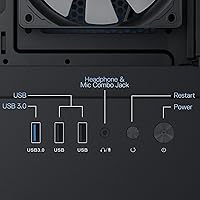
The two USB 3.0 ports handle the basics — plugging in a gaming headset, thumb drive, or controller receiver is straightforward and the ports feel solid. Their placement on the top panel keeps cables out of the way during normal desktop use.
There is no USB-C port on the front panel, which is increasingly a dealbreaker for builders with modern peripherals and smartphones that rely on Type-C connections. Two USB ports total is also a lean offering compared to competing cases that include three or four at a similar price point.
Thermal Management Potential
77%
23%
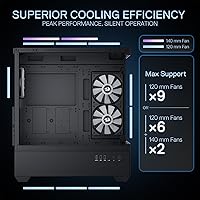
The chassis supports up to nine 120mm fans and a 360mm radiator, meaning the thermal ceiling is high enough to support even enthusiast-tier cooling setups if you invest in additional hardware. The vented panels ensure that added cooling hardware can actually breathe.
Achieving that thermal potential requires aftermarket fan upgrades, which adds to the total build cost and partially offsets the initial value proposition. The stock configuration is adequate for moderate builds but not optimized for high-wattage systems running sustained workloads.
Structural Rigidity
76%
24%
The steel frame holds its shape well during transport and component installation, and reviewers did not report the creaking or panel warping that sometimes plagues budget chassis. The overall feel during a build session is solid without feeling unnecessarily heavy.
Some thinner interior panels, particularly around the drive bay area, show a bit of flex under direct pressure. It is not a structural concern under normal use, but it is a reminder that this is not a premium-grade chassis and corners were trimmed somewhere to hit the price target.
Storage Options
62%
38%
The case accommodates multiple SSD and HDD configurations, which covers the needs of most standard gaming builds that rely on one or two drives. Drive sleds are included and installation is straightforward once the manual ambiguity is worked around.
The number of accessible drive bays is modest, and builders planning a larger storage array with three or more drives may find the layout restrictive. The bracket quality for HDD mounting also received lukewarm feedback, with a few users noting it feels less secure than expected.
PSU Compatibility
69%
31%
The bottom-mounted PSU bay fits most standard ATX power supplies up to a practical length, and the shroud design does a good job of hiding it from the glass-facing side of the build. Ventilation underneath the PSU is adequate when the case is on a hard, flat surface.
Very long PSUs push up against clearance limits and can complicate cable routing behind the shroud. Builders should measure carefully before assuming an extra-long unit will fit cleanly, and the case does not perform well on thick carpet where the bottom PSU intake can be partially blocked.

Suitable for:

The Redragon CA606 ATX Mid Tower PC Case is a strong fit for builders who want their system to look impressive without spending premium-tier money on the enclosure. First-time builders in particular will appreciate that three fans come pre-installed, meaning you can focus your budget on the components that actually drive performance rather than day-one accessories. Gamers who have invested in RGB RAM, a colorful GPU, or custom cooling will get genuine mileage from the wide tempered glass coverage — there is a lot to show off, and this chassis lets you do exactly that. Builders planning to run a modern, long graphics card will find the internal clearance generous enough to avoid the compatibility headaches that plague smaller or more restrictive mid-towers. It also works well as an upgrade path for anyone coming from a years-old opaque box who wants a modern aesthetic refresh without committing to a high-end case budget.
Not suitable for:

The Redragon CA606 ATX Mid Tower PC Case is not the right call for builders who need a quiet, acoustically dampened environment — the included fans get audible under load, and tempered glass, while attractive, does not meaningfully suppress noise the way foam-lined panels do. Anyone running a large non-modular power supply should check clearances carefully before buying, as cable management behind the motherboard tray becomes genuinely difficult with thicker cable bundles. Builders who rely on USB-C for peripherals, smartphones, or fast data transfers will find the front I/O panel frustrating — there is no Type-C port at all. This gaming case is also not well suited for experienced builders who want a refined, premium assembly experience, since the included documentation is sparse and some interior finishing feels utilitarian rather than polished. Finally, anyone building a high-wattage workstation or gaming rig that will run sustained heavy loads should plan to replace the stock fans, which adds cost and partially erodes the out-of-the-box value proposition.
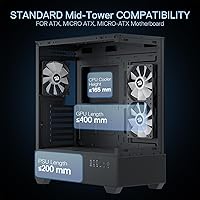
Specifications

  • Form Factor: Mid-tower chassis compatible with Mini-ITX, Micro-ATX, and full ATX motherboard standards.
  • Dimensions: The case measures 17 x 8.6 x 16.3 inches (L x W x H), fitting most standard desktop footprints.
  • Weight: Fully assembled unit weighs 14.82 pounds before components are installed.
  • Case Material: Main frame is constructed from steel with dual tempered glass panels covering approximately 270° of the exterior.
  • Pre-Installed Fans: Ships with three 120mm fans already mounted, providing baseline airflow without requiring immediate additional purchases.
  • Fan Capacity: Supports a maximum of nine 120mm fans distributed across the top, side, and bottom mounting positions.
  • Radiator Support: Accommodates radiators up to 360mm in length, suitable for most dual and triple-fan all-in-one liquid coolers.
  • GPU Clearance: Maximum supported graphics card length is 400mm, covering virtually all current consumer-grade GPUs including triple-fan models.
  • CPU Cooler Height: Tower air coolers up to 165mm tall will fit without panel interference under normal installation conditions.
  • PSU Mounting: Power supply mounts at the bottom of the chassis in a dedicated shrouded bay, supporting units up to 200mm in length.
  • Front I/O Ports: Front panel includes two USB 3.0 Type-A ports; no USB-C port is present on this model.
  • Dust Filtration: A magnetic dust filter with 0.8mm mesh density is located on the top panel; bottom and side intakes do not include filters.
  • Panel Access: Side and glass panels use a tool-free snap-on mechanism, requiring no screwdriver for routine access.
  • Glass Coverage: Dual tempered glass panels provide a continuous 270-degree view of internal components from the front, side, and partial rear angles.
  • Drive Bays: The chassis includes support for standard 2.5-inch SSD and 3.5-inch HDD configurations, suitable for typical single or dual-drive gaming builds.
  • PSU Shroud: An integrated PSU shroud conceals the power supply and lower cable runs from the glass-facing side of the build.
  • Model Identifier: Officially designated as the CA-606B-2F within Redragon's product lineup, released in September 2024.

Related Reviews
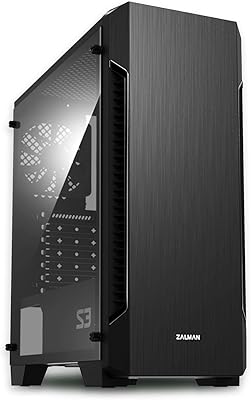
Zalman S4 Mid-Tower ATX PC Case
81%
88%
Airflow and Cooling
80%
Build Quality and Materials
92%
Ease of Installation
60%
Acrylic Panel Durability
70%
Cable Management
More
SAMA S40 Mid Tower ATX PC Case
79%
88%
Airflow Performance
83%
Included Fan Quality
79%
Build Quality & Finish
92%
GPU Compatibility
61%
Cable Management
More
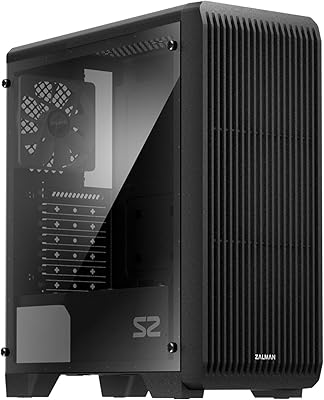
Zalman S2 ATX Mid-Tower PC Case
83%
88%
Cooling Performance
80%
Build Quality
85%
Ease of Setup
70%
Cable Management
92%
Value for Money
More
SZSKYING ATX Mid-Tower PC Gaming Case
85%
92%
Cooling Performance
85%
Build Quality
88%
Aesthetic Design
74%
Cable Management
78%
Ease of Setup
More
Zalman S3 ATX Mid-Tower PC Case
74%
83%
Value for Money
71%
Build Quality
58%
Airflow & Cooling Performance
86%
Ease of Assembly
67%
Acrylic Side Panel
More
darkFlash DS900 ATX Mid-Tower PC Case
84%
89%
Cooling Performance
88%
Build Quality
91%
Ease of Installation
85%
Design & Aesthetics
92%
Value for Money
More
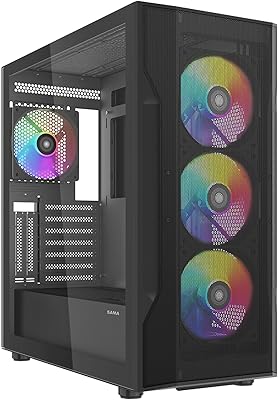
Vetroo AL800 Mid Tower ATX PC Case
76%
78%
Build Quality
84%
Tempered Glass Panel
76%
Airflow Performance
61%
Fan Included & Expandability
69%
Cable Management
More
KEDIERS K4 ATX Mid Tower PC Case
80%
91%
Value for Money
93%
Aesthetic Design
74%
Build Quality
72%
Cooling Performance
84%
Ease of Assembly
More
MUSETEX K2
MUSETEX K2
80%
93%
Aesthetic Design
74%
Build Quality & Materials
78%
Cooling Performance
61%
Fan Noise Levels
91%
Hardware Compatibility & Clearance
More
Corsair 3500X ARGB Mid-Tower ATX PC Case
84%
92%
Cooling Performance
87%
Build Quality
90%
Design & Aesthetics
85%
Ease of Installation
89%
Airflow Support
More
Antec Flux Mid-Tower E-ATX PC Case
85%
93%
Build Quality
88%
Cooling Performance
91%
Design & Aesthetics
87%
Ease of Assembly
72%
Cable Management
More

FAQ

Most likely yes. This mid-tower case supports graphics cards up to 400mm long, which covers essentially every current consumer GPU on the market, including the longest triple-fan models from NVIDIA and AMD. Just measure your card before assuming and double-check there is no drive cage blocking the front of the bay on your specific unit.

It comes with three 120mm fans pre-installed, so your build will have working airflow straight out of the box. That said, these are entry-level fans — functional, but not silent optimized. If you are building in a quiet room or running a high-wattage system, budgeting for aftermarket fans is a reasonable plan.

Yes, the chassis supports radiators up to 360mm, which accommodates a full triple-fan AIO. Top mounting is the most common configuration here. Just be aware that if you are using tall RAM with large heatspreaders, you may want to verify clearance before committing to a top-mounted radiator layout.

It officially supports all three: full ATX, Micro-ATX, and Mini-ITX. Smaller boards will fit and mount correctly, though some of the internal space will go unused, which could actually make cable management a little easier with a compact build.

At moderate system loads they are reasonably quiet, but when temperatures climb and fan speeds ramp up, they do become audible — noticeable in a quiet room, though not obnoxious. If you are sensitive to fan noise or working in a near-silent environment, swapping the stock fans for quieter aftermarket options is worth considering.

No tools required. The panels use a snap-on mechanism, so you just release the latch or pull at the designated point and they come free. It makes quick access for upgrades or cable tidying genuinely convenient, which is a nice touch at this price level.

Tempered glass is more resilient than standard glass, but it is still glass — handle with care during assembly. Most buyers report it arriving undamaged, and routine use poses no real risk. Where people occasionally run into trouble is dropping a panel or knocking it against a hard corner, so just be deliberate when removing and reinstalling it.

Not exactly — the top panel has a magnetic dust filter with a fine mesh, but the bottom PSU intake area and side intakes do not have equivalent filtration included. If you are in a dusty environment, you can source aftermarket foam or mesh filters to cover those areas, but it is an extra step the case does not handle out of the box.

It can be, honestly. The gap behind the motherboard tray is workable for most standard modular PSUs, but if you have a large non-modular unit with a full harness of thick cables, things get tight quickly. A modular PSU makes life considerably easier in this chassis, and adding a few aftermarket velcro ties helps keep things tidy.

No, there is not. The front I/O is limited to two USB 3.0 Type-A ports, which covers the basics but will feel limiting if you rely on USB-C for peripherals, fast storage drives, or charging modern devices. It is one of the more notable omissions on this case and worth factoring into your decision if front-panel USB-C matters to your workflow.