Raynic 1030 12000mAh NOAA Weather Radio


Overview
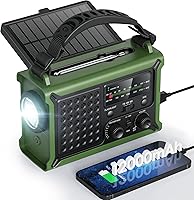
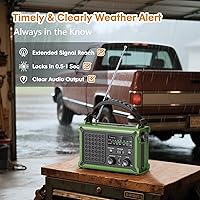
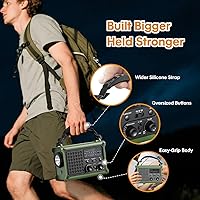
The Raynic 1030 12000mAh NOAA Weather Radio arrived in early 2025 as a more capable alternative to the stripped-down emergency radios that dominate the budget end of this category. It packs weather alerting, AM/FM radio, phone charging, and multiple lighting modes into one olive-green ABS unit that is noticeably bulkier than most competitors. The anti-slip knobs and silicone carry strap suggest Raynic was thinking about actual emergency scenarios rather than just shelf appeal. It sits in the mid-range tier, competing directly with names like Midland and Kaito. Since it is a fairly new product, long-term reliability data is still thin — worth keeping in mind.
Features & Benefits
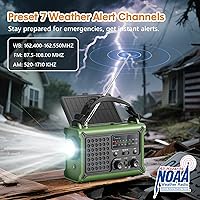
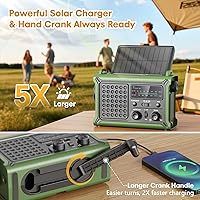
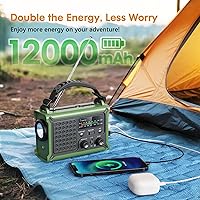
The battery is where this emergency weather radio pulls ahead of most rivals. With a 12000mAh cell onboard, you can realistically charge a smartphone several times over before the radio runs dry — which matters enormously during a multi-day power outage. The monocrystalline solar panel is physically larger than what you would find on comparable units, and the extended hand crank converts energy more efficiently, though real-world solar output still depends heavily on direct sunlight. NOAA reception is certified and antenna-tuned, and the 57mm speaker delivers noticeably fuller audio than the tinny output typical of emergency radios. A 5W flashlight and separate reading lamp round out the package.
Best For
This solar-powered radio makes the most sense for people who live in storm-prone regions and want one device that handles alerts, lighting, and keeping phones alive. Campers and hikers who need off-grid communication will appreciate the dual USB-A and USB-C output ports alongside real-time NOAA broadcasts. It is also a logical choice for preppers assembling a serious emergency kit, where battery capacity matters more than packing light. That said, at 1.83 pounds with a fairly substantial footprint, it is not a natural fit for ultralight trekkers. Think of the size as an intentional tradeoff — more capacity means more weight, and for many buyers, that is an easy compromise.
User Feedback
Early buyers of the Raynic hand crank radio tend to praise the solar charging speed relative to older models, which is a reasonable expectation given the larger panel. NOAA reception gets solid marks in rural and indoor settings, which is the real test for any weather radio. On the critical side, some users question whether the actual battery output matches the rated capacity under real charging loads, and a few note that the USB output speed is modest. The SOS siren and flashlight brightness generally meet expectations. Build quality impressions are mostly positive, though with limited ownership history, knob and strap durability remains an open question.
Pros
- One of the largest battery capacities in this price tier, capable of charging a smartphone multiple times during extended outages.
- Monocrystalline solar panel is physically larger than most competitors, translating to faster top-up in strong sunlight.
- NOAA-certified reception holds up reliably in rural areas and indoors where cheaper radios often struggle.
- Both USB-A and USB-C output ports allow simultaneous charging of different devices without an adapter.
- The 57mm speaker delivers noticeably fuller, richer audio than the tinny output typical of emergency radios.
- Five power input options — solar, hand crank, built-in battery, AAA cells, and corded electric — cover virtually every scenario.
- A dedicated reading lamp mode alongside the main flashlight makes it more versatile than single-light competitors.
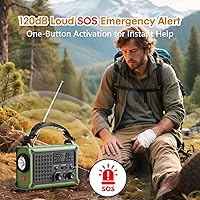
- Oversized anti-slip knobs and a loud SOS siren are genuinely useful design choices for high-stress emergency moments.
- The hand crank radio accepts a 3.5mm auxiliary input, a small but appreciated feature for extended off-grid listening sessions.
Cons
- Launched in early 2025 with limited ownership history, so long-term build durability remains unverified.
- At 1.83 pounds, it is noticeably heavier than rival units, which matters if portability is a priority.
- USB charging output speed appears modest based on early buyer reports, meaning phone top-up times can be slow.
- Actual usable battery output may fall short of the rated 12000mAh under real-world charging conditions.
- Solar charging is only effective in direct sunlight, making it unreliable as a primary charging method in cloudy climates.
- The larger body size can feel awkward to pack in a standard emergency bag compared to slimmer competitors.
- Knob and strap attachment durability have not yet been tested across enough ownership cycles to draw firm conclusions.
- No programmable SAME alert filtering, which more advanced NOAA receivers in the same price range sometimes offer.
Ratings
The Raynic 1030 12000mAh NOAA Weather Radio has been evaluated by our AI rating engine after analyzing verified global buyer reviews, with spam, bot-generated, and incentivized feedback actively filtered out. Scores reflect the full picture — genuine strengths and real frustrations alike — so you can make a confident, eyes-open buying decision. This solar-powered radio earns strong marks in several key areas but shows clear room for improvement in a few others.
Battery Capacity
NOAA Reception
Solar Charging
Hand Crank Charging
Build Quality
Flashlight & Lamp
SOS Siren
Speaker Audio Quality
Ease of Use
Portability
Value for Money
Phone Charging Speed
Multi-Power Redundancy
Suitable for:
The Raynic 1030 12000mAh NOAA Weather Radio is a strong fit for households in hurricane corridors, tornado alleys, or flood-prone areas where a single dependable device needs to cover weather alerts, phone charging, and lighting without relying on the power grid. Families who want one grab-and-go unit stored in a closet or garage will appreciate having all those functions consolidated at a mid-range price rather than buying separate devices. Campers and overlanders who monitor weather while off-grid will find the combination of certified NOAA reception and dual USB output ports genuinely practical. Preppers assembling serious emergency kits tend to prioritize raw battery capacity above all else, and the 12000mAh cell puts this emergency weather radio near the top of its class in that regard. It also works well as a permanent bedside or workshop radio that doubles as a power bank during routine blackouts.
Not suitable for:
The Raynic 1030 12000mAh NOAA Weather Radio is not the right call for ultralight backpackers or minimalist hikers for whom every ounce is a deliberate choice — at nearly two pounds with a footprint larger than most competing units, it simply does not fit that use case. Buyers who need a compact radio to slip into a jacket pocket or a small daypack should look elsewhere in the Kaito or Midland lineup. People who expect solar charging to work as a primary top-up method in low-light or overcast conditions may also find themselves frustrated, since monocrystalline panels still need direct sunlight to deliver meaningful charge rates. Because this solar-powered radio only reached the market in early 2025, shoppers who place heavy weight on proven multi-year durability records would be wise to wait for a larger body of long-term owner feedback before committing. Finally, buyers primarily seeking a dedicated home weather station with programmable alert zones may prefer purpose-built NOAA receivers over an all-in-one device.
Specifications
- Model Number: This unit is designated as the Raynic model 1030, released to market in April 2025.
- Dimensions: The body measures 6.81″ long by 2.91″ wide by 4.76″ tall, making it noticeably larger than most competing emergency radios.
- Weight: The unit weighs 1.83 pounds, reflecting the larger battery cell and reinforced housing.
- Battery Capacity: An internal 12000mAh rechargeable lithium cell powers the radio and provides multiple charges to connected devices during outages.
- Power Sources: The radio accepts five input methods: corded electric, built-in rechargeable battery, monocrystalline solar panel, hand crank, and AAA backup batteries.
- Output Ports: One USB-A and one USB-C output port allow external device charging simultaneously from the internal battery.
- Radio Bands: Tuner covers AM, FM, and all seven NOAA weather band frequencies with NOAA certification for official National Weather Service alerts.
- Speaker: A single 57mm full-range driver handles audio output, sized to deliver broader frequency response than the smaller speakers common in this category.
- Flashlight: An integrated 5W LED flashlight provides primary illumination, supplemented by a separate lower-intensity reading lamp mode.
- SOS Siren: The built-in emergency siren reaches 120dB, audible at significant distance to attract attention during rescue situations.
- Solar Panel: The monocrystalline solar panel is described as five times larger than standard panels found on comparable emergency radios.
- Connectivity: A 3.5mm auxiliary input jack allows external audio sources to play through the onboard speaker.
- Body Material: The housing is constructed from ABS (Acrylonitrile Butadiene Styrene) plastic with anti-slip knobs and a soft silicone carry strap.
- Color: Available in Olive-Green as the standard colorway at time of release.
- Included Items: The package includes the radio unit, a charging cable, and AAA batteries as noted in the product listing.
Related Reviews
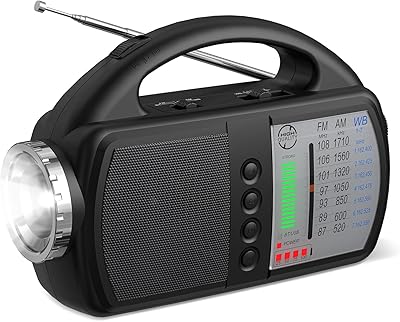
Audiocrazy AM FM NOAA Emergency Weather Radio
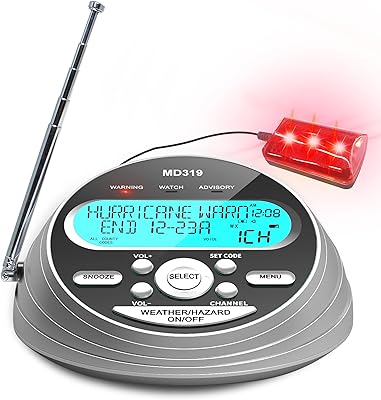
Rychi TMUS-MD319 NOAA Weather Alert Radio
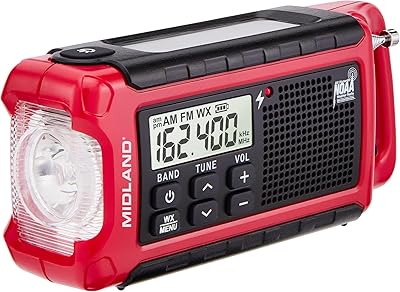
Midland ER210 Emergency Weather Radio
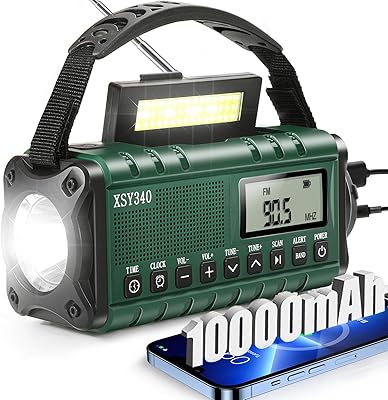
Leaton Emergency NOAA Weather Alert Radio
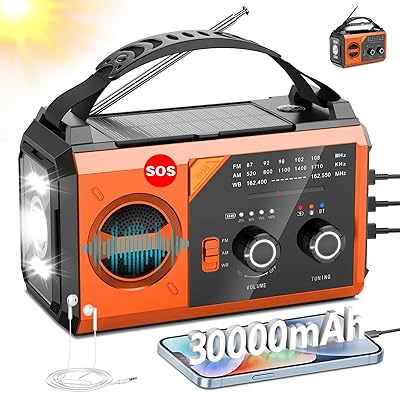
FQBLXY H27 30000mAh Emergency Weather Radio
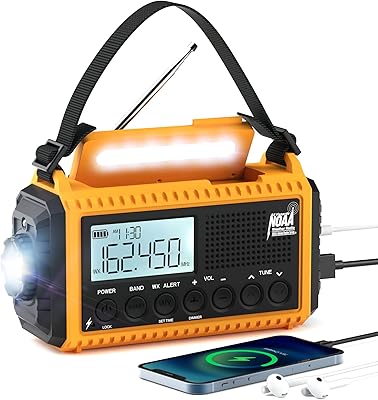
Eoxsmile CR1009Pro Emergency Weather Radio
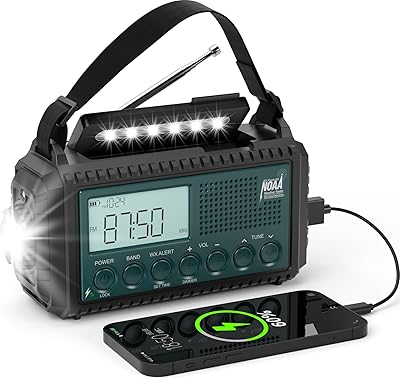
PPLEE P-1009Pro Emergency Weather Radio
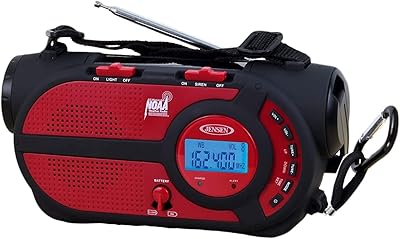
Jensen JEP-650R NOAA Emergency Weather Radio
Eton Odyssey All-Band Emergency Weather Radio