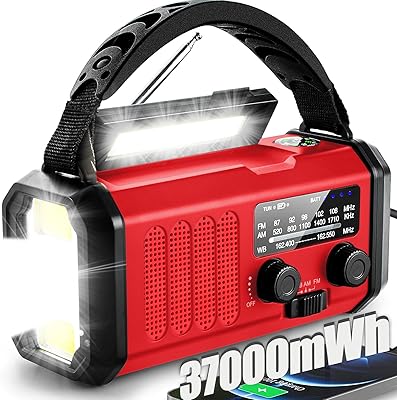
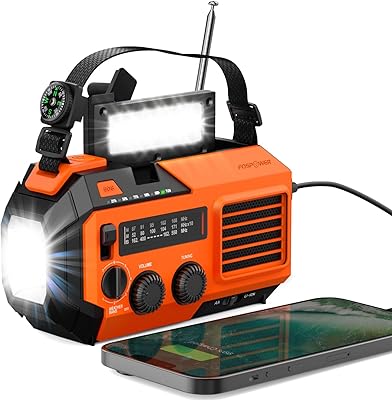
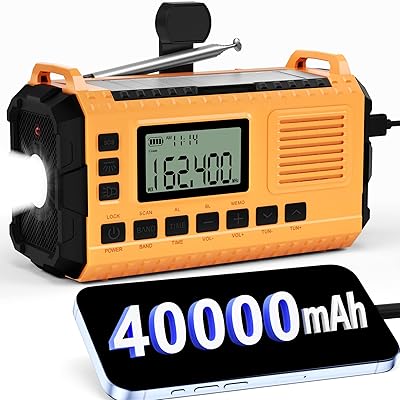
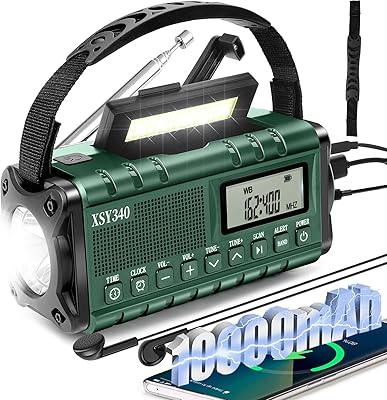
Overview

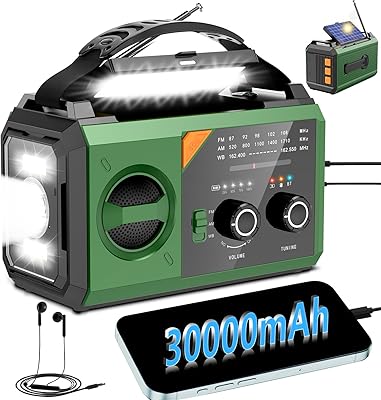
The FQBLXY H27 30000mAh Emergency Weather Radio entered the market in early 2025, made by a Shenzhen-based electronics manufacturer with a growing line of outdoor survival tools. Its standout claim is a 30000mAh battery — a figure that towers over most competitors at this price point. A caveat worth noting: budget-tier devices from Chinese manufacturers frequently list nominal rather than usable capacity, so expect real-world output to land somewhat below the spec sheet. That said, even a conservative fraction of that capacity still outperforms many similarly priced radios. This is firmly a budget preparedness tool, not premium gear, and approaching it with that mindset is key to appreciating what it genuinely delivers.
Features & Benefits

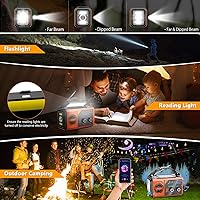
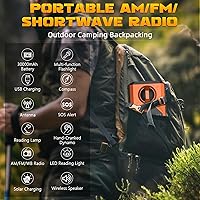
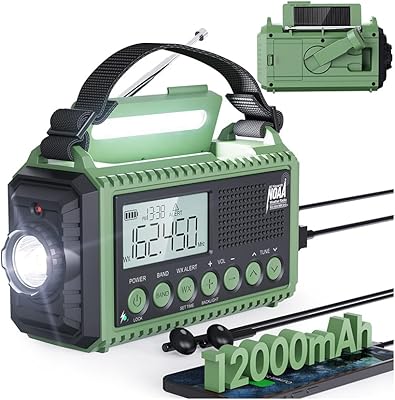
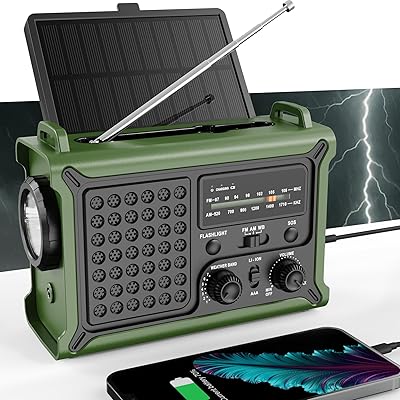
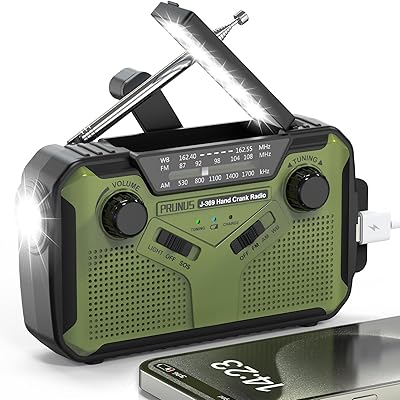
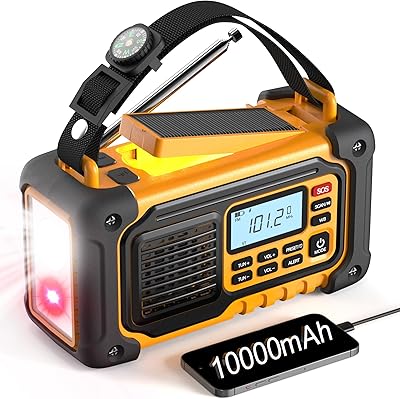
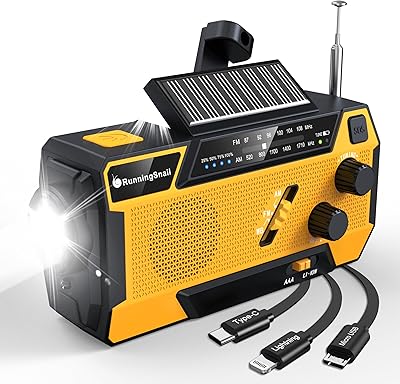
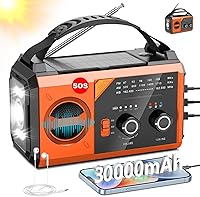
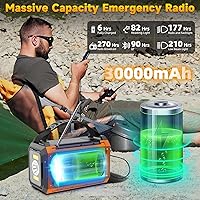
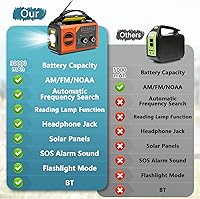
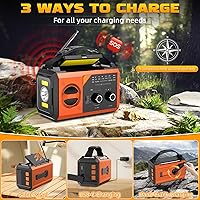
Pack a device roughly the size of a thick paperback book and you get quite a lot. The three charging methods — AC wall adapter, solar panel, and hand crank — act as a layered insurance policy. AC charging is the reliable workhorse; solar works best in direct sunlight but charges slowly; the hand crank is a genuine last resort, not a primary option. A 16-inch telescoping antenna pulls in AM, FM, and NOAA weather bands with reasonable clarity in most locations. Bluetooth 5.3 pairs quickly for audio streaming, and a headphone jack covers private listening. A motion-activated reading light, SOS alarm, compass, and basic ambient thermometer round things out — practical additions that earn their place on a campsite.

Best For

This hand-crank survival radio fits squarely into the practical gifts and budget preparedness category. It makes the most sense for household emergency kits — the kind families stock ahead of hurricane or wildfire season — where NOAA reception and a large battery backup matter more than sleek construction. Car campers who want a single multi-tool device instead of packing separate radios, flashlights, and chargers will appreciate the consolidation. It also works well as a thoughtful gift for an outdoorsy friend or a relative in a storm-prone region. Serious hikers and outdoor professionals will likely prefer more purpose-built gear, but for the casual weekend camper, this radio covers a lot of ground without straining the budget.

User Feedback

Buyers who pick up the H27 weather radio tend to come away impressed by its feature count relative to its price — the battery size earns consistent praise as the headline value. But some recurring patterns in feedback deserve honest attention. Solar charging speed draws the most frustration: in real conditions it works slowly, and overcast days render it nearly ineffective. The hand crank shares similar limitations for sustained use. A number of buyers also report inconsistent radio reception in rural or low-signal areas. Build quality is described as functional but noticeably plastic, which is predictable at this price tier. The Bluetooth speaker and flashlight, however, tend to pleasantly surprise people — most find both genuinely useful rather than throwaway extras.

Pros

  • The nominal 30000mAh battery is the largest in its price class, offering meaningful backup charging capacity for smartphones during outages.
  • Three charging methods — AC, solar, and hand crank — provide layered power redundancy that most single-source radios cannot match.
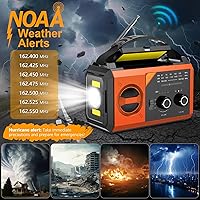
  • NOAA weather band reception via a 16-inch telescoping antenna keeps families informed during severe weather events.
  • Bluetooth 5.3 pairing is quick and reliable, making the speaker genuinely useful for both emergency updates and casual campsite audio.
  • The motion-activated reading light is a small but clever touch that proves handy during nighttime outdoor use.
  • Built-in SOS alarm, compass, and thermometer add real utility without requiring separate gadgets in a go-bag.
  • At its price point, the sheer number of functional features packed into one compact unit represents strong value for budget-minded buyers.
  • The 18-month warranty offers more post-purchase protection than many competing budget devices provide.
  • Compact enough to store in a car glovebox, closet shelf, or camping pack without taking up meaningful space.

Cons

  • Solar panel charging is slow even in direct sunlight and nearly useless on overcast days, limiting its emergency utility.
  • Hand-crank power output is minimal — it takes sustained effort to generate even a short burst of usable charge.
  • Actual usable battery capacity likely falls short of the stated 30000mAh figure, as is common with budget-tier electronics from this manufacturing region.
  • Radio reception becomes unreliable in rural or low-signal areas, which is precisely where emergency communication matters most.
  • Build materials feel noticeably lightweight and plastic, which raises reasonable questions about long-term durability under field conditions.
  • IPX4 splash resistance is frequently misread as waterproofing — it will not survive rain exposure beyond light drizzle.
  • The device weight of approximately 876g makes it heavier than expected for its size, which matters for anyone carrying it on a trail.
  • No fast-charging support limits how quickly connected devices can be topped up during time-sensitive emergencies.

Ratings

The scores below for the FQBLXY H27 30000mAh Emergency Weather Radio were generated by our AI system after analyzing verified global buyer reviews, actively filtering out incentivized, bot-generated, and duplicate submissions to surface genuine user sentiment. Both the strengths that earned loyal repeat buyers and the frustrations that prompted returns are reflected honestly in each category. This hand-crank survival radio punches above its weight in some areas and falls short in others — and the scores tell that full story.
Value for Money
83%
Buyers consistently flag this emergency radio as one of the better-stocked devices available at its budget price point. The sheer number of functional features — NOAA reception, phone charging, flashlight, SOS alarm, Bluetooth — bundled into a single affordable unit makes the purchase feel justified for most households building out a basic emergency kit.
A portion of buyers feel the gap between advertised specs and real-world performance — particularly around battery capacity and solar charging — stretches the value claim thin. Those who expected premium behavior at a budget price point tend to walk away more disappointed than those who set realistic expectations from the start.
Battery Capacity
71%
29%
The stated 30000mAh figure is by far the largest in the competitive budget tier, and even accounting for real-world conversion losses, most users report getting several meaningful phone charges out of a full battery. During multi-day power outages, buyers note the reserve lasts considerably longer than similarly priced alternatives.
Budget lithium cells at this price point rarely deliver their full nominal capacity, and the H27 weather radio is no exception — actual usable output is noticeably lower than advertised. A subset of buyers, particularly those who relied on it during extended outages, reported the battery depleting faster than the spec sheet suggested it should.
Solar Charging
44%
56%
In ideal conditions — strong, direct midday sunlight — the solar panel does contribute a slow but measurable trickle charge to the battery, which is better than nothing in a genuine off-grid scenario. Some car campers appreciate having even a minimal solar top-up option during long, sunny day trips.
The solar panel's real-world performance is the single most common complaint across all verified reviews. Charging is extremely slow even in direct sunlight, and overcast or partially cloudy skies render it nearly ineffective. Buyers who imagined being able to sustain the device on solar power alone during a multi-day emergency were consistently let down.
Hand Crank Efficiency
41%
59%
The hand crank provides a genuine power-of-last-resort option that gives users some peace of mind in extreme situations where all other charging sources have failed. For short bursts — powering the radio or flashlight for a few minutes — it does its job.
Generating meaningful battery charge via the hand crank requires sustained, tiring effort and yields only a small return. Multiple buyers describe it as exhausting relative to the charge produced, and it is clearly not capable of maintaining the device through extended use. Think of it as a truly last-resort feature, not a practical everyday charging method.
Radio Reception
67%
33%
In suburban and urban environments with reasonable signal coverage, the 16-inch telescoping antenna pulls in AM, FM, and NOAA weather band stations with acceptable clarity. Users in storm-prone metro areas specifically praise the NOAA reception for delivering timely severe weather alerts during hurricane and tornado events.
Rural buyers and those in signal-challenged areas report noticeably inconsistent reception, with some stations coming in weak or broken regardless of antenna positioning. For a device marketed as an emergency tool, spotty performance in the locations where people are most likely to need it is a meaningful concern.
Flashlight Performance
78%
22%
The three-mode LED flashlight earns consistently positive feedback, with buyers noting the 75-meter range is genuinely useful for campsite navigation and power outage situations. The motion-activated reading mode is a pleasant surprise — several users specifically mention it as one of the more practically useful features on the device.
The flashlight housing feels less robust than the beam performance suggests, and a handful of buyers report the motion sensor activating inconsistently after extended use. It performs well as a primary flashlight in the short term, but long-term durability under frequent use remains a mild concern.
Bluetooth Speaker
74%
26%
For a device with this many features packed in, the Bluetooth 5.3 speaker delivers audio quality that genuinely surprises buyers expecting a tinny, throwaway experience. Pairing is fast and stable, and the speaker volume is adequate for campsite music listening or catching voice-based weather broadcasts without straining to hear.
Audio quality drops noticeably at higher volumes, and bass response is minimal, which is expected at this form factor and price but still worth flagging. A few buyers also note that simultaneous use of Bluetooth and other power-drawing features — like the flashlight — drains the battery faster than expected.
Build Quality
59%
41%
The physical layout is thoughtfully organized — controls are logically placed, the telescoping antenna extends and retracts smoothly, and the device feels balanced enough to hold comfortably during extended use. For buyers with modest expectations around materials, the construction feels adequate and fit for purpose.
The all-plastic construction is the most divisive aspect of the build, with many buyers describing it as feeling lighter and more hollow than the 876g weight implies. Buttons and ports show early wear in some units, and buyers who handle it frequently report the finish scuffs easily — a common trade-off at this price tier but worth knowing upfront.
Ease of Use
81%
19%
Setup requires no technical knowledge — the device powers on quickly, radio tuning is straightforward, and Bluetooth pairing follows a simple process accessible to older adults and non-technical users alike. Most buyers note they had it fully operational within minutes of unboxing, which matters when you are distributing emergency kits to family members.
The control labeling on some units is small and can be difficult to read in low-light conditions without the flashlight active — a minor but ironic usability gap for an emergency device. A few users also found the hand-crank mechanism stiff initially, requiring a break-in period before it turned smoothly.
Water Resistance
52%
48%
The IPX4 splash rating does provide a meaningful level of protection against light rain and incidental water contact, which is enough to handle brief drizzle on a campsite or accidental spills near a workbench. Most buyers in mild outdoor conditions report no water-related issues.
The IPX4 rating is consistently misread as full waterproofing, and buyers who pushed the device beyond light splashes — setting it out during actual rain or near a stream — reported damage. The rating is clearly communicated in the specs but not prominently enough to prevent real-world misuse, and the device is not recovered easily from water ingress.
Portability
76%
24%
The footprint is compact enough to slip into a backpack side pocket or store in a car emergency kit without consuming meaningful space. Car campers and families keeping it in a closet preparedness bag appreciate that it does not require dedicated storage space or special handling.
At approximately 876g, the H27 weather radio is heavier than it appears relative to its size, and trail hikers carrying it over significant distances start to feel it. It is genuinely portable for low-exertion scenarios but sits on the heavier end of the spectrum for a device marketed partly at hikers.
SOS Alarm
77%
23%
The built-in SOS alarm is loud enough to be heard at a meaningful distance in outdoor environments, giving solo campers and hikers a real audible distress signal without needing a separate whistle or device. Buyers testing it before trips consistently report being satisfied with the volume output.
The alarm activation process requires navigating a button sequence that is not immediately intuitive under stress, and a few buyers report accidentally triggering it while adjusting other controls. In a genuine emergency where fine motor control is compromised, the activation steps could slow response time.
Compass & Thermometer
63%
37%
Having a compass and ambient thermometer built in means casual campers and day hikers can check basic orientation and temperature without reaching for a separate tool. The thermometer in particular gets positive mentions from buyers who use it to monitor tent or campsite conditions overnight.
Neither instrument approaches the accuracy of a dedicated tool — the compass can be thrown off by the device's own electronics if not held correctly, and the thermometer reading lags behind rapid temperature changes. These are supplementary conveniences, not reliable navigation or measurement instruments.
Warranty & Support
69%
31%
An 18-month warranty is above average for a budget device at this price point, and buyers who have filed legitimate defect claims generally report the process being resolved without significant friction. The warranty commitment signals a degree of confidence from the manufacturer that is not universal in this product category.
Customer support response times vary considerably depending on the purchasing channel, and international buyers occasionally report delays in warranty claim processing. The warranty covers manufacturing defects but does not extend to damage from water exposure beyond the IPX4 rating, which catches some buyers off guard.

Suitable for:

The FQBLXY H27 30000mAh Emergency Weather Radio is a practical fit for households that want a single, affordable device covering the basics of emergency preparedness without building out a more elaborate kit. Families living in hurricane corridors, wildfire-prone states, or regions that regularly face severe winter storms will find the NOAA weather band reception and large backup battery genuinely useful when the power goes out and cellular networks get strained. It also makes a solid choice for car campers and weekend hikers who prefer consolidating gear — one device handling radio, flashlight, phone charging, and audio — over packing multiple single-purpose tools. Budget-conscious shoppers looking for a thoughtful, practical gift for an outdoorsy friend or a relative who lives alone in a storm-prone area will find this hand-crank survival radio hits a sweet spot between useful and affordable. The 18-month warranty adds a layer of reassurance that is not always standard at this price tier.
Not suitable for:

The FQBLXY H27 30000mAh Emergency Weather Radio is not the right call for buyers expecting professional-grade build quality or precision performance from any of its individual features. Serious backcountry hikers or survivalists who depend on reliable radio reception in remote, low-signal areas may find this emergency radio falls short — reception quality is inconsistent outside of well-covered urban and suburban zones. The IPX4 water resistance rating means light splashes are manageable, but anyone planning to use this device in heavy rain, near water crossings, or in genuinely wet outdoor environments should know it is not waterproof in any meaningful sense. The solar charging and hand-crank functions, while present, are slow and inefficient enough that they should not be counted on as primary power sources in a real emergency. Buyers who want a dedicated weather radio with sharp tuner performance, or a standalone high-capacity power bank with fast charging, will be better served by purpose-built devices in each category.
Specifications

  • Model: The unit is designated model H27, manufactured by Shenzhen Huashengtimes Electronic Technology Co., LTD.
  • Battery Capacity: Nominal battery capacity is rated at 30000mAh; actual usable output will vary and is typically lower than the stated nominal figure.
  • Charging Methods: The device supports three input charging methods: AC USB wall adapter, built-in solar panel, and manual hand crank.
  • USB Output: Power bank output is rated at 3A via USB, suitable for charging smartphones, earphones, and other USB-powered devices.
  • Radio Bands: Receives AM, FM, and NOAA Weather Band (WB) broadcasts across standard frequency ranges.
  • Antenna: A 16-inch telescoping antenna is built in to improve AM, FM, and weather band signal reception.
  • Bluetooth: Bluetooth 5.3 is supported for wireless audio streaming from paired smartphones or tablets.
  • Audio Output: A 3.5mm headphone jack allows private wired listening in addition to the built-in Bluetooth speaker.
  • Flashlight: The integrated LED flashlight offers three modes and a stated range of up to 75 meters, with a motion-activated reading light mode.
  • Water Resistance: The device carries an IPX4 rating, meaning it can withstand light splashes from any direction but is not suitable for submersion or heavy rain exposure.
  • Dimensions: Physical dimensions are approximately 6.73″ x 4.11″ x 3.6″, making it roughly the size of a thick paperback book.
  • Weight: The manufacturer states a weight of approximately 876g, though some product listings note 400g — buyers should expect a device on the heavier side for its size.
  • Additional Sensors: A built-in compass and an ambient environmental thermometer are included as supplementary navigation and awareness tools.
  • SOS Alarm: A built-in SOS emergency alarm is included and can be activated to signal for help in survival situations.
  • Warranty: The manufacturer provides an 18-month limited warranty from the date of purchase.
  • Power Source: The unit can operate on its internal rechargeable battery, direct AC power via USB, or trickle input from solar or hand-crank sources.
  • Compatibility: The USB power bank output is compatible with smartphones, MP3 players, earphones, and select laptops drawing within the rated output.
  • Date Available: This product first became available on the Amazon marketplace in February 2025.

Related Reviews

RAOUOEN 30000mAh Emergency Weather Radio
85%
89%
Battery Life & Charging
91%
Performance in Emergencies
75%
Portability & Weight
84%
Sound Quality & Reception
87%
Ease of Use
More
Sttfaishen F20 Emergency Hand Crank Weather Radio
72%
82%
NOAA Alert Reception
54%
Battery Capacity & Honesty
61%
Hand Crank Usability
57%
Solar Charging Performance
83%
USB-C Charging Speed
More
Roxicosly CR1009Ultra 12000mAh Emergency Weather Radio
74%
88%
Battery Life
91%
Charging Versatility
86%
NOAA Alert Performance
58%
Hand Crank Durability
44%
Solar Charging Speed
More
OnLyee CR1030 Emergency Weather Radio
76%
88%
Power Source Redundancy
83%
Hand Crank Durability
61%
Solar Charging Performance
79%
NOAA Reception Quality
67%
Battery Capacity & Phone Charging
More
QAUYYW Emergency Weather Radio XSY330
86%
89%
Battery Life
85%
Ease of Use
92%
Portability
75%
Radio Reception
88%
Build Quality
More
FosPower A6 5200mAh Emergency Weather Radio
77%
91%
NOAA Reception
84%
Build Quality
67%
Power Bank Utility
53%
Hand Crank Efficiency
49%
Solar Charging
More
TFTDOUP Emergency Weather Alert Radio
86%
88%
Overall Performance
85%
Battery Life
90%
Charging Options
80%
Ease of Use
87%
Build Quality
More
GIDEZH H27 30000mAh Emergency Weather Radio
75%
82%
Battery Capacity
86%
NOAA Reception Quality
78%
Charging Versatility
88%
All-in-One Convenience
74%
Flashlight Performance
More
Midland ER210 Emergency Weather Radio
75%
91%
NOAA Reception Quality
83%
Power Source Versatility
78%
Battery Life
89%
Ease of Use
67%
Flashlight Performance
More
AXYEBI AB-US-107Y Emergency Weather Radio
75%
91%
Value for Money
82%
NOAA Signal Reception
88%
Flashlight Performance
63%
Build Quality & Durability
67%
Hand Crank Usability
More

FAQ

The stated 30000mAh is a nominal figure, and real-world output will be lower once you account for conversion losses. Realistically, most users can expect somewhere between 4 and 6 full charges for an average smartphone — still a meaningful reserve, but temper expectations if you were counting on the maximum advertised number.

Honestly, it depends on conditions. In direct, strong sunlight the solar panel does trickle charge the battery, but it is slow — we are talking hours to add a meaningful percentage. On cloudy days or indoors, it contributes very little. Think of solar as a supplemental top-up option rather than a primary charging method.

The hand crank works, but it takes sustained effort for modest returns. A few minutes of cranking will power the radio or flashlight for a short burst, but it cannot realistically recharge the main battery to any significant level on its own. It is best treated as a true last-resort option when all other charging methods are unavailable.

Yes, that is exactly the scenario it is designed for. The FQBLXY H27 30000mAh Emergency Weather Radio can receive NOAA weather alerts and broadcast updates without any external power, provided its internal battery is pre-charged. Keeping it topped up via AC before a storm season is strongly recommended so it is ready when you need it.
Light drizzle and incidental splashes should be fine given the IPX4 rating. However, do not count on it surviving a downpour or being left out in steady rain. IPX4 is splash resistance, not waterproofing — if you are camping in wet conditions, keep it under cover or in a dry bag when not in use.

For a device at this price with this many features built in, the Bluetooth speaker performs better than most buyers expect. It is not hi-fi audio, but it is clear enough for voice updates and casual music listening around a campsite. Pairing with Bluetooth 5.3 is quick and stable on most modern phones.

Yes, the 3.5mm headphone jack lets you plug in any standard wired earphones or headphones for private listening. This works independently of the Bluetooth speaker, so you can switch between the two depending on the situation.

Both are basic tools rather than precision instruments. The compass gives a general directional reading useful for orientation, and the thermometer reflects ambient temperature in the surrounding environment. For casual hiking and camping they are handy to have, but experienced outdoors people who need reliable navigation should carry a dedicated compass.

It activates the flashlight automatically when it detects movement nearby, which is practical at night in a tent or campsite so you are not fumbling for a switch in the dark. It is a small feature but one that buyers consistently mention as more useful than they initially expected.

The manufacturer covers the hand-crank survival radio with an 18-month limited warranty, which is a reasonable commitment for a budget device. Support is handled through the seller, so keep your order confirmation and document any defects with photos early if you encounter issues. Response times will vary depending on the seller, so reaching out promptly is advisable.