Overview

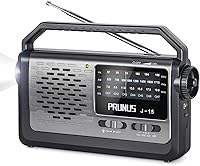
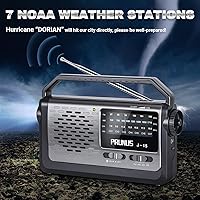
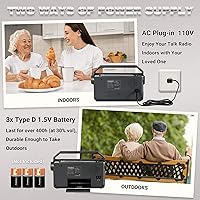
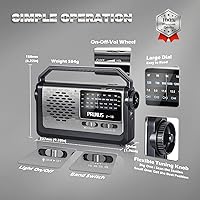
The PRUNUS J15WB NOAA Weather AM FM Radio is a straightforward, no-frills emergency radio that covers the bases most households actually need — AM, FM, shortwave, and all seven NOAA channels. It runs on either AC wall power or three D-cell batteries, which makes it genuinely useful when the lights go out. The classic analog dial and simple knob layout give it an old-school feel that older adults tend to appreciate right away. At just 1.3 pounds, this weather radio is light enough to grab and go, yet sturdy enough to sit on a kitchen shelf for years of daily listening.

Features & Benefits

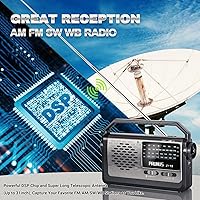
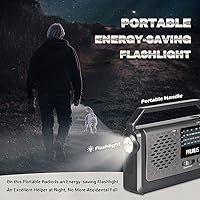
Inside, a DSP tuner chip works alongside a 31-inch telescopic antenna to pull in stations that cheaper radios might miss entirely. The seven NOAA weather band channels are baked right in, so during a hurricane warning or tornado watch you get official alerts without hunting through frequencies manually. There is also a built-in LED flashlight — not a powerhouse beam, but bright enough to navigate a dark hallway during a blackout. Plug the PRUNUS portable radio into the wall for all-day listening, or drop in three D-cell batteries when the power fails. A 3.5mm earphone jack rounds things out, letting you listen privately or pipe audio into a separate speaker.

Best For

This emergency radio is really built for a specific kind of person — someone who wants reliable, no-fuss access to weather alerts and local news without fumbling through apps or Bluetooth menus. Seniors and older adults are the obvious fit; the large dial, tactile knobs, and no-nonsense layout make it genuinely accessible from day one. It also belongs in any emergency preparedness kit, particularly for households in areas hit by ice storms or extended outages. Gift-givers shopping for a practical present for a parent or grandparent will find it easy to recommend. Shortwave is a bonus, though expectations should stay realistic — treat it as secondary, not a selling point.

User Feedback

Buyers consistently praise FM and NOAA reception, with many noting that the radio locks onto local stations cleanly and delivers weather alerts without a hitch. Speaker volume earns favorable mentions from users with hearing difficulties, though a handful find it falls short in a noisy environment. Where opinions split is on the shortwave band — it works, but sensitivity is limited compared to dedicated receivers, so go in informed. A recurring surprise for new owners: D batteries are not included in the box. Build quality impressions are mostly positive, though the tuning dial feels a bit light to some. The lack of Bluetooth is rarely a complaint; the people buying this radio simply were not looking for it.

Pros

  • FM and NOAA reception are the clear standouts — both perform reliably even in rural or low-signal areas.
  • The dual power setup means this emergency radio stays usable during blackouts, ice storms, and extended grid failures.
  • Setup takes minutes with no technical knowledge required — extend the antenna, plug in or insert batteries, and tune.
  • Large analog dial and straightforward knobs make it accessible for users with limited dexterity or vision challenges.
  • At its price point, the combination of multi-band coverage and emergency features is hard to beat in this category.
  • The built-in handle makes it easy to move between rooms or pack into an emergency go-bag without fuss.
  • Speaker volume is strong enough for daily listening in a medium-sized room, with decent clarity at moderate levels.
  • The 3.5mm earphone jack adds flexibility for private listening or connecting to an external speaker at home.
  • AM performance is solid for news, talk, and agricultural programming within a reasonable broadcast range.
  • Classic, uncluttered design makes it a comfortable fit in any home without looking out of place.

Cons

  • D-cell batteries are not included in the box, which can catch buyers off guard when they need the radio urgently.
  • Shortwave sensitivity is limited — distant or weak international stations often get lost in background noise.
  • No automatic NOAA alert activation means the radio must already be on and tuned to catch emergency broadcasts.
  • The tuning knob feels noticeably lighter and less precise than the rest of the unit, making fine adjustments tricky.
  • The built-in flashlight is too dim for outdoor emergencies or illuminating anything beyond a small immediate area.
  • Speaker distortion appears at high volume levels, particularly noticeable with voice-heavy programming.
  • No digital frequency display makes it harder to land precisely on a known station frequency compared to digital tuners.
  • Antenna base can feel slightly loose after repeated extended and retracted cycles over months of use.

Ratings

The PRUNUS J15WB NOAA Weather AM FM Radio earned its scores through AI-driven analysis of verified global buyer reviews, with spam, bot-generated, and incentivized feedback actively filtered out before any scoring was applied. What emerges is an honest, well-rounded picture of where this emergency radio genuinely delivers and where it falls short — no sugarcoating, no inflated averages. Both the strengths that keep buyers recommending it and the friction points that prompt complaints are reflected transparently in every category below.

FM Reception
88%
Most buyers report that FM station lock-in is one of this radio's strongest suits. The DSP chip and long telescopic antenna combine to pull in local stations cleanly, even in rural areas or buildings where cheaper radios drop signal. Daily listeners consistently mention stable, static-free playback during morning routines.
A small number of users in densely urban areas note occasional interference when the antenna is not fully extended or positioned at the right angle. The tuning can feel slightly sensitive, making it easy to drift off a station if the knob is nudged accidentally.
NOAA Weather Alert Reception
91%
Picking up all seven NOAA weather channels is where this emergency radio earns real respect from buyers. Users in storm-prone regions report that alerts come through clearly and promptly, which is exactly what you need at 2am when a tornado watch is issued. It handles this core job reliably.
The radio does not have automatic alert activation or a memory alarm — you have to have it on and tuned to a weather band to catch an alert. For true set-and-forget emergency monitoring, buyers expecting that functionality will be disappointed.
AM Reception
76%
24%
AM performance is solid for talk radio and news stations within reasonable range. Users who rely on AM for overnight broadcasts or agricultural reports find it dependable during both day and evening hours. The DSP tuner helps reduce the hum that plagues many low-cost AM radios.
Weak or distant AM stations can be harder to isolate cleanly, and a few buyers note some residual static on fringe signals. It is not an AM enthusiast-grade receiver, so expectations should match the price tier.
Shortwave Reception
57%
43%
Shortwave coverage spans 7.0 to 19.0 MHz, which is enough to pick up major international broadcasters during favorable conditions. Some buyers enjoy it as a casual way to explore global programming, particularly in the evenings when shortwave propagation improves.
This is the band where the most criticism lands. Sensitivity is limited, and weaker international stations often get buried in noise. Buyers who purchase this radio specifically for shortwave listening tend to feel let down — it is best treated as a secondary bonus rather than a primary feature.
Build Quality
72%
28%
The overall construction feels sturdy enough for everyday shelf use and occasional trips outdoors. The cabinet has a reassuring solidity to it, and the band switch clicks firmly into position. Most buyers who use it as a home radio report no issues after months of regular handling.
The tuning knob draws the most build-related complaints — it feels lighter and less precise than the rest of the unit, which can make fine-tuning a bit fiddly. A handful of users also noted the antenna base connection feels slightly loose over time with repeated adjustments.
Ease of Use
93%
This is arguably the radio's greatest strength for its target audience. The layout is intuitive from the moment you take it out of the box — one knob tunes, one knob controls volume, and the band switch is clearly labeled. Seniors and non-tech-savvy buyers consistently highlight how little learning curve there is.
The analog dial markings can be hard to read in low light without the flashlight on. A small number of younger buyers find the purely analog tuning less convenient compared to digital preset buttons they are used to on other devices.
Speaker Volume & Clarity
78%
22%
The built-in speaker is loud enough for a medium-sized room, and buyers with mild hearing difficulties often mention they can follow news and weather clearly at higher volume settings. Clarity at moderate listening levels is consistently rated well for a mono speaker at this price.
At maximum volume, some distortion creeps in — particularly on bass-heavy voices or music. In noisy outdoor settings like a busy campsite or workshop, the speaker can struggle to cut through ambient sound, making the earphone jack the better option in those situations.
Flashlight Usefulness
63%
37%
Having a flashlight built into an emergency radio is genuinely handy, and buyers appreciate the convenience of not needing a separate torch during a blackout. It is bright enough to navigate a hallway or find supplies in a dark room, which is its intended role.
Do not expect a tactical-grade beam. The LED output is modest, and users who needed to illuminate a larger area or work outdoors during a storm found it underwhelming. It is a complementary feature, not a replacement for a dedicated flashlight.
Battery Life
68%
32%
Running on three D-cell batteries is a practical choice for emergency use — D-cells are widely available and hold more capacity than AA or AAA alternatives. Buyers who keep spare batteries stocked report the radio holds up well through extended outages.
D batteries are not included, which catches a surprising number of buyers off guard at the moment they need the radio most. Actual battery life varies significantly by volume level, and a few users noted the drain felt faster than expected at high volume during continuous use.
Value for Money
84%
At its price point, this emergency radio offers a combination of bands, dual power, and build quality that is hard to match with competing models. Buyers who needed a dependable NOAA and FM radio without spending more consistently feel they got fair value, especially as a gift purchase.
If you are a serious shortwave listener or need advanced emergency features like hand-crank power or solar charging, the value equation shifts. Those buyers will likely outgrow it quickly and might be better served spending more on a feature-richer alternative.
Portability
81%
19%
At 1.3 pounds and with a built-in handle, the PRUNUS portable radio is easy to carry from room to room or pack into an emergency bag. Its dimensions are practical — it fits comfortably on a nightstand, kitchen counter, or workbench without dominating the space.
It is not pocketable or jacket-friendly the way a smaller transistor radio would be. For buyers specifically wanting a radio they can walk around with hands-free, this size requires carrying or finding a surface to set it on.
Setup & First Use
89%
Buyers consistently report having the radio up and running within minutes of opening the box. Plugging in the AC cord, extending the antenna, and rotating the tuning dial is genuinely all it takes. No pairing, no apps, no account creation — a real advantage for less tech-comfortable users.
The included manual is basic and does not explain shortwave band behavior or optimal antenna positioning in detail. First-time shortwave users may feel a bit lost without doing some independent reading on how to get the most out of those frequencies.
Earphone Jack Functionality
74%
26%
The 3.5mm jack works reliably for private listening, and buyers who use the radio in shared living spaces appreciate being able to listen without disturbing others. It also doubles as an audio-out connection to a portable speaker, which expands the radio's versatility meaningfully.
There is no volume memory or auto-pause when headphones are connected or disconnected, which is a minor but noticeable omission. The jack placement on the unit is functional but not the most ergonomic position depending on how the radio is oriented.
Gifting Appeal
86%
This emergency radio has become a go-to choice for practical gift-giving, especially for older parents or grandparents. The approachable design, easy operation, and genuine utility around emergency preparedness make it easy to present as something both thoughtful and useful year-round.
The silver color is functional but uninspiring as a gift presentation. Buyers have noted the packaging is plain, so if presentation matters for the occasion, some extra wrapping effort is needed to elevate it beyond a purely utilitarian box.

Suitable for:

The PRUNUS J15WB NOAA Weather AM FM Radio is genuinely well-matched to older adults and seniors who want a radio that works without any digital setup, app, or pairing process — just plug in, extend the antenna, and tune. Households in hurricane corridors, tornado alleys, or areas prone to winter ice storms will find real peace of mind in having direct access to all seven NOAA weather alert channels without depending on an internet connection or a charged smartphone. It also makes a lot of sense as an emergency preparedness addition for anyone building or refreshing a home emergency kit, particularly because the dual AC and D-battery power setup means it stays functional even when the grid goes down. Gift-givers shopping for a practical, non-intimidating present for a parent, grandparent, or older relative will find this weather radio easy to recommend — it looks familiar, operates simply, and serves a clear everyday purpose. Rural listeners who want dependable FM and AM coverage in areas where streaming is unreliable will also get solid daily use out of it.

Not suitable for:

Buyers primarily motivated by shortwave listening should approach the PRUNUS J15WB NOAA Weather AM FM Radio with measured expectations — shortwave reception at this price tier is limited, and serious international radio enthusiasts will find the sensitivity too modest for weak or distant signals. Anyone wanting a self-sufficient emergency radio with hand-crank charging, solar power, or an auto-alert function that activates the radio automatically when a NOAA warning is broadcast will need to look at more advanced options, as this emergency radio requires being powered on and tuned to a weather band to catch alerts. Buyers who value wireless connectivity should also look elsewhere — there is no Bluetooth, no digital preset memory, and no smartphone integration of any kind, which is by design but still a dealbreaker for those who want modern convenience. Finally, anyone planning to use this radio as their primary flashlight during extended outdoor emergencies should know the built-in LED is modest at best, and is not a substitute for a proper torch.

Specifications

  • Model Number: This radio carries the official model designation J15WB, manufactured by PRUNUS.
  • Dimensions: The unit measures 2.2″ deep by 6.42″ wide by 10.12″ tall, making it shelf-friendly without occupying excessive counter space.
  • Weight: At 1.3 lb, the radio is light enough to carry by its built-in handle without fatigue.
  • Band Coverage: Receives AM (520–1710 kHz), FM (87–108 MHz), shortwave (7.0–19.0 MHz), and all seven NOAA weather broadcast channels (162.40–162.55 MHz).
  • Tuner Technology: A DSP (Digital Signal Processing) chip handles station acquisition and demodulation across all supported bands.
  • Antenna: A 31-inch telescopic antenna is built in and manually extendable to improve signal reception on FM, shortwave, and weather bands.
  • Power Sources: Operates on 110V AC via the included power cord, or on three D-cell batteries (not included) for portable or emergency use.
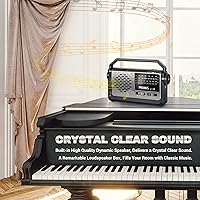
  • Speaker: A single built-in dynamic mono speaker delivers audio output suitable for personal and small-room listening.
  • Audio Output: A 3.5mm earphone jack allows connection of standard wired headphones or an external speaker via auxiliary cable.
  • Flashlight: An integrated LED flashlight is accessible via a dedicated on/off switch on the unit's control panel.
  • Controls: Physical controls include an on/off/volume wheel, an analog tuning knob, a band selector switch, and a dedicated flashlight toggle.
  • Display: A large analog frequency dial with printed band markings serves as the tuning reference; there is no digital frequency display.
  • Color: Available in silver with a classic radio cabinet aesthetic designed to complement home and emergency kit settings.
  • Included Items: Each unit ships with an AC power cord and a printed owner's manual; batteries and headphones are not included.
  • Connectivity: The radio has no Bluetooth, Wi-Fi, or digital wireless connectivity of any kind — audio output is via the 3.5mm jack only.
  • NOAA Channels: All seven standard NOAA Weather Radio broadcast frequencies are accessible via the weather band selector on this unit.
  • Manufacturer: PRUNUS is the brand and manufacturer, with this model first made available in January 2022.

Related Reviews
Audiocrazy AM FM NOAA Emergency Weather Radio
67%
83%
NOAA Reception
61%
Battery Life
58%
Build Quality
79%
Value for Money
62%
Bluetooth Performance
More
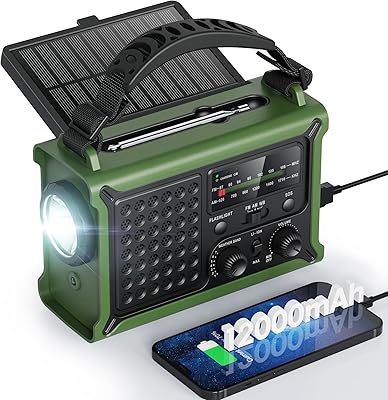
FQBLXY H27 30000mAh Emergency Weather Radio
67%
83%
Value for Money
71%
Battery Capacity
44%
Solar Charging
41%
Hand Crank Efficiency
67%
Radio Reception
More
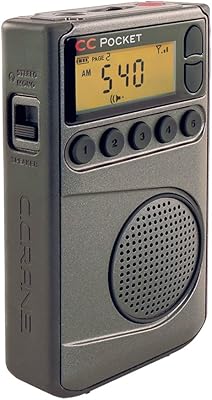
C. Crane CC Pocket AM/FM NOAA Weather Radio
87%
87%
Reception Quality
94%
Portability
90%
Ease of Use
80%
Battery Life
65%
Sound Quality
More
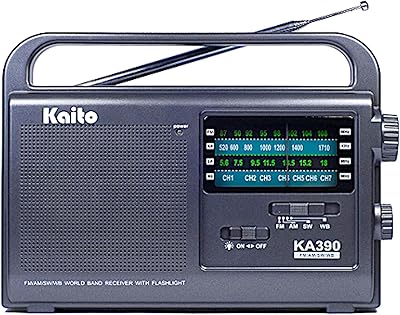
Kaito KA390 Portable Weather Radio
76%
88%
Value for Money
86%
NOAA Weather Reception
81%
FM Reception
67%
Shortwave Reception
78%
Speaker Quality
More
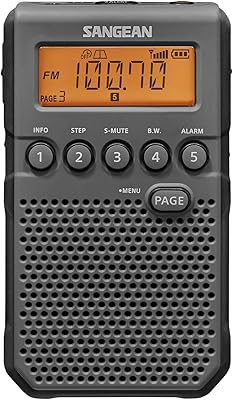
Sangean DT-800BK AM/FM/NOAA Weather Alert Pocket Radio
77%
88%
AM/FM Reception Quality
91%
NOAA Weather Alert Reliability
93%
Portability & Form Factor
67%
Build Quality & Durability
72%
Battery Life
More
Raynic NOAA Weather Radio 12000mAh
86%
88%
Performance in Emergencies
91%
Charging Options
83%
Signal Reception
89%
Flashlight & Lamp Effectiveness
85%
Ease of Use
More
Eoxsmile CR1009Pro Emergency Weather Radio
79%
88%
Value for Money
91%
NOAA Weather Alert
67%
Battery Life
83%
Charging Versatility
74%
Build Quality
More
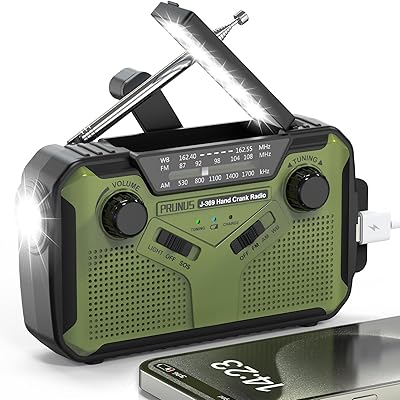
PRUNUS J-369 Emergency Weather Radio
84%
88%
Value for Money
93%
Power Options Flexibility
85%
Ease of Use
90%
SOS Alarm Effectiveness
80%
Battery Life
More
Midland ER210 Emergency Weather Radio
75%
91%
NOAA Reception Quality
83%
Power Source Versatility
78%
Battery Life
89%
Ease of Use
67%
Flashlight Performance
More
Rychi TMUS-MD319 NOAA Weather Alert Radio
75%
86%
Alert Reliability
71%
S.A.M.E. Programming Ease
89%
External Warning Light
63%
Battery Backup Performance
67%
Build Quality
More

FAQ

Batteries are not included. You will need three D-cell batteries to use this emergency radio on battery power. It is worth picking up a pack before you actually need it during an outage, so you are not caught unprepared.

No — the PRUNUS J15WB NOAA Weather AM FM Radio does not have an automatic alert activation feature. To receive a weather alert, the radio needs to already be switched on and tuned to one of the seven NOAA weather band channels. If you need a radio that wakes itself up during an alert, look for models with a dedicated SAME alert function.

Most users find FM reception is one of this radio's strongest points. The DSP chip and long telescopic antenna together do a solid job of locking onto local stations cleanly. In rural areas especially, buyers report noticeably better performance than basic clock radios or small portable sets.

It depends on your expectations. The shortwave band works and can pick up major international broadcasters, especially during evening hours when shortwave propagation improves. That said, sensitivity is modest at this price tier, so weak or distant stations will likely be hard to isolate clearly. Treat it as a bonus feature rather than a core reason to buy.

Yes, absolutely. Running on AC power is actually the most comfortable way to use it at home — no battery drain to worry about, and you can listen all day at whatever volume you like without any interruption.

The built-in LED is bright enough to move around indoors safely — finding your way to the circuit breaker or locating supplies in a dark room, for instance. For extended outdoor use or illuminating a larger area, it will feel limited. Think of it as a handy backup rather than a primary torch.

Yes. The 3.5mm earphone jack on the unit accepts any standard wired headphones or earbuds. It also works with an auxiliary cable if you want to route audio into a larger external speaker.

It is genuinely one of the simpler radios available. There are no menus, no apps, and no pairing processes. Turn the volume knob to power it on, select a band, and rotate the tuning knob until you find a station. Most buyers report that older family members figure it out within a few minutes on their own.

The antenna is functional and extends to a useful length, but like most telescopic antennas in this category it is not built for rough handling. Extending and collapsing it gently rather than yanking it will keep it in good shape longer. Some users have noted the base connection can feel slightly loose after extended repeated use.

There is no digital frequency display on this radio. Tuning is entirely analog, using a printed dial with frequency markings. For most casual listeners this is perfectly fine, but if you need to land precisely on a known frequency — a specific shortwave broadcast, for example — it takes a bit more patience than a digital tuner would require.