Audiocrazy AM FM NOAA Emergency Weather Radio
Audiocrazy AM FM NOAA Emergency Weather Radio — image 1
Audiocrazy AM FM NOAA Emergency Weather Radio — image 2
Audiocrazy AM FM NOAA Emergency Weather Radio — image 3
Audiocrazy AM FM NOAA Emergency Weather Radio — image 4
Audiocrazy AM FM NOAA Emergency Weather Radio — image 5
Audiocrazy AM FM NOAA Emergency Weather Radio — image 6
Audiocrazy AM FM NOAA Emergency Weather Radio — image 7
Audiocrazy AM FM NOAA Emergency Weather Radio — image 8
67%
33%

Overview

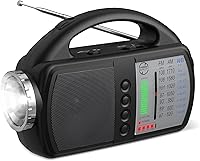
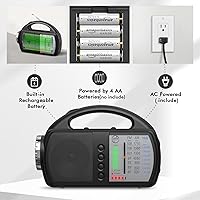
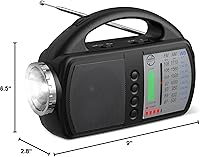
The Audiocrazy AM FM NOAA Emergency Weather Radio entered the market in early 2024 as a budget-conscious option packing a surprising number of features into a single plastic unit. At 9″ x 2.8″ x 6.5″ and 2.2 lbs, it sits in that awkward middle zone — not pocketable, but not a burden to carry either. Audiocrazy isn't a household name, and that's worth keeping in mind. What this weather radio does offer, though, is a dual power system — a built-in rechargeable lithium polymer battery paired with a 4 AA battery compartment — plus AM, FM, NOAA, Bluetooth, USB, and AUX-IN all in one box. For the price, the feature count is hard to argue with.

Features & Benefits

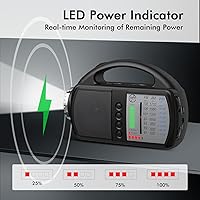
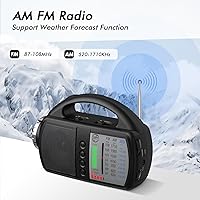
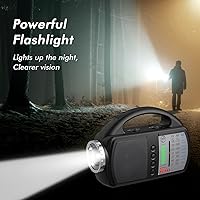
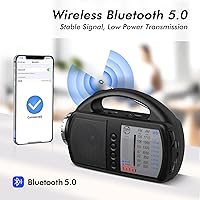
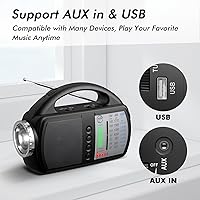
The seven preset NOAA channels are the real reason most people consider this emergency radio in the first place, and they work as advertised — tuning in quickly without fumbling through frequencies during a storm. Bluetooth 5.0 handles wireless audio well enough for casual listening, though don't expect audiophile-grade range or rock-solid pairing every time. The USB and AUX-IN inputs are genuinely useful additions, letting you play music from a flash drive or connect a wired device when you'd rather save your phone battery. The built-in flashlight is a practical touch, not a gimmick. The battery indicator is another thoughtful detail — knowing your charge level before severe weather hits matters more than people tend to realize.

Best For

This emergency radio makes the most sense for households in storm-prone areas who want a capable backup device without a significant financial commitment. If you're assembling a go-bag or stocking a home emergency kit, it checks most of the important boxes — NOAA alerts, extended battery options, and a flashlight — at an accessible price point. Campers and weekend outdoor users will appreciate the AA battery fallback, which means you're not stranded if the built-in battery drains. It also works reasonably well as a bedside or garage radio that connects wirelessly to your phone, though that's really a secondary function here. Think of it as a preparedness tool first, casual radio second.

User Feedback

Buyers generally respond well to how quickly NOAA alerts come through, with several noting clear, usable reception even during poor conditions. The flashlight gets mixed mentions — some find it bright enough during a power outage, others wish it were stronger. Bluetooth pairing draws occasional complaints about limited range and inconsistent reconnection, which is worth considering if wireless audio is a priority. The all-plastic build raises durability questions from a handful of reviewers. On battery life, the 10-hour figure appears to reflect standby rather than active listening time, so real-world results will vary depending on usage. The rhythm light lands mostly as a fun extra — rarely a deciding factor in either direction.

Pros

  • Seven preset NOAA channels make tuning into emergency alerts fast and frustration-free during stressful situations.
  • Dual power options — rechargeable battery plus 4 AA slots — mean you have a backup when outlets aren't available.
  • Bluetooth 5.0 keeps the radio useful day-to-day as a casual wireless speaker, not just during emergencies.
  • USB drive and AUX-IN inputs add real flexibility for audio sources beyond just radio or a paired phone.
  • The built-in flashlight is a genuinely practical addition during power outages, not just a box-checking feature.
  • A battery level indicator takes the guesswork out of knowing whether this emergency radio is ready when you need it.
  • At its price point, the feature-to-cost ratio is hard to beat for basic emergency preparedness needs.
  • Compact enough to fit in a go-bag or on a nightstand without taking over the space.
  • AM and FM reception alongside NOAA gives you multiple information sources during a crisis.

Cons

  • All-plastic construction raises durability concerns for buyers who need a device that can take rough handling.
  • Bluetooth range and reconnection reliability have drawn complaints — it's inconsistent enough to notice.
  • The 10-hour battery figure is a standby estimate, not a reflection of active listening time, which is meaningfully shorter.
  • Flashlight brightness falls short for some users who expected a more powerful output during complete blackouts.
  • Audiocrazy has a limited track record, making long-term reliability and warranty support harder to gauge.
  • The volume rhythm light, while novel, adds no practical value and may feel out of place on an emergency device.
  • No ruggedized or water-resistant rating makes it a risky choice for outdoor or field use in wet conditions.
  • Buyers who want a primary Bluetooth speaker will likely find better-performing dedicated options at a similar price.

Ratings

The scores below for the Audiocrazy AM FM NOAA Emergency Weather Radio were generated by our AI rating engine after analyzing verified purchase reviews from buyers worldwide, with spam, bot activity, and incentivized feedback actively filtered out. The result is an honest, data-driven snapshot that reflects both what this weather radio genuinely gets right and where real users have run into friction. Nothing has been softened or inflated — what you see is what buyers actually experienced.

NOAA Reception
83%
Most buyers in storm-prone areas reported tuning into NOAA alerts quickly and reliably, with the 7 preset channels making it straightforward to find the right station without fumbling mid-storm. Reception clarity held up well even in adverse conditions, which is exactly what matters most for this use case.
A smaller segment of users noted occasional static or weaker signal in areas with naturally poor radio coverage, which is partly a geography issue but also reflects the limitations of the built-in antenna design. It performs solidly in most locations but is not outstanding in fringe reception zones.
Battery Life
61%
39%
The dual power system — rechargeable lithium polymer battery plus a 4 AA compartment — gave buyers genuine peace of mind during extended outages, knowing they had a backup ready without scrambling for a charger. The AA fallback in particular earned consistent praise from campers and emergency preppers.
The advertised 10-hour figure routinely disappointed users who interpreted it as active listening time rather than standby duration. In real-world continuous use, with radio playing and occasional flashlight use, actual runtime fell noticeably shorter, leaving some buyers feeling misled by the spec sheet.
Build Quality
58%
42%
For its price tier, the unit feels reasonably assembled straight out of the box, with buttons and controls that are tactile and easy to operate even in low-light situations. Several buyers appreciated that it did not feel flimsy during everyday handling on a nightstand or workbench.
The all-plastic construction raises legitimate durability concerns for buyers who expect a device like this to take a drop or survive rough field conditions. A handful of reviewers mentioned creaking or flex in the casing after weeks of use, and the lack of any water resistance rating is a real limitation for outdoor scenarios.
Value for Money
79%
21%
At its price point, the feature set — AM, FM, NOAA, Bluetooth 5.0, USB, AUX-IN, flashlight, and dual power — is genuinely hard to match without spending significantly more. Buyers building a budget emergency kit repeatedly cited this as one of the most cost-effective all-in-one options they found.
The value proposition holds only if expectations are calibrated correctly. Users who expected premium performance across all features — particularly Bluetooth range or battery life — felt let down, which reflects a mismatch between expectation and the product's actual market tier rather than a flaw in isolation.
Bluetooth Performance
62%
38%
Pairing with a smartphone was generally quick and straightforward for most users, and Bluetooth 5.0 provided stable audio at short ranges for casual background listening in a room or garage setting. The wireless convenience was appreciated as a daily-use bonus feature beyond emergency functions.
Range limitations drew consistent complaints, with several buyers noting that moving more than a room away caused dropout or lag. Reconnection after the device was powered off and back on was reported as inconsistent, which is frustrating enough that users who rely on Bluetooth regularly may want to look elsewhere.
Flashlight Utility
67%
33%
During power outages, buyers found the built-in flashlight genuinely useful for navigating a dark room, locating supplies, or reading — situations where a hands-free radio with integrated lighting is more convenient than juggling separate devices. It works well as a supplementary light source.
Brightness was the most common complaint, with a noticeable share of reviewers feeling the output was underwhelming compared to even a basic standalone flashlight. It is functional but not powerful enough to serve as a primary light source in a true blackout, especially in larger spaces.
Ease of Use
81%
19%
The control layout was praised for being intuitive, with physical buttons that are easy to distinguish by feel in the dark — an important detail for an emergency device. Switching between AM, FM, and NOAA modes required minimal learning curve for most buyers across age groups.
A few users, particularly older buyers, found the labeling on some controls small and difficult to read in poor lighting. The manual was also cited as sparse, which made troubleshooting Bluetooth pairing or USB playback slightly more effortful than it needed to be.
Audio Quality
64%
36%
For voice-forward content like weather alerts, talk radio, and news broadcasts, audio clarity was consistently rated as adequate and clear enough to understand without straining. That is ultimately what matters most for an emergency-use device, and it delivers on that baseline.
Music playback — whether via Bluetooth, USB, or AUX — revealed the limitations of the speaker more clearly, with bass lacking depth and high volumes introducing distortion. Buyers expecting hi-fi audio for daily listening will find it underwhelming compared to even modestly priced dedicated speakers.
Portability
72%
28%
At 2.2 lbs and a compact footprint, this emergency radio fits comfortably in a go-bag, on a nightstand, or on a garage shelf without dominating the space. The form factor is practical for home use and manageable for car camping where weight is not a strict concern.
It is not light enough to be a comfortable hiking or backpacking companion for weight-conscious outdoor users. The 9″ length also means it does not slip neatly into a side pocket or standard bag pouch, making grab-and-go transport slightly more deliberate than truly portable alternatives.
Charging Experience
66%
34%
The smart battery indicator was well-received, giving users a clear read on remaining charge and active charging status — a small but genuinely useful detail that prevents the device from dying unexpectedly before a storm. Knowing charge level at a glance builds confidence in the device.
Charging speed was not highlighted as a strength, and the proprietary power cord included in the box means a lost cable becomes a minor inconvenience to source a replacement. USB-C charging would have been a more future-friendly choice given how common those cables are in most households today.
NOAA Channel Access
84%
The 7 preset NOAA channels cover all officially designated weather alert frequencies, and switching between them takes seconds. Buyers in coastal and tornado-alley regions specifically praised how quickly they could access regional alerts without tuning manually through a frequency dial.
There is no automatic alert activation — the radio will not wake itself up or sound an alarm when a new NOAA warning is broadcast. For users who expected that functionality, it is a meaningful gap that requires staying proactive rather than relying on the device to alert them passively.
USB Playback
69%
31%
The ability to plug in a flash drive and play audio files directly was appreciated by users who wanted a music source independent of a phone or Bluetooth. It is a practical fallback that adds real-world flexibility, particularly for users who keep a pre-loaded USB stick in their emergency kit.
File format compatibility was not clearly documented, and a few users ran into issues with certain audio formats not playing as expected. The USB port also sits in a position that some buyers found awkward to access without moving the unit, which is a minor but recurring annoyance.
Rhythm Light
44%
56%
A small group of buyers — particularly those who use the radio as a casual bedroom or workshop companion — found the volume-synced light a fun visual touch that added personality to the device during music playback. It does not harm anything and costs nothing to ignore.
The overwhelming majority of reviewers either ignored the rhythm light entirely or flagged it as unnecessary for an emergency-focused device. It adds no practical utility and, for buyers who associate this radio with preparedness rather than entertainment, it can feel slightly out of place with the product identity.
Brand Reliability
53%
47%
The product has performed reliably enough out of the box for most buyers, with few reports of immediate defects or manufacturing failures. For buyers willing to accept some uncertainty about long-term support, the day-one experience has generally been positive.
Audiocrazy's limited market history makes it genuinely difficult to assess long-term reliability, warranty follow-through, or customer service responsiveness. Buyers who value the reassurance of an established brand with documented support channels will find that confidence harder to come by here.

Suitable for:

The Audiocrazy AM FM NOAA Emergency Weather Radio is a solid pick for budget-conscious households in regions where severe weather — hurricanes, tornadoes, flooding — is a real seasonal concern. If you're the type of person who keeps a go-bag by the door or stocks a basic emergency kit, this weather radio fills several roles at once without requiring a large investment. Campers and outdoor users who spend time in areas with spotty cell coverage will appreciate having a dedicated NOAA receiver plus the AA battery fallback, which means you're not dependent on a charging source in the field. It also works well as a low-commitment bedside or workshop radio that connects to your phone via Bluetooth when there's no emergency to monitor. For first-time emergency radio buyers who want to cover the basics without overthinking it, this is a practical starting point.

Not suitable for:

Buyers who prioritize long-term durability or who plan to rely on this device heavily through multiple storm seasons should approach the Audiocrazy AM FM NOAA Emergency Weather Radio with measured expectations. The all-plastic construction raises reasonable questions about how well it holds up after drops or extended use in rough conditions — it's not built like a ruggedized field device. The 10-hour battery claim refers to standby time, not active listening, so if you expect hours of continuous use during an outage, the real-world performance may fall short of expectations. Those who want a dependable Bluetooth speaker as a primary function should look elsewhere — the wireless audio is a bonus, not a strength. Buyers who value brand reputation and established after-sale support may also find the relatively unknown Audiocrazy name a sticking point when it comes to warranties or troubleshooting.

Specifications

  • Brand: Manufactured by Audiocrazy, a consumer electronics brand that entered the portable radio market in early 2024.
  • Dimensions: The unit measures 9″ in length, 2.8″ in width, and 6.5″ in height.
  • Weight: This weather radio weighs 2.2 lbs, making it portable but not ultralight for pack-sensitive users.
  • Material: The outer housing is constructed entirely from plastic, which keeps the weight down but limits ruggedization.
  • Radio Bands: Supports AM, FM, and NOAA bands, with 7 preset NOAA weather alert channels for rapid emergency tuning.
  • Bluetooth: Equipped with Bluetooth 5.0 for wireless audio streaming from smartphones, tablets, and computers.
  • Audio Inputs: Includes a USB-A port for flash drive playback and an AUX-IN port for wired audio connections.
  • Primary Power: Powered by a built-in rechargeable lithium polymer battery with a manufacturer-claimed standby time exceeding 10 hours.
  • Backup Power: Features a dedicated battery compartment that accommodates 4 standard AA batteries as a secondary power source.
  • Charging: Charges via the included power cord; a smart battery indicator displays both charge level and active charging status.
  • Flashlight: Incorporates a built-in LED flashlight intended for use during power outages and low-visibility emergency situations.
  • Rhythm Light: A volume-synced rhythm light illuminates in time with audio output, functioning as a visual audio indicator.
  • Connectivity: Offers three connectivity options: Bluetooth wireless, USB drive input, and a wired AUX-IN port.
  • In the Box: Package includes the radio unit, a power cord, a pre-installed lithium polymer battery, and a Bluetooth stereo setup.
  • First Available: The product was first listed on Amazon on January 26, 2024, making it a relatively recent market entry.
  • ASIN: The Amazon Standard Identification Number for this product is B0CTCG8CBW.

Related Reviews
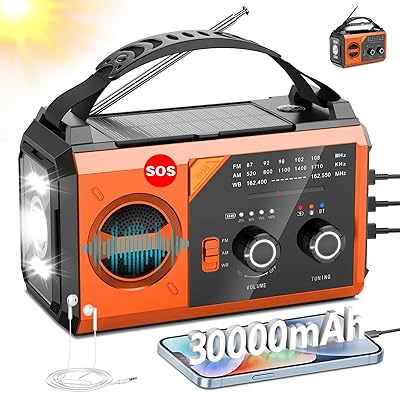
FQBLXY H27 30000mAh Emergency Weather Radio
67%
83%
Value for Money
71%
Battery Capacity
44%
Solar Charging
41%
Hand Crank Efficiency
67%
Radio Reception
More
Eoxsmile CR1009Pro Emergency Weather Radio
79%
88%
Value for Money
91%
NOAA Weather Alert
67%
Battery Life
83%
Charging Versatility
74%
Build Quality
More
Leaton Emergency NOAA Weather Alert Radio
85%
88%
Battery Life & Charging Options
85%
Weather Alerts & Reception
90%
Build Quality & Durability
93%
Portability & Size
87%
Ease of Use
More
Midland ER210 Emergency Weather Radio
75%
91%
NOAA Reception Quality
83%
Power Source Versatility
78%
Battery Life
89%
Ease of Use
67%
Flashlight Performance
More
PPLEE 1009Pro-G NOAA Emergency Weather Radio
84%
94%
Power Options Versatility
88%
Build Quality and Durability
81%
Ease of Use
90%
Portability and Size
75%
Sound Quality (Radio Reception)
More
PPLEE CR1009 5000mAh Emergency Weather Radio
74%
88%
NOAA Reception Reliability
91%
Power Redundancy
83%
Battery Life
47%
Solar Charging Performance
44%
Hand Crank Efficiency
More
Jensen JEP-650R NOAA Emergency Weather Radio
70%
88%
Value for Money
83%
NOAA Reception
81%
Power Source Versatility
51%
Hand-Crank Efficiency
67%
AM/FM Reception
More
PRUNUS J15WB NOAA Weather AM FM Radio
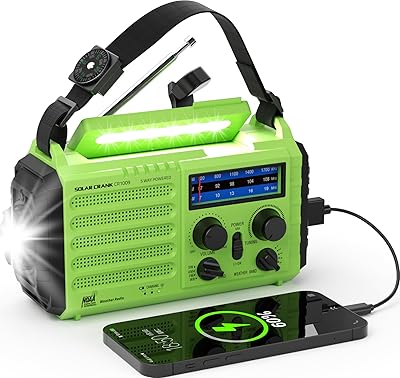
79%
88%
FM Reception
91%
NOAA Weather Alert Reception
76%
AM Reception
57%
Shortwave Reception
72%
Build Quality
More
C. Crane CC Pocket AM/FM NOAA Weather Radio
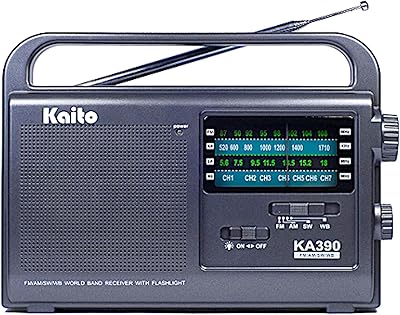
87%
87%
Reception Quality
94%
Portability
90%
Ease of Use
80%
Battery Life
65%
Sound Quality
More
Kaito KA390 Portable Weather Radio
76%
88%
Value for Money
86%
NOAA Weather Reception
81%
FM Reception
67%
Shortwave Reception
78%
Speaker Quality
More

FAQ

You have to tune in manually — this emergency radio does not have an automatic NOAA alert function that triggers on its own. However, the 7 preset NOAA channels make it quick to access the right frequency without scanning, which is practical enough when time matters.

The 10-hour figure the manufacturer cites refers to standby time, not continuous active listening. In practice, expect noticeably shorter runtime when you have the radio playing, Bluetooth active, or the flashlight on simultaneously. A safe real-world estimate for active listening is somewhere in the range of 4 to 6 hours, though this varies with volume and feature usage.

Yes, it supports Bluetooth 5.0 and will pair with your phone or computer for casual listening. That said, this is an emergency radio first — the audio quality and Bluetooth range are adequate but not comparable to a dedicated Bluetooth speaker. Think of the wireless audio as a useful bonus rather than a primary selling point.

The battery compartment accepts 4 standard AA batteries, which are widely available. AA batteries are not included in the box — only the built-in rechargeable lithium polymer battery comes pre-installed.

No, there is no waterproof or water-resistant rating for this device. The plastic housing offers basic protection from dust and minor handling, but it should not be exposed to rain or moisture. Keep that in mind if you plan to use it outdoors.

It charges via the included power cord. The specific connector type is not officially detailed in the product listing, so it is worth checking the included accessories before assuming it is compatible with cables you already own.

The AUX-IN port is designed to accept audio input from an external source, not to output audio to headphones or external speakers. If you want to connect a non-Bluetooth device as a source — like an older MP3 player — the AUX-IN handles that.

Buyer feedback on this is genuinely mixed. Some users find it sufficient for moving around a dark room or locating essentials during an outage, while others feel it could be brighter. It is functional, but if a powerful flashlight is a priority for you, consider keeping a dedicated torch in your emergency kit as a supplement.

Audiocrazy is a relatively new and lesser-known brand, which makes warranty and after-sale support harder to assess with confidence. The product listing does not prominently detail warranty terms, so it is worth reaching out to the seller directly before purchasing if post-sale support is important to your decision.

Yes, that is one of the more practical design choices here — the AA battery compartment exists precisely for this scenario. As long as you have 4 AA batteries on hand, this weather radio will continue to operate independently of any power source, which is a meaningful advantage during extended outages.