Mesqool MQL-CR1009 5000mAh Emergency Weather Radio
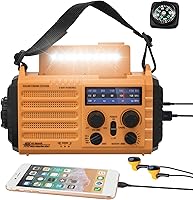
Mesqool MQL-CR1009 5000mAh Emergency Weather Radio — image 1
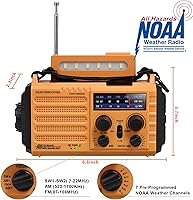
Mesqool MQL-CR1009 5000mAh Emergency Weather Radio — image 2
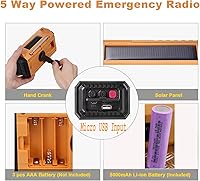
Mesqool MQL-CR1009 5000mAh Emergency Weather Radio — image 3
Mesqool MQL-CR1009 5000mAh Emergency Weather Radio — image 4
Mesqool MQL-CR1009 5000mAh Emergency Weather Radio — image 5
Mesqool MQL-CR1009 5000mAh Emergency Weather Radio — image 6
Mesqool MQL-CR1009 5000mAh Emergency Weather Radio — image 7
Mesqool MQL-CR1009 5000mAh Emergency Weather Radio — image 8
77%
23%

Overview

The Mesqool MQL-CR1009 5000mAh Emergency Weather Radio sits in a crowded field of survival radios, but its 5000mAh battery genuinely sets it apart from the 2000–3000mAh models that dominate this price range. It carries official NOAA certification, covers AM, FM, and shortwave bands, and uses a straightforward analog dial — no touchscreens, no Bluetooth pairing, no app required. That simplicity is a deliberate choice, not a shortcut. When the power is out and stress is high, turning a knob is exactly what you want. This is a capable, practical survival tool, not a premium audiophile device or an indestructible military-grade unit.

Features & Benefits

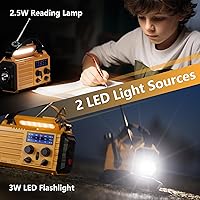
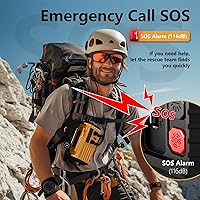
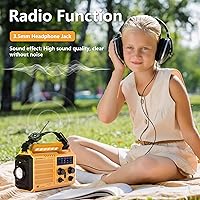
What makes this emergency radio genuinely useful in a crisis is the redundancy built into its power system. You can charge it via USB-C on a normal day, lean on the solar panel during a prolonged outage, or crank it by hand when everything else fails — three AAA batteries serve as a last-resort backup. The NOAA weather band locks onto all seven pre-set official frequencies instantly, while AM and FM keep you connected to local broadcasts. Shortwave adds international reach, though reception quality at this price tier will not rival a dedicated SW receiver. The 3W flashlight is noticeably bright, and a built-in reading lamp offers softer light for shelter use. A loud 116dB SOS siren rounds out the safety toolkit.

Best For

The Mesqool hand-crank radio makes the most sense for people who live in areas with real, recurring weather threats — coastal households in hurricane country, families in tornado alley, or anyone who has experienced a multi-day blackout and vowed never to be caught unprepared again. Campers and hikers will appreciate being able to top off a phone battery in the field using the USB-A output, even if it charges slowly. The analog tuning is genuinely ideal for older or tech-averse users who want nothing to do with menus or apps. It also works well as a thoughtful gift — something practical rather than decorative — for a family member who lives alone or in a rural area without reliable cell coverage.

User Feedback

Buyers consistently highlight the battery capacity as the standout strength — most people expected a modest cell but were surprised by how long this survival radio actually runs between charges. The ability to charge a phone, even at a trickle, during an outage earns frequent praise. That said, a recurring complaint is that solar charging alone is painfully slow in anything less than direct sunlight, so it should not be treated as a primary input. Shortwave reception gets mixed reviews; signals can be weak and drifty compared to standalone shortwave receivers. Build quality is adequate rather than impressive — the plastic chassis feels light. One genuine surprise: many buyers mention the reading lamp as unexpectedly handy, often used long after the emergency has passed.

Pros

  • A 5000mAh battery is meaningfully larger than most rivals at this price, giving you real runtime when the grid goes down.
  • Five distinct charging methods make it nearly impossible to end up with a dead radio during a prolonged emergency.
  • NOAA weather band with seven pre-set channels locks onto official alerts instantly, no manual scanning needed.
  • The 3W flashlight is noticeably brighter than the 1W units found on many competing survival radios.
  • A built-in reading lamp with adjustable brightness is a genuinely practical bonus most buyers do not expect.
  • At under one pound, this emergency radio fits easily in a go-bag, glove compartment, or bedside drawer.
  • The 116dB SOS siren is loud enough to be heard at a real distance, adding a personal safety layer beyond weather alerts.
  • Included carabiner, nylon strap, and compass mean it is ready to use straight out of the box without extra purchases.
  • Analog dial tuning is refreshingly simple — no learning curve, no dead touchscreen, no software updates.
  • AM and FM bands make it useful for everyday listening, so it gets regular use rather than sitting forgotten in a drawer.

Cons

  • Solar charging is extremely slow in practice and should not be relied on as a standalone power source.
  • Shortwave reception is weak and drifty compared to any dedicated SW receiver, limiting its usefulness for serious monitoring.
  • The USB-A output charges connected devices slowly at 5V/1A, which will feel inadequate for modern smartphones.
  • Recharging the internal battery via USB-C takes around 12 hours, which is long if you forgot to top it off beforehand.
  • The plastic housing feels noticeably lightweight, which raises reasonable doubts about long-term durability in field conditions.
  • No digital frequency display means finding a specific station requires patience, especially on the shortwave band.
  • Hand-crank charging requires sustained effort for minimal power gain — it is a last resort, not a convenient option.
  • AAA battery backup adds versatility, but three AAAs provide only limited additional runtime in a real extended outage.

Ratings

The scores below for the Mesqool MQL-CR1009 5000mAh Emergency Weather Radio were generated by AI after analyzing thousands of verified global buyer reviews, with spam, bot-submitted, and incentivized feedback actively filtered out. Each category reflects the honest distribution of real user experiences — strengths are credited where earned, and recurring frustrations are not smoothed over.

Battery Life
88%
Buyers consistently single out the 5000mAh capacity as the main reason they chose this radio over cheaper alternatives. In real outage scenarios lasting 24 to 48 hours, users report the battery holding up well through continuous radio use and occasional flashlight bursts without needing a recharge.
A handful of buyers noted that battery life degrades noticeably if the unit is stored unused for several months, which matters for a device kept in a go-bag for years. Runtime also drops significantly when the flashlight is used on its high setting alongside the radio.
Power Input Versatility
91%
Five independent charging methods give this survival radio a genuine resilience edge that most competitors simply cannot match at this price. Users in hurricane and wildfire scenarios praised having USB-C as the day-to-day option with hand crank and solar as credible backups when the grid stayed down for days.
The hand crank requires a sustained, moderately tiring effort to generate meaningful charge — users report it is firmly a last resort, not a convenient option. AAA battery runtime is also limited, so relying on that input alone during an extended emergency will burn through batteries faster than expected.
NOAA Reception
86%
The seven pre-set NOAA channels lock in quickly and cleanly for most buyers, with no fiddly manual tuning required during a stressful situation. Users in coastal hurricane zones and tornado-prone regions specifically called out the clarity of local NOAA broadcasts as reliable and easy to access.
A smaller subset of users in geographically isolated areas or those surrounded by dense building coverage reported weaker NOAA signal pickup than expected. Extending the antenna fully is essential — something the manual notes but buyers occasionally overlook, leading to complaints that are often user-side issues.
AM/FM Reception
79%
21%
AM and FM performance is solid for everyday use — local stations come in cleanly when the telescoping antenna is extended, and users who take this radio camping enjoy tuning into regional FM stations without any setup hassle. The analog dial is intuitive enough that non-technical users get comfortable with it within minutes.
Fine-tuning to a precise frequency on the analog dial takes a steady hand, and the dial can feel slightly loose or imprecise on some units, making it easy to drift off a weaker station. FM stereo output through headphones is mono, which is a minor but noticeable limitation for regular listening.
Shortwave Reception
54%
46%
Users interested in picking up international news during a major regional disaster do report being able to pull in some shortwave stations, particularly stronger broadcasters like BBC World Service or Voice of America when conditions are favorable. For occasional, non-critical SW use it clears a low bar.
Shortwave performance is the most consistently criticized aspect of this emergency radio. Signals drift, background noise is high, and weaker or more distant stations are often impossible to resolve clearly — a direct consequence of the budget analog tuner. Anyone serious about shortwave will find it genuinely frustrating.
Flashlight Brightness
83%
The 3W flashlight is noticeably brighter than the 1W units found on many rival survival radios, and buyers use it in real power outage situations to navigate hallways, basements, and outdoor paths. At 150 lumens on the lower setting it runs for up to 22 hours, which is a meaningful advantage during multi-day outages.
The beam is a fairly wide flood rather than a focused spot, which limits its effective range for tasks like navigating a dark road or checking a distant area. A few users also noted the flashlight button placement could be more intuitive to locate by feel in the dark.
Reading Lamp
84%
The warm-toned reading lamp consistently surprised buyers who initially dismissed it as a minor feature. In actual use during outages, users found it genuinely comfortable for reading, playing cards, or keeping a shelter space softly lit for hours without eye strain — and the 40-hour runtime at low brightness is impressive.
The lamp is positioned under the flip-up solar panel, which means its angle is fixed and cannot be adjusted freely. Users who wanted to direct the light toward a specific area found themselves repositioning the entire unit rather than tilting a lamp head.
Solar Charging
47%
53%
In direct, unobstructed summer sunlight the solar panel does add a slow but real trickle of charge over several hours, which is genuinely better than nothing in a prolonged off-grid situation. A few buyers who tested it during extended camping trips confirmed it can partially offset daily radio use when left in the sun.
Solar charging is the most polarizing feature — many buyers feel it is oversold relative to its real-world output. Overcast skies, partial shade, or indirect light reduce its effectiveness dramatically, and even under ideal conditions it would take an impractically long time to meaningfully recharge a depleted 5000mAh cell.
SOS Alarm
87%
The 116dB siren is genuinely loud and commands attention — users who tested it outdoors confirmed it carries well over distance. The combination of audible alarm and flashing red beacon is a well-thought-out pairing for scenarios where someone needs to signal rescuers in low-visibility or noisy conditions.
The SOS button is accessible enough that accidental activations have been reported, particularly when the radio is being carried in a bag or handled in the dark. There is no lock or guard around the button, which can become an annoyance in everyday carry situations.
Build Quality
62%
38%
For a radio in this price tier, the build is functional and the overall fit is acceptable — buttons are responsive, the dial turns smoothly, and the unit arrives without quality control issues in the majority of reported cases. The weight is kept low deliberately, and most buyers accept that trade-off.
The plastic housing feels noticeably lightweight, and several buyers expressed doubt about how well it would hold up after a drop onto a hard surface or after years in a go-bag. A few units showed loose dial action or rattling components out of the box, which erodes confidence in longevity.
Portability
89%
At under one pound and roughly the size of a thick paperback, this emergency radio fits into a go-bag side pocket, a glove compartment, or a bedside drawer without taking up meaningful space. The included carabiner and strap make it easy to clip to a pack for hands-free outdoor carry.
The flip-up solar panel adds a bit of bulk compared to flat-panel designs, and a small number of buyers found the panel hinge felt fragile enough to be a concern for rough pack-and-go use over time.
Ease of Use
92%
The analog dial is one of this radio's most appreciated design decisions among its target buyers — there is no menu to navigate, no pairing process, and no screen to read in the dark. Older users and tech-averse buyers in particular praised how quickly they could get it up and running under stress.
The lack of a digital display makes it genuinely difficult to land precisely on a specific frequency, particularly on the shortwave band. New users also sometimes struggle to understand the interaction between the band selector and the tuning dial without reading the manual first.
Phone Charging Speed
51%
49%
The ability to charge a phone at all from a survival radio is a real and appreciated capability — buyers who used it during multi-day outages were glad to have even a slow top-up available to make emergency calls or check local alerts.
At 5V/1A output, charging a modern smartphone is a slow process, and buyers expecting power-bank-level speed are consistently disappointed. Several users also noted that running the radio and charging a phone simultaneously drained the internal battery faster than anticipated.
Value for Money
82%
18%
Compared to survival radios with smaller batteries and fewer power inputs at a similar price, this unit offers a strong feature-to-dollar ratio. Buyers who frame it correctly as a practical emergency preparedness tool rather than a premium audio device tend to come away satisfied with what they paid.
Buyers expecting premium build materials or best-in-class performance in any single category will feel the price point reflected in the compromises — the shortwave tuner, solar panel output, and plastic housing all leave room for improvement that a higher-end unit would address.

Suitable for:

The Mesqool MQL-CR1009 5000mAh Emergency Weather Radio is a strong fit for anyone who lives in a region where severe weather is a real annual concern — think Gulf Coast households bracing for hurricane season, Midwest families who keep a go-bag by the door, or rural residents who know from experience that power outages can stretch into days. Its five charging methods mean you are unlikely to ever find it completely dead when you actually need it, which is the core promise of any emergency device. Campers and backpackers who want one compact device to handle weather alerts, basic radio, phone top-offs, and lighting will find it punches well above its weight class. The analog dial design is a genuine advantage for older users or anyone who does not want to troubleshoot a menu system at two in the morning during a storm. It also makes a thoughtful, practical gift for a parent, grandparent, or college student living alone in an area prone to natural disasters.

Not suitable for:

The Mesqool MQL-CR1009 5000mAh Emergency Weather Radio is not the right choice for buyers expecting audiophile-level radio performance or serious shortwave listening. If you are a ham radio enthusiast or someone who regularly monitors distant international broadcasts, the shortwave reception on this unit will frustrate you — budget survival radios simply cannot compete with dedicated SW receivers on sensitivity or selectivity. Buyers who need a device that can survive being dropped, submerged, or thrown into a pack with heavy gear should also look elsewhere, as the lightweight plastic build is practical but not rugged. If solar charging is your primary planned power source — say, for an extended off-grid trip — be aware that the solar panel is better treated as a slow trickle backup than a reliable main input. Finally, anyone expecting fast phone charging will be disappointed: the USB-A output charges at a modest rate, useful in a pinch but not a replacement for a proper power bank.

Specifications

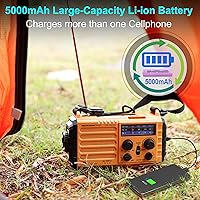
  • Battery Capacity: The built-in rechargeable lithium-ion battery holds 5000mAh (18500mWh), providing up to 13 hours of radio playback at 50% volume on a full charge.
  • Power Inputs: The unit accepts power via USB-C (5V/2A), a built-in solar panel, a hand crank, or 3 AAA batteries, giving five independent charging options in total.
  • Power Output: A USB-A port outputs 5V/1A and can be used to charge a connected smartphone or other small device from the internal battery.
  • Charge Time: Charging the internal battery to full via USB-C takes approximately 12 hours under standard 5V/2A input conditions.
  • Radio Bands: The radio covers AM (520–1700 kHz), FM (87.5–108 MHz), Shortwave (7–19 MHz), and all 7 NOAA Weather Band frequencies (162.400–162.550 MHz).
  • NOAA Channels: All seven official NOAA weather frequencies are pre-set and accessible by rotating the band selector, requiring no manual frequency entry.
  • Tuner Type: Reception across all bands is controlled by an analog dial tuner, with no digital display or digital tuning system included.
  • Flashlight: The integrated flashlight delivers 3W output with two brightness settings — 150 lumens (up to 22 hours runtime) and 300 lumens (up to 8 hours runtime).
  • Reading Lamp: A 2.5W warm-tone reading lamp is located beneath the flip-up solar panel, offering 150LM (up to 40 hours) or 300LM (up to 10 hours) output.
  • SOS Alarm: Pressing the dedicated SOS button activates a 116dB siren accompanied by a flashing red beacon light for visual and audible distress signaling.
  • Dimensions: The unit measures 6.8″ long by 2.9″ wide by 3.7″ tall, making it compact enough to fit in a standard go-bag side pocket.
  • Weight: The radio weighs 0.93 lbs (12.8 oz), light enough for extended carry during hiking or evacuation scenarios.
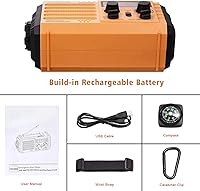
  • In the Box: Each unit ships with the emergency radio, a USB-C charging cable, a carabiner, a nylon carrying strap, a compass, and a printed owner's manual.
  • SW Range: The shortwave band spans 7 to 19 MHz, which covers a portion of the shortwave spectrum commonly used for international broadcasting and news services.
  • Model Number: The manufacturer model number for this unit is MQL-CR1009, produced by Mesqool E-commerce Co., Ltd.
  • Market Rank: This radio holds a position of #10 in the Weather Radios category on Amazon, ranking #3,747 overall in Electronics at the time of publication.

Related Reviews
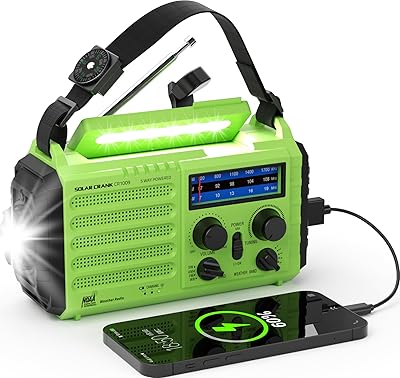
PPLEE CR1009 5000mAh Emergency Weather Radio
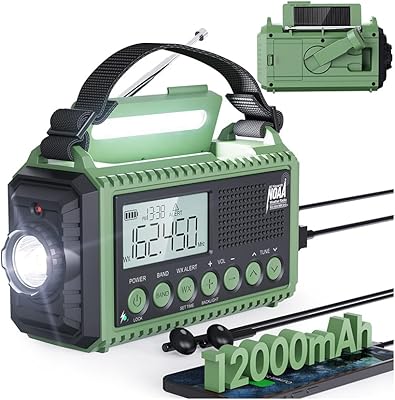
74%
88%
NOAA Reception Reliability
91%
Power Redundancy
83%
Battery Life
47%
Solar Charging Performance
44%
Hand Crank Efficiency
More
FosPower A6 5200mAh Emergency Weather Radio
77%
91%
NOAA Reception
84%
Build Quality
67%
Power Bank Utility
53%
Hand Crank Efficiency
49%
Solar Charging
More
OnLyee CR1030 Emergency Weather Radio
76%
88%
Power Source Redundancy
83%
Hand Crank Durability
61%
Solar Charging Performance
79%
NOAA Reception Quality
67%
Battery Capacity & Phone Charging
More
QAUYYW Emergency Weather Radio XSY330
86%
89%
Battery Life
85%
Ease of Use
92%
Portability
75%
Radio Reception
88%
Build Quality
More
Roxicosly CR1009Ultra 12000mAh Emergency Weather Radio
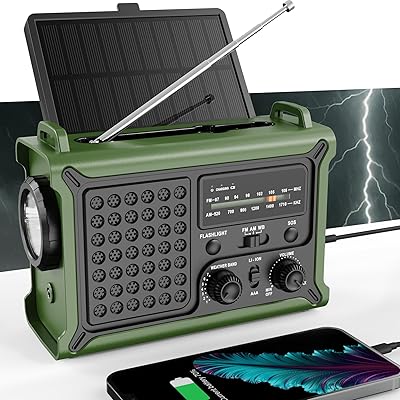
74%
88%
Battery Life
91%
Charging Versatility
86%
NOAA Alert Performance
58%
Hand Crank Durability
44%
Solar Charging Speed
More
UMUTOO EM03 5000mAh Emergency Weather Radio
74%
88%
Value for Money
82%
NOAA Reception
79%
Battery Capacity
51%
Hand-Crank Charging
57%
Solar Charging
More
RAOUOEN H27 30000mAh Emergency Weather Radio
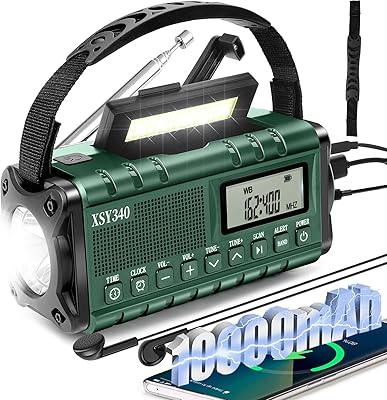
68%
83%
Battery Capacity
81%
Value for Money
76%
Radio Reception
44%
Solar Charging
58%
Hand Crank Usability
More
TFTDOUP Emergency Weather Alert Radio
86%
88%
Overall Performance
85%
Battery Life
90%
Charging Options
80%
Ease of Use
87%
Build Quality
More
Sttfaishen F20 Emergency Hand Crank Weather Radio
72%
82%
NOAA Alert Reception
54%
Battery Capacity & Honesty
61%
Hand Crank Usability
57%
Solar Charging Performance
83%
USB-C Charging Speed
More
DexScout Crank Emergency Weather Radio 10000mAh
86%
91%
Value for Money
88%
Battery Life and Charging
94%
Portability & Size
85%
Weather Alert Accuracy
90%
Build Quality and Durability
More

FAQ

Rotate the band selector to the WB (Weather Band) position and then use the tuning dial to cycle through the seven pre-set NOAA channels. The frequencies run from 162.400 to 162.550 MHz, and your local station will be one of those seven — just step through them until you hear a clear broadcast. No manual frequency entry is needed.

Yes, it can, but keep expectations realistic. The USB-A output runs at 5V/1A, which is on the slower side for modern smartphones. You will get a meaningful top-up rather than a fast charge, but in a genuine emergency that is still a very useful capability. Think of it as a slow trickle rather than a rapid refill.

It works, but it is slow — genuinely slow. Under direct, strong sunlight the solar panel will add charge over time, but it is not a replacement for USB-C as a primary charging method. Treat it as a last-resort top-up option or a way to slowly recover a bit of charge during a prolonged outdoor emergency, not as a reliable standalone power source.

Shortwave reception on the Mesqool MQL-CR1009 5000mAh Emergency Weather Radio is adequate for casual listening but will not satisfy anyone serious about SW monitoring. At this price point, the sensitivity and selectivity of the shortwave tuner are limited, so distant or weak signals can be difficult to pull in cleanly. For basic emergency news from international stations during a major regional event, it serves its purpose.

At 116dB, the siren is genuinely loud — roughly equivalent to a chainsaw at close range. It is paired with a flashing red beacon light, which adds a visual signal for rescuers in low-visibility conditions. It should be audible at a considerable distance outdoors, though walls and terrain will naturally reduce its effective range.

The unit takes 3 AAA batteries, not AA. These serve as a backup power option when the built-in Li-ion battery is depleted and no USB-C or solar charging is available. They will provide some runtime, though for extended use you will want to rely on the rechargeable internal battery as your primary source.

No, this survival radio is not rated as waterproof or water-resistant. The plastic housing will handle light splashes reasonably well, but you should keep it away from rain, flooding, or submersion. If you anticipate wet conditions, storing it in a dry bag or zip-lock when not in use is a sensible precaution.

The housing is lightweight plastic, which keeps the weight down but is not what you would call rugged. It can handle the normal bumps of daily carry or being stored in a go-bag, but do not expect it to survive being dropped onto concrete from any real height. It is built to the standard you would expect from a mid-range emergency radio, not a field-hardened piece of gear.

The reading lamp is one of the more pleasant surprises in this unit. It sits under the flip-up solar panel and emits a warm, soft light that is easy on the eyes during a nighttime outage. At its lower brightness setting it can run for up to 40 hours, making it genuinely useful for extended use in a shelter or tent without chewing through battery quickly.

It comes well-equipped out of the box. The package includes a USB-C cable, a carabiner, a nylon carry strap, a small compass, and a printed manual. The only thing you would need to add yourself is a set of AAA batteries if you want that backup option ready to go from day one. For most buyers, no additional purchases are necessary to put it into service immediately.