
Overview
The Midland ER210 Emergency Weather Radio has been around since 2015 and holds a well-earned reputation as one of the more dependable mid-range options in its category — currently ranked third among weather radios on Amazon. Midland is a brand with serious roots in two-way and weather radio manufacturing, so this isn't a generic import dressed up in emergency branding. This hand-crank weather radio is compact enough to fit in a go-bag but sturdy enough to live on a shelf year-round. It solves a specific, unglamorous problem: staying informed when the power is out and your phone is dead.
Features & Benefits
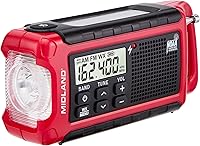
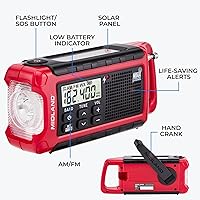
What makes this emergency radio practical rather than just promising is the triple power system. You can charge it via USB, crank the handle manually, or let the built-in solar panel do slow work in direct sunlight — and a fully charged 2200 mAh battery can run the radio for up to 32 hours. The NOAA weather function automatically scans all seven weather channels and locks onto the clearest signal, triggering an audible alarm for severe weather warnings and AMBER alerts. There's also an AM/FM tuner for everyday listening, a 130-lumen flashlight with a dedicated SOS Morse code mode, and a backlit LCD that's easy to read at night.
Best For
This hand-crank weather radio is a natural fit for anyone who lives in a region where hurricanes, tornadoes, or winter storms are a real seasonal concern. It also works well for campers and hikers who venture beyond reliable cell coverage — having a dedicated weather scanner that doesn't depend on your phone's battery matters more than it sounds. First-time preppers building a go-bag will find it approachable and genuinely useful without being overwhelming. Families with kids especially appreciate how straightforward the controls are. If you want one compact device that handles weather alerts, basic lighting, and can trickle-charge a phone in a pinch, this covers all three.
User Feedback
Most owners of the Midland ER210 point to reliable NOAA reception and ease of use as the standout strengths — the kind of feedback that matters most when evaluating a device meant for stressful situations. Build quality is generally praised for the price point. That said, recurring complaints are worth noting: the solar panel charges very slowly unless you're in direct, intense sunlight, and cranking the handle for more than a few minutes gets tiring fast. The USB power output is functional but slow for modern smartphones. Long-term users have also flagged battery degradation after repeated charge cycles. The flashlight works, but it isn't a replacement for a dedicated torch.
Pros
- Three independent power sources mean you're unlikely to be completely stuck without a way to run the radio.
- NOAA auto-scan locks onto the clearest weather channel without any manual tuning required.
- The 2200 mAh battery delivers up to 32 hours of continuous radio use on a single charge.
- AMBER alert broadcasts are a lesser-known but genuinely valuable civic safety feature.
- Compact enough to slip into a go-bag without taking up meaningful space or adding much weight.
- The SOS Morse code flashlight mode adds a real signaling capability that most radios skip entirely.
- AM/FM reception makes this hand-crank weather radio useful day-to-day, not just in emergencies.
- Controls are straightforward enough that anyone in the household can operate it under stress.
- Backlit LCD display is easy to read at night without needing a separate light source.
- Midland has a long track record in this product category, which matters for reliability and parts support.
Cons
- The built-in solar panel charges extremely slowly in indirect or partial sunlight — don't count on it in a pinch.
- Hand cranking for more than a few minutes becomes physically tiring and yields modest charge returns.
- USB charging output is slow by modern standards and won't meaningfully charge a contemporary smartphone quickly.
- The 130-lumen flashlight is adequate for navigation but won't replace a dedicated torch in extended outages.
- Battery capacity degrades noticeably over time with repeated charge and discharge cycles.
- Speaker volume and audio clarity have drawn criticism from users trying to hear alerts in noisy outdoor conditions.
- The crank mechanism on some units has been reported to feel loose or plasticky after extended use.
- No Bluetooth or digital display features, which may feel dated compared to newer competitors at similar prices.
Ratings
The scores below for the Midland ER210 Emergency Weather Radio were generated by our AI system after analyzing thousands of verified global user reviews, with spam, incentivized feedback, and bot activity actively filtered out before scoring. Each category reflects the honest distribution of buyer sentiment — not just the highlights — so both the strengths that make this radio a category staple and the friction points that frustrate real owners are transparently represented.
NOAA Reception Quality
Power Source Versatility
Battery Life
Ease of Use
Flashlight Performance
Build Quality
USB Charging Output
Hand Crank Efficiency
AM/FM Reception
AMBER Alert Function
Portability
Long-Term Durability
Value for Money
Suitable for:
The Midland ER210 Emergency Weather Radio is a strong fit for anyone who takes emergency preparedness seriously but doesn't want to spend a lot or manage a complicated device. Households in hurricane corridors, tornado alleys, or regions prone to winter ice storms will get the most value out of it — particularly families who want something that works without hunting for batteries or a working outlet. Campers, weekend hikers, and overlanders who travel beyond reliable cell service will also find it genuinely useful, since a dedicated NOAA scanner gives you weather awareness that your phone simply can't replicate off-grid. It's also a smart pick for preparedness newcomers who are building their first emergency kit and want one compact device that handles weather alerts, emergency lighting, and basic phone charging without requiring any technical know-how.
Not suitable for:
The Midland ER210 Emergency Weather Radio is not the right choice for buyers who need a primary flashlight, a fast phone charger, or a radio with exceptional audio fidelity. Power users who go on extended backcountry trips of several days should know that the solar panel charges frustratingly slowly in anything less than direct sunlight, and cranking by hand long enough to meaningfully restore the battery is genuinely tiring. If you live somewhere with mild, stable weather and no real emergency risk, the specialized NOAA features will rarely get used and the value proposition weakens considerably. Those who already own dedicated emergency tools — a quality standalone flashlight, a portable power bank, a separate weather alert system — may find this radio redundant rather than complementary.
Specifications
- Brand: Manufactured by Midland, a company with decades of experience producing two-way radios and weather alert devices for consumer and professional markets.
- Model: The ER210 is Midland's mid-range emergency radio, first made available in September 2015 and still actively manufactured.
- Dimensions: The unit measures 9 x 2.75 x 6.5 inches, making it compact enough for a go-bag while still large enough to operate comfortably under stress.
- Weight: At 14.8 oz, this hand-crank weather radio is light enough to carry on a camping trip without adding meaningful burden to a pack.
- Battery: A built-in 2200 mAh lithium-ion rechargeable battery pack is included and provides up to 32 hours of continuous radio operation on a full charge.
- Power Sources: The radio supports three independent charging methods: a built-in solar panel, a manual hand crank, and USB input via the included charging cord.
- Radio Bands: Receives AM, FM, and all 7 NOAA weather band channels, with an automatic scan function that locks onto the strongest available weather signal.
- Weather Alerts: The NOAA Weather Alert system triggers an audible alarm for severe weather warnings and also broadcasts AMBER alerts for missing children notifications.
- Flashlight: A CREE LED flashlight outputs up to 130 lumens on high, includes a low-brightness conservation mode, and features a dedicated SOS Morse code beacon function.
- Display: A backlit LCD screen shows the current radio station, time, and active weather channel simultaneously, readable in low-light and nighttime conditions.
- Connectivity: Includes both USB input for charging the radio itself and a USB output port for trickle-charging small external devices such as phones or GPS units.
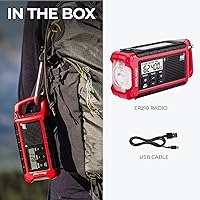
- Included Items: The package contains the radio unit, a rechargeable battery pack, a USB charging cord, and a printed owner's manual.
- Color: Available in a high-visibility red and black colorway, which aids in locating the unit quickly in an emergency situation.
- Tuner: The radio uses an AM tuner as its primary reception technology, supplemented by FM and digital NOAA weather band scanning capabilities.
- Battery Type: Requires one lithium-ion battery, which is included in the box; no disposable AA or AAA batteries are needed for primary operation.
Related Reviews
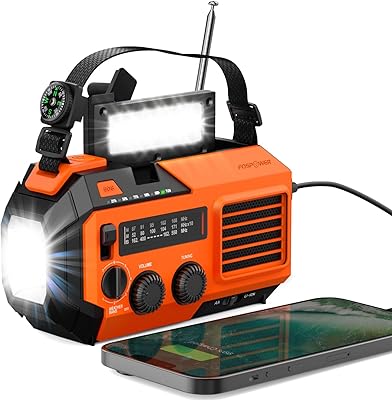
FosPower A6 5200mAh Emergency Weather Radio
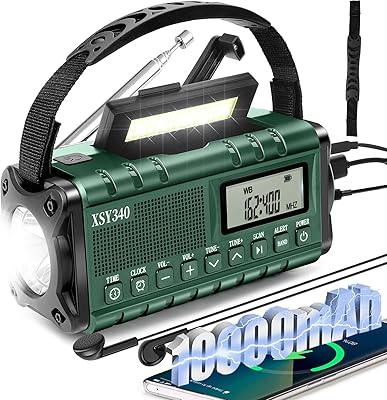
TFTDOUP Emergency Weather Alert Radio
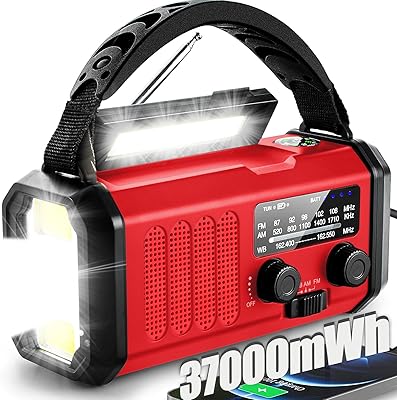
QAUYYW Emergency Weather Radio XSY330
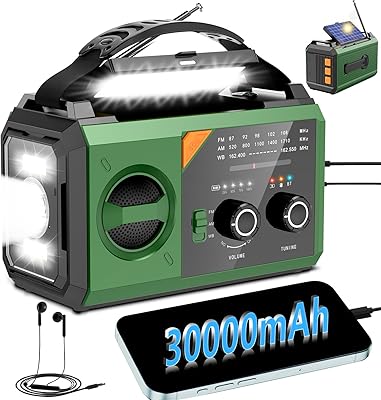
RAOUOEN H27 30000mAh Emergency Weather Radio
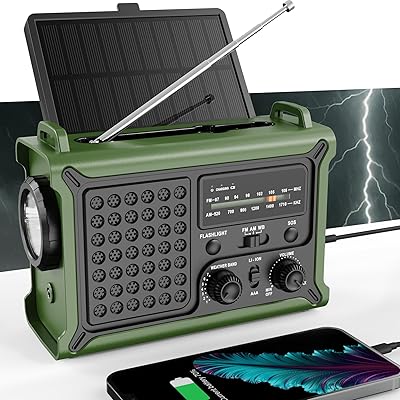
OnLyee CR1030 Emergency Weather Radio
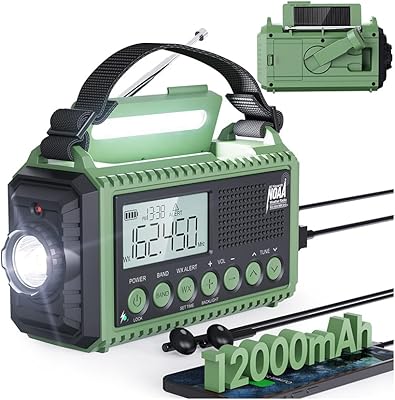
Roxicosly CR1009Ultra 12000mAh Emergency Weather Radio
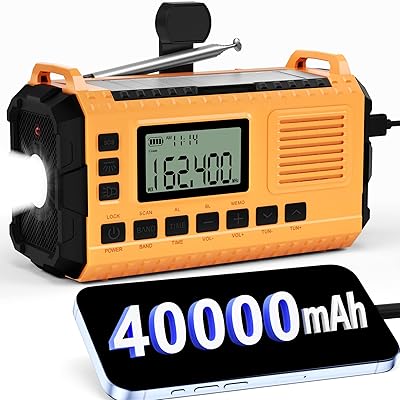
Sttfaishen F20 Emergency Hand Crank Weather Radio
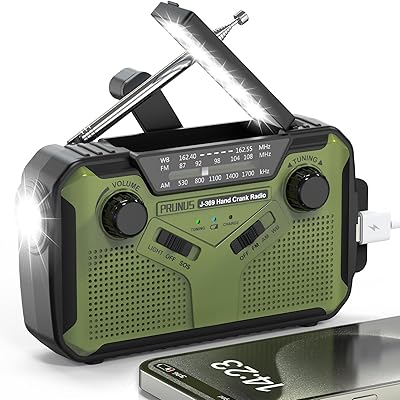
PRUNUS J-369 Emergency Weather Radio
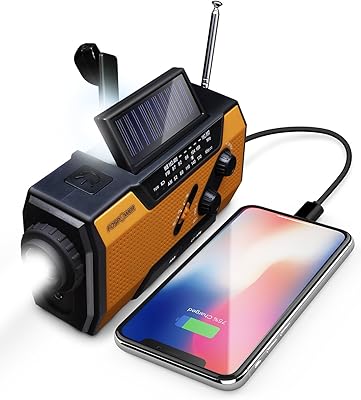
FosPower Emergency Weather Radio A1