Overview

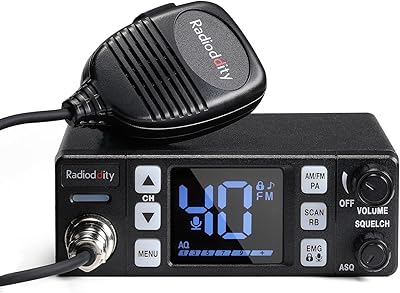
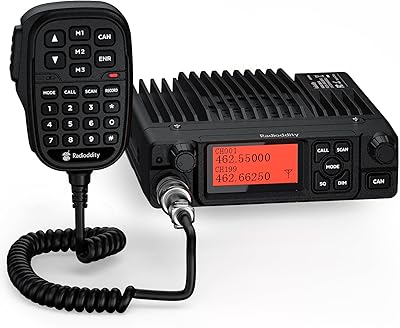
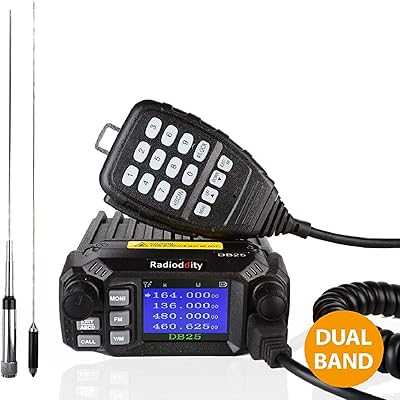
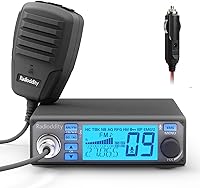
The Radioddity CB-500 CB Radio Mobile Transceiver is a solid mid-range option for drivers who want more than a bare-bones CB unit without crossing into professional-grade territory. It brings a few genuinely useful updates to a format that hasn't changed much in decades, most notably AM/FM dual-mode support, which gives you access to less crowded FM channels when conditions allow. Range tops out at around 4 miles in open terrain — expect less in cities or hilly areas, which is true of any CB radio at this power level. The 18-month warranty suggests Radioddity stands behind this one.
Features & Benefits

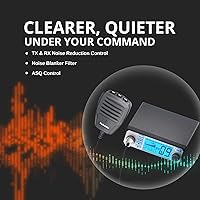
What makes the CB-500 stand out in everyday use is how well it handles road noise. The five-level noise reduction — paired with a narrowband filter — does a real job of cutting through the interference you get on busy interstates or near construction zones. You can dial in exactly how much filtering you need rather than toggling a single on/off switch. NOAA weather scanning is quietly one of the most practical inclusions here; it means you can monitor storm alerts without a second device. VOX hands-free operation keeps things safe and legal, and the 12/24V compatibility makes it a clean fit for everything from a pickup to a heavy-duty rig. The 38 CTCSS and 104 DCS codes add channel privacy that convoy teams will appreciate.

Best For

This CB radio hits its stride with long-haul truckers who depend on CH 9 and CH 19 for emergencies and traffic updates, and who need weather alerts baked in rather than bolted on. It also makes sense for anyone upgrading from a basic, feature-light unit — you get meaningful noise control without the complexity or cost of a professional-grade setup. Fleet drivers running convoys will find the CTCSS/DCS codes worth the step up from a plain 40-channel set. The broad voltage range covers both standard 12V cars and 24V commercial vehicles, so there is no compatibility headache. If you want a well-rounded CB radio that does not cut corners on the features that actually matter on the road, this is a reasonable choice.

User Feedback

With roughly 99 ratings and a 4.5-star average, Radioddity's mobile transceiver has gathered a strong early reception for a product that only launched in late 2023 — though that pool is still relatively small, so treat patterns rather than outliers as the real signal. Buyers consistently mention audio clarity and the noise reduction effectiveness as genuine highlights, and installation gets positive marks from experienced CB users. On the critical side, a few reviewers note that menu navigation has a learning curve, and real-world range often falls short of the 4-mile ceiling depending on terrain and antenna quality. Microphone build quality draws mixed opinions — functional but not premium-feeling, which is fair given the price tier.

Pros

  • Five-level noise reduction gives you genuine control over interference, not just a basic on/off toggle.
  • Instant one-button access to emergency channels CH 9 and CH 19 is a real safety asset on long routes.
  • Built-in NOAA weather scanning means fewer devices cluttering your cab on storm-prone drives.
  • AM and FM dual-mode support opens up less congested channels when highway CB traffic gets heavy.
  • Works with both 12V and 24V systems, covering everything from daily drivers to heavy commercial rigs.
  • 38 CTCSS and 104 DCS privacy codes make this CB radio a strong pick for fleet and convoy coordination.
  • VOX hands-free transmission keeps things legal and safer without needing external accessories.
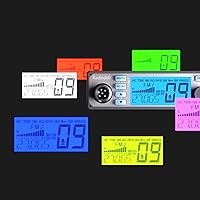
  • The seven-color backlit display is genuinely useful at night and easy to match to your dash setup.
  • Standard SO-239 antenna connector means it plays nicely with most existing antenna hardware.
  • 18-month warranty offers reasonable coverage for a mid-range unit in this category.

Cons

  • Advertised 4-mile range is a ceiling, not a typical result — hilly or urban terrain cuts it significantly.
  • Menu navigation has a real learning curve that frustrates less experienced CB users during initial setup.
  • The included microphone feels noticeably lighter and cheaper than the main unit's build suggests.
  • VOX sensitivity requires careful tuning in louder diesel cabs to avoid unintended transmission triggers.
  • CTCSS and DCS code configuration is not intuitive and may require online guidance beyond the printed manual.
  • The user manual lacks the detail needed for first-time installers to handle antenna tuning confidently.
  • No dedicated weather alert alarm — you need to actively monitor NOAA channels to catch incoming broadcasts.
  • Display contrast can wash out in direct sunlight depending on which backlight color you have selected.
  • With roughly 99 reviews, the feedback pool is still relatively small for drawing firm long-term durability conclusions.
  • Microphone cable connection point has been flagged by some users as a potential weak spot with heavy daily use.

Ratings

The Radioddity CB-500 CB Radio Mobile Transceiver has been scored across 12 performance categories by our AI system after analyzing verified buyer reviews worldwide, with spam, bot-generated, and incentivized feedback actively filtered out. Scores reflect the honest consensus of real drivers — from long-haul truckers to weekend convoy enthusiasts — who have put this CB radio through its paces in actual road conditions. Both the standout strengths and the recurring frustrations are transparently represented below.
Audio Clarity
88%
Most users report noticeably clean audio during highway cruising, crediting the multi-level noise reduction for cutting through engine rumble and road interference without distorting incoming transmissions. Reviewers who upgraded from older single-filter CB units describe the difference as immediately apparent on busy interstates.
A handful of users note that at the highest noise reduction settings, some distant or weak signals get over-filtered and lose definition. In very low-interference environments, the NB filter can occasionally introduce a subtle hollow quality to received audio.
Noise Reduction Performance
86%
The five-level NRC system gives drivers real control over how aggressively background interference is suppressed, which is a genuine advantage near construction zones or on congested trucking corridors. Users specifically appreciate being able to fine-tune the setting rather than flipping a binary switch.
A few reviewers note the NRC calibration takes some trial and error before you land on the right level for your specific cab setup and antenna. Those driving in quieter rural areas occasionally feel the filter adds unnecessary complexity for their use case.
Transmission Range
67%
33%
In open flat terrain — think plains highways or rural two-lanes with minimal obstruction — users report solid communication in the 3 to 4 mile window, which is consistent with the 4W power output. For convoy coordination on straightaways, this CB radio holds up reliably.
Real-world range drops noticeably in hilly terrain, urban environments, or when paired with a lower-quality antenna, with some users seeing effective range closer to 1 to 2 miles. The 4-mile figure is clearly a ceiling, not a typical result, and a few buyers felt misled by the advertised maximum.
Ease of Installation
83%
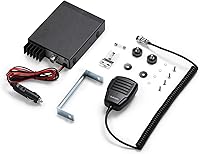
The included mounting bracket, hardware kit, and car charger mean most users can get the CB-500 up and running in under an hour without needing extra parts. Experienced CB installers particularly appreciate the standard SO-239 antenna connector, which works with most existing antenna setups.
First-time CB radio installers report that the user manual could be more detailed, especially around antenna tuning and SWR calibration. A small number of buyers encountered fitment challenges specific to their vehicle dash configuration.
Menu Navigation & Usability
63%
37%
Once the initial setup is dialed in, day-to-day channel switching and squelch adjustment are straightforward. Drivers who spend time with the manual typically report that the control layout becomes intuitive after a few days of regular use.
Menu navigation is one of the most consistently criticized aspects across reviews. Accessing the deeper settings — like adjusting CTCSS codes or switching modulation modes — requires multiple button presses that are not always logically organized, which frustrates newer CB users.
Emergency Channel Access
91%
Instant one-button access to CH 9 and CH 19 is exactly what long-haul drivers need, and users consistently single this out as a practical safety feature that works without fumbling through menus during a roadside situation. This alone is a meaningful argument for choosing this CB radio over a stripped-down alternative.
There is little to criticize here functionally, though a few users noted they accidentally triggered the emergency channel shortcut before getting familiar with the button layout. This is a minor habituation issue rather than a design flaw.
NOAA Weather Scanning
82%
18%
Truckers navigating storm-prone Midwest or Southeast routes report real peace of mind from having weather alerts built directly into the unit rather than relying on a phone or separate receiver. The scanning function picks up NOAA broadcasts reliably when signal conditions are reasonable.
Reception quality for NOAA channels is tied to the antenna and regional transmitter coverage, so users in remote areas occasionally report weak or interrupted weather feeds. A dedicated weather alert alarm is absent, meaning you need to be actively monitoring to catch incoming alerts.
VOX Hands-Free Operation
78%
22%
Hands-free VOX transmission is well-received by drivers who prioritize safety and want to keep both hands on the wheel during active communication. The sensitivity is adjustable enough to reduce false triggers in most cab environments.
In noisier cabs — especially diesel rigs with prominent engine sounds — VOX sensitivity requires careful calibration to prevent the unit from keying up unintentionally. Some users ultimately default back to push-to-talk for reliability in high-noise vehicles.
Display Visibility
84%
The seven-color backlit display gets consistent praise for legibility, particularly during nighttime driving when glare from a bright white screen would be distracting. Drivers appreciate being able to match the display color to their dash lighting preference.
In direct daylight — particularly sunlight hitting the display at a low angle — contrast can wash out slightly on certain color settings. Sticking to higher-contrast color options largely resolves this, but it does require some experimentation.
Microphone Quality
69%
31%
The included handheld microphone delivers clear enough audio for standard CB communication, and most users report that their transmissions are intelligible to other drivers without complaint. The microphone bracket keeps it accessible and organized in the cab.
Build quality of the microphone itself draws mixed feedback — the housing feels noticeably lighter and less durable than the main unit, and a few buyers have questioned its long-term resilience to daily handling. Aftermarket microphone upgrades are a common suggestion in the review thread.
CTCSS & DCS Privacy Codes
77%
23%
With 38 CTCSS and 104 DCS codes available, fleet operators and convoy groups have plenty of options to keep their channel communications from bleeding into unrelated traffic. Users coordinating multi-truck runs specifically call this feature out as a reason they chose this unit over simpler alternatives.
Configuring these codes is one of the more finicky aspects of setup, and the menu process is not particularly intuitive for users new to tone squelch systems. Without prior CB experience, first-time users may need to consult online resources beyond the printed manual.
Build Quality & Durability
74%
26%
The main unit feels solid for its class — the chassis has a reassuring heft to it given the compact dimensions, and the water-resistant rating adds a layer of confidence for installations in environments with some moisture exposure. Most reviewers report no mechanical issues after months of regular use.
The overall plastics and button feedback do not quite match what you'd expect from a truly premium CB build, and the microphone cable connection point has been flagged as a potential wear area over time. For the price tier, it is acceptable, but power users may eventually want to step up to a more robust unit.

Suitable for:

The Radioddity CB-500 CB Radio Mobile Transceiver is built for drivers who spend serious time on the road and need a CB unit that goes beyond basic channel access. Long-haul truckers are the most obvious fit — the instant CH 9 and CH 19 emergency access, NOAA weather scanning, and five-level noise reduction all address the real, practical demands of interstate and cross-country driving. Fleet operators and convoy teams will also find genuine value here, particularly in the CTCSS and DCS privacy codes that keep group communications clean and separated from general CB chatter. The 12V and 24V compatibility makes this CB radio a natural choice for both standard pickup trucks and heavy-duty commercial rigs without any wiring workarounds. Drivers upgrading from a stripped-down, single-filter CB unit will notice a meaningful jump in audio control and feature depth, and those who want VOX hands-free operation for safer communication will appreciate having it built in rather than added as an afterthought.
Not suitable for:

The Radioddity CB-500 CB Radio Mobile Transceiver is not the right call for buyers expecting professional-grade build quality or the kind of rugged durability found in units built specifically for extreme working environments. If your primary use case is short urban trips or occasional weekend use, the feature set here is probably more than you need and the menu complexity may feel disproportionate to the task. Drivers expecting 4-mile range as a consistent reality — rather than a best-case ceiling in ideal open terrain — may come away disappointed, especially in hilly, forested, or dense urban areas where signal degrades quickly. Power users who depend on their microphone surviving years of heavy daily handling should consider either budgeting for an aftermarket mic or looking at a higher-tier unit from the start. Finally, buyers completely new to CB radio who want a plug-and-play experience with minimal setup should be aware that features like CTCSS codes and noise reduction calibration do require some patience and willingness to read the manual.
Specifications

  • Power Output: The unit transmits at 4 watts, which is the standard legal maximum for CB radios in the United States.
  • Frequency Range: Covers the full CB band from 26.965 MHz to 27.405 MHz across all 40 standard channels.
  • Modulation: Supports both AM and FM modulation modes, allowing the user to switch between standards depending on local channel conditions.
  • Noise Reduction: Equipped with a five-level noise reduction control (NRC) system plus a narrowband (NB) filter for suppressing interference during both transmit and receive.
  • Privacy Codes: Includes 38 CTCSS tones and 104 DCS codes for channel privacy and selective communication in group or fleet scenarios.
  • Input Voltage: Compatible with both 12V and 24V DC power systems, covering standard passenger vehicles and heavy-duty commercial rigs.
  • Audio Output: Delivers 2 watts of audio output at 8 ohms with less than 10% distortion, suitable for clear in-cab listening without an external amplifier.
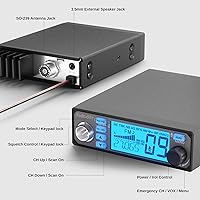
  • Antenna Connector: Uses a standard SO-239 (UHF female) antenna connector, which is compatible with the vast majority of existing CB antenna coax cables.
  • Display: Features a seven-color backlit display that can be customized to match cab lighting preferences and improve nighttime visibility.
  • Emergency Channels: Provides dedicated instant-access buttons for CH 9 (emergency) and CH 19 (highway traffic), bypassing normal channel navigation.
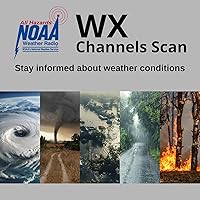
  • Weather Scanning: Built-in NOAA weather channel scanning monitors official broadcast frequencies to alert drivers to changing conditions without a separate receiver.
  • Hands-Free Operation: VOX (voice-operated transmission) is supported, enabling hands-free keying with adjustable sensitivity to suit different cab noise levels.
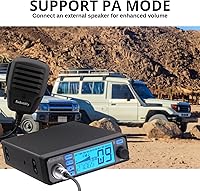
  • PA System: Supports connection to an external PA speaker, allowing the unit to function as a public address system when needed.
  • Water Resistance: Rated as water resistant, providing a basic degree of protection against moisture exposure in vehicle installations.
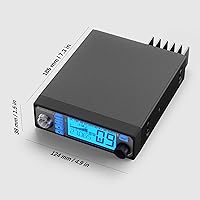
  • Dimensions: The packaged unit measures 11.26 x 6.54 x 2.28 inches, making it compact enough for most standard dashboard or under-dash mounting positions.
  • Weight: The complete package weighs 2.23 pounds, including the handheld microphone, mounting hardware, and car charger.
  • Squelch Sensitivity: Squelch opens at signals below 1 microvolt, ensuring the channel stays quiet until a meaningful transmission is received.
  • Warranty: Backed by an 18-month manufacturer warranty from Radioddity, covering defects in materials and workmanship under normal use conditions.

Related Reviews

Radioddity DB50 Dual Band Mobile Radio Transceiver
79%
88%
Transmit Power & Range
91%
Receiver Coverage
86%
Audio Clarity
84%
Channel Management
89%
Chirp Compatibility
More
Radioddity CB-606 CB Radio
76%
88%
Ease of Installation
86%
Display Readability
67%
Audio Clarity & Speaker Output
63%
Microphone Quality
81%
Squelch Performance
More
Radioddity CB-900 PRO AM/FM CB Radio
78%
83%
Audio Clarity & Receive Quality
74%
Transmit Quality & Microphone Performance
78%
Noise Reduction Effectiveness
69%
AM/FM Dual-Mode Operation
86%
NOAA Weather Alert Reception
More
Radioddity CS-47 40-Channel CB Radio
77%
83%
Audio Clarity
71%
Build Quality
88%
Ease of Installation
86%
Display Readability
62%
VOX Performance
More
Radioddity DB40-G GMRS Mobile Radio
73%
78%
Transmit Power & Range
84%
Audio Clarity
81%
Repeater Capability
62%
Channel Flexibility & Programming
76%
Build Quality & Durability
More
Galaxy DX-959B Mobile CB Radio
86%
91%
Signal Quality & Range
88%
Ease of Setup
85%
Build Quality & Durability
94%
Display Visibility
84%
Sound Clarity
More
Radioddity DB20-G GMRS Mobile Radio
78%
93%
Ease of Installation
88%
Audio Clarity
71%
Transmit Range
82%
Repeater Access
84%
Display & Interface
More
Uniden CMX760 Compact Mobile CB Radio
76%
94%
Compactness & Form Factor
88%
Mic Display Concept
71%
Audio Clarity (In-Cab)
86%
Ease of Installation
78%
Build Quality & Durability
More
AnyTone AT-778UV Dual Band Mobile Radio
79%
83%
Build Quality
88%
Audio Clarity
86%
Dual-Band Coverage
79%
Display & Interface
51%
Programming Software
More
Radioddity DB25 Pro Dual Band Mini Mobile Radio
88%
91%
Value for Money
87%
Signal Reception
89%
Ease of Use
92%
Display Quality
84%
Durability
More

FAQ

No license is required to operate the Radioddity CB-500 CB Radio Mobile Transceiver in the United States. CB radio is a license-free service regulated by the FCC, and this unit carries FCC certification, so you are legal to use it right out of the box.
No antenna is included — you will need to source one separately, which is standard practice for CB radios at this level. The unit uses a standard SO-239 connector, so it is compatible with the vast majority of CB antennas on the market. For best range and audio performance, a tuned antenna with a low SWR reading makes a noticeable difference compared to a cheap untuned option.

Yes, the CB-500 is compatible with both 12V and 24V DC systems, so it works cleanly in heavy-duty rigs and commercial vehicles without needing a voltage converter. The included car charger supports both standards.

The five-level NRC system lets you dial in how aggressively background noise gets filtered rather than just toggling it on or off. On a busy interstate, bumping the NRC up a couple of levels cuts a lot of road and engine interference out of incoming transmissions. That said, at the highest settings you can occasionally over-filter weaker signals, so most experienced users find a mid-range setting works best for everyday highway driving.

The 4-mile figure is a best-case scenario in flat, open terrain with a well-tuned antenna — think long straight stretches of rural highway. In practice, most drivers see effective range of 1 to 3 miles depending on terrain, surrounding structures, and the quality of both antennas involved. Hills, urban buildings, and a poorly matched antenna all reduce range significantly, which is true of any 4-watt CB radio, not just this one.

It depends on your specific cab and how much ambient noise you are dealing with. The VOX sensitivity is adjustable, which helps, but some drivers with loud diesel engines find that the sensitivity threshold is hard to calibrate precisely enough to prevent false triggers. In quieter petrol-engine vehicles it tends to work well. If false keying becomes a consistent issue in your rig, push-to-talk is always available as a fallback.

Yes, this CB radio supports connection to an external speaker, and it also has a PA system output if you want to use an external PA speaker for public address purposes. This makes it a solid choice for drivers who want louder or better-positioned audio than the built-in speaker provides.

For most experienced CB users, installation is fairly straightforward — the standard SO-239 connector, included mounting bracket, and car charger keep things simple. First-timers may find the user manual a bit thin on detail, particularly around antenna tuning and SWR adjustment. Watching a few online installation guides specific to CB radio setup will save you time and help you get the best performance out of the unit.

The CB-500 includes NOAA weather channel scanning, but it does not have a dedicated alert alarm that will interrupt normal operation when a weather warning is broadcast. You need to actively switch to weather scanning mode to monitor NOAA broadcasts. It is a useful feature for checking conditions before or during a drive, but it is not quite the same as a standalone weather alert radio that pushes notifications automatically.

These tone codes let you filter out transmissions from other CB users on the same channel, so your radio only opens up when someone in your group — also set to the matching code — transmits. For solo drivers just monitoring highway traffic, you probably do not need them. For fleet drivers, convoy groups, or anyone coordinating with a specific team on the road, they are genuinely useful for keeping your communications focused. Setting them up takes a bit of patience with the menu system, but it is a one-time configuration once you know the process.