Overview

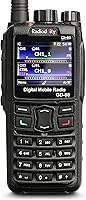
The Radioddity GD-88 DMR Dual Band Ham Radio sits in a crowded but competitive space — a mid-to-premium handheld built for licensed operators who refuse to choose between digital and analog. It covers both VHF and UHF bands and handles DMR Tier II alongside conventional analog, which is genuinely useful when your local repeater network is mixed. What really sets this radio apart from simpler handhelds is its cross-band repeater capability and Same-Frequency Repeater mode. Add built-in GPS with APRS support, and you have a field-ready unit for emergency or outdoor use. That said, this is not a radio you hand to someone on day one — it rewards patience and prior knowledge.
Features & Benefits

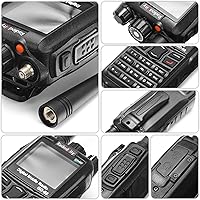
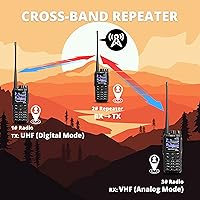
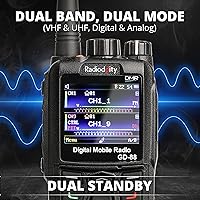
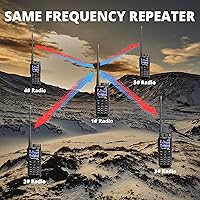
The GD-88 packs a lot into a small chassis. Cross-band repeating is the headline trick — receive on VHF, retransmit on UHF (or vice versa), and it can even bridge an analog signal into a digital DMR stream. Few handhelds at this price do that. The Same-Frequency Repeater mode is equally clever: using TDMA timeslot separation, multiple units can form a mesh network, extending comms without any fixed infrastructure. The built-in GPS pushes your position to the APRS network in real time — genuinely valuable when coordinating a group in the field. On the hardware side, you get a 2-inch color display, IP54 water resistance, AES256 encryption, and a 3000mAh battery. Four programmable keys can be mapped however you like.

Best For

This dual-band DMR handheld is a natural fit for Technician-class and General licensees who are already comfortable with DMR zone programming and don't mind spending time in the CPS software before heading out. Emergency preparedness teams will appreciate having a portable repeater in a single unit — no separate hardware to lug around. SOTA operators and hikers get real value from the APRS beacon functionality, especially when traveling in areas with limited cell coverage. Clubs running coordinated events can deploy several GD-88 units in SFR mode to stitch together coverage across a wide area. Operators moving away from analog-only rigs will find this a capable bridge to the digital world.

User Feedback

With a 3.8 out of 5 rating across dozens of reviews, the GD-88 tells a familiar story: the more experienced you are, the more satisfied you tend to be. Seasoned operators consistently praise the GPS and APRS reliability and the build quality, noting the unit feels solid and well-constructed. The criticism, however, is pointed. Many users hit a wall with the programming software — the Open CPS has quirks, and the documentation doesn't always bridge the gap. A few buyers reported inconsistent out-of-box behavior that a firmware update resolved, though not everyone knows to check for that. Speaker volume and audio clarity have drawn occasional complaints. If you know what you're getting into, this ham radio delivers; if you don't, it can frustrate quickly.

Pros

  • Cross-band repeating — including analog-to-digital bridging — is rare at this price point and genuinely useful in mixed-mode networks.
  • Built-in GPS with APRS beacon support adds real safety value for hikers, search-and-rescue volunteers, and field events.
  • Storing up to 300,000 digital contacts means you rarely need to chase down a DMR ID manually.
  • The 3000mAh battery holds up well through long operating sessions without needing a mid-day recharge.
  • SFR mesh networking lets multiple GD-88 units extend coverage cooperatively, without any fixed repeater infrastructure.
  • IP54 water resistance and solid build quality give it credibility for outdoor and emergency use.
  • Four fully programmable keys reduce menu diving significantly once the radio is configured to your workflow.
  • AES256 encryption is a meaningful addition for operators who need communication privacy on digital channels.
  • The 2-inch color TFT display is easy to read in varied lighting conditions compared to older monochrome screens.
  • Open CPS supports bulk contact import and export, which saves real time when managing large channel lists.

Cons

  • The programming software has a steep learning curve and occasional quirks that frustrate even experienced operators.
  • Documentation is thin in places, leaving newer DMR users to rely heavily on community forums to fill the gaps.
  • Some units ship with firmware that needs updating before behavior is fully stable — not always obvious to first-time buyers.
  • Speaker volume and audio clarity have drawn enough complaints to be a consistent concern, particularly in noisy environments.
  • The 16-zone limit with 250 channels per zone may feel restrictive for operators covering large or complex repeater networks.
  • Setup time before the radio is field-ready is considerable; this is not a quick configure-and-go device.
  • The CPS software interface is functional but dated, making the programming experience less polished than the hardware deserves.
  • At this price tier, buyers reasonably expect better out-of-box documentation and a smoother initial experience than this ham radio currently delivers.

Ratings

The scores below for the Radioddity GD-88 DMR Dual Band Ham Radio were generated by our AI system after analyzing verified purchaser reviews from global marketplaces, with spam, incentivized, and bot-generated feedback actively filtered out. Every category reflects the honest distribution of real operator experiences — from seasoned hams who praised its advanced capabilities to buyers who struggled with the setup process. Both the strengths and the friction points are represented transparently so you can make a genuinely informed decision.
Feature Depth
93%
Experienced operators consistently describe the GD-88 as punching well above its price tier in terms of what it can actually do. Cross-band repeating with analog-to-digital bridging, SFR mesh networking, APRS beaconing, AES256 encryption, and 300,000 contact storage in a single handheld is a combination that is hard to find without spending significantly more.
The sheer volume of features creates its own problem — the menu structure is dense and the logic is not always intuitive, especially for operators coming from simpler radios. A few users noted that some advanced functions are buried several layers deep, making them impractical to access in the field without prior memorization.
GPS and APRS Performance
88%
The built-in GPS locks on reliably in open conditions, and APRS beacon transmission works in both analog and DMR digital modes — a detail that matters when your group is running mixed equipment. Hikers and emergency response users in particular praised how accurately and consistently their position appeared on APRS tracking sites during group activities.
Cold start GPS acquisition can take longer than expected in dense urban environments or when the sky view is partially obstructed by tree cover. A small number of users also reported that APRS configuration requires careful setup in the CPS software, and errors there can result in silent beacon failures that are not obvious until you check the network.
Programming Experience
51%
49%
Open CPS software supports bulk import of large DMR contact databases, which is a genuine time-saver compared to manual entry. Once a competent operator has the codeplug dialed in, the radio performs reliably and the configuration holds well across sessions without drift or corruption.
The CPS software itself is one of the most consistently criticized aspects of ownership. Users describe the interface as clunky and prone to counterintuitive behavior, and the included documentation does not adequately prepare beginners for the process. Several reviewers spent multiple evenings troubleshooting before achieving a working setup, which is a significant friction point for anyone new to DMR programming.
Build Quality
82%
18%
The physical construction of this dual-band DMR handheld earns consistent praise — the chassis feels solid in hand, buttons have a satisfying click, and the IP54 rating means light rain and dust are not a concern during typical outdoor use. For a radio in this category, the build inspires confidence when you are using it in variable field conditions.
A few users noted that the antenna connection feels slightly less robust than expected after extended daily carry, and the belt clip supplied in the box drew some criticism for not being as secure as third-party alternatives. Nothing that rises to a dealbreaker, but worth noting for users who plan heavy daily use.
Audio Quality
63%
37%
On DMR digital channels, audio clarity is generally clean and free of the analog noise floor, which operators appreciate during coordinated nets where intelligibility matters. In quiet environments, received audio is perfectly usable and the speaker reproduces voice frequencies adequately.
Speaker volume is a recurring complaint — multiple reviewers flagged that it struggles in noisy outdoor settings like windy hillsides or busy event venues. The audio can sound slightly compressed compared to premium alternatives, and some users felt the microphone pickup was average rather than impressive during field tests.
Battery Life
79%
21%
The 3000mAh lithium-ion pack is sized generously for a handheld of this form factor, and most operators report comfortably getting through a full day of mixed monitoring and transmitting on a single charge. The power-saving mode meaningfully extends standby time for users who spend long periods listening rather than transmitting.
Heavy transmit use at full 7W power draws the battery down faster than casual users might expect, and operators running the radio as a cross-band repeater for extended periods noticed more significant drain. Replacement batteries are available but sourcing a genuine unit rather than a generic substitute requires some care.
Display Readability
77%
23%
The 2-inch color TFT screen is a noticeable upgrade over the monochrome displays found on older or cheaper handhelds, making it easier to distinguish zones, channels, and signal indicators at a glance. The color coding for analog versus digital modes is a practical touch that reduces mode-related errors during operation.
Outdoor readability in direct sunlight is only adequate rather than excellent — bright conditions can wash out the display enough to require shading the screen with your hand. Backlight brightness is adjustable but the display is not among the sharpest in its class when compared to higher-end competitors.
Cross-Band Repeater
86%
The ability to bridge an analog signal to a DMR digital output — and vice versa — in a single handheld is a feature that genuinely impresses experienced operators who have used it in mixed-mode emergency exercises. It effectively extends the utility of the GD-88 as a portable infrastructure node for groups that cannot rely on fixed repeaters.
Setting up cross-band repeater mode correctly requires careful frequency and mode configuration in advance, and the radio does not walk you through it intuitively. Operators who attempted to configure it in the field without prior practice found the process frustrating under time pressure.
Ease of Use
44%
56%
Once the radio is fully configured by a knowledgeable operator, day-to-day use is reasonably straightforward — channel switching, zone selection, and key functions work consistently. Power users who have invested the setup time report that the radio does not get in their way during actual operation.
For anyone without prior DMR experience, the initial usability of this ham radio is genuinely poor. The menu system, the programming dependency, the firmware update requirement, and the documentation gaps collectively create a barrier that many casual buyers were not prepared for. The out-of-box experience is notably worse than radios designed with usability as a priority.
Value for Money
72%
28%
For operators who fully utilize the feature set — cross-band repeating, SFR mesh, APRS, and large contact storage — the price represents strong value relative to what comparable capabilities would cost from more established brands. The hardware quality reinforces the sense that the money went into the radio rather than into packaging or marketing.
Buyers who underestimate the setup complexity often feel the purchase did not deliver what they expected, making the value perception highly dependent on the operator's experience level. For a casual user who ends up using only a fraction of the features, the price is hard to justify against simpler and cheaper alternatives.
Firmware and Software Support
58%
42%
Radioddity has pushed firmware updates that addressed real functional issues reported by early adopters, which suggests an active enough development cycle that problems are not simply ignored. Users who kept their firmware current generally reported fewer behavioral inconsistencies.
The fact that a firmware update is almost a prerequisite for stable operation is a meaningful criticism — new buyers should not have to troubleshoot firmware on day one. Update documentation is not prominently communicated at purchase, and some users only discovered the necessity after diagnosing problems through community forums.
Customizability
84%
Four programmable keys with independent short-press and long-press functions give experienced operators meaningful control over how the radio behaves in their hands. Functions like zone selection, scan toggling, and power switching can all be mapped to physical keys, reducing reliance on the menu system during active use.
The customization potential is real but largely inaccessible without spending time in the CPS software, which loops back to the broader programming friction. New operators are unlikely to take advantage of this capability until they are already comfortable with the platform.
Compatibility
81%
19%
The 2-pin Kenwood K1 connector is one of the most widely supported standards in the amateur radio accessory market, meaning most existing speaker microphones, earpieces, and programming cables will work without adapters. This is a practical advantage for operators who already have an accessory kit built around that connector.
DMR network compatibility is generally strong but users have noted occasional interoperability nuances with certain third-party DMR repeaters and color code configurations that required manual troubleshooting. Out-of-band receive coverage, which some users expected, is more limited than comparable radios from other manufacturers.
Emergency Preparedness Utility
89%
As a self-contained portable communications node, the GD-88 is one of the more capable options available without dedicated infrastructure. The combination of GPS tracking, cross-band repeating, SFR mesh, and dual-mode operation addresses multiple emergency communication scenarios in a single unit that fits in a go-bag.
Its utility in a genuine emergency depends entirely on being pre-configured before that emergency occurs — this is not a radio you can hand to someone unfamiliar with DMR and expect them to operate effectively under pressure. The complexity is a real operational risk if the operator has not practiced with it beforehand.

Suitable for:

The Radioddity GD-88 DMR Dual Band Ham Radio is built for licensed amateur radio operators — Technician class and above — who are already comfortable with DMR concepts and want a single handheld that handles both digital and analog without compromise. Emergency preparedness teams will find it especially compelling, since the cross-band repeater and Same-Frequency Repeater modes let a small group create functional communication infrastructure using only the radios themselves, no additional hardware required. SOTA hikers and backcountry operators who need others to track their position in real time will appreciate the APRS integration far more than a standard handheld offers. Clubs running coordinated nets or field events get real mileage from deploying multiple units in SFR mesh mode to stitch together coverage across difficult terrain. If you are transitioning from a purely analog setup and want a capable bridge into the DMR world without buying two separate radios, this dual-band DMR handheld makes a strong practical case for itself.
Not suitable for:

The Radioddity GD-88 DMR Dual Band Ham Radio is not the right choice for anyone expecting to unbox it and start transmitting within the hour. New ham licensees who have not yet worked with DMR zone programming, talk groups, or CPS software will likely find the setup process genuinely discouraging, and the documentation does not always fill the gap. The Open CPS software has a learning curve of its own, and users who skip the firmware update step sometimes run into behavior that makes the radio feel buggy rather than feature-rich. If your primary use case is simple local analog communication on a handful of channels, this ham radio is significant overkill — you would be paying for capabilities you will never touch. Budget-conscious buyers looking for a casual handheld for family outings or basic scanning should look elsewhere, since the value here is almost entirely tied to its advanced digital feature set.

Specifications

  • VHF Range: Transmits and receives on VHF frequencies from 136 MHz to 174 MHz.
  • UHF Range: Transmits and receives on UHF frequencies from 400 MHz to 480 MHz.
  • Output Power: Switchable between 7W high power and 2.5W low power to balance range and battery consumption.
  • Battery: Includes a 3000mAh lithium-ion battery pack with built-in power-saving functionality.
  • Display: Features a 2-inch color TFT screen for clear readability of channel, zone, and status information.
  • Channel Capacity: Supports up to 4000 programmable channels organized across 16 zones with 250 channels per zone.
  • Digital Contacts: Stores up to 300,000 DMR digital contacts with support for bulk import and export via Open CPS software.
  • Water Resistance: Rated IP54, meaning it is protected against dust ingress and water splashing from any direction.
  • Encryption: Supports AES256 digital encryption for secure communications on DMR channels.
  • GPS and APRS: Built-in GPS receiver supports APRS position beaconing in both analog and digital modes.
  • Repeater Modes: Capable of cross-band repeating between VHF and UHF, including analog-to-digital bridging, and Same-Frequency Repeater mesh operation.
  • Programming: Programmed via Open CPS software with a supplied cable; supports direct bulk contact and channel import and export.
  • Speaker Jack: Uses a 2-pin Kenwood and Wouxun K1-compatible connector for earpieces and external speaker microphones.
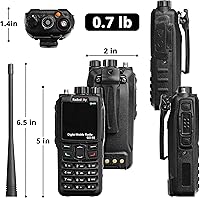
  • Dimensions: Measures 5″ tall by 2″ wide by 1.4″ deep, keeping it compact enough for everyday carry on a belt or in a pack.
  • Weight: Weighs 0.7 lb (11.2 oz) with battery installed, which is manageable for extended field use.
  • Programmable Keys: Includes 4 customizable keys — each with distinct short-press and long-press functions assignable from a broad function list.
  • DTMF Support: In analog mode, the radio can transmit standard DTMF tones covering digits 0 through 9, plus *, #, and letters A through D.
  • FCC Certification: Certified by the FCC under ID 2AN62-GD88, confirming regulatory compliance for licensed amateur radio use in the United States.

Related Reviews

Retevis RT95 Dual Band Mobile Ham Radio
77%
88%
Audio Clarity
67%
Ease of Programming
91%
Display & Readability
86%
Value for Money
74%
Build Quality
More
Radioddity DB50 Dual Band Mobile Radio Transceiver
79%
88%
Transmit Power & Range
91%
Receiver Coverage
86%
Audio Clarity
84%
Channel Management
89%
Chirp Compatibility
More
Radioddity DB25 Pro Dual Band Mini Mobile Radio
88%
91%
Value for Money
87%
Signal Reception
89%
Ease of Use
92%
Display Quality
84%
Durability
More
Baofeng DM-1701 DMR Digital Two-Way Radio
70%
83%
Audio Clarity (DMR Mode)
41%
Programming Experience
78%
Value for Money
76%
Build Quality & Durability
86%
OpenGD77 Firmware Compatibility
More
TYT MD-UV390 Dual Band VHF UHF DMR Radio
82%
86%
Overall Performance
92%
Build Quality & Durability
81%
Ease of Use & Programming
88%
Battery Life
94%
Waterproofing & Ruggedness
More
Radtel RT-860 Multiband Ham Radio Transceiver
75%
88%
Value for Money
76%
Reception Range & Sensitivity
59%
SSB & HF Audio Quality
83%
Build Quality & Durability
62%
Ease of Programming & Setup
More
Baofeng UV-21R Dual Band Ham Radio
75%
91%
Value for Money
68%
Build Quality
54%
Transmission Range
83%
Display & Interface
88%
Charging Convenience
More
Radioddity QT40 10 Meter SSB Ham Radio
77%
86%
SSB Signal Performance
83%
Noise Reduction Effectiveness
88%
Power Output
84%
Audio Clarity
81%
NOAA Weather Integration
More
AnyTone AT-778UV Dual Band Mobile Radio
79%
83%
Build Quality
88%
Audio Clarity
86%
Dual-Band Coverage
79%
Display & Interface
51%
Programming Software
More
BTECH UV-50X2 Second Gen Mobile Radio
73%
88%
Transmission Performance
84%
Audio Clarity
79%
Build Quality
51%
Ease of Setup
47%
User Interface & Menu
More

FAQ

Yes, absolutely. The GD-88 is a transmitting radio that operates on amateur radio frequencies, so you need at minimum a Technician class license from the FCC before you legally transmit. Receiving only does not require a license, but that is not how most people intend to use it.

Honestly, it depends on your patience and willingness to learn. The Radioddity GD-88 DMR Dual Band Ham Radio has a lot of capability, but it comes with real setup complexity — you will need to understand DMR concepts like talk groups, time slots, and zones before it makes sense. If you are brand new to digital radio, expect to spend several hours reading documentation and watching tutorials before your first QSO. It is not impossible for beginners, but it is not forgiving either.
Some basic settings can be adjusted from the keypad, but for anything meaningful — loading channels, zones, or a full contact list — you will want to use the Open CPS software on a PC with the included programming cable. The good news is that Open CPS supports bulk import of DMR contact databases, so you do not have to enter 300,000 contacts by hand.

Yes, and that is one of the things that genuinely sets this ham radio apart. It can receive a signal on one band in analog and retransmit it on the other band in DMR digital (or vice versa), which is uncommon at this price point. This makes it useful in situations where part of your group is running analog and part is on DMR.

The GPS lock is generally considered solid by users who rely on it in the field. APRS beacon transmission works in both analog and DMR digital modes, so you have flexibility in how your position gets pushed to the network. In open terrain with clear sky view, the position reporting is consistent enough for hiking and search-and-rescue use cases.

SFR stands for Same-Frequency Repeater. Using TDMA timeslot technology, the GD-88 can receive on one timeslot and retransmit on the other — all on the same frequency. When several units operate this way, they form a chain or mesh that lets radios at the edges of range communicate through the ones in between. It is particularly useful for clubs at field events or emergency response teams spread across a large area without access to a fixed repeater.

If your accessory uses the standard 2-pin K1 connector (which most Kenwood and Wouxun compatible accessories do), it should work without any adapter. It is always worth double-checking the pin configuration of any third-party accessory before buying.

Yes, and this is genuinely important advice. Some users have reported inconsistent behavior that turned out to be firmware-related, and updating to the latest version resolved it. Radioddity posts firmware updates on their website, and it is a good habit to check before concluding something is broken. Think of it the way you would a software update on any modern device.

With the 3000mAh battery, most operators report a full day of mixed use on a single charge — roughly 8 to 12 hours depending on how much you are transmitting versus monitoring. Running at high power continuously will drain it faster, but the built-in power saving mode helps extend standby time when you are mostly listening.

It can communicate with analog radios operating on frequencies within its VHF and UHF range — so other licensed amateur handhelds running standard analog FM are fine. However, FRS and GMRS consumer radios operate on specific frequencies that are outside the amateur bands, and using this radio on those frequencies would likely violate FCC regulations. Stick to licensed amateur frequencies for legal operation.

Where to Buy