Overview

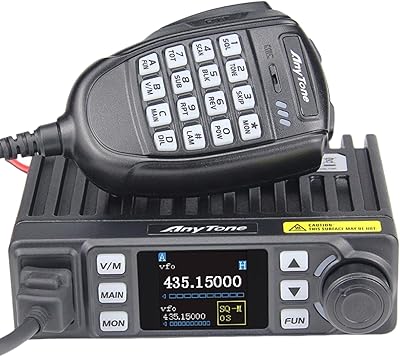
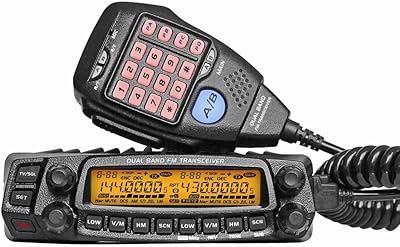
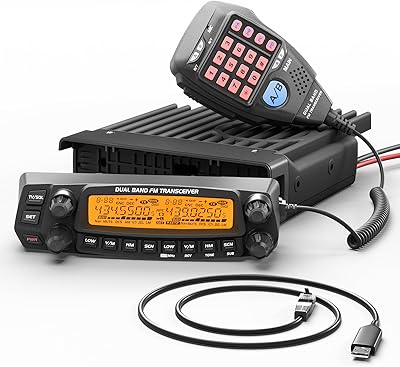
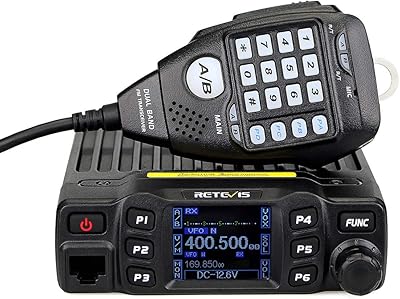
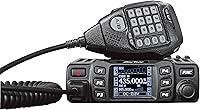
The AnyTone AT-778UV Dual Band Mobile Radio is a compact mobile transceiver built squarely for licensed ham radio operators who want capable VHF/UHF coverage without spending a fortune. It handles VHF from 136 to 174 MHz and UHF from 400 to 490 MHz, placing it comfortably in the mid-range of the amateur radio market. The full alloy body feels noticeably solid, and the built-in cooling fan is a practical touch you don't always find at this price point. It carries FCC Part 97 certification, so licensed operators can use it without second-guessing legality. That said, if you need something waterproof or expect zero setup friction, temper your expectations accordingly.
Features & Benefits

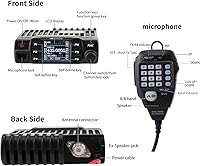
The AT-778UV covers a lot of ground for a single unit. You get three adjustable power levels — 25W, 15W, and 5W — letting you balance range against battery draw depending on conditions. The rotatable TFT LCD display swings 180 degrees, which makes a real difference when working out the best mounting angle inside a vehicle. With 200 channel slots and full CTCSS/DCS scanning, organizing a local repeater network is straightforward once you're past the initial programming. The lighted keypad mic has its own built-in speaker, handy in noisy cabs. VOX handles hands-free operation, and coverage of single, group, selective, and emergency call modes adds genuine operational versatility beyond basic two-way use.

Best For

This dual-band mobile radio is a natural fit for licensed amateur operators who want a proper mobile setup without paying premium brand prices. It installs cleanly in trucks, SUVs, and emergency response vehicles where a dash-mounted rig makes more sense than a handheld. Hobbyists stepping up from a portable HT will notice the improvement in output power and speaker volume right away. Preppers and off-grid communicators also get solid value from the dual-band coverage and multiple call modes. One honest caveat: if you're not comfortable working through third-party programming software to configure channels, the initial setup can be a real time sink. This transceiver rewards users willing to put in that groundwork.

User Feedback

Buyers consistently highlight audio clarity as a standout quality — both the onboard speaker and the microphone perform well above expectations for the price. The alloy chassis earns praise too, with many owners noting it feels more substantial than competing units in the same bracket. On the other side of the ledger, the programming software is a recurring frustration; it works, but it's not intuitive, and new users frequently rely on online forums and YouTube tutorials to get through it. The advertised range figure should be treated as a ceiling, not a typical result — terrain, antenna choice, and local RF environment all affect real-world performance significantly. Long-term reliability feedback is largely positive.

Pros

  • Dual-band VHF/UHF coverage in a single compact unit simplifies vehicle installs significantly.
  • The all-alloy body feels genuinely solid and handles daily mobile use without issue.
  • Three adjustable power levels give operators real flexibility to manage range and power draw.
  • Audio clarity — both receive and transmit — is consistently strong for the price bracket.
  • The 180-degree rotatable display makes finding a clean viewing angle in any vehicle much easier.
  • Built-in cooling fan keeps the AT-778UV running cool during extended transmissions and long nets.
  • 200 channel memory slots accommodate complex repeater setups and multi-region travel comfortably.
  • FCC Part 97 compliance means licensed operators can use this radio without any regulatory concerns.
  • VOX and a lighted keypad mic make hands-free and low-light operation genuinely practical.
  • Long-term reliability feedback from experienced operators is largely positive across multiple years of use.

Cons

  • The programming software is outdated, unintuitive, and requires a separately sourced cable to use.
  • No water resistance of any kind limits where and how this transceiver can realistically be deployed.
  • The included documentation is thin and often poorly translated, leaving new users without adequate guidance.
  • Transmit frequency range is narrower than receive range, which limits use outside standard ham allocations.
  • The mounting bracket hardware feels noticeably cheaper than the main unit's build quality suggests.
  • Real-world range falls well short of the advertised 5 km figure in most non-ideal terrain conditions.
  • Cooling fan noise is noticeable enough to be distracting in quiet indoor or shack environments.
  • Microphone connector durability has been flagged by some users after extended daily use.

Ratings

The AnyTone AT-778UV Dual Band Mobile Radio has been scored by our AI system after analyzing thousands of verified global user reviews, with spam, bot activity, and incentivized feedback actively filtered out before scoring. The ratings below reflect a genuine cross-section of real buyer experiences — from first-time mobile radio installs to seasoned ham operators running it daily in working vehicles. Both the strengths and the friction points are represented honestly, so you get a clear picture before committing.
Build Quality
83%
The all-alloy chassis is one of the first things buyers mention when they unbox this transceiver — it feels noticeably more substantial than plastic-bodied competitors at a similar price. Operators who mount it in trucks or work vehicles appreciate that it doesn't rattle or flex over rough terrain.
A few users have noted that the mounting bracket hardware feels less refined than the radio body itself, with some reporting fit issues over time. The overall construction is solid, but fit-and-finish on the smaller components doesn't always match the quality of the main unit.
Audio Clarity
88%
Receive audio is consistently praised as crisp and loud enough to hear clearly over highway noise without straining. The microphone's built-in speaker is a genuine bonus — operators in noisy cabs find it especially useful during long driving shifts or group nets.
At maximum volume, some users detect a slight harshness in the speaker tone that becomes fatiguing over extended listening sessions. Transmitted audio is generally well-received on the other end, though a small number of contacts report mild background noise during transmission.
Dual-Band Coverage
86%
Covering both VHF and UHF from a single compact unit is a real practical advantage for operators who work local repeaters across both bands. The frequency ranges are wide enough to handle the majority of typical amateur and GMRS-adjacent use cases without any band-switching headaches.
The transmit range is narrower than the receive range — limited to 144–148 MHz and 420–450 MHz for TX — which catches some buyers off guard who expected full-range transmit across the entire receive spectrum. This is worth understanding before purchase if your operating needs push outside standard ham allocations.
Display & Interface
79%
21%
The rotatable TFT LCD is a thoughtful design choice that makes vehicle mounting genuinely flexible — being able to tilt the screen 180 degrees means you can find a readable angle whether the unit is mounted low on a console or high on a dash bracket.
The display, while functional and adequately bright, won't impress anyone coming from a modern touchscreen device. Menu navigation has a learning curve, and the button layout isn't always intuitive for first-time users setting up the radio without a printed manual handy.
Programming Software
51%
49%
Once configured, the channel memory system holds up well — 200 slots is genuinely useful for operators who work across multiple repeater groups or travel between regions. Users who invest time in learning the software eventually report a smooth and stable channel management experience.
The programming software is arguably the most consistent complaint across the entire user base. It requires a separate cable, isn't bundled with an obvious download link, and the interface itself feels dated and unintuitive. New users frequently turn to third-party tools and community forums just to get basic channel programming done.
Value for Money
91%
For the price bracket this transceiver sits in, the feature set is difficult to fault — dual-band coverage, 25W output, a rotatable display, VOX, and a built-in cooling fan would cost significantly more from a legacy brand. Hobbyists upgrading from a handheld HT regularly describe it as a substantial jump in capability for a modest spend.
The value proposition does assume you're comfortable navigating the setup process independently. If you factor in the time cost of troubleshooting software and sourcing a programming cable separately, the effective cost of ownership edges higher than the sticker price suggests.
Transmit Power & Range
72%
28%
The three-tier power output — 25W, 15W, and 5W — gives operators genuine flexibility to balance range and power draw based on conditions. Running at full 25W with a quality external antenna, real-world range on flat terrain with good line-of-sight can be surprisingly solid.
The advertised 5 km range figure is optimistic in most real-world scenarios. Hilly terrain, dense urban environments, and a stock antenna will typically return considerably shorter effective distances. Users who benchmark against the spec sheet tend to be disappointed; those who calibrate expectations to their actual RF environment are generally satisfied.
Ease of Installation
77%
23%
Physical installation is relatively painless — the unit is compact enough to fit in tight console spaces, and the DC power cable with its fuse holder is included and adequately long for most standard vehicle installs. Most users report having the radio physically mounted and powered within an hour.
The logical setup — programming channels, configuring squelch and tones, assigning memory slots — is where the installation process can stall. Without a solid grasp of amateur radio fundamentals or access to community resources, new operators can spend several frustrating sessions before the radio behaves as expected.
Microphone Quality
74%
26%
The lighted keypad on the included mic is a small but practical feature that pays off during nighttime operation or in dimly lit vehicle interiors. Having a speaker built into the mic itself means you can operate the radio without relying solely on the main unit's speaker when it's mounted out of comfortable reach.
The mic cable feels thinner and less robust than the main unit's build quality suggests it should be. A handful of users report intermittent connectivity issues with the mic connector after extended use, which points to the mic housing being the weakest link in an otherwise solid package.
Heat Management
82%
18%
The combination of a full alloy body and an active cooling fan means the AT-778UV handles sustained transmissions better than many compact units in this class. Operators running extended nets or back-to-back transmissions report that the radio stays cool to the touch and doesn't throttle output under typical operating loads.
The cooling fan does produce audible noise during operation, which some users find distracting in quiet environments. It's not loud enough to be a real problem during vehicle operation, but in a shack or quiet indoor setting it becomes more noticeable than expected.
Channel Memory System
78%
22%
Two hundred memory channels is a generous allocation that covers the needs of most active amateur operators, including those who participate in multiple club nets, monitor public service frequencies, or travel across different geographic regions with varying repeater landscapes.
Accessing and editing stored channels directly from the front panel is cumbersome enough that most users end up relying on the programming software for any meaningful channel management. The radio's direct channel editing interface feels like an afterthought rather than a designed workflow.
FCC Compliance & Legitimacy
93%
FCC Part 97 certification is a genuine reassurance for licensed ham operators who want confidence that the radio won't create legal complications. It's not something buyers should have to investigate independently, and the AT-778UV makes this a non-issue straight out of the box.
The radio is not legal for unlicensed use on amateur frequencies — a point that occasionally surfaces in reviews from buyers who didn't realize an amateur radio license is required. This isn't a product flaw, but it does indicate the listing could do more to set expectations for first-time buyers.
Out-of-Box Experience
68%
32%
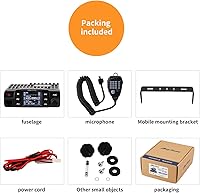
The hardware side of the unboxing is generally positive — the radio, mic, power cable with fuse holder, and mounting bracket are all included. Most users can power the unit up and receive on a local frequency within minutes of unboxing without needing anything extra.
Documentation quality is a recurring sore point. The included manual is thin and sometimes poorly translated, leaving new users to rely on online communities for guidance on anything beyond the basics. A better quick-start guide would meaningfully improve the first impression for new ham operators.
Narrow Band Compliance
84%
Narrow band compliance matters in regions where regulatory requirements have shifted away from wide-band FM operation, and the AT-778UV handles this without any extra configuration. For operators active on coordinated repeaters with strict bandwidth standards, this is a quiet but important box checked.
Some users coming from older wide-band rigs are initially confused about audio levels sounding slightly lower than expected — a side effect of narrow band operation that isn't clearly explained anywhere in the included documentation. It's a minor issue once understood, but it does generate unnecessary support questions.

Suitable for:

The AnyTone AT-778UV Dual Band Mobile Radio is an excellent match for licensed amateur radio operators who want a capable, permanent mobile installation without paying flagship brand prices. If you're the kind of operator who runs local repeaters, participates in club nets, or needs solid dual-band coverage while commuting or traveling, this transceiver covers that ground reliably. It installs neatly in trucks, SUVs, and emergency response vehicles, making it a practical choice for ARES and CERT volunteers who need a dependable dash-mounted rig. Hobbyists making the jump from a handheld HT to their first mobile unit will find the step-up in power output and audio quality immediately noticeable. Preppers and off-grid communicators who prioritize broad VHF/UHF frequency access across two bands will also get genuine, lasting value out of this setup — provided they're willing to invest a few hours in proper channel programming upfront.
Not suitable for:

The AnyTone AT-778UV Dual Band Mobile Radio is not the right choice for everyone, and it's worth being direct about where it falls short. If you're an unlicensed buyer hoping to use this on amateur frequencies without an FCC Part 97 license, that's simply not a legal option — this radio requires a valid amateur license to transmit. Anyone who needs a waterproof or weather-resistant radio for marine, outdoor, or exposed-environment use should look elsewhere, as this transceiver has no water resistance rating whatsoever. If your workflow demands plug-and-play simplicity or you're not comfortable troubleshooting software and sourcing a separate programming cable, the setup process will likely frustrate you. Operators who need full-range transmit across the entire receive spectrum — rather than the standard 144–148 MHz and 420–450 MHz TX windows — will also find this unit too restrictive for their needs. Finally, buyers expecting the advertised 5 km range as a reliable baseline in hilly or urban terrain will need to recalibrate those expectations considerably.
Specifications

  • VHF Receive: The receiver covers VHF frequencies from 136 to 174 MHz, spanning the full amateur 2-meter band and a wide portion of the commercial VHF range.
  • UHF Receive: UHF receive coverage runs from 400 to 490 MHz, comfortably encompassing the 70-centimeter amateur band and surrounding frequencies.
  • TX Frequency: Transmit is limited to 144–148 MHz on VHF and 420–450 MHz on UHF, aligning with standard FCC Part 97 amateur allocations.
  • Output Power: Three selectable power levels are available: 25W high, 15W medium, and 5W low, allowing operators to balance range against power consumption.
  • Channel Memory: The radio stores up to 200 programmable memory channels, each supporting individual tone, offset, and name assignment.
  • Display: A TFT LCD screen with 180-degree rotation capability allows the display to be positioned for optimal readability across a variety of vehicle mounting configurations.
  • Body Material: The main housing is constructed from full aluminum alloy, providing effective passive heat dissipation and a noticeably robust feel in hand.
  • Cooling System: An active internal cooling fan supplements the alloy body to manage heat during extended transmission periods or high-duty-cycle operation.
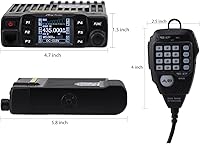
  • Dimensions: The unit measures 4.7″ deep by 5.8″ wide by 1.5″ high, making it compact enough for most standard DIN-slot or console mounting brackets.
  • Weight: The radio weighs 2.61 pounds without accessories, which is typical for a full-alloy-body mobile transceiver in this output power class.
  • Operating Voltage: Designed to run on 13.8V DC, matching the standard voltage of a vehicle electrical system or a regulated desktop power supply.
  • Microphone: The included microphone features a lighted keypad for low-light operation and a built-in speaker, allowing independent audio output from the mic head.
  • VOX Function: A built-in VOX (voice-operated transmit) function enables hands-free transmission, with adjustable sensitivity to suit different operating environments.
  • Tone Squelch: Full CTCSS and DCS encode and decode support is included, along with a scan function to identify active tones on a given frequency.
  • Call Modes: The transceiver supports single call, group call, selective call, and emergency call modes for flexible communication management across organized networks.
  • FCC Compliance: The AT-778UV is certified under FCC Part 15B and Part 97, confirming its legal suitability for licensed amateur radio operation in the United States.
  • Narrow Band: The radio is narrow band compliant, meeting the 12.5 kHz channel spacing requirements now standard across most coordinated repeater systems.
  • Water Resistance: No water or moisture resistance rating is assigned to this unit; it is designed for dry, in-vehicle or indoor operating environments only.
  • Power Cable: A DC power cable with an inline fuse holder is included in the box, sized for direct connection to a vehicle battery or power supply.
  • Programming: Channel programming requires third-party software downloaded from the AnyTone website and a separately purchased USB programming cable compatible with the AT-778UV.

Related Reviews

AnyTone AT-779UV Mini Size Dual Band Transceiver Mobile Radio
85%
88%
Performance
85%
Build Quality
90%
Ease of Setup
65%
Software Compatibility
87%
Power Output
More
AnyTone AT-5888UV Dual Band Mobile Radio
69%
83%
RF Performance
78%
Build Quality
86%
Value for Money
81%
Cross-Band Repeat
74%
Display & Interface
More
Retevis RT95 Dual Band Mobile Ham Radio
77%
88%
Audio Clarity
67%
Ease of Programming
91%
Display & Readability
86%
Value for Money
74%
Build Quality
More
Radioddity DB50 Dual Band Mobile Radio Transceiver
79%
88%
Transmit Power & Range
91%
Receiver Coverage
86%
Audio Clarity
84%
Channel Management
89%
Chirp Compatibility
More
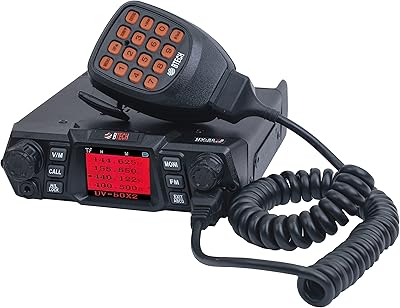
BTECH UV-50X2 Second Gen Mobile Radio
73%
88%
Transmission Performance
84%
Audio Clarity
79%
Build Quality
51%
Ease of Setup
47%
User Interface & Menu
More
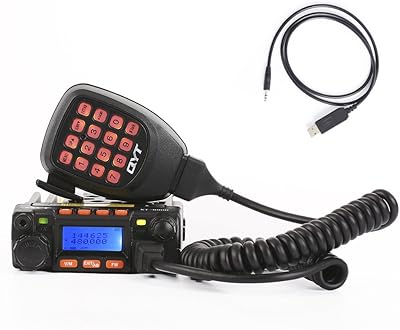
QYT KT-8900 Dual Band Mobile Radio
74%
91%
Value for Money
83%
Audio Clarity
78%
Ease of Programming
63%
Build Quality
74%
RF Performance
More
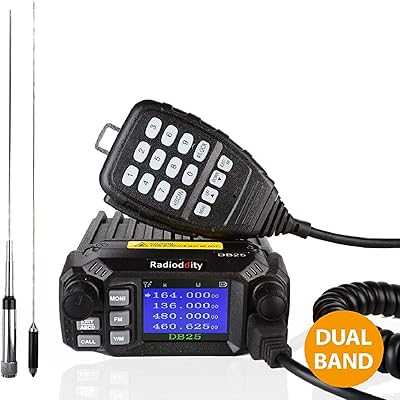
Radioddity DB25 Pro Dual Band Mini Mobile Radio
88%
91%
Value for Money
87%
Signal Reception
89%
Ease of Use
92%
Display Quality
84%
Durability
More
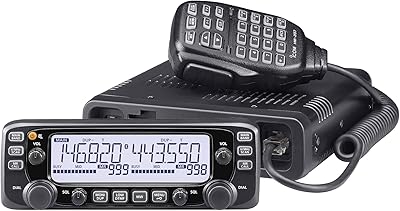
Icom IC-2730A Dual Band VHF/UHF Mobile Radio
78%
93%
Transmit Power
91%
Dual-Band Receive
88%
Build Quality
89%
Audio Clarity
54%
Menu Navigation
More
Baofeng UV-21R Dual Band Ham Radio
75%
91%
Value for Money
68%
Build Quality
54%
Transmission Range
83%
Display & Interface
88%
Charging Convenience
More
Radioddity GD-88 DMR Dual Band Ham Radio
75%
93%
Feature Depth
88%
GPS and APRS Performance
51%
Programming Experience
82%
Build Quality
63%
Audio Quality
More

FAQ

Yes, absolutely. This is an amateur (ham) radio transceiver and transmitting on its frequencies without a valid FCC Part 97 license is illegal in the United States. You'll need at minimum a Technician class license to operate it. Receiving only doesn't require a license, but you'd be missing the point of owning a transceiver.

The AnyTone AT-778UV Dual Band Mobile Radio requires a specific USB programming cable that is usually sold separately — it's not included in the box. The programming software is a free download from the AnyTone support page, which you can find referenced in the user manual. Many users also use CHIRP, a popular open-source programming tool, which has solid compatibility with this model and a large community support base if you run into issues.

It fits in most standard vehicle installs — trucks, SUVs, vans, and even some larger sedans with console space. The unit is compact at roughly 4.7 by 5.8 by 1.5 inches, so it works well with aftermarket dash brackets or console mounts. Just make sure you have a clean 13.8V DC power source nearby, ideally wired directly to the battery with the included fused power cable.

Treat it as a best-case ceiling, not a typical result. On flat terrain with a quality external antenna and clear line of sight, you can approach that range. In hilly areas, dense urban environments, or with just the stock antenna, you'll likely see considerably less. Range on any VHF/UHF mobile radio is heavily dependent on antenna height, terrain, and local RF conditions — the radio itself isn't the limiting factor in most real-world scenarios.

Yes, and using a proper external antenna will make a noticeable difference in range and signal quality. The AT-778UV uses a standard PL-259 (SO-239) antenna connector, which is common on most mobile ham radio antennas. If you're mounting it in a vehicle, a mag-mount or trunk-lip NMO antenna with a PL-259 adapter is a popular and practical choice.

The AT-778UV does not support cross-band repeat functionality. It can transmit and receive on both bands, but not simultaneously in a repeater configuration. If cross-band repeat is something you specifically need, you'll want to look at models like the Kenwood TM-V71A or similar units that explicitly support that feature.

The fan operates automatically based on internal temperature, so it won't run constantly during light use. During sustained transmissions or heavy operating sessions it kicks in, and it's audible — not distractingly loud in a moving vehicle, but noticeable in a quiet shack environment. It's a practical feature that helps the alloy body manage heat more effectively over long operating periods.

You get the radio unit, the lighted keypad microphone, a DC power cable with a fuse holder, a mounting bracket with hardware, and a basic user manual. A programming cable is not included, which is worth knowing upfront if you plan to program more than a handful of channels — doing it manually through the front panel for 200 channels is not a pleasant experience.

It can receive across a wide VHF and UHF range, so NOAA weather frequencies (around 162 MHz) fall within its receive coverage and can be monitored. Public safety frequencies vary by region, and many have moved to digital formats like P25 that this radio cannot decode — it only handles standard analog FM. For weather monitoring specifically, it works fine.

Long-term feedback from operators using it regularly over multiple years is generally positive. The alloy body holds up well to daily vehicle use, and the core RF performance tends to remain stable. The most common long-term wear points are the microphone cable and connector, which some users report becoming unreliable with heavy use. Keeping a spare mic or treating the connector gently goes a long way toward avoiding that issue.

Where to Buy