Overview

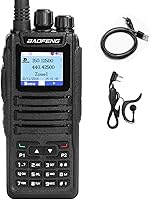
The Baofeng DM-1701 DMR Digital Two-Way Radio sits at an interesting crossroads — it operates in both digital and analog modes, giving licensed amateur operators a genuine entry point into DMR without the steep price of commercial-grade alternatives. Baofeng has packed a lot into this handheld, and it ships with a programming cable, charger, and PTT earpiece right out of the box. A standout differentiator is OpenGD77 firmware support, an open-source option that the community has embraced enthusiastically. That said, newcomers should go in with eyes open — this radio rewards patience and a willingness to learn, and it is not something you simply power on and start using out of the box.
Features & Benefits

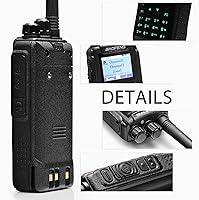
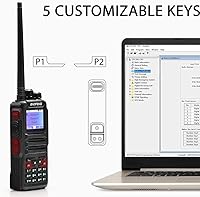
The DM-1701 supports dual time slot DMR, meaning two separate calls can share one frequency point simultaneously, which is genuinely useful for coordinating busy talk groups. It holds up to 3,000 channels, 10,000 digital talk groups, and a contact list reaching 120,000 entries — serious headroom for active operators. The 1.77-inch color TFT screen is crisp enough for field use, and five programmable shortcut keys let you reach frequently used functions without digging through menus. SMS messaging, emergency alarm, and DMR encryption round out the feature set. Firmware and software updates are free for life, and the PC software supports mass channel editing, which saves considerable time when building complex codeplugs.

Best For

This dual-band digital radio makes the most sense for licensed ham operators who want to explore DMR without committing to a significantly more expensive unit. If you already own analog Baofeng radios and are curious about digital voice modes, the DM-1701 is a natural next step. It is also a solid hardware choice for anyone running OpenGD77, since community support for this platform on that firmware is strong — though that path does require a degree of technical comfort. Emergency preparedness groups coordinating across multiple talk groups will appreciate the channel depth. Windows-only programming is a real limitation, so Mac and Linux users should factor that in before purchasing.

User Feedback

Across several hundred ratings, the DM-1701 holds a 4.2-star average, which reflects a fairly predictable split. Experienced DMR operators consistently praise audio clarity in digital mode and note the build quality feels solid for what you pay. The OpenGD77 firmware gets called out repeatedly as a genuine improvement over the stock software. On the other side, programming complexity is the single most common complaint — first-time DMR users frequently find the codeplug process frustrating, and the Windows-only software locks out a portion of buyers entirely. A few reviewers also flagged that factory defaults need adjustment before the radio performs well, which adds another hurdle for beginners just getting started.

Pros

  • Dual time slot DMR lets two separate calls share one frequency, which is practical at busy club events or public service operations.
  • Supports Tier I and Tier II MOTOTRBO compatibility, so it plays well in mixed-hardware DMR environments.
  • Channel and contact capacity is generous enough for even complex regional repeater networks without compromise.
  • OpenGD77 open-source firmware support gives technically inclined operators a meaningfully improved alternative to the stock software.
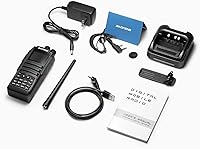
  • Includes a programming cable, charger, and PTT earpiece in the box, covering the basics without extra purchases.
  • Digital audio clarity in DMR mode is consistently praised by experienced users as a step above analog alternatives at this price point.
  • Lifetime-free firmware and software updates protect the investment over time.
  • Five programmable shortcut keys reduce time spent navigating menus during field operations.
  • The build feels solid and substantial for the price tier, with no significant reports of premature hardware failures.

Cons

  • Programming the radio requires significant time investment and external resources — the included manual does not get beginners on the air.
  • Software is Windows-only; Mac and Linux users cannot program the radio through official tools at all.
  • Factory default settings often need manual correction before the radio performs as expected, adding another early hurdle.
  • Firmware flashing errors are a documented issue and require driver troubleshooting steps that are not documented in the box.
  • The included PTT earpiece is uncomfortable for extended wear and noticeably lower quality than basic aftermarket alternatives.
  • Battery drain under heavy DMR transmit use is faster than many buyers anticipate for all-day field deployments.
  • Display washes out in direct sunlight, which is a real limitation for outdoor use cases where the radio is otherwise well suited.
  • The analog mode performance is average at best, making this a poor choice if digital operation is not a primary goal.
  • Operating on most frequencies legally requires a valid amateur or commercial license, which casual buyers may overlook before purchasing.

Ratings

The Baofeng DM-1701 DMR Digital Two-Way Radio has been evaluated by our AI rating system after analyzing verified purchaser reviews from global markets, with spam, incentivized, and bot-generated feedback actively filtered out. The scores below reflect a balanced picture of where this dual-band digital handheld genuinely delivers and where real buyers have run into friction. Strengths and pain points are weighted equally, so you get an honest read before committing.
Audio Clarity (DMR Mode)
83%
In digital mode, users consistently report clean, noise-free audio even at the edge of a repeater's coverage area. Compared to analog handhelds in the same price range, the DMR audio quality is noticeably crisper during club nets and emergency preparedness drills.
Switching to analog mode reveals a more average audio experience, with some users noting background hiss on busy frequencies. A handful of buyers also reported that audio levels out of the factory default settings are either too low or slightly distorted until manually adjusted.
Programming Experience
41%
59%
For operators already familiar with DMR codeplugs, the PC software does offer genuine power — mass-editing channels and talk groups in bulk is a real time-saver when managing large repeater lists. The included programming cable works reliably once the correct driver is installed.
This is the most consistently cited pain point across buyer reviews. First-time DMR users frequently describe hours of frustration just getting the first codeplug working, and the manual is not beginner-friendly. The process requires external resources like community guides and YouTube walkthroughs just to get on the air.
Value for Money
78%
22%
For what the DM-1701 offers — dual time slot DMR, broad channel capacity, and an included accessory bundle — it competes with radios that cost significantly more. Amateur operators looking to dip into DMR without a large upfront commitment find the pricing genuinely hard to argue with.
If you factor in the time investment required to program the radio correctly, the true cost of entry is higher than the sticker price suggests. Buyers who give up and purchase a more beginner-friendly radio afterward often feel the savings were not worth the hassle.
Build Quality & Durability
76%
24%
The chassis feels substantial in hand — not flimsy or hollow like some budget handhelds. Users who have carried it in belt holsters during outdoor events and field days report no cracking, flex, or button degradation after months of regular use.
The waterproof rating gives some buyers false confidence; it is splash-resistant rather than truly submersible under realistic conditions. A few users noted the antenna connector feels marginally loose compared to higher-end handhelds, which is worth watching over time.
OpenGD77 Firmware Compatibility
86%
For technically inclined operators, OpenGD77 firmware transforms the radio. The open-source community has added features, improved the UI, and fixed stock firmware quirks — buyers who made the switch often say they would not go back. It is one of the strongest reasons to choose this hardware platform specifically.
OpenGD77 is emphatically not a plug-and-play upgrade. It requires flashing firmware, learning a different interface, and accepting that it voids any manufacturer warranty claim. Buyers expecting a simple improvement will find this path more involved than anticipated.
Channel & Talk Group Capacity
88%
With 3,000 channels, 10,000 digital talk groups, and room for 120,000 contacts, the DM-1701 handles even complex regional repeater networks without hitting limits. Active DMR users who work multiple talk groups across several zones appreciate not having to compromise on what gets programmed in.
The sheer capacity becomes a liability without efficient programming tools. Managing that many channels manually through the keypad is impractical, which makes the PC software essentially mandatory — and therefore the Windows-only restriction becomes a more significant frustration at scale.
Display & Navigation
71%
29%
The 1.77-inch color TFT screen is readable in most outdoor lighting conditions, and the five customizable shortcut keys genuinely reduce time spent navigating menus during field operations. Users running simplex DMR at events find the display easy to read at a glance.
Direct sunlight washes out the display more than expected for a radio marketed toward field use. The menu structure itself has a learning curve, and several reviewers noted that navigating talk group selections mid-operation is clumsier than on competing DMR handhelds.
Software & Firmware Update Process
62%
38%
Lifetime-free firmware and software updates are a genuine long-term benefit. Baofeng has pushed functional updates since the radio launched, and users who have followed the update path report tangible improvements in stability and feature access over time.
The update process itself is not smooth. Multiple users reported USB open failed errors during firmware flashing, and the fix requires disabling memory protection and reinstalling drivers — steps that are nowhere in the quick-start guide. Mac and Linux users are entirely excluded from this process.
Accessories & Included Bundle
74%
26%
Getting a programming cable, charger, and PTT earpiece in the box is practical and saves an immediate follow-up purchase. The PTT earpiece is usable for casual monitoring, and the charger functions reliably according to the majority of buyers who reviewed it specifically.
The included PTT earpiece is functional but not comfortable for extended wear. Several buyers noted the earpiece audio quality is noticeably lower than aftermarket options, and the programming cable requires a specific driver download before it works — something that should be made clearer upfront.
Dual Time Slot Performance
79%
21%
The ability to run two simultaneous calls on one frequency point is a practical advantage in busy club environments or emergency nets where spectrum efficiency matters. Users coordinating multi-group operations during public service events have found this feature meaningfully useful.
Getting dual time slot working correctly requires proper codeplug configuration, which circles back to the programming complexity issue. Users who have not set up time slots correctly in their codeplug may not realize the feature is not functioning as intended.
Range & RF Performance
67%
33%
On a clear line-of-sight path — open fields, elevated terrain — the DM-1701 performs competitively against similarly priced handhelds. Hitting a nearby repeater from a hilltop or rooftop during a club net works reliably for most users in reasonable RF environments.
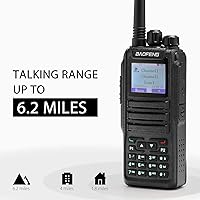
The advertised 10-mile range is a best-case scenario that most buyers will never experience in practice. In suburban and urban environments with buildings and terrain interference, real-world simplex range is far shorter, and a few buyers expressed disappointment when reality did not match the marketing claim.
Battery Life
69%
31%
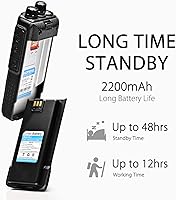
Under moderate use — a few hours of intermittent transmitting and extended monitoring — the 3.7V lithium-ion battery holds up reasonably well through a full day event. Users who primarily use the radio for digital receive report longer battery sessions than those transmitting frequently.
Heavy transmit use, especially in DMR mode with busy talk group traffic, drains the battery faster than many buyers expect. There is no quick-charge support, and the charging cradle feels somewhat slow compared to modern standards, which frustrates users who need a fast top-up between sessions.
Cross-Radio Compatibility
81%
19%
Tier I and Tier II MOTOTRBO compatibility means the DM-1701 can communicate with a wide range of commercial and amateur DMR radios. Users participating in mixed-hardware club environments appreciate not being locked into a single ecosystem for inter-radio communication.
Compatibility works best when talk groups and color codes are configured identically across all radios in a group, which again demands careful codeplug work. A few users noted minor interoperability quirks with certain third-party DMR radios that required additional troubleshooting to resolve.
Ease of Use for Beginners
38%
62%
For buyers who have invested time in learning DMR fundamentals before purchasing — watching tutorials, reading community guides, joining a local ham club — the radio becomes manageable and eventually intuitive. The shortcut keys help experienced operators move quickly once the setup phase is complete.
For anyone expecting to unbox and operate within an hour, the DM-1701 will be a frustrating experience. The default factory settings often require adjustment, the manual leaves critical gaps, and there is no guided setup flow. This is genuinely a radio for people who enjoy the technical side of the hobby.
Analog Mode Performance
63%
37%
Running the radio in analog mode alongside existing repeaters or for simplex communication is straightforward once configured. Operators who split time between analog and digital networks appreciate having both modes in one device rather than carrying two handhelds.
Analog performance is serviceable but not exceptional — it is clearly not where this hardware shines. Users who primarily operate on analog repeaters and only occasionally use DMR may find the overall trade-off in usability and complexity does not justify choosing this radio over a simpler analog-only option.

Suitable for:

The Baofeng DM-1701 DMR Digital Two-Way Radio is a strong fit for licensed amateur radio operators who want to step into DMR without spending heavily on commercial-tier hardware. If you already hold a Technician or General class license and have some experience programming analog radios, the learning curve here is steep but manageable — and the payoff is access to a genuinely capable digital platform. Hobbyists who are already active in the Baofeng ecosystem will find the transition familiar enough in terms of form factor, while gaining meaningful new capabilities in digital voice. Emergency preparedness groups and ARES or RACES volunteers who need to coordinate across many talk groups will appreciate the deep channel and contact capacity. The DM-1701 is also a compelling hardware choice for operators interested in running OpenGD77, the open-source firmware that the amateur radio community has developed into a polished alternative to the stock software — though that path does require comfort with flashing firmware and learning a new interface. Windows PC users who enjoy the technical side of radio programming, building codeplugs, and fine-tuning configurations will feel at home here.
Not suitable for:

The Baofeng DM-1701 DMR Digital Two-Way Radio is a poor match for anyone expecting a ready-to-use experience straight out of the box. Beginners with no prior DMR knowledge and no willingness to spend real time on tutorials, community forums, and codeplug guides will likely end up frustrated and underusing what they paid for. Mac and Linux users face an immediate wall — the programming software only runs on Windows 7, 8, or 10, and there is no official workaround from the manufacturer. Anyone who needs a radio primarily for analog repeater use would be paying for DMR capabilities they will rarely touch, and a simpler analog handheld would serve them better. The advertised range figures should also be taken with a healthy dose of skepticism — in real suburban or urban environments, simplex coverage is considerably shorter than the marketing implies. Finally, buyers who are not yet licensed should understand that operating this radio on most frequencies requires a valid amateur or commercial license; it is not a general-purpose walkie-talkie.
Specifications

  • Frequency Range: The radio operates on dual band covering 420–450 MHz, allowing access to a wide range of UHF repeaters and simplex frequencies used by amateur operators.
  • Channel Capacity: Up to 3,000 channels can be stored, giving active operators plenty of room to organize local, regional, and national repeater networks without running out of memory.
  • Talk Groups: The radio supports up to 10,000 digital talk groups, making it practical for operators who participate in large DMR networks spanning multiple regions or countries.
  • Contact Storage: A contact list of up to 120,000 entries can be loaded, which is sufficient to import full national DMR ID databases without trimming entries.
  • Display: A 1.77″ color TFT screen provides channel, talk group, and signal information at a glance, with reasonable readability in most lighting conditions.
  • DMR Tier: The radio is compatible with DMR Tier I and Tier II MOTOTRBO standards, enabling communication with a broad ecosystem of commercial and amateur digital radios.
  • Time Slots: Dual time slot operation allows two independent calls to share a single frequency simultaneously, effectively doubling the communication capacity of one channel.
  • Battery: A 3.7V lithium-ion battery powers the radio, providing adequate runtime for moderate daily use, though heavy transmit sessions will require more frequent charging.
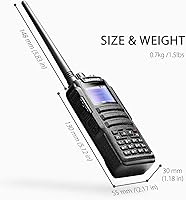
  • Weight: The radio weighs 1.47 pounds, which is on the heavier side for a handheld but reflects the solid chassis construction buyers consistently mention in reviews.
  • Dimensions: Physical dimensions are 8.27″ x 4.33″ x 4.72″, making it a full-sized handheld that fits securely in hand but is not particularly pocketable.
  • Water Resistance: The unit carries a waterproof rating suitable for light rain and splash exposure, though it should not be submerged or used in heavy downpour conditions without caution.
  • Programmable Keys: Five customizable shortcut keys are available on the keypad, allowing operators to assign frequently used functions for faster field access without navigating deep menus.
  • Firmware Updates: Both firmware and the channel programming software receive lifetime-free updates, which have historically added features and improved stability since the radio launched in 2019.
  • OS Compatibility: The programming software runs on Windows 7, 8, and 10 only; Mac and Linux operating systems are not supported by any official Baofeng tool for this model.
  • Included Accessories: The package includes a programming cable, desktop charger, and a PTT earpiece, covering the essential accessories most new buyers would otherwise need to purchase separately.
  • Open Firmware: The hardware is compatible with OpenGD77, a community-developed open-source firmware that offers an alternative interface and additional features beyond the stock software.
  • Special Functions: The radio includes SMS messaging, DTMF signaling, an emergency alarm mode, digital monitor mode, and DMR encryption support for operators who need those capabilities.
  • FCC Certification: The DM-1701 holds FCC Part 90 certification, which is relevant for operators using it in licensed commercial or amateur radio contexts in the United States.
  • Warranty: Baofeng provides a one-year manufacturer warranty covering defects in materials and workmanship from the original purchase date.
  • Initial Password: The factory default keypad lock password is 00000000 (eight zeros), and users can change or disable this setting directly from the keypad without software.

Related Reviews
BAOFENG DM-32UV DMR Radio
83%
92%
GPS and APRS Performance
89%
Range and Power Output
85%
Build Quality and Durability
75%
Battery Life
78%
Usability and Interface
More
Baofeng AR-5RM Handheld Ham Radio
77%
93%
Value for Money
78%
Ease of Use
61%
Transmission Range
67%
Build Quality
74%
Battery Life
More
BTECH DMR-6X2 PRO Two-Way Radio
87%
88%
Performance & Signal Quality
91%
Bluetooth Functionality
85%
GPS & APRS Features
83%
Battery Life
92%
Build Quality & Durability
More
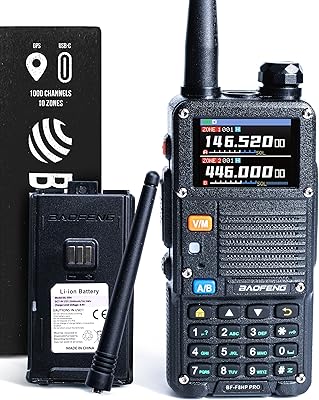
BAOFENG BF-F8HP PRO 7th Gen Tri-Band Radio
78%
88%
Transmission Power & Range
91%
Tri-Band Frequency Coverage
83%
Build Quality & Durability
79%
Weather Resistance (IP54)
67%
GPS Functionality
More
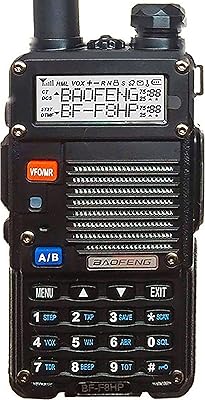
Baofeng BF-F8HP 8-Watt Dual Band Two-Way Radio
72%
88%
Signal Strength & Range
86%
Battery Life
74%
Build Quality & Durability
67%
Audio Clarity
52%
Ease of Programming
More
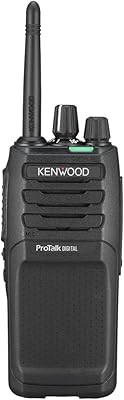
Kenwood TK-3701D Digital Licence-Free Two-Way Radio
77%
88%
Audio Clarity
91%
Build Quality
61%
Range Performance
83%
Ease of Setup
74%
Second PTT Usability
More
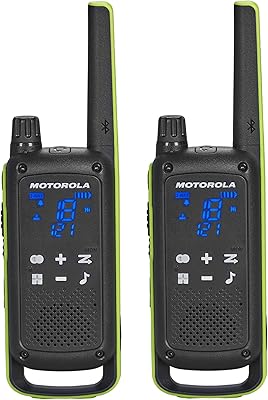
Motorola T803 Two-Way Radio
83%
84%
Range Performance
88%
Battery Life
78%
Bluetooth Functionality
90%
Build Quality & Durability
85%
Ease of Use
More
Motorola DLR1060 Business Two Way Radios
85%
92%
Battery Life
88%
Ease of Use
75%
Range
87%
Build Quality
90%
Portability
More
Motorola T470 Talkabout Two Way Radios
84%
88%
Range Performance
91%
Ease of Use
85%
Build Quality & Durability
83%
Weather Resistance
80%
Battery Life
More
Wouxun KG-805G GMRS Two Way Radio
81%
88%
Battery Life
91%
Water Resistance
75%
Communication Range
85%
Portability
70%
Ease of Use
More

FAQ

Yes, in virtually all practical use cases you do. Operating on the UHF frequencies this radio covers requires at minimum a Technician class amateur radio license in the US, or a valid commercial license if used in a business context. This is not a license-free walkie-talkie, and using it without the appropriate authorization is illegal.

Unfortunately, the official programming software only runs on Windows 7, 8, or 10. There is no Mac or Linux support from Baofeng for this model. Some operators use virtualization software like Parallels or VMware to run Windows on a Mac, but that requires a valid Windows license and some technical comfort to set up.

Genuinely difficult if you have never worked with DMR before. Unlike analog radios where you just punch in a frequency, DMR requires building a codeplug — a structured file that defines your channels, talk groups, time slots, and color codes. Most new users need to spend several hours with community guides, YouTube tutorials, and forum threads before getting on the air. Budget that time in before purchasing.

Yes, when set to analog mode the DM-1701 can communicate with standard analog FM radios on the same frequency, including other Baofeng handhelds. You will just need to make sure the frequencies and any CTCSS or CDCSS tones match across devices.

OpenGD77 is a free, open-source firmware created by the amateur radio community that replaces the stock Baofeng software on compatible hardware, including this radio. It offers a cleaner interface, additional features, and better overall usability according to many experienced users. You do not need it to use the radio, but if you are comfortable flashing firmware, it is widely regarded as a significant improvement. Be aware it voids any warranty claim.

Only in ideal conditions — think flat open terrain with no buildings, trees, or terrain blocking the path. In a typical suburban neighborhood or urban area, real simplex range will be considerably shorter, often just a mile or two. Through a repeater, your effective range depends entirely on the repeater's coverage area, not the radio's power output.

Yes, indirectly. The radio itself is RF-only — it does not have built-in internet or hotspot capability. However, you can connect it to a personal hotspot device like a Pi-Star or SharkRF OpenSpot, which then links to BrandMeister or other DMR networks over the internet. Many DM-1701 users operate exactly this way at home.

The default password is eight zeros (00000000). The password protection feature is turned off at the factory, but if it somehow got enabled, entering 00000000 should get you back in. You can then disable the feature entirely through the keypad settings so it does not prompt again.

It can work alongside Tier I and Tier II MOTOTRBO-compatible Motorola radios if the talk group, time slot, color code, and frequency are programmed to match. However, enterprise Motorola systems often use proprietary encryption or features that are not compatible with third-party radios, so always verify the network configuration with your system administrator before assuming interoperability.

This is a common issue and usually comes down to a driver problem or memory protection being enabled. First, make sure you have installed the correct USB driver for the programming cable, not a generic one. Then open the update software and check whether Memory Protection is toggled on — if it is, disable it before attempting the flash again. If problems persist, Radioddity support is accessible through their official website and tends to respond to these specific issues.

Where to Buy