Overview

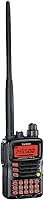
The Yaesu VX-6R Tri-Band Ham Radio Transceiver has earned a quiet but firm reputation among serious amateur radio operators since it first appeared on the market. It is not trying to impress casual listeners — this is a purpose-built tool for licensed hams who need something compact, capable, and genuinely tough. The mil-spec submersible construction sets it apart from most handhelds in its class; few radios at this price point can be dunked and keep working. Tri-band transmit coverage and a receiver that sweeps nearly the full spectrum round out a package that rewards operators who know exactly what they are looking for.
Features & Benefits

The VX-6R transmits on 144, 222, and 440 MHz, putting out a solid 5 watts on the 2-meter and 70-centimeter bands. The 222 MHz band gets 1.5 watts — enough to reach local repeaters, though operators expecting more output there should note that limitation upfront. What really broadens the radio's utility is the 0.5 to 999 MHz receive range, letting you monitor everything from aircraft to weather broadcasts. Practical touches like Automatic Repeater Shift, a transmit time-out timer, and 999 programmable channels keep field operations organized. The ARTS system is a thoughtful addition for paired operations, alerting you when you drift out of range with another equipped station.

Best For

This tri-band HT is squarely aimed at licensed operators, not radio newcomers. Hikers, SOTA activators, and campers who need dependable waterproof communications in the field will find the submersible build genuinely reassuring — not just as a spec, but as something that has proven itself in rain, rivers, and rough conditions. Emergency preparedness volunteers who depend on 2-meter and 70-centimeter repeater networks will appreciate the reliability. The VX-6R also stands out for anyone active on 222 MHz, since capable tri-band handhelds covering that band are notably scarce. Add in the wide-spectrum receiver, and it works well for operators who like to monitor beyond their transmit bands.

User Feedback

Operators who have used this Yaesu handheld in real conditions consistently praise two things: build quality and receiver performance. The waterproofing holds up in actual field use, not just in controlled tests, and audio clarity gets strong marks across the board. On the other side, the menu navigation carries a real learning curve — even experienced hams occasionally need the manual nearby when programming channels. The stock 1250mAh battery is functional but modest; a common community upgrade is swapping in a higher-capacity pack for longer sessions. Long-term owners tend to stick with this radio precisely because it does not let them down when conditions get difficult.

Pros

  • Mil-spec submersible waterproofing holds up in real outdoor conditions, not just controlled tests.
  • Tri-band transmit on 144, 222, and 440 MHz from a single pocket-sized radio is genuinely rare.
  • Receiver spans 0.5 to 999 MHz, making this Yaesu handheld a capable field scanner as well.
  • At under three ounces, it is one of the lightest full-featured tri-band HTs available.
  • Receiver sensitivity and audio clarity consistently earn high marks from operators on weak signals.
  • Built-in Automatic Repeater Shift and 999 channel memory keep field operations organized and efficient.
  • Long service life — many operators report reliable daily use well beyond the ten-year mark.
  • ARTS range-alert system adds a practical safety layer for paired backcountry or event operations.
  • The VX-6R holds its resale value well compared to most handhelds in its class.
  • Compact form factor fits comfortably on a belt or in a jacket pocket for all-day carry.

Cons

  • The menu system has a steep learning curve that frustrates operators expecting a modern interface.
  • The included 1250mAh battery pack falls short on extended activations and typically needs upgrading.
  • 222 MHz output is capped at 1.5 watts, limiting useful range on that band in marginal conditions.
  • A programming cable is essentially a required accessory but is sold separately.
  • Rubber seals require periodic inspection to maintain waterproof integrity as the radio ages.
  • The belt clip feels underbuilt relative to the otherwise rugged radio body.
  • Small keypad spacing makes button operations difficult when wearing gloves in cold conditions.
  • Replacement battery packs are becoming harder to source as the model ages in the market.
  • Internal speaker volume can be insufficient in noisy outdoor environments without an external speaker.
  • The WIRES internet linking feature feels dated and sees limited practical use in most operating scenarios.

Ratings

The Yaesu VX-6R Tri-Band Ham Radio Transceiver scores here reflect an AI-driven analysis of verified purchaser reviews gathered from global sources, with spam, incentivized feedback, and bot activity actively filtered out before scoring. What you see below is an honest synthesis of where this tri-band HT genuinely excels and where real operators have run into friction — no soft-pedaling on the weaknesses, no inflation on the strengths.
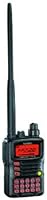
Build Quality & Durability
93%
Long-term owners consistently describe this Yaesu handheld as one of the most physically robust HTs they have owned. The housing resists drops, knocks, and rough handling in the field without cracking or rattling, and the controls stay firm and tactile even after years of regular use.
A small number of users have noted that the belt clip feels slightly underbuilt relative to the radio body itself, and the battery compartment seal requires periodic inspection to maintain its waterproof integrity over many cycles.
Waterproofing & Weather Resistance
91%
This is where the VX-6R earns genuine loyalty. Operators have reported using it in heavy rain, accidental submersion in streams during SOTA activations, and humid coastal environments — and the radio keeps working. The mil-spec rating is not marketing language; it holds up in actual field conditions.
The waterproofing depends on the condition of the rubber seals, which can degrade over time if not maintained. A handful of users discovered ingress only after the radio had aged a few years without seal inspection, so periodic maintenance is a real-world requirement.
Receiver Performance
88%
The wide receive range from 0.5 to 999 MHz gives operators far more than just a transceiver — it functions as a capable scanner for aircraft, weather, and public safety bands. Sensitivity on the ham bands is strong, with users noting clean, clear audio even on weak signals in fringe coverage areas.
On very crowded frequency environments, some users notice the receiver can struggle slightly with adjacent-channel interference without careful squelch management. It is a minor complaint, but operators in dense urban RF environments occasionally mention it.
Audio Clarity
86%
Received audio on this tri-band HT is consistently praised as clean and intelligible, even at lower volume levels. Users running it during outdoor activities note they can copy transmissions clearly without pressing the speaker to their ear, which matters in windy or noisy field conditions.
The internal speaker, while clear, is not particularly loud at maximum volume compared to some competing handhelds. In high-noise environments like crowded public events or near traffic, a few users recommend an external speaker accessory to stay on top of traffic reliably.
Transmit Power & Range
77%
23%
Five watts on 2-meter and 70-centimeter is exactly what most operators need for reliable repeater access and simplex work within a reasonable radius. The output is consistent and clean, and users report solid hits on local repeaters even from terrain-challenged locations.
The 222 MHz band is capped at 1.5 watts, which is a real constraint operators should understand before purchasing. In practical terms, it limits the useful range on that band and can make marginal repeater access unreliable — a genuine trade-off for anyone prioritizing 220 operation.
Ease of Programming & Menu System
58%
42%
Once channels are programmed and the menu logic clicks, the VX-6R operates smoothly in the field. Experienced operators who take the time to work through the manual often say the menu structure makes sense after a short learning period, and software like CHIRP can simplify the initial setup significantly.
The menu system is a genuine stumbling block for new or returning operators. The layered navigation and non-intuitive key combinations frustrate users who expect a modern interface, and without the manual nearby, basic tasks like programming a new repeater can take longer than they should.
Battery Life
63%
37%
Under moderate use — listening with occasional short transmissions — the included 1250mAh pack gets through a typical day of field activity. For emergency preparedness kits and casual portable use, many operators find the stock battery sufficient for short deployments.
Heavy transmit use drains the stock pack noticeably faster than competing radios with larger cells. This is a well-known limitation in the VX-6R community; the standard advice is to budget for a higher-capacity replacement pack if you plan on extended activations or all-day portable operating.
222 MHz Band Capability
67%
33%
The fact that this Yaesu handheld covers 222 MHz at all is significant — genuinely capable 220 MHz portables are a short list. For operators active on that band, having a single radio that handles all three bands without compromise on the other two is a practical convenience with real value.
The 1.5-watt output ceiling on 222 MHz is not trivial. Operators who primarily use 220 MHz for their day-to-day communications may find this limiting, and it is worth comparing against dedicated single-band options if 220 is your main focus rather than a secondary band.
Portability & Ergonomics
84%
At under three ounces and small enough to slip into a jacket pocket, the VX-6R is one of the more comfortable HTs to carry daily. The form factor works well on a belt or in a pack, and operators who carry a radio every day appreciate not having something bulky pulling at their hip.
The compact size comes with smaller controls, which a few operators with larger hands find fiddly, particularly when trying to change settings with gloves on. The keypad spacing is tight, and cold-weather operation with winter gloves gets mentioned as a minor ergonomic frustration.
Frequency Coverage & Versatility
89%
The combination of tri-band transmit and near-full-spectrum receive makes this one of the more versatile handhelds available. Operators use it to monitor weather alerts, scan public safety frequencies, and transmit across three amateur bands — all from one device they can carry in a shirt pocket.
The receive coverage, while impressively wide, does not include gaps-free performance across every sub-band. Some users note uneven sensitivity at the extreme edges of the receive range, particularly in the very low and very high portions of the spectrum.
Value for Money
79%
21%
For what it delivers — mil-spec waterproofing, tri-band operation, and a sub-250-gram chassis — most operators consider the price fair when weighed against the long service life. Radios like this routinely stay in service for ten or more years, which changes the cost-per-use calculation significantly.
The upfront cost sits firmly in mid-to-premium territory, which can be a barrier for newer licensees still deciding how committed they are to the hobby. Add in the likely battery upgrade and optional programming cable, and the real total cost of ownership rises noticeably from the sticker price.
ARTS & Special Features
72%
28%
ARTS adds a genuinely practical safety layer for paired operations — knowing when you have drifted out of reliable contact range is useful information during backcountry activations or search-and-rescue support. The WIRES key and built-in ARS are conveniences that reduce manual steps during repeater access.
ARTS requires both operators to have equipped radios, which limits its usefulness to specific operating scenarios. For the majority of users who do not operate in paired configurations, it sits unused, and features like WIRES feel dated in an era of more modern internet linking systems.
Longevity & Reliability
94%
This is arguably where the VX-6R's reputation is most firmly cemented. Operators routinely report using the same radio for a decade or more with no significant failures, and it remains a go-to recommendation in ham radio communities for operators who want something they can genuinely depend on.
Replacement parts and accessories, including battery packs, are not always easy to source through mainstream channels as the radio ages. Operators relying on it for emergency preparedness should plan ahead and stock a spare battery while supply remains available.
Out-of-Box Completeness
76%
24%
The included package covers the essentials — antenna, wall charger, belt clip, and battery are all in the box, so the radio is functional from day one without any mandatory add-on purchases. For operators who want to get on the air quickly, there is no critical missing piece in the stock configuration.
The included 1250mAh battery and basic wall charger are functional but not impressive at this price point. Many buyers end up purchasing a programming cable and upgraded battery within the first few months, which makes the out-of-box experience feel slightly incomplete for the asking price.

Suitable for:

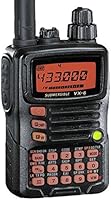
The Yaesu VX-6R Tri-Band Ham Radio Transceiver is purpose-built for licensed amateur radio operators who spend real time in the field and need a radio that keeps up with them. If you are a hiker, SOTA activator, or camper who has ever worried about a handheld dying after an accidental dunking or a day in the rain, this is the radio that resolves that concern without compromise. Emergency preparedness volunteers and ARES or RACES members will find the reliable repeater access on 2-meter and 70-centimeter bands exactly what they need when infrastructure goes down and communication margins shrink. Operators active on 222 MHz will appreciate that genuinely capable tri-band handhelds covering that frequency are rare, making this Yaesu handheld one of the few practical portable options for that band. Anyone who wants a single carry radio that doubles as a wide-spectrum receiver — scanning weather alerts, aircraft, or public safety bands — will get real everyday utility beyond just ham transmitting. Experienced operators upgrading from a basic single-band HT will notice the difference immediately, and long-term users routinely keep this radio in service for a decade or more.
Not suitable for:

The Yaesu VX-6R Tri-Band Ham Radio Transceiver is not the right starting point for someone who has just passed their Technician exam and is still figuring out how repeaters work. The menu system requires patience and a willingness to spend time with the manual — new operators who expect a plug-and-play experience are likely to find the programming process frustrating rather than educational. This tri-band HT is also a poor fit for anyone whose primary operating interest is the 222 MHz band at meaningful power levels; 1.5 watts on that band is a real constraint, and if 220 is your main focus, a more specialized option may serve you better. Budget-conscious buyers who need a functional radio without follow-on purchases should know that a programming cable and higher-capacity battery are near-universal upgrades the community recommends, which adds to the real cost of ownership. Unlicensed users looking for a general-purpose scanner or a family communications radio will find both the price and the feature set oriented entirely toward the licensed amateur market, making this the wrong tool for that job entirely.
Specifications

  • Transmit Bands: The radio transmits on three amateur bands: 144 MHz (2-meter), 222 MHz (1.25-meter), and 440 MHz (70-centimeter).
  • Receive Range: The receiver covers a continuous range from 0.5 MHz to 999 MHz, enabling broad-spectrum monitoring across amateur, aviation, weather, and public safety frequencies.
  • Output Power: Transmit power is 5 watts on the 144 MHz and 440 MHz bands, and 1.5 watts on the 222 MHz band, with selectable lower power settings available on all bands.
  • Channel Memory: The radio supports up to 999 programmable memory channels, allowing operators to store and organize a large number of repeater and simplex frequencies.
  • Waterproofing: Construction meets military specification (MIL-STD) standards for submersibility, providing protection against water ingress in rain, splashing, and short-term immersion.
  • Dimensions: The radio body measures 1.1″ deep by 2.3″ wide by 3.5″ tall, excluding the antenna, making it one of the more compact tri-band handhelds available.
  • Weight: The unit weighs 2.82 ounces without the antenna, contributing to comfortable all-day carry on a belt clip or inside a pack.
  • Battery: Power is supplied by the included FNB-80LI 1250mAh lithium-ion rechargeable battery pack, operating at a nominal voltage of 3.7V DC.
  • Charging: The included SAD-11B wall charger provides a standard desktop charging solution, though a rapid charger is available separately for faster turnaround between field sessions.
  • Antenna: The YHA-67 flexible whip antenna is included in the box and covers all three transmit bands; aftermarket antennas with standard SMA connectors are also compatible.
  • Special Systems: The radio includes ARTS (Auto-Range Transponder System), a WIRES internet linking access key, and Automatic Repeater Shift (ARS) for automated offset handling on repeater frequencies.
  • Additional Features: Operator aids include a transmit Time-Out Timer (TOT), Automatic Power-Off (APO), and TX deviation reduction for use in high-congestion channel environments.
  • Frequency Connector: The antenna port uses a standard SMA connector, which is compatible with a wide range of aftermarket antennas and accessories commonly available in the amateur radio market.
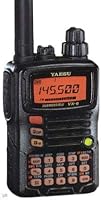
  • Color: The radio is available in black with a high-contrast display and clearly labeled keypad designed for legibility in low-light field conditions.
  • Manufacturer: The VX-6R is designed and manufactured by Yaesu (Vertex Standard), a Japanese electronics company with a long history of producing professional-grade amateur radio equipment.
  • Included Accessories: The box contains the transceiver, FNB-80LI battery, SAD-11B wall charger, YHA-67 antenna, a belt clip, the owner's manual, and a warranty card.
  • Display: The radio features a backlit LCD display that shows frequency, mode, signal strength, battery status, and other operating parameters simultaneously.
  • Availability: The VX-6R has been continuously available since its initial release in December 2010 and is confirmed as not discontinued by the manufacturer as of current product listings.

Related Reviews
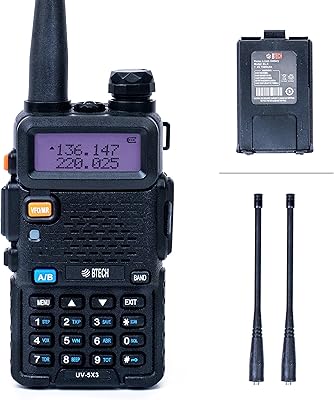
BTECH UV-5X3 Tri-Band Handheld Ham Radio
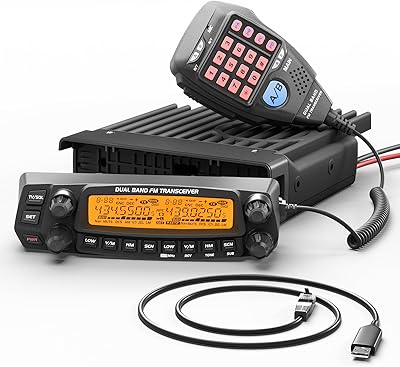
77%
91%
Value for Money
93%
Tri-Band Frequency Coverage
54%
Ease of Programming
88%
USB-C Charging Convenience
78%
Build Quality & Durability
More
Radioddity DB50 Dual Band Mobile Radio Transceiver
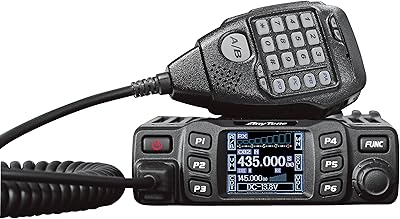
79%
88%
Transmit Power & Range
91%
Receiver Coverage
86%
Audio Clarity
84%
Channel Management
89%
Chirp Compatibility
More
AnyTone AT-778UV Dual Band Mobile Radio
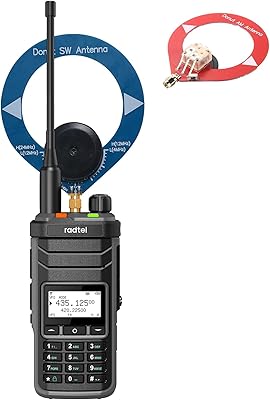
79%
83%
Build Quality
88%
Audio Clarity
86%
Dual-Band Coverage
79%
Display & Interface
51%
Programming Software
More
Retevis RT95 Dual Band Mobile Ham Radio
77%
88%
Audio Clarity
67%
Ease of Programming
91%
Display & Readability
86%
Value for Money
74%
Build Quality
More
Radtel RT-860 Multiband Ham Radio Transceiver
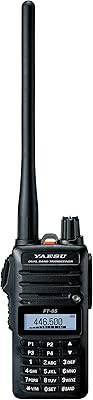
75%
88%
Value for Money
76%
Reception Range & Sensitivity
59%
SSB & HF Audio Quality
83%
Build Quality & Durability
62%
Ease of Programming & Setup
More
Yaesu FT-65R Dual-Band Handheld Transceiver
81%
91%
Build Quality
88%
Audio Clarity
86%
Battery Life
58%
Ease of Programming
61%
Antenna Performance
More
Yaesu FT-60R DualBand Handheld Amateur Radio Transceiver
87%
88%
Performance & Communication Range
90%
Build Quality & Durability
78%
Ease of Use & User Interface
94%
Portability & Size
85%
Battery Life
More
AnyTone AT-779UV Mini Size Dual Band Transceiver Mobile Radio
85%
88%
Performance
85%
Build Quality
90%
Ease of Setup
65%
Software Compatibility
87%
Power Output
More
BAOFENG BF-F8HP PRO 7th Gen Tri-Band Radio
78%
88%
Transmission Power & Range
91%
Tri-Band Frequency Coverage
83%
Build Quality & Durability
79%
Weather Resistance (IP54)
67%
GPS Functionality
More
C. Crane CCRadio-2E Enhanced Portable AM FM Weather and 2-Meter Ham Band Radio
85%
94%
Battery Life
89%
AM Reception
90%
NOAA Weather Alerts
70%
Portability
85%
Durability
More

FAQ

Yes, you do. The Yaesu VX-6R Tri-Band Ham Radio Transceiver is a transmitting radio designed for use on licensed amateur radio frequencies. In the United States, you need at least a Technician class license from the FCC to legally transmit. The wide-range receiver can be used for listening without a license, but the transmit functions are strictly for licensed operators.

It is the real thing. This tri-band HT carries a genuine military-specification submersible rating, and operators have used it in heavy rain, near rivers, and in humid coastal conditions over many years without issues. That said, the rubber seals that maintain the waterproof integrity can degrade over time, so it is worth inspecting them periodically and applying silicone grease if you notice any cracking or compression loss.

Yes, and most operators strongly recommend it. CHIRP is a free, open-source programming software that supports the VX-6R and makes channel programming far faster and less error-prone than navigating the onboard menu system. You will need a compatible programming cable — typically a USB cable with the correct connector for the radio — which is sold separately.

It depends on your local repeater infrastructure and how close you are to it. For hitting a well-placed local 220 MHz repeater, 1.5 watts is often sufficient. For simplex work at any real distance or for reaching a repeater from a fringe location, it can be limiting. If 222 MHz is your primary band rather than a secondary one, it is worth considering whether a more powerful option might serve you better for that specific use case.

Under typical use — mostly listening with occasional short transmissions — the included 1250mAh pack will usually get through several hours of active use, sometimes a full day for light operators. Heavy transmitting drains it noticeably faster. The community consensus is to budget for a higher-capacity replacement battery if you plan on extended portable operations, SOTA activations, or all-day emergency communication deployments.

The VX-6R uses a standard SMA connector, which is one of the more common types in the handheld radio world. This means you have a wide selection of aftermarket antennas to choose from if you want to upgrade from the included YHA-67 whip — a popular upgrade among operators looking to improve receive performance or reduce the profile for everyday carry.

It is actually one of the better choices for emergency preparedness among portable handhelds, not overkill at all. The submersible waterproofing, reliable 2-meter and 70-centimeter repeater access, and exceptional long-term durability make it a radio you can genuinely depend on when conditions are rough. Many ARES and RACES operators specifically choose this Yaesu handheld because it holds up in exactly the conditions where communications matter most.

The VX-6R can receive NOAA weather radio frequencies since they fall within its broad receive range, but it does not have a dedicated automatic weather alert function that wakes the radio or triggers an alarm the way some purpose-built weather radios do. You can manually tune to a weather frequency or store it in memory, but for automatic storm alerting, a dedicated weather radio is a better tool.

Honestly, yes — at least at first. The menu navigation relies on a layered structure that takes time to internalize, and some common tasks like programming a repeater with a CTCSS tone are not immediately intuitive. Most experienced operators recommend spending an evening with the manual before heading into the field, and using CHIRP for the bulk of programming. Once the logic clicks, day-to-day operation is smooth; it is the initial setup phase that trips people up.

Yes, the VX-6R has an accessory port that supports compatible speaker microphones, headsets, and other accessories from Yaesu's lineup. The port configuration uses a standard two-connector jack arrangement common in Yaesu handhelds, so many third-party accessories are also compatible. If you plan to use it for extended field operations or vehicle-mounted use, a speaker mic significantly improves practical usability.

Where to Buy