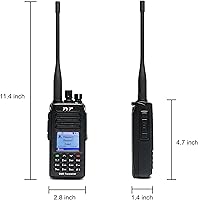
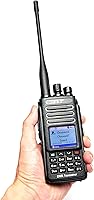
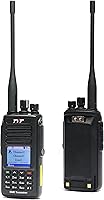
Overview

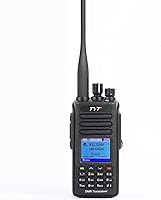
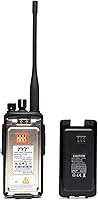
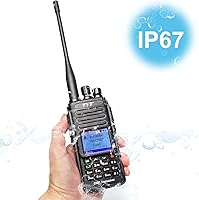
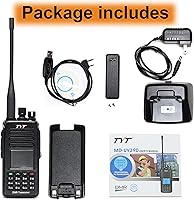
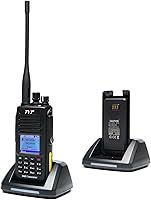
The TYT MD-UV390 DMR Dual-Band Handheld Radio sits in an interesting spot in the market — rugged enough for real field use, yet priced where most hobbyists can actually justify the purchase. The IP67-rated housing means you can use it in rain, dusty job sites, or muddy outdoor events without babying the thing. It covers both VHF and UHF bands and switches between analog and digital DMR modes, which matters when you operate across mixed networks. The box includes a desktop charger, programming cable, and battery — not a stripped-down package. A US-based warranty and domestic returns add peace of mind that's easy to overlook until you actually need it.

Features & Benefits

The MD-UV390 can store up to 3000 channels, which sounds like overkill until you start programming repeaters across multiple regions or building out talkgroup lists for a busy DMR network. At 5 watts, range holds up well in open terrain — though expect less in hilly or urban environments, as with any handheld. The 2800mAh battery genuinely lasts through a full day of moderate use. What stands out for the price is AES256 encryption plus remote kill and stun functions — features you'd normally find on more expensive public-safety gear. Voice prompts and DTMF support reduce the need to dig through menus constantly, which helps considerably in the field.

Best For

This dual-band DMR radio makes the most sense for amateur operators ready to move beyond basic analog handhelds without spending on a top-shelf unit. Emergency preparedness groups will appreciate the IP67 build and wide channel capacity for coordinating across large areas. Outdoor event staff or field workers in wet and dusty conditions get a radio that doesn't demand careful handling. If you're already running a MotoTRBO network, the Tier 1 and Tier 2 compatibility means it drops right in without headaches. It's also a smart pick for curious hobbyists wanting hands-on DMR experience before deciding whether to invest in pricier hardware.

User Feedback

Across more than 200 reviews, buyers settle at 4.1 stars — solid, but with patterns worth knowing before you buy. Build quality and durability draw consistent praise; people report using this handheld transceiver in genuinely rough conditions and it holds up. Audio clarity in digital mode also earns strong marks. Where things get more nuanced: DMR newcomers frequently mention a steep programming curve, and the Windows-only software is a real inconvenience for Mac households. A small number of users have flagged firmware inconsistencies, though manufacturer updates are available. Overall, the feedback describes a capable, honest performer — one that rewards patience during setup.

Pros

  • IP67 waterproofing holds up in real-world rain, dust, and mud without any special precautions.
  • Dual-band VHF and UHF coverage gives flexibility across a wide range of frequencies and networks.
  • AES256 encryption is a rare security feature at this price point, useful for sensitive communications.
  • The 2800mAh battery comfortably handles a full day of moderate field use on a single charge.
  • MotoTRBO Tier 1 and Tier 2 compatibility makes the MD-UV390 easy to integrate into existing DMR infrastructure.
  • 3000-channel capacity is more than enough for operators managing complex repeater networks across multiple regions.
  • Ships with a desktop charger, programming cable, and battery — a genuinely complete out-of-box package.
  • Remote kill and stun functions add operational control that most radios at this tier simply do not offer.
  • Audio clarity in digital mode is consistently praised by real-world buyers across varied environments.
  • US-based warranty support and domestic returns reduce the risk that typically comes with imported radio hardware.

Cons

  • Programming this dual-band DMR radio requires patience, a Windows PC, and a willingness to consult third-party guides.
  • Mac users have no native software support and must find workarounds before the radio is usable.
  • Advertised range figures assume ideal open terrain; expect noticeably shorter distances in urban or hilly areas.
  • Some users have reported firmware inconsistencies that require downloading and applying manufacturer updates manually.
  • The menu system can feel unintuitive until you have spent meaningful time learning the interface.
  • Heavier than many comparable handhelds at 1.66 pounds, which adds up during extended carry.
  • DMR newcomers may find the talkgroup and channel setup process overwhelming without prior digital radio experience.
  • No built-in GPS on the base model, which limits location-aware features available on the upgraded variant.

Ratings

The scores below were generated by our AI system after analyzing verified buyer reviews for the TYT MD-UV390 DMR Dual-Band Handheld Radio from global sources, with spam, bot-submitted, and incentivized feedback actively filtered out. The result is an honest snapshot of real ownership experiences — the strengths that made buyers recommend it and the friction points that gave others pause. Both sides are reflected transparently in every category below.

Build Quality
88%
Buyers consistently describe the chassis as solid and confidence-inspiring, especially given the price point. The IP67-rated housing has been tested in genuine field conditions — rain, mud, and dusty construction sites — and the overwhelming consensus is that it holds up without any babying required.
A small number of users have noted that certain buttons and the display cover feel slightly less refined than the main housing suggests. Nothing that affects function, but under close inspection the fit and finish reveals some of the cost-saving decisions in materials.
Waterproofing
91%
The IP67 rating is not just a marketing claim here — buyers working in outdoor environments report using the MD-UV390 through heavy downpours and dusty job sites without any performance degradation. For a radio at this tier, that level of environmental protection is genuinely uncommon.
A few users pushed the limits beyond IP67 spec, expecting pool or kayaking-level submersion tolerance, and experienced issues as a result. The rating covers incidental water exposure well, but it was never designed for sustained underwater use, and a handful of buyers learned that the hard way.
Audio Clarity
84%
In digital mode especially, the received audio draws consistent praise for being clean and intelligible even in noisy environments. Event coordinators and field workers mention being able to copy calls clearly in environments where cheaper radios would produce garbled audio.
In analog mode, audio quality is more ordinary and less consistent, which occasionally disappointed users expecting the same clarity across both modes. A few buyers also noted that the speaker volume, while adequate indoors, can struggle to compete with loud machinery or heavy wind outdoors.
Battery Life
82%
18%
The 2800mAh lithium-ion pack comfortably handles a full working day for most users operating on a typical transmit-receive-standby cycle. Emergency preparedness teams and outdoor event staff particularly appreciate not needing a mid-day charge during extended deployments.
Heavy continuous transmitting drains the battery significantly faster than the spec implies, which matters for users running high-traffic talkgroups. Some buyers also found that battery capacity degraded more noticeably than expected after six to twelve months of regular use.
Programming Experience
51%
49%
The included programming cable and free software from TYT at least mean you are not spending extra to get started. For users who invest the time — and lean on resources like the MIKLOR community — the software gives full control over all 3000 channels and talkgroup configurations.
The Windows-only limitation is a real barrier for Mac users, and the software interface itself is not intuitive enough to figure out without external guidance. DMR newcomers almost universally report spending several frustrating hours on initial setup, and the user manual alone is insufficient to bridge that gap.
DMR Feature Depth
86%
For a radio at this price tier, the feature list is genuinely impressive — AES256 encryption, remote kill and stun, MotoTRBO Tier 1 and 2 compatibility, and up to 3000 channels give this handheld transceiver capabilities you would typically associate with considerably more expensive hardware. Experienced ham operators and network administrators tend to be the most vocal advocates.
The depth of features is also a double-edged sword — many of the advanced functions require meaningful technical knowledge to configure and use correctly. Buyers who purchased this radio expecting to use encryption or remote management out of the box were often surprised by the setup complexity involved.
Range Performance
72%
28%
In open terrain, the 5W output delivers solid range that experienced users describe as competitive with other handhelds in the class. Pairing the radio with a well-positioned repeater unlocks much greater effective coverage, which is exactly how most serious operators use it.
Real-world range in urban environments or hilly terrain drops off more sharply than the advertised figures suggest, and some buyers felt misled by the 4km claim. Without repeater infrastructure, dense environments significantly limit the practical distance, which is not a flaw unique to this radio but still catches newcomers off guard.
Value for Money
83%
Compared to other DMR radios with similar waterproofing, dual-band capability, and digital feature sets, the MD-UV390 offers a strong combination of capability per dollar. Buyers who understood what they were purchasing — and who had the technical background to unlock the features — consistently describe it as an excellent investment.
Buyers who underestimated the setup complexity or who needed Mac-compatible software felt the value proposition weakened after factoring in the time and workarounds required. The price feels justified for the right user, but for casual buyers it can feel like paying for features they cannot fully access.
MotoTRBO Compatibility
87%
Users who were already operating within a MotoTRBO-based network report clean integration at Tier 1 and Tier 2 without any unexpected interoperability issues. This makes the MD-UV390 a practical, budget-conscious addition to existing commercial DMR fleets.
Getting the radio correctly programmed to match an existing MotoTRBO system still requires accurate network details — color codes, talkgroup IDs, time slots — and errors in any of these will cause silent failures that are not immediately obvious to troubleshoot.
Firmware Stability
63%
37%
TYT actively releases firmware updates through their official website, and buyers who kept the firmware current generally reported a stable experience. The update process itself is reasonably straightforward for users already comfortable with the programming workflow.
A meaningful minority of buyers encountered quirks on factory firmware — unexpected reboots, display glitches, or menu inconsistencies — that required tracking down and applying updates before the radio performed reliably. For a product in this price class, the out-of-box firmware polish leaves room for improvement.
Ease of Use
58%
42%
Voice prompts help reduce the memory burden of navigating the menu system during field use, and once channels are fully programmed the day-to-day operation is fairly simple. Experienced DMR operators describe the interface as functional once the learning curve is behind them.
For anyone new to digital radios, the initial experience is steep — the menu structure is layered, the labeling is sometimes ambiguous, and there is very little hand-holding in the included documentation. The radio rewards experienced users and challenges beginners, which is a consistent theme across user feedback.
Package Completeness
86%
The box includes everything needed to get operational on a Windows machine — desktop charger, programming cable, battery, belt clip, and a software CD. It is one of the more complete out-of-box packages in this category, and buyers appreciate not having to source accessories separately.
The software CD is increasingly impractical as fewer computers include optical drives, and the manual is too basic to guide a DMR newcomer through a meaningful first setup. A downloadable quick-start guide and USB drive would modernize the package considerably.
Durability Over Time
79%
21%
Buyers who have owned the MD-UV390 for a year or more generally describe it as holding together well under regular field use. The housing shows normal wear without structural degradation, and the battery connector and antenna port maintain a solid feel even after repeated use.
Some longer-term owners report that battery capacity fades more noticeably than expected by the 12-to-18-month mark under heavy daily use. A few also noted that the belt clip, while functional initially, loosens with regular attachment and detachment over time.
Warranty and Support
74%
26%
The one-year US-based warranty backed by domestic returns via a California warehouse is a meaningful differentiator from other imported radios that route warranty claims overseas. Buyers who needed to use the warranty reported a smoother process than they expected.
The warranty covers one year, which some buyers feel is short given the price and the technical nature of the product. Post-warranty support from the manufacturer is inconsistent, and users encountering issues after the coverage period often rely on community forums rather than official channels.

Suitable for:

The TYT MD-UV390 DMR Dual-Band Handheld Radio is a strong fit for amateur radio operators who have outgrown basic analog handhelds and want to explore DMR without paying flagship prices. Emergency preparedness groups will find the IP67 waterproofing and large channel capacity genuinely useful when coordinating across wide areas in unpredictable conditions. Outdoor workers, search-and-rescue volunteers, and event staff who operate in rain, dust, or rough terrain get a radio that doesn't need to be treated delicately. Anyone already operating within a MotoTRBO-based network will appreciate how cleanly this handheld transceiver integrates at the Tier 1 and Tier 2 level. It also suits the patient hobbyist who wants real hands-on DMR experience and is willing to spend time on initial programming setup to unlock the full feature set.

Not suitable for:

The TYT MD-UV390 DMR Dual-Band Handheld Radio is not the right choice for buyers expecting a plug-and-play experience out of the box. DMR programming has a real learning curve, and if you are not willing to spend time with software, online communities, and documentation, this radio will frustrate more than it impresses. Mac users face an immediate friction point since the included programming software only supports Windows, meaning a workaround or a separate machine is required just to get started. Buyers looking for casual, short-range communication at job sites or family outings will find this handheld transceiver overcomplicated and overpowered for that purpose. If your priority is simplicity and you have no interest in digital protocols or repeater networks, a much simpler analog radio will serve you better and cost considerably less.

Specifications

  • Frequency Bands: Covers both VHF and UHF bands, allowing operation across a wide range of amateur and professional frequencies.
  • Digital Protocol: Compliant with DMR standard ETSI TS 102 361-1, -2, and -3, supporting structured digital voice and data communication.
  • Output Power: Switchable between 5W high power and 1W low power to balance range needs against battery consumption.
  • Channel Capacity: Supports up to 3000 programmable channels, accommodating complex repeater networks and large talkgroup configurations.
  • Battery: Includes a 7.4V 2800mAh lithium-ion battery pack designed to sustain a full day of moderate field use.
  • Water Resistance: Rated IP67, meaning the radio is fully dustproof and can withstand submersion in up to 1 meter of water for 30 minutes.
  • Encryption: Features AES256 digital encryption for secure voice communications in sensitive or private operational environments.
  • Network Compatibility: Compatible with MotoTRBO Tier 1 and Tier 2 infrastructure, enabling integration into existing commercial DMR networks.
  • Analog Support: Operates in both digital DMR and legacy analog modes, making it usable alongside older analog radio equipment.
  • Signaling: Built-in CTCSS and DCS tone systems are included for analog squelch control alongside DTMF encoding and decoding.
  • Remote Functions: Supports remote kill, stun, and activate commands, allowing fleet managers to control radio access remotely.
  • Weight: The radio weighs 1.66 pounds including the battery, which is on the heavier side for a handheld but typical for its feature class.
  • FCC Certification: Certified under Part 90 of FCC rules, making it legal for use on licensed business and amateur frequencies in the US.
  • Programming: Programmed via included cable and free software available from the TYT website, compatible with Windows 7, 8, and 10 only.
  • Voice Prompts: Built-in voice prompt system announces channel and menu selections audibly, reducing reliance on the display in the field.
  • Package Contents: Includes the radio, 2800mAh battery, desktop charger, belt clip, programming cable, driver and software CD, and user manual.
  • Warranty: Comes with a one-year US-based warranty administered domestically, with a California-based warehouse handling returns.
  • Item Dimensions: The packaged unit measures 7.91 x 6.34 x 3.39 inches, reflecting a full-featured form factor rather than an ultra-compact design.

Related Reviews
TYT MD-UV380 Dual Band VHF/UHF Two-Way Radio
77%
92%
Value for Money
88%
Range and Performance
85%
Build Quality and Durability
80%
Ease of Use
65%
Software and Setup Experience
More
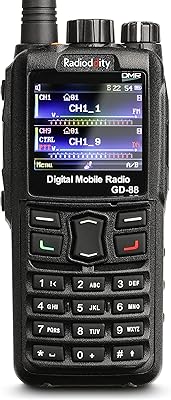
Radioddity GD-88 DMR Dual Band Ham Radio
75%
93%
Feature Depth
88%
GPS and APRS Performance
51%
Programming Experience
82%
Build Quality
63%
Audio Quality
More
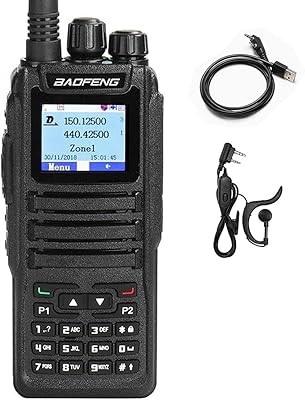
Baofeng UV-21R Dual Band Ham Radio
75%
91%
Value for Money
68%
Build Quality
54%
Transmission Range
83%
Display & Interface
88%
Charging Convenience
More
Baofeng DM-1701 DMR Digital Two-Way Radio
70%
83%
Audio Clarity (DMR Mode)
41%
Programming Experience
78%
Value for Money
76%
Build Quality & Durability
86%
OpenGD77 Firmware Compatibility
More
AnyTone AT-778UV Dual Band Mobile Radio
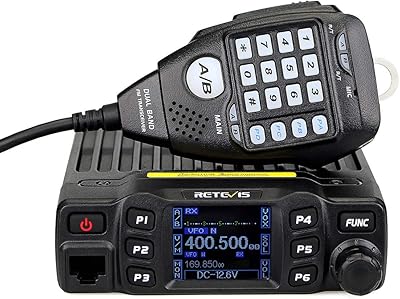
79%
83%
Build Quality
88%
Audio Clarity
86%
Dual-Band Coverage
79%
Display & Interface
51%
Programming Software
More
Radioddity DB50 Dual Band Mobile Radio Transceiver
79%
88%
Transmit Power & Range
91%
Receiver Coverage
86%
Audio Clarity
84%
Channel Management
89%
Chirp Compatibility
More
Yaesu FT-65R Dual-Band Handheld Transceiver
81%
91%
Build Quality
88%
Audio Clarity
86%
Battery Life
58%
Ease of Programming
61%
Antenna Performance
More
Retevis RT95 Dual Band Mobile Ham Radio
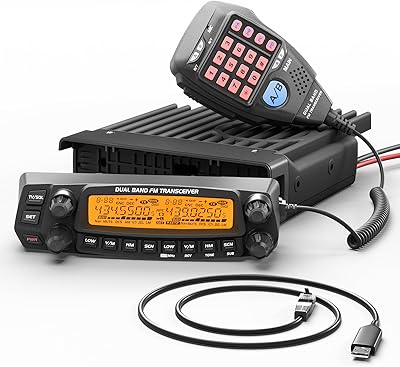
77%
88%
Audio Clarity
67%
Ease of Programming
91%
Display & Readability
86%
Value for Money
74%
Build Quality
More
QYT KT-8900 Dual Band Mobile Radio
74%
91%
Value for Money
83%
Audio Clarity
78%
Ease of Programming
63%
Build Quality
74%
RF Performance
More
TYT TH-8600 Dual Band Mobile Transceiver
76%
88%
Waterproof Protection
79%
RF Performance
83%
Build Quality
81%
Audio Clarity
61%
Ease of Programming
More

FAQ

Honestly, yes — there is a real learning curve, especially if you are coming from a simple analog radio. DMR requires understanding concepts like talkgroups, color codes, and time slots before programming makes sense. The good news is that communities like the MIKLOR website and dedicated Facebook groups have detailed guides specifically for the MD-UV390, and the free software from TYT is straightforward once you understand the basics.

Unfortunately, no. The included software and drivers only support Windows 7, 8, and 10. Mac users will need access to a Windows machine or run Windows through a virtual machine like Parallels or VirtualBox. It is a genuine inconvenience, and it is worth planning for before you buy if you are a Mac household.

The IP67 rating means it can handle submersion up to 1 meter for 30 minutes, so heavy rain and splashing are well within its tolerance. Buyers who work outdoors regularly report using the MD-UV390 in wet conditions without issues. Just avoid prolonged submersion or pressure washing, which exceeds what IP67 is designed for.

Yes, this handheld transceiver is compatible with MotoTRBO Tier 1 and Tier 2 systems, which covers the vast majority of commercial Motorola DMR infrastructure. You will need to program the correct frequencies, color codes, and talkgroup IDs, but once configured it integrates cleanly without special workarounds.

Range depends heavily on terrain and environment. The often-cited 4km figure assumes flat, open land with clear line of sight. In urban areas, dense forests, or hilly terrain, expect noticeably shorter distances — often 1 to 2km. For extended range, using a repeater is the practical solution, which is where the 3000-channel capacity becomes genuinely useful.

Largely yes. The box includes the radio, a 2800mAh battery, desktop charger, belt clip, programming cable, and a software CD. You will need a Windows PC to run the programming software, and you will need a valid amateur radio license or appropriate business license to transmit legally on most frequencies.

You can power it on and scan in analog mode without programming, but to use it meaningfully on DMR networks or set up specific channels, programming is required. Treating it as a ready-to-go walkie talkie out of the box will lead to frustration — plan to spend time on setup before expecting reliable communications.

With moderate use — meaning a mix of transmitting, receiving, and standby — the 2800mAh battery comfortably covers a full eight-hour day for most users. Heavy continuous transmitting will drain it faster, but for typical field or event use the battery life is one of the radio's more reliable strengths.

Updates are available for free on the TYT manufacturer website and are applied through the same programming software used for channel setup. The process is straightforward if you are already comfortable with the programming workflow. Some users have reported that updates resolved quirks present in earlier firmware versions, so it is worth checking for the latest version after you receive the radio.

It is probably more radio than you need for basic job site use. If your team just needs clear, short-range communication and has no interest in DMR networks, repeaters, or digital modes, a simpler analog radio will be easier to set up and maintain. This dual-band DMR radio rewards users who want to take advantage of its feature depth — for purely casual use, the complexity is not worth it.

Where to Buy