
Overview

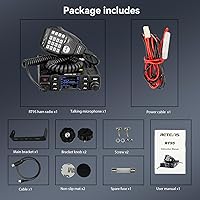
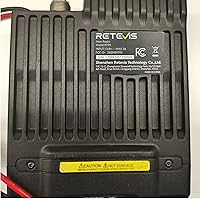
The Retevis RT95 Dual Band Mobile Ham Radio has been quietly holding its ground in the amateur radio market since 2017 — a solid run for a rig that covers VHF and UHF without asking a premium price. At roughly 6.4 x 4.9 x 1.5 inches, this mobile transceiver fits comfortably in tight dashboard spaces or on a cluttered workbench. The package includes a handheld mic, mounting hardware, and a programming cable, so you are not hunting for accessories on day one. One practical note: if you are planning a home base station setup, you will need a separate 13.8V/10A DC power supply — it is not in the box.

Features & Benefits

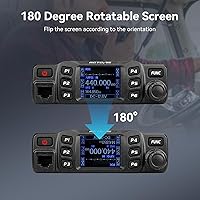
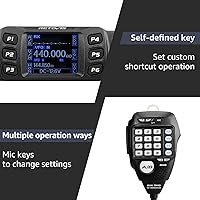
The standout physical feature is the 180-degree rotatable display — it sounds like a small thing until you are mounting a radio in an awkward spot and realize you can flip the screen rather than contort the unit. Programming is similarly flexible: the RT95 supports CHIRP for batch channel management via computer, but also lets you edit frequencies directly on the device through VFO mode. The hands-free VOX function is genuinely useful while driving, though it works best in quieter cabins. Mic gain is adjustable via firmware and can amplify faint audio, but push it too high and background hiss becomes noticeable — the sweet spot takes some dialing in. With 200 memory channels and a full suite of signaling options, it covers most repeater scenarios without issue.

Best For

This dual-band rig suits a fairly specific type of buyer. If you are a newly licensed ham looking for your first mobile setup, the included cable and CHIRP compatibility remove a lot of the intimidation. Emergency preparedness users will appreciate the compact footprint and the ability to run it as a base station — as long as they source the right power supply ahead of time. Repeater operators who rely on CTCSS or DCS tones will find it well-equipped. It is also a practical pick for ARES or RACES volunteers who need to deploy quickly at community events. Where it falls short: operators wanting wideband coverage or waterproofing will not find either here.

User Feedback

Across more than 400 ratings, the RT95 holds a 4.6 out of 5 — not a perfect score, but the kind that reflects genuine satisfaction rather than manufactured enthusiasm. The rotatable screen comes up repeatedly as a practical win that buyers did not fully anticipate before purchase. Audio quality also draws consistent praise, which aligns with the dual-speaker arrangement. On the critical side, users who skipped CHIRP and tried to program channels manually found the process more involved than expected. A handful noted that the missing power supply caught them off guard when setting up a fixed station. Mic gain sensitivity is another nuanced point — it can work against you in noisy environments if left unchecked.

Pros

  • CHIRP compatibility makes batch programming fast and far less frustrating than menu-diving alone.
  • The 180-degree rotatable display is a genuinely practical feature for unconventional mounting situations.
  • Dual speakers — one in the radio body, one in the mic — produce noticeably clearer audio separation than single-speaker units.
  • VOX support allows true hands-free operation, which matters when you are driving and cannot reach the PTT button.
  • 200 memory channels with full CTCSS, DCS, DTMF, and 5-Tone support covers virtually every repeater scenario.
  • The RT95 ships with a mic, mounting hardware, and programming cable, so you can get started without extra purchases.
  • Firmware-upgradeable mic gain gives users real control over audio sensitivity rather than a fixed factory setting.
  • The lighted keypad makes operating in low-light environments — parked at night, dark shacks — much easier.
  • A built-in cooling fan helps manage heat during extended transmit sessions, which cheaper rigs often neglect.
  • At its price tier, the overall build quality and feature density represent strong value for a new or budget-conscious operator.

Cons

  • No water resistance at all — even brief exposure to rain or condensation is a legitimate risk.
  • The external 13.8V/10A power supply required for base station use is not included and adds to the total cost.
  • Manual on-device programming without CHIRP is cumbersome enough that some users give up mid-setup.
  • Mic gain adjustments require a firmware update process that is not clearly documented for first-time users.
  • Pushing the mic gain too high introduces noticeable background hiss that can frustrate contacts on the other end.
  • Frequency coverage is limited to the standard 2m and 70cm bands — no extended or cross-band options.
  • The unit is not waterproof or weather-resistant, limiting outdoor or field deployment in poor conditions.
  • Some users report the mounting bracket hardware feels less robust than the radio itself.
  • VOX sensitivity can trigger unintentionally in noisy vehicle environments if not carefully adjusted.
  • No NOAA weather alert reception, which competing units at similar price points sometimes include.

Ratings

The Retevis RT95 Dual Band Mobile Ham Radio has been scored across 12 performance categories by our AI rating system, which analyzed verified owner reviews from buyers worldwide — actively filtering out incentivized, bot-generated, and low-signal feedback to surface what real operators actually experience. Scores reflect both what this dual-band rig consistently delivers and where it leaves certain buyers wanting more. Strengths and friction points are weighted equally, so the picture you get here is honest rather than flattering.

Audio Clarity
88%
The dual-speaker arrangement — one in the radio body, one inside the handheld mic — produces noticeably cleaner audio separation than single-speaker mobile radios in this price range. Drivers on long commutes and volunteers running nets at community events consistently mention that received audio is crisp and easy to understand even in noisy environments.
At higher mic gain settings, transmitted audio picks up a layer of background hiss that contacts on the other end can clearly notice. In loud vehicle cabins — highway driving, engine noise — this trade-off becomes more pronounced and requires careful gain calibration.
Ease of Programming
67%
33%
CHIRP compatibility is a genuine asset here: users who download the free software and use the included cable can load a full set of repeater memories in under 30 minutes. The onboard VFO mode also lets you adjust frequencies without ever touching a computer, which is handy for quick field changes.
Without CHIRP, navigating the manual programming menu is genuinely tedious and confusing for newcomers, and the printed manual does not do enough to guide first-timers through the process. Several buyers report spending hours on basic channel setup before finding community tutorials online.
Display & Readability
91%
The 180-degree rotatable TFT LCD is one of the most practically useful features on this rig — operators who mount radios in tight or unconventional dashboard positions often struggle to find readable angles, and the ability to flip the screen solves that problem outright. Brightness control makes it readable both in direct sunlight and in dark cabin environments.
The display resolution and color depth are functional rather than impressive — it is not a high-definition screen by any measure. Under very bright outdoor sunlight at certain angles, glare can reduce readability even with brightness set to maximum.
Value for Money
86%
For the price, the RT95 bundles a surprising amount of functionality: dual-band coverage, CHIRP support, 200 channels, VOX, a lighted mic, and a programming cable all in one package. Newcomers who would otherwise pay separately for accessories find the included kit particularly cost-effective as a starter mobile setup.
The omission of a power supply — a required component for base station use — frustrates buyers who expected a more complete package at this price point. Once you factor in a quality 13.8V/10A supply, the total cost of entry climbs noticeably.
Build Quality
74%
26%
The radio body feels solid and reasonably well-constructed for a mid-range unit, and the built-in cooling fan signals that the manufacturer put some thought into thermal management during sustained transmit sessions. Most owners report no hardware failures after regular use over months.
The mounting bracket hardware draws repeated criticism for feeling flimsy relative to the radio itself, with some users reporting loosening over time from road vibration. The handheld mic cable connection point also feels less reinforced than experienced operators might prefer.
VOX Performance
71%
29%
VOX works reliably in moderate-noise environments and is a meaningful convenience feature for anyone who uses this rig while driving solo. The sensitivity adjustment gives users real control over how readily the transmitter activates, which helps avoid accidental keying in most situations.
In louder vehicle environments — highway speeds, diesel engines, open windows — VOX can trigger falsely unless sensitivity is dialed down quite conservatively. At lower sensitivity settings, soft-spoken users sometimes find the VOX threshold too high to trigger reliably.
Channel Capacity
89%
200 memory channels is more than sufficient for the vast majority of amateur operators, covering local repeaters, simplex frequencies, and emergency channels across multiple regions without running out of storage. ARES and RACES volunteers who coordinate across several zones particularly benefit from this headroom.
There is no built-in channel grouping or zone management system on the device itself, so organizing large channel lists requires discipline in how you structure them before programming. Operators managing channels across many geographic areas may find navigation through a flat 200-channel list somewhat slow.
Signaling & Repeater Access
92%
Full support for CTCSS, DCS, DTMF, 5-Tone, and ANI covers essentially every tone-access scenario a Technician or General class operator is likely to encounter on local and regional repeaters. Remote kill and remote wake functions add useful coordination tools for group deployments.
Advanced signaling features like 5-Tone and ANI are not especially well-documented in the included manual, and newer operators may not realize these features exist or how to configure them without seeking external guides.
Mic Gain Flexibility
69%
31%
The firmware-upgradeable mic gain is a thoughtful addition that lets users push sensitivity higher for weak or distant audio sources — a feature typically reserved for more expensive transceivers. Operators who work in quiet environments or use headset microphones report noticeable improvement after calibrating this setting.
The gain upgrade process requires a PC, the programming cable, and a firmware file from Retevis, which adds friction that some buyers did not anticipate. The calibration process itself lacks clear guidance, and overshooting the optimal gain level creates noise problems that are harder to reverse than they should be.
Mounting Flexibility
83%
Between the compact footprint and the rotatable display, this rig fits into more vehicle mounting scenarios than most comparably priced mobile radios. Users with limited dashboard space or center-console obstructions consistently mention that the installation options here solved problems they had with previous radios.
The mounting bracket, while functional, does not inspire confidence for long-term vibration resistance — particularly in trucks or off-road vehicles. A sturdier aftermarket bracket is a common upgrade among buyers who use the RT95 in rougher driving conditions.
Base Station Suitability
72%
28%
The RT95 transitions cleanly into a home base station setup once connected to an appropriate power supply, and its compact size means it does not dominate a desk or shelf the way larger transceivers do. Emergency preparedness users report it as a reliable standby unit that can be up and running quickly during a grid outage.
The required external 13.8V/10A power supply is a genuine additional investment that the product listing does not emphasize clearly enough. Buyers who assume the radio arrives base-station-ready are frequently caught off guard, and sourcing a quality supply adds meaningful cost and setup complexity.
Weather & Durability
41%
59%
Indoors or in a protected vehicle cabin, the RT95 holds up well under regular daily use — most owners report no performance degradation from normal operating conditions over extended periods. The internal cooling fan helps maintain component integrity during longer transmit sessions.
The complete absence of any water or weather resistance rating is a real limitation for field use. Even light rain exposure during outdoor events or emergency deployments is a legitimate risk, and operators who need a ruggedized option will need to look elsewhere entirely.

Suitable for:

The Retevis RT95 Dual Band Mobile Ham Radio is a strong fit for newly licensed amateur radio operators who want a capable vehicle rig without spending heavily on their first setup. The included programming cable and CHIRP compatibility make channel management accessible even for people still learning the ropes, and the onboard VFO mode means you are not dependent on a laptop every time you want to tweak a frequency. Emergency preparedness households will appreciate how easily this dual-band rig transitions into a home base station — provided they already own or plan to purchase a compatible 13.8V DC power supply. ARES and RACES volunteers, as well as community event coordinators, will find the compact footprint and quick deployment practical in field conditions. Repeater-focused operators who rely on CTCSS or DCS tone access will have no shortage of signaling options here.

Not suitable for:

The Retevis RT95 Dual Band Mobile Ham Radio is not the right tool for operators who need wideband frequency coverage beyond the standard 2-meter and 70-centimeter allocations. Anyone expecting to use this unit outdoors in wet or unpredictable weather should know upfront that it carries no water resistance rating whatsoever — even light rain exposure could be a problem. If you are a more experienced ham who already owns quality gear, the feature set here may feel limiting rather than practical. Buyers who prefer to avoid computer-assisted programming entirely may find the manual channel-entry process more tedious than expected. And if you are setting up a base station and do not already own a 13.8V/10A DC power supply, factor that added cost into your budget before purchasing.

Specifications

  • Frequency Range: The radio covers VHF 144–148 MHz and UHF 430–440 MHz, the two standard amateur radio bands used for local and repeater communication.
  • Memory Channels: Up to 200 channels can be stored in memory, supporting organized frequency management across multiple zones or repeater groups.
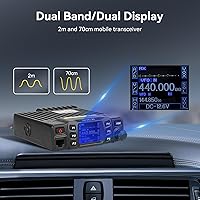
  • Display: A TFT LCD screen rotates 180 degrees, allowing the unit to be mounted in standard or inverted orientations depending on installation needs.
  • Dimensions: The radio body measures 6.42 x 4.88 x 1.54 inches, making it compact enough to mount in typical vehicle dash or under-dash positions.
  • Weight: The unit weighs 2.7 pounds (1225 grams), which is within the normal range for a mobile transceiver of this class.
  • Power Requirement: Full-power operation requires an external 13.8V DC supply rated at 10A minimum; this power source is not included with the radio.
  • Speaker Setup: Two independent speakers are built into the system — one inside the radio body and one inside the handheld microphone — for improved audio separation.
  • VOX Support: Voice-activated transmission (VOX) is supported natively, allowing hands-free operation without pressing the push-to-talk button.
  • Programming: The RT95 is compatible with CHIRP open-source software for PC-based programming and also supports direct on-device frequency editing via VFO mode.
  • Signaling Protocols: Supported signaling formats include CTCSS, DCS, DTMF, 5-Tone, and ANI, covering the tone-access requirements of most amateur repeaters.
  • Special Functions: The radio includes remote kill, remote wake, all-call, and emergency alarm functions, which are useful in coordinated group communication scenarios.
  • Mic Gain: Microphone gain is adjustable through a firmware upgrade process, allowing users to increase sensitivity for weak audio sources with some trade-off in background noise.
  • Keypad Lighting: The handheld microphone keypad is backlit, making it usable in low-light environments such as night driving or dark field deployments.
  • Cooling System: A built-in cooling fan helps dissipate heat during extended transmit sessions, reducing thermal stress on the internal components.
  • Water Resistance: The RT95 carries no water resistance rating and should not be exposed to rain, moisture, or high-humidity environments.
  • FCC Certification: The unit holds FCC ID 2ASNSRT95, confirming it meets federal requirements for legal operation on licensed amateur radio frequencies in the United States.
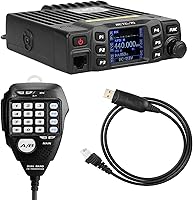
  • Box Contents: The package includes the RT95 radio unit, a handheld microphone, a programming cable, mounting hardware with screws, and a printed user manual.
  • First Available: The RT95 was introduced to the market in September 2017 and remains in active production and sale as of this writing.

Related Reviews
Radioddity DB50 Dual Band Mobile Radio Transceiver
79%
88%
Transmit Power & Range
91%
Receiver Coverage
86%
Audio Clarity
84%
Channel Management
89%
Chirp Compatibility
More
AnyTone AT-778UV Dual Band Mobile Radio
79%
83%
Build Quality
88%
Audio Clarity
86%
Dual-Band Coverage
79%
Display & Interface
51%
Programming Software
More
QYT KT-8900 Dual Band Mobile Radio
74%
91%
Value for Money
83%
Audio Clarity
78%
Ease of Programming
63%
Build Quality
74%
RF Performance
More
BTECH UV-50X2 Second Gen Mobile Radio
73%
88%
Transmission Performance
84%
Audio Clarity
79%
Build Quality
51%
Ease of Setup
47%
User Interface & Menu
More
Radioddity DB25 Pro Dual Band Mini Mobile Radio
88%
91%
Value for Money
87%
Signal Reception
89%
Ease of Use
92%
Display Quality
84%
Durability
More
AnyTone AT-779UV Mini Size Dual Band Transceiver Mobile Radio
85%
88%
Performance
85%
Build Quality
90%
Ease of Setup
65%
Software Compatibility
87%
Power Output
More
Icom IC-2730A Dual Band VHF/UHF Mobile Radio
78%
93%
Transmit Power
91%
Dual-Band Receive
88%
Build Quality
89%
Audio Clarity
54%
Menu Navigation
More
Retevis RA86 GMRS Mobile Radio
85%
88%
Performance
91%
Audio Clarity
85%
Ease of Use
93%
NOAA Weather Alerts
65%
Installation Complexity
More
Retevis RA87 GMRS Mobile Radio
78%
88%
Transmit Power
84%
Repeater Channel Support
86%
Audio Clarity
83%
Ease of Installation
81%
CHIRP Compatibility
More
Retevis RA25 GMRS Mobile Radio
82%
91%
Audio Clarity
89%
Transmission Range
87%
Channel Versatility
84%
Ease of Installation
79%
Build Quality
More

FAQ

Yes, you do. The RT95 operates on the 2-meter and 70-centimeter amateur bands, which require at least a Technician class license issued by the FCC. Operating without a license on these frequencies is illegal in the United States.

You will need a regulated 13.8V DC power supply rated at 10 amps or higher. This is a standard spec for mobile transceivers running at full power indoors. The power supply is not included in the box, so budget for one separately — quality units from brands like Pyramid or Powerwerx work well with this class of radio.

Yes. The RT95 includes a VFO mode that lets you enter and adjust frequencies directly from the front panel without connecting a PC. That said, if you are setting up a large number of channels or repeater memories, using CHIRP software with the included cable will save you a lot of time and frustration.

It is. The Retevis RT95 Dual Band Mobile Ham Radio is supported in CHIRP, which is free, open-source, and available for Windows, macOS, and Linux. Just make sure to use the included programming cable and select the correct radio model in CHIRP before reading or writing any data.

VOX picks up your voice and triggers the transmitter automatically, so you do not need to press the PTT button while driving. The sensitivity is adjustable, which matters because road noise can cause false triggers if the threshold is set too low. Most users find a medium sensitivity setting works reliably in typical driving conditions.

Mic gain is controlled through a firmware upgrade rather than a simple menu setting. Retevis provides the firmware and instructions, and the process involves connecting the radio to a PC with the programming cable. Once updated, you can set the gain level through the radio menu. Keep in mind that higher gain settings amplify background noise along with your voice, so a moderate level tends to give the clearest transmitted audio.

Yes, and this is one of the more practical features of this rig. The TFT display rotates 180 degrees, so if your mounting position works better with the radio flipped, you can invert the unit and still read the screen correctly. It opens up quite a few options for non-standard mounting locations.

The listed maximum range of around 5 miles applies under ideal open conditions with clear line of sight. In practice, urban environments, terrain, and vehicle obstructions reduce range considerably. When used through a well-placed repeater, you can extend your effective coverage to many miles beyond that direct range.

Absolutely. The RT95 supports CTCSS and DCS tone encoding, which are the two most common access methods used by amateur repeaters. You program the appropriate tone into the channel memory alongside the repeater frequency, and the radio handles the rest automatically when you transmit.

No — there is no water resistance rating on this unit at all. It is designed primarily for in-vehicle or indoor base station use. If you are planning to use it at an outdoor event or in the field, you would want to keep it sheltered from any precipitation. For rugged outdoor deployments, you would need a different radio with an appropriate IP rating.