Overview

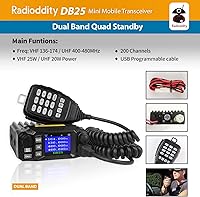
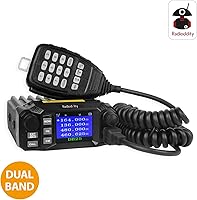
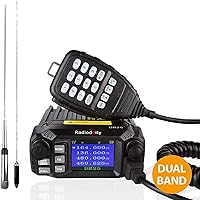
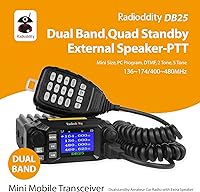
The Radioddity DB25 Pro Dual Band Mobile Radio is a compact, mid-range transceiver aimed at licensed ham operators and preparedness-minded drivers who need reliable VHF/UHF comms without sacrificing dashboard real estate. At just 1.7″ x 3.8″ x 5″, it fits where full-size rigs simply won't — tight center consoles, small trucks, even compact SUVs. What genuinely separates it from basic dual-band radios is quad-standby capability, letting you monitor multiple channels without juggling separate units. A quad-band antenna ships in the box, so you're not chasing down accessories before your first transmission. Just keep expectations grounded: the 5 km range figure is a best-case scenario, and real-world results vary heavily with terrain and antenna placement.
Features & Benefits

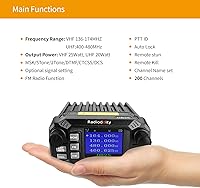
Running VHF and UHF simultaneously is the starting point, with selectable output between 25W and 10W depending on how much power the situation calls for. The four-color display is a practical touch — easy to read at a glance while driving, and the dual synchronized display mode means both bands stay visible at once. Quad-standby lets you monitor four channels at the same time, which is genuinely useful during net operations or group convoys. The smart cooling fan only kicks in when temperatures climb past 45°C, keeping the radio quiet during normal use. A programming cable and Windows driver come included, giving you a head start on channel setup, though the software learning curve is real.

Best For

This compact mobile transceiver is a strong fit for licensed Technician-class hams (or higher) — keep in mind that an FCC license is required to transmit on these frequencies. It works especially well for overlanders and convoy groups who need coordinated VHF/UHF comms across multiple vehicles. Emergency preparedness buyers will appreciate a dedicated vehicle-mounted option that can monitor several channels at once. New hams entering the mobile radio space will find the feature set generous for the price, though they should plan on investing time to learn the programming side. Anyone squeezed for space — small trucks, compact cars, or motorcycles with mount adapters — will find the physical footprint hard to beat.

User Feedback

Owners consistently point to audio clarity as a highlight — the speaker output is noticeably louder and cleaner than you'd expect from a unit this size. Build quality gets decent marks too, with most users finding the chassis solid enough for daily in-vehicle use. The sticking point for many is programming: CHIRP works, but you need to select the QB25 profile specifically, and that detail trips up more than a few first-timers. Some buyers have flagged inconsistent performance from the included antenna at distance, suggesting an aftermarket upgrade pays off for serious range work. Fan noise rarely comes up as a complaint, since the thermal trigger keeps it silent most of the time.

Pros

  • Quad-standby monitoring of four channels simultaneously is a rare capability at this price point.
  • The compact footprint fits dashboards and center consoles where most mobile radios simply will not.
  • Speaker output is noticeably louder and clearer than the unit's small size would suggest.
  • The DB25 Pro ships with a quad-band antenna, programming cable, mounting bracket, and speaker mic included.
  • Selectable 25W and 10W output gives practical flexibility depending on range needs and power draw.
  • The smart thermal fan stays off during normal operation, keeping the cabin quiet the majority of the time.
  • Two hundred channel slots accommodate complex repeater and frequency plans without running out of memory.
  • Water resistance adds useful durability for outdoor events, overlanding, and exposed vehicle installations.
  • DTMF support plus remote stun, activate, and kill functions add meaningful depth for coordinated group operations.
  • CHIRP compatibility gives experienced users a familiar, efficient path to bulk channel programming.

Cons

  • CHIRP setup requires selecting the QB25 profile specifically — a detail that trips up many first-time users.
  • The included antenna underperforms at distance; most users pursuing real range end up replacing it.
  • No Mac-compatible programming software is bundled, leaving Mac-only users reliant on workarounds.
  • The advertised 5 km range is an open-field best case — urban or hilly terrain cuts it considerably.
  • An FCC amateur radio license is legally required to transmit, making this unsuitable for unlicensed buyers.
  • The printed manual is sparse and hard to follow without supplementing it with online forums or video guides.
  • Extended back-to-back transmissions generate noticeable heat, even with the thermal fan management in place.
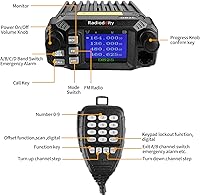
  • The compact button layout feels cramped for users with larger hands during frequent in-drive adjustments.
  • Programming software must be downloaded separately from the Radioddity website, adding a step to initial setup.

Ratings

The Radioddity DB25 Pro Dual Band Mobile Radio earns its scores here from a synthesis of verified global user feedback, with AI filtering applied to remove incentivized, bot-generated, and outlier reviews before analysis. The result is an honest, balanced picture — where this compact mobile transceiver genuinely excels is reflected in the numbers, and so are the areas where real buyers have run into friction. No category has been glossed over; the pain points are as visible as the strengths.
Audio Quality
83%
The speaker on this compact mobile transceiver is consistently praised for punching well above its size class. Users report clear, loud audio during highway drives — even without external speakers — which is a meaningful advantage when you need to catch incoming transmissions without pulling over.
Some users note mild distortion at maximum volume levels during extended operation, particularly when the chassis is warm. It is not a dealbreaker, but those running nets for hours at a time may prefer connecting an external speaker for consistent clarity.
Build Quality
74%
26%
Most owners describe the chassis as adequately solid for daily vehicle use, holding up well against road vibration, temperature swings, and the occasional knock during installation. The housing feels more substantial than the price point might suggest at first handling.
The DB25 Pro does not approach the tank-like feel of higher-end Japanese transceivers. A recurring theme in longer-term reviews is that certain buttons feel slightly soft or imprecise over time, and the overall finish reads as functional rather than refined.
Value for Money
81%
19%
For the mid-range price, this dual-band rig delivers a feature set that typically costs more from established competitors. Quad-standby, DTMF functions, a four-color display, and a bundled accessory kit in one package make it genuinely strong value for new hams and preparedness buyers alike.
Buyers who discover they need a better antenna or hit programming hurdles often end up spending additional time and money on accessories and research, which quietly dents the initial value impression. Mac users also face friction that Windows buyers do not.
Programming Ease
52%
48%
CHIRP compatibility is a real advantage over radios locked to proprietary software, and the USB programming cable already in the box removes one immediate barrier. Experienced CHIRP operators who know to select the QB25 profile will be fully programmed in a single sitting.
First-time programmers consistently hit the same wall: the QB25 profile must be selected specifically in CHIRP, and the included manual provides almost no guidance for this step. Without community forums or video tutorials, initial setup can turn into a multi-hour ordeal for beginners.
Range & Signal
67%
33%
At 25W output on both VHF and UHF, the DB25 Pro performs competently in favorable conditions — flat terrain, open highways, and suburban areas with active repeater infrastructure. Users in well-covered areas report reliable contact across reasonable everyday distances.
The advertised 5 km talking range is frequently cited as optimistic by owners in hilly, forested, or urban environments. Stock antenna performance at distance has drawn consistent criticism, and several users treat an aftermarket antenna as a near-mandatory upgrade for serious range work.
Feature Set
88%
Quad-standby, dual synchronized display, DTMF in 2-tone and 5-tone formats, remote stun and kill commands, 200-channel memory, and selectable bandwidth in a compact chassis represent impressive feature density at this price tier. Overlanders and emergency preparedness users especially appreciate multi-channel monitoring without needing a second radio.
Several of the more advanced functions — randomization privacy mode and remote activate in particular — are poorly documented in the manual, leaving users to piece together usage from third-party resources. For buyers who will never touch those features, it is a non-issue, but those specifically seeking them face a steep learning curve.
Display Readability
79%
21%
The four-color screen with dual synchronized display mode gives a clear, at-a-glance view of both active bands simultaneously, which is noticeably more useful than single-display designs during mobile operation. Color differentiation between bands meaningfully reduces the risk of misreading the active channel while driving.
In direct sunlight, the display can wash out enough to require a closer look — a real inconvenience when the unit sits on a sun-facing dashboard. Brightness adjustment options are limited compared to more expensive transceivers, which leaves some users wishing for more control.
Compact Form Factor
91%
At 1.7″ x 3.8″ x 5″, this is one of the smallest mobile transceivers in its class without meaningfully sacrificing core functionality. Drivers with compact vehicles, tight center consoles, or multi-device dashboards consistently name the footprint as a primary reason they chose it over larger alternatives.
The compact size means button spacing is tighter than on full-size rigs, which can be fiddly for users with larger hands during frequent manual adjustments on the move. Accessing secondary functions requires multi-step button combinations that are considerably easier to navigate when parked.
Included Accessories
77%
23%
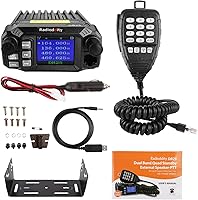
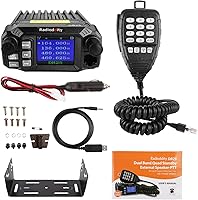
The box is meaningfully stocked — speaker microphone, mounting bracket, car power cable, programming cable, spare fuse, and quad-band antenna all arrive with the radio, eliminating the usual round of post-purchase accessory shopping. For new hams setting up their first mobile station, this saves real time and money.
The stock antenna, while included and functional for short-range use, falls short of what most users want for serious distance work. The user manual is widely regarded as too sparse to serve as a reliable reference for anything beyond the most basic operations.
Heat Management
82%
18%
The thermally controlled fan design is well thought-out: it stays completely silent during typical operation and only activates above 45°C, keeping cabin noise to a minimum during everyday use. Users running extended nets appreciate that heat buildup is actively managed rather than left to passive dissipation.
During prolonged back-to-back transmission sessions — the kind that occur during emergency activations or long net check-ins — the chassis gets noticeably warm and the fan audibly cycles on. It handles the heat effectively, but heavy sustained use is not a zero-concern scenario.
Quad-Standby
86%
Being able to monitor four channels simultaneously without manual switching is a genuine operational advantage that most radios in this price class simply do not offer. Convoy operators and emergency preparedness users regularly highlight it as the single feature that makes this dual-band rig worth choosing over a cheaper alternative.
The quad-standby function is not always intuitive to configure on first use, particularly for operators new to multi-channel monitoring. Response priority behavior when traffic appears on multiple channels simultaneously takes some trial and error to understand and dial in to personal preference.
Antenna Performance
61%
39%
The included quad-band high-gain antenna covers the radio's full VHF and UHF range right out of the box, which is a step above competitors that ship with single-band or bare-minimum antennas. For local repeater access and short-range coordination, it performs adequately for most entry-level use cases.
Beyond moderate distances or in terrain with any meaningful obstruction, the stock antenna struggles to maintain signal quality, and some users have flagged connector reliability as inconsistent. Most owners who use this rig seriously end up replacing the antenna within the first few months of real-world use.
Ease of Installation
78%
22%
The mounting bracket, screw hardware, adhesive pad, and pre-terminated power cable in the box make the physical installation accessible even for less experienced users. Connecting to a 12V vehicle system is direct and requires no additional power conditioning equipment whatsoever.
Routing the power cable cleanly to a fuse box or battery terminal requires basic automotive knowledge and patience, which can trip up buyers who have never installed a hardwired vehicle accessory before. The mounting bracket also offers limited angle adjustment for unconventional or angled dashboard configurations.
Long-term Reliability
71%
29%
Users who have owned this compact mobile transceiver for over a year generally report it holding up without significant issues under regular mobile operation. The water-resistant rating provides reassurance for outdoor activations, and the thermal management system appears to contribute positively to long-term component health.
Radioddity is not yet in the same reliability tier as long-established transceiver brands, and a small but recurring subset of owner reports mention quality control inconsistencies — particularly around antenna connector durability and button tactile response degrading noticeably after extended daily use.
Software & Compatibility
58%
42%
CHIRP compatibility is the saving grace in this category — it is free, open-source, and available for Windows, Mac, and Linux, meaning the programming cable in the box is usable across platforms. For operators already familiar with CHIRP, the DB25 Pro slots right into their existing workflow.
The native bundled software is Windows 7 and 10 only, which immediately sidelines Mac users from the included tools. Even on Windows, first-time users frequently hit the QB25 profile selection issue in CHIRP before finding community guidance, and the printed manual offers no help for this critical step.

Suitable for:

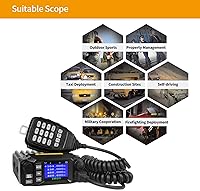
The Radioddity DB25 Pro Dual Band Mobile Radio is purpose-built for licensed amateur radio operators — Technician class and above — who want capable VHF/UHF mobile communications without dedicating half their dashboard to a full-size rig. It suits overlanders, off-road convoy groups, and campers particularly well, since coordinating across multiple vehicles on the move is exactly where quad-standby and dual-band coverage earn their keep. Emergency preparedness households will find real practical value in a unit that can monitor several channels at once without manual switching, especially when a situation is developing fast. New hams entering the mobile space get solid out-of-the-box value here, since the kit ships with an antenna, programming cable, and mounting hardware rather than leaving them to source accessories separately. Anyone squeezed for console or dash space — smaller trucks, compact SUVs, or even motorcycles with aftermarket mounts — will find this one of the few transceivers that actually fits without a major installation effort.
Not suitable for:

The Radioddity DB25 Pro Dual Band Mobile Radio is a poor match for anyone who hasn't obtained an FCC amateur radio license, because transmitting on VHF and UHF frequencies without one is a federal violation — this is not a plug-and-play CB-style radio. Buyers expecting simple setup will likely be disappointed; getting channels loaded through CHIRP requires selecting the QB25 profile correctly, and the included manual rarely gets beginners across the finish line without supplemental online research. If long-distance communication is the priority, this dual-band rig's real-world range falls well short of the advertised figure in anything but flat, open terrain, and the stock antenna often needs upgrading before the 25W output is truly utilized. Mac-only users will also find the included programming software unavailable to them without workarounds. Anyone who prefers a traditional full-size transceiver layout with large, well-spaced controls may find the compact form factor a daily frustration rather than a benefit.
Specifications

  • Brand: Manufactured and sold by Radioddity, a brand specializing in amateur and professional radio equipment.
  • Dimensions: The unit measures 1.7″ deep, 3.8″ wide, and 5″ tall, making it notably compact for a vehicle-mounted mobile transceiver.
  • Frequency Range: Covers 144–148 MHz on the VHF band and 420–450 MHz on the UHF band for simultaneous dual-band operation.
  • Output Power: Transmit power is user-selectable between 25W high and 10W low, allowing the operator to balance range against power draw.
  • Channel Capacity: Supports up to 200 programmable channels, providing ample storage for complex repeater plans and multiple frequency groups.
  • Display: Equipped with a four-color screen and a dual synchronized display mode that keeps both active bands visible at once.
  • Standby Mode: Quad-standby operation allows the radio to monitor up to four channels simultaneously, breaking squelch on whichever sees activity first.
  • Input Voltage: Operates on 12V DC, intended for direct connection to a standard vehicle electrical system via the included power cable.
  • Water Resistance: Rated as water resistant, offering basic protection against splashes and incidental moisture during outdoor or vehicle-mounted use.
  • Included Antenna: Ships with a quad-band high-gain antenna rated at 50W, covering the radio's full VHF and UHF frequency range out of the box.
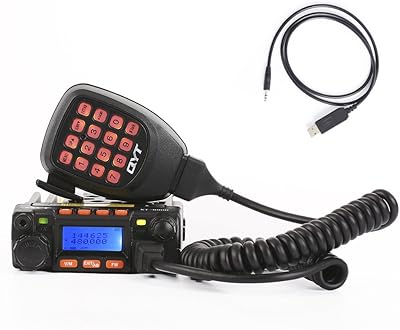
  • Programming: Includes a USB programming cable and Windows driver; compatible with CHIRP open-source software using the QB25 device profile.
  • Cooling Fan: The internal fan activates only when temperature reaches or exceeds 45°C (113°F), remaining completely silent during normal operation below that threshold.
  • Special Functions: Supports DTMF signaling in both 2-tone and 5-tone formats, along with remote stun, remote kill, and remote activate commands.
  • Scan Modes: Offers auto scan, variable frequency scanning, and scanning resume to automatically monitor activity across stored or entered frequencies.
  • Bandwidth: Supports both wide (broadband) and narrow bandwidth modes, selectable per channel to comply with local band plan requirements.
  • Talking Range: Maximum advertised talking range is 5 km, though actual range depends heavily on terrain, antenna quality, and obstructions between stations.
  • Package Contents: Includes the transceiver, speaker microphone, car power cable, mounting bracket, screw set, spare fuse, USB programming cable, quad-band antenna, user manual, and double-sided adhesive pad.

Related Reviews
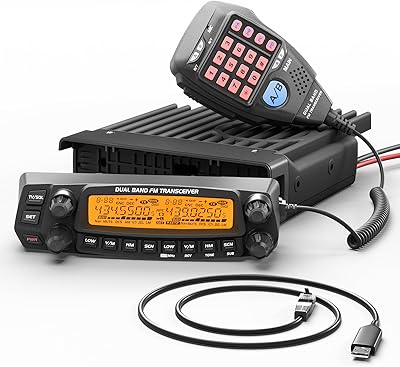
Radioddity DB50 Dual Band Mobile Radio Transceiver
79%
88%
Transmit Power & Range
91%
Receiver Coverage
86%
Audio Clarity
84%
Channel Management
89%
Chirp Compatibility
More
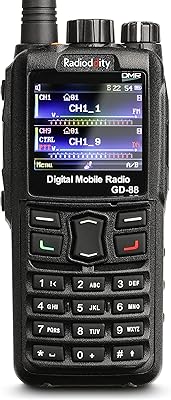
Radioddity GD-88 DMR Dual Band Ham Radio
75%
93%
Feature Depth
88%
GPS and APRS Performance
51%
Programming Experience
82%
Build Quality
63%
Audio Quality
More
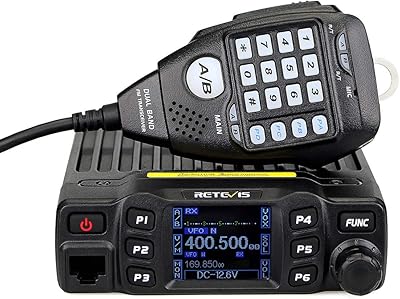
Retevis RT95 Dual Band Mobile Ham Radio
77%
88%
Audio Clarity
67%
Ease of Programming
91%
Display & Readability
86%
Value for Money
74%
Build Quality
More
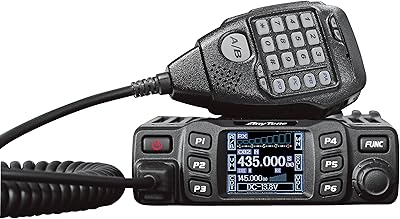
AnyTone AT-778UV Dual Band Mobile Radio
79%
83%
Build Quality
88%
Audio Clarity
86%
Dual-Band Coverage
79%
Display & Interface
51%
Programming Software
More
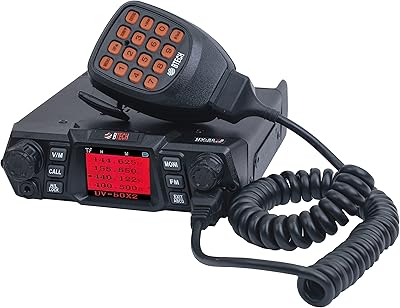
BTECH UV-50X2 Second Gen Mobile Radio
73%
88%
Transmission Performance
84%
Audio Clarity
79%
Build Quality
51%
Ease of Setup
47%
User Interface & Menu
More
QYT KT-8900 Dual Band Mobile Radio
74%
91%
Value for Money
83%
Audio Clarity
78%
Ease of Programming
63%
Build Quality
74%
RF Performance
More
Icom IC-2730A Dual Band VHF/UHF Mobile Radio
78%
93%
Transmit Power
91%
Dual-Band Receive
88%
Build Quality
89%
Audio Clarity
54%
Menu Navigation
More
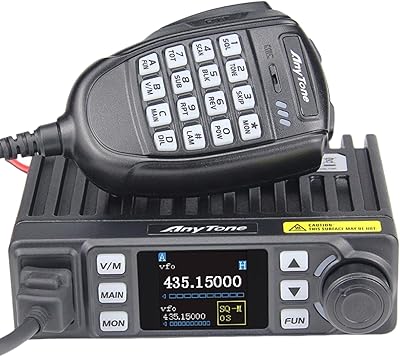
AnyTone AT-779UV Dual Band Mobile Radio
73%
88%
Value for Money
91%
Compact Form Factor
83%
RF Output & Range
79%
Audio Clarity
52%
Programming Experience
More
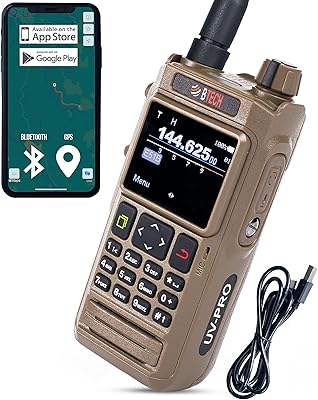
BTECH UV-PRO Dual Band Two-Way Radio
79%
86%
Build Quality
88%
Waterproofing & Durability
78%
Bluetooth App Integration
81%
APRS & GPS Performance
67%
Range & Signal Clarity
More
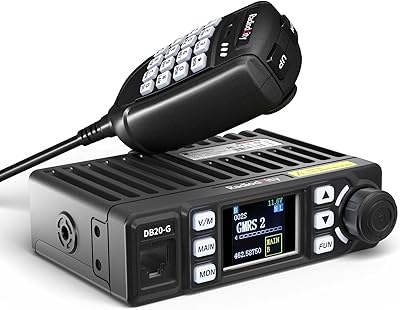
Radioddity DB40-G GMRS Mobile Radio
73%
78%
Transmit Power & Range
84%
Audio Clarity
81%
Repeater Capability
62%
Channel Flexibility & Programming
76%
Build Quality & Durability
More

FAQ

Yes, a valid FCC amateur radio license at the Technician class or higher is legally required before you can transmit on these VHF and UHF frequencies. This is not a CB or FRS radio — operating without a license on these bands is a federal violation, regardless of how you use it. The Technician exam is a 35-question multiple-choice test, and there are excellent free study tools available online if you want to get licensed before the radio arrives.

CHIRP does work with the Radioddity DB25 Pro Dual Band Mobile Radio, but you must select the QB25 device profile in CHIRP — choosing the wrong profile is the most common mistake new users make. Once you have the right profile selected and the USB cable connected, the actual channel programming is straightforward if you have done it before. If this is your first time with CHIRP, set aside time for a learning session and lean on the active online CHIRP community, which has solid documentation and forum threads for this exact radio.

The 5 km figure is a best-case number achieved in flat, open terrain with good antenna placement — treat it as a ceiling, not a guarantee. In practice, hilly countryside, urban environments, and dense tree cover will all cut that range meaningfully. Your antenna setup and placement on the vehicle will have a bigger impact on day-to-day range than the transmit power setting alone.

For local, short-range use the included quad-band antenna gets the job done well enough to start with. That said, users who are counting on this compact mobile transceiver for convoy coordination over longer distances or emergency use in variable terrain consistently find that a quality aftermarket VHF/UHF antenna — properly mounted with an NMO or SO-239 base — delivers a noticeable improvement in both receive sensitivity and transmit range.

Yes, the DB25 Pro runs on 12V DC and ships with a power cable designed to connect to your vehicle's electrical system. Most users run the cable to an accessory fuse tap or directly to the battery with an inline fuse for a cleaner, more reliable install. A spare fuse is included in the box, which saves a trip to the hardware store if you blow one during setup.

It means the radio is simultaneously listening on up to four channels at once and will break squelch automatically on whichever one sees traffic first. In practice, this is genuinely useful if you want to monitor a local repeater, a national calling frequency, a weather alert channel, and a convoy or team channel all at the same time — no manual switching required. For emergency preparedness users or anyone running group communications, it is one of the most practical features this dual-band rig offers.

Not for most users. The fan only activates when the internal temperature crosses 45°C (113°F), which generally happens during sustained back-to-back transmissions rather than typical mixed use. During normal operation, it stays off entirely. When it does run, most owners describe it as audible but not intrusive — closer to a quiet desk fan than anything disruptive.

Not in a straightforward, legally clear way. This dual-band rig is designed for amateur radio frequencies, while FRS and GMRS devices operate under separate Part 95 rules on different channel plans. There is some frequency overlap between amateur UHF and GMRS on paper, but mixing those services involves real regulatory complexity. If cross-service communication is a goal, it is worth reading the FCC rules carefully before attempting it.

The chassis feels solid and adequately built for the price range, though it does not approach the premium feel of higher-end Japanese transceiver brands. Most users report it holding up well to the heat swings, vibration, and daily handling that come with a permanent vehicle installation. The water-resistant rating provides a useful buffer for anyone using it in open vehicles, during outdoor events, or in wet-weather emergency scenarios.

The bundled programming software and driver are Windows-only, so you cannot use that software natively on a Mac. However, since this compact mobile transceiver is CHIRP-compatible via the QB25 profile, Mac and Linux users can still handle all their channel programming through CHIRP — just download it separately, use the included USB cable, and select QB25 as the device. It is a small extra step but works reliably.

Where to Buy