Overview

The Radtel RT-860 Multiband Ham Radio Transceiver arrived in early 2025 as one of the more ambitious budget handhelds to hit the market in a while, and it comes with a genuinely interesting proposition. For the price of a decent dinner out, you get a metal-bodied handheld that feels more substantial than most plastic rivals at this tier. It transmits on standard VHF and UHF ham bands, but its real draw is the wideband receive capability stretching across HF, MW, SW, CB, and Air Band. This is a radio built for hobbyists, preppers, and newly licensed hams — not serious DX operators expecting professional-grade performance.
Features & Benefits

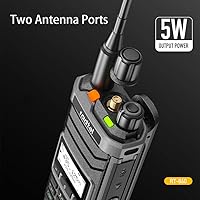
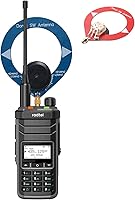
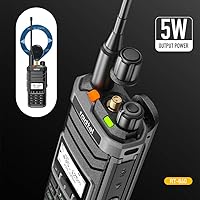
What makes this handheld transceiver stand out in a crowded entry-level field is the sheer breadth of what it can receive. Beyond the usual FM and AM, it pulls in SSB, CW, and Air Band — modes you rarely see bundled at this price point. A dedicated SW/MW antenna port means you can actually improve shortwave reception by swapping in the included antennas rather than relying on the stock whip. The 1024-channel memory stores your local repeaters quickly without requiring a programming cable, which is a genuine convenience. Type-C charging rounds things out — no hunting for a proprietary cable at the end of a long field day.

Best For

If a friend asked whether the RT-860 was right for them, the honest answer depends on what they expect. Newly licensed Technician or General class hams who want to hit local repeaters and explore shortwave on the side will get a lot of mileage here. Same goes for preppers who want one device that monitors CB, Air Band, and ham without lugging around multiple radios. Shortwave hobbyists curious about SSB but not ready to spend serious money on a dedicated HF rig will find it a reasonable starting point. Just don't hand this multiband radio to an experienced operator expecting DX-quality HF audio — that is simply not what it is built for.

User Feedback

Across 241 ratings, this multiband radio holds a 4.1-star average — respectable for a device only on the market since early 2025. The most consistent praise centers on value for money, with buyers genuinely surprised by the metal construction and solid reception range at this price tier; the Type-C charging port draws repeated appreciation as well. On the critical side, users with real SSB experience on HF note the audio quality leaves noticeable room for improvement, and the manual earns complaints for being vague on setup. Long-term durability remains an open question — the review pool is still young enough that a clear reliability picture has not fully emerged yet.

Pros

  • Covers an unusually wide range of receive modes — AM, FM, SSB, CW, CB, Air Band, MW, SW — in a single pocket-sized device.
  • Metal housing feels noticeably more substantial than plastic rivals at the same price tier.
  • Type-C charging means one less proprietary cable to carry in the field.
  • The dedicated SW/MW antenna port delivers a genuine improvement in shortwave signal clarity when used with the included antennas.
  • 1024-channel memory with quick frequency matching reduces the need for computer cable programming for most everyday setups.
  • Covers standard VHF and UHF ham repeater bands for licensed operators needing two-way communication.
  • Compact and slim enough to travel well without adding meaningful bulk to a bag or kit.
  • Solid early reliability signals from buyers, with few hardware failure reports in the first months of ownership.
  • One-year warranty provides a reasonable safety net for a relatively new product from a smaller manufacturer.

Cons

  • SSB and HF audio quality falls short of dedicated receivers — experienced ears will notice immediately.
  • The included manual is widely criticized for being vague, especially around advanced mode configuration.
  • No water resistance rating makes it a risky choice for rainy field conditions or any marine environment.
  • The stock VHF/UHF whip antenna is mediocre and will likely need an upgrade for serious repeater work.
  • Long-term durability is still unproven — the review base is too new for confident reliability conclusions.
  • Speaker volume drops off quickly in windy or noisy outdoor environments.
  • Display readability in direct sunlight is a recurring complaint among field users.
  • Firmware quirks have been flagged by early adopters, with no clear update roadmap currently communicated.
  • The RT-860 cannot transmit on HF or CB bands — a point that confuses buyers expecting full multiband transmit capability.

Ratings

The scores below were generated by our AI system after analyzing verified buyer reviews for the Radtel RT-860 Multiband Ham Radio Transceiver from global sources, with spam, bot-submitted, and incentivized feedback actively filtered out. We evaluated the RT-860 across 13 categories specific to handheld ham and shortwave radios, drawing on real-world usage patterns reported by hobbyists, preppers, and newly licensed operators alike. Both the genuine strengths and the recurring frustrations are reflected honestly here — nothing has been softened to make the numbers look prettier.
Value for Money
88%
Most buyers are genuinely surprised by how much radio they get at this price point. The combination of wideband receive modes, metal construction, and Type-C charging would typically cost considerably more from established brands, and that contrast drives a lot of the positive sentiment in early reviews.
A handful of more experienced operators feel the price advantage shrinks once you factor in the learning curve and the need to manage its HF audio limitations. For casual listeners it holds up well, but those who push the SSB modes harder start questioning whether a slightly higher budget would have served them better.
Reception Range & Sensitivity
76%
24%
On VHF and UHF, the RT-860 pulls in local repeaters cleanly, and buyers in rural areas report picking up signals at distances that surprised them for a radio in this class. The dedicated SW/MW antenna port makes a tangible difference for shortwave listening when the included antennas are swapped in.
Weak-signal performance on crowded HF bands is inconsistent, and some users in urban environments note that the stock antenna struggles with interference. MW reception in particular can be noisy without the supplemental antenna, which means the out-of-the-box shortwave experience is not always as strong as the spec sheet implies.
SSB & HF Audio Quality
59%
41%
For a first foray into SSB listening, the RT-860 gets the job done at a price that makes experimentation low-risk. Casual listeners tuning into international broadcasts or amateur nets report that voice is intelligible and the novelty of SSB reception at this price genuinely delivers.
Anyone who has used a dedicated HF receiver will notice the audio fidelity shortcomings quickly — SSB voices can sound thin and prone to distortion at higher signal levels. This is the most consistently cited technical disappointment among reviewers with any prior HF experience, and it is the clearest indicator that this is an entry-level device.
Build Quality & Durability
83%
The metal housing sets it apart from the sea of plastic handhelds at this price, and buyers consistently describe it as feeling more premium in hand than expected. Several users mention dropping it during field use without visible damage, which builds confidence for outdoor and emergency preparedness scenarios.
The dust-proof and crush-resistant claims have not been stress-tested by enough long-term owners yet to draw firm conclusions — the review pool is still relatively young. A few buyers note that the button feel is slightly mushy compared to the solid chassis, suggesting the internal components may not match the exterior build quality.
Ease of Programming & Setup
62%
38%
The 1-second frequency matching feature genuinely reduces the frustration of manual channel entry, and buyers who have wrestled with older Baofeng-style radios appreciate not needing a computer cable for basic repeater setup. For straightforward VHF/UHF use, most users are operational within an hour of unboxing.
The included manual draws repeated criticism for being thin on detail, particularly around the more advanced receive modes like SSB and CW. Users trying to organize all 1024 channels or configure scanning behavior report hitting walls that the documentation does not adequately address, leading many to seek third-party guides online.
Battery Life
74%
26%
The 2000mAh lithium-ion battery handles a full day of moderate use — a mix of monitoring and occasional transmission — without needing a top-up for most buyers. Field users on weekend camping trips report it lasting through the day with some charge to spare when transmission is kept under 30 percent of total use.
Heavy transmit sessions on VHF/UHF drain the battery noticeably faster, and users who run the radio continuously as a scanning monitor report needing a midday charge. The 2000mAh capacity is adequate but not generous; a larger pack option would be welcomed by those using it in extended off-grid situations.
Charging Convenience
91%
Type-C is the right call in 2025, and buyers are vocal about appreciating it. Being able to use the same cable as a phone or laptop on a camping trip or during an emergency removes one of the small but real friction points that plagued older micro-USB handhelds. Charge times are reported as reasonably quick.
A small number of users report that the charging port connection feels slightly loose after extended use, though it is unclear whether this reflects a manufacturing consistency issue or isolated cases. The radio lacks wireless or desktop cradle charging, which some buyers in this category have come to expect.
Portability & Form Factor
86%
At just over a pound and with a slim profile, this multiband radio slips into a jacket pocket or a bag side pouch without the bulk of older multi-band portables. Travelers specifically call out how easy it is to pack alongside other gear while still covering a wide range of listening and communication needs.
The metal build, while appreciated for durability, adds a bit more weight than ultra-light plastic alternatives. Users with smaller hands occasionally find the grip slightly awkward during extended hold periods, and the 4.72-inch height means it protrudes noticeably from a shirt pocket.
Mode Versatility
82%
18%
The breadth of receive modes — AM, FM, SSB, CW, CB, Air Band, LW, MW, SW — is the feature that most frequently tips buyers toward the RT-860 over simpler dual-band alternatives. Preppers and hobbyists who want a single device to monitor aviation, citizen band, and amateur frequencies simultaneously find this versatility hard to match at the price.
Having all these modes crammed into one device means none of them are optimized to the standard of a dedicated receiver. Switching between receive modes is not always intuitive, and users who primarily want one mode — say, pure AM shortwave listening — might find a purpose-built portable outperforms it meaningfully in that specific area.
Antenna Performance
68%
32%
The inclusion of dedicated SW and MW antennas in the box is a meaningful addition that most competitors skip entirely. When connected via the dedicated port, users report a noticeable lift in shortwave signal clarity, and the accessory antennas feel like a considered inclusion rather than a throwaway marketing extra.
The stock whip antenna that ships for VHF/UHF is serviceable but uninspiring — a common complaint in this segment. Users wanting to maximize HF receive performance will likely need to invest in an aftermarket antenna eventually, and the port, while useful, does not accommodate all third-party options without an adapter.
Display & Interface Clarity
71%
29%
The display is readable in moderate lighting conditions and shows enough information — frequency, mode, channel number — at a glance for basic operation. Buyers transitioning from entry-level single-band radios find the interface layout relatively familiar and the screen size adequate for day-to-day use.
Outdoor readability in bright sunlight gets mentioned as a limitation, with the display washing out enough to make quick frequency checks frustrating in the field. The interface also gets more complex as you explore advanced modes, and without better documentation, some menu paths feel unnecessarily buried.
Audio Output Quality
73%
27%
For monitoring broadcasts and local repeater traffic, the speaker output is clear enough to follow conversations without straining, and volume levels are adequate for use in moderately noisy environments like a vehicle or campsite. Most buyers find it perfectly serviceable for its primary intended uses.
The speaker lacks the projection needed for a busy or loud environment, and audio can start to distort at the upper end of the volume range. Users wearing gloves or operating in wind report struggling to hear clearly, which is a practical concern for the outdoor and emergency preparedness crowd this radio targets.
Long-Term Reliability
64%
36%
Early reliability signals are cautiously positive — most buyers report no hardware failures in the first few months of regular use, and the metal chassis gives at least an impression of durability that cheaper plastic alternatives cannot match. The one-year warranty provides a basic safety net for early adopters.
With the RT-860 only available since January 2025, the ownership timeline is simply too short to draw confident conclusions about long-term durability or firmware stability. A handful of users have flagged minor firmware quirks, and whether those get addressed through updates is still an open question that prospective buyers should weigh.

Suitable for:

The Radtel RT-860 Multiband Ham Radio Transceiver hits a sweet spot for a specific kind of buyer: someone who wants more than a basic dual-band HT but is not yet ready to spend serious money on dedicated HF gear. Newly licensed Technician and General class hams will find it a practical first radio — it covers the VHF and UHF repeater bands they need for day-to-day communication while opening a door to shortwave and HF listening as their curiosity grows. Preppers and emergency preparedness enthusiasts get particular mileage here, since the ability to monitor CB, Air Band, and wideband AM/FM alongside standard ham frequencies means one device covers a lot of ground in a go-bag. Shortwave hobbyists who want a portable, rechargeable receiver they can toss in a travel bag — without lugging a separate dedicated unit — will also find the RT-860 a reasonable companion. The metal build and Type-C charging are practical advantages for anyone using it in the field regularly, and the included SW and MW antennas mean you are not immediately forced into extra purchases to get useful performance.
Not suitable for:

If you are a licensed operator with serious HF ambitions, the Radtel RT-860 Multiband Ham Radio Transceiver is likely to frustrate you fairly quickly. The SSB audio quality on HF bands falls noticeably short of what a dedicated HF receiver or a higher-tier handheld delivers, and experienced operators will hear those limitations immediately rather than gradually. This is also not the right choice for anyone who needs a waterproof or genuinely ruggedized radio — the chassis is metal and feels solid, but there is no water resistance rating, which rules it out for marine use or exposure to rain. The programming documentation is thin enough that technically less-confident buyers may hit real roadblocks when trying to configure advanced scanning or organize all 1024 channels, and community support for this relatively new model is still building. Finally, anyone whose primary use case is pure transmit performance on ham bands — contests, DXing, or emergency nets — should look at purpose-built transceivers where the transmit audio path has been properly engineered, rather than a wideband receive-focused device like this one.
Specifications

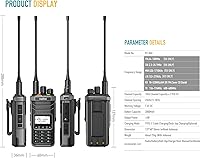
  • Brand: Manufactured by Xiamen Radtel Electronics Co., Ltd, sold under the Radtel brand.
  • Model: RT-860, first made available in January 2025.
  • Transmit Bands: Licensed amateur radio transmission is supported on VHF (144–148 MHz) and UHF (420–450 MHz) only.
  • Receive Modes: Wideband receive covers AM, FM, USB, LSB, CW, CB, LW, MW, SW, SSB, and Air Band reception.
  • Channel Memory: Stores up to 1024 programmable channels with 1-second frequency matching for quick access.
  • Battery: Powered by a built-in 2000mAh lithium-ion cell rated at 7.4V; one battery is included and required.
  • Charging: Charges via Type-C USB port, supporting fast charging from any compatible USB power source.
  • Dimensions: The unit measures 1.18″ deep, 2.36″ wide, and 4.72″ tall in standard operating configuration.
  • Weight: Complete unit weighs 1.23 pounds, making it practical for extended handheld or bag carry.
  • Housing Material: Constructed from metal described as dust-proof and crush-resistant for use in demanding field environments.
  • Water Resistance: The RT-860 carries no official water resistance or IP rating and should be kept away from moisture.
  • Talking Range: Maximum rated communication range is 5 km under optimal, unobstructed line-of-sight conditions.
  • Antenna Port: Includes a dedicated secondary antenna port specifically for connecting the supplied SW and MW antennas.
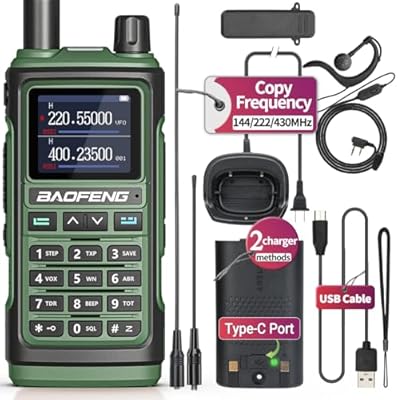
  • Included Accessories: Ships with separate shortwave (SW) and medium wave (MW) antennas for enhanced HF band reception.
  • Warranty: Covered by a 1-year manufacturer warranty provided by Radtel.
  • Frequency Range: Primary ham transmit frequency ranges are 144–148 MHz (VHF) and 420–450 MHz (UHF).
  • Voltage: Battery operating voltage is 7.4V, consistent with standard dual-cell lithium-ion handheld radio packs.

Related Reviews
Radtel RT-4D DMR Two-Way Radio
67%
88%
Value for Money
91%
Feature Set
79%
DMR Performance
48%
Ease of Programming
67%
Build Quality
More
Radtel RT-493 GMRS Radio 10W
86%
91%
Range Performance
89%
Durability (Waterproofing & Build Quality)
81%
Battery Life
88%
Usability & Interface
90%
Charging Convenience (USB-C)
More
Yaesu VX-6R Tri-Band Ham Radio Transceiver

80%
93%
Build Quality & Durability
91%
Waterproofing & Weather Resistance
88%
Receiver Performance
86%
Audio Clarity
77%
Transmit Power & Range
More
Hustler 5BTV 5-Band Vertical Ham Radio Antenna
75%
91%
Multiband Coverage
83%
Build Quality
62%
Installation Experience
58%
80-Meter Performance
86%
40-Meter Performance
More
Ailunce HD1 Ham Radio
82%
93%
Durability & Build Quality
89%
Battery Life
75%
Ease of Use
90%
Range & Signal Performance
91%
Waterproofing
More
TIDRADIO TD-H3 Ham Multi-Band Two-Way Radio
75%
91%
Value for Money
83%
Ease of Programming
88%
Battery Life
61%
Firmware Stability
67%
Build Quality
More
BAOFENG UV-17R Dual Band Ham Radio
73%
91%
Value for Money
63%
Ease of Setup
54%
Real-World Range
67%
Build Quality
61%
Audio Quality
More
Radtel RT-880 Portable Ham Radio
73%
83%
Cross-Band Repeater Performance
89%
Receive Coverage Breadth
86%
Display Quality
81%
Battery Life & Charging
71%
Build Quality & Ergonomics
More
Xiegu G90 HF Amateur Radio Transceiver
80%
88%
Value for Money
91%
Built-in Antenna Tuner
89%
SDR Spectrum Display
92%
Portability & Form Factor
84%
Remote Head / Mobile Install
More
Xiegu X6100 HF Radio Transceiver 10W
86%
88%
Value for Money
85%
Performance
90%
Bluetooth Functionality
92%
Portability
89%
Ease of Use
More

FAQ

No — and this is one of the most important things to understand before buying. The RT-860 can only transmit on the VHF (144–148 MHz) and UHF (420–450 MHz) amateur radio bands. Everything else — CB, shortwave, Air Band, MW — is receive-only. Transmitting on CB or HF frequencies without proper authorization is illegal in most countries.

You need a license to transmit, but not to listen. If you only plan to use the radio for shortwave listening, CB monitoring, or Air Band reception, no license is required. However, if you want to actually transmit and talk on the VHF and UHF ham bands, you will need at minimum a Technician class license in the US, or the equivalent in your country.

Honestly, it is functional but not impressive. For a first experience with SSB — tuning into amateur nets or international utility stations — it gets the job done and voice is intelligible. However, if you have used a dedicated HF receiver or a higher-end portable before, you will notice that the audio can sound thin and slightly distorted on stronger signals. Manage expectations accordingly, especially if SSB listening is your primary reason for buying.

It is a solid option for that use case. The ability to monitor CB, Air Band, weather broadcasts, and local ham repeaters from one compact device is genuinely useful in an emergency scenario. The Type-C charging is a practical advantage since you can recharge it from a power bank. Just keep in mind it is not waterproof, so protect it in wet conditions.

You can program channels manually using the keypad, and the 1-second frequency matching feature helps speed that process up considerably. For most everyday VHF/UHF repeater setups, you will not need a cable. That said, if you want to organize all 1024 channels in bulk or configure complex scanning sequences, a cable and compatible software will make your life much easier — the manual alone may not walk you through those steps clearly enough.

Yes, it genuinely does. Plugging in the included SW or MW antenna instead of the stock whip produces a meaningful improvement in signal clarity on shortwave and medium wave bands. It is one of the features that separates this radio from budget alternatives that force you to rely solely on the standard VHF/UHF antenna for all receive modes.

No. The RT-860 has no water resistance rating whatsoever. The metal housing is described as dust-proof and crush-resistant, but there is no IP rating and no protection against moisture. If you are caught in rain, keep it sheltered. For field use in wet climates, a simple zip-lock bag is a sensible precaution.

For mixed use — some monitoring, some VHF/UHF transmitting — most users get through a full day on a single charge without issue. If you are running it continuously as a scanning receiver, expect to need a top-up by evening. Heavy transmit use drains it faster, so pack a USB power bank if you are away from mains power for an extended period.

The RT-860 targets a different buyer than the UV-5R. The Baofeng is a proven, simple dual-band HT with a massive accessories ecosystem and well-documented programming. The RT-860 adds shortwave and HF receive capability, a broader set of modes, a metal build, and Type-C charging — all meaningful upgrades. The trade-off is a newer, smaller community and less mature documentation. If you only need a basic dual-band HT, the Baofeng ecosystem may serve you better. If the wideband receive modes matter to you, the RT-860 is worth the step up.

It is a reasonable choice, with some caveats. The VHF/UHF transmit capability covers everything a new Technician licensee needs for local repeater work, and the wideband receive modes give you a broader exploration tool than a plain dual-band HT. The learning curve on the more advanced modes is real, and the manual is not always helpful, so be prepared to seek out online resources or community forums to get the most out of it.