Overview

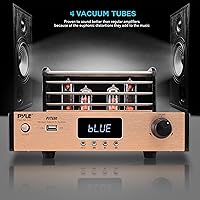
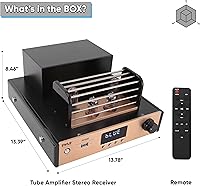
The Pyle PVTA90 Vacuum Tube Stereo Amplifier sits in an interesting middle ground — priced accessibly enough for curious beginners, but feature-rich enough to satisfy someone stepping up from a basic receiver. It is not trying to compete with boutique audiophile gear, and that honesty is part of its appeal. The four vacuum tubes perched visibly on top add genuine visual character; this is a unit that looks the part on a shelf or desk. At just over 13 pounds, it has real physical heft. With 451 ratings averaging 4.0 stars since its 2020 launch, buyer satisfaction is broadly solid, though expectations around power output need to be set carefully from the start.

Features & Benefits

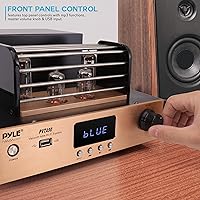
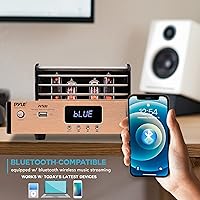
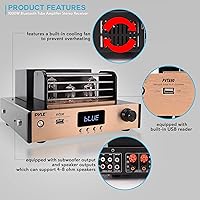
The PVTA90 packs a genuinely useful range of inputs and outputs into one desktop box. Bluetooth pairing with phones or laptops works reliably and adds modern convenience to what is otherwise a retro-inspired design. USB playback, two CD/DVD inputs, dual speaker outputs, and a dedicated subwoofer output cover most home setups without requiring extra hardware. The front panel controls — including an LED display, input selector, and volume knob — are straightforward to use. One practical engineering choice worth noting: the built-in cooling fan. Tube gear runs hot, and active cooling is a smart inclusion, though some users do report the fan is audible during very quiet listening sessions.

Best For

This vacuum tube receiver makes the most sense for someone upgrading from a basic Bluetooth speaker or a bare-bones stereo receiver — someone who wants noticeably warmer, richer sound without spending audiophile money. It works particularly well in a home office or living room setting, where the glow of four vacuum tubes becomes part of the room's atmosphere as much as the audio does. If you are juggling multiple sources — a disc player, a USB drive of FLACs, and a phone — the flexibility here is a real advantage. That said, if you are a serious listener expecting reference-grade tube performance, this amp will likely leave you wanting more.

User Feedback

Across its review base, this tube amp earns genuine appreciation for the warmth it adds to music and the visual impact of those glowing tubes — buyers consistently mention how good it looks in a room. Bluetooth pairing draws frequent praise for being quick and reliable. On the critical side, fan noise is the most commonly cited drawback, specifically during low-volume or late-night listening when ambient quiet makes the cooling fan more noticeable. Build quality also comes up — knobs and plastics feel functional rather than premium. The 1000W peak power figure is a recurring point of skepticism, which is fair; peak ratings rarely translate directly to continuous real-world output. Overall, most buyers come away satisfied.

Pros

  • The tube-driven sound has genuine warmth that makes everyday listening noticeably more enjoyable than a basic solid-state receiver.
  • Four glowing vacuum tubes on top make this amp a visual conversation piece in any room.
  • Bluetooth pairing is reliable and quick, working smoothly with phones, tablets, and laptops.
  • USB audio playback plus two CD/DVD inputs cover a wide range of source types in one box.
  • A dedicated subwoofer output gives you room to grow your system without extra gear.
  • The included remote control adds convenience that not all amps at this price point bother to provide.
  • Front panel controls are intuitive and clearly laid out, with a readable LED display.
  • The built-in cooling fan actively protects the unit from heat buildup — a thoughtful inclusion for tube gear.
  • Over 450 verified buyers give it a 4.0-star average, reflecting genuine broad satisfaction.
  • At its price point, the combination of tube aesthetics and multi-source flexibility is hard to match.

Cons

  • The cooling fan is audible during quiet passages, which can interrupt immersive or late-night listening.
  • The 1000W power rating is a peak figure — real continuous output is significantly lower and should not be taken at face value.
  • Plastics and knobs feel lightweight and budget-grade when handled up close, undercutting the premium tube aesthetic.
  • There is no phono preamp input, so vinyl fans will need a separate preamp to connect a turntable.
  • Tube audio performance here is entry-level at best — do not expect the nuance of purpose-built audiophile tube amplifiers.
  • Fan noise has no user-adjustable control, so there is no simple fix for listeners bothered by it.
  • Build quality concerns in user reviews suggest long-term durability may be a question mark for heavy daily use.
  • The unit is bulky and heavy at over 13 pounds, which can limit placement options on smaller desks or shelves.

Ratings

The scores below for the Pyle PVTA90 Vacuum Tube Stereo Amplifier were generated by our AI system after analyzing verified buyer reviews from multiple global markets, with spam, bot activity, and incentivized feedback actively filtered out. Every category reflects a balanced synthesis of what real users praised and what genuinely frustrated them — nothing is glossed over. Where this tube amp shines, the scores show it; where it falls short, that is reflected just as transparently.

Sound Quality
78%
22%
The warm, rounded character that the four vacuum tubes add to the sound is the single most praised aspect across the review base. Buyers upgrading from solid-state entry-level receivers consistently describe the difference as immediately noticeable — music feels fuller and less harsh, particularly on vocals and acoustic instruments.
Experienced listeners and those with a reference point in higher-end tube equipment note that the warmth comes with some softness in detail retrieval. Treble extension and stereo imaging are adequate but not precise, which matters less for casual listening and more for critical music sessions.
Build Quality
61%
39%
The chassis itself has enough physical weight and rigidity to feel solid on a desk or shelf, and the exposed vacuum tubes give it a purposeful, well-assembled appearance from a distance. Most buyers are satisfied with how the unit holds up under normal home use conditions.
Up close, the budget-tier origins become more apparent — knobs feel light and slightly loose, and the plastic panels do not match the visual promise of the glowing tubes. A meaningful portion of reviewers flag that the tactile experience of turning dials or pressing buttons does not inspire long-term confidence.
Value for Money
82%
18%
At this price point, getting genuine vacuum tube circuitry, Bluetooth, multiple inputs, a subwoofer output, and a remote control in a single unit is a compelling package. For buyers stepping into tube audio for the first time, the cost-to-experience ratio is hard to argue with.
The value equation weakens slightly once you factor in the realistic continuous power output versus the advertised peak figure, and the absence of a phono preamp means turntable users face an additional purchase. For buyers who did their homework, it still holds up — for those who did not, it can feel like a partial letdown.
Bluetooth Performance
79%
21%
Pairing is quick and reliable across a wide range of devices including Android and iOS phones, tablets, and laptops. Most users report a stable connection throughout a room with minimal drops during casual listening, which is exactly what this use case calls for.
The Bluetooth implementation appears to use standard SBC codec rather than aptX or AAC, which limits wireless audio quality relative to a wired connection. Audiophile-leaning buyers who care about lossless wireless transmission will notice the ceiling on wireless fidelity.
Input Versatility
84%
Having USB playback, two CD/DVD analog inputs, and Bluetooth all in one box covers the majority of home audio source scenarios without requiring a separate switcher or preamp. Users who run multiple devices — a disc player, a laptop, and a phone — specifically call out this flexibility as a deciding factor in their purchase.
The lack of a dedicated analog RCA aux input beyond the CD/DVD ports is a minor gap that a few buyers noticed when trying to connect a non-disc analog source. Additionally, the absence of optical or coaxial digital inputs may frustrate anyone routing audio from a TV or streaming device digitally.
Cooling & Heat Management
58%
42%
The decision to include an active cooling fan is genuinely smart engineering for a tube unit at this price — tube gear runs hot by nature, and passive cooling alone would raise real longevity concerns. Most users who listen at moderate-to-loud volumes report no issues with overheating.
The fan is audible, and this is the most consistently cited frustration across the entire review base. In quiet rooms or during low-volume late-night listening, the fan hum sits just above the threshold of ignorability — it does not ruin the experience for everyone, but it clearly does for a meaningful subset of buyers.
Visual Design & Aesthetics
88%
The four glowing vacuum tubes on top are the unit's calling card, and virtually every positive review mentions how good the amp looks in a room. In a home office or living room setting, it functions as much as a decorative object as an audio component, which buyers clearly love.
The visual appeal is concentrated on the top panel — the side and rear panels are utilitarian and plain, and the overall chassis finish is not at the level of premium gear. If the tubes are not lit, the unit loses a significant portion of its visual appeal.
Ease of Use
85%
The front panel layout is logical and well-organized, with clearly labeled controls and an LED display that makes input switching and playback management intuitive even for first-time tube amp owners. The included remote adds meaningful convenience for everyday use from across the room.
There is no companion app or digital EQ control, and input labeling could be clearer for users connecting non-standard sources. A small number of buyers mention initial confusion around the input selector when cycling through multiple connected devices.
Power Output (Real-World)
52%
48%
For filling a standard-sized living room or home office with sound, the actual usable output of this vacuum tube receiver is sufficient at comfortable listening volumes. Most buyers in typical domestic environments will never push it to its limits.
The 1000W peak power figure is misleading by industry standards, and informed buyers consistently flag it as a credibility issue. Continuous RMS output is a fraction of that number, and anyone expecting to drive demanding or inefficient speakers in a large room may find the real-world headroom disappointing.
Remote Control
73%
27%
The inclusion of a remote at this price tier is appreciated, and it covers the core functions — volume, input selection, and basic playback controls — without overcomplicating the experience. It works reliably within normal room distances.
The remote feels lightweight and inexpensive in hand, consistent with the overall build-tier of the unit. Its range and responsiveness have drawn occasional complaints, with some users noting they need to aim more deliberately than expected for reliable response.
Setup & Installation
86%
Getting the PVTA90 up and running from unboxing is genuinely straightforward — Bluetooth pairs without fuss, speaker terminals are accessible and clearly marked, and the front panel controls are self-explanatory. First-time tube amp owners specifically appreciate how little friction is involved in the initial setup.
No phono preamp means turntable users hit an immediate obstacle that requires sourcing additional equipment before their setup is complete. Speaker cable and RCA cables are also not included, which is standard practice but still a consideration for buyers equipping a system from scratch.
Tube Longevity & Serviceability
63%
37%
Vacuum tubes are inherently replaceable components, and experienced audio hobbyists will have no trouble sourcing compatible replacements when the time comes. Under normal home use, tube lifespan is measured in thousands of hours, so it is not an immediate concern for most buyers.
Pyle does not provide clear documentation on tube replacement procedure or the specific tube types used, which creates uncertainty for less experienced users. If a tube fails outside of warranty, the path to repair is less clear than it should be for a product built around a serviceable component.

Suitable for:

The Pyle PVTA90 Vacuum Tube Stereo Amplifier is a strong fit for the audio-curious buyer who wants to experience the characteristic warmth of tube sound without committing to the steep prices that serious audiophile equipment demands. If you are currently running a basic Bluetooth speaker or a thin-sounding entry-level receiver and want a meaningful upgrade in both audio richness and visual presence, this amp delivers a noticeable step up. It works particularly well in living rooms, home offices, or den setups where the glow of four visible vacuum tubes becomes part of the room's character as much as the sound does. Anyone juggling multiple source types — a phone via Bluetooth, a USB drive loaded with music files, or a physical disc player — will appreciate having all of that handled by one unit without extra switching hardware. Casual listeners who prioritize atmosphere and everyday enjoyment over clinical audio accuracy are the core audience this tube amp serves well.

Not suitable for:

Dedicated audiophiles with a trained ear and high standards for fidelity should approach the Pyle PVTA90 Vacuum Tube Stereo Amplifier with realistic expectations, because this is an entry-level tube experience rather than a reference-grade one. The 1000W figure advertised is a peak rating, not a continuous RMS output, and buyers who understand amplifier specs will recognize that real-world usable power is considerably more modest. Those who listen at low volumes late at night or in very quiet environments may find the built-in cooling fan distracting, since it produces audible noise that more sensitive listeners have flagged as an immersion-breaker. If premium build quality matters to you — weighted knobs, solid metal construction, a chassis that feels as good as it looks — this vacuum tube receiver will likely feel underwhelming up close. Anyone planning to anchor a high-end speaker system or demanding home theater around this unit would be better served looking further up the price ladder.

Specifications

  • Brand: Manufactured by Pyle, a US-based consumer electronics brand known for accessible audio equipment.
  • Model Number: The unit is identified by model number PVTA90.
  • Peak Power: Rated at 1000W peak power output; note that this is a peak figure, not a continuous RMS rating.
  • Vacuum Tubes: Equipped with 4 vacuum tubes mounted visibly on the top panel of the chassis.
  • Bluetooth: Built-in Bluetooth supports wireless audio streaming from smartphones, tablets, laptops, and other compatible devices.
  • Inputs: Offers one USB Type-A input for direct audio file playback and two CD/DVD analog inputs for disc players.
  • Outputs: Provides two speaker outputs supporting 4–8 ohm speakers and one dedicated subwoofer output.
  • Display: Features a front-panel LED digital display showing playback status and input selection.
  • Controls: Front panel includes a master volume knob, input selector, and playback controls including play/pause and previous/next track.
  • Remote Control: A remote control is included in the box for convenient distance operation of core functions.
  • Cooling System: A built-in active cooling fan is integrated into the chassis to manage heat generated by the vacuum tubes during operation.
  • Circuit Board: Internal electronics are built on a double-sided fiber circuit board for improved signal routing and durability.
  • Speaker Impedance: Compatible with speakers rated between 4 and 8 ohms, covering most standard home audio speaker configurations.
  • Dimensions: The unit measures 13.78″ deep by 13.39″ wide by 8.46″ tall.
  • Weight: The amplifier weighs 13.17 lbs, giving it a solid, substantial desktop presence.
  • Color: Available in black with a chassis designed to showcase the four glowing vacuum tubes on the top panel.
  • Power Cable: A power cable is included in the package alongside the remote control.
  • Availability: First made available in September 2020 and has maintained consistent availability since launch.

Related Reviews
Douk Audio X1
Douk Audio X1
78%
78%
Sound Quality
71%
Phono Stage Performance
84%
Bluetooth Performance
83%
Power Output & Speaker Driving
76%
Build Quality
More
Pyle PDA5BU Bluetooth Stereo Amplifier
72%
83%
Value for Money
88%
Input Versatility
79%
Karaoke Performance
71%
Bluetooth Reliability
46%
Power Output
More
Pyle PDA69BU Stereo Amplifier Receiver
75%
83%
Bluetooth Connectivity
74%
Sound Quality
79%
Build Quality
86%
Value for Money
88%
Input Versatility
More
Pyle PVTA20 Bluetooth Tube Amplifier
81%
88%
Sound Quality
85%
Bluetooth Connectivity
90%
Build Quality
82%
Power Output
87%
Ease of Setup
More
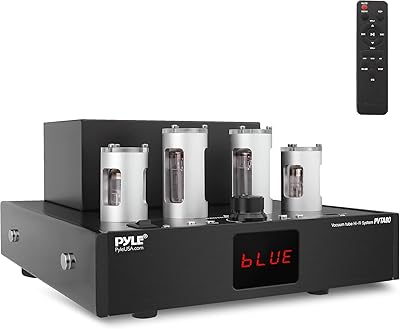
Pyle PVTA80 Bluetooth Vacuum Tube Amplifier
71%
73%
Sound Quality
78%
Value for Money
61%
Build Quality
88%
Aesthetics & Design
74%
Bluetooth Performance
More
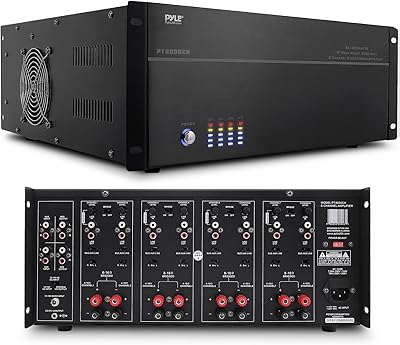
Pyle PT8000CH
Pyle PT8000CH
70%
84%
Ease of Installation
78%
Multi-Zone Audio Performance
51%
Rated Power Accuracy
62%
Build Quality
57%
Thermal Management & Fan Noise
More
Pyle PCAU46BA Bluetooth Stereo Amplifier
73%
83%
Value for Money
67%
Sound Quality
91%
Ease of Setup
68%
Bluetooth Performance
54%
Build Quality
More
Pyle PLA2378 2-Channel Car Amplifier
72%
83%
Value for Money
51%
Power Output Accuracy
67%
Build Quality
88%
Ease of Installation
58%
Heat Management
More
Pyle PLA2200 2-Channel Car Amplifier
67%
78%
Value for Money
83%
Ease of Installation
69%
Sound Clarity
54%
Power Output (Real-World)
61%
Build Quality
More
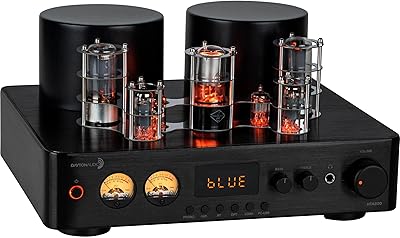
Dayton Audio HTA100
Dayton Audio HTA100
80%
88%
Sound Quality
84%
Build Quality
91%
Value for Money
79%
Phono Preamp Performance
93%
Aesthetic & Design
More

FAQ

No, the PVTA90 does not include a built-in phono preamp input. If you want to connect a turntable, you will need a separate phono preamplifier between the turntable and the amp. This is a common omission at this price point, so it is worth factoring into your setup budget if vinyl is your primary source.

It depends a lot on your listening volume and how quiet your room is. At moderate to higher volumes, most users report that music easily masks the fan. The complaints tend to come from people listening at low volumes late at night or in very quiet spaces, where the fan hum becomes more apparent. It is a real trade-off to be aware of if quiet background listening is your main use case.

Peak power is the maximum output the amplifier can hit in very short bursts — it does not reflect sustained, usable output. The continuous RMS power, which is the number that actually tells you how loud and controlled the amp will sound day to day, is considerably lower. Most buyers will find the real-world power more than adequate for a home room, but do not expect 1000W of constant output.

Yes, this vacuum tube receiver includes both a dedicated subwoofer output and two speaker outputs simultaneously, so you can run a subwoofer alongside a pair of stereo speakers without any extra hardware or switching. Just make sure your speakers fall in the 4–8 ohm range.

User feedback is generally positive on this front. Most buyers report that Bluetooth pairing is straightforward and that the connection holds reliably during normal use. Range is typical for consumer Bluetooth — staying within the same room or adjacent rooms works fine, but walls and distance can cause dropouts as with any Bluetooth device.

Vacuum tubes are consumable components by nature and can be replaced, but Pyle does not prominently document a tube replacement process for this unit. If a tube fails, you would need to identify the tube type used and source compatible replacements. It is a reasonable question to direct to Pyle support before buying if long-term tube serviceability matters to you.

Yes, 8-ohm speakers are squarely within the supported impedance range of 4–8 ohms, so your existing bookshelf speakers should connect and work without any issues.

The product listing does not specify support for aptX or other premium Bluetooth codecs, which suggests standard SBC Bluetooth is most likely what you are getting. For casual wireless listening this is perfectly fine, but if high-resolution wireless audio is a priority, you may want to verify directly with Pyle or use a wired input instead.

It is a fairly substantial piece of kit at roughly 13.78″ deep, 13.39″ wide, and 8.46″ tall, weighing just over 13 lbs. It will fit on most audio shelves or desks, but it will dominate the space. The height in particular is worth measuring against your shelf clearance, especially since the tubes extend upward from the top panel.

The package includes the amplifier unit itself, a remote control, and a power cable. No additional cables for speaker connections or audio inputs are included, so you will need to supply your own RCA cables or speaker wire depending on how you plan to connect your devices.

Where to Buy