Overview

The Pyle PHA40 4-Channel Headphone Amplifier is a no-frills distribution unit built for one job: getting audio into multiple sets of ears at the same time. If you run a home studio or do any kind of live recording, you have probably hit the wall where your mixer only has one headphone output and someone is always left without monitoring. This headphone amp solves that problem at a price that does not make you think twice. Pyle sits firmly in the affordable audio gear space — their stuff is aimed at hobbyists and semi-pros, not touring engineers. Set expectations accordingly and you will find this is a genuinely useful utility tool, nothing more.
Features & Benefits

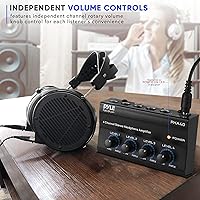
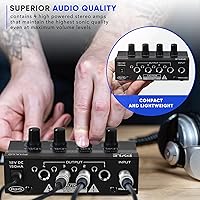
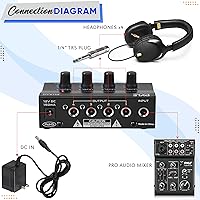
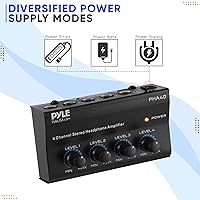
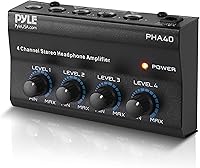
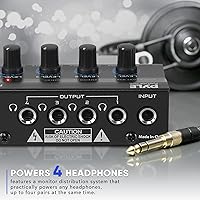
At the heart of this monitoring unit are four ¼″ TRS output jacks, each paired with its own independent volume knob — so four people can plug in and dial their own listening level without anyone having to compromise. The single ¼″ TRS input feeds directly from a mixer or audio interface, keeping the setup dead simple. It runs off AC power, which means no scrambling for batteries mid-session. The chassis is plastic, compact enough to sit on a desk without hogging space, and light enough to toss in a gear bag. The amplifier circuit keeps noise low enough that you will not notice unwanted hiss at normal listening volumes, though it does have limits with demanding headphones.

Best For

This headphone amp hits its stride in specific situations. Home studio recording is the obvious fit — a singer and producer can each have a cue mix going simultaneously without needing a full headphone management system. It also works well for podcasting, where a host and guest both need to hear playback during an interview. Band rehearsals where the mixer only has one output? Run this four-channel splitter and suddenly everyone gets their own feed. Educators or interviewers running group listening sessions will find it practical too. It is not built for professional venues, but for casual and semi-pro use it covers the bases without fuss.

User Feedback

The most consistent thing buyers mention about this monitoring unit is how easy setup is — plug it in, connect your headphones, and you are running with no software or configuration involved. People using it in home recording or podcast setups tend to be satisfied given what they paid. That said, the complaints worth knowing: users with higher-impedance headphones, the 250-ohm variety for instance, often find the output volume underwhelming. Build quality draws mixed reactions too — the plastic shell feels light, which makes some buyers uneasy. Long-term reliability is inconsistent; a handful report early failure while others say it has run without a hiccup for years.

Pros

  • Completely plug-and-play — no software, no drivers, no configuration required before your first use.
  • Four independent volume knobs let each listener set their own level without affecting anyone else.
  • Compact and light enough to slip into a gear bag and take to a rehearsal or recording session.
  • Works cleanly with standard mixers and audio interfaces via the common ¼″ TRS connection.
  • AC-powered operation means consistent output throughout long sessions without battery anxiety.
  • Delivers solid value for hobbyists and beginners who need basic headphone distribution on a tight budget.
  • The simple signal chain means there is almost nothing that can go wrong or need troubleshooting in day-to-day use.
  • At moderate volumes with efficient headphones, the audio is clean enough for comfortable monitoring.

Cons

  • Output volume is noticeably weak when driving higher-impedance headphones, making it a poor match for many studio-grade cans.
  • Plastic chassis feels lightweight and somewhat fragile, which raises real concerns about longevity under regular use.
  • Channel bleed and an elevated noise floor become apparent when volume knobs are pushed toward maximum.
  • No battery option means you are always tethered to an AC outlet, ruling out truly portable or location recording use.
  • Long-term reliability is inconsistent — jack failures and early unit drop-outs appear frequently enough in user feedback to be a genuine concern.
  • No power indicator light makes it impossible to tell at a glance whether the unit is actually on.
  • Volume knobs have no position markings or detents, so returning to a known setting after adjustment is guesswork.
  • Only one audio input means all four listeners always hear the same source — there is no individual mix routing whatsoever.

Ratings

The Pyle PHA40 4-Channel Headphone Amplifier has been put through its paces by a wide range of buyers — from bedroom producers and podcast hosts to small-band rehearsal rooms — and our AI has analyzed verified purchase reviews worldwide, actively filtering out incentivized and bot-generated feedback, to surface what real users consistently experience. Scores reflect both the genuine strengths this monitoring unit delivers and the honest pain points that show up repeatedly across different use cases.
Value for Money
86%
Most buyers feel this four-channel splitter punches well above its price bracket for what it actually does. Home studio beginners in particular report feeling like they got significantly more utility than they expected, especially when comparing it to rack-mounted alternatives that cost several times as much.
A small segment of buyers who needed more headroom or better build eventually upgraded and felt the initial purchase was a stepping stone rather than a long-term solution. If your needs grow quickly, the savings up front may feel less compelling over time.
Ease of Setup
93%
Plug-and-play is not an exaggeration here — users consistently report having the unit running within minutes of opening the box, with zero driver installation or configuration required. For podcasters and educators who just need audio in multiple ears fast, that simplicity is genuinely appreciated.
There is essentially no setup documentation beyond the basics, which is fine for most users but can leave absolute beginners unsure about optimal signal chain placement. A few buyers wished there was clearer guidance on connecting it between a mixer output and headphones correctly.
Output Volume & Headphone Drive
57%
43%
With efficient, lower-impedance headphones — the kind that ship with most consumer and entry-level studio gear — the output level is adequate for comfortable monitoring in a quiet room. Users with standard 32-ohm headphones rarely complain about lacking volume.
Owners of higher-impedance headphones, particularly 250-ohm models common in studio environments, frequently report that the unit simply cannot drive them to a usable listening level. This is one of the most repeated criticisms and is a real functional limitation buyers should assess before purchasing.
Signal Clarity & Noise Floor
71%
29%
At moderate listening levels, the monitoring unit keeps the signal reasonably clean — most home recording users do not notice intrusive background hiss during casual use. For the intended audience of hobbyists and beginners, the audio transparency is considered more than acceptable.
At maximum volume, some users report a noticeable noise floor and occasional channel bleed between outputs, which becomes more obvious with sensitive in-ear monitors. This is not a unit for critical listening or professional mix evaluation — it is a distribution tool, and the noise behavior reflects that.
Build Quality
62%
38%
The compact plastic chassis keeps the unit light and portable, which suits users who move between home and a rehearsal space regularly. Several long-term owners report the knobs and jacks have held up fine over years of moderate use, which is reassuring for the price tier.
The lightweight plastic construction immediately raises eyebrows for buyers accustomed to metal-bodied audio gear. More than a few users describe it as feeling fragile, and there are enough reports of early unit failure — particularly with the jacks — that durability is a legitimate concern for heavy or daily use.
Independent Volume Control
82%
18%
Having a dedicated rotary knob for each of the four outputs is genuinely practical when multiple people with different hearing preferences are monitoring simultaneously. Vocalists who prefer a louder cue mix and producers who want a softer reference can both get what they need without any compromise.
The knobs themselves feel a bit loose and plasticky, and a handful of users note they can shift position unintentionally if the unit gets bumped. There is no center-detent or markings to help you return to a known volume position, which is a minor but real inconvenience.
Portability & Form Factor
84%
At just over ten ounces and small enough to fit in a laptop bag side pocket, this monitoring unit travels easily. Educators, interviewers, and musicians who need a portable multi-headphone solution find the compact footprint a genuine advantage over bulkier alternatives.
The corded power requirement means you always need an AC outlet nearby, which limits truly portable use. Unlike battery-powered options, you cannot set this up in a location without mains power — something outdoor or mobile recording users should factor in.
Number of Outputs
78%
22%
Four simultaneous headphone outputs cover the most common small-group monitoring scenarios — a typical band tracking session or a two-person podcast with a producer monitoring from the booth. For the target user, four channels hits the sweet spot.
Anyone needing more than four feeds will immediately outgrow this unit, and there is no daisy-chain or expansion option. Studios expecting to scale up even modestly would need a different solution entirely, which limits this headphone amp to smaller setups by design.
Input Compatibility
75%
25%
The single ¼″ TRS input works cleanly with the balanced outputs found on most mixers and audio interfaces, making integration into an existing signal chain uncomplicated. Users report it accepts the input signal without obvious level mismatch in typical studio configurations.
Having only one input means this is a single-source distribution unit — you cannot feed different mixes to different listeners without additional gear upstream. Some buyers assumed more routing flexibility was built in and were disappointed to find it operates as a straightforward signal splitter.
Long-Term Durability
54%
46%
A portion of buyers report using this headphone amp for several years without any issues, particularly in low-traffic home studio environments where the unit stays on a desk and is handled gently. Those users tend to be very positive about the longevity relative to the purchase price.
The reliability record across user feedback is inconsistent enough to be concerning. Reports of jack failures, channel drop-outs, and complete unit failures within the first year appear with enough regularity that treating this as a long-term investment rather than a replaceable utility item seems unwise.
Power Supply Stability
79%
21%
Running on AC power means the unit draws consistent voltage throughout a session, which translates to steady output levels without the gradual fade that battery-powered devices can develop. Studio users who leave it powered on for extended sessions appreciate that reliability.
No power indicator light is included, so you cannot tell at a glance whether the unit is on or off — a small but occasionally frustrating oversight. The power cable also lacks strain relief, and some users note it sits loosely in the unit after extended use.
Channel Isolation
61%
39%
Under normal operating conditions and at modest volume levels, most users do not notice bleed between channels, which keeps the monitoring experience clean enough for typical home recording and podcasting use cases.
When volume knobs are pushed toward maximum, channel bleed becomes more perceptible — particularly on sensitive in-ear monitors. Users tracking in quiet environments or relying on precise stereo imaging for critical headphone mixing will find this limitation frustrating.
Compatibility with Existing Gear
81%
19%
The standard ¼″ TRS connectors mean this monitoring unit works with the vast majority of mixers, interfaces, and headphones already in a home or project studio without any adapters. That plug-and-go compatibility across common gear is a genuine selling point for buyers who just want something that works.
Users with gear using different connector standards — XLR outputs, 3.5mm headphone connections — will need adapters that are not included. The unit also lacks any impedance matching, which compounds the low-volume issues experienced with certain headphone types.

Suitable for:

The Pyle PHA40 4-Channel Headphone Amplifier is a natural fit for home studio owners who regularly record with one or two other musicians and need everyone to monitor the same mix at once without fighting over a single headphone output on their interface. Podcasters running interviews where the host and guest both need to hear playback will find it does exactly what they need, quickly and without any technical fuss. Small band rehearsal setups benefit too — when your mixer only has one headphone jack and four people need a cue feed, this monitoring unit fills that gap at a fraction of the cost of a proper headphone management system. Educators leading group listening exercises, language teachers, or interviewers who need a simple multi-ear setup on a modest budget will also find it gets the job done reliably. If you are buying low-to-mid impedance headphones — most consumer and entry-level studio cans fall into this category — the output level will be sufficient for comfortable monitoring in a typical quiet room.
Not suitable for:

Buyers who own higher-impedance studio headphones, particularly 250-ohm or 600-ohm models, should think carefully before purchasing the Pyle PHA40 4-Channel Headphone Amplifier, because the output stage simply does not have enough drive to bring those headphones to a comfortable listening level. Professional studio engineers or anyone relying on this unit for critical mix decisions will find the noise floor and occasional channel bleed at higher volume settings to be a real obstacle. The plastic construction is functional for light desk use, but anyone who needs gear that can handle the physical demands of a touring environment, a shared rehearsal space with heavy foot traffic, or daily plugging and unplugging by multiple users should look at a more robustly built alternative. If you need more than four simultaneous headphone feeds, or require independent mixes for each listener rather than a single shared source, this four-channel splitter has no capability to accommodate that — you would need a proper headphone distribution system with mix control. Long-term reliability is inconsistent enough that treating this as mission-critical gear in a professional or semi-professional workflow carries real risk.

Specifications

  • Model Number: The unit is designated as model PHA40, manufactured by Sound Around under the Pyle brand.
  • Headphone Outputs: Four ¼″ TRS balanced stereo output jacks are provided, each capable of driving a separate pair of headphones simultaneously.
  • Audio Input: A single ¼″ TRS input jack accepts a balanced stereo signal from a mixer, audio interface, or other line-level source.
  • Volume Controls: Each of the four output channels has its own dedicated rotary volume knob for independent level adjustment per listener.
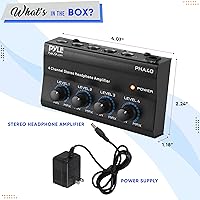
  • Dimensions: The chassis measures 4.3 × 2 × 5.8 inches, making it compact enough to sit on a desktop or fit inside most gear bags.
  • Weight: The unit weighs 10.41 ounces, keeping it light enough for easy transport between locations.
  • Power Source: The amplifier runs on AC mains power via a corded electric connection and does not support battery operation.
  • Body Material: The enclosure is constructed from plastic, contributing to the unit's lightweight profile.
  • Color: The unit is finished in black.
  • Amplifier Circuit: An ultra-low noise amplifier circuit is used internally to minimize signal degradation and background hiss at normal operating levels.
  • Signal Design: The routing architecture is a distribution-style design, meaning all four outputs share the same single input source with no individual mix routing.
  • Connector Type: All input and output jacks use the ¼″ TRS (Tip-Ring-Sleeve) standard, compatible with balanced stereo signals.
  • Best Sellers Rank: As of available data, this headphone amp holds a rank of approximately #20 in the Headphone Amplifiers category on Amazon.
  • First Available: This product was first listed for sale in December 2005, giving it a long commercial track record in the budget headphone amp segment.
  • Plug & Play: No driver installation or software configuration is required — the unit operates as a purely hardware device recognized by any standard audio signal chain.

Related Reviews
Zoom ZHA-4 Compact 4-Channel Headphone Amplifier
87%
91%
Sound Quality
95%
Portability
75%
Battery Life
88%
Ease of Use
83%
Build Quality
More
LZSIG LHA1 4-Channel Headphone Amplifier
82%
88%
Audio Clarity
84%
Build Quality
91%
Value for Money
93%
Ease of Setup
87%
Channel Independence
More
socodox 4-Channel Headphone Amplifier
85%
88%
Audio Quality
90%
Build Quality
91%
Volume Control Precision
85%
Portability
87%
Input Compatibility
More
YGiTK KTYDAC152 4-Channel Headphone Amplifier
82%
91%
Value for Money
93%
Ease of Setup
94%
Per-Channel Volume Control
88%
Input Flexibility & Mixing
77%
Build Quality
More
Rockville RHPA4 4-Channel Headphone Amplifier
87%
88%
Audio Performance
85%
Build Quality
91%
Ease of Use
87%
Portability
89%
Volume Control Flexibility
More
Pyle PLAM1600 4-Channel Car Amplifier
69%
74%
Value for Money
67%
Sound Quality
51%
Power Output Accuracy
83%
Ease of Installation
59%
Build Quality
More
Pyle PLMRMP4A 4-Channel Marine Amplifier
64%
61%
Value for Money
53%
Build Quality
67%
Waterproofing
58%
Power Output
79%
Ease of Installation
More
Pyle PLMTR4A 4-Channel Marine Amplifier
69%
78%
Value for Money
73%
Weatherproof Durability
41%
Power Accuracy
58%
Build Quality
86%
Installation Ease
More
Samson QH4
Samson QH4
87%
88%
Audio Transparency
86%
Build Durability
92%
Value for Money
94%
Ease of Setup
83%
High Impedance Support
More
Neoteck NTK190us 4-Channel Stereo Headphone Amplifier
85%
88%
Sound Quality
85%
Build Quality
92%
Ease of Use
90%
Value for Money
89%
Noise Performance
More

FAQ

Technically it will connect, but you are likely to run into volume problems. The output stage on this monitoring unit is not designed to drive high-impedance headphones effectively, so 250-ohm cans in particular will often feel underpowered even with the knob at maximum. If your headphones are 32 to 80 ohms, you should be fine for most monitoring purposes.

All four outputs carry the same signal from the single input — there is no way to send different mixes to different listeners. This is a distribution amp, not a headphone mixer. If your recording software or mixer can provide multiple separate outputs, you would need a more advanced headphone management system to route individual mixes.

It plugs into a standard AC wall outlet — no special power supply or adapter is required for North American use. Just note that there is no battery option, so you will always need to be near a power source to use it.

Most modern audio interfaces have a ¼″ headphone output or a ¼″ TRS line output, which connects directly to this unit without any adapter. If your interface only has a 3.5mm output, you will need a 3.5mm to ¼″ TRS adapter, which is inexpensive and widely available.

At moderate volume levels with typical headphones, the noise floor is low enough that most users do not notice it during normal use. However, if you push the output knobs toward maximum, some users do report a more audible hiss — particularly with sensitive in-ear monitors. For casual monitoring it is generally a non-issue, but it is not a unit designed for quiet critical listening sessions.

There is no official daisy-chain output or expansion port, so connecting a second unit to extend the number of channels is not straightforward. Some users have experimented with splitting the input signal upstream and feeding two units separately, but that requires additional gear and the results can vary. If you routinely need more than four feeds, a dedicated headphone distribution system would be a more reliable solution.

The power cable is relatively short — around three to four feet by most user accounts — so placement near an outlet matters. There is no power indicator light on the unit, which means you cannot tell at a glance whether it is on or off, something a handful of buyers have flagged as a minor but real inconvenience.

For a personal home studio where the unit stays on a desk and is handled by the same one or two people, it holds up reasonably well. The plastic body and lighter construction make it less ideal for environments with heavy daily use, frequent plug-and-unplug cycles, or rough handling. If your setup is more demanding than occasional home recording or podcasting, a metal-chassis unit would be a safer long-term investment.

The unit ships on its own — no headphones, cables, or adapters are included in the box. You will need your own ¼″ TRS cable to connect it to your mixer or interface, and your headphones should ideally have ¼″ plugs or come with a ¼″ adapter.

If you record interviews with one or two guests in the same room and everyone needs to hear the same playback feed through headphones, this monitoring unit is a very practical fit. It requires no technical knowledge to set up, takes up almost no desk space, and lets each person control their own listening volume. Just make sure everyone is using standard impedance headphones — anything in the 32 to 80-ohm range — and you should have no trouble.

Where to Buy