Overview

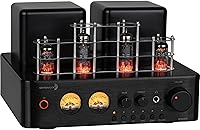
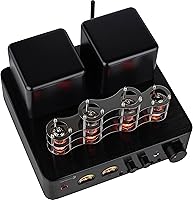
The Dayton Audio HTA100 sits in an interesting corner of the amplifier market — it pairs a vacuum tube preamp stage with a solid-state Class A/B power section, giving you that characteristic tube warmth without committing fully to the upkeep a pure tube design demands. The result is a genuinely musical sound that feels smooth and unhurried. Visually, this hybrid tube amp is hard to ignore: the glowing tubes, dual VU meters, and retro-modern styling make it something you want to leave on display. For the price, it offers a compelling entry point into tube-flavored hi-fi that does not require a second mortgage or a soldering iron.

Features & Benefits

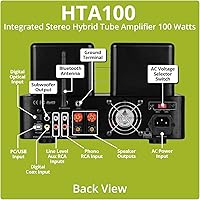
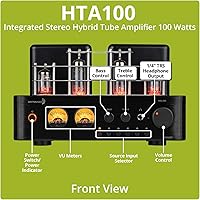
The connectivity lineup on this integrated amplifier covers a lot of ground. You get RCA inputs for a CD player or external DAC, Bluetooth 5.0 for wireless streaming from a phone, a USB DAC input, and — notably — a built-in phono preamp that handles moving-magnet cartridges without an external box. That phono stage is a genuine differentiator at this price tier; most competing units ask you to buy one separately. Up front, there is a headphone jack and bass/treble tone knobs for quick adjustments, while banana plug speaker terminals keep wiring tidy. The VU meters are not just decorative — they give you a real-time read on output levels during playback.

Best For

This hybrid tube amp is a natural fit for anyone who spins vinyl and wants a single unit that handles amplification and phono duties without cluttering the rack. It is also well-suited for small to medium rooms — the 50 watts per channel is genuinely capable, though pairing it with efficient speakers at 90dB sensitivity or higher will get the most from it. Listeners who primarily stream but still want analog inputs will appreciate the combination of Bluetooth and RCA connectivity. If you are moving on from a budget receiver and curious about what tube character actually sounds like, this integrated amplifier is a low-stakes way to find out.

User Feedback

Across several hundred ratings, this integrated amplifier holds a strong average, and the praise is fairly consistent: buyers highlight build quality and aesthetics as punching well above expectations, and many describe the sound as smooth and warm — the opposite of the bright, fatiguing character common in budget solid-state gear. On the critical side, a handful of users note the unit runs noticeably warm during extended sessions, which is expected for a hybrid design but worth considering in enclosed spaces. A few buyers with large or inefficient speakers felt the output fell short. Bluetooth performance draws mixed comments — stable and functional, but not a standout feature.

Pros

  • Built-in phono preamp removes the need for a separate turntable preamplifier entirely.
  • Tube warmth in the midrange makes vocals and acoustic instruments noticeably more natural-sounding.
  • Covers Bluetooth, USB DAC, RCA, and phono inputs from a single chassis — no switcher needed.
  • VU meters are functional, not just decorative, giving real-time visual feedback during playback.
  • The HTA100 looks genuinely impressive on a shelf, far beyond what the price tag suggests.
  • Class A/B power topology keeps efficiency and reliability higher than a pure tube design would.
  • Front-panel headphone jack is a practical convenience many competing amps at this tier skip.
  • Bass and treble tone controls are useful for quickly compensating for room acoustics or speaker character.
  • Setup is straightforward — banana plug terminals, clear labeling, and Bluetooth pairs on the first attempt.
  • Buyers stepping up from entry-level receivers consistently report it as a meaningful, audible upgrade.

Cons

  • Bluetooth stability drops in apartment buildings or RF-congested environments with multiple competing networks.
  • The unit runs noticeably warm during extended sessions, making enclosed cabinet placement a real risk.
  • Only one RCA input pair limits users with multiple analog sources unless they add an external switcher.
  • Power output feels strained when paired with inefficient or low-sensitivity speakers at higher volumes.
  • Tube character is subtle enough that listeners expecting dramatic, classic valve sound may feel underwhelmed.
  • No adjustable phono loading makes the built-in preamp a poor fit for anything beyond basic MM cartridges.
  • The physical footprint — nearly 14 inches in both width and depth — is larger than product photos imply.
  • Headphone output lacks the drive needed for high-impedance cans above 150 ohms.
  • Tone control sweep is wide and coarse, making precise fine-tuning difficult without overshooting the target.
  • No input indicator display means active source confirmation relies entirely on knob position memory.

Ratings

Our scores for the Dayton Audio HTA100 are generated by AI after analyzing verified buyer reviews from multiple global sources, with spam, bot activity, and incentivized feedback actively filtered out. The result is an honest, balanced snapshot of what real owners experience — strengths and frustrations included. This integrated amplifier earns high marks in several areas, but a few practical limitations are worth knowing before you buy.

Sound Quality
88%
Most owners describe the sound as smooth, warm, and easy to listen to for extended sessions — qualities that budget solid-state amps rarely deliver. The tube preamp stage adds a subtle softness to the midrange that makes vocals and acoustic instruments feel more natural and present.
Purist audiophiles may find the tube character too mild to satisfy, since the solid-state power section keeps things controlled rather than lush. At high volumes with complex orchestral or dense electronic material, some listeners notice a slight compression in the dynamics.
Build Quality
84%
For the price tier, the chassis feels reassuringly solid and the front-panel controls have a deliberate, weighted feel that does not suggest cost-cutting. The VU meter needles are consistent and the tube sockets hold components securely without wobble.
The top vents and some internal components are visible at close range, and the finishing is not quite on par with what you would find on European or Japanese-made equipment at a similar price. A handful of buyers noted minor cosmetic inconsistencies around the tube cage area.
Value for Money
91%
Combining a phono preamp, USB DAC, Bluetooth, and tube-influenced amplification in one box at this price point is genuinely difficult to match. Buyers who previously owned separate budget components frequently note how much money and desk space this integrated amplifier saved them.
If you already own a quality standalone phono stage or external DAC, you are paying for redundancy you will not use. For pure power amplification with no extra features, dedicated solid-state competitors at the same price offer more raw output.
Phono Preamp Performance
79%
21%
Having a built-in moving-magnet phono stage removes a real barrier for turntable users who do not want to invest in a separate preamp. Most vinyl listeners report it handles standard MM cartridges cleanly with adequate gain and a quiet noise floor for casual listening.
Serious vinyl enthusiasts with higher-end cartridges or a preference for fine-tuned loading options will quickly run into the phono stage's limitations — there are no adjustable settings. It competes well against budget standalone preamps but not against dedicated units in the next price tier.
Aesthetic & Design
93%
This is genuinely one of the most visually striking amplifiers available at this price. The combination of glowing tubes, swinging VU meters, and the retro-modern front panel makes it a conversation piece that looks equally at home on a vinyl listening station or a desktop audio setup.
The exposed tube design, while beautiful, means dust accumulation is a real maintenance consideration. The overall footprint — nearly 14 inches wide and deep — is larger than it appears in photos, which can be a surprise for buyers working with limited shelf or desk space.
Connectivity & Inputs
86%
The input selection covers nearly every common source: RCA for CD players or streaming boxes, USB DAC for computer audio, Bluetooth for phones, and phono for turntables — all accessible without a separate switcher box. The front headphone jack is a practical addition that many similarly priced amps omit.
There is only one set of RCA inputs, so users with multiple analog sources will need an external switcher. The input selector knob works well enough but lacks the crisp detent feel that more expensive units offer.
Bluetooth Performance
67%
33%
Bluetooth 5.0 connects reliably to phones and tablets within a normal listening room range, and the latency is acceptable for music playback. It is a genuinely convenient feature for casual streaming sessions without touching a cable.
Range drops noticeably through walls, and the connection stability in RF-congested environments like apartments has drawn complaints from a noticeable share of buyers. For critical listening, most users ultimately prefer a wired input, as Bluetooth compression is audible on high-quality recordings.
Power Output & Headroom
72%
28%
In a small to medium room with reasonably efficient speakers — say 89dB sensitivity or higher — 50 watts per channel delivers ample volume with room to spare. Most casual listeners will never push it close to its limits in a typical home environment.
Pair this integrated amplifier with large floor-standing speakers or anything below 87dB sensitivity and the limitations become noticeable at higher volumes. A handful of buyers with demanding speaker loads reported the amp running noticeably hot and sounding strained during long, loud listening sessions.
Headphone Output
74%
26%
The front-panel headphone jack is a convenient bonus that works well with medium-impedance headphones in the 32 to 150 ohm range, offering a warm and listenable output consistent with the amp's overall character.
High-impedance headphones — anything above 150 ohms — do not receive adequate drive, and the output lacks the refinement of a dedicated headphone amplifier. It is a useful feature for occasional private listening but not a substitute for a proper headphone amp.
Ease of Setup
89%
Unboxing and getting sound out of this hybrid tube amp takes under 15 minutes for anyone familiar with basic audio connections. Banana plug terminals make speaker wiring clean and quick, and Bluetooth pairing works on the first try in most cases.
The manual is brief and assumes some baseline audio knowledge, which could leave true beginners uncertain about proper speaker impedance matching. There is no digital display or input confirmation light, so knowing which input is active requires familiarity with the knob positions.
Heat Management
63%
37%
The warm operating temperature is a natural byproduct of the tube preamp section and Class A/B biasing, and for most users in open-shelf setups it is entirely manageable. The chassis handles thermal dissipation adequately under normal listening conditions.
In enclosed AV cabinets or on tightly packed shelves, the heat output becomes a genuine concern and may require leaving cabinet doors open. Several buyers specifically flagged this as something they wished the product page had warned them about more clearly.
Tone Controls
77%
23%
The bass and treble knobs respond smoothly and allow quick, effective adjustments for different speaker profiles or room acoustics without diving into equalizer menus. For users who just want to add a little warmth or take the edge off bright recordings, they work well.
The controls are relatively coarse — there is no midrange adjustment and the sweep range is wide enough that small movements produce noticeable changes. Precise fine-tuning is difficult, and users who prefer a flat reference signal will likely leave them centered anyway.
Long-Term Reliability
71%
29%
Early adopter feedback from buyers who have owned the unit for over a year is largely positive, with no widespread reports of component failures or tube degradation under normal use. Dayton Audio has a reasonable reputation for standing behind its products.
The long-term tube lifespan is an inherent variable with any tube-based design, and replacement schedules depend heavily on usage hours. A small number of buyers reported channel imbalance issues after several months of heavy use, which required contacting customer support.

Suitable for:

The Dayton Audio HTA100 is a strong match for vinyl listeners who want a tidy, all-in-one setup — the built-in phono preamp means you can plug a turntable directly in without buying a separate box, which genuinely saves both money and desk space. Casual audiophiles who are curious about tube sound but do not want to deal with biasing, re-tubing schedules, or high operating voltages will find the hybrid approach a practical middle ground that delivers real warmth without the fuss. It also suits people who mix their listening habits — streaming from a phone over Bluetooth one evening, spinning records the next — because the input range covers all of it from a single unit. Small to medium room setups are where this integrated amplifier really shines, especially paired with efficient bookshelf speakers in the 89dB sensitivity range or higher. And if aesthetics matter to you — if you actually want your audio gear to look good on a shelf — the glowing tubes and swinging VU meters make this one of the more visually rewarding options at this price point.

Not suitable for:

Buyers expecting full, unapologetic tube amplifier sound should understand that the Dayton Audio HTA100 is a hybrid design — the tube influence is present and pleasant, but the solid-state power section keeps the character relatively controlled, which will not satisfy someone chasing the rich, euphonic quality of a purpose-built all-tube integrated. The 50 watts per channel figure also deserves a realistic caveat: if you own large floor-standing speakers, inefficient designs below 87dB, or plan to fill a generous open-plan living space, this integrated amplifier may run out of headroom before you do. Serious vinyl enthusiasts with high-performance cartridges or a preference for adjustable phono loading will also find the built-in phono stage limiting — it is a competent entry-level circuit, not a critical listening tool. Anyone who needs more than one pair of RCA analog inputs, or works in a cramped enclosed cabinet where heat dissipation is restricted, should also weigh those constraints carefully before committing.

Specifications

  • Power Output: The amplifier delivers 50 watts RMS per channel into a standard 8-ohm load, providing adequate headroom for most small to medium listening rooms.
  • Amplifier Topology: The power stage uses a Class A/B design, which balances efficiency and thermal performance while the vacuum tube preamp section shapes the tonal character.
  • Preamp Stage: Two vacuum tubes handle the preamplification circuit, introducing the subtle warmth and harmonic character associated with classic valve amplifier designs.
  • Inputs: Available inputs include one stereo RCA pair, a moving-magnet phono input, a USB DAC input for computer audio, and Bluetooth 5.0 wireless connectivity.
  • Speaker Outputs: Speaker connections use high-conductivity banana plug compatible binding posts, supporting standard 4-ohm and 8-ohm loudspeaker loads.
  • Headphone Output: A 3.5mm headphone jack is located on the front panel, providing private listening output suited to low to medium impedance headphones.
  • Bluetooth Version: Bluetooth 5.0 is implemented for wireless audio streaming from smartphones, tablets, and other compatible source devices.
  • Phono Stage Type: The built-in phono preamplifier is designed for moving-magnet cartridges only and does not support moving-coil cartridges or adjustable loading.
  • Tone Controls: Dedicated front-panel bass and treble rotary knobs allow manual frequency response adjustment without the need for an external equalizer.
  • Display: Dual analog VU meters on the front panel provide a real-time visual indication of output signal levels during playback.
  • Dimensions: The unit measures 14.02 inches wide by 13.39 inches deep by 9.45 inches tall, requiring meaningful shelf or desk clearance on all sides.
  • Weight: The HTA100 weighs 3.6 pounds, reflecting its hybrid construction with a relatively compact internal transformer compared to full tube designs.
  • Manufacturer: The HTA100 is designed and sold by Dayton Audio, a US-based brand distributed primarily through Parts Express and major online retailers.
  • Model Number: The official model designation is HTA100, which corresponds to the Hybrid Tube Amplifier with a 100-watt total combined output rating.
  • Availability Date: The product was first listed for sale in April 2023, making it a relatively recent addition to Dayton Audio's amplifier lineup.
  • Warranty: Dayton Audio typically covers its amplifier products with a limited manufacturer warranty; buyers should confirm current terms directly with the retailer at the time of purchase.
  • USB DAC Input: The USB input functions as a digital-to-analog converter, allowing direct connection from a computer or laptop as an audio source without a separate DAC.
  • Tube Accessibility: The vacuum tubes are exposed and visible through the top venting, making them accessible for inspection and eventual replacement without disassembling the unit.

Related Reviews
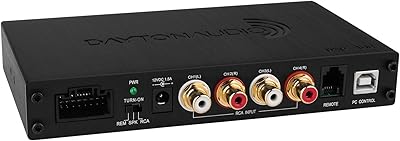
Dayton Audio DSP-408
85%
94%
Value for Money
88%
Software Interface & GUI
92%
Audio Routing Flexibility
87%
Compactness & Form Factor
61%
Out-of-the-Box Connectivity
More
Dayton Audio APA150
Dayton Audio APA150
81%
88%
Sound Quality
83%
Build Quality
91%
Value for Money
89%
Noise Floor & Fan Operation
61%
Crossover Precision
More
Dayton Audio Classic B40
77%
88%
Sound Clarity
91%
Treble Performance
54%
Bass Extension
83%
Build Quality
93%
Value for Money
More
Dayton Audio Classic T65 Tower Speakers
86%
91%
Sound Quality
87%
Bass Performance
88%
Treble Clarity
85%
Power Handling
92%
Build Quality
More
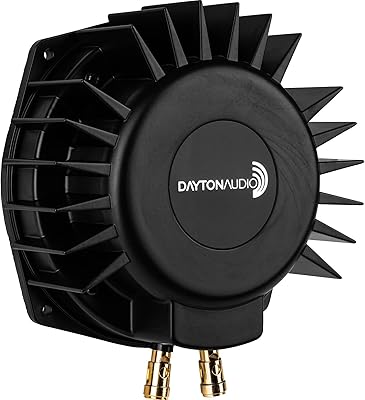
Dayton Audio BST-300EX Bass Shaker
84%
88%
Bass Performance
91%
Build Quality
85%
Ease of Setup
90%
Value for Money
87%
Durability
More
Dayton Audio Classic B65
78%
83%
Sound Quality
71%
Bass Performance
86%
Treble Clarity
78%
Build Quality
91%
Value for Money
More
Dayton Audio Wave-Link WLS System
86%
89%
Wireless Performance
91%
Ease of Setup
87%
Multi-room Compatibility
84%
Sound Quality
65%
Latency
More
Dayton Audio SUB-800 8″ Powered Subwoofer
85%
86%
Bass Quality
92%
Value for Money
89%
Ease of Setup
93%
Compactness/Size
85%
Connectivity Options
More
Dayton Audio SUB-1200 12″ Powered Subwoofer
86%
88%
Bass Performance
91%
Ease of Integration
89%
Value for Money
85%
Build Quality
93%
Size/Space Efficiency
More
Dayton Audio CCS-33B Center Channel Speaker
90%
94%
Sound Clarity
96%
Dialogue Intelligibility
87%
Bass Performance
91%
Build Quality
90%
Ease of Installation
More

FAQ

It works with any turntable that has a moving-magnet cartridge, which covers the vast majority of consumer and mid-range decks on the market. If your turntable already has a built-in phono preamp, you can bypass the internal one by connecting via the RCA input instead. Moving-coil cartridges are not supported by the built-in stage.

With efficient bookshelf speakers rated at 89dB sensitivity or higher, it gets genuinely loud — well beyond comfortable listening levels in a standard room. Where things get more nuanced is with inefficient or power-hungry speakers; in those cases you may notice the amp feeling strained at higher volumes. For small to medium rooms with sensible speaker pairing, 50 watts per channel is more than enough.

Yes, the USB DAC input lets you plug directly into a computer via USB and use the HTA100 as your system sound output. This is one of the more practical features for desktop setups, since it removes the need for a separate external DAC. Just select it as your audio output device in your operating system settings.

The unit does run warm — noticeably so on the top surface near the tubes after an extended listening session. This is completely normal for a hybrid design with an active tube preamp stage. The main thing to avoid is placing it inside a fully enclosed cabinet with no airflow, as heat buildup in a confined space can affect long-term reliability. On an open shelf it handles thermal dissipation without issue.

For casual background listening and everyday streaming from a phone, it works reliably well within the same room. Range through walls is limited, and in environments with a lot of competing wireless signals — dense apartment buildings, for example — some users report occasional dropouts. It is not the amp's strongest feature, but it is entirely functional for its intended use case.

Eventually, yes — tubes do have a finite lifespan, typically measured in thousands of hours of use. For most casual listeners who run the amp a few hours per day, that translates to several years before any degradation becomes noticeable. When the time comes, the tubes are accessible from the top and replacement is straightforward for anyone comfortable handling basic electronics.

The amplifier is designed to drive standard 4-ohm and 8-ohm speakers, which covers essentially all consumer bookshelf and floor-standing loudspeakers. Sticking to speakers within that range will keep the amp running comfortably and protect the output stage from unnecessary stress.

No, the HTA100 does not include a remote control. All input switching, volume adjustment, and tone control is handled via the front-panel knobs. If remote operation is important to your setup, that is worth factoring into your decision, as there is no workaround short of a third-party smart plug for power cycling.

The headphone output works best with headphones in the 32 to 150 ohm range — typical consumer and enthusiast headphones in that window will sound warm and pleasant. High-impedance headphones above 150 ohms, like certain studio or audiophile models, will not receive adequate drive from this output and may sound thin or quiet. If you primarily listen through demanding headphones, a dedicated headphone amplifier would serve you better.

It is actually one of the more approachable entry points into tube-influenced audio, precisely because the hybrid design handles the complexity of a pure tube amp for you — no biasing, no high-voltage concerns, no fragile all-tube signal path to manage. You get the tonal character people associate with tubes without the learning curve or maintenance overhead. For someone curious about the tube sound who does not want to commit fully to it, this integrated amplifier makes a lot of sense as a starting point.