Overview

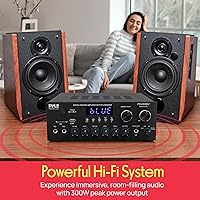
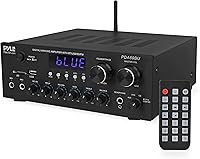
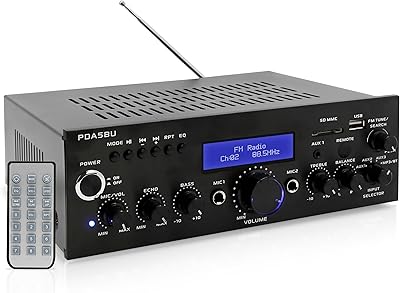
The Pyle PDA69BU Stereo Amplifier Receiver is a compact 2.0 channel unit built for listeners who want real amplified sound without a big spend. It delivers 40W x 2 RMS — that is the number to focus on, not the inflated 200W peak figure used in marketing. The metal chassis feels surprisingly solid for the price, and at just under 10 inches square it sits comfortably on a desk or bookshelf. This budget stereo amplifier competes in a crowded field of mini receivers, but its blend of Bluetooth 5.x wireless, multiple inputs, and a sturdy build makes it a credible option at this price point.
Features & Benefits

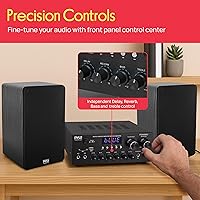
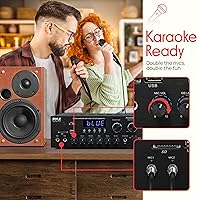
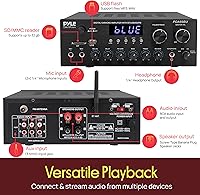
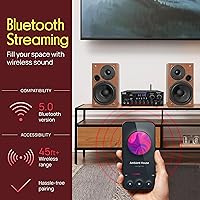
Bluetooth 5.x pairing is quick and stable — connect a phone or tablet and you are playing music within seconds. Beyond wireless, this compact receiver reads USB drives and SD cards directly, so you can queue up a playlist without any streaming app. A built-in FM tuner with a dedicated antenna rounds things out for traditional radio listeners. There is also a microphone input with adjustable reverb, handy if you occasionally host a casual sing-along. The included remote control handles volume, bass, treble, balance, and input switching, and RCA plus 3.5mm AUX inputs mean older turntables and televisions plug straight in without adapters.

Best For

This Pyle amp is the right call for anyone setting up bookshelf or desktop speakers in a small room, home office, or bedroom. Students and renters especially benefit from its compact footprint — it takes up minimal space and moves easily. If you are stepping up from a single Bluetooth speaker and want proper stereo separation through real speakers, this budget stereo amplifier makes that transition affordable. The karaoke mic input is a genuine bonus for occasional gatherings, though it will not replace a dedicated PA system. One honest caveat: in larger living rooms, it may not push enough volume to fill the space comfortably.

User Feedback

Across more than 1,400 ratings, this compact receiver holds a 4.2-star average — solid for a value-tier amp. Buyers consistently highlight easy Bluetooth pairing and how sturdy the build feels relative to the price. Sound quality at moderate listening levels draws genuine praise. On the flip side, several users report that FM reception weakens noticeably in poor-signal areas, and some find the remote range shorter than expected. A few buyers also flag the peak wattage as inflated marketing — in real-world use, this is a modest-output receiver that performs best in smaller spaces, not open living areas.

Pros

  • Bluetooth 5.x pairs quickly with phones and tablets, with stable connections in everyday room-sized distances.
  • USB and SD card slots allow direct music playback without needing a phone or streaming service.
  • Metal chassis feels noticeably more solid and premium than plastic-bodied competitors at the same price.
  • All-in-one input set — Bluetooth, FM, USB, SD, RCA, and AUX — means fewer additional purchases to get started.
  • Remote control handles volume, tone, balance, and input switching, reducing the need to reach the unit constantly.
  • Built-in FM tuner with a dedicated antenna adds a zero-cost radio option that many rivals in this price range omit.
  • Mic input with reverb control is a practical bonus for casual karaoke without a separate mixer.
  • Compact footprint makes it easy to fit on a crowded desk or narrow shelf without rearranging the whole room.
  • At 4.2 stars across more than 1,400 ratings, this budget stereo amplifier has a verified, broadly satisfied user base.
  • Headphone jack allows private late-night listening without reconfiguring any cables.

Cons

  • The 200W peak wattage claim is a marketing figure; actual usable power is 40W x 2 RMS, which is far more modest.
  • FM tuner sensitivity is weak in low-signal or rural areas, producing noticeable static that degrades the listening experience.
  • Remote control requires a fairly direct line of sight and loses reliability beyond roughly 15 feet.
  • Volume ceiling compresses and loses clarity when pushed hard, even with efficient speakers.
  • No optical or coaxial digital input limits compatibility with newer TVs and modern home theater sources.
  • Some units have shown quality control inconsistencies, including loose RCA jacks or erratic Bluetooth pairing after months of use.
  • USB and SD playback lacks any display for track info, making navigation through large libraries impractical.
  • Headphone output underperforms with higher-impedance over-ear headphones, sounding thin and underpowered.
  • The chassis warms up noticeably during extended high-volume sessions, which can be concerning in confined or poorly ventilated spaces.

Ratings

The Pyle PDA69BU Stereo Amplifier Receiver has been evaluated by our AI system after processing hundreds of verified buyer reviews from global markets, with spam, bot-generated, and incentivized feedback actively filtered out. The scores below reflect honest consensus across real-world use cases — from home office desks to casual living room setups — capturing both what this budget stereo amplifier genuinely does well and where it falls short for certain buyers.
Bluetooth Connectivity
83%
Bluetooth 5.x pairing is consistently described as fast and stable by buyers using it daily with phones and tablets. Most users report no noticeable dropouts at normal in-room distances, which matters when the amp is across a desk or a small room.
A handful of users note the Bluetooth range drops off more quickly than expected through walls or at longer distances. It is not a deal-breaker in small rooms, but buyers planning to stream from another floor may be disappointed.
Sound Quality
74%
26%
At moderate volumes, this compact receiver delivers a clean, balanced stereo image that genuinely surprises buyers upgrading from a single Bluetooth speaker. Bass and treble controls give enough flexibility to tune the sound for both music and spoken content without needing an external EQ.
Push it toward the upper end of the volume dial and clarity starts to compress, particularly in the midrange. This is a value-tier amplifier, and listeners with higher expectations — or efficient speakers in a larger room — will notice the ceiling fairly quickly.
Build Quality
79%
21%
The metal chassis is a standout for the price bracket. Buyers frequently comment that it feels heavier and more substantial than comparable plastic-bodied mini receivers, and the front panel controls have a satisfying, solid feel.
While the outer shell impresses, some users report that the internal build does not always match. A small number of units have shown quality control inconsistencies out of the box, including loose RCA jacks or rattling internals.
Value for Money
86%
For what this budget stereo amplifier costs, the combination of Bluetooth, FM tuner, USB/SD playback, mic input, and remote control in a single box is hard to beat. Most buyers feel they received considerably more functionality than the price suggests.
The inflated peak wattage figure in the marketing creates expectations that real-world performance cannot always meet. Buyers who did not read carefully sometimes feel misled when comparing it to true high-wattage amplifiers.
Input Versatility
88%
Having RCA, 3.5mm AUX, USB, SD card, Bluetooth, and FM all in one unit means this Pyle amp works with almost any source a casual listener owns. Users frequently highlight how easy it was to connect a turntable, a phone, and a TV without buying any adapters.
There is no optical or digital coaxial input, which limits compatibility with newer soundbars or certain smart TVs that output digital-only audio. For the target audience this rarely matters, but it is worth noting for anyone with a more modern setup.
Remote Control
67%
33%
The remote covers a genuinely useful range of functions — volume, input switching, EQ presets, and tone controls — reducing the need to physically reach the unit once it is placed on a shelf or tucked away.
Range and angle sensitivity draw mixed feedback. Several users report that the remote needs to be pointed fairly directly at the unit and loses reliability beyond about 15 feet. The button layout is also described as cramped and not especially intuitive.
FM Tuner Performance
61%
39%
In areas with decent broadcast signal strength, the built-in FM tuner performs adequately for casual background listening. The included antenna is functional and auto-scan works without issues in well-served urban locations.
In weaker signal areas — rural locations or apartments with limited line-of-sight — the tuner struggles, producing noticeable static. Users accustomed to dedicated tuners or even car radios find the sensitivity underwhelming in these conditions.
Karaoke & Mic Functionality
71%
29%
The mic input with adjustable reverb is a practical bonus that casual entertainers genuinely appreciate. Buyers who host occasional gatherings report it works well enough for a fun sing-along without needing to add a separate mixer to the chain.
The reverb effect has a somewhat artificial character that experienced karaoke fans find limiting. Mic bleed and feedback at higher mic gain settings are also reported, so users need to balance levels carefully during use.
Setup & Ease of Use
84%
Unboxing and getting sound out of this compact receiver takes most buyers under ten minutes. Input switching is straightforward, the controls are clearly labeled, and the remote handles initial configuration without requiring a manual.
The instruction manual is thin and occasionally unclear about advanced functions like EQ preset customization. Users less familiar with audio equipment sometimes struggle to understand the signal chain when multiple inputs are connected simultaneously.
Power Output & Volume Range
63%
37%
For desktop setups and small rooms with efficient bookshelf speakers, the 40W x 2 RMS output is sufficient for comfortable daily listening at reasonable levels. Buyers in home office environments rarely feel the need for more.
The gap between the marketed 200W peak and the actual 40W RMS is significant, and buyers expecting to fill a medium-to-large room are often let down. This amp is genuinely underpowered for anything beyond a small, treated listening space.
USB & SD Card Playback
77%
23%
Direct playback from USB drives and SD cards works reliably for common MP3 and WAV files. Users who prefer offline listening without streaming subscriptions find this feature particularly convenient for dedicated playlists.
Format support has limits — some users report incompatibility with certain file types or higher-bitrate audio files. There is also no display to show track information, which makes navigating a large library on a USB drive cumbersome.
Headphone Output
69%
31%
Having a dedicated headphone jack is a practical touch that lets users switch to private listening without reconfiguring anything. It works well for late-night sessions when speakers would disturb others nearby.
Audio quality through the headphone output is noticeably weaker than through the speaker terminals, and higher-impedance headphones may sound thin or underpowered. It is best suited for casual, low-impedance earbuds rather than over-ear studio headphones.
Compact Form Factor
81%
19%
At roughly 10 inches square and under 4 inches tall, this Pyle amp fits on a crowded desk or a narrow shelf without dominating the space. Students and renters especially value how easily it can be relocated or packed up between living situations.
The compact size that makes it convenient also imposes real hardware limits on heat dissipation and component quality. Running it at high volumes for extended periods causes the chassis to warm up more than some users expect from a metal-bodied unit.
Long-Term Reliability
66%
34%
Many buyers report using the unit daily for over a year without any functional issues, which is a reasonable durability record for the price. The metal shell adds some confidence compared to all-plastic alternatives in the same price range.
A visible minority of reviews mention unit failures — particularly input jacks degrading or Bluetooth pairing becoming erratic — after several months of regular use. Quality control variability means not every unit ships to the same standard.

Suitable for:

The Pyle PDA69BU Stereo Amplifier Receiver is an ideal pick for anyone who wants to power a pair of bookshelf or desktop speakers in a small-to-medium room without spending a lot or buying multiple separate components. Students living in dorms or apartments will appreciate how much functionality is packed into a unit that takes up barely any shelf space and moves easily between living situations. Home office workers who want background music from their phone via Bluetooth, with the occasional FM radio session, will find it covers those bases reliably. If you are stepping up from a single portable Bluetooth speaker and want the richer, room-filling experience of actual stereo separation through proper speakers, this budget stereo amplifier makes that upgrade affordable and straightforward. It also makes a lot of sense for casual entertainers who host occasional gatherings and want a mic input for a sing-along without buying a dedicated karaoke machine or PA mixer.
Not suitable for:

Buyers expecting this compact receiver to power a large living room or fill an open-plan space will likely be underwhelmed — the real-world output of 40W x 2 RMS is solid for small rooms but runs out of headroom in bigger environments, regardless of what the peak wattage figure on the box implies. Audiophiles or serious music listeners who prioritize high-fidelity reproduction and low noise floors should look elsewhere; this Pyle amp is built for convenience and accessibility, not acoustic precision. Anyone who relies heavily on FM radio in a rural or weak-signal area may also find the tuner frustrating, as its sensitivity is a known weak point. If you need digital audio inputs like optical or coaxial to connect a modern TV or soundbar, this receiver does not offer them, which is a genuine compatibility gap for certain setups. Finally, buyers wanting a long-term, high-durability investment should be aware that quality control variability means unit-to-unit consistency is not always guaranteed.

Specifications

  • Model Number: The unit is manufactured under model number PDA69BU by Sound Around, the parent company behind the Pyle brand.
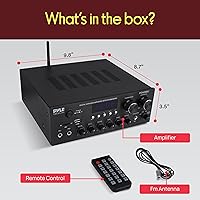
  • Dimensions: The chassis measures 9.8″ x 9.8″ x 3.9″, making it compact enough for a desktop or narrow shelf.
  • Weight: The unit weighs 8.07 pounds, which reflects the solid metal construction rather than a lightweight plastic build.
  • Chassis Material: The outer enclosure is constructed from metal, providing more structural rigidity than plastic-bodied alternatives at this price tier.
  • Power Output: Continuous RMS output is rated at 40W per channel into a 2.0 stereo configuration, with a peak figure of 200W used for marketing purposes.
  • Channel Config: This is a 2.0 channel stereo amplifier with no subwoofer channel or surround sound processing.
  • Bluetooth Version: The unit uses Bluetooth 5.x with a built-in antenna for stable wireless streaming from phones, tablets, and laptops.
  • Analog Inputs: Connectivity includes one set of RCA stereo inputs and one 3.5mm AUX input for wired source devices such as turntables or TVs.
  • Digital Inputs: A USB Type-A port and an SD card slot support direct file playback without a connected streaming device.
  • Audio Outputs: Speaker binding terminals handle the main stereo output, and a dedicated headphone jack provides private listening capability.
  • Mic Input: A microphone input is included with adjustable reverb control, suitable for casual karaoke or voice amplification use.
  • FM Tuner: A built-in FM tuner is included, and a passive FM antenna ships in the box for basic broadcast radio reception.
  • Remote Control: The included infrared remote controls volume, bass, treble, balance, input selection, and eight onboard EQ presets.
  • EQ Presets: Eight selectable sound effect presets are accessible via the remote, allowing basic tonal adjustments without manual knob adjustment.
  • Supported Formats: USB and SD playback supports common audio formats including MP3, with additional video codec compatibility listed for multimedia use cases.
  • Availability Date: The product was first made available for purchase on January 17, 2022, and has accumulated over 1,400 verified ratings since launch.

Related Reviews
Pyle PLMRM29BT Marine Stereo Receiver
83%
85%
Audio Quality
90%
Bluetooth Connectivity
88%
Ease of Installation
80%
Hands-Free Calling
84%
Build Quality/Durability
More
Pyle PLCD43BTM Marine Stereo Receiver
83%
88%
Bluetooth Connectivity
91%
Ease of Installation
85%
Sound Quality
82%
Durability & Build Quality
60%
AM/FM Radio Reception
More
Pyle PDA5BU Bluetooth Stereo Amplifier
82%
88%
Audio Performance
82%
Bluetooth Connectivity
71%
Build Quality
85%
Ease of Setup
90%
Input Versatility
More
Pyle PCAU46BA Bluetooth Stereo Amplifier
73%
83%
Value for Money
67%
Sound Quality
91%
Ease of Setup
68%
Bluetooth Performance
54%
Build Quality
More
Pyle PVTA80 Bluetooth Tube Amplifier Receiver
86%
88%
Sound Quality
84%
Bluetooth Connectivity
91%
Power Output
83%
Ease of Setup
87%
Build Quality
More
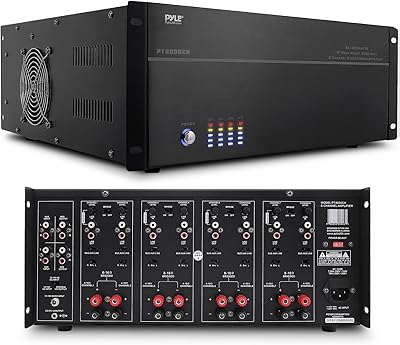
Pyle PT8000CH
Pyle PT8000CH
70%
84%
Ease of Installation
78%
Multi-Zone Audio Performance
51%
Rated Power Accuracy
62%
Build Quality
57%
Thermal Management & Fan Noise
More
NEOHIPO AK45 Bluetooth Stereo Receiver Amplifier
73%
83%
Value for Money
91%
Ease of Setup
71%
Sound Quality
88%
Input Versatility
67%
Bluetooth Stability
More
Pyle PLMR88W Marine Stereo Headunit Receiver
84%
88%
Sound Quality
91%
Ease of Installation
85%
Water-Resistant Durability
83%
Connectivity Options
86%
EQ Adjustability
More
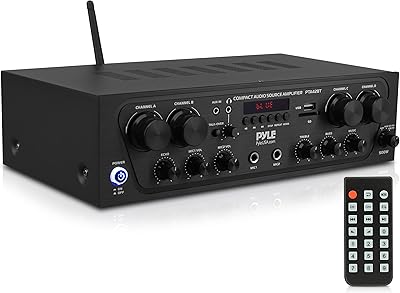
Pyle PTA42BT Wireless Karaoke Bluetooth Stereo Receiver
81%
85%
Sound Quality
91%
Bluetooth Connectivity
92%
Value for Money
88%
Ease of Use
63%
Microphone Performance
More
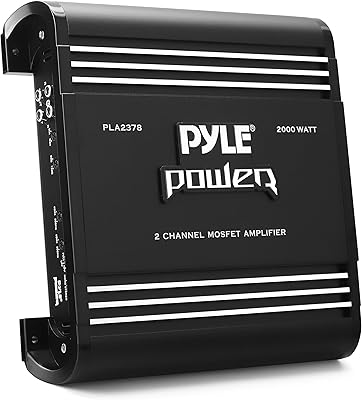
Pyle PLA2378 2-Channel Car Stereo Amplifier
85%
87%
Sound Quality
90%
Installation Ease
85%
Power Output
83%
Build Quality
80%
Bass Control
More

FAQ

The 200W figure is a peak marketing number, not a continuous rating. The actual RMS output — the number that reflects real sustained listening performance — is 40W per channel. For a small room with efficient bookshelf speakers, that is plenty, but do not expect it to shake a large open-plan living area.

You can connect a turntable via the RCA inputs, but only if your turntable has a built-in phono preamp or if you use a separate phono stage. This compact receiver does not have a dedicated phono preamp built in, so a standard moving-magnet cartridge plugged in without one will sound very faint.

Most users find it reliable and quick to pair within a normal room distance. Bluetooth 5.x helps maintain a stable link, and dropouts are uncommon when the source device is in the same room. Through walls or at longer distances, performance can degrade like most consumer Bluetooth devices.

It is designed to drive passive (unpowered) speakers. If you already own powered or active speakers with their own built-in amplification, you would not use this receiver for them — you would connect those directly to a source instead.

In urban areas with strong broadcast signals, it works fine for background listening. In rural or weak-signal environments, several buyers report noticeable static and difficulty locking onto stations. If FM radio is a primary use case and your signal is weak, it is worth managing expectations on this one.

The unit has a dedicated mic input with adjustable reverb, so it is ready for casual karaoke without an external mixer. You will need to supply your own microphone — none is included. It works well for informal gatherings, though experienced karaoke users may find the reverb range a bit limited compared to dedicated karaoke gear.

Pyle recommends connecting speakers with an impedance of 4 to 8 ohms, which covers the vast majority of standard bookshelf and floor-standing passive speakers. Avoid connecting speakers below 4 ohms, as this can stress the amplifier circuit.

Unfortunately, no. There is no screen on the unit, so when playing music from a USB drive or SD card, you have no visual feedback on track names, file names, or playback position. Navigating a large music library by ear alone is not practical, so it works best with smaller, well-organized drives.

The metal chassis does warm up during longer listening sessions, especially at higher volumes. This is normal for a compact amplifier of this type, but make sure the unit has some clearance around it and is not enclosed in a tight cabinet without ventilation. Running it at moderate volume levels keeps heat manageable.

The remote handles volume, input switching, bass, treble, balance, and the eight EQ presets — so it covers the core functions well. Reliability is generally acceptable, but it requires a fairly direct line of sight to the front of the unit and tends to lose responsiveness beyond about 15 feet. It is not the strongest remote in its class, but it gets the job done for typical couch-to-shelf distances.