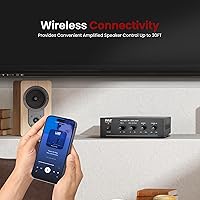
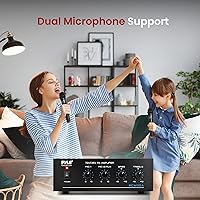
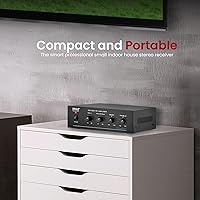
Overview

The Pyle PCM30A 60W Compact PA Amplifier has been a quiet workhorse in the budget PA space since 2009, and its staying power says something. It sits comfortably between a basic home stereo receiver and a light commercial PA unit — useful for small venues, offices, and distributed speaker setups where you need both music playback and occasional microphone use. The 60W output paired with multi-impedance speaker outputs — including 4, 8, and 16-ohm plus 25V and 70V options — gives it genuine flexibility that most similarly priced amps lack. Just be clear about what it is: a practical distributed audio tool, not a high-fidelity listening device.

Features & Benefits

What makes this compact PA amp genuinely useful in real-world installs is how much it covers in a small box. The MIC 1 auto-talkover function is the standout feature — when someone speaks into the mic, the background music ducks automatically, so announcements cut through cleanly without manual fader adjustments. On the output side, the 25V and 70V options matter more than most buyers realize: these are standard voltages for distributed speaker systems in commercial buildings, meaning you can daisy-chain multiple ceiling speakers on a single wire run. Each input also has its own volume knob, and there are separate treble and bass controls for basic tone shaping.

Best For

This small-venue amplifier hits a clear sweet spot for anyone running a modest installed audio system on a realistic budget. Think small restaurants and cafes that want background music they can talk over, houses of worship needing a simple way to mic a speaker above ambient sound, or offices with waiting rooms where on-hold music and occasional announcements are the only requirements. It also makes a solid choice for AV integrators doing small 70V zone installs where cost-per-zone matters. Home hobbyists wiring up a garage or workshop will find it straightforward to configure. If your needs stay in that lane, this amp delivers without overcomplicating things.

User Feedback

Across more than 200 reviews, the Pyle PCM30A earns a steady 4.0-star average — not spectacular, but consistent. Non-technical users frequently mention how quickly they got it running, and church or office installers specifically appreciate the auto-talkover function working reliably out of the box. On the flip side, the unit does run warm during extended use, so give it breathing room rather than boxing it into a tight cabinet. A handful of buyers also flag that the plastic construction feels basic, though that is an honest trade-off at this price tier. For what it is — a dependable small-zone PA amp — real-world satisfaction holds up well.

Pros

  • The MIC 1 auto-talkover feature works reliably, cutting background music the moment someone speaks — no manual adjustment needed.
  • Support for both 25V and 70V outputs makes this compact PA amp compatible with most existing distributed speaker wiring.
  • Five distinct input types, including paging and telephone terminals, cover a wider range of real-world install scenarios than most budget amps offer.
  • Independent volume control for each input means you can balance music, mic, and paging levels without compromise.
  • Setup is genuinely beginner-friendly — most non-technical users report getting it running within minutes of unboxing.
  • The compact footprint fits neatly on a shelf or in a shallow rack space without dominating the installation area.
  • A replaceable fuse adds a practical layer of protection and keeps maintenance simple if something goes wrong.
  • Over 200 user reviews averaging 4.0 stars reflect consistent real-world satisfaction across diverse install types.
  • The multi-impedance speaker outputs — from 4-ohm to 70V — reduce the need for external matching transformers in many setups.

Cons

  • The unit runs noticeably warm during extended use, making ventilation placement a required consideration, not an afterthought.
  • Build quality feels utilitarian — the chassis and knobs are functional but do not inspire confidence in high-traffic environments.
  • At 60W, headroom is limited; pushing the amp hard in larger rooms can introduce audible strain before adequate volume is reached.
  • There are no Bluetooth or digital inputs, which may frustrate buyers expecting modern wireless connectivity.
  • Tone controls are basic rotary treble and bass knobs only — no EQ bands or room correction of any kind.
  • The absence of a rack-mount kit means additional hardware is needed if you want a clean rack installation.
  • Fan noise or cooling provisions are not mentioned, so thermal management falls entirely on how the buyer positions the unit.
  • At 9.15 pounds, it is heavier than it looks for a unit marketed as portable or easily movable.

Ratings

The Pyle PCM30A 60W Compact PA Amplifier has been scored by our AI system after analyzing hundreds of verified global user reviews, with spam, bot-generated, and incentivized feedback actively filtered out before scoring. The results reflect where this small-venue amplifier genuinely delivers and where real buyers have run into friction — no sugar-coating on either side.

Ease of Setup
88%
Non-technical users consistently describe getting this compact PA amp running within minutes. Church volunteers, small business owners, and home hobbyists alike report that the front-panel layout makes input selection and level-setting intuitive, even without consulting a manual.
A small number of buyers unfamiliar with 70V distributed audio found the output terminal labeling confusing at first. Without some basic knowledge of impedance and constant-voltage systems, the initial wiring step can cause hesitation.
Microphone Performance
83%
The MIC 1 auto-talkover function earns genuine praise from office managers and worship leaders who use it daily. When an announcement needs to cut through background music, the automatic ducking responds quickly and naturally without requiring a hands-on adjustment.
MIC 2 lacks the talkover feature, which frustrates users who assumed both inputs would behave identically. At higher mic gain settings, some reviewers also noted a light background hiss, particularly in quieter room environments.
Output Power & Coverage
74%
26%
For the small spaces this amp is designed for — waiting rooms, small dining areas, boutique retail floors — 60W proves entirely adequate. Users running four to six ceiling speakers on a 70V loop report consistent, even coverage without strain.
Push it toward a medium-sized hall or a space with high ambient noise and the headroom starts to feel thin. Several buyers who underestimated their room size ended up needing a more powerful unit, making accurate room assessment before purchase essential.
Input Versatility
86%
Five distinct input types — including RCA AUX, two mic channels, monitor, and telephone/paging — cover a surprisingly wide range of real installs. Users setting up music-on-hold systems for small offices found that the MOH terminal worked exactly as needed, saving the cost of a separate interface.
There is no digital input, no Bluetooth, and no optical connection. Buyers expecting to stream audio wirelessly or connect a TV digitally will need an external adapter, which adds a step the product does not acknowledge in its marketing.
Build Quality
61%
39%
The metal chassis is sturdy enough for stationary installs where nobody touches the unit regularly. For a shelf-mounted office or chapel amplifier that simply runs in the background, the construction holds up adequately over time.
The knobs and switches feel plasticky and light — a noticeable contrast to the metal body. Several reviewers noted that the overall fit and finish feels like it reflects the price tier honestly but would not withstand frequent handling or rough commercial environments.
Heat Management
63%
37%
Under normal operating conditions in a well-ventilated space, the Pyle PCM30A runs warm but stable. Users who mounted it on an open shelf or in a vented rack enclosure report no operational issues even during all-day use.
In enclosed or poorly ventilated spaces, heat buildup becomes a real concern. A recurring complaint from buyers who installed the unit inside a tight cabinet is that it runs uncomfortably hot, and a few report performance issues tied directly to thermal stress.
Value for Money
82%
18%
For small-zone 70V installs, this compact PA amp undercuts many rivals while covering the functional bases that actually matter for the use case. AV integrators doing budget-conscious projects specifically cite it as a reliable cost-saving option for single-zone audio.
Buyers who expected premium construction or high-fidelity audio output for the price point often feel let down. The value proposition only holds if your expectations are calibrated to distributed paging audio — not to consumer hi-fi performance.
Tonal Quality
58%
42%
For background music and voice paging, the tonal output is clear and functional. The independent treble and bass controls give enough adjustment range to compensate for room acoustics in small spaces.
Critical listeners will find the sound flat and uninspiring. The amp is not voiced for music enjoyment — it is voiced for intelligibility — and buyers who compared it to consumer stereo receivers were generally underwhelmed by its sonic character.
Front Panel Usability
79%
21%
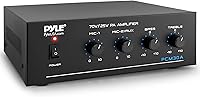
Everything is right there — power switch, input selector, level knobs, and LED indicator — all on the front face. For an install where a non-technical staff member needs to adjust the volume daily, the layout is practical and approachable.
The knobs are closely spaced given the unit's compact width, and some users with larger hands find them fiddly to adjust precisely. There is also no display or numerical reference, so recalling a specific level setting between sessions requires guesswork.
Compatibility
84%
The range of impedance outputs — from 4-ohm through 16-ohm and both 25V and 70V constant-voltage — covers the vast majority of speaker types a small install would encounter. Users rarely need additional matching hardware to get this small-venue amplifier working with existing speaker infrastructure.
There is no documentation included that clearly explains which output to use for which speaker type, which creates a compatibility barrier for less experienced buyers. A few users connected speakers to the wrong terminal and reported poor results before troubleshooting.
Reliability & Longevity
71%
29%
Many buyers report the unit running without issue for years in low-traffic permanent installs. The replaceable fuse is a thoughtful touch that extends the serviceable life of the amp without requiring professional repair for a common failure point.
Long-term reliability data is mixed for units used heavily in commercial settings. A subset of reviewers reported failure within the first year under continuous daily operation, suggesting the internal components are sized for moderate rather than heavy-duty duty cycles.
Paging & MOH Integration
81%
19%
The telephone/paging terminal and dedicated music-on-hold input work exactly as described for small office phone systems. Users who needed a simple way to route hold music through their phone system found this feature genuinely useful and easy to wire.
The paging terminal lacks priority override relative to MIC 2, which can create awkward level balancing in multi-source environments. Buyers expecting a more sophisticated paging matrix will find this implementation basic.
Size & Portability
77%
23%
The compact footprint makes it easy to tuck into tight install locations — behind a counter, on a utility shelf, or inside a shallow rack. For semi-portable use at recurring small events, the manageable weight makes transport straightforward.
At just over nine pounds, it is heavier than it looks for a unit sometimes marketed as portable. The lack of handles or a carrying solution means repeated transport is less convenient than the size alone would suggest.

Suitable for:

The Pyle PCM30A 60W Compact PA Amplifier is a practical fit for anyone who needs a straightforward, no-fuss audio hub for a small-to-medium space where both background music and voice announcements are part of daily life. Small restaurant and cafe owners will find it handles the typical music-plus-occasional-mic scenario without requiring a complicated setup or a dedicated AV technician. Houses of worship, community halls, and small event spaces benefit from the auto-talkover microphone function, which lets a speaker address a room without manually fading the music. Offices with waiting areas can put the on-hold music terminal and paging inputs to immediate practical use. AV integrators working on budget-conscious 70V distributed speaker installs will also appreciate having a capable amplifier at a price that keeps project costs manageable. For home hobbyists wiring a garage, workshop, or backyard speaker system, this compact PA amp offers more input flexibility than most consumer receivers at a comparable price.

Not suitable for:

The Pyle PCM30A 60W Compact PA Amplifier is not the right tool if sound quality is your primary concern. Audiophiles or home theater enthusiasts expecting warm, detailed stereo reproduction will be disappointed — this unit is engineered for intelligibility and coverage, not sonic refinement. If you are equipping a mid-to-large venue, a single 60W amp will fall short of filling the space with consistent volume, and you will need something with significantly more headroom. Buyers who plan to run the unit continuously in an enclosed rack cabinet should also think twice, as heat management becomes a real concern without adequate airflow. The build quality is honest about its price tier — the chassis and controls feel functional rather than durable, which may be a dealbreaker for installations where the hardware takes daily physical handling. If your use case demands professional-grade reliability over years of heavy commercial use, investing in a purpose-built commercial amplifier from a pro-audio brand is a smarter long-term decision.

Specifications

  • Power Output: The amplifier delivers 60W RMS, providing adequate headroom for small-to-medium distributed speaker installations.
  • Speaker Outputs: Output terminals cover COM, 4-ohm, 8-ohm, and 16-ohm impedances, plus 25V and 70V constant-voltage options for distributed audio systems.
  • Audio Inputs: Five input types are available: AUX RCA stereo, MIC 1, MIC 2, Monitor (600-ohm, 1V and 1W 8-ohm), and Telephone/Paging terminals.
  • Mic Talkover: MIC 1 includes an automatic talkover function that lowers background audio when the microphone detects an incoming voice signal.
  • Mute Terminal: A dedicated mute terminal allows external devices or switches to silence the amplifier output on command.
  • MOH Support: A music-on-hold terminal is included, enabling background audio to play through telephone paging systems during call holds.
  • Tone Controls: Independent rotary treble and bass controls allow basic tonal adjustment across the output signal.
  • Volume Controls: Each input channel features its own independent volume knob, so levels for music, microphone, and paging can be set separately.
  • Dimensions: The unit measures 10.7″ wide by 3.46″ tall by 8.86″ deep, making it suitable for shelf placement or shallow rack installations.
  • Weight: The amplifier weighs 9.15 pounds, which is moderate for its size and warrants secure placement in permanent installs.
  • Power Indicator: A front-panel LED indicator confirms at a glance that the unit is powered on and operating.
  • Fuse: The amplifier includes a user-replaceable fuse, simplifying basic protection maintenance without requiring a service technician.
  • Mounting Type: The unit is designed for freestanding use and does not include integrated rack ears, though its dimensions are rack-compatible with an optional kit.
  • Input Selector: A front-panel input selector switch allows the operator to choose the active source without navigating menus or software.
  • Model Number: The official model designation is PCM30A, manufactured by Sound Around under the Pyle brand.
  • Voltage Outputs: The 25V and 70V constant-voltage outputs conform to standard distributed audio wiring conventions used in commercial and institutional installations.
  • Mic Terminals: Both microphone inputs use rear-panel terminals and are compatible with standard dynamic microphones at typical PA impedance levels.
  • Power Supply: The unit operates on standard AC mains power and ships with a power cable included in the box.

Related Reviews
Pyle PT110
Pyle PT110
76%
91%
Ease of Setup
72%
Build Quality
74%
Audio Clarity
61%
Power Output & Headroom
83%
70V Line Performance
More
Pyle PMX3500PH
Pyle PMX3500PH
72%
83%
Value for Money
51%
Power Output Accuracy
88%
Input Versatility
67%
Bluetooth Performance
78%
Microphone Mixing & Echo
More
Pyle PMSA126BU Bluetooth PA Amplifier
72%
83%
Value for Money
91%
Input Versatility
78%
Bluetooth Performance
88%
Speaker Output Flexibility
61%
Build Quality
More
Pyle PCM20A.5 Compact Mini Home Power Amplifier
85%
86%
Sound Performance
91%
Portability
90%
Ease of Setup
83%
Build Quality
88%
Microphone Priority Feature
More
Pyle PDA22BT Compact Home Audio Amplifier with Bluetooth 5.0
84%
88%
Sound Quality
91%
Ease of Setup
90%
Bluetooth Connectivity
85%
Power Output
87%
Compact Design
More
Pyle PCM20A
Pyle PCM20A
74%
88%
Value for Money
91%
Ease of Setup
86%
Talkover / Mic Priority
61%
Bluetooth Reliability
58%
Build Quality
More
Pyle PLMRA400 4-Channel Marine Amplifier
75%
88%
Value for Money
86%
Ease of Installation
71%
Water Resistance
63%
Power Output
79%
Build Quality
More
Pyle PLMRMB2CW Marine Amplifier
86%
85%
Sound Quality
92%
Waterproof Durability
88%
Bluetooth Connectivity
80%
Power Output
87%
Installation Ease
More
Pyle PLMRA200 2-Channel Marine Amplifier
71%
83%
Value for Money
81%
Ease of Installation
57%
Power Output
63%
Build Quality
61%
Water Resistance
More
Pyle PVTA90 Bluetooth Tube Amplifier
85%
89%
Sound Quality
84%
Bluetooth Connectivity
87%
Ease of Setup
91%
Power & Performance
82%
Build Quality
More

FAQ

You can use standard 8-ohm speakers directly — just connect them to the 8-ohm output terminal. The 70V and 25V outputs are specifically for distributed audio systems where speakers have built-in line-matching transformers. If you are setting up a home or small venue system with conventional speakers, the standard impedance outputs work perfectly fine.

When someone speaks into MIC 1, the amplifier automatically reduces the volume of whatever background audio is playing so the voice comes through clearly. Once the mic goes quiet, the music returns to its previous level. It is genuinely hands-free and works well for announcements in cafes, offices, or houses of worship where you do not want to reach for a fader every time.

Not at all. Most buyers describe it as plug-and-play. You connect your speakers to the appropriate output terminal, plug in your audio source via RCA or mic cable, set your input levels, and you are running. The front panel keeps all the controls visible and accessible, so there is not much guesswork involved.

For a genuinely small space — think a single dining room, a boutique, or a waiting area — 60W is generally adequate, especially when running ceiling or wall speakers at background levels. If your space is large or you need high SPL, you may want to look at higher-powered options. This compact PA amp is sized for small-zone coverage, not filling a warehouse.

Yes, there are two dedicated mic inputs. MIC 1 has the auto-talkover function, while MIC 2 is a standard mic input with its own level control. Both can be active simultaneously, which is useful for panel discussions, two-presenter setups, or any situation where you need more than one live mic.

It does run warm, particularly during extended use. That is normal for Class AB amplifier designs, but placement matters. Leave open space above and around the unit — do not box it into a sealed cabinet or bury it under other equipment. Give it room to breathe and it handles continuous operation without issue.

Both are constant-voltage formats used in distributed speaker systems, where multiple speakers are wired in parallel on a single loop. In North America, 70V is the more common standard for commercial installs, while 25V is used in lower-power or older systems. Check what voltage your speakers or transformers are rated for and match accordingly. If you are in doubt, 70V is typically the safe default for modern commercial setups.

No, there is no Bluetooth on this unit. Audio sources connect via RCA AUX input or through the mic and paging terminals. If you want to stream audio wirelessly, you would need to pair it with a separate Bluetooth receiver connected to the RCA input.

The dimensions are compatible with standard rack enclosures, but the unit does not ship with integrated rack ears. You would need a universal rack-mount shelf or a third-party adapter kit to install it cleanly in a rack. Many installers simply place it on a shelf inside a rack cabinet without additional hardware.

It is honest about what it is — a functional, budget-tier amplifier. The chassis is metal but the controls feel more utilitarian than robust. For a low-traffic permanent install like an office or small chapel where nobody handles the unit regularly, it holds up well. For environments with heavy daily physical interaction or rough handling, you may want something built to a higher mechanical standard.

Where to Buy