Overview

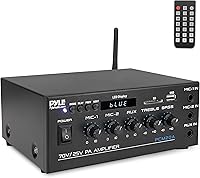
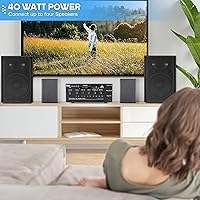
The Pyle PCM20A.5 Compact Power Amplifier is a 40W mini amp that punches above its weight class for anyone needing a no-fuss PA or distributed audio solution on a modest budget. It handles both casual home audio duties and light commercial installations — a flexibility you don't often find at this price point. The iron chassis keeps it solid enough to move around without worry, while the compact footprint means it tucks almost anywhere. Crucially, this unit supports 70V distributed audio, which is genuinely rare territory for a box this size. Just go in knowing it's a utility amplifier, not a high-fidelity audiophile piece — adjust your expectations accordingly.

Features & Benefits

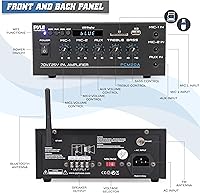
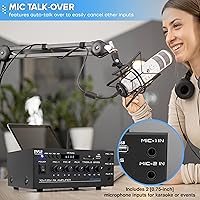
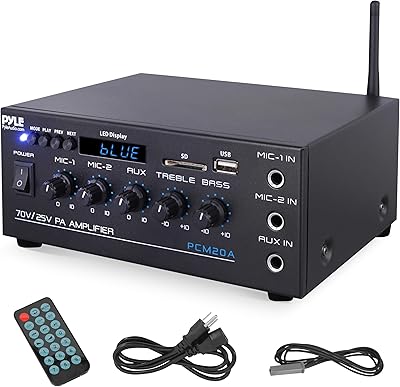
What makes this mini power amp genuinely useful day-to-day is how thoughtfully its inputs are laid out. You get one AUX jack and two microphone inputs, each with its own dedicated volume knob — so you're never fighting a shared control when balancing a mic against background music. The MIC 1 talkover priority is a practical touch: speak into that channel and the amp automatically pulls down the other audio, keeping announcements clear without manual intervention. Out back, COM, 8-ohm, 25V, and 70V speaker terminals cover a wide range of install types. Bass and treble controls give you at least basic tone shaping for speech or casual music playback.

Best For

This small PA amplifier is a natural fit for spaces where audio needs are real but modest — think a small church hall, a school classroom, or a neighborhood restaurant running background music through ceiling speakers. If you're running a 70V distributed system and don't want to spend significantly more on a commercial rack unit, the Pyle compact amp can handle the job with surprisingly little fuss. It also works well as a compact backup amp for mobile entertainers or event hosts who need simultaneous mic and music playback without hauling heavy gear around. Skip it for large venues or any setting demanding critical listening quality.

User Feedback

Buyers tend to appreciate how quickly this mini power amp gets up and running — most report a straightforward setup experience even without much technical background. The versatility of outputs draws consistent praise, particularly from users running 70V ceiling speaker lines in retail or church settings. That said, a fair number of reviewers flag noticeable hum or background noise at higher gain levels, which can be distracting in quieter environments. Some feel the 40W rating overstates real-world volume, especially on distributed lines where wattage spreads thin across multiple speakers. Build quality gets a mixed reaction — functional, but the materials feel closer to entry-level than the chassis spec might suggest. Solid value, with honest caveats attached.

Pros

  • Supports 70V, 25V, and 8-ohm speaker outputs, making it genuinely versatile for different install types.
  • MIC 1 talkover priority automatically ducks background audio during announcements without any manual adjustment.
  • Three independent inputs, each with its own volume knob, simplify live mixing without extra gear.
  • Compact dimensions make it easy to tuck into a cabinet, shelf, or portable carry bag.
  • Straightforward setup means most users are running audio within minutes of unboxing.
  • Replaceable fuse and detachable power cable make field servicing practical and affordable.
  • Basic bass and treble controls let you dial in a more comfortable sound for your space.
  • Strong value proposition for small venues that need distributed audio on a tight budget.
  • The iron chassis holds up better to everyday bumps and moves than a purely plastic shell would.

Cons

  • Background hum or noise at higher gain settings is a recurring complaint that can be hard to resolve.
  • Real-world output on a 70V distributed line feels underwhelming compared to the 40W headline figure.
  • High-frequency reproduction rolls off noticeably, limiting musical clarity on anything beyond basic background audio.
  • Build materials feel entry-level up close despite the iron chassis, with some plasticky panel components.
  • No balanced XLR inputs means integration with professional microphones or mixers requires adapters.
  • Frequency response ceiling of 15kHz misses the upper range that makes music sound open and detailed.
  • Limited EQ options — just bass and treble — leave little room to correct for poor room acoustics.
  • No rack-mount design makes permanent professional installation less clean than dedicated commercial units.

Ratings

The scores below reflect our AI-driven analysis of verified global buyer reviews for the Pyle PCM20A.5 Compact Power Amplifier, with spam, bot-generated, and incentivized submissions actively filtered out before scoring. Each category captures what real users consistently reported across a wide range of practical settings — from small church installs to restaurant background music systems. Both the standout strengths and the honest frustrations are weighted into every score you see here.

Value for Money
83%
For buyers setting up a basic PA or distributed speaker system on a limited budget, this mini power amp delivers a feature set — including 70V line support and dual mic inputs — that typically costs considerably more elsewhere. Reviewers running small venues or community spaces repeatedly cited it as the most affordable path to a functional distributed audio setup.
A handful of buyers felt the real-world performance didn't fully justify even the modest asking price once background noise and volume limitations surfaced. Those who expected commercial-grade output were left feeling the value proposition was weaker than the spec sheet implied.
Ease of Setup
88%
The front-panel layout is intuitive enough that most buyers had audio running within minutes without needing to consult a manual. Users with little technical background — including volunteers setting up church halls or small event spaces — consistently praised how quickly the unit became operational.
Users attempting to configure the 70V distributed output for the first time occasionally hit a learning curve around speaker tapping and wiring conventions. The included documentation, while functional, leaves some gaps for true beginners working with distributed audio systems.
Audio Quality
57%
43%
For voice reproduction and basic background music in a small room, the Pyle compact amp performs adequately — speech comes through clearly at moderate volumes, and most listeners in a casual setting won't notice obvious deficiencies during announcements or light playlist audio.
The 50Hz–15kHz frequency response ceiling becomes apparent whenever music quality matters, with the high end sounding rolled off and the low end lacking body. Buyers who tested it with anything beyond background audio — live music, podcasts with rich production — found the sonic character noticeably flat and uninspiring.
Output Power & Volume
61%
39%
In a direct 8-ohm single or dual speaker setup in a small room, the amp produces adequate volume for speech and ambient music without straining. Users in compact classrooms or small retail spaces generally found the output sufficient for their day-to-day needs.
The 40W rating generates frequent disappointment when distributed across a 70V speaker line — multiple ceiling speakers share that total wattage, leaving individual drivers noticeably underpowered. Several buyers described the maximum volume as lower than expected, particularly in rooms with any ambient noise competing for attention.
Build Quality
62%
38%
The iron chassis gives the unit a meaningful level of structural integrity that holds up reasonably well to being moved between locations and placed in various mounting positions. For a utility amp at this price tier, the overall assembly feels more purposeful than flimsy.
Once you look past the chassis, the panel components and knobs have a plasticky, entry-level feel that undercuts confidence in long-term durability. Several buyers noted that buttons and pots felt loose or imprecise, which matters in a live-use PA setting where reliable control response is expected.
Input Versatility
84%
Having two mic inputs and one AUX input — each independently controlled — covers the most common small-venue scenarios without requiring an external mixer. Users running background music while also needing a microphone for announcements found this setup genuinely practical and self-contained.
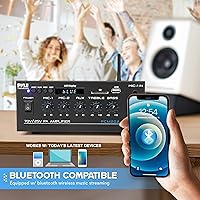
The absence of balanced XLR inputs limits compatibility with professional microphones and mixers without an adapter, which adds a small but real friction point for users stepping up from basic consumer gear. There is no Bluetooth or digital input, so wireless source connectivity requires a separate transmitter.
Speaker Output Flexibility
86%
The combination of 8-ohm, 25V, and 70V output terminals on a single compact unit is a genuine differentiator at this price point, giving buyers the freedom to work with different speaker types without purchasing a separate distribution amplifier. Church and restaurant installers in particular highlighted this as the primary reason they chose the unit.
Switching between output types requires careful attention to which terminal is in use, and the labeling on some units has been described as small and hard to read in dim installation environments. Using the wrong output with mismatched speakers can cause performance issues or damage, so the layout demands more care than it might suggest.
Noise & Interference
48%
52%
In well-isolated setups with quality shielded cables, some users managed to keep background noise at an acceptable level for speech-only PA applications where a low noise floor is less critical. Proper grounding and cable management made a meaningful difference for a portion of buyers.
Background hum is the most consistently reported complaint across user reviews, with multiple buyers noting it becomes prominent at higher gain settings and is difficult to eliminate entirely. For quiet environments — small meeting rooms, libraries, or any setting where silence between announcements matters — this issue is a genuine dealbreaker.
Microphone Performance
71%
29%
The MIC 1 talkover priority function works reliably in practice — background music drops when someone speaks, making announcements audible without manual intervention. Users running basic PA duties in retail stores or community halls appreciated not having to manually adjust levels during events.
Mic preamp quality is adequate for speech but uninspiring for anything that requires sensitivity or low noise, with some users noting added coloration on vocals. MIC 2 lacks the talkover function, which can cause confusion when users expect consistent behavior across both channels.
Portability
79%
21%
At just over five pounds and with a footprint small enough to slip into a carry bag, this small PA amplifier is genuinely easy to transport between venues. Event hosts and mobile entertainers valued being able to pack a full PA amp solution without dedicating significant bag space or weight to it.
The unit is freestanding only, with no rack-mount ears or integrated carry handle, which makes repeated transport slightly more awkward than a purpose-built portable unit. The detachable power cable is a practical touch, but the lack of a cable management solution means loose wires are a constant in portable use scenarios.
Tone Controls
66%
34%
Having both bass and treble adjustment on the front panel gives users a basic but functional way to compensate for room acoustics or source material characteristics. In practice, bumping the treble slightly improved speech clarity in rooms where the default response sounded dull.
Two-band tone control is a fairly blunt instrument — there is no mid-range adjustment, which is precisely the frequency range most relevant to voice intelligibility and musical presence. Users dealing with problematic room acoustics quickly found the controls insufficient to address specific resonance issues.
Durability Over Time
63%
37%
Users who have run this compact amp in fixed installations over several months generally report it continues to function without major failures, suggesting the core components hold up reasonably well under light-duty continuous use. The replaceable fuse is a practical design choice that extends the usable life of the unit.
Longer-term reviews flag concerns about the quality of potentiometers and selector switches, with some users reporting increased crackling or intermittent behavior after extended use. Units subjected to frequent transport or regular handling showed more wear on panel components than those used in static installations.
Serviceability
74%
26%
The user-replaceable fuse and detachable AC power cable are thoughtful details that allow common field repairs without specialized tools or sending the unit back for service. For a venue volunteer or small business owner, being able to swap a fuse on-site during an event is a meaningful practical advantage.
Beyond the fuse and power cable, internal serviceability is limited for the average user, and replacement parts are not widely available through standard retail channels. If a pot or input jack fails after the warranty period, repair options are narrow and may not be cost-effective relative to the unit's original price.

Suitable for:

The Pyle PCM20A.5 Compact Power Amplifier is a smart pick for anyone who needs a practical, no-frills audio solution in a small-to-medium space without committing to expensive commercial equipment. It fits naturally into settings like small churches, community meeting rooms, classrooms, or neighborhood restaurants — anywhere voice intelligibility and background music matter more than audiophile-grade sound. Home hobbyists running ceiling or wall speakers through a 70V distributed line will find this mini power amp surprisingly capable for the investment. Event hosts or part-time DJs who need a reliable backup amp that handles both a microphone and an AUX source simultaneously will also appreciate how little hassle is involved getting it up and running. If your goal is functional, dependable amplification for speech and casual music in a compact package, this small PA amplifier delivers real value.

Not suitable for:

The Pyle PCM20A.5 Compact Power Amplifier is not the right tool for anyone prioritizing audio fidelity or pushing sound through a large venue. Its 50Hz–15kHz frequency response leaves out meaningful low-end extension and high-frequency air, which matters the moment music quality becomes a real concern rather than an afterthought. The 40W power rating sounds reasonable on paper, but in a 70V distributed system spread across multiple speakers, real-world volume can feel modest — buyers expecting big, room-filling output from a single unit will likely come away disappointed. Those who are sensitive to background noise should also be cautious, as some users report a noticeable hum at higher gain settings that can be hard to eliminate. Professionals running permanent commercial installs or anyone who needs clean, studio-grade amplification should look further up the product ladder.

Specifications

  • Power Output: Delivers 40 watts of continuous power suitable for small PA and distributed audio applications.
  • Speaker Outputs: Provides four output terminals: COM, 8-ohm, 25V, and 70V, accommodating a wide range of speaker configurations.
  • Audio Inputs: Includes one 6.35mm AUX input and two 6.35mm microphone inputs, each with an independent volume control.
  • Talkover Function: MIC 1 features an automatic talkover priority that reduces background audio level when that microphone channel is active.
  • Frequency Response: Rated from 50Hz to 15kHz, covering the practical range needed for voice intelligibility and general background music.
  • Tone Controls: Front-panel bass and treble knobs allow basic tonal adjustment to suit the acoustic character of the room.
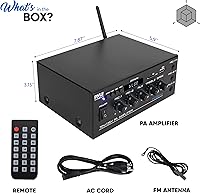
  • Dimensions: The unit measures 7.87″ x 3.15″ x 5.9″, making it compact enough to place on a shelf or inside a small equipment cabinet.
  • Weight: Weighs 5.21 pounds, light enough to carry between locations without needing dedicated transport equipment.
  • Chassis Material: Constructed with an iron chassis that provides structural rigidity and resistance to everyday handling wear.
  • Power Source: Operates on corded AC power via a detachable power cable, which simplifies replacement if the cable is damaged.
  • Fuse: Fitted with a user-replaceable fuse that protects the unit from power surges and simplifies field maintenance.
  • LED Indicator: An LED power indicator on the front panel confirms at a glance whether the unit is active or in standby.
  • Speaker Impedance: Supports connection of up to four speakers with a minimum impedance of 8 ohms on the direct speaker output.
  • Input Selector: A front-panel input selector switch allows the user to choose the active audio source without disconnecting cables.
  • Color: Available in black, consistent with standard rack and PA equipment aesthetics for easy integration into most setups.
  • Model Number: Manufactured under model designation PCM20A.5 by Pyle, a brand focused on accessible consumer and light commercial audio gear.
  • Package Dimensions: Ships in packaging measuring 9.57″ x 8.23″ x 5.28″, with a packaged weight of approximately 5.22 pounds.

Related Reviews
Pyle PCM20A
Pyle PCM20A
74%
88%
Value for Money
91%
Ease of Setup
86%
Talkover / Mic Priority
61%
Bluetooth Reliability
58%
Build Quality
More
Pyle PCM30A 60W Compact PA Amplifier
76%
88%
Ease of Setup
83%
Microphone Performance
74%
Output Power & Coverage
86%
Input Versatility
61%
Build Quality
More
Pyle PDA8BUWM.5 Wireless Stereo Receiver Amplifier
66%
81%
Value for Money
88%
Ease of Setup
58%
Sound Quality
47%
Power Output
43%
Build Quality
More
Pyle PDA22BT Compact Home Audio Amplifier with Bluetooth 5.0
84%
88%
Sound Quality
91%
Ease of Setup
90%
Bluetooth Connectivity
85%
Power Output
87%
Compact Design
More
Pyle PT588AB 5.1 Channel Home Theater Receiver
70%
74%
Value for Money
52%
Build Quality
61%
Audio Performance
83%
Karaoke Functionality
78%
HDMI Connectivity
More
Pyle PTAU23 Stereo Amplifier
74%
83%
Value for Money
89%
Input Versatility
91%
Ease of Setup
61%
Audio Quality
74%
Microphone Performance
More
Pyle PT506BT Professional Powered Amplifier
85%
86%
Sound Quality
72%
Bluetooth Connectivity
92%
Build Quality
88%
Portability
91%
Ease of Use
More
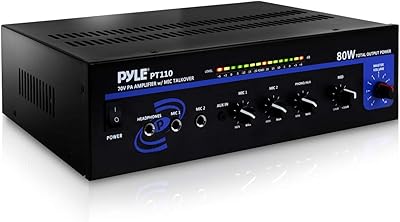
Pyle PT110
Pyle PT110
76%
91%
Ease of Setup
72%
Build Quality
74%
Audio Clarity
61%
Power Output & Headroom
83%
70V Line Performance
More
Pyle PT12050CH 12-Channel Rack Amplifier
71%
83%
Value for Money
79%
Channel Flexibility
72%
Bluetooth Performance
81%
Mic Talk-Over Function
57%
Build Quality
More
Outlaw Audio Model 5000x
84%
93%
Audio Clarity & Noise Floor
91%
Power Delivery & Dynamics
89%
Build Quality & chassis
88%
Channel Isolation & Crosstalk
87%
Speaker Protection & Safety
More

FAQ

Yes, and this is genuinely one of the stronger use cases for this mini power amp. The 70V output terminal lets you wire multiple ceiling speakers in a distributed line without needing a separate transformer unit. Just make sure your speakers are rated for 70V operation and that the total wattage draw across all of them stays within the amp's 40W output.

You can connect two microphones simultaneously using the two 6.35mm mic input jacks. Each has its own volume knob, so you can balance them independently. Keep in mind that MIC 1 has the talkover priority function, which automatically lowers background audio when that channel picks up a signal — useful for announcements but worth knowing before you assign mics to each input.

That is worth thinking about carefully. In a direct 8-ohm setup driving one or two speakers, 40W feels about right for a small room. On a 70V distributed line with several speakers sharing that total wattage, each individual speaker receives considerably less power, so overall volume will be noticeably more modest. Plan your speaker layout accordingly and don't expect concert-level output.

It works well as a standalone unit for straightforward setups. You get two mic inputs and one AUX input, each with independent volume control and basic bass and treble adjustment on the front panel. For simple speech-and-music applications — like a classroom or small meeting room — you likely won't need an external mixer at all.

Some users do report a background hum, particularly at higher gain settings. This is not uncommon in amplifiers at this price tier and can sometimes be reduced by checking your cable shielding, keeping mic and speaker cables separated, and ensuring a solid ground connection. If your environment requires very low noise floors — like a recording space or a quiet meeting room — it is worth being aware of this before buying.

Not directly via Bluetooth, since this unit has no wireless connectivity. However, you can connect a smartphone, tablet, or laptop through the AUX input using a 3.5mm to 6.35mm adapter cable, which is a straightforward workaround for playing audio from a mobile device.

It depends on which output you use. The 8-ohm terminal supports standard passive speakers with at least 8 ohms impedance, and you can connect up to four of them. The 25V and 70V terminals are designed for distributed audio speakers with matching transformer taps — the kind typically used in commercial ceiling speaker installations. Make sure your speaker type matches the output you plan to use.

No, the Pyle compact amp is not designed for standard rack mounting. It is a freestanding tabletop unit, which works well for casual installs and portable setups but is less suited to permanent professional rack enclosures. If rack mounting is a requirement for your install, you would need a different unit or a shelf adapter.

Most buyers find it quite approachable. The front panel controls are clearly labeled, and the input and output terminals are straightforward to identify. Connecting a single speaker and an audio source typically takes just a few minutes. Setting up a 70V distributed speaker line is slightly more involved but still manageable with basic audio knowledge and the included documentation.

Yes, the fuse is user-replaceable, which is a practical feature that saves you from having to send the unit in for service. Check your local electronics or hardware store for the correct fuse rating before replacing it, and always unplug the unit from AC power before attempting any fuse swap.