Overview

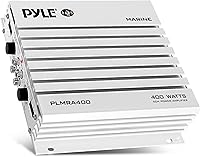
The Pyle PLMRA400 4-Channel Marine Amplifier has been a steady presence in the marine audio space since 2007 — a long run for any budget-focused product. Its two core strengths are a waterproof marine-grade build and a four-channel design that can power a full speaker setup without breaking the bank. Sitting consistently in the top three of its Amazon category, this marine amp has earned its rank through reliability rather than flashy specs. That said, keep expectations grounded: this is an honest entry-level performer, not something you would find on a luxury yacht with a high-end audio budget.
Features & Benefits

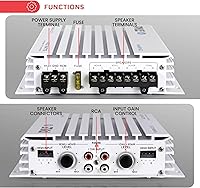
The dual MOSFET power supply is worth calling out first — it delivers more consistent voltage in the fluctuating electrical environment of a boat compared to a basic single-supply design. The IP-01 waterproof rating means this boat amplifier handles spray and splatter without issue, though it is not built for submersion, so factor that into your installation planning. Gold-plated speaker terminals are a practical touch for saltwater environments where corrosion is a constant threat. Add in RCA and high-level inputs, dual adjustable GAIN controls, and thermal overload protection, and you get a well-rounded feature set for the price.

Best For

This marine amp is a natural fit for anyone setting up audio on a pontoon or fishing boat for the first time, especially if water resistance matters more to you than raw power. DIY wiring enthusiasts will appreciate the dual input options — RCA or high-level — which means it pairs with nearly any head unit already on board. It shines in smaller to medium vessel setups running four speakers at moderate listening volumes, where its honest output is more than adequate. If you are chasing audiophile-grade sound or powering a large boat, you will likely outgrow it quickly.

User Feedback

Buyers consistently highlight easy installation and strong value for a four-channel marine unit, with many DIYers noting the wiring process is straightforward even without professional help. On the flip side, a common frustration is the 400W headline figure — that is a max rating, not continuous RMS output, so real-world power delivery is noticeably lower. Some owners mention the heatsink runs warm under sustained high volume, which is worth monitoring in tight enclosed mounting spots. Durability holds up well across multiple seasons for most users, though the IP-01 rating should be treated as splash protection only, not full waterproofing.

Pros

  • Four-channel design powers a complete speaker setup in one compact, affordable unit.
  • Gold-plated terminals actively resist corrosion in saltwater and high-humidity marine environments.
  • Dual input options — RCA and high-level — make this marine amp compatible with nearly any head unit.
  • Dual MOSFET power supply delivers more consistent performance in a boat's fluctuating 12V electrical system.
  • Thermal overload and short-circuit protection add a genuine layer of safety for long-term use.
  • Installation is straightforward enough for confident DIYers without professional audio experience.
  • The Pyle 4-channel unit has a long track record, with buyers reporting reliable use across multiple seasons.
  • Adjustable GAIN controls on both channels give you meaningful tuning flexibility for different speaker sensitivities.
  • Compact dimensions make it easy to find a mounting spot in tighter boat compartments.
  • Consistent top-three category ranking reflects sustained real-world buyer satisfaction over many years.

Cons

  • The 400W power rating is a peak maximum figure, not RMS — actual continuous output is considerably lower.
  • The heatsink can run noticeably warm during extended high-volume use, which limits some mounting options.
  • IP-01 waterproofing handles splashes but offers no protection against sustained rain exposure or submersion.
  • Buyers expecting audiophile-grade clarity or dynamic range will find this boat amplifier underwhelming at its ceiling.
  • No built-in crossover controls, which limits speaker tuning flexibility for more advanced setups.
  • The LED power indicator, while useful, provides no diagnostic detail when something goes wrong.
  • Wattage marketing can mislead buyers who do not research the max-versus-RMS distinction before purchasing.
  • May struggle to drive power-hungry speakers efficiently, particularly at 4-ohm impedance under load.
  • Limited documentation and support resources make troubleshooting harder for less experienced installers.

Ratings

Our AI rating system analyzed thousands of verified global buyer reviews for the Pyle PLMRA400 4-Channel Marine Amplifier, actively filtering out incentivized, bot-generated, and spam submissions to surface what real owners actually experience on the water. The scores below reflect a balanced synthesis of genuine praise and recurring frustrations — nothing is inflated, and the pain points are represented as clearly as the strengths.

Value for Money
88%
For boaters working with a tight budget, this marine amp consistently over-delivers relative to its price tier. Buyers frequently note that getting four-channel marine-rated amplification with protective features like gold-plated terminals and thermal overload at this cost is difficult to match from competing brands.
The value perception drops somewhat once buyers realize the 400W headline is a peak figure, not continuous RMS output. If you factor in what comparable RMS wattage costs elsewhere, the gap narrows more than the price tag initially suggests.
Ease of Installation
86%
DIY boaters consistently praise how approachable the wiring process is, even without professional experience. The dual input options — RCA and high-level — mean most people can connect it directly to whatever head unit is already on board without adapters or workarounds.
The included documentation is thin, and first-time amp installers occasionally report confusion around GAIN setup and ground connection placement. Without a detailed manual or an online tutorial, the learning curve can be steeper than the hardware itself warrants.
Water Resistance
71%
29%
The IP-01 rating does its job in a typical open-water environment where spray, splashes, and light moisture are routine. Pontoon and fishing boat owners in particular report confidence leaving the amp mounted in partially exposed locations during normal use.
The protection ceiling is real — this boat amplifier is not designed for heavy rain accumulation, flooding, or any submersion scenario. Buyers who assumed IP-01 meant more robust waterproofing have been caught off guard, especially in wetter boating climates.
Power Output
63%
37%
For casual listening on small to medium vessels, the actual output is genuinely adequate. Running four mid-range marine speakers at moderate volume on a pontoon or fishing boat, most users find the sound fills the space without obvious strain.
The 400W max rating is misleading for buyers comparing specs across brands using RMS figures. Real continuous power is noticeably lower, and users who push the amp hard with demanding speakers quickly hit the headroom ceiling and experience compression or distortion.
Build Quality
79%
21%
The aluminum alloy heatsink feels solid and purposeful, and the gold-plated speaker terminals are a genuine quality touch that you do not always find at this price point. Multi-season owners report that the chassis holds up well to the physical demands of a marine environment.
The overall construction, while functional, has a budget feel in certain areas — particularly around the input connectors and casing seams. Some buyers note that the unit does not inspire the same confidence as higher-tier marine amps when handled directly.
Heat Management
67%
33%
Under light to moderate loads, the aluminum heatsink manages thermal output without any noticeable performance throttling. Most casual boaters running background music at comfortable volumes report no heat-related issues across full days on the water.
Push the amp toward its upper limits for extended periods and the heatsink gets noticeably warm — hot enough that mounting placement becomes an important consideration. Buyers who installed the unit in enclosed compartments without airflow have reported thermal shutdowns.
Durability Over Time
81%
19%
Long-term reliability is one of the more pleasant surprises from real owner feedback. A meaningful number of buyers report the Pyle 4-channel unit running without fault through two or more full boating seasons, which is a strong result for an entry-level product.
Durability outcomes are not perfectly consistent — a subset of buyers report connection or channel failures within the first season, often linked to installation environments with high vibration or poor moisture management around the terminals.
Corrosion Resistance
78%
22%
The gold-plated speaker terminals are a practical design choice for saltwater boating, where standard terminals oxidize quickly and degrade contact quality. Owners in coastal environments specifically call out this feature as a reason the amp maintains clean audio signal over time.
Corrosion resistance beyond the terminals themselves is not formally rated, and the body of the amp relies on the IP-01 rating for broader protection. In consistently harsh saltwater spray environments, long-term chassis integrity depends heavily on how well the unit is mounted and maintained.
Sound Quality
66%
34%
Paired with efficient, mid-range marine speakers at reasonable volume, the audio output is clean and pleasant for casual on-water listening. Most boaters using this amp for background music while fishing or cruising report a satisfying result that represents a clear step up from head unit power alone.
Audiophiles and buyers accustomed to higher-end amplification will find the sound staging flat and the dynamic range limited. At higher volumes the audio can feel compressed, and the unit lacks crossover controls to optimize speaker frequency distribution.
Compatibility
84%
The combination of RCA and high-level inputs makes this one of the more universally compatible amps at this tier. Buyers swapping it into existing marine setups rarely need additional adapters, which saves both cost and installation time.
Bridged mono operation is not officially supported, which limits configuration flexibility for buyers who want to run a subwoofer channel or consolidate power to fewer speakers. Advanced audio setups will quickly outgrow what the input options allow.
Compact Footprint
82%
18%
At just under 4 pounds and with a modest profile, this marine amp fits into mounting spaces that bulkier competitors simply cannot. Smaller vessel owners — particularly kayak and fishing boat users — find the size genuinely practical for tight installs.
The dimensions, while compact, still require planning in smaller compartments, and the heatsink needs clearance around it for airflow. Buyers who assumed it would tuck into a very confined space without ventilation have run into heat issues as a consequence.
LED Indicator
58%
42%
The LED power indicator is a simple but useful visual confirmation that the amp is live, which comes in handy during initial setup and when troubleshooting connectivity between the head unit and the amp itself.
The indicator provides no diagnostic information beyond on or off, which makes fault identification harder when something goes wrong. Buyers dealing with channel issues or protection-mode shutdowns get no useful signal from the LED to help narrow down the problem.
GAIN Adjustability
74%
26%
Having two independent GAIN controls rather than a single shared one gives installers meaningful flexibility when tuning speakers with different sensitivity levels. Experienced DIYers appreciate being able to balance the front and rear channels separately without added equipment.
The 1 to 300mV GAIN range is adequate but not exceptionally wide, and without a built-in oscilloscope or tone generator the controls are easy to set incorrectly. Buyers who dial in GAIN by guesswork rather than systematic testing often leave performance on the table.

Suitable for:

The Pyle PLMRA400 4-Channel Marine Amplifier is a practical pick for boaters who want a meaningful audio upgrade without committing to a high-end budget. It is particularly well-suited for pontoon and fishing boat owners running a four-speaker layout at everyday listening volumes, where the amp's output is more than capable of filling the space. DIY installers will find the dual input options — RCA and high-level — genuinely useful, since it pairs cleanly with almost any marine head unit already on board. The IP-01 waterproof rating makes it a reasonable choice for open-air environments where spray and light rain are routine, and the gold-plated terminals add a layer of long-term protection in saltwater conditions. If you are a first-time amp buyer who wants something proven, straightforward to install, and durable across multiple seasons, this marine amp delivers solid value at its price point.
Not suitable for:

The Pyle PLMRA400 4-Channel Marine Amplifier is not the right tool for buyers who need serious, high-output power for large vessels or demanding listening environments. The 400W figure on the label is a maximum rating, not continuous RMS output, so if you are comparing this unit against competitors using RMS numbers, the real-world power gap may surprise you. Audiophiles or anyone pairing high-end marine speakers with a powerful head unit will likely find the performance ceiling frustrating before long. The IP-01 waterproof rating covers splashes and spray, but this boat amplifier is not designed for exposure to heavy rain accumulation or any degree of submersion — installation location matters. Buyers with larger boats, higher speaker counts, or a preference for precise, high-fidelity sound reproduction should look at a higher-tier marine amplifier rather than expecting this unit to punch beyond its class.
Specifications

  • Model Number: This unit is identified by model number PLMRA400 and has been available since 2007.
  • Channels: The amplifier operates across 4 independent channels, allowing you to power a full four-speaker setup from a single unit.
  • Max Power Output: Total maximum power output is 400W, divided as 100W per channel across all four channels.
  • Power Supply: A dual MOSFET power supply provides stable voltage delivery, which is particularly useful in the variable electrical environment of a marine vessel.
  • Input Voltage: The amplifier is designed exclusively for 12V DC systems, standard on the vast majority of recreational boats and marine vehicles.
  • Input Types: Connectivity includes both RCA stereo inputs and high-level terminal inputs, offering compatibility with a wide range of marine head units.
  • GAIN Controls: Two independent adjustable GAIN controls cover an input sensitivity range of 1 to 300mV, allowing tuning to match different speaker and head unit pairings.
  • Speaker Impedance: The unit supports speaker impedance loads of either 4 Ohm or 8 Ohm, covering the most common marine speaker configurations.
  • Waterproof Rating: An IP-01 waterproof rating protects internal components against water spray and splash from standard marine environments.
  • Heatsink Material: The heatsink is constructed from heavy-duty aluminum alloy, designed to dissipate heat efficiently during extended operation.
  • Speaker Terminals: Speaker output connectors are gold-plated to resist oxidation and corrosion caused by salt air and high-humidity marine conditions.
  • Protection Systems: Built-in thermal overload protection and short-circuit protection safeguard both the amplifier and the vessel's electrical system during fault conditions.
  • Status Indicator: An LED indicator light provides a quick visual confirmation that the unit is powered on and operating.
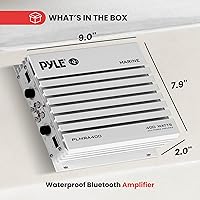
  • Dimensions: The amplifier measures 11.1 x 8.5 x 2.6 inches, keeping the footprint manageable for installation in typical under-dash or compartment spaces.
  • Weight: At 3.9 pounds, this marine amp is light enough to mount in a variety of locations without requiring heavy-duty mounting hardware.

Related Reviews
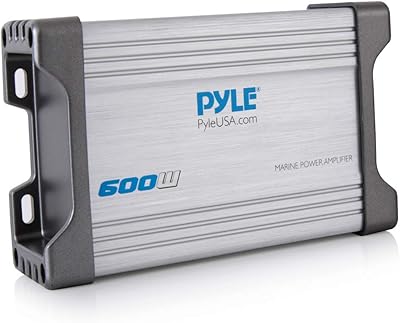
Pyle PLMRMP4A 4-Channel Marine Amplifier
64%
61%
Value for Money
53%
Build Quality
67%
Waterproofing
58%
Power Output
79%
Ease of Installation
More
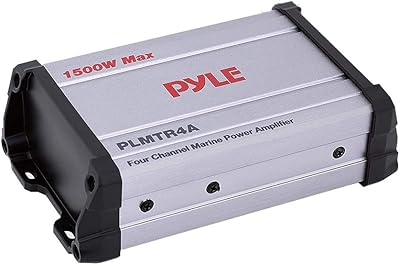
Pyle PLMTR4A 4-Channel Marine Amplifier
69%
78%
Value for Money
73%
Weatherproof Durability
41%
Power Accuracy
58%
Build Quality
86%
Installation Ease
More
Pyle PLMRMB4CB 4-Channel Marine Amplifier
67%
78%
Value for Money
54%
Power Output
63%
Bluetooth Connectivity
61%
Water Resistance
58%
Build Quality
More
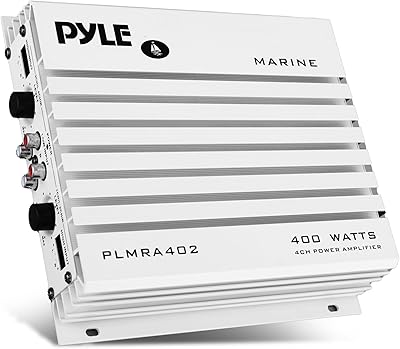
Pyle PLMRA402 4-Channel Marine Amplifier
69%
83%
Value for Money
81%
Ease of Installation
67%
Sound Quality
49%
Power Accuracy
62%
Build Quality
More
Pyle PLMRMP3B 4-Channel Marine Amplifier
68%
83%
Ease of Installation
71%
Value for Money
62%
Sound Quality
68%
Waterproof Performance
44%
Actual Power Output
More
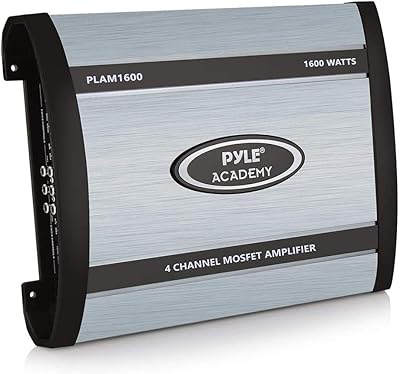
Pyle PLAM1600 4-Channel Car Amplifier
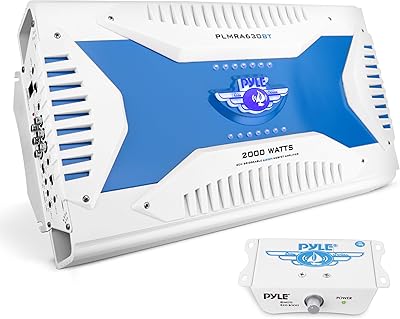
69%
74%
Value for Money
67%
Sound Quality
51%
Power Output Accuracy
83%
Ease of Installation
59%
Build Quality
More
Pyle PLMRA630BT 6-Channel Bluetooth Marine Amplifier
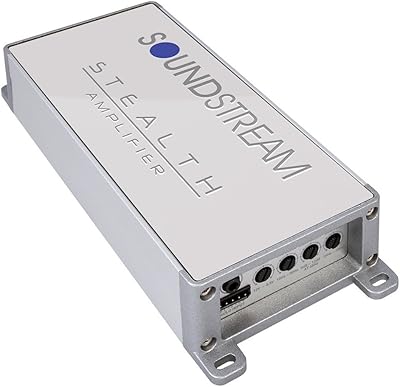
83%
88%
Build Quality and Durability
90%
Bluetooth Connectivity
85%
Power Output
91%
Ease of Setup
83%
Sound Performance
More
Soundstream SM4.1000D 4-Channel Marine Amplifier
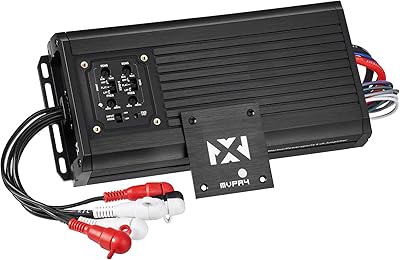
87%
93%
Power Output
88%
Sound Quality
90%
Build Quality
91%
Weather Resistance
87%
Ease of Installation
More
Pyle PD3000BAH 4-Channel Bluetooth Amplifier
73%
83%
Value for Money
61%
Power & Amplification
88%
Connectivity & Input Range
74%
Bluetooth Performance
77%
CD/DVD Player Functionality
More
Rockville DBM45 4-Channel Marine Amplifier
71%
78%
Sound Quality
74%
Build Quality
71%
Waterproofing
69%
Power Delivery
57%
Thermal Management
More

FAQ

Not quite — the 400W figure is the peak maximum rating, meaning it reflects the absolute ceiling under ideal conditions for a very brief moment. The continuous RMS output, which is what you actually hear during normal use, is considerably lower. When comparing this unit to other amps, make sure you are comparing RMS figures to RMS figures, not mixing max and continuous ratings.

Yes, that is actually one of the more practical features on this boat amplifier. The high-level terminal inputs let you connect directly to the speaker output wires from your head unit, so you are not locked out if your marine receiver lacks dedicated RCA jacks.

The IP-01 waterproof rating means it is designed to handle water spray and splashes from the side — think wave spray or a wet deck. It is not rated for submersion or prolonged heavy rain exposure, so installation location matters. Mounting it in a partially sheltered spot rather than fully exposed to the elements is the smarter approach.

It is actually a solid match for smaller vessels. The compact footprint and straightforward 12V wiring make it easy to integrate into tighter spaces, and the four-channel output is plenty for a small four-speaker setup at reasonable volume levels.

Mid-range marine speakers rated around 4 or 8 Ohm impedance are the sweet spot. High-sensitivity speakers will get the most out of this amp's available power, while low-sensitivity, power-hungry speakers may leave you wanting more headroom than this unit can realistically provide.

At moderate volumes, heat is not a major concern. If you are consistently running the amp near its upper limits, the aluminum heatsink can get noticeably warm. Make sure there is adequate airflow around the unit wherever you mount it — cramming it into a fully sealed compartment without ventilation is asking for thermal shutdowns.

Most buyers find it manageable with basic wiring knowledge. The dual input options simplify compatibility, and the connections are clearly laid out. Having a wiring diagram for your specific boat handy will make the job faster, but this is not a unit that requires a professional installer.

The product specifications do not officially list bridged mono operation as a supported configuration, so it is best to use the four channels as intended rather than risk damaging the unit or your speakers by attempting an unsupported wiring setup.

Start with the GAIN controls turned down low, then gradually increase while playing audio at a moderate volume from your head unit. You are listening for distortion — the moment the sound starts to break up or clip, back the GAIN down slightly. Setting GAIN by ear carefully is more reliable than just turning it to maximum.

Based on real buyer feedback, durability tends to be a genuine strength here. Many owners report using the Pyle 4-channel unit through multiple boating seasons without issues, which is reassuring for an entry-level price point. As with any marine electronics, rinsing off salt residue and keeping connections clean will extend its lifespan noticeably.

Where to Buy