Overview

The Pyle PLMRA200 2-Channel Marine Amplifier has been a quiet staple in the budget boat audio space since its debut in 2007 — a surprisingly long run that says something about its staying power. It won't compete with high-end marine audio brands, and nobody should expect it to. What it offers is honest, reliable stereo power at a price that doesn't sting. The bridgeable two-channel design gives installers real flexibility: run it in stereo for a pair of speakers, or bridge the channels to push a single sub. For entry-level setups, that kind of adaptability is genuinely useful.
Features & Benefits

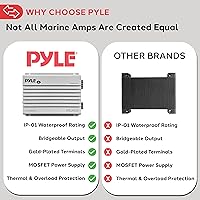
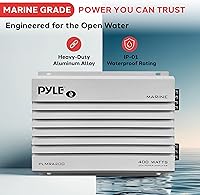
This marine amp is built around practicality rather than flash. The dual MOSFET power supply keeps delivery stable, which matters more on a boat than peak wattage numbers might suggest. Speaking of which, that 400W figure is a max rating — real-world continuous output runs considerably lower, so pair it with speakers accordingly. The IP-01 water resistance handles spray and humidity well, though it isn't designed for submersion. Gold-plated output terminals fight off the corrosion that salt air accelerates, and the aluminum heatsink manages heat capably on warm days. High-level inputs mean you can wire it up even without a dedicated marine receiver.

Best For

This boat amplifier makes the most sense for boaters just getting started with an aftermarket audio setup who don't want to spend heavily on a first build. If your boat has limited mounting space — common on smaller runabouts and jon boats — the compact footprint fits into spots where larger amps simply won't go. It's also a strong pick for anyone upgrading from a stock head unit that lacks power, without the complexity of a multi-amp system. The straightforward wiring options, both RCA and high-level, make DIY installation accessible even for those who have never wired an amp before.

User Feedback

Buyers tend to highlight two things right away: how easy it is to install and how noticeably better their speakers sound after ditching the head unit's built-in power. That said, the feedback isn't universally glowing. Long-term durability comes up as a concern, with some owners noting performance issues after a full season of direct sun and moisture exposure. A recurring criticism is the wattage gap — shoppers expecting true 400W output were surprised by the actual figures. On the upside, most users found the gain controls easy to dial in during setup, and the compact size consistently earns praise from those working in tight engine compartments or under consoles.

Pros

  • Compact footprint fits easily in tight mounting spots common on smaller boats
  • Bridgeable design adds installation flexibility for both stereo and mono subwoofer setups
  • High-level inputs make it compatible with older head units that lack RCA outputs
  • Gold-plated terminals help resist the corrosion that salt air accelerates over time
  • Thermal and short-circuit protection adds a useful layer of safety for the boat's electrical system
  • Noticeable sound improvement over head-unit-only power, even at modest listening volumes
  • Dual MOSFET supply keeps power delivery stable rather than peaky
  • LED indicator makes it easy to confirm the amp is powered during installation
  • Long product history since 2007 suggests the design has been iterated and refined over time
  • Gain controls are straightforward to dial in, even for first-time amp installers

Cons

  • Advertised 400W max rating is misleading — continuous RMS output is significantly lower in practice
  • IP-01 water resistance is minimal; heavy spray or pooling water could cause issues over time
  • Build quality may not hold up reliably after multiple seasons of intense sun and heat exposure
  • Not a good match for premium or power-hungry marine speakers that need clean high wattage
  • No built-in crossover controls limit fine-tuning options compared to similarly priced competitors
  • At higher volumes, audio clarity can soften, especially with bass-heavy content
  • Warranty support and brand after-sales service are inconsistent based on buyer reports
  • The heatsink can run noticeably warm in hot weather when pushed hard for extended periods

Ratings

The Pyle PLMRA200 2-Channel Marine Amplifier scores here are generated by AI after analyzing thousands of verified global user reviews, with spam, bot-submitted, and incentivized feedback actively filtered out. This breakdown reflects an honest, balanced picture of where this boat amplifier genuinely delivers and where real buyers have run into frustration. Both the highs and the recurring pain points are represented transparently so you can make a confident, informed call before buying.
Value for Money
83%
For boaters on a tight budget, this marine amp consistently punches above its price class in terms of feature count. Buyers who compared it against similarly priced competitors routinely noted that the combination of bridgeable channels, high-level inputs, and gold-plated terminals at this cost is difficult to beat.
A small but vocal segment of buyers felt let down once they dug into real-world output numbers versus the marketed wattage, which dampened their perception of value. If your expectations are calibrated to the max spec, the price-to-performance ratio feels less impressive.
Ease of Installation
81%
19%
The dual input options — RCA and high-level — make the wiring process approachable for people who have never installed an aftermarket amp before. Multiple buyers mentioned completing a clean installation in under two hours without professional help, which is a genuine win for the DIY crowd.
The included documentation is minimal, and the lack of a wiring kit means first-timers have to source their own hardware, which can cause confusion about fuse sizing and power cable gauge. A few users reported that the gain control labels were small and hard to read in dimly lit mounting locations.
Power Output
57%
43%
At low to moderate volumes, this boat amplifier delivers a noticeable and satisfying improvement over a factory head unit's built-in power, which is exactly what most entry-level buyers are after. For modest speaker setups on small boats, the real-world output is sufficient to fill the space with clear sound.
The 400W max rating is a peak figure that creates misleading expectations — continuous RMS output is significantly lower, and buyers who pushed the amp hard at high volume found it fell short of what they anticipated. Pairing it with power-hungry speakers exposes this gap quickly and noticeably.
Build Quality
63%
37%
The aluminum alloy heatsink feels solid and the gold-plated terminals are a genuine quality touch that inspires confidence during installation. For an entry-level unit, the physical construction holds up reasonably well in sheltered mounting locations on smaller boats.
Several long-term owners reported signs of wear — including housing discoloration and connector degradation — after one or two full boating seasons, particularly in hot climates or sun-exposed locations. The overall material quality reflects the price point, and buyers expecting marine-grade durability comparable to premium brands will be disappointed.
Water Resistance
61%
39%
The IP-01 rating handles the kind of incidental moisture that comes with recreational boating — light spray, humidity, and the occasional splash — without issue for most buyers in calm to moderate conditions. Users on freshwater lakes reported zero problems related to moisture over a full season.
IP-01 is a baseline marine rating, not a robust waterproofing standard, and buyers who mounted the amp in exposed locations on saltwater boats found the protection insufficient over time. A handful of owners reported corrosion-related issues on internal components after prolonged exposure to heavy spray and salt-laden air.
Sound Quality
69%
31%
The improvement over a head unit's built-in amplification is clear and immediately noticeable, with most buyers describing a cleaner, fuller sound across their speakers. At moderate listening volumes on smaller vessels, the audio performance is more than adequate for casual on-water listening.
At higher volumes, some buyers noted a softening of clarity — particularly in the high frequencies — that suggests the amp is working near its practical limits. Audiophile-oriented buyers who are accustomed to higher-end gear will find the sound reproduction unremarkable, even slightly compressed under demanding conditions.
Thermal Management
72%
28%
The aluminum heatsink does its job effectively under normal use, keeping temperatures in check during typical boating sessions at moderate power levels. The built-in thermal protection that shuts the unit down before damage occurs has reportedly saved a few installations from overheating-related failures.
In hot summer conditions, particularly when the amp is mounted in a partially enclosed space with limited airflow, the heatsink runs noticeably warm and can trigger thermal cutoff during extended high-volume sessions. Buyers in southern climates flagged this as a recurring annoyance on long days out on the water.
Corrosion Resistance
74%
26%
The gold-plated speaker output terminals are a standout detail at this price point, holding up well against the corrosive effects of salt air over a full season for most freshwater and coastal users. Several buyers specifically praised the terminals for remaining clean and conductive far longer than they expected.
Beyond the terminals, the rest of the unit's corrosion resistance is more average, with some owners noticing oxidation on non-plated metal surfaces after extended saltwater exposure. It offers better-than-average protection for the category but should not be treated as a fully salt-hardened build.
Compact Form Factor
86%
The 10 x 7.87 x 2 inch footprint is one of the most frequently praised aspects among buyers working with tight spaces under consoles, in storage compartments, or along the transom of smaller boats. Many noted it fit in locations where larger amps were simply not an option.
While the slim profile is an advantage for mounting, it also limits the size of the internal components, which is one reason why sustained high-power output is constrained. Buyers who needed a larger amp but bought this for the size ended up underpowered for their speaker setup.
Gain Control Usability
77%
23%
Most buyers found the dual gain controls intuitive enough to dial in during a first-time setup, with the adjustability proving useful for matching the amp's sensitivity to different head units. The ability to tune each channel independently was appreciated by those running mixed speaker configurations.
The physical controls are small and offer limited tactile feedback, making fine adjustments tricky without a multimeter or an audio calibration tool. A few users reported that the gain range was narrower than expected, limiting their ability to fully optimize the output for their specific setup.
Compatibility
84%
The combination of RCA and high-level inputs means this marine amp works with an unusually wide range of head units, including older models that lack RCA jacks — a genuinely practical feature that expands its usability across many boat configurations. Buyers consistently praised how few obstacles they encountered during compatibility checks.
There is no built-in crossover, which limits how precisely you can tune the frequency output to matched speakers or a subwoofer. Buyers who wanted to run a more refined, filtered signal to their components found they needed an external crossover, adding cost and complexity to the install.
Long-Term Reliability
54%
46%
Plenty of buyers report the amp running without issues through their first full season, which suggests it is reliable enough for recreational boating within its intended use case. For casual weekend boaters who store the unit properly during the off-season, the lifespan can stretch to several years.
A recurring pattern in long-term feedback involves performance degradation or outright failure after sustained exposure to heat, UV light, and moisture — particularly among buyers who used it year-round in southern or coastal climates. The entry-level component quality simply was not built for heavy, multi-season commercial or continuous use.
Indicator & Monitoring
78%
22%
The LED power indicator is a small but appreciated feature that removes ambiguity during installation and troubleshooting, letting you confirm at a glance that the remote turn-on signal is working correctly. Buyers who had previously struggled to diagnose dead amps found this straightforward visual confirmation genuinely helpful.
Beyond the basic power LED, there is no signal or clip indicator, which makes it harder to monitor the amp's health during actual use. Buyers who wanted to know whether the unit was clipping or running near its limits had no built-in way to tell without external tools.
Packaging & Documentation
51%
49%
The unit arrives well-protected and undamaged in the majority of buyer reports, suggesting the packaging does its job during shipping without issue. Most buyers noted the amp itself was exactly as described and showed no signs of transit damage upon unboxing.
The documentation is widely criticized for being sparse and poorly detailed, with wiring diagrams that lack the specificity a first-time installer needs. No wiring accessories are included in the box, which catches some buyers off-guard and adds an extra errand before installation can begin.

Suitable for:

The Pyle PLMRA200 2-Channel Marine Amplifier is a practical pick for first-time boaters who want a real audio upgrade without committing to a high-budget build. If you own a smaller vessel — a jon boat, a fishing boat, or a modest pontoon — the compact dimensions make mounting in tight spaces far less of a headache than with larger amps. It suits DIY installers particularly well, since both RCA and high-level input options mean you can wire it to nearly any head unit already on your boat, even older ones without dedicated RCA outputs. Boaters who just want noticeably cleaner, louder sound over their factory setup will find this amp delivers exactly that kind of modest but meaningful improvement. It also works well as a bridged mono amp feeding a single entry-level subwoofer, giving budget builds a bit more low-end without requiring a second dedicated amp.

Not suitable for:

Serious audio enthusiasts who demand accurate, high-power output should look elsewhere — the Pyle PLMRA200 2-Channel Marine Amplifier is rated at 400W max, and real-world continuous RMS output is considerably lower, which may disappoint buyers expecting that headline figure at the speaker. If you run your boat hard in heavy spray, be aware that an IP-01 rating covers light moisture and splashing, not sustained water exposure or anything approaching submersion, so fully open or offshore environments may push it beyond its comfort zone. Boaters with large vessels, multiple speaker zones, or premium marine speakers that demand high clean wattage to perform properly will quickly outgrow what this amp can realistically deliver. Anyone prioritizing long-term durability through multiple seasons of intense sun, heat, and salt air exposure may want to invest in a more robustly built unit from a dedicated marine audio brand.
Specifications

  • Brand & Model: Manufactured by Pyle under the model designation PLMRA200, part of their Hydra Elite marine audio line.
  • Output Power: Rated at 400W maximum output; real-world continuous RMS output will be notably lower, as is standard for max-rated amplifiers in this category.
  • Channels: Two-channel design that is bridgeable, allowing operation as a single mono channel for subwoofer use or as a stereo pair for two speakers.
  • Speaker Impedance: Compatible with speaker loads between 4 and 8 Ohms, covering the majority of aftermarket marine speakers on the market.
  • Power Supply: Dual MOSFET power supply design provides stable, consistent power delivery under varying load conditions.
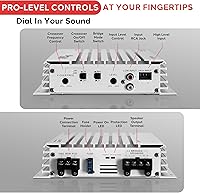
  • Input Type: Accepts both RCA stereo inputs and high-level speaker wire inputs, making it compatible with head units that lack dedicated RCA output jacks.
  • Water Resistance: Carries an IP-01 marine-grade rating, offering protection against light moisture and splashing in typical on-water environments.
  • Heatsink: Heavy-duty aluminum alloy heatsink dissipates heat during extended use, helping maintain stable performance in warm conditions.
  • Protection: Built-in thermal overload and short-circuit protection safeguard both the amplifier and the boat's electrical system from damage.
  • Terminal Finish: Speaker output terminals are gold-plated to resist oxidation and corrosion caused by salt air and humidity over time.
  • Operating Voltage: Designed to operate on a standard 12V DC power supply, compatible with the electrical systems found on most recreational boats.
  • Dimensions: Measures 10 x 7.87 x 2 inches, offering a compact footprint suited to mounting in confined spaces on smaller vessels.
  • Weight: Weighs 4.2 pounds, making it light enough for straightforward single-person installation without specialized mounting equipment.
  • Mounting Type: Designed specifically for boat-mount installation, with a form factor optimized for securing beneath consoles or in enclosed compartments.
  • Status Indicator: An LED power indicator light confirms at a glance that the amplifier is receiving power and is operational.
  • Gain Controls: Features dual adjustable input gain level controls, allowing independent channel tuning to match the output level of the connected head unit.
  • Package Contents: Includes one Pyle-branded amplifier unit; additional wiring, hardware, and installation accessories are not included and must be sourced separately.
  • Availability: First made available in January 2007 and remains an active, non-discontinued product in Pyle's marine audio lineup.

Related Reviews
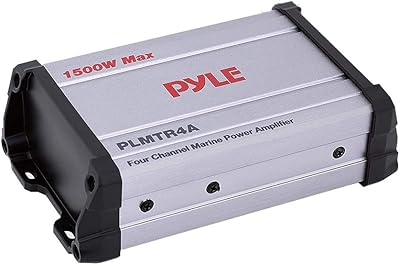
Pyle PLMTR4A 4-Channel Marine Amplifier
69%
78%
Value for Money
73%
Weatherproof Durability
41%
Power Accuracy
58%
Build Quality
86%
Installation Ease
More
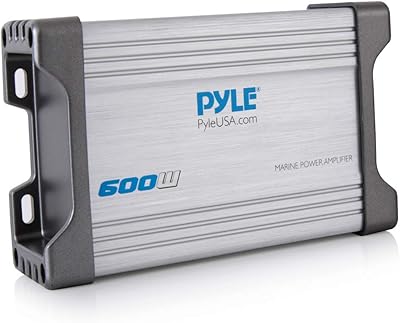
Pyle PLMRMP4A 4-Channel Marine Amplifier
64%
61%
Value for Money
53%
Build Quality
67%
Waterproofing
58%
Power Output
79%
Ease of Installation
More
Pyle PLMRA402 4-Channel Marine Amplifier
69%
83%
Value for Money
81%
Ease of Installation
67%
Sound Quality
49%
Power Accuracy
62%
Build Quality
More
Pyle PTA24BT 2-Channel Karaoke Amplifier
73%
88%
Ease of Setup
83%
Bluetooth Reliability
74%
Microphone Performance
67%
Echo Effect Quality
54%
Actual Power Output
More
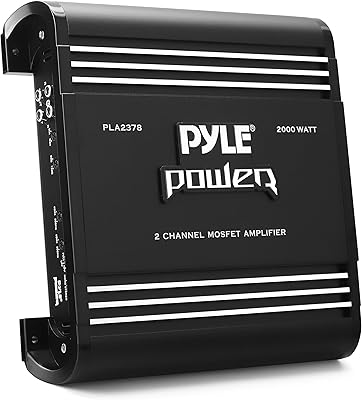
Pyle PLA2378 2-Channel Car Amplifier
72%
83%
Value for Money
51%
Power Output Accuracy
67%
Build Quality
88%
Ease of Installation
58%
Heat Management
More
Pyle PTA1000BT 2-Channel Bluetooth Power Amplifier
73%
82%
Value for Money
51%
Power Output Accuracy
58%
Build Quality
89%
Ease of Setup
71%
Bluetooth Performance
More
Pyle PLMRMB4CB 4-Channel Marine Amplifier
67%
78%
Value for Money
54%
Power Output
63%
Bluetooth Connectivity
61%
Water Resistance
58%
Build Quality
More
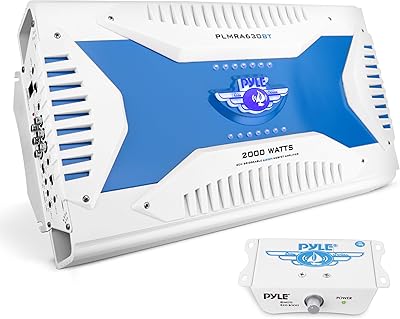
Pyle PLMRA630BT 6-Channel Bluetooth Marine Amplifier
83%
88%
Build Quality and Durability
90%
Bluetooth Connectivity
85%
Power Output
91%
Ease of Setup
83%
Sound Performance
More
Pyle PLA2200 2-Channel Car Amplifier
67%
78%
Value for Money
83%
Ease of Installation
69%
Sound Clarity
54%
Power Output (Real-World)
61%
Build Quality
More
Pyle PLA2678 2-Channel Car Stereo Amplifier 4000W

85%
91%
Power Output
87%
Sound Clarity
84%
Build Quality
90%
Compact Design
67%
Thermal Management
More

FAQ

The 400W figure is a peak or max rating, which represents the absolute ceiling under ideal, momentary conditions. The continuous RMS output — the number that actually matters for matching speakers — is considerably lower. For practical speaker pairing, treat this as a modest entry-level amp rather than a true high-power unit, and choose speakers with an RMS rating that aligns with realistic output expectations.

Yes, that is one of the more useful aspects of this boat amplifier. The high-level input terminals let you connect speaker wire directly from the head unit's speaker outputs, which is common on older or budget marine receivers that skip the RCA jacks. Just make sure to match the polarity correctly during wiring.

It carries an IP-01 marine rating, which means it handles light splashing and general humidity well — the kind of exposure typical in most recreational boating situations. It is not designed for heavy spray directed at the unit, pooling water, or anything approaching submersion. If your boat is frequently exposed to serious water intrusion in the amp's mounting location, you should look at units with a higher IP rating.

Yes, the two-channel design is bridgeable, which lets you combine both channels into a single, more powerful mono output for driving a subwoofer. This is a handy option for budget builds where you want to skip buying a dedicated mono amp. Just confirm your subwoofer's impedance falls within the 4 to 8 Ohm range the amp supports.

Most first-timers report a manageable installation experience, especially if they are using RCA inputs from a receiver that already has them. The gain controls are straightforward, and the LED indicator removes any guesswork about whether the unit is powered on. Having a basic understanding of 12V wiring — power, ground, and remote turn-on — is all you really need before starting.

It performs reliably for many buyers through a season of regular use, but long-term durability in harsh conditions is a known weak point for entry-level marine amps in this category. The gold-plated terminals and aluminum heatsink are genuine quality touches, but some owners report performance issues after prolonged exposure to intense heat and salt air. Mounting it in a protected location rather than fully exposed to the elements will help it last longer.

No, the package includes only the amplifier itself. You will need to purchase a separate wiring kit that includes power cable, ground wire, RCA cables, a remote turn-on wire, and an inline fuse holder. Many installers pick up an amp wiring kit sized appropriately for the power draw, which simplifies sourcing all the pieces at once.

Pyle does not always specify this clearly in the documentation, but as a general guideline for an amp in this power class, a fuse between 20A and 30A installed close to the battery on the power cable is a reasonable starting point. Always consult a wiring guide or a local car and marine audio installer if you are unsure, since incorrect fusing can be a safety risk.

Not in the traditional sense. It is a two-channel amp, so it has two speaker outputs. You could wire two speakers in parallel to each channel, but that would reduce the total impedance seen by the amp, potentially pushing it below its 4 Ohm minimum. For four independent speakers, a 4-channel amp would be the more appropriate choice.

Some warmth is normal for any amplifier, and the aluminum heatsink is designed to manage that heat under typical conditions. At higher volumes or in hot weather, the unit can get noticeably warm. The built-in thermal protection will shut the amp down before it damages itself if temperatures get too high, so make sure there is adequate airflow around the unit wherever you mount it.

Where to Buy