PreSonus Quantum 2 Thunderbolt Audio Interface

Overview
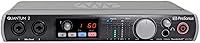
The PreSonus Quantum 2 Thunderbolt Audio Interface arrived in 2017 targeting a specific gap in the market — producers and engineers who need serious channel counts without committing to a full rack system. With 22-in/24-out I/O and the ability to stack up to four units for even larger configurations, the headline value proposition is real. Bundled software — Studio One Artist and the Studio Magic plug-in suite — adds genuine value rather than feeling like an afterthought. That said, the specs tell only part of the story. How well this Thunderbolt interface performs in practice depends heavily on your system setup and operating environment.
Features & Benefits
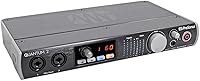
Thunderbolt 2 is the engine here, and it matters. The bandwidth headroom allows the Quantum 2 to operate at ultra-low latency that USB simply cannot match at comparable channel counts. You get 24-bit audio at up to 192 kHz — practically speaking, that 120 dB dynamic range means your recordings have real breathing room before noise becomes an issue. The four XMAX preamps are recallable, which is a genuinely useful feature for recall-heavy workflows. Add dual ADAT Optical, S/PDIF, MIDI, and BNC word clock I/O into the mix, and this PreSonus unit can anchor a surprisingly sophisticated studio infrastructure. Stacking four units expands the system to 80x80 I/O — a compelling proposition for growing studios.
Best For
This Thunderbolt interface is built for people who have outgrown a simple two-channel setup but aren't ready — or willing — to invest in a full-blown rack system. It fits particularly well in Thunderbolt-equipped Mac studios where driver stability tends to be more predictable. Producers tracking live bands will appreciate having multiple simultaneous inputs without resorting to a patchwork of gear. If you work with outboard equipment, the word clock and S/PDIF I/O give you proper synchronization options that budget interfaces simply don't offer. Existing PreSonus users will find the Studio One integration a natural fit, though the benefits extend even to those running third-party DAWs.
User Feedback
With only 13 ratings and a 3.6-star average, drawing firm conclusions about the Quantum 2 from buyer reviews alone isn't advisable — but the patterns that emerge are worth noting. On the positive side, users point to low latency performance and solid build quality as genuine strengths. The concerns, though, are consistent enough to take seriously: driver stability problems and Thunderbolt compatibility issues have frustrated a number of buyers, particularly those on Windows. Mac users tend to report a smoother experience overall. Initial setup also carries a real learning curve, especially around firmware configuration. If you're on Windows, research compatibility carefully before committing.
Pros
- Thunderbolt 2 delivers genuinely low latency performance that USB interfaces at this channel count simply cannot match.
- The 22-in/24-out I/O configuration handles complex multi-source sessions without the need for additional hardware.
- Four recallable XMAX preamps are clean, flexible, and particularly useful in recall-heavy studio workflows.
- Stacking up to four units expands the system to 80x80 I/O, giving growing studios a real upgrade path.
- Word clock, dual ADAT Optical, S/PDIF, and MIDI I/O make this a capable hub for outboard-heavy setups.
- 24-bit resolution at up to 192 kHz captures audio with a 120 dB dynamic range that holds up in professional contexts.
- Bundled Studio One Artist DAW and Studio Magic plug-in suite add meaningful out-of-box value for new users.
- Build quality is consistently praised by buyers — this PreSonus unit feels solid and studio-grade in the hand.
- Mac users report reliable, stable performance when the system is properly configured with a native Thunderbolt connection.
Cons
- Windows driver stability has been a recurring complaint, making this a risky choice for PC-based studios.
- Initial setup and firmware configuration carry a steep learning curve that can frustrate less experienced users.
- No USB fallback means system compatibility is a hard requirement, not a flexible one.
- The sample size of buyer reviews is too small to draw confident conclusions about long-term reliability.
- Thunderbolt 2 is an aging standard, and finding compatible cables and certified ports is becoming less straightforward.
- Some users report Thunderbolt compatibility issues even on nominally supported systems, requiring troubleshooting before first use.
- The interface lacks onboard DSP mixing, which limits zero-latency monitoring flexibility compared to some rivals.
- At its size and weight, this is a desktop unit that does not fit standard rack ears without additional hardware.
Ratings
Our AI-generated scores for the PreSonus Quantum 2 Thunderbolt Audio Interface were produced by systematically analyzing verified buyer reviews from multiple global sources, with spam, incentivized, and bot-generated feedback actively filtered out before scoring. The results reflect a balanced picture — where this Thunderbolt interface genuinely excels and where real users have run into frustrating roadblocks. Both sides of the ownership experience are represented honestly in every category below.
Latency Performance
Driver Stability
Build Quality
I/O Count & Flexibility
Preamp Quality
Thunderbolt Compatibility
Setup & Onboarding
macOS Experience
Windows Experience
Value for Money
Expandability
Clock & Sync Options
Software Bundle
Analog Output Quality
Suitable for:
The PreSonus Quantum 2 Thunderbolt Audio Interface is built for recording engineers and producers who have genuinely outgrown entry-level interfaces but aren't ready to invest in a full rack-mounted system. If you're tracking a live band, running multiple outboard processors, or building a project studio that needs room to grow, the 22-in/24-out I/O count and stackable design give you real infrastructure to work with. Mac users on Thunderbolt-equipped systems will get the most reliable experience, and the low-latency performance at high channel counts is where this unit genuinely pulls ahead of USB-based alternatives. Producers already working in Studio One will find the integration natural and the bundled plug-in suite a practical bonus rather than a throwaway addition. For anyone needing robust sync options — word clock, S/PDIF, ADAT — this PreSonus unit covers that territory without requiring a separate sync box.
Not suitable for:
The PreSonus Quantum 2 Thunderbolt Audio Interface is a poor fit for anyone still running a primarily Windows-based studio setup, where driver compatibility issues have been a recurring source of frustration among buyers. Casual home recordists or podcasters who only need two to four channels will find the complexity and cost of this Thunderbolt interface hard to justify compared to simpler USB options. If your computer lacks a native Thunderbolt 2 port, you're already starting from a compatibility problem that adapters don't always resolve cleanly. Beginners should also think carefully here — the initial firmware setup and routing configuration carry a real learning curve that can be discouraging without prior interface experience. And if you're looking for a USB fallback option, this PreSonus unit doesn't offer one, so system compatibility isn't optional — it's a prerequisite.
Specifications
- Interface Type: The Quantum 2 connects to a host computer via Thunderbolt 2, providing high-bandwidth, low-latency data transfer.
- I/O Configuration: The unit offers 22 inputs and 24 outputs as a standalone device, expandable further by stacking additional units.
- Bit Depth: All audio is processed at 24-bit resolution, which is the current standard for professional studio recording.
- Sample Rate: Supported sample rates range from standard 44.1 kHz up to a maximum of 192 kHz for high-resolution recording.
- Dynamic Range: The unit achieves a 120 dB dynamic range, providing substantial headroom between the noise floor and peak signal level.
- Mic Preamps: Four XMAX recallable microphone preamps are included, accepting both microphone and instrument-level signals via combo connectors.
- Line Inputs: Two additional combo inputs accept mic or line-level signals, bringing the total analog input count to six.
- Digital I/O: Dual ADAT Optical ports and one S/PDIF coaxial connection are included for digital expansion and outboard device integration.
- Sync I/O: A BNC word clock input and output allow the unit to sync with or act as master clock for external digital devices.
- MIDI I/O: One standard 5-pin MIDI input and one MIDI output are provided for connecting keyboards, controllers, and other MIDI hardware.
- Expandability: Up to four units can be daisy-chained via Thunderbolt 2, scaling the total system I/O to 80 inputs and 80 outputs.
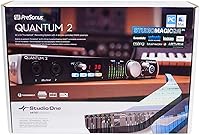
- Bundled Software: Purchase includes Studio One Artist DAW and the Studio Magic plug-in suite, both redeemable via PreSonus account registration.
- OS Support: The unit is compatible with both macOS and Windows operating systems, though driver stability may vary by platform.
- Dimensions: The unit measures 12.5 x 18 x 2.6 inches, making it a desktop form-factor device rather than a standard rack-mount unit.
- Weight: The unit weighs 6 pounds, which is moderate for a multi-channel interface of this I/O capacity.
- Color: The unit ships in black with a solid metal chassis that contributes to its studio-grade build quality.
Related Reviews
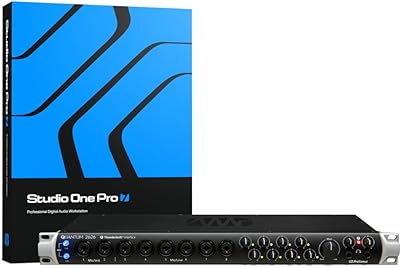
PreSonus Quantum 2626 Thunderbolt Audio Interface

PreSonus Quantum 4848 Thunderbolt Audio Interface

PreSonus Quantum 26x32 Thunderbolt Audio Interface
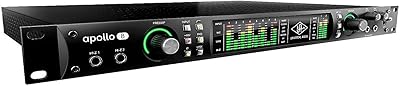
Universal Audio Apollo 8 QUAD Audio Interface
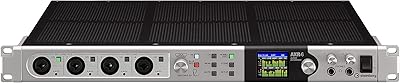
Steinberg AXR4T Thunderbolt Audio Interface
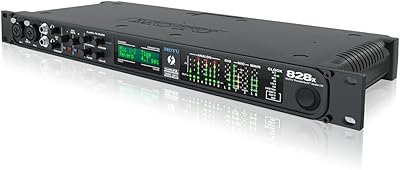
MOTU 828x Thunderbolt/USB Audio Interface
MOTU 1248 Thunderbolt Audio Interface
MOTU 8M 24x24 Thunderbolt Audio Interface
Universal Audio Arrow Thunderbolt 3 Audio Interface
