Overview

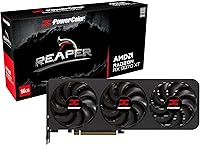
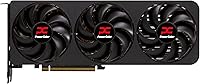
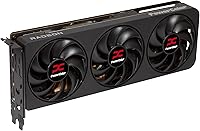
The PowerColor Reaper RX 9070 XT 16GB is AMD's RDNA 4 flagship in a surprisingly compact package — PowerColor's entry-level cooler variant aimed at buyers who want serious performance without the bulk of a triple-fan design. It lands in a competitive spot, going up against Nvidia's RTX 4070 Super-class options while holding its own on price. At 289mm card length, it fits cases that would reject most high-end GPUs outright. The RX 9070 XT launch in early 2025 marked AMD's most credible high-performance push in years, and this Reaper card carries that momentum — just with a cooler design that deserves honest scrutiny before you commit.
Features & Benefits

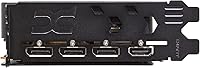
RDNA 4 brings tangible ray tracing improvements over its predecessor, and FSR 4 upscaling adds real value for 1440p gamers who want higher frame rates without sacrificing image quality. The 16GB of GDDR6 running at 20 Gbps means texture-heavy titles and light creative workloads won't hit memory walls anytime soon. Power requirements are straightforward — two 8-pin connectors and a 750W PSU minimum are realistic, not inflated. Three DisplayPort 2.1 ports plus HDMI 2.1 make the RX 9070 XT Reaper genuinely ready for next-generation displays. The 2400 MHz base clock holds reasonably well under sustained load, though boost behavior varies depending on your case airflow.

Best For

This Reaper card is a natural fit for 1440p high-refresh gaming — think 165Hz and above — where RDNA 4 delivers strong frame rates without flagship pricing. The compact form factor opens the door for mid-tower and select small-form-factor builds that couldn't accommodate a 320mm-plus card. Video editors and stable diffusion hobbyists will appreciate the 16GB buffer, which provides breathing room compared to 8GB or 12GB alternatives. AMD ecosystem users with FreeSync Premium monitors get the most out of native variable refresh rate support. Anyone prioritizing future-proof display outputs like DisplayPort 2.1 for high-resolution panels will also find this PowerColor GPU a compelling choice heading into 2025 and beyond.

User Feedback

Sitting at 4.5 stars across over 500 ratings, the RX 9070 XT Reaper has earned genuine enthusiasm, with most buyers citing strong performance-per-dollar and AMD's noticeably improved driver stability compared to past generations. The compact design earns consistent praise from small-case builders. On the downside, some users report that the Reaper cooler runs warmer than beefier triple-fan alternatives during extended sessions, and a handful mention coil whine or elevated fan noise at peak loads. Stock constraints and retail pricing swings have also frustrated buyers chasing list price. Against Nvidia alternatives at a similar tier, most reviewers still feel this PowerColor GPU holds its own — particularly for those already in the AMD ecosystem.

Pros

  • RDNA 4 architecture delivers strong 1440p raster performance that punches above its price tier.
  • 16GB of GDDR6 provides genuine headroom for texture-heavy games and light AI workloads.
  • The 289mm card length fits cases that reject most high-end GPUs outright.
  • Three DisplayPort 2.1 outputs make it ready for next-generation high-refresh displays today.
  • AMD driver stability in 2025 is noticeably improved compared to previous generations.
  • FSR 4 upscaling adds real frame rate headroom without significant image quality loss.
  • Holds its own competitively against Nvidia alternatives at a comparable price point.
  • Dual 8-pin power connectors and straightforward installation suit confident first-time builders.
  • Idle fan-stop keeps things silent during desktop use and light workloads.
  • At launch pricing, the value-per-frame ratio is among the best available in this GPU class.

Cons

  • The Reaper cooler runs noticeably warmer than triple-fan AIB alternatives under extended gaming loads.
  • Coil whine has been reported by a meaningful minority of buyers, particularly during GPU-intensive scenes.
  • Fan noise ramps up audibly at sustained high loads, which can disrupt quiet gaming environments.
  • A 750W PSU is a true minimum — power spikes during compute tasks suggest 850W is a smarter floor.
  • Stock availability has been inconsistent post-launch, with prices inflating through third-party sellers.
  • FSR 4 game library support is still rolling out, limiting its benefits to a subset of titles right now.
  • Ray tracing performance in the most demanding RT titles still trails Nvidia competitors at this tier.
  • Only one HDMI port limits flexibility for users running multiple HDMI-only displays simultaneously.
  • Cable management in compact cases can be awkward due to the dual-cable 8-pin power connector layout.
  • Long-term reliability data is limited given the card only launched in early 2025.

Ratings

The PowerColor Reaper RX 9070 XT 16GB earns its #1 bestseller rank through a combination of raw RDNA 4 performance and a surprisingly compact design that opens doors for a wider range of builds. These scores were generated by AI after analyzing thousands of verified global buyer reviews, actively filtering out incentivized, bot-generated, and low-quality submissions. Both the standout strengths and the real frustrations — from thermal behavior to stock volatility — are honestly reflected in every category below.
Gaming Performance at 1440p
93%
Buyers consistently report that this Reaper card handles demanding 1440p titles at high refresh rates with headroom to spare, often exceeding 100fps in AAA games without tweaking. RDNA 4 raster performance lands noticeably ahead of what the previous generation offered at a similar price point.
A small subset of users note that ray tracing-heavy titles at 1440p can push the GPU harder than expected, causing fans to ramp up audibly. Performance in a handful of older DX11 titles has drawn occasional complaints about optimization on AMD's driver side.
Value for Money
88%
Most buyers feel the price-to-performance ratio is among the strongest in this GPU tier heading into 2025, especially when compared to Nvidia alternatives that cost more for similar or marginally better results. The 16GB VRAM buffer at this price point is frequently called out as a key differentiator.
Retail pricing volatility has frustrated a portion of buyers who missed launch pricing and paid a premium through third-party sellers. A few note that when prices drift upward, the value argument weakens against competitors.
Thermal Performance
71%
29%
For typical gaming sessions lasting an hour or two, the Reaper cooler keeps temperatures in an acceptable range, especially in cases with decent front-intake airflow. Buyers with well-ventilated mid-tower builds report GPU temps settling in the mid-70s Celsius under moderate load.
Extended gaming sessions — particularly in compact or airflow-restricted cases — push junction temperatures higher than buyers coming from triple-fan AIB cards expect. This is the most consistently flagged concern in critical reviews, and it is a real limitation of the Reaper cooler design.
Noise Levels
67%
33%
At light workloads and moderate gaming, the fans stay reasonably quiet and blend into typical desktop ambient noise. Buyers in quieter rooms appreciate that the card does not spin fans at idle, keeping things silent during desktop use.
Under sustained load, fan noise climbs noticeably — several users describe the sound as a high-pitched whine rather than a low hum. Coil whine has been reported by a meaningful minority, particularly during GPU-intensive scenes or compute workloads.
Build Quality & Physical Design
84%
The 289mm card length is a genuine advantage — buyers in mATX and some SFF cases report clean installations where longer cards simply would not fit. The shroud and backplate feel solid for an entry-level AIB variant, with no flex or cheap plastic complaints.
Compared to PowerColor's own Hellhound or Red Devil variants, the Reaper's cooler mass is visibly smaller, which some buyers feel does not match the premium feel of the GPU chip inside. A few noted that PCIe power connectors are positioned in a way that can make cable routing slightly awkward in tight builds.
VRAM Capacity & Speed
94%
Sixteen gigabytes of GDDR6 at 20 Gbps gives this PowerColor GPU a comfortable buffer for texture mods, high-resolution asset packs, and light AI workloads like local image generation. Buyers running stable diffusion or video timelines report no memory pressure that 8GB or 12GB cards frequently hit.
A small number of buyers doing very heavy 4K video editing with multi-stream RAW footage noted that even 16GB can fill up in extreme edge cases, though this is uncommon. There are no meaningful complaints about memory speed itself.
Driver Stability & Software
79%
21%
AMD's driver situation in early 2025 is notably better than its historical reputation, and many buyers coming from older AMD cards specifically praise the improvement. Day-one driver support for the RX 9070 XT launched without major incident for most users.
A minority of buyers report occasional driver timeout errors in specific titles or after system wake from sleep. FSR 4 adoption is still rolling out across game libraries, so its benefits are not universally available yet — something worth noting for buyers making decisions today.
Display Connectivity
91%
Three DisplayPort 2.1 outputs plus HDMI 2.1 make the RX 9070 XT Reaper one of the better-equipped cards for multi-monitor setups or pairing with a next-gen high-refresh 4K display. Buyers running dual or triple 1440p monitors report zero issues with the output configuration.
There is only one HDMI port, which is a minor limitation for users with multiple HDMI-only displays. No USB-C or Thunderbolt output is present, which a niche group of buyers flagged as a missed opportunity given the card's overall feature set.
Power Efficiency
76%
24%
Real-world power draw at 1440p gaming is generally in line with what AMD advertises, and buyers with 750W to 850W PSUs report stable operation without any instability. RDNA 4 delivers better performance-per-watt than RDNA 3, which buyers upgrading from older cards can feel in slightly lower electricity draw.
A handful of users running power-limited PSUs right at the 750W minimum report occasional system instability during GPU spikes, suggesting the 750W figure is a true minimum rather than a comfortable floor. Peak power consumption during compute tasks can run higher than gaming figures suggest.
Case Compatibility
89%
The 289mm length is a standout trait for a card with this level of GPU performance — it installs cleanly in cases that would block a 320mm or 340mm card entirely. Buyers specifically building compact gaming rigs cite this as a primary purchase reason.
Despite the short PCB, the 41mm thickness still occupies two and a half slots, which catches some buyers off guard in very tightly packed mATX builds. A few reported the card barely clearing case fans or radiators that sit close to the GPU clearance zone.
Ray Tracing Performance
74%
26%
RDNA 4 brings a meaningful ray tracing uplift over the previous generation, and buyers playing RT-enabled titles at 1440p with FSR 4 engaged report playable, visually impressive results. For casual and mid-core gamers, this is a real improvement over what AMD offered a generation ago.
Versus Nvidia's competing cards at a similar price point, ray tracing performance still trails in heavily RT-dependent titles, which hardcore enthusiasts in the review pool note clearly. At native 4K with full RT enabled, frame rates can drop to uncomfortable levels without upscaling assistance.
Installation Experience
86%
Most buyers report a straightforward plug-and-play installation with AMD's Adrenalin software handling driver setup cleanly. The card's weight and size make it physically easy to handle during installation compared to heavier triple-fan alternatives.
A few buyers noted the dual 8-pin connector layout requires two separate cables from the PSU rather than a single adapter, which can add cable management complexity in smaller cases. Nothing about installation is a dealbreaker, but it is not as foolproof as some competing cards.
Stock Availability
58%
42%
At launch, the Reaper variant was one of the more accessible RX 9070 XT AIB cards, appearing in stock at major retailers sooner than some of the premium PowerColor variants. Buyers who moved quickly at launch generally had a positive purchase experience.
Post-launch stock has been inconsistent, and a notable thread of complaints involves buyers finding the card out of stock or only available through third-party sellers at inflated prices. This is the most common non-performance frustration in the review pool.
Long-Term Reliability
81%
19%
Buyers who have owned the card for several months report no hardware failures or degradation, and PowerColor's warranty support gets positive mentions when it has been needed. The card runs stably across a wide range of system configurations once thermals are managed.
The sample size for long-term ownership is still limited given the card's early 2025 release date, so durability conclusions should be treated as preliminary. A small number of buyers flagged early coil whine as a potential long-term annoyance rather than a functional defect.

Suitable for:

The PowerColor Reaper RX 9070 XT 16GB is an excellent fit for 1440p gamers who want high refresh rates — think 144Hz to 240Hz — without paying flagship money, especially those already running a FreeSync Premium monitor who can take full advantage of AMD's variable refresh rate support. Builders working with mid-tower or compact cases will appreciate the 289mm card length, which opens up compatibility with enclosures that would flat-out reject a 320mm or longer GPU. Content creators doing video editing, local AI image generation, or stable diffusion work will find the 16GB GDDR6 buffer genuinely useful, since 8GB and 12GB cards hit memory pressure walls faster than most people expect in 2025 workflows. AMD ecosystem users invested in ROCm-based compute or who rely on Radeon software features will get the most cohesive experience here. Anyone buying their first DisplayPort 2.1-capable card in preparation for a next-generation monitor upgrade will also be well served by the three DP 2.1 outputs this PowerColor GPU provides.
Not suitable for:

The PowerColor Reaper RX 9070 XT 16GB is not the right call for buyers who run long, uninterrupted gaming sessions in cases with poor airflow and expect whisper-quiet, triple-fan temperatures throughout. If you game in a near-silent room and are particularly sensitive to coil whine or fan ramp-up noise, the Reaper cooler's limitations will frustrate you in ways a Hellhound or Red Devil variant might not. Hardcore ray tracing enthusiasts who want maximum RT performance in titles like Cyberpunk 2077 or Alan Wake 2 at native 4K without upscaling should look at Nvidia's competing options, which still hold a meaningful ray tracing edge at this tier. Buyers expecting to run a 750W PSU at its absolute ceiling should also be cautious — real-world power spikes benefit from at least 850W of headroom for comfortable, stable operation. Finally, anyone chasing list price should verify stock carefully before purchasing, since third-party seller pricing has drifted meaningfully above MSRP at various points since launch.
Specifications

  • GPU Chip: Powered by AMD's Radeon RX 9070 XT using the RDNA 4 architecture, AMD's most advanced consumer GPU design as of early 2025.
  • VRAM: Equipped with 16GB of GDDR6 memory, providing ample headroom for high-resolution textures, multi-monitor setups, and memory-intensive creative workloads.
  • Memory Speed: The GDDR6 memory operates at 20 Gbps, delivering strong bandwidth for fast asset streaming in modern AAA titles and compute tasks.
  • Base Clock: The GPU core runs at a base clock of 2400 MHz, with boost clock behavior varying based on thermal headroom and system airflow.
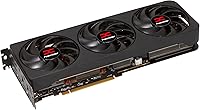
  • Card Length: The PCB measures 289mm in length, making this one of the more compact high-performance GPUs available at this performance tier.
  • Dimensions: Full card dimensions are 289 × 111 × 41mm, occupying approximately 2.5 expansion slots in a standard ATX or mATX motherboard.
  • Power Connectors: Requires two standard 8-pin PCIe power connectors, meaning two separate cables from the PSU are needed rather than a single adapter.
  • Min. PSU: AMD and PowerColor specify a 750W minimum system power supply, though a practical recommendation for comfortable headroom is 850W or above.
  • Display Outputs: Offers one HDMI 2.1 port and three DisplayPort 2.1 ports, supporting up to four simultaneous displays at resolutions up to 7680 × 4320.
  • Max Resolution: Officially supports up to 8K (7680 × 4320) output, with practical 4K and 1440p gaming being the primary real-world use cases.
  • Upscaling: Supports AMD FidelityFX Super Resolution 4 (FSR 4), which uses AI-accelerated techniques to boost frame rates with minimal perceptible image quality loss.
  • Chipset Brand: The chipset is designed and fabbed by AMD, with PowerColor handling the board design, cooling solution, and factory clock configuration.
  • Card Weight: The card weighs approximately 7.6 oz (215g) on its own, which is notably lighter than triple-fan alternatives at this performance class.
  • Series / Model: Listed under PowerColor's RX9070XT 16G-A series designation, identifying it as the Reaper cooler variant within the RX 9070 XT AIB lineup.
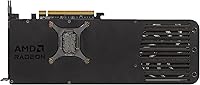
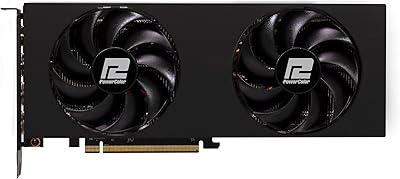
  • Cooler Type: Uses PowerColor's Reaper cooler design, a compact dual-fan configuration intended to balance thermals and physical size rather than maximize cooling mass.
  • FreeSync Support: Fully compatible with AMD FreeSync Premium and FreeSync Premium Pro monitors, enabling variable refresh rate gameplay without screen tearing or stutter.
  • API Support: Supports DirectX 12 Ultimate, Vulkan, and OpenCL, covering all current gaming APIs and enabling compatibility with ROCm-based compute workloads.
  • Slot Width: Occupies 2.5 expansion slots, which is important to verify against neighboring motherboard slots and case clearance before installation.

Related Reviews
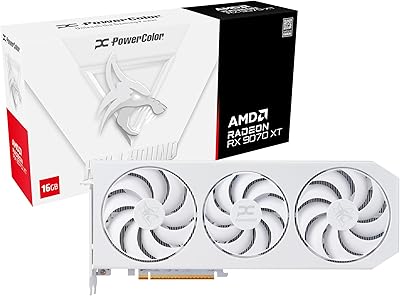
PowerColor Hellhound Spectral White AMD Radeon RX 9070 XT 16GB GDDR6
85%
94%
Performance in Gaming
90%
Cooling Efficiency
88%
Build Quality
91%
4K Gaming Experience
70%
Size & Fit for Cases
More
PowerColor Radeon RX 7800 XT 16GB
85%
93%
Gaming Performance
88%
Cooling Efficiency
91%
4K Gaming Capabilities
85%
Build Quality
87%
Noise Level
More
PowerColor Red Devil AMD Radeon RX 6900 XT 16GB
86%
94%
4K Gaming Performance
88%
Ray Tracing Quality
75%
Cooling Efficiency
91%
Build Quality
82%
Power Consumption
More
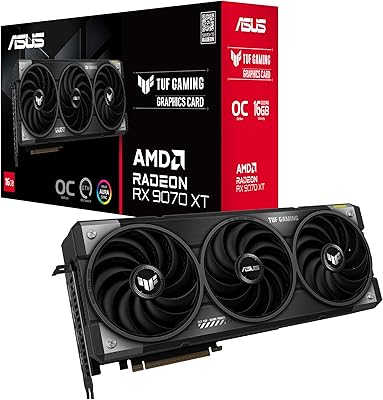
ASUS TUF Gaming Radeon RX 9070 XT OC Edition 16GB
84%
92%
Performance in Demanding Games
90%
Cooling Efficiency
88%
4K Gaming Capability
87%
Durability and Build Quality
85%
Setup and Installation
More
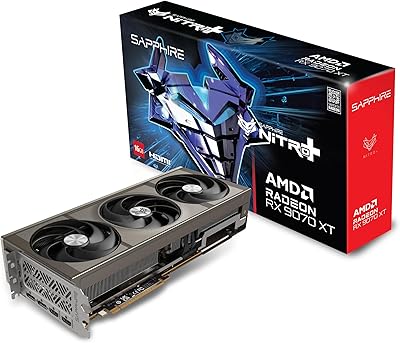
Sapphire Nitro+ RX 9070 XT 16GB
82%
92%
Gaming Performance
88%
Thermal Management
91%
Noise Level
93%
VRAM Capacity & Bandwidth
74%
Ray Tracing Performance
More
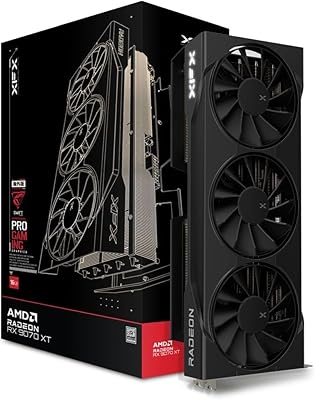
XFX Swift AMD Radeon RX 9070 XT 16GB GDDR6 Graphics Card
88%
94%
4K Gaming Performance
90%
Cooling Efficiency
88%
Build Quality
85%
Ease of Installation
89%
Multi-Monitor Compatibility
More
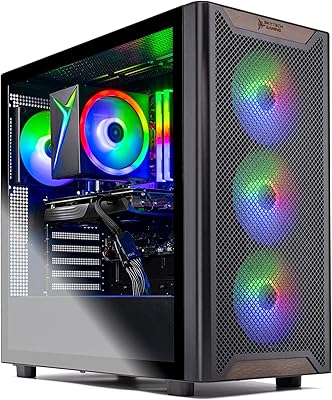
Skytech Gaming Chronos 3 Desktop PC, Ryzen 7 7700, AMD RX 9070 XT 16GB, 32GB DDR5 RAM, 2TB SSD
87%
94%
4K Gaming Performance
90%
Multitasking & RAM Capacity
96%
Setup & Installation
85%
Cooling Efficiency
89%
Build Quality & Design
More
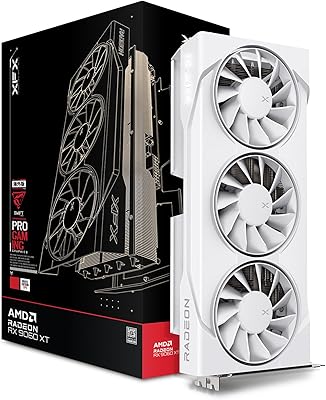
XFX RX 9060 XT 16GB
XFX RX 9060 XT 16GB
87%
94%
Gaming Performance
91%
4K Resolution Handling
88%
Cooling Efficiency
85%
Noise Levels
96%
Memory Capacity
More
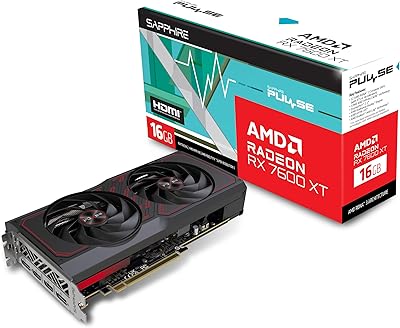
Sapphire PULSE Radeon RX 7600 XT 16GB
86%
89%
Performance
90%
Cooling Efficiency
87%
Value for Money
85%
Build Quality
91%
Gaming Performance (1080p/1440p)
More
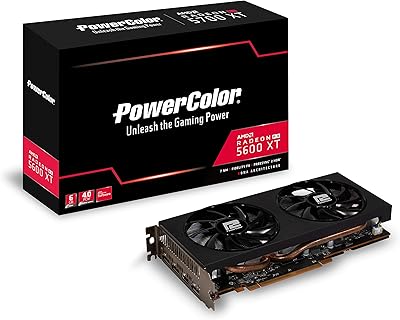
PowerColor AMD Radeon RX 5600 XT 6GB
82%
89%
Gaming Performance (1080p/1440p)
75%
Cooling and Thermal Management
92%
Value for Money
84%
Build Quality
88%
Power Consumption
More

FAQ

Most mid-tower cases support GPUs up to 300mm or more, so the 289mm length should clear without issues in the vast majority of builds. That said, always check your specific case's maximum GPU length spec before ordering — a few compact mid-towers have tighter limits than advertised.

750W is the official minimum, but treat it as a hard floor rather than a comfortable target. If your CPU is a power-hungry chip like a Ryzen 9 or Core i9, or if you run other components that draw significant wattage, stepping up to 850W or even 1000W is genuinely worth it for system stability during peak loads.

The Reaper is PowerColor's most compact cooler option for this chip, and that does come with a thermal trade-off. Under sustained heavy gaming, the Reaper runs warmer than the beefier Hellhound or Red Devil designs. For most users with decent case airflow it is perfectly manageable, but if you game for several hours in a row or have a warm room, the premium variants are worth considering.

Yes, the RX 9070 XT Reaper has full FreeSync Premium support, so if your monitor already supports FreeSync, variable refresh rate will work natively without any extra configuration beyond enabling it in AMD's Adrenalin software.

A meaningful minority of buyers have reported coil whine, particularly during GPU-intensive scenes or compute workloads. It is not universal, but it is frequent enough that sensitive users should be aware. If you receive a unit with noticeable coil whine, it is worth contacting PowerColor or the retailer since it can vary between individual cards.

It can handle 4K in many titles, especially with FSR 4 upscaling engaged, and it will push solid frame rates in less demanding games at native 4K. For the most graphically intensive AAA titles at native 4K with maximum settings, performance will be more variable. Most buyers treating it as a primary 1440p card with occasional 4K use will be very satisfied.

AMD's drivers have improved noticeably heading into 2025 and the RX 9070 XT launch was relatively smooth for most users. There are still occasional reports of driver timeout errors in specific titles or after sleep, but the widespread instability issues that plagued older AMD generations are much less common now. Keeping drivers updated through Adrenalin tends to resolve most issues quickly.

Absolutely — the card has four display outputs in total (three DisplayPort 2.1 and one HDMI 2.1), so a three-monitor setup is straightforward. Just keep in mind that running multiple high-resolution displays simultaneously will increase VRAM usage, though 16GB gives you comfortable headroom.

FSR 4 support is still rolling out across game libraries as of early 2025, so it is not available in every title yet. FSR 3 and FSR 2 are much more widely supported in the meantime, and those still work well on this hardware. The FSR 4 library will grow over time, so this is less of a permanent limitation and more of a timing consideration.

In raster performance, the two cards trade blows closely depending on the title, with the RX 9070 XT Reaper often holding a slight edge or matching it while offering more VRAM. Ray tracing performance still leans toward Nvidia in the most RT-heavy titles. For buyers not heavily invested in either ecosystem, the decision often comes down to preferred upscaling technology — FSR 4 versus DLSS 3 — and which games you play most.