Overview

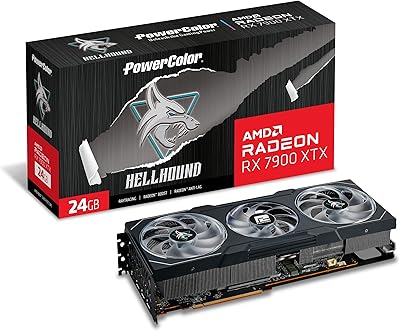
The PowerColor RX 5600 XT 6GB Graphics Card is AMD's RDNA-architecture answer to the 1080p gaming crowd, and it holds up better than you might expect for a card that launched in late 2020. PowerColor has built a solid reputation as a reliable AMD board partner, and this variant reflects that — well-built, properly cooled, and shipped with a factory overclock. Where expectations need calibrating is memory: 6GB of GDDR6 was comfortable at launch but is feeling tighter as modern titles get greedier. This is a strong 1080p card. It can stretch to light 1440p work, but don't let the listed max resolution fool you into thinking 4K gaming is on the table.
Features & Benefits

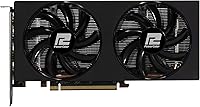
The RX 5600 XT runs on AMD's first-generation RDNA architecture, which brought a meaningful efficiency jump over the older GCN lineup — 2304 stream processors doing noticeably more per clock than their predecessors. The memory setup feeds 1080p gaming well but can get squeezed in texture-heavy scenes at 1440p. PowerColor's factory overclock pushes the boost clock to up to 1620 MHz, a small but real improvement over stock reference speeds. The multi-fan cooling arrangement keeps the card quiet during typical gaming sessions. One firm caveat worth stating plainly: no ray tracing hardware is present, so buyers cross-shopping against Nvidia's RTX lineup should weigh that gap carefully before committing.

Best For

This mid-range AMD GPU is squarely aimed at 1080p gamers who want to max out settings in mainstream AAA titles or chase high frame rates in esports games without spending heavily. It suits builders upgrading from integrated graphics or an aging entry-level card who want a genuinely tangible performance jump. If you're already on an AMD-compatible platform with a PCIe 3.0 or 4.0 board, this PowerColor card drops in cleanly. The roughly 11.5-inch length fits comfortably in most mid-tower cases. For players focused on pure rasterization games where ray tracing simply isn't a factor, the trade-offs here are very easy to live with.

User Feedback

Across 185 ratings, the RX 5600 XT holds a 4.5 out of 5 average — solid, though not a massive sample to draw sweeping conclusions from. Buyers consistently praise quiet operation under load and strong out-of-the-box 1080p performance, particularly in older and mid-generation AAA titles. The AMD Radeon software suite gets mixed reactions — more stable than it once was, but occasional driver hiccups still surface in user comments. The recurring criticism is predictable: 6GB of VRAM is starting to pinch in newer releases at high texture settings. A handful of reviewers also flag that competing cards at a similar price point make the value case harder to argue than it was a couple of years ago.

Pros

  • Delivers confident 1080p gaming performance in most mainstream AAA and esports titles.
  • PowerColor's factory overclock provides a real, if modest, speed advantage over reference board designs.
  • Multi-fan cooling keeps the card running quietly during extended gaming sessions.
  • RDNA architecture offers noticeably better efficiency per clock than older AMD GCN-based cards.
  • Compatible with both PCIe 3.0 and 4.0 slots, making it easy to drop into a wide range of existing builds.
  • The card's physical dimensions fit comfortably in most mid-tower cases without major clearance issues.
  • GDDR6 memory at 14 Gbps handles 1080p texture loads without visible stuttering in most current titles.
  • A 4.5-star aggregate rating across real buyers reflects consistent satisfaction with day-to-day gaming use.
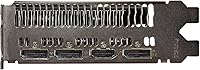
  • DisplayPort outputs support high-refresh-rate 1080p monitors, which is where this card genuinely shines.

Cons

  • 6GB of VRAM is increasingly tight in newer titles at high texture settings, even at 1080p.
  • No ray tracing hardware means this mid-range AMD GPU cannot compete with Nvidia RTX cards on that feature.
  • AMD's Radeon software driver suite, while improved, still draws occasional complaints about stability and updates.
  • At current market pricing, newer-generation mid-range alternatives offer better raw performance per dollar.
  • Light 1440p gaming is possible but requires meaningful settings compromises in demanding modern releases.
  • The RX 5600 XT is based on first-generation RDNA, meaning it misses architectural improvements found in RDNA 2 and later cards.
  • No AV1 hardware encode support, which matters for streamers and content creators on modern workflows.
  • The listed 4K max resolution is technically accurate but practically misleading — real 4K gaming performance is poor.
  • Resale value has eroded as the GPU market has moved on, limiting flexibility if you plan to upgrade and sell.

Ratings

Our AI scoring system analyzed verified global buyer reviews for the PowerColor RX 5600 XT 6GB Graphics Card, actively filtering out incentivized, duplicate, and bot-generated feedback to surface what real users genuinely experienced. The scores below reflect a balanced picture — where this mid-range AMD GPU punches above its weight and where it falls short of modern expectations. Both the strengths that earned it a loyal following and the frustrations that surfaced over time are transparently represented.

1080p Gaming Performance
88%
Users consistently report smooth, high-frame-rate gameplay in mainstream AAA titles and esports games at 1080p on high or ultra settings. Games like Fortnite, Warzone, and Red Dead Redemption 2 run comfortably, with the RDNA architecture providing noticeably cleaner performance than older AMD GCN cards it typically replaces.
Performance headroom shrinks in the most demanding 2024 and 2025 releases, where frame rates can dip below comfortable thresholds even at 1080p with all settings maxed. Users chasing 144fps consistently in every modern title may occasionally need to dial back settings more than expected.
VRAM Adequacy
58%
42%
For 1080p gaming in titles released before 2023, 6GB of GDDR6 is genuinely sufficient and buyers rarely reported problems in that specific context. The fast 14 Gbps memory speed helps mask some of the capacity limitation in less texture-intensive workloads.
Newer titles with high-resolution texture packs regularly push past the 6GB ceiling, causing noticeable stuttering or forcing users to reduce texture quality to medium — a frustrating trade-off on a card otherwise capable of high settings. At 1440p, this limitation becomes a recurring problem rather than an occasional one.
Thermal Management
83%
PowerColor's multi-fan cooling solution keeps temperatures well within safe operating ranges during typical gaming sessions, and users frequently mention the card running cooler than expected compared to single-fan alternatives. Even during longer play sessions, the thermal performance remains stable without throttling.
Under sustained full-load benchmarking or in poorly ventilated cases, temperatures do climb more noticeably. A handful of users in smaller form-factor builds reported needing to improve case airflow to keep temperatures from creeping higher than comfortable during summer months.
Noise Level
81%
19%
The fan arrangement does a solid job of keeping audible noise low during everyday gaming, and multiple buyers specifically called out how quiet it stays compared to previous cards they owned. In typical gaming loads, most users describe it as a non-issue even in quieter room environments.
At maximum fan speed under heavy synthetic load, the card becomes clearly audible. This is not unusual for cards in this class, but users who run compute workloads or extended benchmarks alongside gaming noticed the fans ramping up louder than they would prefer.
Value for Money
62%
38%
At launch, this PowerColor card offered a genuinely competitive price-to-performance ratio for 1080p gaming, and buyers who purchased it during that window report feeling satisfied with what they paid. The factory overclock adding measurable performance at no extra cost was a frequently praised touch.
At current market pricing, newer-generation mid-range cards from both AMD and Nvidia have eroded its value proposition considerably. Several recent buyers noted that spending a bit more lands you on RDNA 2 or Nvidia Ampere territory with better performance, more VRAM, and additional features — making it a harder recommendation to justify today.
Ray Tracing Capability
11%
89%
There is nothing meaningful to report here in a positive context — the card's architecture predates AMD's hardware ray tracing implementation entirely, so this was never a design oversight but rather a generational limitation.
The complete absence of ray tracing hardware is a firm dealbreaker for buyers who want to experience titles like Cyberpunk 2077 or Alan Wake 2 with ray tracing enabled. Compared to Nvidia RTX alternatives available at similar or marginally higher price points, this is a significant competitive gap.
1440p Gaming Performance
54%
46%
In older and less demanding titles, the RX 5600 XT can produce playable 1440p frame rates at medium to high settings, which some users appreciated for casual 1440p use on older game libraries.
In modern AAA titles, 1440p gaming at high settings frequently runs into both GPU compute limits and VRAM constraints simultaneously — a double bottleneck that results in disappointing performance. Users who bought this card with 1440p aspirations in mind were among the most consistently dissatisfied reviewers.
Driver Stability
69%
31%
AMD's Radeon software has matured noticeably since this card launched, and the majority of users report a stable daily experience without significant crashes or game-breaking issues in well-established titles.
A recurring thread in user feedback involves driver hiccups following major Radeon software updates, particularly around new game launches. Some users reported needing to roll back driver versions after updates introduced stuttering or compatibility issues — a hassle that Nvidia users on competing cards report less frequently.
Build & Board Quality
84%
PowerColor's build quality is consistently praised across this product line, with buyers reporting no coil whine, solid backplate construction, and no early hardware failures in the reviewed period. The card feels substantial and well-finished for its tier.
The card's physical weight — 2.2 pounds — can place mild stress on the PCIe slot in cases that lack GPU support brackets, and a few users in aging cases reported minor GPU sag over time. It is a manageable issue but worth factoring in for older builds.
Installation & Compatibility
91%
Buyers across a wide range of build configurations report plug-and-play installation with no unusual compatibility problems. PCIe 3.0 and 4.0 motherboard compatibility means it slides into both older and current-generation platforms without any configuration headaches.
The card's 11.54-inch length is on the longer side and caught a handful of users off guard when installing in tighter micro-ATX cases, requiring them to remove drive bays or rearrange cables more than anticipated. Always verify case GPU clearance specs before purchasing.
Overclocking Headroom
67%
33%
The factory overclock from PowerColor already squeezes a meaningful portion of the chip's headroom, meaning enthusiasts who like to push further manually will find some ceiling improvement available through software tools like Radeon Software's tuning options.
The additional manual overclocking headroom beyond the factory tune is fairly limited — users who expected substantial gains through custom overclock profiles were generally underwhelmed. The chip runs close to its practical ceiling at the factory settings, leaving little margin for meaningful further gains.
Display Output Options
72%
28%
DisplayPort support ensures this mid-range AMD GPU is compatible with high-refresh-rate monitors at 1080p, which is exactly the pairing most buyers are building around. Users with 144Hz or 165Hz 1080p panels reported no signal or compatibility issues.
The output configuration lacks the breadth of some competing cards, and users wanting to drive multiple monitors simultaneously, or those relying on HDMI 2.1 for specific display setups, may find the available ports more restrictive than alternatives in a similar price bracket.
Software Ecosystem
66%
34%
AMD's Radeon software includes useful features like Radeon Anti-Lag and Radeon Image Sharpening that add practical value for gamers, and users who took the time to configure these features found them genuinely helpful for improving responsiveness in fast-paced games.
The software suite, while functional, is widely considered less polished than Nvidia's GeForce Experience equivalent. Some buyers found the interface unintuitive at first, and the lack of equivalent Nvidia features like DLSS — which RX 5600 XT predates FidelityFX Super Resolution's broad adoption — is a tangible omission for performance scaling.
Longevity & Future-Proofing
47%
53%
For buyers who primarily play older or less graphically demanding game libraries, the card still has usable life ahead of it at 1080p without needing immediate replacement.
Built on first-generation RDNA with 6GB VRAM and no ray tracing, the card is aging on multiple fronts simultaneously. Buyers planning to keep a card for three or more years and wanting it to handle whatever comes next in gaming should strongly consider a newer-generation alternative instead.

Suitable for:

The PowerColor RX 5600 XT 6GB Graphics Card is a strong fit for PC gamers who have settled on 1080p as their target resolution and want to play mainstream AAA titles or competitive esports games at high to ultra settings without breaking the bank. If you are upgrading from integrated graphics or an older entry-level discrete card, the performance jump here is substantial and immediately noticeable. AMD platform builders with existing PCIe 3.0 or 4.0 motherboards will find the installation straightforward, and the card's 11.5-inch length fits comfortably in most mid-tower and full-tower cases. Gamers who primarily play rasterization-focused titles — think open-world RPGs, shooters, and strategy games — rather than ray tracing showcases will get the most honest value out of this card. It also appeals to builders who prioritize quiet thermals, since PowerColor's multi-fan cooling keeps noise at a reasonable level during typical gaming sessions.
Not suitable for:

Buyers with serious 1440p or 4K ambitions should look elsewhere — while the RX 5600 XT can handle some 1440p titles at reduced settings, the 6GB GDDR6 frame buffer becomes a genuine bottleneck in texture-heavy modern games at that resolution. The PowerColor RX 5600 XT 6GB Graphics Card also has no hardware ray tracing support, which is a firm dealbreaker for anyone who considers that feature a priority; competing Nvidia RTX options at a comparable price tier do offer it. Gamers planning to drive a high-refresh-rate 1440p monitor will likely find themselves compromising more on settings than they'd like as newer 2024 and 2025 releases push memory limits harder. Content creators who rely on GPU-accelerated encoding or need robust professional application support may also find AMD's software ecosystem less mature than they'd prefer. Finally, buyers sensitive to long-term value should factor in that this generation of GPU is aging, and newer mid-range options from both AMD and Nvidia offer better performance-per-dollar at current market prices.
Specifications

  • GPU Chip: Built on the AMD Radeon RX 5600 XT processor using the first-generation RDNA architecture for improved efficiency over older GCN-based cards.
  • Stream Processors: Equipped with 2304 stream processors, which handle the bulk of rendering workloads in both games and GPU-accelerated applications.
  • Base Clock: The GPU runs at a base engine clock of 1560 MHz under sustained workloads.
  • Boost Clock: PowerColor's factory overclock allows the GPU to boost up to 1620 MHz, providing a modest performance edge over reference designs.
  • Video Memory: Includes 6GB of GDDR6 memory, sufficient for 1080p gaming but increasingly constrained in texture-heavy titles at 1440p.
  • Memory Speed: The GDDR6 memory operates at 14 Gbps, which supports adequate bandwidth for fast 1080p rendering and light 1440p workloads.
  • Memory Interface: Uses a 192-bit memory bus, a common width at this performance tier that balances bandwidth and manufacturing cost.
  • Video Output: Outputs via DisplayPort, enabling compatibility with high-refresh-rate 1080p and 1440p monitors that support this connection standard.
  • Ray Tracing: This card does not include dedicated ray tracing hardware, so real-time ray tracing in supported games is not available.
  • Card Length: The card measures 11.54 inches in length, which fits comfortably in most standard mid-tower and full-tower PC cases.
  • Card Weight: At 2.2 pounds, the card is substantial enough to warrant checking your case and motherboard slot for adequate physical support.
  • Slot Width: The card occupies a dual or triple slot footprint depending on the cooling configuration used on this PowerColor variant.
  • PCIe Interface: Connects via a PCIe slot and is compatible with both PCIe 3.0 and PCIe 4.0 motherboards without any performance penalty on either.
  • Max Resolution: The listed maximum output resolution is 3840x2160, though real-world 4K gaming performance at this hardware tier is not practical for modern titles.
  • Manufacturer: Manufactured by PowerColor, a dedicated AMD board partner with a long track record of producing well-cooled and reliable Radeon-based graphics cards.
  • Model Number: The official model identifier is AXRX 5600XT 6GBD6-3DHV2/OC, which designates the overclocked variant of this specific PowerColor cooling design.
  • Architecture: Based on AMD's RDNA 1 architecture, which introduced a major generational efficiency improvement over the preceding GCN architecture used in older Radeon cards.
  • Release Date: This product was first made available in December 2020, placing it in AMD's mid-generation RDNA lineup before the arrival of RDNA 2.

Related Reviews
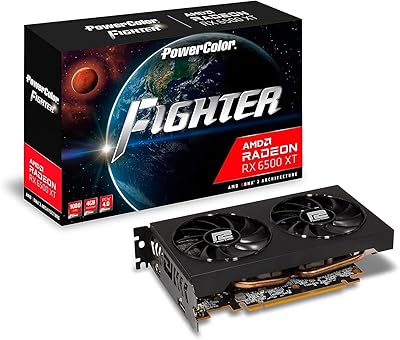
PowerColor Fighter AMD Radeon RX 6500 XT 4GB Graphics Card
82%
91%
Value for Money
89%
1080p Gaming Performance
85%
Build Quality
88%
Power Efficiency
84%
Setup & Installation
More
AMD Radeon RX 6950 XT Graphics Card
72%
92%
4K Gaming Performance
94%
VRAM Capacity & Bandwidth
51%
Power Consumption
48%
Physical Size & Case Fit
67%
Driver Stability
More
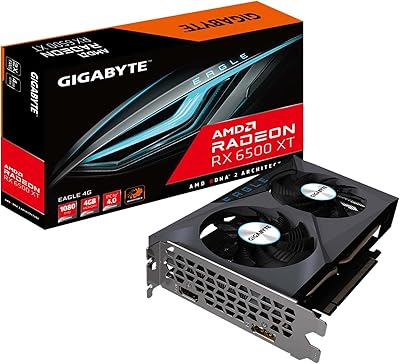
GIGABYTE Radeon RX 6500 XT Eagle 4GB Graphics Card
83%
92%
Value for Money
88%
Gaming Performance (1080p)
90%
Cooling System Efficiency
63%
4K Performance
84%
Build Quality
More
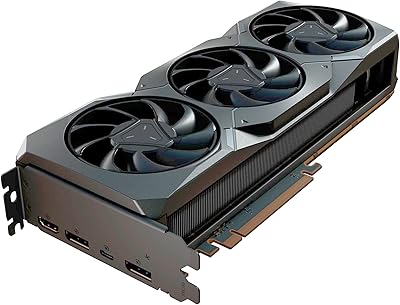
Sapphire Radeon RX 7900 XT Graphics Card
78%
91%
Rasterization Performance
63%
Ray Tracing Performance
93%
VRAM Capacity
88%
Build Quality
84%
Thermal Management
More
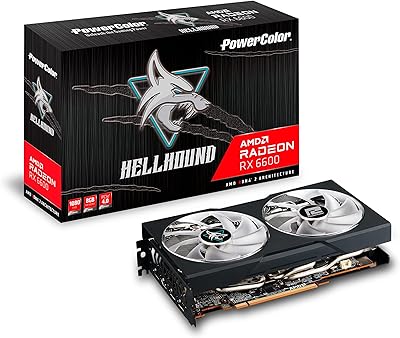
PowerColor Hellhound AMD Radeon RX 6600 8GB Graphics Card
85%
91%
Value for Money
88%
Gaming Performance (1080p)
85%
Cooling Efficiency
75%
Noise Level Under Load
90%
Ease of Installation
More
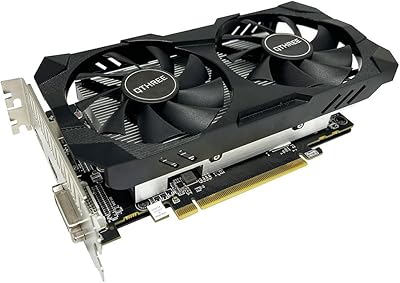
QTHREE Radeon RX 560 XT 8GB Graphics Card
68%
61%
Value for Money
53%
Gaming Performance
88%
Installation & Setup
67%
Thermal Performance
58%
Fan Noise
More
XFX Speedster QICK319 RX 7700 XT 12GB GDDR6 Graphics Card
85%
92%
Gaming Performance
87%
Cooling Efficiency
90%
Price-to-Performance Ratio
62%
Compatibility with Motherboards
88%
Build Quality
More
GIGABYTE Radeon RX 9060 XT Gaming OC 16G
83%
93%
1440p Gaming Performance
96%
Memory Capacity (VRAM)
89%
Thermal Management
84%
Acoustic Performance
87%
Build Quality & Materials
More
PowerColor Hellhound AMD Radeon RX 7900 XTX 24GB Graphics Card
86%
94%
Gaming Performance
89%
Cooling Efficiency
91%
4K/8K Capability
87%
Build Quality
92%
Compatibility with AAA Games
More
GIGABYTE RX 7700 XT 12GB Graphics Card
83%
88%
1440p Gaming Performance
91%
Thermal Performance
83%
Noise Level
93%
Build Quality
76%
Value for Money
More

FAQ

For straightforward 1080p gaming in mainstream titles, the RX 5600 XT still holds up reasonably well. That said, newer mid-range cards from both AMD and Nvidia now offer better performance per dollar at current market prices, so it is worth comparing carefully before committing. If you can get it at a notably lower price than newer alternatives, it remains a capable choice for its intended resolution.

It depends on how you play. At 1080p with typical texture settings, 6GB is generally still workable. However, some 2024 and 2025 titles with high-resolution texture packs can push beyond that limit, causing stuttering or forcing you to drop texture quality. At 1440p, the constraint becomes more noticeable more often. If you tend to max out every graphics setting, this is a real limitation to factor in.

Technically it can output a 4K signal, but gaming at 4K in any demanding title will result in poor, unplayable frame rates. The listed max resolution of 3840x2160 refers to display output capability, not gaming performance. Treat this card as a 1080p card, with some headroom for lighter 1440p use.

No, it does not. The RX 5600 XT is built on AMD's first-generation RDNA architecture, which has no dedicated ray tracing hardware. If ray tracing in games like Cyberpunk 2077 or Alan Wake 2 is important to you, you will need to look at Nvidia RTX cards or AMD's newer RDNA 2 and RDNA 3 lineup instead.

Most users report it stays reasonably quiet during typical gaming sessions, which is one of the more appreciated aspects of PowerColor's multi-fan cooling design. You will hear the fans spin up under heavy load, but it does not tend to be distractingly loud in normal use. Running a demanding benchmark for extended periods will push temperatures and noise higher, as expected.

AMD officially recommends a 550W power supply for the RX 5600 XT. In practice, a quality 500W unit may suffice in a modest system, but 550W to 650W gives you comfortable headroom, especially if your CPU and other components draw meaningful power. Always factor in your full system load, not just the GPU rating.

At 11.54 inches long and spanning a dual or triple slot, it fits in the vast majority of mid-tower and full-tower cases on the market. Before buying, check your case's listed GPU clearance spec to confirm. Most cases advertised for gaming builds accommodate cards in this size range without issue.

AMD's Radeon software has improved considerably over the years and is more stable than it was in earlier iterations. That said, a portion of users still report occasional driver-related hiccups after major updates, particularly around launch windows for new game titles. The general advice is to do a clean driver install when updating and to avoid rushing to grab updates on the day they release.

Yes, the RX 5600 XT works perfectly well with PCIe 3.0 slots. The card is designed for PCIe 4.0 but is fully backward compatible, and the practical gaming performance difference between the two interfaces at this card's performance level is negligible.

Against the GTX 1660 Super, the RX 5600 XT generally trades blows at 1080p but typically comes out slightly ahead in GPU-intensive titles. The RTX 3060 is a different conversation — it offers more VRAM, RDNA 2-level efficiency in Nvidia's architecture, and hardware ray tracing support, making it the stronger all-around option if budget allows. At current pricing, the RX 5600 XT's value proposition depends heavily on what you actually pay for it.