Overview

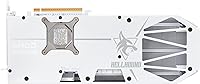
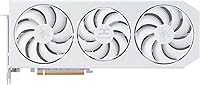
The PowerColor RX 9070 XT 16GB Graphics Card arrives as PowerColor's serious push into the RDNA 4 generation, and it makes a strong first impression. The GPU market at this tier is genuinely competitive right now, with green-team alternatives commanding significant premiums — this Hellhound Spectral White positions itself as the more pragmatic choice without sacrificing ambition. The triple-fan white cooler is a real draw for anyone building a monochrome or all-white rig; it looks purposeful rather than gimmicky. Sitting at #1 in Graphics Cards on Amazon with a 4.5-star average across more than 500 ratings, the early reception is hard to ignore.
Features & Benefits

RDNA 4 brings a meaningful IPC jump over the previous generation, and you feel it in games that stress shader throughput and ray tracing workloads — both areas where prior AMD cards left performance on the table. The 16GB of GDDR6 memory running at 20 Gbps isn't just a spec box to tick; it matters when you're pushing 4K texture packs, running heavily modded titles, or doing GPU-accelerated rendering. The factory overclock pushes the boost clock to 2460 MHz, giving you real headroom without touching a slider. Just be aware: this card requires an 800W power supply minimum, so older mid-range builds may need a PSU upgrade before installation.

Best For

The RX 9070 XT is built for 1440p gamers who refuse to turn settings down, and it holds its own at 4K too — particularly for those upgrading from RTX 3080 or RX 6700 XT territory where the performance gap is substantial. If you're building a white-themed PC, the Spectral White cooler is one of the few high-end GPU options that genuinely fits the aesthetic without compromise. Content creators who rely on GPU-accelerated workflows — video encoding, 3D rendering, even AI-based upscaling pipelines — will appreciate the VRAM ceiling. This card is not the right pick if you're running a modest power supply or a compact ITX case.

User Feedback

Buyers consistently praise PowerColor's flagship card for delivering real-world frame rates that align with advertised specs — always a concern with any new GPU launch. The build quality and aesthetics get frequent mentions, especially from white-build enthusiasts who struggled to find premium options before. On the flip side, several reviewers note that fan noise under sustained load is noticeable, and a handful of early adopters flagged initial driver instability in specific titles — something that tends to improve over time but warrants monitoring. A few buyers also mentioned the PSU requirement caught them off guard. Overall sentiment leans strongly positive across both gaming and productivity use cases.

Pros

  • RDNA 4 architecture delivers a real generational performance jump, especially in ray tracing workloads where prior AMD cards fell short.
  • 16GB of GDDR6 VRAM future-proofs the card for high-resolution texture packs and memory-hungry workloads.
  • Factory overclock out of the box means strong performance without touching any settings yourself.
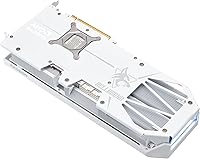
  • The triple-fan Spectral White cooler is one of the cleanest-looking high-end GPU options available for white builds.
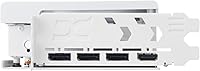
  • Supports up to four simultaneous displays, including HDMI 2.1 and three DisplayPort 2.1a outputs.
  • At 327mm, the RX 9070 XT fits comfortably in most standard mid-tower cases without the fitting anxiety of larger flagship cards.
  • Verified buyers consistently confirm that real-world frame rates hold up to advertised performance claims.
  • Strong value proposition compared to equivalently performing options from competing brands at higher price points.
  • Idle fan-stop behavior keeps the card near-silent during light desktop use and video playback.

Cons

  • An 800W minimum PSU requirement means many existing mid-range builds will need a costly power supply upgrade first.
  • Fan noise under sustained gaming loads is noticeably loud according to multiple buyer reports.
  • Early driver stability issues in certain titles have been flagged — not unusual for a new AMD architecture, but worth knowing upfront.
  • No USB-C display output, which limits compatibility with some newer monitors and capture devices.
  • At 2.68 pounds, the card puts real stress on the PCIe slot over time without a GPU support bracket.
  • Availability has been inconsistent since launch, making it difficult to purchase at retail price without monitoring stock actively.
  • The white color scheme, while attractive, limits resale flexibility for buyers who may later switch to a different build aesthetic.

Ratings

Our AI rating system analyzed verified global buyer reviews for the PowerColor RX 9070 XT 16GB Graphics Card, actively filtering out incentivized, bot-generated, and low-quality submissions to surface what real users actually experience. Scores reflect both the genuine strengths that make this card a standout in its class and the honest pain points that prospective buyers deserve to know about. Every category below is weighted against real-world usage patterns — not spec sheets.

Gaming Performance
92%
Verified buyers consistently report that real-world frame rates at 1440p and 4K match or exceed expectations, particularly in GPU-limited scenarios. The RDNA 4 architecture's IPC improvements translate into noticeably smoother gameplay in open-world and ray-traced titles compared to prior-gen AMD cards.
A small subset of users noted occasional performance inconsistencies in certain DX11 titles, which appear to be driver-related rather than hardware limitations. These instances are infrequent but worth monitoring as driver updates continue rolling out.
Value for Money
89%
Buyers upgrading from RTX 3080 or RX 6700 XT class cards repeatedly describe the purchase as feeling justified given the performance jump. When measured against competing green-team options at similar or higher price points, the RX 9070 XT is widely regarded as the more rational choice.
The 800W PSU requirement means some buyers face an additional system upgrade cost that wasn't anticipated upfront, which effectively increases the total investment. For those already on a capable PSU, the value equation is excellent — but it's not universal.
Build Quality
88%
The physical construction of this Hellhound Spectral White draws consistent praise — the shroud feels dense and well-assembled, and the backplate adds rigidity without adding unnecessary bulk. Buyers who handled multiple GPU brands noted that PowerColor's fit and finish here feels competitive with more expensive alternatives.
A few early buyers flagged minor cosmetic inconsistencies in the white finish, including slight color variation between the shroud and backplate. These appear to be isolated quality control cases rather than a systemic issue, but they did surface in early production units.
Thermal Management
84%
Under gaming loads, temperatures stay comfortably within safe operating range according to the majority of buyer reports, with the triple-fan cooler doing its job without requiring aggressive fan curves. The zero RPM idle mode is genuinely appreciated by users who leave their PCs running during non-gaming tasks.
A portion of buyers running the card in cases with restricted airflow reported higher-than-expected temperatures, suggesting the cooler performs best when ambient airflow is adequate. Thermal headroom in poorly ventilated mid-towers is tighter than in open-air test bench conditions.
Noise Level
71%
29%
At idle and during light desktop use, the card is completely silent thanks to the fan-stop feature — a detail that users working or browsing at their gaming rigs genuinely appreciate. Low-to-medium load scenarios also keep noise levels reasonable and unobtrusive.
Under sustained full-load gaming, multiple buyers describe the fan noise as noticeably audible from a standard desk distance. It's not unusually loud for a card in this performance tier, but buyers expecting near-silence during intense sessions will be disappointed.
Driver Stability
67%
33%
For the majority of popular gaming titles, current driver builds deliver a stable and reliable experience, and AMD has pushed several updates since launch that addressed early reported issues. Users running mainstream titles like Cyberpunk, Hogwarts Legacy, or competitive shooters report no persistent problems.
A meaningful minority of early adopters experienced crashes or visual artifacts in specific titles during the first weeks post-launch, which is a recurring pattern with new AMD architecture releases. Buyers who need day-one stability across a wide game library should factor in a short waiting period.
Aesthetics & Design
93%
Among white-build enthusiasts, this card is almost universally praised as one of the cleanest-looking high-end GPU options currently available. The all-white shroud and backplate combination photographs well and integrates naturally with white motherboard and case setups without looking out of place.
The white colorway is a deliberate design choice that works brilliantly in matching builds but limits the card's visual flexibility for non-white systems. Buyers building dark or RGB-heavy rigs may find the aesthetic jarring rather than complementary.
Display Connectivity
87%
Having three DisplayPort 2.1a outputs alongside an HDMI 2.1 port gives users genuine flexibility for multi-monitor workstations and sim-racing setups. Content creators who drive a reference display alongside gaming monitors particularly appreciate having dedicated outputs for each without adapters.
The absence of a USB-C display output is a minor but real limitation for buyers with newer monitors or portable display devices that rely on that connector. It's not a dealbreaker, but it's a feature competing cards at this tier sometimes include.
VRAM Adequacy
94%
16GB of GDDR6 provides meaningful breathing room for 4K texture packs, heavily modded open-world games, and GPU-accelerated creative workloads — scenarios where 8GB or 12GB cards begin to stutter or drop quality. Content creators using the card for video encoding or 3D rendering find the VRAM headroom directly impactful.
There are very few scenarios where 16GB feels insufficient at this product tier, making this category hard to criticize. The only honest note is that memory bandwidth, while strong at 20 Gbps, trails some competing configurations built around wider bus designs.
Installation Experience
79%
21%
Most buyers report a straightforward installation process with no unusual mechanical complications. The 327mm card length slots neatly into standard mid-tower cases, and the dual 8-pin connector setup is familiar and uncomplicated for anyone who has installed a discrete GPU before.
A handful of buyers noted the card's weight puts noticeable stress on the PCIe slot without a support bracket, which is not included in the box. First-time builders unfamiliar with GPU sag may not realize they need an aftermarket bracket until the card is already installed.
Software & Ecosystem
72%
28%
AMD's Adrenalin software has matured substantially and gives users access to FidelityFX Super Resolution, performance overlays, and driver management from a single interface. Buyers already embedded in the AMD ecosystem found the transition to RDNA 4 smooth from a software standpoint.
Compared to Nvidia's GeForce Experience, AMD's software suite still draws complaints about UI intuitiveness and occasional background crashes. New AMD users switching from green-team cards specifically mention a learning curve that can be frustrating during initial setup.
Packaging & Unboxing
76%
24%
The retail packaging is protective and well-designed, and most buyers received the card in perfect condition. The unboxing experience is appropriately premium for a card at this price tier, with a presentation that reflects the product's positioning.
A small number of early buyers flagged minor shipping damage to the outer box, though the card itself arrived undamaged in virtually all reported cases. Some users felt the accessory bundle was minimal given the price, specifically noting the absence of a PCIe power adapter or GPU support bracket.
Multi-Monitor Support
86%
Four independent display outputs supporting up to 8K make this card genuinely practical for multi-monitor productivity and gaming setups. Sim-racing users running triple 1440p monitors praised the card's ability to handle the workload without hitting VRAM limits.
AMD's multi-display configuration process via Adrenalin can require some manual setup compared to plug-and-play competitors, and a few users encountered resolution detection issues on initial boot with certain monitor combinations. These are typically resolved by a driver reset or display hot-plug.
Long-Term Reliability
81%
19%
It is early in the product lifecycle, but buyer sentiment around build durability and component quality is broadly positive. PowerColor has a solid reputation for producing cards that hold up over multi-year ownership, and nothing in current feedback suggests an outlier here.
The card's weight combined with standard PCIe slot stress is a legitimate long-term concern without a GPU support bracket, particularly in systems that are frequently transported. It's a manageable risk, but one that buyers should proactively address rather than ignore.

Suitable for:

The PowerColor RX 9070 XT 16GB Graphics Card is the right call for PC gamers who play at 1440p on high refresh rate monitors and refuse to dial back visual settings — this card handles that workload with headroom to spare. It's equally compelling for anyone starting to push into 4K gaming without wanting to pay the significant premium that competing green-team options currently demand. Upgraders stepping up from an RTX 3080 or RX 6700 XT will notice a genuine performance leap that makes the purchase feel justified rather than incremental. Content creators who lean on GPU acceleration for video encoding, 3D rendering, or AI-based tools will find the 16GB VRAM buffer genuinely useful for demanding projects. Finally, if you're assembling a white or monochrome build, this Hellhound Spectral White is one of the very few high-end GPUs that nails the aesthetic without asking you to compromise on performance.
Not suitable for:

The PowerColor RX 9070 XT 16GB Graphics Card is a hard sell for anyone running a power supply under 800W — and that rules out a surprising number of mid-range systems that were never built with this tier of GPU in mind. Compact ITX builders should also measure twice before ordering, since the 327mm card length won't clear every small-form-factor case. If you're primarily a casual or esports-only gamer running titles at 1080p, the performance on offer here is well beyond what you actually need, and the investment won't translate into a meaningful day-to-day improvement. Buyers who have historically struggled with AMD driver stability — particularly in the early months after a new architecture launch — should go in with eyes open, as community reports suggest the usual teething issues that tend to accompany new AMD releases. Anyone expecting plug-and-play perfection from day one may want to wait a driver cycle or two before pulling the trigger.
Specifications

  • GPU Architecture: Built on AMD's RDNA 4 architecture, delivering improved IPC, stronger ray tracing performance, and AI-accelerated rendering compared to the previous generation.
  • GPU Chip: Powered by the AMD Radeon RX 9070 XT processor, AMD's flagship RDNA 4 silicon for high-end gaming and content creation workloads.
  • VRAM: Equipped with 16GB of GDDR6 memory, providing ample headroom for 4K textures, heavily modded titles, and GPU-accelerated creative applications.
  • Memory Speed: The GDDR6 memory operates at 20 Gbps, ensuring fast data throughput for high-resolution rendering and demanding workloads.
  • Boost Clock: Factory overclocked to a boost clock of 2460 MHz, delivering above-reference performance straight out of the box.
  • Card Dimensions: The card measures 327 x 142 x 49 mm, occupying approximately 2.5 expansion slots in a standard ATX or mid-tower chassis.
  • Card Length: At 327 mm in length, this card fits most standard mid-tower cases, though clearance should be verified before purchase for smaller enclosures.
  • Power Connectors: Requires two 8-pin PCIe power connectors to be connected from the power supply for stable operation.
  • Minimum PSU: AMD and PowerColor specify a minimum 800W system power supply, accounting for the card's peak draw alongside a full gaming PC configuration.
  • Display Outputs: Provides four display outputs: one HDMI 2.1 port and three DisplayPort 2.1a ports, supporting multi-monitor and high-refresh-rate setups.
  • Max Resolution: Capable of driving displays at up to 7680x4320 (8K) resolution via DisplayPort 2.1a at supported refresh rates.
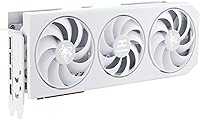
  • Cooler Design: Uses a triple-fan cooling solution finished in white, with a fan-stop feature that keeps the card silent during idle and light-use conditions.
  • Card Color: The Hellhound Spectral White edition features an all-white shroud and backplate, designed specifically for white or monochrome PC builds.
  • Card Weight: The card weighs 2.68 pounds (approximately 1.22 kg), which places meaningful stress on the PCIe slot and benefits from a GPU support bracket.
  • Connectivity Standard: Connects to the motherboard via a PCIe 4.0 or PCIe 5.0 x16 slot, maintaining backward compatibility with PCIe 4.0 platforms.
  • API Support: Supports DirectX 12 Ultimate, Vulkan, and OpenGL, covering the full range of modern gaming and professional rendering APIs.
  • Display Technology: Compatible with AMD FreeSync Premium Pro for variable refresh rate gaming, reducing screen tearing on supported monitors.
  • Model Number: The official model identifier is RX9070XT 16G-L/OC/WHITE, which can be used to verify compatibility documentation and warranty registration.

Related Reviews
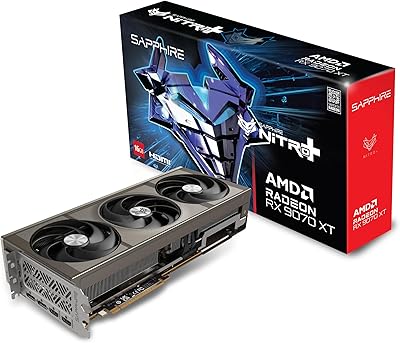
Sapphire Nitro+ RX 9070 XT 16GB
82%
92%
Gaming Performance
88%
Thermal Management
91%
Noise Level
93%
VRAM Capacity & Bandwidth
74%
Ray Tracing Performance
More
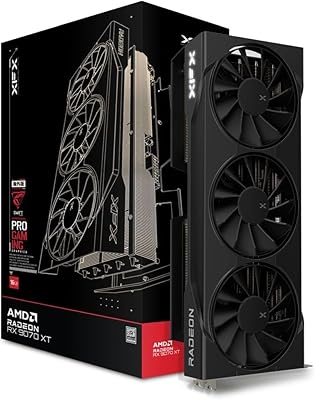
XFX Swift RX 9070 XT 16GB Graphics Card
78%
93%
Gaming Performance at 1440p
78%
4K Gaming Capability
91%
Thermal Performance
82%
Noise Levels
89%
Build Quality
More
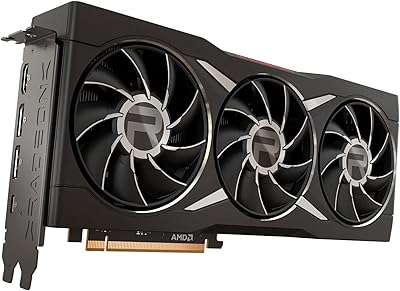
AMD Radeon RX 6950 XT Graphics Card
72%
92%
4K Gaming Performance
94%
VRAM Capacity & Bandwidth
51%
Power Consumption
48%
Physical Size & Case Fit
67%
Driver Stability
More
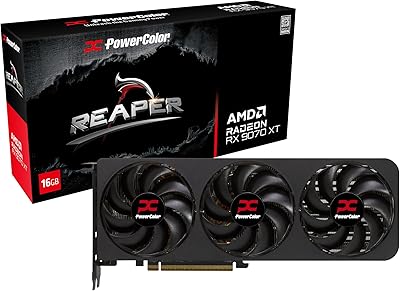
PowerColor Reaper RX 9070 XT 16GB
81%
93%
Gaming Performance at 1440p
88%
Value for Money
71%
Thermal Performance
67%
Noise Levels
84%
Build Quality & Physical Design
More
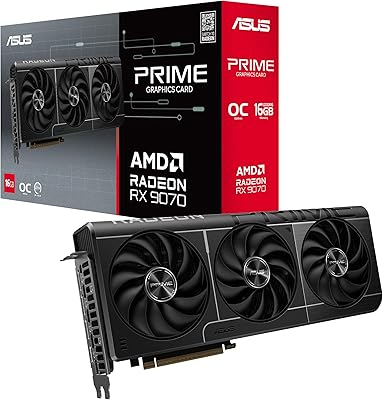
ASUS Prime RX 9070 OC Graphics Card
82%
91%
Gaming Performance at 1440p
88%
Thermal Management
87%
Noise Levels
84%
Build Quality & Feel
67%
Driver Stability & Software
More
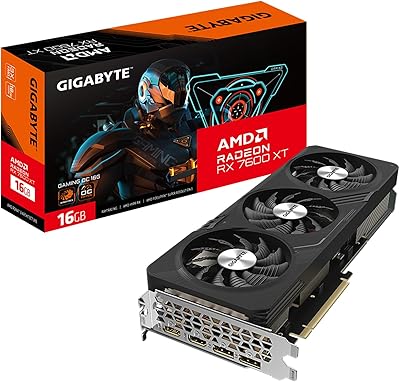
GIGABYTE RX 7600 XT 16GB Graphics Card
80%
88%
Value for Money
84%
1080p Gaming Performance
72%
1440p Gaming Performance
93%
VRAM Capacity
86%
Thermal Performance
More
GIGABYTE RX 7800 XT 16GB Graphics Card
78%
91%
1440p Gaming Performance
88%
Thermal Management
93%
VRAM & Future-Proofing
79%
Value for Money
61%
Driver & Software Experience
More
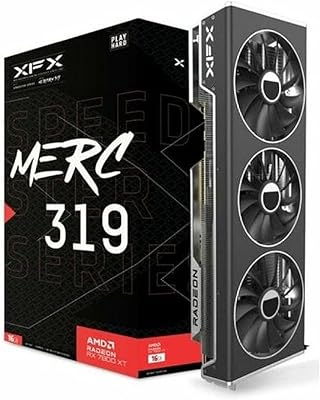
XFX Speedster MERC319 RX 7800 XT 16GB GDDR6 Graphics Card
85%
91%
Overall Performance
94%
Gaming Performance at 4K
88%
Cooling Efficiency
87%
Value for Money
85%
Build Quality
More
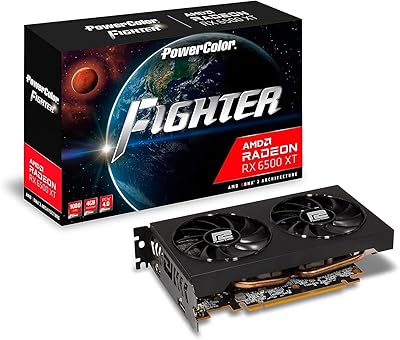
PowerColor Fighter AMD Radeon RX 6500 XT 4GB Graphics Card
82%
91%
Value for Money
89%
1080p Gaming Performance
85%
Build Quality
88%
Power Efficiency
84%
Setup & Installation
More
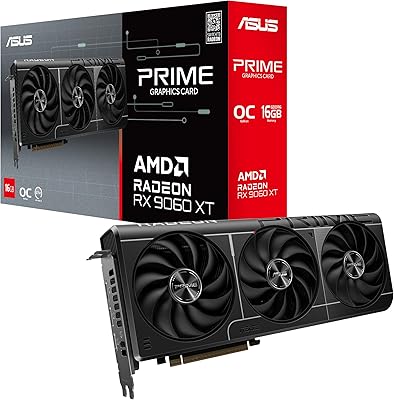
ASUS RX 9060 XT 16GB Graphics Card
82%
91%
1440p Gaming Performance
94%
VRAM Capacity
89%
Thermal Performance
88%
Noise Levels
93%
Build Quality
More

FAQ

It is a genuine requirement, not just padding. The RX 9070 XT can draw significant power under sustained gaming loads, and when you factor in the rest of a modern gaming system — CPU, drives, fans, RAM — an 800W PSU is the responsible floor. Running it on a 650W or 750W unit is risky and can cause instability or shutdowns under load.

At 327 mm, it clears most standard mid-towers without issue. That said, always check your specific case's listed GPU clearance before ordering — some cases with front-mounted radiators or unconventional drive cage layouts can reduce the available space below 327 mm.

It handles 4K gaming well in most titles, particularly when using AMD's upscaling technology to boost frame rates. For native 4K at maximum settings in the most demanding games, you may see some dips, but for the vast majority of the library it performs strongly at that resolution.

Drivers have improved noticeably since launch, but AMD's track record with new architecture releases means there can be lingering quirks in specific titles. If you rely on your PC for work or streaming and can't tolerate occasional driver hiccups, it's worth checking current community forums before buying. Most mainstream gaming titles run without issues.

Yes, the triple-fan cooler includes a zero RPM mode that kicks in during idle and light desktop use, so the card is completely silent when you're browsing or watching video. Under sustained gaming load, however, the fans do spin up audibly — multiple buyers describe the noise as noticeable, though not unusually loud for a card in this performance class.

Absolutely. The card has four outputs — one HDMI 2.1 and three DisplayPort 2.1a — so a four-monitor setup is fully supported. Just note that not all outputs can be active in every combination depending on your display configuration, so check AMD's multi-display documentation for your specific setup.

It works fine with PCIe 4.0 x16 motherboards. PCIe is backward compatible, so you won't need to upgrade your platform just to use this card. Performance difference between PCIe 4.0 and 5.0 for gaming GPUs at this tier is negligible.

For most people making that jump, yes. The RX 9070 XT offers a meaningful step up in rasterization performance, a substantially better ray tracing experience than the 3080 provided, and double the VRAM. If you're gaming at 1440p or trying to push into 4K, the difference is real and tangible.

Buyer feedback on build quality is generally positive — the shroud feels solid and the finish holds up well under normal handling. That said, like any painted or coated plastic surface, it can show scratches if you're rough during installation. Take care when seating it, and consider using a GPU support bracket to avoid long-term stress on the slot and backplate.

The 16GB VRAM buffer makes it genuinely useful for GPU-accelerated creative work — video encoding via AMF, 3D viewport rendering in Blender, and AI-based upscaling or noise reduction tasks all benefit from the memory headroom. It's not a professional workstation card, but for prosumer creative workflows it punches well above entry-level options.

Where to Buy