Overview

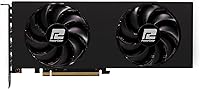
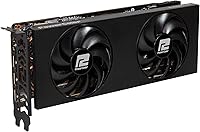
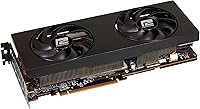
The PowerColor RX 7800 XT 16GB Graphics Card arrived in December 2024 into a GPU market overdue for a strong mid-range AMD contender. PowerColor has been building custom AMD cards for decades, and that experience shows in build quality and consistent driver support. The RDNA 3 architecture underneath delivers solid rasterization performance — ray tracing remains weaker than Nvidia's RTX 4070 at a comparable price, but the gap has closed noticeably. The 260mm card length is worth flagging early: it genuinely fits mATX and compact mid-tower cases where longer triple-fan designs simply won't clear the front panel. That physical practicality alone sets this PowerColor twin-fan card apart from bulkier alternatives.
Features & Benefits

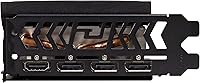
The twin-fan cooler keeps thermals genuinely manageable during long gaming sessions — not whisper-quiet, but noticeably restrained compared to triple-fan cards running harder. Sixteen gigabytes of GDDR6 memory at 19.5 Gbps is the spec that actually matters most here: it handles heavily modded games, high-resolution texture packs, and 4K workloads without the throttling that 8GB or 12GB cards routinely hit. Four display outputs — one HDMI 2.1 and three DisplayPort 2.1 ports — cover almost any multi-monitor setup without adapters. The 2124 MHz boost clock holds reasonably steady under sustained load, though expect some variance in real sessions. One honest caveat: the dual 8-pin power requirement means your PSU needs 750W, which is a real added cost if you're running an older 650W unit.

Best For

This RX 7800 XT is squarely aimed at 1440p gamers who want modern AAA titles at high or maxed settings without stretching to a flagship GPU budget. The compact footprint makes it genuinely viable for builders with smaller mid-tower or mATX cases where a 260mm card is not just convenient but necessary. AMD users invested in FSR 3 and Radeon Software will find everything works as expected without adapting to a foreign ecosystem. The 16GB VRAM headroom also makes it a credible pick for light video editing or 3D rendering where memory capacity directly impacts workflow. Multi-monitor users on high-refresh or 4K displays will also appreciate the native DisplayPort 2.1 bandwidth.

User Feedback

Across nearly 900 verified ratings averaging 4.2 out of 5, the most consistent praise clusters around thermal management and the card's generous memory — buyers repeatedly note that temperatures stay controlled through extended gaming without aggressive fan ramp-up. Packaging holds up well in transit, which matters when buying a GPU online sight-unseen. Criticism, though a minority, tends to land on AMD's Radeon Software: some users report driver hiccups needing a clean reinstall to fix. Buyers switching from Nvidia generally mention a short adjustment to the Radeon interface before settling in. A smaller number of reviewers flagged coil whine under load, which seems unit-dependent rather than a consistent manufacturing issue.

Pros

  • Sixteen gigabytes of GDDR6 VRAM is unusually generous at this price tier, handling texture-heavy and modded games without breaking a sweat.
  • The 260mm card length opens up case options that triple-fan competitors simply cannot fit into.
  • Four display outputs — including three DisplayPort 2.1 ports — support multi-monitor and high-refresh 4K setups natively without adapters.
  • Thermals stay controlled under extended gaming load, and fan noise remains reasonable rather than intrusive.
  • RDNA 3 rasterization performance is competitive, delivering smooth 1440p framerates across most modern titles.
  • Full FSR 3 support gives AMD ecosystem users a capable upscaling solution that works across a wide range of games.
  • Build quality is solid for a board partner card, with packaging that holds up well in transit — a real concern for online GPU purchases.
  • The twin-fan design keeps the physical footprint modest without meaningfully sacrificing cooling headroom compared to larger triple-fan cards.
  • A 4.2 out of 5 rating across nearly 900 verified buyers reflects broadly positive real-world ownership experience.

Cons

  • Ray tracing performance lags behind Nvidia alternatives at a comparable price — it works, but it is not a strength.
  • The 750W PSU minimum is a hard requirement that forces an extra upgrade cost for users on older 650W platforms.
  • AMD's Radeon Software driver stack still generates occasional stability complaints, with some users needing clean reinstalls after updates.
  • Coil whine under heavy load has been flagged by a subset of buyers, and it appears inconsistent across units.
  • Boost clock behavior varies in real gaming sessions, so synthetic benchmark numbers should not be taken at face value.
  • Buyers switching from Nvidia will face a short but real adjustment period with Radeon's interface and feature set.
  • At 1080p, this card is overkill for budget-focused builds where a cheaper GPU would deliver similar results.
  • No triple-fan cooling option is available in this specific PowerColor variant, which may concern builders in poorly ventilated cases.

Ratings

Our AI-generated scores for the PowerColor RX 7800 XT 16GB Graphics Card are built from a rigorous analysis of verified global buyer reviews, with spam submissions, incentivized ratings, and bot-generated feedback systematically filtered out before any scoring was applied. Each category below reflects the full spectrum of real ownership experiences — sustained gaming sessions, driver updates, physical installations, and daily software use — not controlled lab benchmarks. Consistent strengths and recurring pain points are represented with equal weight so you can make a clear-eyed buying decision.
Gaming Performance
84%
At 1440p, this RX 7800 XT consistently delivers high to ultra settings in demanding AAA titles with smooth, comfortable framerates — buyers frequently cite Cyberpunk 2077, Hogwarts Legacy, and Starfield running well at that resolution. For the target audience, real-world gaming performance rarely disappoints during extended sessions.
At 4K with everything maxed, some titles require dialing back shadows or post-processing effects to maintain fluid framerates, which limits its appeal as a pure 4K card. Synthetic benchmark numbers also tend to look better than sustained in-game performance, where thermal variance under prolonged load plays a real role.
VRAM Capacity
93%
Sixteen gigabytes of GDDR6 is genuinely rare at this price tier, and buyers running heavily modded games, 4K texture packs, or creative apps alongside gaming feel the difference immediately — no stuttering from VRAM saturation that routinely plagues 8GB and 12GB competitors. It is the single most-praised specification across the review pool.
For users sticking to standard 1440p with no mods or texture upgrades, 16GB is more than they will realistically use, making the advantage future-proofing rather than immediately felt. A smaller subset of reviewers note that memory bandwidth, not just raw capacity, can still create bottlenecks in the most intensive workloads.
Value for Money
76%
24%
Buyers who compared specs against competing cards frequently found this PowerColor twin-fan card offered more VRAM per dollar than Nvidia alternatives at a similar price — a concrete advantage for long-term ownership. For 1440p gaming, the performance-to-price ratio lands in a range that most verified buyers describe as fair to good.
The 750W PSU minimum catches some buyers off guard, adding an unplanned upgrade cost that quietly erodes the value proposition for those on older mid-range systems. When the RTX 4070 goes on sale, the price gap narrows enough that AMD's software ecosystem tradeoffs become a genuinely harder call to make.
Thermal Management
81%
19%
During multi-hour gaming sessions, most reviewers report GPU temperatures staying in a comfortable operating range without clock throttling — a consistent finding across the review pool that reflects well on the cooling design punching above its physical size. Buyers running compact builds particularly appreciate that thermals hold steady even in tighter airflow environments.
The twin-fan setup works harder than triple-fan alternatives moving the same heat across a smaller surface area, and some users in poorly ventilated cases or warmer climates report temperatures running higher than ideal under sustained stress. A minority of buyers also note that fans spin up more aggressively than expected during the first few minutes of a heavy gaming load.
Ray Tracing Performance
57%
43%
RDNA 3 has made real progress on ray tracing compared to the previous generation, and buyers who use RT selectively — enabling it in titles where it makes a strong visual difference — report workable results with FSR 3 upscaling offsetting the framerate cost. For occasional RT use, it is a functional if unexciting experience.
This is the most consistent criticism from buyers who switched from Nvidia: real-time ray tracing performance noticeably lags behind the RTX 4070 at a comparable price, and the gap is wide enough to matter in RT-heavy titles. Users who prioritize ray tracing as a core feature will find this RX 7800 XT a frustrating compromise regardless of its other strengths.
Build Quality
83%
PowerColor's manufacturing quality shows up reliably in buyer feedback — reviewers comment on solid backplate construction, secure connector seating, and a card that arrives in good physical condition with no flex or wobble after installation. For a board partner card in this price range, fit and finish meet expectations consistently.
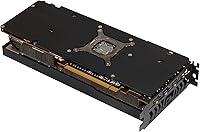
A subset of buyers note that the plastic fan shroud feels less premium than some triple-fan competitors in the same price bracket, and a handful report minor cosmetic scuffs on arrival that are not functional issues but matter for builders with windowed cases. These are edge cases, not systemic problems.
Noise Level
72%
28%
For a dual-fan card managing this thermal load, noise levels are broadly acceptable — most buyers describe the fan profile as noticeable but not intrusive during normal gaming, and the card runs completely silent at desktop idle and light loads when the fans spin down entirely. That zero-RPM idle behavior is a specific positive for quiet home setups.
Under sustained heavy load, the fans reach a speed that becomes clearly audible in a quiet room, and the pitch of this particular fan curve draws more comments than competing triple-fan designs operating at similar temperatures. Users in open-air rooms or always wearing headphones rarely flag this, but it is a real and documented data point for noise-sensitive buyers.
Driver Stability
66%
34%
The majority of buyers across this large review sample report stable day-to-day operation with no driver-related disruptions, and AMD's Radeon driver cadence has improved meaningfully in recent years. For users who perform clean DDU installs after major updates, the experience is largely trouble-free with no ongoing intervention required.
A recurring minority complaint — appearing frequently enough to be statistically meaningful across 894 verified reviews — involves instability after automatic driver updates, requiring a clean DDU reinstall to resolve. Buyers who are not comfortable with that process or who expect a truly plug-and-play driver experience may find this friction more disruptive than it sounds in practice.
Display Connectivity
91%
Four outputs — one HDMI 2.1 and three DisplayPort 2.1 ports — cover virtually every realistic multi-monitor configuration a buyer at this tier would build, and both standards provide the bandwidth needed for high-refresh 4K and ultrawide displays natively without adapters. Reviewers building triple-monitor workstations specifically call out the display output selection as a genuine strength.
There is no USB-C or Thunderbolt video output, which limits compatibility with some professional monitors and newer portable displays that rely on that connector. For buyers building a creative workstation where USB-C display output is part of the setup, this is a real gap that requires an adapter with no guarantee of full bandwidth support.
Case Compatibility
87%
The 260mm card length is the standout compatibility advantage, and it appears repeatedly in buyer reviews — users specifically chose this card over longer triple-fan alternatives because it physically fit their mATX or compact mid-tower build where competing options simply would not clear. That constraint-solving value is difficult to overstate for the right buyer.
The card occupies approximately 2.5 expansion slots, which can create clearance issues in tightly packed mATX builds where adjacent PCIe slots are already occupied. A small number of buyers in cases with front-panel fan or radiator obstructions also report needing to verify airflow routing more carefully than anticipated before the build came together cleanly.
Software Experience
62%
38%
AMD's Radeon Software covers the core features most gamers need — performance overlay, fan curve adjustment, and per-game profiles — without requiring third-party tools. Buyers who configure it once and leave it alone generally report no complaints, and the automatic game detection works reliably for common titles.
Buyers switching from Nvidia's GeForce Experience consistently describe Radeon Software as less intuitive to navigate, with features like anti-lag, sharpening, and capture tools buried in a menu structure that takes real time to learn. A meaningful cluster of the nearly 900 reviews flagged the software as the weakest part of an otherwise solid ownership experience.
Power Efficiency
69%
31%
Under typical 1440p gaming loads, the card's power draw stays within expectations for its performance tier, and buyers with properly sized 750W or higher PSUs report stable system behavior with no unexpected shutdowns or voltage issues. Desktop idle power draw is low enough that everyday non-gaming use adds nothing meaningful to energy costs.
The 750W system PSU minimum sits higher than many buyers expect at this price tier, and the dual 8-pin connector requirement means older platforms with a single 8-pin PCIe rail face a mandatory PSU replacement before the card will even run. Performance-per-watt efficiency also trails Nvidia's competing options, which is a real consideration for buyers in regions with high electricity costs.
FSR and Upscaling
78%
22%
FSR 3 support is a practical advantage for buyers playing across a wide range of supported titles, and the frame generation technology meaningfully boosts perceived smoothness in open-world games at 1440p where GPU demand runs high. Buyers who lean into AMD's upscaling ecosystem consistently report positive results in supported titles.
FSR 3 is available in a growing but still narrower selection of titles compared to Nvidia's DLSS library, which has broader and more mature game-level support. In quality mode, FSR 3 output is competitive but not identical to DLSS quality, and some buyers notice visible differences in fine texture detail and motion clarity during fast-moving sequences.
Out-of-Box Experience
82%
18%
Packaging quality earns consistent praise throughout the review pool — buyers note the card arrives well-protected, undamaged, and ready to drop into a build without setup surprises. The physical installation process is completely standard, which matters particularly for first-time GPU upgraders who are not looking to troubleshoot before they can even power on.
The box includes only the card and basic documentation — no power cable adapters, no HDMI cable, and no bundle extras that would ease installation for buyers on older PSU platforms. A small number of buyers also report cosmetic damage to the outer box during shipping, though the card itself arrived undamaged in virtually all such cases.
Future-Proofing
77%
23%
The 16GB VRAM buffer and DisplayPort 2.1 outputs are the strongest forward-looking arguments for this card — both exceed what the current gaming ecosystem demands, giving the PowerColor 7800 XT a meaningful runway before it becomes the performance bottleneck in a typical 1440p gaming setup. For buyers planning a three-to-four year ownership cycle, that headroom is a real advantage.
Ray tracing capability and AMD's competitive position in AI-driven rendering features may become more relevant as game engines integrate these techniques more aggressively over the card's usable lifespan. If the industry accelerates its shift toward RT and AI upscaling as baseline rendering requirements, this card ages faster than its strong rasterization numbers alone would suggest.

Suitable for:

The PowerColor RX 7800 XT 16GB Graphics Card is a strong fit for PC gamers who primarily play at 1440p and want to run modern AAA titles at high or maxed settings without paying flagship GPU prices. Its 260mm length is a genuine practical advantage for builders working with compact mid-tower or mATX cases, where most competing cards in this performance tier simply won't physically fit. Buyers already invested in the AMD ecosystem — relying on FSR 3 upscaling or Radeon Software features — will get full native support without workarounds. The 16GB of GDDR6 memory also makes this RX 7800 XT a reasonable pick for light content creators: video editors and 3D artists who occasionally hit VRAM walls on smaller cards will find the headroom genuinely useful. Multi-monitor users targeting high-refresh or 4K displays will also benefit directly from the four display outputs, all running on modern HDMI 2.1 and DisplayPort 2.1 standards.
Not suitable for:

Buyers primarily chasing ray tracing performance should temper expectations — while RDNA 3 has improved in this area, this PowerColor twin-fan card still trails Nvidia's competing RTX options at a similar price when RT workloads are the priority. Anyone running a 650W power supply will face an immediate hidden cost, since the card requires a 750W system minimum, and that PSU upgrade can meaningfully affect the total budget calculation. Competitive esports players focused on ultra-high framerates in lightweight titles at 1080p are also not the target audience, as there are more cost-efficient options for that specific use case. Heavy professional workloads — 3D rendering, large-scale video production, or machine learning — demand purpose-built compute cards, and the PowerColor RX 7800 XT 16GB Graphics Card is not engineered for those sustained workloads. Finally, buyers sensitive to software friction should note that AMD's Radeon driver stack, while improved, still generates occasional complaints that Nvidia's ecosystem does not, and that tradeoff is real.
Specifications

  • GPU: Powered by the AMD Radeon RX 7800 XT chip built on the RDNA 3 architecture, delivering competitive rasterization performance in the mid-to-upper GPU tier.
  • VRAM: Equipped with 16GB of GDDR6 memory, providing substantial headroom for high-resolution textures, heavily modded games, and sustained 4K workloads.
  • Memory Speed: The GDDR6 memory operates at 19.5 Gbps, enabling fast data throughput that supports demanding 1440p and 4K rendering scenarios.
  • Boost Clock: The GPU boost clock reaches up to 2124 MHz, though real-world sustained speeds vary depending on thermal conditions and workload intensity.
  • Card Length: The PCB measures 260mm in length, making it physically compatible with compact mid-tower and mATX cases that cannot fit longer triple-fan designs.
  • Dimensions: Full card dimensions are 260 x 109 x 50mm, occupying approximately 2.5 expansion slots in a standard ATX or mATX motherboard bay.
  • Weight: The card weighs 2.87 lb (approximately 1.3 kg), which falls within the normal range for a dual-fan mid-range GPU.
  • Cooling System: A twin-fan active cooling solution manages thermals during sustained gaming loads without the added bulk of a triple-fan heatsink assembly.
  • Power Connectors: Requires two standard 8-pin PCIe power connectors from the system power supply for stable operation under full gaming load.
  • Min. PSU: A minimum 750W system power supply is required, accounting for total platform draw including CPU, storage, and all other components.
  • Display Outputs: Offers four video outputs: one HDMI 2.1 port and three DisplayPort 2.1 ports, supporting up to four simultaneous displays.
  • Max Resolution: Officially supports up to 3840x2160 (4K UHD) output natively across all connected displays via HDMI 2.1 and DisplayPort 2.1.
  • API Support: Compatible with DirectX 12 Ultimate, Vulkan, and OpenGL 4.6, covering the full range of modern gaming and professional graphics APIs.
  • FSR Support: Supports AMD FidelityFX Super Resolution 3 (FSR 3), enabling upscaling and frame generation in compatible titles without requiring Nvidia-exclusive hardware.
  • Chipset Brand: The graphics processor is manufactured by AMD, and the card is assembled and warrantied by PowerColor, a long-standing AMD board partner.
  • Availability: First made available in December 2024, positioning it as a current-generation product with active AMD driver and software support.
  • User Rating: Holds an average rating of 4.2 out of 5 stars based on 894 verified buyer ratings, reflecting broadly positive real-world ownership experience.
  • Market Rank: Ranked #66 in Amazon's Computer Graphics Cards category, indicating strong sales volume relative to the broader GPU market at launch.

Related Reviews
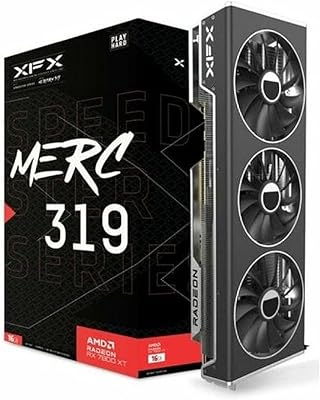
XFX Speedster MERC319 RX 7800 XT 16GB GDDR6 Graphics Card
85%
91%
Overall Performance
94%
Gaming Performance at 4K
88%
Cooling Efficiency
87%
Value for Money
85%
Build Quality
More
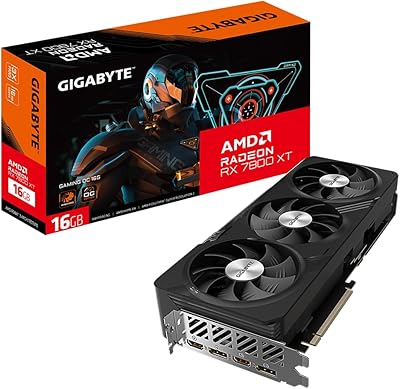
GIGABYTE RX 7800 XT 16GB Graphics Card
78%
91%
1440p Gaming Performance
88%
Thermal Management
93%
VRAM & Future-Proofing
79%
Value for Money
61%
Driver & Software Experience
More
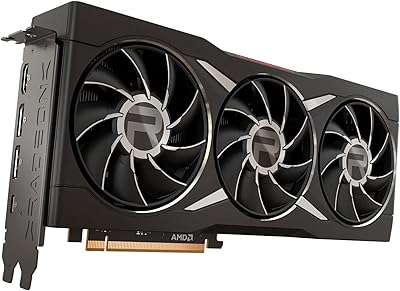
AMD Radeon RX 6950 XT Graphics Card
72%
92%
4K Gaming Performance
94%
VRAM Capacity & Bandwidth
51%
Power Consumption
48%
Physical Size & Case Fit
67%
Driver Stability
More
GIGABYTE RX 7600 XT 16GB Graphics Card
80%
88%
Value for Money
84%
1080p Gaming Performance
72%
1440p Gaming Performance
93%
VRAM Capacity
86%
Thermal Performance
More
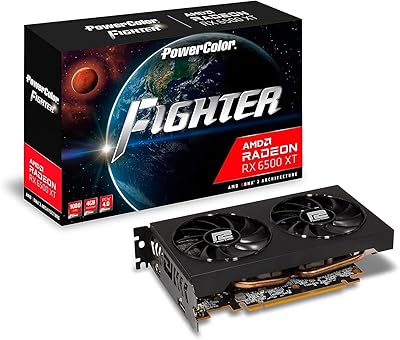
PowerColor Fighter AMD Radeon RX 6500 XT 4GB Graphics Card
82%
91%
Value for Money
89%
1080p Gaming Performance
85%
Build Quality
88%
Power Efficiency
84%
Setup & Installation
More
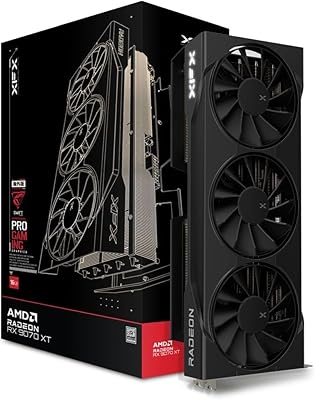
XFX Swift RX 9070 XT 16GB Graphics Card
78%
93%
Gaming Performance at 1440p
78%
4K Gaming Capability
91%
Thermal Performance
82%
Noise Levels
89%
Build Quality
More
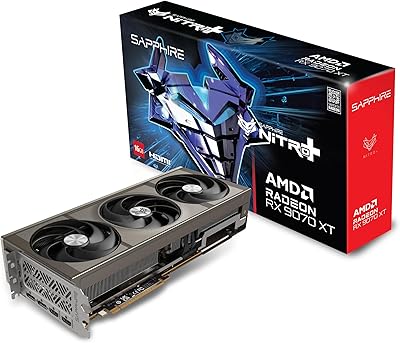
Sapphire Nitro+ RX 9070 XT 16GB
82%
92%
Gaming Performance
88%
Thermal Management
91%
Noise Level
93%
VRAM Capacity & Bandwidth
74%
Ray Tracing Performance
More
XFX Speedster MERC319 AMD Radeon RX 6800 XT 16GB GDDR6 Graphics Card
85%
94%
Performance in 4K Gaming
88%
Thermal Management & Cooling
89%
Value for Money
85%
Build Quality & Durability
82%
Installation & Setup
More
ASUS RX 9060 XT 16GB Graphics Card
82%
91%
1440p Gaming Performance
94%
VRAM Capacity
89%
Thermal Performance
88%
Noise Levels
93%
Build Quality
More
PowerColor Red Devil RX 6900 XT Graphics Card
78%
91%
Gaming Performance
89%
Thermal Management
84%
Noise Level
88%
Build Quality
93%
VRAM & Memory
More

FAQ

At 260mm long, this RX 7800 XT is notably shorter than many competing cards in its performance class, most of which run 300mm or longer. That said, always verify your case's official maximum GPU clearance before buying — some budget mATX cases list clearances as low as 240mm, which would still be too tight. Check your case spec sheet, not just the form factor label.

Yes, realistically you should. The 750W minimum accounts for your entire system draw — CPU, storage, fans, and everything else running simultaneously. A 650W unit might hold up at idle or light load, but under full gaming stress you risk system instability, unexpected shutdowns, or long-term damage to the PSU itself. Factor that upgrade cost into your total budget before committing.

It is genuinely well-suited for 1440p. The RDNA 3 chip handles most modern AAA titles at high to ultra settings with strong, comfortable framerates at that resolution, and the 16GB of VRAM means you will not hit memory limits even with texture mods or graphically demanding scenes. It is not a 4K powerhouse, but for 1440p it is a legitimate choice without paying flagship prices.

In pure rasterization, which covers the vast majority of games, performance is close enough that real-world differences are hard to feel day to day. Where the RTX 4070 pulls ahead is ray tracing quality and DLSS, which FSR 3 is a capable but not identical alternative to. This PowerColor twin-fan card typically offers more VRAM for the money, which matters for texture-heavy or heavily modded games. It really comes down to whether you prioritize ray tracing fidelity or memory headroom.

You can run 4K, and it handles less demanding or older titles comfortably at that resolution. For the most graphically intense modern games with every setting maxed, you may need to pull back a few sliders to maintain smooth framerates. Think of it as a capable 4K card at moderate settings, and a strong 1440p card when you want everything turned up.

Yes — with one HDMI 2.1 and three DisplayPort 2.1 outputs, it supports up to four simultaneous displays natively. A triple-monitor productivity or gaming setup works without adapters or additional hardware, and the DisplayPort 2.1 bandwidth is more than sufficient for high-refresh or high-resolution configurations across all three screens.

Real-world buyer feedback describes it as controlled rather than loud — the fans spin up noticeably under sustained load but do not reach a distracting level for most users. It is louder than a triple-fan card spreading heat across a larger surface area, but it is not the kind of noise that pulls you out of a gaming session. If you are particularly sensitive to fan noise, it is worth reading through user reviews specifically on that point before deciding.

AMD's driver reliability has improved significantly over the past few years, and most users will run this card without any intervention. A minority of reviewers do flag occasional driver hiccups after updates — typically resolved with a clean DDU reinstall — but it is not a widespread or chronic issue. It is honest to say the experience is slightly less friction-free than Nvidia's driver stack for a small subset of users, but the majority report no problems.

Hardware installation is identical — it drops into any PCIe x16 slot the same way, and Windows handles the driver transition cleanly after a DDU wipe. The adjustment is mostly on the software side: Radeon Software is organized differently from GeForce Experience, and features like in-game overlays and performance monitoring work through different menus. Most switchers report getting comfortable within a few sessions. Moving from DLSS to FSR 3 is the other adjustment, and while FSR 3 is competitive, it is not a like-for-like replacement in every title.

It is genuinely useful in specific situations. At standard 1440p settings most games stay well under 10GB, so casual players will rarely notice the difference. Where it matters is with heavily modded games, 4K texture packs, or light content creation work alongside gaming — those scenarios push cards with 8GB or 12GB into saturation, causing noticeable performance drops that the extra headroom here avoids. Over a 3-to-4 year ownership window, it is a meaningful future-proofing advantage.

Where to Buy