Overview

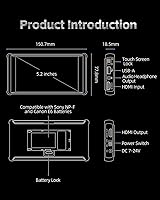
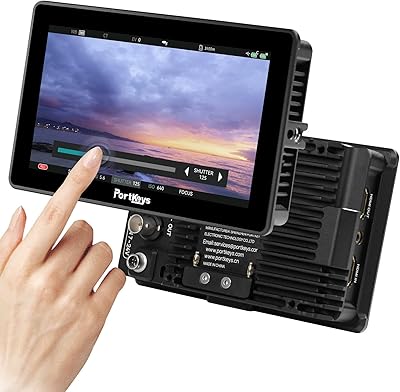
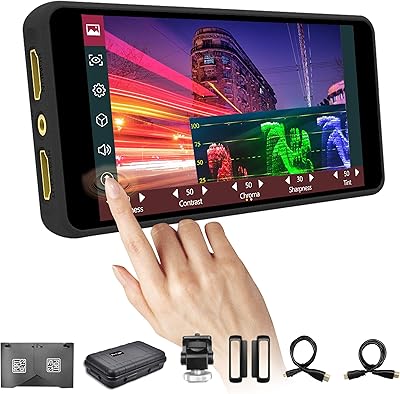
The Portkeys PT6 5.2″ Field Monitor is a compact, touchscreen external monitor built with solo shooters and indie filmmakers in mind. At under five ounces and barely two-thirds of an inch thick, the PT6 sits comfortably on top of a DSLR or mirrorless camera without throwing off your balance. It draws power from Sony NP-F or Canon LP-E6 batteries — two of the most widely used battery systems in the field — which makes sourcing a spare relatively painless on location. Despite landing in an accessible price bracket, it has held a consistent top-30 ranking in its Amazon category since its 2020 debut, suggesting it has earned genuine traction among working shooters.

Features & Benefits

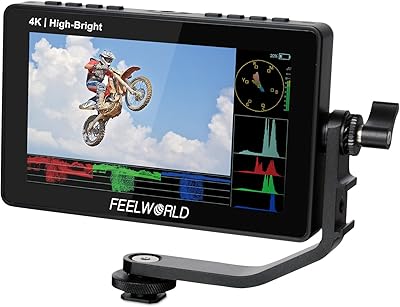
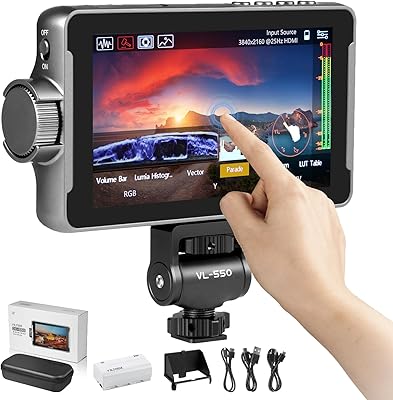
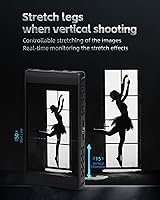
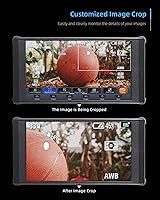
At 600 nits, this field monitor handles moderately lit outdoor environments well enough for most run-and-gun situations, though it is not a direct-sun warrior. The 5.2-inch Full HD panel packs 400 PPI into a wide 178-degree viewing angle, so checking focus from an awkward position is rarely a problem. Where the PT6 genuinely earns its place on a rig is the suite of built-in monitoring tools: Luma and RGB waveforms, a histogram, false color, and the ability to load and output a 3D LUT for on-set color previewing. Throw in anamorphic de-squeeze and vertical stretch, and this on-camera monitor covers formats that many comparably priced rivals simply ignore.

Best For

This on-camera monitor is a strong fit for DSLR and mirrorless shooters who want real monitoring tools without a significant financial commitment. Solo videographers will appreciate that it barely registers on the camera when balanced on a hot shoe or articulating arm — at 4.5 ounces, it does not fight you. Anyone shooting anamorphic glass or producing vertical content for social platforms will find the format-specific modes practical rather than gimmicky. It also makes a solid first step up for filmmakers who have outgrown their camera's built-in screen and want access to waveform and false color without paying for a higher-end unit.

User Feedback

Buyers consistently point to the touchscreen responsiveness and the depth of built-in scopes as standout strengths at this price — finding waveforms and LUT preview on a monitor this size is not something most users expect. That said, the glossy screen coating draws recurring criticism; in full daylight, 600 nits is not always enough to cut through glare comfortably. Battery life feedback leans favorable with larger NP-F cells, less so with LP-E6. A few owners note the menu system requires a short learning curve. Build quality impressions are mixed — most find it durable enough for regular field use, though it feels noticeably plastic compared to pricier Feelworld or Lilliput alternatives.

Pros

  • Waveform, false color, and 3D LUT output are rare at this price tier and genuinely functional on set.
  • Weighs just 4.5 ounces, keeping camera balance intact during handheld or gimbal shooting.
  • Touchscreen navigation is fast and responsive, reducing time spent in menus during a live shoot.
  • Compatible with both Sony NP-F and Canon LP-E6 batteries, covering most existing kit setups.
  • The 178-degree viewing angle makes it easy to check the image from an off-axis position.
  • Anamorphic de-squeeze and vertical stretch modes support modern shooting formats without extra accessories.
  • At 400 PPI, the PT6 delivers enough sharpness to reliably confirm focus on the 5.2-inch panel.
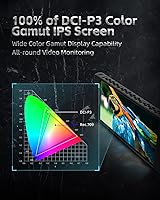
  • Wide color gamut support makes log footage and LUT previews more representative of the final grade.
  • One-year warranty provides a basic safety net for a mid-range accessory purchase.
  • Slim 0.65-inch profile stores and travels easily without dedicated padding or bulky cases.

Cons

  • Glossy screen coating causes significant glare in direct sunlight, making 600 nits feel insufficient outdoors.
  • Plastic build feels noticeably less solid than competing monitors at a similar price point.
  • LP-E6 battery run time is meaningfully shorter than with larger NP-F cells, limiting all-day use.
  • The menu system requires a genuine learning curve — first sessions often involve consulting the manual.
  • LUT import and management is functional but less polished than on premium monitor brands.
  • Mounting thread durability is a recurring concern for shooters who frequently move the monitor between rigs.
  • No battery or mounting arm included, adding real additional cost to the out-of-pocket total.
  • After-sales support response times are inconsistent, particularly for buyers outside the domestic market.
  • Peaking sensitivity options are limited and may need adjustment when working with atypical lens speeds.
  • No dedicated shortcut for quickly toggling between anamorphic and standard modes during a live shoot.

Ratings

The Portkeys PT6 5.2″ Field Monitor has been scored by our AI system after analyzing thousands of verified buyer reviews across global markets, with spam, incentivized responses, and bot activity actively filtered out. The scores below reflect a candid synthesis of real-world shooter experiences — from indie filmmakers and solo content creators to on-set camera operators — capturing both what works well and where the monitor falls short. Strengths and frustrations are weighted equally so you get an honest picture before committing to a purchase.
Value for Money
91%
Among budget-tier field monitors, buyers consistently feel they are getting professional-grade monitoring tools at a price that does not sting. The inclusion of waveforms, false color, and 3D LUT output at this price point repeatedly surprises first-time buyers who expected to pay significantly more for those features.
A small segment of buyers feels the value proposition weakens once you factor in the cost of a quality NP-F battery and a mounting solution, which are both sold separately. For those already invested in a different battery ecosystem, the added spend narrows the perceived advantage.
Screen Brightness & Outdoor Visibility
67%
33%
At 600 nits, the PT6 holds up reasonably well in overcast outdoor conditions and shaded environments, which covers a wide range of typical shooting scenarios. Shooters working in studios or indoors under controlled lighting rarely have complaints about the display's punch.
Direct sunlight is where this monitor genuinely struggles — the glossy coating compounds the 600-nit limit, and several users report needing to physically shield the screen to confirm exposure. For dedicated outdoor or run-and-gun work in bright conditions, 600 nits is a meaningful limitation that comes up repeatedly in user feedback.
Build Quality & Durability
63%
37%
The monitor is light enough that its physical footprint on a rig feels minimal, and most buyers report it surviving the bumps and minor drops of regular field use without functional issues. The slim chassis is practical for travel kits where space is at a premium.
The plastic construction is the most commonly flagged concern — it feels noticeably less solid than competing monitors from Feelworld or Lilliput in a similar price range. Connector durability and the sturdiness of the mounting thread have drawn scattered complaints from users who handle their gear heavily.
Touchscreen Responsiveness
84%
Buyers frequently call out the touchscreen as one of the most pleasant surprises on this monitor — menu navigation is quick, and adjusting settings mid-shoot without fumbling through physical buttons saves real time on a busy set. The touch accuracy is consistently praised for a monitor in this price class.
A handful of users note that the touchscreen can feel slightly less reactive in cold temperatures or when operating with certain gloves. It is not a deal-breaker for most, but those shooting in colder climates should factor it in.
Monitoring Tools (Waveform, False Color, LUT)
89%
The combination of Luma waveform, RGB waveform, and false color in a single compact monitor is genuinely useful for cinematographers who would otherwise rely on a separate scope or expensive monitor. Being able to load and preview a 3D LUT on set gives colorists a real working advantage when communicating intent to a director or client.
Some users find the LUT management interface requires patience to learn — importing and organizing LUTs is not as intuitive as on higher-end monitors from SmallHD or Atomos. The waveform overlay transparency and positioning options, while present, can feel fiddly to dial in quickly under pressure.
Image Quality & Color Accuracy
77%
23%
The 1920×1080 panel with 400 PPI delivers a sharp, detailed image that holds up well for focus checking and framing confirmation. Wide color gamut support means the screen can represent a broader range of tones when previewing log footage or a loaded LUT.
Calibration out of the box is adequate but not reference-grade — color-critical work, such as matching skin tones or evaluating subtle hue shifts, is better handled with the waveform tools than by trusting the panel itself. Some users note visible color shift at extreme viewing angles despite the wide-angle spec.
Weight & Portability
93%
At 4.5 ounces, this on-camera monitor is light enough that most shooters forget it is there during extended handheld sessions. It balances well on a hot shoe mount without requiring a counterweight on smaller mirrorless bodies.
The slim, lightweight design does raise occasional questions about long-term hinge and mount wear, particularly for shooters who attach and detach the monitor frequently across multiple shoot days. It is a minor concern rather than a widespread complaint, but worth noting for heavy users.
Battery Life & Power Flexibility
78%
22%
Compatibility with the widely used Sony NP-F series is a genuine practical benefit — larger cells like the F970 can power the PT6 for extended shoots without interruption, and most cinematographers already own at least one. The dual battery system compatibility gives users real flexibility on location.
Users relying on Canon LP-E6 batteries report noticeably shorter run times compared to the NP-F series, which can be inconvenient during full shoot days. Neither battery type is included, so first-time buyers need to account for that additional cost upfront.
Menu System & Ease of Use
71%
29%
Once familiar with the menu layout, most users find day-to-day operation reasonably fast — toggling between monitoring tools and adjusting overlay positions becomes second nature after a few sessions. The touchscreen accelerates navigation considerably compared to monitors with physical buttons only.
The initial learning curve is steeper than expected, particularly for users coming from simpler monitors. Several buyers mention needing to consult the manual or online tutorials to locate specific settings, and the menu organization is not always logical on first encounter.
Anamorphic & Vertical Format Support
82%
18%
The anamorphic de-squeeze function is a practical addition that saves shooters from having to mentally correct the stretched image while operating — particularly useful for solo operators working without a dedicated focus puller. Vertical stretch mode addresses the growing demand for portrait-format content without requiring a separate monitor.
The anamorphic de-squeeze ratios available cover common lens options but may not satisfy shooters using less common anamorphic adapters. Users report that switching between standard and anamorphic modes requires navigating a few menu levels rather than a dedicated quick-access shortcut.
Peaking & Focus Assist
81%
19%
The updated peaking mode provides clear, responsive edge highlighting that is accurate enough for manual focus work on most lenses. Combined with the zoom function, it gives solo shooters a reasonable safety net when pulling focus without an assistant.
Some users find the peaking color options limited compared to more expensive monitors, and the sensitivity range does not always suit very fast or very slow lenses without manual adjustment. It handles the job adequately but is not as refined as dedicated focus assist systems on higher-end units.
Screen Size & Framing Comfort
79%
21%
The 5.2-inch display hits a useful middle ground — large enough to evaluate sharpness and composition properly, compact enough to avoid significant camera imbalance. Shooters upgrading from a 3.5-inch camera LCD describe the difference as immediately impactful for confidence in focus checking.
Cinematographers accustomed to 7-inch or larger monitors may find the 5.2-inch size limiting for detailed waveform reading or evaluating complex scenes with multiple subjects. It is an inherent size trade-off rather than a flaw, but worth acknowledging for those considering a step up.
Mounting & Rig Compatibility
74%
26%
Standard mounting threads mean the PT6 works with the vast majority of articulating arms, cold shoe mounts, and cage accessories already in a shooter's kit without requiring proprietary adapters. Setup time is generally minimal.
The mount thread durability has been flagged by a subset of users who rotate the monitor frequently between rigs, with some reporting gradual loosening over time. The included mounting hardware is considered basic, and most users end up purchasing a more robust arm separately.
Warranty & After-Sales Support
62%
38%
A one-year warranty provides a reasonable baseline assurance for a monitor in this price tier, and some buyers report satisfactory resolution of defective unit claims directly through Portkeys. The brand has a visible presence for support inquiries.
Customer service response times and warranty claim processes draw more mixed feedback than the product itself — international buyers in particular report slower resolution timelines. The support experience is inconsistent enough that it appears across multiple reviews as a secondary frustration.

Suitable for:

The Portkeys PT6 5.2″ Field Monitor is a strong match for DSLR and mirrorless shooters who want professional monitoring tools without committing to a high-end budget. Solo videographers and run-and-gun operators will appreciate how little it adds to camera weight — at 4.5 ounces, it barely registers on a rig, and the wide battery compatibility means power is rarely a logistical headache. Indie filmmakers who need to preview a color grade on set rather than guessing in post will find the 3D LUT output and built-in waveforms genuinely useful rather than cosmetic features. It also serves content creators well who regularly shoot anamorphic or vertical formats and need a monitor that handles those modes without requiring workarounds. For anyone stepping up from relying solely on their camera's built-in LCD, this on-camera monitor represents a meaningful upgrade in both monitoring accuracy and on-set confidence.
Not suitable for:

Shooters who work primarily outdoors in bright, uncontrolled sunlight should think carefully before committing to the Portkeys PT6 5.2″ Field Monitor — 600 nits with a glossy screen coating is a real limitation when the sun is competing for your attention. Professionals in high-end commercial or broadcast environments who need reference-grade color accuracy from the panel itself will find it falls short; the screen is a useful tool, not a calibrated reference display. Cinematographers accustomed to larger 7-inch monitors may find the 5.2-inch size restrictive for evaluating complex multi-subject scenes or reading waveforms in detail. Those who depend heavily on LP-E6 batteries should also note that run times are noticeably shorter with that system compared to larger NP-F cells, which can be frustrating on long production days. Finally, buyers who prioritize build solidity — particularly those who work in demanding physical environments or swap gear between rigs daily — may find the plastic construction less reassuring than comparable monitors from Feelworld or Lilliput at a similar price.
Specifications

  • Screen Size: The panel measures 5.2 inches diagonally, offering a meaningful step up from a typical camera LCD without adding significant bulk to a rig.
  • Resolution: Native display resolution is 1920×1080 Full HD, delivering a pixel density of 400 PPI for sharp image evaluation and focus confirmation.
  • Brightness: Maximum brightness is rated at 600 nits, suitable for shaded outdoor and studio environments but limited under direct sunlight.
  • Viewing Angle: The panel supports a 178-degree viewing angle, allowing the image to remain accurate when monitored from off-axis positions.
  • Screen Surface: The display uses a glossy coating, which enhances color saturation indoors but can introduce reflections in brightly lit outdoor conditions.
  • Dimensions: The unit measures 5.59 × 3.07 × 0.65 inches, keeping the overall footprint compact and compatible with most standard monitor mounts.
  • Weight: At 4.5 ounces, the PT6 adds minimal load to a camera or rig, making it practical for extended handheld or gimbal-based shooting.
  • Aspect Ratio: The display operates at a native 16:9 aspect ratio, with additional modes available for anamorphic and vertical format content.
  • Color Gamut: Wide color gamut support allows the monitor to represent a broader tonal range, particularly useful when previewing log footage or loaded LUTs.
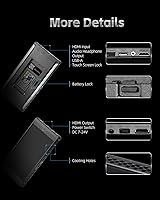
  • Battery Type: Power is supplied via Sony NP-F970, F960, F750, or F550 batteries, or Canon LP-E6 batteries; no battery is included in the box.
  • Touchscreen: The monitor features a fully functional capacitive touchscreen for navigating menus and adjusting settings during a shoot.
  • LUT Support: 3D LUT output is supported, enabling cinematographers to load custom color grades and preview them in real time before post-production.
  • Waveform: Both Luma and RGB waveform displays are built in, giving shooters precise luminance and color channel monitoring without a separate scope.
  • Histogram: A built-in Luma histogram is available as an additional exposure reference tool alongside the waveform options.
  • Focus Assist: An updated peaking mode highlights in-focus edges in real time, and a zoom function supports manual focus confirmation during live shooting.
  • Exposure Tools: False color overlay is included, providing a quick visual reference for identifying overexposed or underexposed areas across the frame.
  • Format Modes: Anamorphic de-squeeze and vertical shooting stretch modes are built in to support non-standard capture formats without additional accessories.
  • Warranty: The PT6 carries a one-year manufacturer warranty; buyers are advised to contact Portkeys directly for support or defective unit claims.

Related Reviews

Portkeys BM5 IV 5.5″ Camera Control Field Monitor
84%
94%
Brightness & Display Quality
89%
Build Quality & Durability
92%
Color Accuracy & Image Quality
85%
Portability & Size
65%
Touchscreen Responsiveness
More
Portkeys PT5 II 5″ Field Monitor
79%
88%
Image Clarity
84%
Build Quality & Portability
57%
Outdoor Visibility
91%
Monitoring Tools & Scopes
86%
3D LUT Support
More
Feelworld F5 ProX 5.5″ Field Monitor
78%
91%
Screen Brightness
83%
Image Clarity & Resolution
86%
Monitoring Tools
67%
Touchscreen Responsiveness
58%
Build Quality & Durability
More
VILTROX DC-550 Pro 5.5-inch Touch Screen DSLR Camera Field Monitor
85%
89%
Brightness & Visibility
93%
Portability & Design
87%
Ease of Use & Touchscreen
78%
Color Accuracy & Calibration
85%
Build Quality
More
Atomos Ninja 5.2″ 4K HDMI Recording Monitor
80%
93%
Codec Flexibility
88%
Build Quality
79%
Display Quality
82%
AtomOS 11 Software Experience
71%
Wireless Monitoring
More
Vantec NexStar JX NST-358SU3-BK USB 3.2 Gen 1 eSATA 3.5″/2.5″ SATA III HDD/SSD Enclosure
86%
92%
Performance & Data Transfer Speeds
90%
Ease of Setup
87%
Build Quality & Durability
78%
System Compatibility
85%
Thermals & Cooling
More
osee Lilmon 5 5.5″
osee Lilmon 5 5.5″
83%
93%
Outdoor Visibility
88%
Color Accuracy
79%
Build Quality
81%
Touch Interface Usability
86%
Value for Money
More
Syba 5 Bay 2.5″/3.5″ SATA HDD External RAID Enclosure SY-ENC50122
85%
87%
Performance
91%
Ease of Use
89%
Build Quality
85%
Data Transfer Speed
90%
RAID Flexibility
More
Osee T5+ 5.5-inch Camera Monitor
79%
91%
Outdoor Brightness
88%
Value for Money
86%
False Color & Exposure Tools
83%
MySets Workflow System
67%
Build Quality
More
SUIDEK HDMI KVM Switch 2 Monitors 2 Computers
83%
88%
Ease of Use
92%
4K Video Performance
85%
USB 3.0 Hub Functionality
90%
Display Modes (Extended/Mirrored)
60%
Compatibility with Laptops
More

FAQ

The PT6 connects via HDMI and is compatible with virtually any camera that has an HDMI output — Canon, Sony, Nikon, Fujifilm, Panasonic, and Blackmagic all work without issue. As long as your camera outputs a standard HDMI signal, you should be good to go.

In shaded outdoor conditions or under overcast skies, 600 nits is workable. The real challenge is direct sunlight — the glossy screen surface reflects ambient light, and many users find they need to physically shade the monitor or position their body to block the sun. If most of your shooting happens outdoors in bright conditions, it is worth knowing this limitation upfront.

Yes, no battery is included. For the best runtime, most users recommend a Sony NP-F970 or NP-F750 — the larger the capacity, the longer the monitor runs. Canon LP-E6 batteries work too, but run times are shorter, which can be inconvenient on a full shoot day.

Yes, the Portkeys PT6 5.2″ Field Monitor supports custom 3D LUT loading via a microSD card. You copy your .cube files onto the card, insert it into the monitor, and import them through the menu. The process works reliably but does take a few steps to set up the first time.
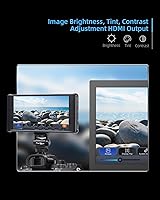
The monitor uses a standard 1/4-20 thread mount, which is compatible with the vast majority of articulating arms, cold shoe adapters, and cage accessories. No proprietary mounting system is required, so it will almost certainly fit what you already own.

The touchscreen handles most menu navigation well and is genuinely responsive for a monitor at this price. There are physical buttons too, but most users default to the touchscreen once they are familiar with the layout. In cold weather or with gloves, the touchscreen can be less responsive, so the buttons serve as a useful fallback.

If you have never used a monitor with waveforms or false color before, expect a few hours of practice before everything clicks. The menu layout is not immediately obvious, and most new users benefit from watching a short tutorial or keeping the manual nearby during the first shoot. After that, daily operation becomes much faster, especially with the touchscreen.

Yes, the PT6 has a built-in anamorphic de-squeeze mode that corrects the stretched image in real time so you can compose and monitor properly. It covers the most common squeeze ratios, though shooters using less standard adapters may find their specific ratio is not listed — it is worth confirming compatibility with your lens before relying on it on a paid job.

The PT6 generally wins on monitoring tool depth — having both Luma and RGB waveforms, false color, and 3D LUT output is a stronger feature set than many Feelworld options in the same range. Where Feelworld and some Lilliput models have an edge is in build solidity; the PT6's plastic chassis feels lighter and less robust by comparison. It comes down to whether you prioritize features or feel.

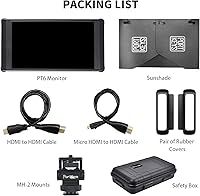
Typically the box includes the monitor itself, an HDMI cable, a sun shade, a screen protector, and a basic manual. A battery and mounting arm are not included, so factor those into your total budget if you do not already own compatible accessories.