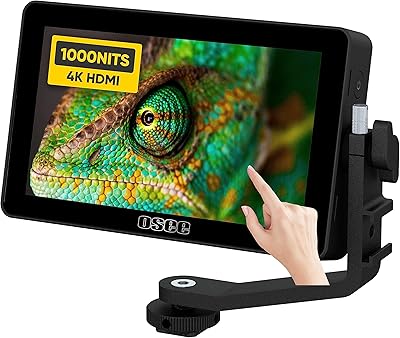
Overview

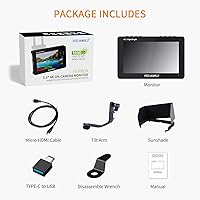
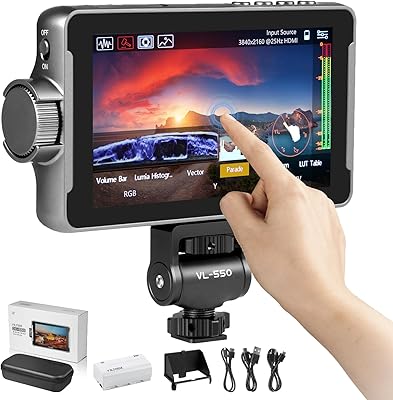
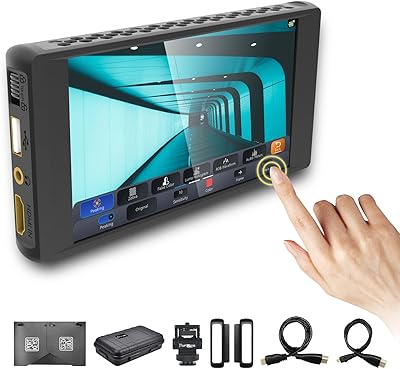
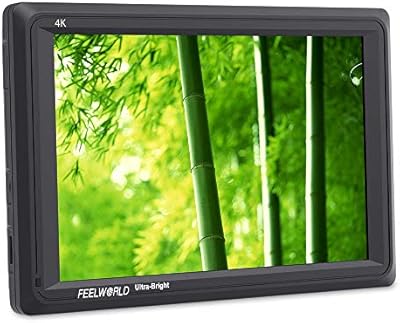
The Feelworld F5 ProX 5.5″ Field Monitor sits in a sweet spot for solo videographers and small crews who need dependable on-camera monitoring without a premium price tag. The headline feature is its 1600nit brightness, which makes outdoor shooting far less of a guessing game. At 5.5 inches, the touchscreen is large enough to read focus and exposure at a glance, yet compact enough not to unbalance a lightweight rig. The kit includes a tilt arm, sunshade, carry bag, and F970 battery plate — solid value out of the box. One honest caveat: the plastic shell keeps the weight down to a practical 245g, but don't expect it to shrug off hard knocks the way a metal-bodied monitor would.
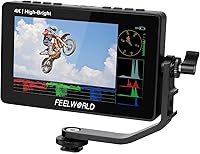
Features & Benefits

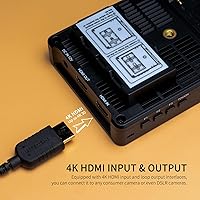
Where this field monitor earns its place is in the practical translation of its specs to real shooting conditions. Sunlight-visible brightness at 1600 nits means you can actually trust what you're seeing on screen mid-afternoon on a bright day — no squinting, no guesswork. The REC-709 calibrated touchscreen lets you make rough color grading calls on location rather than waiting for a desktop review. Tools like waveform, false color, and focus peaking are present and functional, helping you nail exposure in tricky lighting without constantly diving into menus. The HDMI loop-out is a genuinely useful addition for operators feeding a recorder or a second monitor, and the F970 battery plate can push power to accessories via the 8.4V DC output.

Best For

The F5 ProX is a strong fit for outdoor event videographers — wedding shooters, documentary crews, and solo operators who regularly deal with changing light and can't afford to second-guess their exposure. If you're running a mirrorless or DSLR setup and want a sunlight-readable monitor without crossing into high-end pricing, this on-camera monitor checks the right boxes. Operators building a multi-monitor or monitor-plus-recorder rig will also appreciate the HDMI loop-out. It's less suited to studio work where color accuracy demands are extremely high, and buyers who prioritize build durability over portability might find the plastic chassis underwhelming. For field work on a practical budget, though, it covers most bases well.

User Feedback

Across roughly 128 ratings, the F5 ProX holds a 4.1-star average — a score that reflects real satisfaction alongside a handful of recurring frustrations. The brightness gets the most consistent praise; reviewers describe it as actually working in direct sunlight, not just technically rated for it. Touchscreen responsiveness draws more divided opinions, with some users finding it snappy and others noting occasional lag during menu navigation. The plastic build comes up frequently as feeling a notch below what the price implies. One point worth flagging: several buyers were caught off guard discovering the battery is not included — only the F970 plate ships in the box, so budget accordingly. The sunshade and tilt arm, however, earn regular appreciation.

Pros

  • 1600nit brightness is genuinely usable in direct sunlight — not just rated for it, but proven by real shooters.
  • Waveform, false color, and focus peaking together make confident exposure decisions possible without a second crew member.
  • HDMI loop-out lets you feed a recorder and monitor simultaneously from a single camera output.
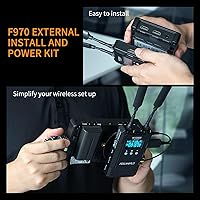
  • The F970 battery plate doubles as a 8.4V power source for small accessories, cutting cable clutter on location rigs.
  • At 245g, this on-camera monitor won't unbalance a lightweight mirrorless setup during long handheld shoots.
  • Included sunshade, tilt arm, and carry bag mean you can mount and shoot without an immediate accessory run.
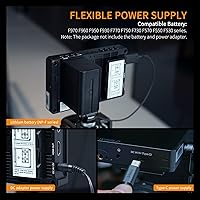
  • Type-C power input adds flexibility for operators using modern power banks on extended shoots.
  • REC-709 calibration gives a reliable enough color baseline for on-set white balance and rough exposure calls.
  • The 4.1-star average across real verified buyers reflects a monitor that delivers on its core promise for most users.

Cons

  • The F970 battery is not included in the box — budget for it separately before your first shoot.
  • The plastic shell flex slightly under firm handling and accumulates scuffs faster than a metal-bodied alternative.
  • Touchscreen lag is a real and recurring complaint, particularly during quick menu navigation in cold conditions.
  • No SDI input limits compatibility with broadcast and cinema camera systems entirely.
  • Menu depth and layout has a noticeable learning curve for first-time field monitor users.
  • The tilt arm and sunshade feel functional at best — expect to replace them with sturdier third-party options over time.
  • Color accuracy is adequate for field reference but will disappoint anyone treating it as a precision grading display.
  • The micro HDMI connection on the included cable feels fragile when the monitor is rigged on a moving gimbal.

Ratings

The Feelworld F5 ProX 5.5″ Field Monitor has been scored by our AI rating system after analyzing verified buyer reviews from multiple global markets, with spam, bot activity, and incentivized feedback actively filtered out. The scores below reflect the honest balance of what real videographers loved about this on-camera monitor and where it left them wanting more. Both standout strengths and genuine frustrations are factored in transparently.
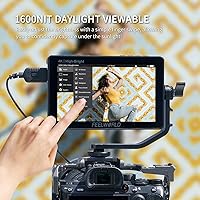
Screen Brightness
91%
Outdoor shooters consistently report that 1600 nits delivers on its promise in real conditions — afternoon sun included. Wedding and event videographers mention being able to trust the image without reaching for a monitor hood on most shooting days.
A small number of users note that at maximum brightness the screen can run warm to the touch during extended sessions. In extremely harsh midday desert or beach conditions, a few operators still preferred to shade the monitor for critical color work.
Image Clarity & Resolution
83%
The native 1080p panel renders sharp, detailed images that hold up well when checking focus on faces or fine textures at typical shooting distances. The REC-709 calibration gives location colorists a reasonably reliable baseline for on-set decisions.
It is not a 4K panel, and buyers who expected the 4K input to translate to a 4K display were occasionally disappointed. Color accuracy, while solid for a field monitor at this price tier, does not satisfy professionals with high-end grading demands.
Monitoring Tools
86%
Having waveform, false color, histogram, focus peaking, and frame guides all in one unit at this price point is genuinely useful for solo operators who can't bring a dedicated DIT. False color in particular earns strong praise for helping nail skin tone exposure quickly.
A few experienced users find the waveform rendering less precise than what dedicated broadcast monitors offer, making it a practical field tool rather than a studio-grade reference. Menu navigation to toggle tools can feel a little buried, especially when switching setups quickly on a live shoot.
Touchscreen Responsiveness
67%
33%
In normal operating conditions — menu adjustments, switching assist tools, tapping to confirm settings — the touchscreen works well enough and feels like a genuine convenience over physical-only button layouts. Many users appreciate not having to hunt for small buttons mid-shoot.
Responsiveness inconsistency is the most polarizing aspect among buyers. Some report lag when tapping quickly through menus, and a handful note that the touch layer becomes less reactive in cold outdoor conditions. It does not approach the fluidity of a modern smartphone display.
Build Quality & Durability
58%
42%
The plastic chassis keeps the total unit weight at a practical 245g, which matters when the monitor is mounted on a lightweight mirrorless rig for hours. For studio or controlled environment use, the build holds up fine under normal handling.
The plastic shell is the most consistently cited disappointment among buyers who handle the unit daily. It flex slightly under firm grip pressure, and several reviewers note that it looks and feels a tier below the asking price, especially after a few field shoots where minor scuffs accumulate quickly.
Connectivity & I/O
88%
The combination of HDMI in, HDMI loop-out, Type-C, and DC input covers most real-world rigging scenarios without adapters. Being able to feed a recorder or second monitor simultaneously from the HDMI loop-out is a practical advantage that operators running multi-device setups genuinely appreciate.
There is no SDI input, which limits its utility for operators working with broadcast-grade cameras. The micro HDMI port on the included cable feels like a slightly fragile connection point when the monitor is rigged on a moving gimbal or shoulder rig.
Power Flexibility
81%
19%
The F970 battery plate combined with the 8.4V DC output lets this on-camera monitor double as a power hub for small accessories, which simplifies cable management on a run-and-gun rig. Type-C input adds welcome compatibility with modern power banks for extended location shoots.
The F970 battery itself is not included in the box, which catches a notable number of buyers off guard given the kit-style branding. Budget accordingly — the total cost rises meaningfully once you factor in a compatible F970 cell and potentially a power adapter.
In-Box Accessories
79%
21%
The included sunshade, tilt arm, carry bag, and cables make this a ready-to-mount package without an immediate trip to buy extras. The sunshade in particular earns consistent appreciation from outdoor shooters who would otherwise purchase one separately.
The quality of the accessories is functional rather than premium — the tilt arm feels lightweight and the sunshade fits adequately but not securely. A few users replaced the included tilt arm with a third-party option after early wear.
Value for Money
84%
For shooters who need a bright, touchscreen field monitor with a full suite of exposure tools and don't want to spend on a high-end brand, the F5 ProX offers a compelling feature-to-price ratio. The bundled accessories add tangible value that competitors at a similar price rarely match.
Once you factor in the cost of the missing battery and a power adapter, the effective entry price is higher than it first appears. Buyers who stretch their budget slightly can find monitors with better build quality, which makes the value case more nuanced for buyers prioritizing longevity.
Portability & Size
85%
At 245g and 148x93x20mm, this field monitor balances screen real estate with a footprint that doesn't overwhelm compact mirrorless rigs. It mounts cleanly on a cold shoe or small NATO rail without destabilizing handheld setups.
The 5.5-inch size, while versatile, sits in a middle ground that some operators find slightly too small for detailed focus checking at arm's length, especially when using it as a director's monitor rather than an operator's monitor.
Menu & UI Experience
63%
37%
The interface covers all the key monitoring functions and is reasonably intuitive for users who have worked with field monitors before. Touchscreen access to common settings does reduce the time spent pressing small buttons in the field.
First-time field monitor users report a noticeable learning curve navigating the layered menu structure. Some settings feel more deeply buried than necessary, and the UI design has not kept pace with more refined interfaces found on competing monitors at a slightly higher price.
Audio Monitoring
71%
29%
The stereo headphone output allows operators to monitor embedded audio directly from the HDMI feed, which is a useful sanity check during solo shoots when a dedicated audio engineer isn't present. It handles the basic job without fuss.
Audio monitoring is functional rather than feature-rich — there are no advanced audio meters or channel isolation controls that more demanding operators might want. Users doing serious audio work on set will likely pair this with a dedicated audio device regardless.
Color Calibration Accuracy
74%
26%
The REC-709 calibration provides a reasonably consistent color baseline that makes on-set exposure and rough white balance decisions more reliable. For shooters who log-grade in post, having a calibrated reference in the field reduces correction time later.
Calibration accuracy is adequate for field reference but not precision-grade. Side-by-side comparisons with professional reference monitors reveal noticeable variance in saturation and white point, so it should not be treated as a grading-grade display.
HDMI Loop-Out Performance
82%
18%
The ability to pass a 4K HDMI signal through to a recorder or second monitor simultaneously is a workflow advantage that operators building a more complex rig will rely on daily. Signal passthrough is clean with no reported quality degradation under normal conditions.
A small number of users noted occasional signal handshake delays when hot-plugging devices into the loop-out port. It is a minor inconvenience rather than a consistent failure, but worth noting for operators who frequently change their rig configuration between setups.

Suitable for:

The Feelworld F5 ProX 5.5″ Field Monitor is built for outdoor videographers who spend most of their shooting day fighting sunlight rather than hiding from it. Solo operators doing weddings, documentary work, or event coverage will get the most out of the 1600nit display, where the ability to actually trust what you see on screen mid-shoot is worth more than any spec sheet number. DSLR and mirrorless shooters on a practical budget who want exposure tools like waveform and false color without paying a premium brand tax will find the feature set punches well above its price tier. Content creators building their first serious rig will also appreciate that the kit includes a sunshade, tilt arm, and carry bag, reducing the immediate need for accessory spending. Operators who need to simultaneously feed a recorder or second monitor from a single camera output will find the HDMI loop-out a genuinely useful workflow addition.
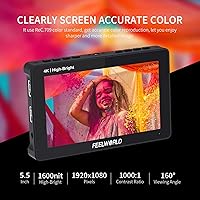
Not suitable for:

The Feelworld F5 ProX 5.5″ Field Monitor is a harder sell for professionals whose work demands precision color reference on set — the REC-709 calibration is a useful field guide, not a grading-grade standard, and it will not satisfy a DIT or colorist who needs tight display accuracy. Buyers who prioritize physical durability and expect a metal-bodied monitor that can take daily punishment across years of hard use should look elsewhere, as the plastic chassis shows its limits quickly under rough field conditions. Cinematographers working with broadcast or cinema cameras that rely on SDI connectivity will hit a dead end immediately, since there is no SDI input on this unit. Anyone assuming the F970 battery is part of the package will be caught off guard — the battery plate is included, but the battery itself is sold separately, which bumps the real cost of getting started. If refined touchscreen response is important to your workflow, the occasional lag that some users report may become a persistent frustration rather than an acceptable quirk.
Specifications

  • Screen Size: The display measures 5.5 inches diagonally, offering a practical balance between on-rig portability and usable image area for focus and exposure monitoring.
  • Resolution: The panel runs at a native 1920x1080 pixel resolution, delivering a sharp, detailed image suitable for critical focus checking and on-location monitoring.
  • Brightness: Peak brightness reaches 1600 nits, making the screen readable in direct sunlight without requiring an additional monitor tent or shade accessory.
  • Aspect Ratio: The display uses a standard 16:9 aspect ratio, matching the native output of most DSLR, mirrorless, and video cameras used in the field.
  • Contrast Ratio: The panel offers a 1000:1 contrast ratio, providing adequate differentiation between shadows and highlights for field exposure decisions.
  • Color Calibration: The screen ships with REC-709 color calibration, providing a standardized color space reference suitable for broadcast and video production workflows.
  • Touch Input: The monitor features a capacitive touchscreen interface, allowing direct tap-based control of menus and monitoring assist tools without physical buttons.
  • Video Inputs: Connectivity includes a full-size HDMI input supporting 4K signals, a DC power input, and a Type-C port for both power and signal use.
  • Video Outputs: The unit provides a full-size HDMI loop-out for passing the signal to a secondary monitor or recorder, plus a DC 8.4V output for powering accessories.
  • Audio: A stereo headphone output allows operators to monitor embedded audio from the incoming HDMI signal directly through headphones on location.
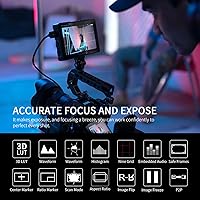
  • Monitoring Tools: Built-in assist tools include waveform, histogram, false color, focus peaking, frame guides, pixel-to-pixel zoom, and a nine-grid overlay for composition reference.
  • Shell Material: The outer casing is constructed from plastic, keeping the overall unit weight low while accepting standard 1/4-inch and cold shoe mounting hardware.
  • Dimensions: The unit measures 148x93x20 mm, a compact footprint that fits cleanly on a camera hot shoe or small NATO rail without overhanging the rig significantly.
  • Weight: The monitor weighs 245g without battery or mounting hardware, making it a lightweight addition to handheld and gimbal-based camera rigs.
  • Battery System: An F970-compatible battery plate is included, allowing the monitor to draw power from Sony-style F970 batteries and output 8.4V DC to connected accessories.
  • Power Options: In addition to the F970 battery plate, the monitor accepts power via a DC input and a Type-C port, offering three independent power pathways for flexible field use.
  • In-Box Contents: The package includes the monitor unit, F970 battery plate, tilt arm, sunshade, carry bag, micro HDMI cable, Type-C to USB cable, disassembly wrench, and a printed manual.
  • Battery Included: No battery or power adapter is included in the box; a compatible F970 battery or DC power adapter must be purchased separately before first use.
  • Manufacturer: The F5 ProX is manufactured by FEELWORLD, a brand specializing in on-camera field monitors and video accessories for the professional and prosumer market.
  • First Available: The product was first listed for sale in June 2023, making it a relatively recent addition to FEELWORLD's field monitor lineup.

Related Reviews
FEELWORLD F5 Pro 6″ Field Monitor
78%
84%
Display Quality
79%
Touchscreen Responsiveness
86%
Color Accuracy & Calibration
88%
Monitoring Tools
67%
Build Quality & Durability
More
Portkeys BM5 IV 5.5″ Camera Control Field Monitor
84%
94%
Brightness & Display Quality
89%
Build Quality & Durability
92%
Color Accuracy & Image Quality
85%
Portability & Size
65%
Touchscreen Responsiveness
More
VILTROX DC-550 Pro 5.5-inch Touch Screen DSLR Camera Field Monitor
85%
89%
Brightness & Visibility
93%
Portability & Design
87%
Ease of Use & Touchscreen
78%
Color Accuracy & Calibration
85%
Build Quality
More
Portkeys PT6 5.2″ Field Monitor
78%
91%
Value for Money
67%
Screen Brightness & Outdoor Visibility
63%
Build Quality & Durability
84%
Touchscreen Responsiveness
89%
Monitoring Tools (Waveform, False Color, LUT)
More
FEELWORLD FW568 6″ Field Monitor
77%
88%
Image Clarity & Sharpness
84%
Color Accuracy
91%
LUT Support & Preview
87%
Exposure & Focus Assist Tools
63%
Brightness & Outdoor Usability
More
Feelworld FW759 7″ Field Monitor
72%
83%
Image Clarity
58%
Brightness & Outdoor Usability
81%
Focus Peaking Performance
89%
Portability & Form Factor
54%
Build Quality & Durability
More
Portkeys PT5 II 5″ Field Monitor
79%
88%
Image Clarity
84%
Build Quality & Portability
57%
Outdoor Visibility
91%
Monitoring Tools & Scopes
86%
3D LUT Support
More
FEELWORLD F570 5.7-Inch Full HD DSLR On-Camera Monitor
87%
88%
Display Quality
94%
Portability & Size
90%
Build Quality
85%
Brightness & Outdoor Use
91%
Ease of Use
More
FEELWORLD FW279 7 Inch 2200nit Ultra Bright DSLR Camera Field Monitor
85%
94%
Display Brightness
91%
Image Quality
88%
Portability
85%
Build Quality
83%
Ease of Use
More
osee Lilmon 5 5.5″
osee Lilmon 5 5.5″
83%
93%
Outdoor Visibility
88%
Color Accuracy
79%
Build Quality
81%
Touch Interface Usability
86%
Value for Money
More

FAQ

The F970 battery plate is included, but the battery cell itself is not. You will need to purchase a compatible F970 battery separately before you can use the monitor on battery power. FEELWORLD recommends searching for compatible battery combinations using the monitor model name to find tested options.

Based on consistent real-world buyer feedback, the 1600nit brightness holds up genuinely well in sunny outdoor conditions for most shooting situations. Wedding and event shooters report being able to read the image confidently without a monitor hood during typical daylight. Extreme midday sun at high altitudes may still push its limits, but for the vast majority of outdoor work, it performs as advertised.

Yes, this on-camera monitor connects via HDMI, which is standard across Sony, Canon, Nikon, Fujifilm, and most other DSLR and mirrorless camera systems. As long as your camera has a micro HDMI or full-size HDMI output, a compatible cable is all you need. A micro HDMI cable is included in the box.

Yes, the HDMI loop-out passes the signal through simultaneously, so you can monitor on the F5 ProX screen while also feeding an external recorder or a second monitor at the same time. Signal quality through the loop-out is clean and does not degrade the image being displayed on the monitor itself.

The touchscreen works well for menu navigation and toggling assist tools under normal conditions, and most users find it faster than physical button layouts. That said, buyer feedback does flag occasional lag when tapping quickly through menus, and responsiveness can dip slightly in cold temperatures. It is practical and functional, but not as fluid as a modern smartphone screen.

Yes, the F970 battery plate includes a DC 8.4V output port, which you can use to power compatible accessories such as small LED lights or wireless transmitters directly from the same battery source. This can simplify cable management on a compact rig where space and battery weight are concerns.

The plastic chassis is solid enough for careful day-to-day field use, and the lightweight construction is actually a practical advantage on handheld or gimbal rigs. That said, it does not have the durability of a metal-bodied monitor — it will accumulate scuffs over time with rough handling, and the shell has some flex under firm grip pressure. Handle it with reasonable care and it will last, but do not expect it to take hard knocks without showing wear.

The included tilt arm mounts via a standard 1/4-inch thread, which is compatible with most camera hot shoes, cold shoe adapters, and articulating arms. The monitor body also accepts standard mounting hardware, so it integrates into most cage systems and NATO rail setups without issue.

This is a display and monitoring tool only — it does not record footage internally. For recording, you would need to connect a separate external recorder via the HDMI loop-out port and use the monitor as your display reference while the recorder captures the signal.

The monitor has a stereo headphone output that lets you listen to embedded audio from the HDMI input, which is useful for a quick sanity check on audio presence and levels. There is no dedicated audio meter display on screen beyond the embedded audio indicator, so for detailed multi-channel audio monitoring you would still want a dedicated audio device alongside this monitor.