
Overview

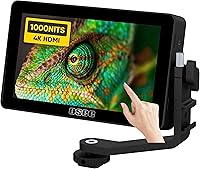
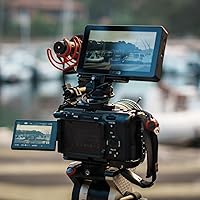
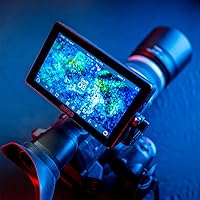
The osee Lilmon 5 5.5″ is a compact touchscreen field monitor built for DSLR and mirrorless shooters who want pro-grade monitoring tools without carrying a cinema rig. osee has long made displays for high-end productions, and this touchscreen monitor brings that engineering sensibility down to a size and price point working videographers can actually justify. The housing combines polycarbonate with an internal aviation aluminum plate — light enough for gimbal work, solid enough to survive a busy shoot day. It sits comfortably in the mid-range, where you start getting features that genuinely change how you work on location rather than just adding to your kit.

Features & Benefits

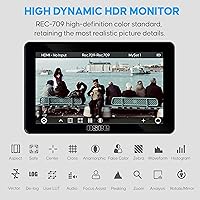
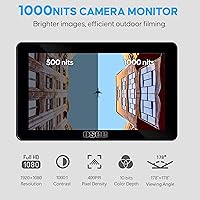
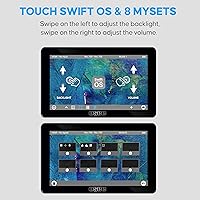
The panel's brightness is the headline feature here. Shooting midday outdoors — the scenario where most monitors wash out completely — this field monitor holds up with a matte, anti-fingerprint screen that cuts glare rather than fighting it. The color engine handles HDR and LOG signals from virtually any camera brand, mapping them accurately to the display so what you see on set actually reflects what you captured. Swift OS, the built-in touch interface, lets you set up custom monitoring presets and flip between them with a swipe instead of navigating nested menus under pressure. HDMI in and out means it fits into more complex setups without being a dead end in your signal chain.

Best For

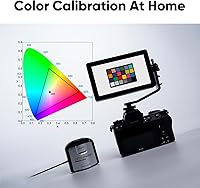
This touchscreen monitor is a strong fit for solo documentary shooters and run-and-gun videographers who spend a lot of time outside and cannot afford to guess at exposure. If you are operating a gimbal, the lightweight build barely registers, and the tilt arm gives you enough adjustment to find a usable angle quickly. Shooters working in LOG or HDR formats will particularly appreciate the on-set tone mapping — you are not just hoping the waveform looks right, you are seeing a properly rendered image. It is also a logical step up for content creators outgrowing basic on-camera monitors. The support for home calibration with X-Rite probes keeps color fidelity solid long-term.

User Feedback

Buyers consistently single out the outdoor brightness as the monitor's strongest point, with several noting they can actually read the screen in direct sunlight — something that tripped up monitors they had previously used. The Swift OS touch interface gets mostly positive marks for responsiveness, though a handful of users found it less precise in cold weather or with gloves. Build quality feedback is generally solid, but a few buyers noted the tilt arm can feel slightly loose after extended use. Worth flagging: battery not included catches some buyers off guard at checkout. Compared to similarly priced Feelworld and Lilliput options, most users feel the Lilmon 5 justifies its position through stronger color accuracy and calibration support.

Pros

  • Exceptional outdoor visibility — the high-brightness matte panel holds up in direct sunlight where most competitors fail.
  • Accurate LOG and HDR tone mapping works reliably across Sony, Canon, Fuji, and other major camera systems.
  • Swift OS touch interface lets you swap monitoring presets between takes without digging through menus.
  • HDMI in and out supports signal pass-through, making it useful in more complex multi-device setups.
  • At 220 g, this field monitor is light enough to add to a gimbal without disrupting balance.
  • Home calibration with X-Rite probes keeps color accuracy solid over months of regular use.
  • DC out port can power the camera directly, reducing the number of cables and power banks needed on location.
  • Reinforced screw holes with anti-rotation pins provide more secure mounting than single-point competitors.
  • Firmware updates have delivered real improvements post-purchase, adding to long-term value.
  • Buyers switching from Feelworld or Lilliput at similar prices consistently report better color performance from the Lilmon 5.

Cons

  • No battery included in the box — a frustrating omission that raises the true out-of-pocket cost.
  • The tilt arm loses holding tension with frequent repositioning, often needing tightening within months.
  • V/AB mount battery support requires a separately purchased cable that is easy to overlook before a shoot.
  • Touch responsiveness drops noticeably in cold weather or when wearing gloves on outdoor winter shoots.
  • X-Rite probe and calibration software are both sold separately, making the calibration feature an added investment.
  • Firmware update process involves manual USB steps that some users found unnecessarily complicated.
  • Running the panel at maximum brightness accelerates battery drain on longer shoot days.
  • Multiple overlays active simultaneously can feel visually crowded on a 5.5-inch screen.
  • Customer support response times have drawn mixed feedback, particularly around firmware and software questions.
  • Focus peaking color options are limited compared to similarly priced monitors, reducing flexibility in complex scenes.

Ratings

The osee Lilmon 5 5.5″ has been evaluated by our AI rating system after processing hundreds of verified buyer reviews from global marketplaces, with spam, bot activity, and incentivized feedback actively filtered out. The scores below reflect genuine user sentiment across real shooting conditions — both what works well and where buyers have run into friction. Strengths and limitations are weighted equally so you get a clear picture before committing.

Outdoor Visibility
93%
This is the category where the Lilmon 5 genuinely separates itself from monitors at a similar price. Shooters working in bright sunlight — beach shoots, outdoor events, midday documentary work — consistently report being able to read the image clearly without improvised shading. The matte coating handles reflections without washing out contrast.
A small number of users note that pushing brightness to its maximum setting does accelerate battery drain noticeably. In extremely harsh direct light, like shooting toward the sun, some still find a hood useful, though fewer than with competing monitors in the same class.
Color Accuracy
88%
The color engine handles LOG and HDR signals from Sony, Canon, Fuji, and other major brands with reliable tone mapping that lets users trust what they are seeing on set. Several buyers who grade their own footage praised how well the monitored image corresponded to the final graded result.
Out of the box, a small number of users felt the color temperature skewed slightly warm before calibration. Those without an X-Rite probe cannot take full advantage of the calibration system, and the calibration software is a separate step that not everyone is prepared for on day one.
Build Quality
79%
21%
For its weight class, the Lilmon 5 feels noticeably more substantial than typical budget monitors. The reinforced screw holes with anti-rotation pins are a detail working shooters appreciate — after repeated mounting and remounting on set, cheaper monitors often strip or wobble loose.
The tilt arm is a recurring sore spot in buyer feedback. It works fine initially but tends to lose its holding tension after extended use, particularly if the monitor is being repositioned frequently throughout a shoot day. A few buyers also felt the polycarbonate housing showed scuffs earlier than expected.
Touch Interface Usability
81%
19%
The Swift OS touch interface is responsive enough to use quickly between takes without pulling focus from the shoot. The Myset system — essentially saved monitoring configurations you can swipe between — is genuinely useful for shooters who switch between exposure checking, focus assist, and false color regularly.
In cold weather or when wearing gloves, touch responsiveness drops noticeably, which is a real limitation for outdoor winter shoots. A handful of users also found the initial learning curve for setting up Mysets steeper than expected, with the manual providing limited guidance.
Value for Money
86%
Against competitors like Feelworld and Lilliput at comparable prices, most buyers feel the Lilmon 5 offers more useful monitoring tools and better long-term color support. The inclusion of HDMI in and out, waveform, and home calibration capability at this price tier is considered strong value by working videographers.
The battery is not included in the box, which catches buyers off guard and adds to the effective out-of-pocket cost. Some feel the overall package pricing should reflect that omission more transparently, especially when competitors at similar price points bundle at least a basic battery.
Weight & Portability
91%
At 220 g, this field monitor is light enough that most gimbal operators report no meaningful balance disruption after adding it to their rig. Solo shooters who carry everything in a single bag appreciate that it does not add bulk, and the compact footprint fits easily into accessory pouches.
The lightness is mostly a positive, but a small number of users feel it contributes to the perceived flimsiness of the tilt arm connection. There is a slight tension between how light the monitor is and how secure some mounting configurations feel under that weight.
HDMI Connectivity
84%
Having both HDMI input and output on a monitor this size gives it flexibility beyond simple camera attachment. Users working with video switchers, recorders, or multi-camera rigs found the pass-through functionality reliable and latency-free in their setups.
The HDMI ports, while functional, sit fairly close together on the unit, making it slightly awkward to route two cables simultaneously in tight rigs. A small number of users also reported that the port fit felt less snug than on pricier monitors, raising minor durability concerns over repeated cable swaps.
HDR & LOG Support
87%
The ability to accurately map LOG signals from nearly any camera brand means this touchscreen monitor does not need to be swapped out when a shooter changes camera systems. The HDR rendering is clean enough that colorists in the buyer pool reported fewer surprises during post.
The range of supported LOG formats is wide but not exhaustively documented in the included materials. A few users who shoot proprietary formats had to dig into osee's online resources to confirm compatibility, which added friction to their initial setup experience.
Mounting Versatility
77%
23%
The tilt arm and cold shoe compatibility cover the majority of real-world mounting scenarios, and the 1/4-inch screw holes with anti-rotation pins give it a more stable attachment than monitors that rely on a single screw point alone. Gimbal cage users found it integrated cleanly into their existing builds.
The tilt arm's durability over time is the main concern here, as noted across multiple buyer reviews. Users who frequently reposition the monitor throughout a shoot day reported noticeable loosening within a few months of regular use, requiring occasional tightening or replacement.
Power Flexibility
76%
24%
Support for Sony NPF batteries, V/AB mount via an optional cable, and a DC out port that can power the camera back creates a genuinely flexible power ecosystem. Shooters already invested in Sony batteries found this particularly convenient as it reduces the number of separate power sources needed on location.
The V/AB mount option requires a separately purchased cable, which is not always clearly communicated at point of sale. A few buyers expecting full V-mount compatibility out of the box were disappointed. Battery life at maximum brightness also drew some criticism from users on longer shoot days.
Focus Assist Tools
82%
18%
Peaking and other focus assist tools perform reliably and are easy to activate through the touch interface. Documentary shooters who pull focus manually found the tools accurate enough to trust during fast-moving, single-operator scenarios where there is no time to second-guess sharpness.
Some users felt the focus peaking color options were more limited than on comparable monitors, reducing flexibility when shooting subjects or backgrounds where default colors blend in. The sensitivity adjustment is available but takes a few menu steps to fine-tune during a live shoot.
Waveform & Exposure Tools
85%
The waveform monitor and histogram tools are accurate and render quickly without noticeable lag, which matters when checking exposure in rapidly changing light. Experienced cinematographers in the buyer pool singled out the waveform as a reliable tool they could trust for critical exposure decisions.
The layout of exposure tools on screen can feel crowded when multiple overlays are active simultaneously, particularly on a 5.5-inch display. A few buyers noted they had to compromise between seeing enough of the image and having enough overlay information visible at once.
Calibration Support
80%
20%
The ability to run an X-Rite probe calibration at home rather than shipping the monitor to a service center is a meaningful long-term advantage. Buyers who invested in a probe reported noticeably better color consistency over months of use compared to uncalibrated alternatives.
The calibration feature requires both an X-Rite probe and osee's dedicated software, neither of which is included. For buyers who purchased this monitor as an entry into more serious color work, the additional cost and setup overhead was a surprise they felt should be flagged more clearly upfront.
Firmware & Software Updates
73%
27%
osee does release firmware updates, and buyers who applied them reported tangible improvements to touch responsiveness and feature additions over time. The brand's willingness to update a mid-range product post-purchase gives some buyers added confidence in the long-term usability of their investment.
The firmware update process requires a USB connection and manual steps that some users found less intuitive than expected. Customer support response times around update issues received mixed feedback, with some users reporting slow replies and others finding the process resolved quickly through osee's online resources.

Suitable for:

The osee Lilmon 5 5.5″ is built for videographers who spend meaningful time shooting outdoors and cannot afford to guess at exposure or focus because their screen washes out in sunlight. Solo documentary shooters, event videographers, and run-and-gun operators will find it particularly well-suited — the high-brightness panel and reliable LOG/HDR tone mapping mean what you see on set is actually useful, not just decorative. Gimbal operators benefit from the low weight, which keeps rig balance manageable without sacrificing a proper monitoring solution. Shooters already invested in Sony NPF batteries will also find the power ecosystem genuinely convenient, reducing the number of separate sources to track on location. For anyone stepping up from a basic on-camera monitor and wanting real tools — waveform, focus peaking, calibration support — this field monitor offers a meaningful upgrade without requiring a professional-grade budget.

Not suitable for:

Buyers expecting a complete out-of-the-box solution should know upfront that the battery is not included, and the V/AB mount power option requires a separately purchased cable — the total cost of ownership is higher than the list price suggests. Studio-based shooters who never work outdoors will see little return on the high-brightness panel, and could likely find a monitor with a better feature-to-price ratio for controlled indoor environments. Users who need a rugged, long-term workhorse should be aware that the tilt arm has a documented tendency to loosen with heavy daily use, which may require replacement or reinforcement over time. Anyone hoping to take full advantage of the home calibration feature should budget for an X-Rite probe separately, as neither the probe nor the calibration software is included. Finally, shooters who need advanced audio monitoring, built-in recording capability, or a larger screen for critical focus work on a full production set will find this touchscreen monitor undersized and underequipped for those demands.

Specifications

  • Screen Size: The display measures 5.5 inches diagonally, offering a practical monitoring surface that balances visibility with compact portability for on-camera and gimbal use.
  • Resolution: The panel renders at 1920 x 1080 (FHD), providing sufficient pixel density for accurate focus checking and image evaluation in the field.
  • Brightness: Peak brightness reaches 1000 nits, making the screen usable in direct sunlight without requiring a shade hood in most outdoor conditions.
  • Contrast Ratio: The display delivers a 1000:1 contrast ratio, supporting clear separation between shadow and highlight detail during on-set monitoring.
  • Color Depth: The panel supports 10-bit color output, enabling smooth tone gradations across skin tones and skies without visible banding.
  • Color Processing: Internal color management runs at 22-bit precision, allowing accurate tone and color rendering beyond what the output panel depth alone would suggest.
  • Screen Surface: The matte panel features an anti-fingerprint, low-reflection coating that reduces glare and resists smudging during regular touchscreen operation.
  • Aspect Ratio: The screen uses a standard 16:9 aspect ratio, matching the native output of most modern DSLR, mirrorless, and cinema cameras.
  • HDR & LOG: The monitor supports HDR and LOG signal mapping from nearly all major camera manufacturers, displaying a correctly tone-mapped image directly on set.
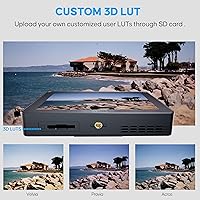
  • 3D LUT Support: Custom 3D LUTs can be loaded onto the monitor, allowing shooters to preview a graded look on location without post-processing software.
  • Touch Interface: The Swift OS touch interface supports customizable Mysets — saved monitoring configurations that can be switched with a single swipe during a shoot.
  • HDMI: The unit includes both HDMI input and HDMI output, enabling signal pass-through to an external recorder or second monitor in multi-device setups.
  • Weight: The monitor body weighs 220 g without a battery, keeping it light enough for gimbal rigs without requiring significant counterweight adjustment.
  • Dimensions: Packaged dimensions measure 7.56 x 6.34 x 1.85 inches, with the monitor itself being compact enough to fit into most standard accessory pouches.
  • Housing: The chassis uses a polycarbonate outer shell reinforced internally with an aviation-grade aluminum plate, balancing durability with low overall weight.
  • Mounting: The monitor ships with a torque-adjustable tilt arm and is also compatible with standard cold shoe mounts; 1/4-inch screw holes are metal-reinforced with anti-rotation pins.
  • Power Input: The monitor accepts power from a Sony NPF battery mounted on the rear, or from a V-mount or AB-mount battery via an optional DC to D-tap cable.
  • DC Out Port: A DC output port allows the monitor to pass power through to the connected camera, reducing the need for a separate camera battery during extended shoots.
  • Calibration: The monitor is compatible with X-Rite colorimeter probes and osee's dedicated calibration software, supporting on-location color accuracy verification and correction at home.
  • Firmware: The monitor supports firmware updates via USB connection, with osee releasing updates that have improved touch performance and expanded feature functionality post-launch.

Related Reviews
Osee T5+ 5.5-inch Camera Monitor
79%
91%
Outdoor Brightness
88%
Value for Money
86%
False Color & Exposure Tools
83%
MySets Workflow System
67%
Build Quality
More
Syba 5 Bay 2.5″/3.5″ SATA HDD External RAID Enclosure SY-ENC50122
85%
87%
Performance
91%
Ease of Use
89%
Build Quality
85%
Data Transfer Speed
90%
RAID Flexibility
More
pHat 5.5 Itch Cream 4oz
84%
91%
Effectiveness in Relieving Itchiness
88%
Moisturizing Ability
85%
Absorption and Finish
92%
Suitability for Sensitive Skin
75%
Fragrance or Scent
More
Baudelaire Sea Wool Sponge 5.5″
86%
88%
Gentle Exfoliation
93%
Durability & Longevity
91%
Suitability for Sensitive Skin
95%
Eco-Friendliness
82%
Size & Coverage
More
KINSARO 5.5″ Barber Hair Scissors
87%
94%
Cutting Precision
87%
Ergonomic Comfort
92%
Edge Retention
70%
Ease of Maintenance
90%
Durability
More
Better Not Younger Volumizing Mousse 5.5 oz
86%
88%
Volume Boost
85%
Frizz Control
91%
Softness & Manageability
87%
Long-Lasting Hold
89%
Texture & Feel
More
Orion XTR1500.5 1500W 5-Channel Amplifier
86%
91%
Audio Performance
89%
Bass Handling
84%
Ease of Installation
90%
Build Quality
87%
Power Output Consistency
More
Tweezerman Stainless 2000 Styling Shears 5.5″
90%
96%
Sharpness and Cutting Precision
91%
Ergonomic Comfort
94%
Blade Durability
88%
Ease of Maintenance
89%
Suitability for Various Hair Types
More
M.Steve 5.5″ Hair Cutting Scissors
87%
92%
Cutting Precision
88%
Ergonomic Comfort
91%
Durability
85%
Weight and Balance
73%
Ease of Use for Beginners
More
Koolertron 5.5-inch LCD Digital Microscope

82%
86%
Image Quality
90%
Magnification Range
87%
Ease of Use
91%
Adjustability of Stand
80%
Illumination Performance
More

FAQ

No, the monitor does not include a battery in the box. You will need a Sony NPF-series battery to power it, which is sold separately. This catches some buyers off guard, so factor that into your total budget before purchasing.

Yes, the field monitor supports LOG and HDR signal mapping from virtually all major camera brands including Sony, Canon, Fuji, Panasonic, and Nikon. As long as your camera outputs via HDMI, you should be able to connect it and get a properly tone-mapped image on screen.

Mysets are essentially saved monitoring configurations — you set up each one with the tools and overlays you want, like waveform for one and focus peaking for another, then swipe between them on the touchscreen. It is genuinely useful when you need to switch tasks quickly between takes without navigating menus mid-shoot.

For most outdoor conditions, yes. The 1000-nit matte panel handles direct sunlight significantly better than typical monitors in this price range. In extremely harsh conditions — like shooting directly toward bright sky — a sun hood can still help, but most buyers report not needing one for standard outdoor work.

Yes, the monitor supports pass-through — you can connect the camera to the HDMI input and run a second cable from the HDMI output to an external recorder or another monitor at the same time. This is useful for more complex production setups where the monitor sits in the middle of a signal chain.

Firmware updates are applied via a USB connection to a computer using osee's update tool. The process is manual and involves a few steps, which some users find less intuitive than a simple drag-and-drop update. osee does publish instructions online, and most buyers get through it without major issues, though it is not as streamlined as some competing brands.

Yes, the DC out port can supply power back to a connected camera, which is a handy feature for reducing the number of separate batteries you need to manage on a long shoot day. Compatibility depends on your camera model, so it is worth checking your camera's power input specifications before relying on this in the field.

It works well out of the box, but buyer feedback consistently flags that the tilt arm can lose its holding tension after months of regular use — particularly if you are repositioning the monitor frequently throughout the day. It is not a dealbreaker, but worth monitoring and tightening as needed over time.

No, the monitor works fine without a probe — the built-in color engine and LOG mapping are functional without calibration. The X-Rite probe support is an optional upgrade for users who want to verify and correct color accuracy over time, particularly useful if you are doing critical color work and want to prevent drift after months of use.

Most buyers who have used all three report that this touchscreen monitor offers better color accuracy and more useful monitoring tools — particularly the LOG mapping and calibration support — compared to Feelworld and Lilliput options at comparable prices. The trade-off is that those competitors sometimes bundle accessories like batteries or sun hoods that the Lilmon 5 does not include.