Overview

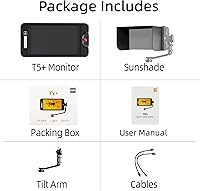
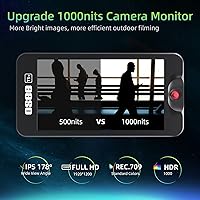
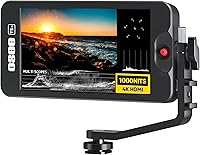
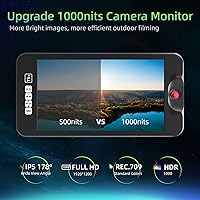
The Osee T5+ 5.5-inch Camera Monitor is a compact field monitor built for solo operators and indie filmmakers who need capable tools without spending a fortune. The headline spec is its 1000-nit brightness, which is roughly double what you'd typically find at this price point — a practical edge when shooting outdoors in direct sunlight. At just 180 grams bare, it sits comfortably on a hot shoe or cage without throwing off your rig. The box includes a sun hood, tilt arm, and both HDMI cable types, which is a welcome addition. One important heads-up: no battery is included, and you'll need either a Sony L-series or Canon LP-E6 to power it — factor that into your budget before checkout.
Features & Benefits

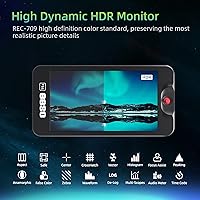
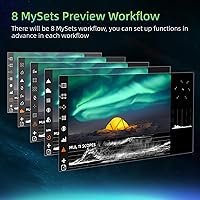
Where the T5+ earns its keep is in the monitoring toolkit packed into a modest price. The customizable false color presets are genuinely useful — you can map them to your specific camera model, so switching between a Sony and a Canon does not mean rebuilding your exposure reference from scratch. The 8 MySets system is easy to undervalue on paper, but in practice it means you can configure separate setups for interior run-and-gun, exterior interviews, and LOG recording before leaving the house, then toggle between them with a single joystick click on location. De-log support spans all major camera brands, and you can load up to 10 custom user LUTs via SD card with adjustable intensity directly on screen.

Best For

This compact camera monitor is a strong fit for run-and-gun shooters — anyone working solo where fumbling through menus mid-shoot is not an option. If you are a mirrorless or DSLR user shooting LOG or HDR and want a real-time converted preview without renting a more expensive monitor, the T5+ fills that gap well. Outdoor content creators will appreciate the brightness most; it is genuinely usable in open shade and decent sunlight without constantly fighting glare. It also makes particular sense if you already own Sony L-series or Canon LP-E6 batteries, since you can share them across your kit. If you need frame-accurate color grading on set, this is not the right tool — but for exposure control and fast practical monitoring, it performs well for the money.

User Feedback

With a 4.3-star average across more than 400 ratings, the overall reception for this field monitor is solid, especially given the price bracket. Buyers repeatedly highlight the panel brightness as the standout strength, confirming it delivers on the outdoor usability promise. The false color tools earn consistent praise for being practical and functional at this tier. On the downside, the missing battery catches more buyers off guard than it should — worth knowing upfront. Some reviewers note the build feels light and plastic, though most report it holds up fine through regular use. Color accuracy opinions are mixed; it is acceptable for exposure monitoring but should not be compared to a professional reference display. Customer support responsiveness draws occasional positive mentions, reassuring for a lesser-known brand.

Pros

  • Outdoor brightness is genuinely usable in direct sunlight without a sun hood in most shooting conditions.
  • False color presets lock to specific camera models, cutting exposure guesswork significantly on location.
  • The T5+ ships with a sun hood, tilt arm, and both HDMI cable types — no immediate accessory scramble.
  • De-log support covers virtually every major camera brand a working indie filmmaker is likely to use.
  • At 180 grams bare, it adds almost nothing to a mirrorless or DSLR rig.
  • Up to 10 custom user LUTs can be loaded via SD card with on-monitor intensity control.
  • Compatible with two of the most widely owned battery formats in the filmmaking world.
  • The 8 MySets system rewards pre-shoot prep with fast, single-joystick switching between full monitoring configurations.
  • Waveform, vectorscope, and histogram are accessible on a single page, which keeps the workflow tight.
  • For the price tier, the overall feature depth is hard to match from competing brands.

Cons

  • No battery is included — and this catches a surprising number of buyers off guard at checkout.
  • The plastic chassis feels noticeably light and less confidence-inspiring than metal-bodied competitors.
  • Color accuracy is inconsistent at panel edges and should not be relied on for critical color decisions.
  • The initial menu learning curve is steeper than it needs to be, with documentation that does not help much.
  • LUT loading requires a specific file format and naming convention that the manual explains poorly.
  • Peaking sensitivity defaults to an aggressive level that can clutter the image before you dial it back.
  • Some less common log profiles require manual adjustment rather than working cleanly from the presets.
  • The joystick can feel imprecise under time pressure, making it easy to overshoot your intended MySets preset.
  • USB-C power delivery is inconsistent with lower-voltage banks, which limits that backup option in practice.
  • The included sun hood and tilt arm are functional but feel like they would not survive a rough production schedule.

Ratings

The Osee T5+ 5.5-inch Camera Monitor has been scored by our AI system after analyzing hundreds of verified global purchases, with spam, bot-generated, and incentivized reviews actively filtered out. The ratings below reflect both the genuine strengths buyers consistently celebrate and the recurring frustrations that show up across independent feedback. Nothing has been smoothed over — if a weakness appears repeatedly in real-world use, it is reflected in the score.
Outdoor Brightness
91%
Buyers shooting in open sunlight — wedding videographers, event run-and-gun operators, outdoor interviews — consistently report being able to read the image clearly without a sun hood in most conditions. This is the single most praised aspect of the T5+, and it holds up to real-world scrutiny.
A small number of users shooting in extreme midday sun with high-contrast scenes still found the image difficult to read at peak brightness. The 1000-nit rating is accurate, but direct overhead sun on a reflective surface can still push the limits of the panel.
Value for Money
88%
For the price bracket, the feature set is unusually deep — false color, waveform, vectorscope, de-log support, and user LUT loading are tools you would typically pay significantly more to access on a field monitor. Buyers routinely describe it as punching well above its weight.
The value calculation changes once you factor in the cost of a compatible battery, which is not included. For buyers who do not already own a Sony L-series or Canon LP-E6, that is an additional expense that erodes the initial appeal of the price tag.
False Color & Exposure Tools
86%
The customizable false color system — with per-camera-model presets for black clip, white clip, skin tone, and highlight zones — is genuinely practical for solo operators managing exposure without an AC. Switching between camera profiles takes seconds, not minutes.
Some users found the initial setup of custom false color zones confusing without consulting the manual, and the documentation is not always clear. The factory defaults are serviceable but benefit from hands-on calibration time before relying on them on a live shoot.
MySets Workflow System
83%
The ability to pre-program up to 8 full monitoring configurations and flip between them via a single joystick toggle is a real time-saver on location. Shooters who juggle multiple setups — say, LOG interior coverage and a clean outdoor look — appreciate not rebuilding settings mid-job.
The joystick itself feels a little imprecise under pressure, and a few users report accidentally toggling past their intended preset when working quickly. It takes some practice to navigate the MySets menu confidently under time pressure on a real shoot.
Build Quality
67%
33%
For regular studio, event, and indie film use, the construction is adequate — most buyers report the monitor surviving months of bag-and-rig daily use without issues. The form factor is genuinely compact and the tilt arm feels sturdy enough for on-camera mounting.
The chassis is plastic and that is immediately obvious when you pick it up. Users upgrading from a metal-bodied monitor will notice the difference. A few reviewers mention the mounting points feeling slightly loose over extended use, which is worth monitoring on a professional rig.
Color Accuracy
63%
37%
For exposure monitoring, focus checking, and basic framing, the panel is more than acceptable. Buyers using it purely as an on-camera reference — not a grading display — generally report no complaints about the image quality in their workflow.
This is not a color-critical display, and reviews from colorists or DPs who expected otherwise reflect that disappointment. Color uniformity across the panel is uneven at the edges, and the color temperature skews slightly cool out of the box. Calibration options are limited.
De-Log & HDR Support
82%
18%
Coverage across ARRI, Blackmagic, Canon, Fuji, Nikon, Panasonic, RED, and Sony log curves means this monitor works with virtually any camera a working indie filmmaker is likely to carry. The live de-log conversion reads as clean and usable in bright field conditions.
A handful of users note that some of the less common log profiles — certain Fuji variants and older Sony curves — require manual fine-tuning rather than simply selecting the preset. The PQ and HLG HDR conversions are functional but not reference-grade.
User LUT Loading
77%
23%
Loading custom LUTs via SD card is a practical feature at this price, and the ability to adjust LUT intensity directly on the monitor without diving into a laptop is useful for quick creative checks on set. Up to 10 LUT slots gives reasonable flexibility.
LUT loading requires a specific SD card format and file naming convention that is easy to get wrong, and the manual is vague about this process. Several buyers report failed LUT loads on the first attempt and needing to troubleshoot through forum posts rather than official documentation.
Portability & Weight
89%
At 180 grams bare, this field monitor adds almost nothing to a mirrorless or DSLR rig. It fits easily into a camera bag side pocket and does not require counterweighting on most standard hot shoe or cage setups. Solo operators working light genuinely appreciate the footprint.
The compact size means the screen real estate is modest — users with larger hands or those accustomed to a 7-inch monitor may find the 5.5-inch display a bit cramped for detailed focus checking, especially when using the 2x or 4x zoom modes.
Focus Assist Tools
74%
26%
Peaking is available in red, green, or blue with a black-and-white background option, giving decent flexibility for different shooting situations. For manual focus confirmation on a budget rig, most users find it reliable enough for standard frame rates and resolutions.
At higher contrast edges, peaking can over-trigger and create a noisy-looking overlay that makes fine focus judgment harder rather than easier. Some users report the peaking sensitivity is tricky to dial in and defaults to a fairly aggressive level that takes adjustment.
Power Flexibility
78%
22%
Supporting both Sony L-series and Canon LP-E6 batteries — two of the most widely owned battery formats in the indie filmmaking ecosystem — means many buyers can power this monitor without purchasing anything extra beyond the initial oversight of the missing battery.
The USB-C DC input is a useful backup option, but the 5–17V range means not every USB-C power bank will work reliably. A few users report inconsistent behavior when running from lower-voltage USB-C sources, particularly during intensive processing modes.
Included Accessories
81%
19%
The box includes a sun hood, tilt arm, a Micro HDMI cable, and a full-size HDMI cable — a complete starter kit that eliminates the usual first-day cable scramble. The sun hood in particular is a genuinely useful inclusion given the outdoor use case.
The sun hood is made of a fairly thin plastic and will not withstand rough treatment over a long production. The tilt arm gets the job done but feels flimsy compared to third-party alternatives. These are functional rather than durable accessories.
Menu & Interface Usability
69%
31%
Once learned, the joystick-based navigation is fast and the MON OS layout puts the most-used tools within a couple of clicks. Users who invest time in setting up their MySets before a shoot report that day-to-day operation becomes genuinely intuitive.
The initial learning curve is steeper than it needs to be — the menu structure is not self-explanatory and the manual does not do a great job of explaining the logic. Buyers coming from competitors like SmallHD or Atomos may find the interface less refined in day-to-day use.
Customer Support
72%
28%
Several buyers specifically mention receiving timely and helpful responses from Osee support when troubleshooting setup issues or LUT loading problems. For a smaller brand, the responsiveness stands out positively in the review record.
Support quality appears inconsistent — some users report longer wait times and generic responses when dealing with hardware issues rather than setup questions. Multilingual support is offered but the quality of communication varies depending on region and issue complexity.

Suitable for:

The Osee T5+ 5.5-inch Camera Monitor is built for the kind of shooter who needs more than a basic passthrough display but cannot justify the cost of a professional-grade monitor. Solo videographers, wedding and event cinematographers, and indie documentary filmmakers will get the most out of it — particularly those who work outdoors and have struggled with washed-out screens on cheaper monitors. If you already own Sony L-series or Canon LP-E6 batteries from your camera kit, the power compatibility means you can keep your bag lean without buying into another battery system. The MySets feature rewards shooters who do their prep work: if you build out your monitoring configurations the night before a job, flipping between them on location with a single joystick click is genuinely efficient. Content creators who shoot LOG format and want a real-time converted preview in the field — without lugging a laptop or renting a better monitor — will find the de-log and LUT tools more than adequate for practical use.

Not suitable for:

The Osee T5+ 5.5-inch Camera Monitor is not the right tool for anyone who needs color-accurate monitoring for on-set grading decisions or critical DIT work. The panel is a budget IPS display, and while it handles exposure monitoring well, it should not be used as a reference for color judgment — the edge uniformity and color temperature out of the box are not consistent enough for that responsibility. Professional directors of photography who expect metal construction, precise colorimetry, or a display that can stand up to years of hard production use will find the plastic build and limited durability underwhelming. If you have never owned a compatible Sony L-series or Canon LP-E6 battery, add that cost to your budget from the start — the monitor ships without one, which has caught many buyers off guard. Users who want a larger viewing area for focus-pulling or detailed image review should also look elsewhere; at 5.5 inches, the screen is practical but not generous, and the digital zoom modes only partially compensate.
Specifications

  • Panel Size: The display measures 5.5 inches diagonally, offering a compact viewing area suited for on-camera and cage-mounted use.
  • Resolution: The panel runs at 1920x1080 full HD, delivering a sharp image for field monitoring at standard and high frame rates.
  • Brightness: Maximum brightness is rated at 1000 nits, which is notably higher than most entry-level monitors and practical for outdoor shooting.
  • Contrast Ratio: The display offers a 1000:1 contrast ratio, providing reasonable differentiation between shadow and highlight regions in the image.
  • Color Depth: The panel supports 1.06 billion colors, allowing for a wider tonal range and smoother gradients compared to standard 8-bit displays.
  • Signal Input: Accepts 4K (4096x2160) and UHD (3840x2160) signals up to 30p, plus HD signals up to 1920x1080 at 60p via HDMI.
  • HDR Support: Compatible with PQ and HLG HDR curves for live preview of HDR footage captured on supported cameras.
  • De-Log Profiles: Built-in de-log processing covers log curves from ARRI, Blackmagic Design, Canon, Fuji, Nikon, Panasonic, RED, and Sony.
  • User LUTs: Supports up to 10 user-uploaded LUT files loaded via SD card, with adjustable intensity controlled directly on the monitor.
  • MySets Presets: Up to 8 full monitoring configuration presets can be saved and recalled instantly using the joystick, with 3 factory defaults included.
  • Power Options: Powered by Sony L-series or Canon LP-E6 batteries (not included), or via USB-C DC input accepting 5–17V.
  • Power Draw: The monitor consumes 5.5W during operation, making it efficient for battery-powered use on location.
  • Weight: The bare monitor weighs 180g, keeping rig balance impact minimal for mirrorless and DSLR camera setups.
  • Dimensions: The monitor body measures 156mm (L) x 78mm (W) x 20mm (H), fitting easily on most standard camera cages and hot shoe mounts.
  • Mounting Points: Features two 1/4"-20 threaded screw mounts — one on the bottom and one on the right side — for flexible rig positioning.
  • Audio: Includes a 3.5mm headphone jack and an on-screen audio meter for basic audio level monitoring alongside the video signal.
  • Zoom Function: Offers 2x and 4x digital zoom for detailed focus checking without an external magnification tool.
  • Focus Assist: Peaking focus assist is available in red, green, or blue overlay with an optional black-and-white background mode.
  • Exposure Tools: Includes customizable false color, zebra, waveform, vectorscope, and histogram — all accessible together on a single multi-scope page.
  • In The Box: Package includes the monitor, a sun hood, a tilt arm, a 30cm Micro HDMI cable, and a 30cm full-size HDMI Type-A cable.

Related Reviews
osee Lilmon 5 5.5″
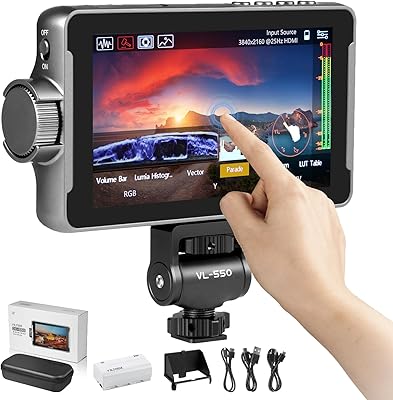
osee Lilmon 5 5.5″
83%
93%
Outdoor Visibility
88%
Color Accuracy
79%
Build Quality
81%
Touch Interface Usability
86%
Value for Money
More
VILTROX DC-550 Pro 5.5-inch Touch Screen DSLR Camera Field Monitor
85%
89%
Brightness & Visibility
93%
Portability & Design
87%
Ease of Use & Touchscreen
78%
Color Accuracy & Calibration
85%
Build Quality
More
AISHICHEN Backup Camera with 5-Inch Monitor
85%
93%
Image Quality
89%
Night Vision Performance
88%
Ease of Installation
85%
Build Quality
91%
Waterproof Durability
More
FEELWORLD F570 5.7-Inch Full HD DSLR On-Camera Monitor
87%
88%
Display Quality
94%
Portability & Size
90%
Build Quality
85%
Brightness & Outdoor Use
91%
Ease of Use
More
Portkeys PT5 II 5″ Field Monitor
79%
88%
Image Clarity
84%
Build Quality & Portability
57%
Outdoor Visibility
91%
Monitoring Tools & Scopes
86%
3D LUT Support
More
Osee T7 7-Inch 3000 Nits FHD DSLR Camera Field Monitor
86%
93%
Display Quality
89%
Portability
96%
Brightness
87%
Build Quality
82%
Ease of Use
More
Feelworld F5 ProX 5.5″ Field Monitor
78%
91%
Screen Brightness
83%
Image Clarity & Resolution
86%
Monitoring Tools
67%
Touchscreen Responsiveness
58%
Build Quality & Durability
More
Portkeys BM5 IV 5.5″ Camera Control Field Monitor
84%
94%
Brightness & Display Quality
89%
Build Quality & Durability
92%
Color Accuracy & Image Quality
85%
Portability & Size
65%
Touchscreen Responsiveness
More
ZEROXCLUB Wireless Backup Camera System with 7-Inch Monitor and 3 Cameras
86%
93%
Wireless Signal Clarity
88%
Ease of Installation
91%
Night Vision Performance
89%
Video Quality (HD 1080P)
85%
Camera Coverage (Rear & Side Views)
More
CUIUIC 18.5-inch Portable Monitor
84%
88%
Display Quality
91%
Portability & Weight
85%
Ease of Setup
90%
Color Accuracy
87%
Connectivity
More

FAQ

No, and this is the most common surprise buyers mention after purchase. The monitor runs on Sony L-series or Canon LP-E6 batteries, neither of which is included. If you do not already own one of these, add a compatible battery to your order — without it, you can only power the monitor via USB-C, which not all power banks support reliably.

Yes, in most practical outdoor conditions. The 1000-nit brightness is genuinely useful in open shade and moderate sunlight, and many buyers report working comfortably without the hood in those situations. In direct midday sunlight with heavy reflections around the set, you may still want the hood, but it is included in the box so there is no extra cost there.

The T5+ covers log curves from ARRI, Blackmagic Design, Canon, Fuji, Nikon, Panasonic, RED, and Sony. For most working indie filmmakers, that covers virtually every camera they are likely to own or rent. A small number of niche or older log profiles from some brands may require manual tweaking rather than working perfectly from the preset.

You load LUTs via SD card — copy your .cube files onto the card in the correct folder structure, insert it into the monitor, and import through the LUT menu. The tricky part is that the file naming and folder format need to follow Osee's convention, which the manual does not explain clearly. If your first attempt fails, the Osee support team or user forums are the most reliable source for the exact formatting requirements.

MySets lets you save up to 8 complete monitoring configurations — each one storing your full set of active tools, overlays, and display settings — and switch between them with a single joystick click. In practice, it is most useful when you set everything up the night before a shoot. For example, you could have one set for LOG interior handheld coverage and another for clean outdoor static shots, and flip between them in a second without touching a menu.

It depends on what you mean by professional use. For exposure monitoring, focus checking, framing, and general field work, it is more than adequate. For color-critical decisions — like approving a grade or making precise skin tone calls — it is not the right tool. The color temperature runs slightly cool out of the box and edge uniformity is not consistent enough to trust for reference work.

Yes. The monitor has two 1/4"-20 threaded mounts — one on the bottom and one on the right side — which are standard fittings compatible with most camera cages, cold shoes, and articulating arms. The included tilt arm is functional for basic setups, though many users swap it for a third-party ball head arm once they have the kit dialed in.

The chassis is plastic, and it feels it. That said, the majority of buyers who use it regularly for event work, weddings, or indie shoots report it holding up fine through normal production use. It is not going to survive being dropped on a hard floor or getting rained on, but for careful everyday use it is durable enough. Just do not expect the build confidence of a metal-bodied monitor.

It does, but with a catch. The USB-C input accepts 5–17V DC, and not all power banks deliver a stable voltage within that range under load. Several users report inconsistent behavior — occasional flickering or the monitor shutting off — when using lower-capacity or non-PD USB-C banks. For reliable power, a Sony L-series or Canon LP-E6 battery is the more dependable option.

It works, but it needs adjustment out of the box. The default sensitivity is set fairly high, which causes the peaking overlay to fire aggressively at high-contrast edges and can make the image look noisier than it is. Once you dial the sensitivity back to a level that suits your shooting style, it becomes a useful and fast tool for manual focus confirmation — especially when combined with the 2x or 4x digital zoom.