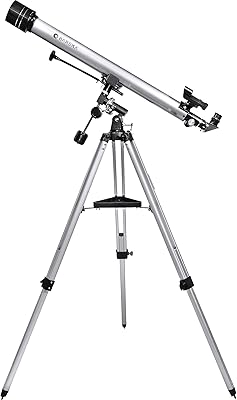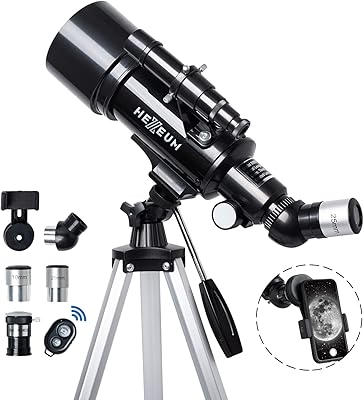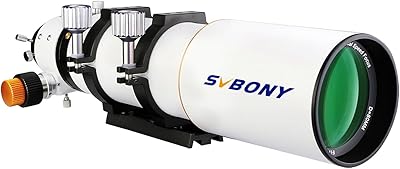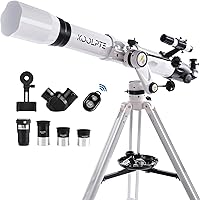

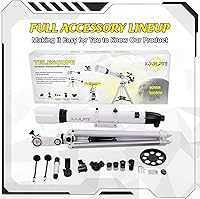
Overview

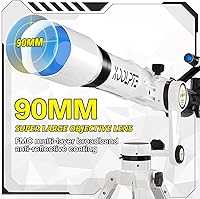
The Koolpte AZ90900 90mm Refractor Telescope sits in an interesting middle ground — it is not a toy, but it is also not the kind of instrument that will keep a seasoned observer satisfied for years. What makes it worth a serious look is the 90mm aperture paired with a 900mm focal length, a combination that genuinely opens up lunar craters and planetary detail that smaller 60mm or 70mm beginner scopes simply cannot resolve. Koolpte is a relatively newer name in the telescope market, but this model has gained real traction. The altazimuth mount design keeps operation straightforward, though it does mean all pointing and tracking is done by hand.

Features & Benefits

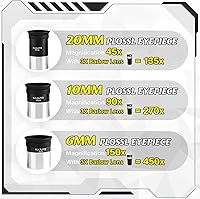
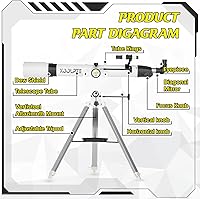
The 90mm objective lens is where this refractor earns its keep. Compared to the narrower apertures common in entry-level kits, it pulls in noticeably more light, translating to sharper, brighter views of the moon and planets. The 900mm focal length supports a usable magnification range from around 45x up to about 200x in realistic conditions — the theoretical 450x ceiling exists on paper, but atmospheric turbulence will cap you well before that on most nights. The included Plossl eyepieces are a solid starting point, the reflex finderscope reduces initial frustration considerably, and the phone adapter plus wireless remote are actually quite useful for hands-free lunar shots.

Best For

This refractor telescope is a natural fit for anyone who has outgrown a cheap department-store scope and wants real optical capability without committing to a complex equatorial setup. Families, students, and casual hobbyists will find the learning curve manageable, especially when the primary goal is lunar and planetary viewing. It travels reasonably well too — at under 20 lbs, you can load it into a car and head to a darker site without much hassle. If capturing moon photos with a smartphone appeals to you, the included adapter makes the Koolpte telescope a capable and approachable entry point into basic astrophotography without a steep investment.

User Feedback

Across nearly 800 verified ratings, the Koolpte telescope holds a 4.3-star average, which reflects a genuinely positive but not uncritical reception. Buyers most frequently praise the clarity on the moon, with many first-timers caught off guard by how much crater detail they can resolve on their opening night. Mount stability earns consistent approval as well. The recurring complaints center on focusing difficulty at higher magnifications — it takes patience and a light touch — and a handful of reviewers noted unit-to-unit inconsistencies in build quality. The phone adapter works for most people, though getting it properly aligned involves some trial and error. Experienced stargazers tend to rate this 90mm scope more critically than complete beginners, which is entirely understandable.

Pros

  • The 90mm aperture delivers noticeably sharper and brighter lunar detail than most entry-level starter scopes.
  • Saturn's rings and Jupiter's moons are clearly visible under typical suburban skies.
  • The altazimuth mount is intuitive enough for complete beginners to start observing within minutes of setup.
  • Included Plossl eyepieces provide a solid usable magnification range right out of the box.
  • The wireless remote genuinely reduces camera shake when capturing moon photos through a smartphone.
  • At under 20 lbs, this refractor telescope is portable enough for car trips to darker observing sites.
  • The reflex finderscope makes locating and centering objects significantly less frustrating for new users.
  • A 4.3-star average across nearly 800 ratings reflects a consistently positive experience for the majority of buyers.
  • No power source is required for operation, keeping setup simple and maintenance minimal.

Cons

  • The 450x maximum magnification rating is theoretical; real-world usable power tops out considerably lower on most nights.
  • Achieving sharp focus at higher magnifications requires a slow, patient touch that frustrates many first-time users.
  • The manual altazimuth mount offers no motorized tracking, making it hard to follow planets at high power.
  • Some buyers have reported inconsistent build quality between units, with minor fit-and-finish issues.
  • Aligning the phone adapter correctly takes trial and error and is not as plug-and-play as the listing implies.
  • The scope is not well-suited for deep-sky objects; faint nebulae and galaxies will disappoint at this aperture.
  • The included eyepiece selection is limited, and serious observers will likely want to invest in upgrades over time.
  • At nearly 20 lbs fully assembled, setup and breakdown is less effortless than the word portable might suggest.

Ratings

The scores below are generated by AI after analyzing verified buyer reviews from around the world for the Koolpte AZ90900 90mm Refractor Telescope, with spam, bot activity, and incentivized feedback actively filtered out before any calculation. The results reflect a genuine cross-section of experiences — from first-time stargazers thrilled by their first view of the moon to more seasoned hobbyists with sharper expectations. Both the real strengths and the honest frustrations are represented transparently in every category.

Optical Clarity
83%
For a scope in this price bracket, the optical clarity on the moon and brighter planets genuinely surprises most buyers. Reviewers consistently describe crisp views of lunar craters and Saturn's rings at moderate magnifications, with minimal chromatic fringing under steady skies.
At higher magnifications, image sharpness degrades noticeably, partly due to atmospheric conditions and partly due to the limits of the 90mm aperture. Some users also report slight color fringing around high-contrast edges, which is a known characteristic of achromatic refractors at this focal ratio.
Mount Stability
79%
21%
The Vertisteel altazimuth mount earns consistent praise for feeling solid and wobble-free once tightened down. Buyers who set up on flat concrete or packed ground report that the mount holds position reliably through a long observing session without constant re-adjustment.
On softer ground like grass or gravel, the tripod legs can shift slightly, introducing unwanted vibration at higher magnifications. The manual tracking also means you are constantly nudging the scope to keep fast-moving planets centered, which some users find disruptive during extended viewing.
Ease of Setup
86%
The majority of first-time buyers report having the scope assembled and pointed at the moon within 30 to 45 minutes of opening the box, with no prior experience needed. The altazimuth design removes the polar alignment headache entirely, which is one of the most common stumbling blocks for new telescope owners.
Aligning the reflex finderscope to match the main optics is a step that catches some beginners off guard, and the included instructions could be clearer on this process. A handful of users also noted that some components required more force to assemble than expected.
Value for Money
81%
19%
When stacked against similarly priced competitors, this 90mm scope offers a noticeably larger aperture and a more substantial mount than most rivals at the same price point. The inclusion of a phone adapter and wireless remote adds practical value that buyers would otherwise need to purchase separately.
A subset of buyers feel the build materials do not fully justify the price, particularly on smaller plastic components around the focuser and eyepiece holder. Those who have owned higher-end refractors tend to rate value more critically, feeling the optical coatings and mechanical tolerances lag behind the price expectation.
Phone Adapter Usability
61%
39%
When properly aligned, the phone adapter does allow users to capture genuinely shareable moon photos, and the wireless remote is a thoughtful addition that reduces camera shake during capture. Several buyers specifically mention successfully sharing moon shots on social media after getting the setup dialed in.
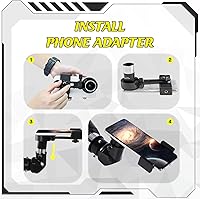
Getting the phone adapter correctly aligned with the eyepiece is described as fiddly and inconsistent, particularly for users with larger smartphones. Compatibility issues arise with some phone case sizes, and the adapter clamp mechanism feels less robust than buyers expect, with a few reports of it slipping mid-session.
Build Quality
67%
33%
The optical tube and main mount body feel solid and well-constructed, and the Vertisteel labeling on the mount reflects a noticeably sturdier material choice than the all-plastic mounts found on cheaper entry-level scopes. Most buyers report no structural issues after extended use.
Smaller components — including the focuser knob, eyepiece barrel, and some tripod hardware — show more variation in finish quality, and a minority of buyers have received units with minor cosmetic imperfections or slightly misaligned components out of the box. Quality control is not perfectly consistent across production runs.
Focuser Performance
63%
37%
At low to mid magnifications, the manual focuser is smooth enough for casual observers to find sharp focus without much difficulty. Most lunar and wide-field planetary sessions go smoothly once the user has spent a session or two learning the focuser's sensitivity.
At higher magnifications, the focuser becomes frustratingly sensitive — tiny movements cause significant image shift, and achieving a truly sharp focus requires a very slow, deliberate touch that takes time to develop. This is one of the most frequently cited frustrations in negative reviews, particularly among users expecting instant sharp images.
Portability
74%
26%
At under 20 lbs fully assembled, this refractor telescope is among the more manageable options in its aperture class, and buyers regularly mention loading it into a car for trips to darker observing sites. Breakdown and reassembly become genuinely quick after a few practice sessions.
It is car-portable rather than hike-portable — the assembled length and tripod bulk make it impractical for trail use. Some buyers also note that the carrying and storage situation is not ideal, as no dedicated case or bag is included in the box.
Magnification Range
58%
42%
The practical magnification range between 45x and around 180x covers the most rewarding observing targets for a scope this size, and the included eyepieces handle that range competently for casual sessions on the moon and planets.
The advertised 450x ceiling is misleading for most buyers — atmospheric turbulence, aperture limits, and eyepiece quality all conspire to make anything beyond 200x an exercise in seeing a larger but softer image. Several experienced buyers flagged this as an overstated spec that sets unrealistic expectations.
Finderscope Quality
71%
29%
The included reflex finderscope is a meaningful improvement over the basic optical finderscopes bundled with many entry-level telescopes, making it much easier to pan around the sky and get objects into the main eyepiece field quickly. Beginners especially appreciate how much easier it makes initial target acquisition.
The finderscope bracket can loosen with repeated use, causing alignment drift that requires rechecking at the start of each session. A few buyers also noted the dot brightness adjustment is limited, making the reticle less visible under very dark skies.
Deep-Sky Performance
38%
62%
Brighter showpiece deep-sky targets like the Orion Nebula and the Pleiades are detectable and provide a pleasant wide-field view at lower magnifications. For an observer who primarily focuses on lunar and planetary work, the occasional bright nebula or open cluster adds welcome variety.
A 90mm aperture under typical suburban skies simply cannot deliver on deep-sky expectations, and several buyers who purchased this scope hoping for galaxy and nebula detail were genuinely disappointed. This is an inherent limitation of the optical design rather than a manufacturing fault, but it is a common source of buyer regret.
Wireless Remote
72%
28%
The wireless remote is a genuinely useful accessory that most buyers did not expect to appreciate as much as they do — triggering the phone shutter without touching the scope makes a real difference in moon photo sharpness. Setup is simple and it works reliably across typical observing distances.
The remote requires a small battery that is not always included, which catches some buyers off guard on their first night out. Bluetooth pairing steps are not clearly documented in the manual, leading to frustration for less tech-savvy users before they get it working.
Astrophotography Capability
56%
44%
For basic lunar astrophotography using a smartphone, this 90mm scope punches reasonably well, and a number of buyers have shared genuinely impressive moon shots captured through the included adapter. It provides a low-cost, low-complexity entry point for anyone curious about astro imaging.
Beyond the moon and the brightest planets, astrophotography capabilities drop off sharply. The manual altazimuth mount has no tracking, so longer exposures accumulate star trails quickly, and the scope lacks a T-ring thread or camera attachment for DSLR use.

Suitable for:

The Koolpte AZ90900 90mm Refractor Telescope is a strong match for anyone who has hit the ceiling of a cheap beginner scope and wants a meaningful upgrade without committing to a complex or expensive setup. It is particularly well-suited to casual hobbyists whose primary interest is lunar and planetary viewing — the 90mm aperture and 900mm focal length deliver genuinely rewarding views of the moon, Saturn's rings, and Jupiter's cloud bands under decent skies. Families with curious kids or students taking their first serious steps in astronomy will appreciate how approachable the altazimuth mount is; there is no polar alignment to wrestle with, just point and observe. Travelers and outdoor enthusiasts who want a capable scope they can realistically pack into a car and set up at a dark-sky site will also find the portability practical. And if capturing smartphone photos of the moon is on your list, the included phone adapter and wireless remote make this refractor telescope a low-friction entry point into basic astrophotography.

Not suitable for:

The Koolpte AZ90900 90mm Refractor Telescope is not the right tool for observers whose ambitions extend to serious deep-sky work — think faint nebulae, distant galaxies, or globular clusters. A 90mm aperture simply does not gather enough light for those targets to look like anything more than dim, soft smudges, especially from a light-polluted suburban backyard. Observers who want motorized tracking will also be disappointed; the manual altazimuth mount means you are constantly nudging the scope to keep fast-moving planets in the field at higher magnifications, which can get tedious quickly. If you are a more experienced stargazer accustomed to equatorial mounts or Go-To systems, this 90mm scope will feel like a step backward in functionality rather than a step forward. Finally, buyers who need rock-solid build consistency should be aware that a subset of users have reported minor quality-control variations between units, so it is worth purchasing from a seller with a clear return policy.

Specifications

  • Brand: This telescope is manufactured and sold under the Koolpte brand, model number AZ90900.
  • Optical Design: The scope uses a refracting optical design, which passes light through a glass objective lens rather than mirrors.
  • Aperture: The objective lens has a diameter of 90mm, allowing it to gather substantially more light than typical 60–70mm beginner scopes.
  • Focal Length: The optical tube has a focal length of 900mm, resulting in a focal ratio of f/10.
  • Magnification: Using the included eyepieces, the scope supports a magnification range from 45x up to a theoretical maximum of 450x.
  • Eyepiece Type: The included eyepieces are Plossl design, which offer good edge sharpness and eye relief for general planetary and lunar use.
  • Mount Type: The scope ships with a Vertisteel Altazimuth mount, which allows smooth up-down and left-right manual movement without motorized tracking.
  • Finderscope: A reflex-style finderscope is included to help users locate and center celestial objects before switching to higher magnification eyepieces.
  • Phone Adapter: A smartphone adapter is included in the box, enabling users to mount a phone to the eyepiece for afocal photography.
  • Wireless Remote: A wireless remote control is included to trigger smartphone camera shutters without touching the scope and causing vibration.
  • Focus System: Focusing is entirely manual, adjusted by hand via a rack-and-pinion or similar mechanism on the focuser drawtube.
  • Power Source: The telescope itself requires no external power source for operation; the wireless remote requires a small battery not included.
  • Tube Length: The optical tube measures 900mm in length, consistent with the stated focal length of the refractor design.
  • Dimensions: The assembled product measures approximately 16.7″ deep by 39.7″ wide by 8.7″ tall in its packaged configuration.
  • Weight: The complete system weighs approximately 19.81 lbs (around 9 kg), making it portable for car-based transport.
  • Item Model: The official model number assigned by Koolpte is AZ90900, which can be used to identify the exact variant when seeking support.

Related Reviews
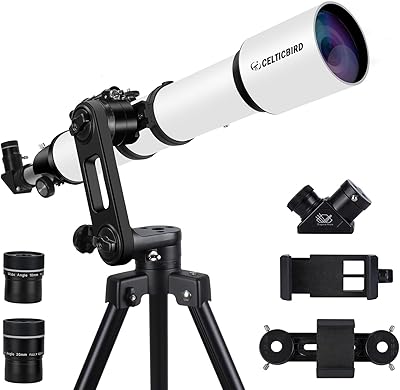
CELTICBIRD 90700 90mm Refractor Telescope
70%
83%
Optical Clarity
76%
Mount Precision
88%
Tripod Stability
81%
Ease of Assembly
62%
Finderscope Usability
More
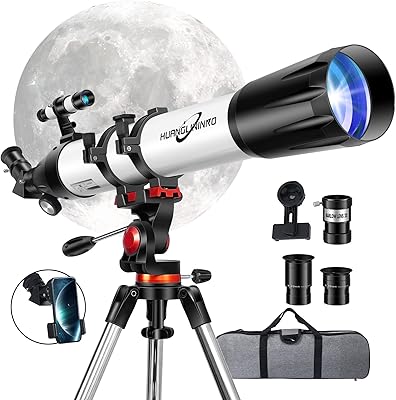
PISEZ 90800 90mm Refractor Telescope
68%
83%
Optical Clarity
81%
Value for Money
72%
Ease of Setup
68%
Magnification Range
61%
Tripod Stability
More
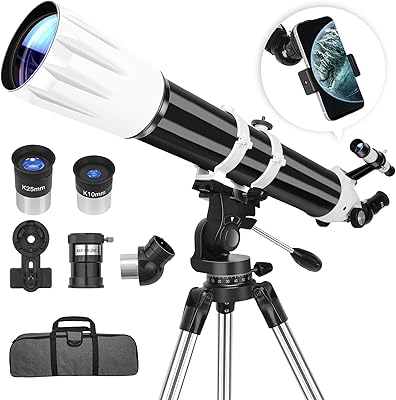
Hawkko 90900 Refractor Telescope
75%
83%
Optical Clarity
76%
Build Quality
69%
Mount Smoothness
88%
Ease of Setup
71%
Magnification Range
More
Celticbird 80mm 800mm Refractor Telescope
75%
83%
Optical Clarity
91%
Ease of Assembly
78%
Mount Usability
61%
Tripod Stability
58%
Included Eyepiece Quality
More
HUGERSTAR 80600 Refractor Telescope
70%
78%
Optical Clarity
88%
Ease of Setup
61%
Tripod Stability
83%
Value for Money
84%
Portability
More
HEXEUM AZ50070 70mm Refractor Telescope
73%
78%
Optical Clarity
88%
Value for Money
57%
Tripod Stability
66%
Ease of Assembly
63%
Finderscope Usability
More
Barska Starwatcher 70mm Refractor Telescope
66%
72%
Optical Clarity
58%
Magnification Performance
54%
Build Quality
84%
Ease of Setup
88%
Portability & Storage
More
Barska Starwatcher Refractor Telescope 60mm
80%
91%
Value for Money
88%
Ease of Setup
93%
Portability
85%
Performance (Planetary Viewing)
62%
Performance (Deep-Sky Viewing)
More
SVBONY SV503 80mm ED Refractor Telescope
81%
91%
Optical Clarity
88%
Focuser Quality
86%
Chromatic Aberration Control
89%
Build Quality & Materials
83%
Value for Money
More
SVBONY SV503 102mm ED Refractor Telescope
82%
88%
Optical Performance
93%
Focuser Quality
84%
Chromatic Aberration Control
91%
Build Quality
86%
Astrophotography Suitability
More

FAQ

Yes, and honestly the moon is where this 90mm scope shines brightest. The combination of a 90mm aperture and 900mm focal length gives you sharp, detailed views of craters, mountain ranges, and the lunar terminator. At moderate magnifications — somewhere in the 100x to 150x range — the views are genuinely impressive, even from a suburban backyard.

You can, and most users are pleasantly surprised by how clearly Saturn's rings resolve even at relatively modest magnification. Jupiter's four Galilean moons appear as small bright dots, and with patience you can also make out the planet's cloud bands. Planetary viewing is one of the stronger use-cases for this refractor telescope.

Honestly, treat that number as a theoretical ceiling rather than a practical target. Atmospheric turbulence, heat shimmer, and the physical limits of a 90mm aperture mean that usable magnification on a typical night tops out somewhere between 150x and 200x. Pushing beyond that usually just makes the image larger and blurrier, not more detailed.

Setup is fairly approachable. The altazimuth mount does not require polar alignment, so you are not dealing with the learning curve that comes with equatorial mounts. Most buyers report having the scope assembled and pointing at the moon within 30 to 45 minutes of opening the box. The reflex finderscope does take a few minutes to align properly, but the instructions walk you through it.

It works, but expect a learning curve. Getting your phone's camera lens aligned precisely with the eyepiece takes some patience, and the fit varies depending on your phone model. Once it is dialed in, you can capture decent moon shots. The wireless remote is a real help here — triggering the shutter without touching the scope makes a noticeable difference in image sharpness.

The mount is entirely manual. There is no motor or Go-To system included. For lunar viewing, this is barely an issue since the moon moves slowly and is easy to nudge back into view. For high-magnification planetary observation, you will find yourself making more frequent adjustments, which some users find tedious over a long session.

It is car-portable rather than truly backpack-portable. At just under 20 lbs assembled, it is not something you will want to hike with, but loading it into a car for a drive to a darker site is perfectly reasonable. Setup and breakdown take about 15 to 20 minutes once you are familiar with the process.

In a limited way, yes, but manage your expectations. Bright showpieces like the Orion Nebula or the Andromeda Galaxy will be visible as soft patches of light, but fine detail will be minimal. A 90mm aperture simply does not gather enough light to make faint deep-sky objects look impressive, especially from light-polluted locations. If deep-sky viewing is your primary goal, you would want a larger aperture scope.

A small percentage of buyers have reported minor inconsistencies in build quality — things like a slightly stiff focuser or small cosmetic imperfections. It is not a widespread problem, but it does appear occasionally across reviews. Buying from a seller with a clear returns policy is a sensible precaution, and most issues reported are minor rather than functional dealbreakers.

It is best suited for curious beginners who have outgrown a toy-grade scope and want real optical performance without diving into complex equatorial setups. Families, students, and casual hobbyists who want to enjoy the moon and planets on clear nights will get the most satisfaction from it. If you already have some astronomy experience and are looking for a serious observing instrument, you would likely find it limiting within a year or two.