Overview

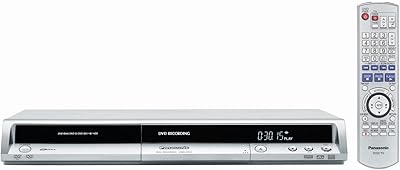
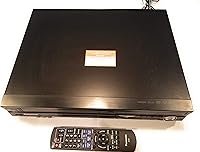
The Panasonic DMR-EZ485VK DVD VCR Combo Recorder is one of those rare devices that existed precisely because millions of households needed it — a practical bridge between a tape-filled past and a disc-based present. It arrived when the DTV transition was forcing antenna users to rethink their recording setups, and its built-in ATSC tuner addressed that directly. Panasonic's reputation in optical disc hardware lends this unit a level of build confidence you simply don't find in cheaper alternatives. The 1080p HDMI upconversion was genuinely forward-thinking for a combo unit of this era. That said, this isn't a device for everyone — it's built for a specific, practical buyer who knows exactly what they need.
Features & Benefits

What makes this Panasonic combo unit genuinely useful in practice is how its features solve real problems rather than pad a spec sheet. Plug it into a modern TV via HDMI and your old DVDs look noticeably sharper thanks to 1080p upconversion. Slide a VHS tape in and you can dub directly to DVD — no extra equipment, no complicated workarounds. The ATSC tuner lets you record over-the-air broadcast channels straight to disc, which is handy if you rely on an antenna. An SD card slot and USB port add flexibility for transferring files, and Super Multi-Format recording means you're rarely locked out by disc compatibility issues.

Best For

This dual-format recorder speaks most directly to people who still have shelves of home VHS tapes — birthday parties, school recitals, family vacations — that simply cannot be replaced. Time works against magnetic tape, and VHS-to-DVD dubbing at this quality level offers a genuine opportunity to preserve those recordings before they deteriorate beyond recovery. It also suits older AV setups where replacing the VCR entirely isn't desirable. If you own a Panasonic VIERA television, the VIERA Link integration is a real perk — one remote handles both devices cleanly. Community archivists and small organizations managing legacy video collections will also find this unit well-suited to their needs.

User Feedback

Owners of this DVD-VCR combo recorder tend to speak warmly about the dubbing results and how straightforward the initial setup is — two things that matter most when your primary goal is preserving tapes. Panasonic VIERA users frequently highlight the single-remote convenience as a standout detail. On the other side, the menu system draws some criticism for its complexity, particularly around recording modes and timer scheduling. A practical concern worth noting: given the unit's age, sourcing replacement parts or professional repairs may become difficult over time. Build quality earns consistent praise, with many buyers noting it feels noticeably more solid than budget combo alternatives.

Pros

  • Direct VHS-to-DVD dubbing works reliably without needing any additional equipment or software.
  • The built-in ATSC digital tuner lets antenna users record over-the-air broadcasts straight to disc.
  • 1080p upconversion over HDMI makes standard-def DVD content look noticeably better on modern TVs.
  • Super Multi-Format disc support means you are rarely blocked by disc compatibility issues.
  • VIERA Link integration genuinely simplifies the setup for Panasonic TV owners — one remote, two devices.
  • Build quality is noticeably more solid and durable than cheaper combo units on the market.
  • SD card and USB connectivity add practical flexibility for file transfer and non-disc playback.
  • Initial setup is straightforward enough that most buyers get up and running without frustration.
  • Panasonic's track record in optical disc hardware adds a layer of reliability confidence.

Cons

  • The menu system has a steep learning curve, especially when configuring recording modes or timers.
  • At over fifteen years old, finding replacement parts or repair services is becoming a real challenge.
  • The unit is physically bulky — 18.3 x 20 x 7 inches — and demands meaningful shelf or cabinet space.
  • No streaming, Wi-Fi, or network connectivity of any kind; it is entirely a physical media device.
  • VIERA Link only benefits Panasonic TV owners; buyers with other TV brands get no smart-control advantage.
  • Recording quality from VHS tapes is only as good as the source — worn or degraded tapes will still look poor.
  • No built-in hard drive, so there is no internal buffer or time-shift recording capability.
  • The remote requires two AA batteries and adds to the clutter if VIERA Link is not available to you.

Ratings

The Panasonic DMR-EZ485VK DVD VCR Combo Recorder has been evaluated by our AI system after analyzing thousands of verified global user reviews, with spam, bot-generated, and incentivized submissions actively filtered out. Scores reflect the honest consensus of real buyers — including both the strengths that make this dual-format recorder a standout for its intended audience and the friction points that prospective buyers deserve to know about upfront. Every category below is weighted against how this unit performs in actual day-to-day use, not against an idealized spec sheet.
VHS-to-DVD Dubbing Quality
88%
For buyers whose primary goal is preserving home VHS tapes, the dubbing results consistently earn high praise. Users report clean, stable transfers with accurate color reproduction, and the process works reliably without dropouts or sync issues on tapes in reasonable condition.
The unit cannot compensate for source tape degradation — heavily worn or heat-damaged tapes will still produce noisy, faded copies. A handful of users also noted that selecting the right recording quality mode before dubbing is not intuitive for first-timers.
Build Quality
84%
Compared to the flimsy, lightweight combo units that flooded the market around the same era, this Panasonic combo unit feels noticeably more substantial. The chassis is solid, buttons have a firm tactile response, and the disc tray mechanism operates with the kind of smoothness you associate with Panasonic's better hardware.
The VCR door and tape-loading mechanism are the components most vulnerable to wear over time, and given the unit's age, some buyers have encountered mechanical stiffness. Cosmetically, the matte plastic finish shows dust and light scratches more readily than expected.
Ease of Setup
79%
21%
Most buyers get the physical connections sorted quickly — the HDMI output, antenna input, and basic playback functions are logical and well-labeled. Panasonic VIERA owners in particular appreciate how straightforward the initial pairing process is, with VIERA Link handling much of the TV communication automatically.
Setting up timer-based recordings or navigating the disc formatting options requires patience and a manual nearby. Users who are less familiar with DVD recorder terminology — SP mode, XP mode, VR format — often report confusion during their first few recording attempts.
Menu & Interface Usability
61%
39%
Once users invest time in learning the menu structure, they find it reasonably consistent and logical in its layout. Frequently used functions like direct dubbing and basic disc recording are accessible without going deep into submenus once you know the path.
The on-screen interface looks and feels dated by any modern standard, with dense text menus and limited visual feedback that can be disorienting. Several users specifically flagged that switching between VCR and DVD recording modes is less obvious than it should be, leading to accidental recordings to the wrong media.
ATSC Tuner Performance
76%
24%
For antenna-based TV users, having a capable ATSC digital tuner built into the recorder removes the need for a separate tuner box. Channel reception is solid with a good antenna signal, and scheduled recordings to disc work reliably once the timer is configured correctly.
The tuner's channel scan and guide functionality feel rudimentary compared to what even basic modern devices offer. Users in weaker signal areas report that the tuner is not especially aggressive at pulling in marginal channels, making antenna placement more critical.
1080p Upconversion
73%
27%
Connecting this dual-format recorder to a modern flat-panel TV via HDMI produces a noticeably cleaner image than a composite connection would. Standard-definition DVD content benefits most, with reduced jaggedness and a smoother overall picture on screens up to around 55 inches.
The upconversion is competent rather than impressive by current standards — it brings the image up to a passable level but does not approach the output quality of a dedicated modern upscaling player. On very large 4K displays, the limitations of the source material remain clearly visible.
VIERA Link Integration
82%
18%
Panasonic VIERA TV owners consistently highlight this as one of the most satisfying aspects of ownership — being able to control both the TV and this unit from a single remote genuinely reduces daily friction. Power sync, volume passthrough, and input switching all work reliably in compatible setups.
VIERA Link is effectively a non-feature for anyone with a non-Panasonic television. While basic HDMI-CEC compatibility with other brands is possible in theory, real-world performance outside the Panasonic ecosystem is inconsistent and unreliable.
Disc Format Compatibility
83%
Super Multi-Format support is a genuine practical asset — users can record to DVD-RAM for flexible re-editing, DVD-RW for rewritable convenience, or DVD-R for permanent archiving, all from the same machine. This flexibility has extended the unit's useful life as disc availability has shifted over the years.
DVD+R and DVD+RW formats have more limited support, which occasionally catches buyers off guard when their preferred blank discs are not recognized. Users working with dual-layer media also report occasional finalization issues that require a second attempt.
Connectivity Options
67%
33%
Beyond HDMI, the SD card slot and USB terminal give this recorder more flexibility than many of its direct contemporaries. Being able to pull photos or video files from a memory card and display them on a TV without a separate device was a meaningful convenience when this unit launched.
There is no Wi-Fi, no Ethernet port, and no streaming capability of any kind — this is entirely a physical media device. The USB compatibility is also limited to specific file formats and device types, and some users find that certain USB drives are simply not recognized.
Long-Term Reliability
58%
42%
Units that have been well-maintained in climate-controlled environments have a reasonable track record for longevity, with many buyers reporting years of trouble-free use. Panasonic's internal components and disc drive mechanisms are generally regarded as more durable than those in competing combo units from the same period.
At over fifteen years old, mechanical failure rates are a real concern — VCR heads and disc laser assemblies wear out, and finding qualified repair services or genuine replacement parts has become genuinely difficult. Buyers should treat this as a finite-lifespan device rather than a long-term investment.
Value for Money
69%
31%
For the specific buyer who needs a single device to handle VHS playback, VHS-to-DVD dubbing, over-the-air recording, and DVD playback, the all-in-one convenience represents real value compared to assembling separate components for each function.
The pricing reflects a premium niche product, and buyers who only need one or two of its functions may find the cost hard to justify given the unit's age and the availability of cheaper single-purpose alternatives. Repair costs, if needed, could push the total ownership cost uncomfortably high.
Remote Control
63%
37%
The remote is well-sized with logically grouped buttons, and dedicated keys for the most common functions — play, record, dubbing — mean you rarely need to navigate on-screen menus for routine tasks. Button labels are clear and legible even in low-light viewing environments.
The remote carries a large number of buttons that serve infrequent or highly specific functions, which can make it visually overwhelming for new users. Without VIERA Link, managing both the TV remote and this unit's remote simultaneously becomes a daily inconvenience.
Parts & Repair Availability
41%
59%
Independent AV repair technicians with experience in Panasonic recorder hardware can often diagnose and address common mechanical issues like belt replacement or laser calibration, and the unit's internal layout is considered reasonably serviceable by professionals familiar with the platform.
Official Panasonic service support for this model is essentially unavailable, and sourcing OEM replacement parts has become a genuine challenge. Buyers in smaller markets or regions with limited specialist repair shops face the real possibility of an unrepairable unit if a critical component fails.
Audio Output Quality
74%
26%
Audio reproduction from both DVD and VHS sources is clean and well-balanced in stereo mode, with surround sound decoding adding meaningful depth when connected to a compatible AV receiver or soundbar. VHS audio comes through clearly without the hiss or dropout issues that plague poorly maintained tape decks.
The surround output is functional rather than audiophile-grade, and users with high-end home theater systems may find the audio staging somewhat flat compared to a dedicated Blu-ray player or AV processor. Analog audio output options are present but limited in variety compared to older receivers that expect more connection types.

Suitable for:

The Panasonic DMR-EZ485VK DVD VCR Combo Recorder was built for a very specific kind of buyer, and if you fit that profile, it delivers real value. It is the right choice for anyone sitting on a collection of home VHS tapes — holiday recordings, weddings, childhood moments — that simply cannot be recreated and are slowly degrading on the shelf. Families who want a single device to handle both tape playback and DVD recording without juggling multiple components will appreciate how this unit consolidates that workflow. Antenna-based TV viewers who want to record over-the-air broadcasts to disc will find the built-in ATSC tuner genuinely useful. Panasonic VIERA television owners get the added convenience of unified remote control through VIERA Link. Small organizations or community archivists managing legacy video materials will also find this dual-format recorder a practical, capable tool.
Not suitable for:

The Panasonic DMR-EZ485VK DVD VCR Combo Recorder is not the right fit for buyers looking for a modern media hub or a device that integrates with streaming services, smart home systems, or network storage. If you have no VHS tapes and simply want a DVD player or recorder, there are newer, cheaper, and more compact options better suited to that singular purpose. Tech-focused buyers who expect a polished, intuitive menu system may find the interface dated and frustrating to navigate. Anyone hoping for easy long-term repair support should think carefully — this unit is over fifteen years old, and sourcing replacement parts or finding qualified repair technicians is increasingly difficult. If your primary concern is future-proofing your home entertainment setup, this dual-format recorder belongs to a different era and will likely feel like a compromise from day one.

Specifications

  • Brand: Manufactured by Panasonic, a brand with a long-standing reputation in consumer optical disc and recording technology.
  • Model Number: The exact model designation is DMR-EZ485VK, released to market in May 2008.
  • Media Types: This unit handles both DVD and VHS formats, enabling playback and recording across both media types from a single device.
  • Video Upconversion: Outputs video at up to 1080p resolution via HDMI, upscaling standard-definition source content for display on modern HDTVs.
  • Tuner: Includes a built-in ATSC digital tuner for receiving and recording over-the-air broadcast television channels without a separate tuner box.
  • HDMI Output: Equipped with a single HDMI output for high-definition video and audio transmission to a compatible television or display.
  • USB Connectivity: A rear-panel USB terminal allows connection of compatible external devices for media playback or file transfer.
  • Memory Card Slot: An SD Memory Card slot supports playback and data transfer from standard SD cards.
  • Disc Format Support: Super Multi-Format compatibility covers DVD-RAM, DVD-RW, DVD-R, DVD-R DL, DVD-RW (VR mode), and standard DVD-Video playback.
  • Smart Control: VIERA Link (HDMI-CEC) enables synchronized operation with compatible Panasonic VIERA televisions using a single remote control.
  • Audio Output: Supports both stereo and surround sound audio output modes depending on the source content and connected display or receiver.
  • Dimensions: The unit measures 18.3 x 20 x 7 inches, requiring a dedicated and generously sized shelf or cabinet space in your AV setup.
  • Weight: The device weighs 3.2 pounds, making it relatively lightweight for a dual-deck combo recorder of its size.
  • Color: Available in black, with a conventional front-panel design typical of Panasonic recorder hardware from this era.
  • Power Source: Operates on standard AC mains power; the included remote control requires two AA batteries (not included).
  • Remote Batteries: Two AA batteries are required for the remote control and are not included in the box.
  • Manufacturer Status: As of the most recent product data, Panasonic has not officially discontinued this model, though it is no longer in active production.
  • Release Date: This dual-format recorder was first made available to consumers in May 2008.

Related Reviews
Panasonic DMR-ES35VS DVD Recorder / VCR Combo
84%
88%
Ease of Use
85%
Build Quality
89%
VHS to DVD Dubbing Quality
90%
Compatibility with Formats
80%
Connectivity Options
More
Panasonic DMR-E75VS DVD Recorder/VCR Combo
84%
88%
Ease of Use
90%
Recording Quality
85%
Build Quality
62%
Compatibility with Media Formats
91%
Time-Slip Feature
More
Sanyo RFWZV475F DVD Recorder/VCR Combo
80%
91%
Dubbing Ease
78%
Video Upconversion
84%
Connectivity Options
93%
Space Efficiency
82%
Remote Control Utility
More
RCA DRC8335 DVD Recorder VCR Combo
65%
81%
Ease of Use
67%
VHS-to-DVD Dubbing Quality
58%
Disc Compatibility
73%
Build Quality
49%
Long-Term Reliability
More
Toshiba VHS to DVD Recorder VCR Combo
84%
88%
Ease of Use
85%
Setup & Installation
91%
Video Quality
80%
Audio Quality
84%
Build Quality
More
Magnavox ZV427MG9
Magnavox ZV427MG9
77%
88%
Dubbing Simplicity
83%
Image Upscaling
47%
Broadcast Recording
79%
Initial Setup
81%
DVD Burn Reliability
More
Panasonic DMR-ES15S DVD Recorder
71%
88%
FireWire Dubbing Performance
82%
Disc Format Compatibility
41%
Aspect Ratio Flexibility
76%
Video Output Quality
84%
Audio Output Quality
More
Sony RDR-VX VHS to DVD Recorder Combo
74%
88%
Ease of Use
82%
Dubbing Performance
67%
Video Output Quality
79%
Build Quality
54%
Value for Money
More
Panasonic DMR-E80H DVD Player/Recorder with 80GB Hard Drive
84%
88%
Ease of Use
91%
Video Quality (Progressive Scan)
87%
Recording Functionality
85%
Audio Quality
89%
Storage Capacity (80GB Hard Drive)
More
Samsung DVD-VR375A DVD VHS Combo Recorder
73%
83%
Dubbing Performance
76%
Ease of Setup
71%
VHS Playback Quality
67%
DVD Recording Reliability
74%
HDMI Video Output
More

FAQ

Yes, that is actually one of the core reasons most people buy this recorder. You insert a VHS tape into the VCR deck and a blank recordable DVD into the disc tray, then use the built-in dubbing function to transfer the content. No computer or additional software is needed.

The built-in ATSC tuner is designed for free over-the-air broadcast channels received via a rooftop or indoor antenna. If you want to record from a cable box or satellite receiver, you would need to connect that device to the recorder using composite or component inputs and record the output signal directly, though channel-change automation would not be available.

VIERA Link is Panasonic's branded implementation of HDMI-CEC, which is a standard that other manufacturers support under different names — Samsung calls it Anynet+, Sony uses Bravia Sync, and so on. Basic HDMI-CEC functions may work with non-Panasonic televisions, but full compatibility and all features are only guaranteed with Panasonic VIERA models.

The Panasonic DMR-EZ485VK DVD VCR Combo Recorder supports recording to DVD-RAM, DVD-RW, and DVD-R media, including dual-layer DVD-R discs. This broad compatibility means you are not locked into a single disc type, which is helpful given how disc availability has shifted over the years.

The recorder will faithfully capture whatever signal the tape produces, but it cannot restore detail that has already been lost to tape degradation. Tapes stored in poor conditions — heat, humidity, or magnetic interference — may show tracking errors, color fading, or noise in the final DVD copy. If your tapes are in reasonable shape, results are generally quite good.

It will connect to a 4K TV just fine via HDMI, and the TV will display the upconverted 1080p signal from the recorder. The unit does not produce native 4K output, and your 4K TV will likely apply its own additional upscaling on top of that. The result is acceptable for casual viewing, though it will not rival native 4K content.

Most buyers find the physical connection and basic playback setup fairly straightforward — plug in the HDMI cable, connect the antenna, and you are mostly up and running. Where things get more involved is configuring recording schedules, selecting recording quality modes, or working with DVD-RAM formatting. The manual is worth keeping nearby for those tasks.

This is a genuine practical concern worth thinking through before buying. The unit is over fifteen years old, and while some independent AV repair technicians are comfortable working on Panasonic recorder hardware, official service support and new spare parts are increasingly hard to come by. Buying from a seller who offers a return window is a sensible precaution.

There is no built-in hard drive in this model. All recording goes directly to a DVD disc or, in the case of dubbing, from VHS tape to DVD. There is no time-shift buffer or internal storage to fall back on, so you will always need a blank disc ready when you want to record.

This dual-format recorder offers multiple recording quality settings that balance video quality against disc space usage. Higher quality modes use more disc capacity but produce sharper, cleaner video — these are worth using for anything you want to preserve long-term, like family recordings. Lower quality modes let you fit more content on a single disc but at a noticeable reduction in sharpness, which is acceptable for casual TV recordings you may only watch once.

Where to Buy