Overview

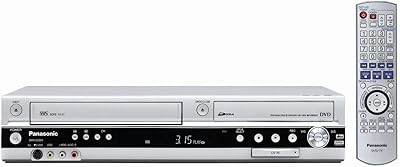
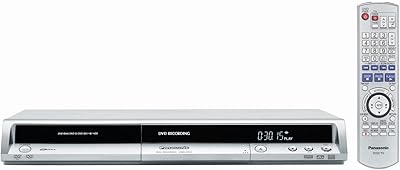
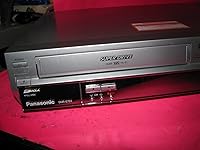
The Panasonic DMR-E75VS DVD/VCR Combo Recorder arrived at a specific moment in home entertainment history — when most living rooms had a stack of VHS tapes but were slowly warming up to DVD. This DVD-VCR combo handled both formats from a single unit, which was genuinely practical for households mid-transition. It is discontinued now, so anyone tracking one down is usually shopping the secondhand market with a clear purpose in mind. Build quality was solid for its era, and the progressive-scan output gave a noticeably cleaner picture on compatible televisions compared to standard interlaced players. Realistic expectations matter here: this is legacy hardware, not a modern media solution.
Features & Benefits

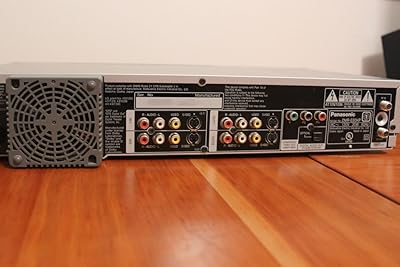
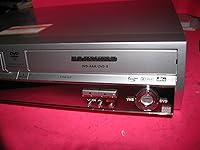
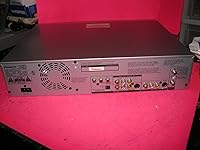
One of the more useful aspects of the DMR-E75VS is its dual recording format support. DVD-R discs are the widely compatible option — burn once, play on most players. DVD-RAM works differently: think of it as a reusable disc you can record over repeatedly, which suits time-shifted viewing well. The time-slip feature takes that further, letting you watch a program from the start while the deck is still recording the end of it. Front-panel A/V inputs make plugging in a camcorder straightforward without reaching behind the unit. Around back, component, S-Video, composite, coaxial, and digital audio outputs are all present, alongside Dolby Digital and DTS decoding for home theater surround sound setups.

Best For

This Panasonic dual-deck recorder makes the most sense for a fairly specific group of buyers. If you have a collection of home movies or recorded TV on VHS and want them moved to DVD without purchasing two separate devices, this unit was built for exactly that workflow. It also suits analog-era home theaters that use component or S-Video connections rather than HDMI. Small businesses with archival or training material still living on tape will find real value in a deck that handles both formats reliably. For general modern viewers, though, there are far simpler options available today. This is a purpose-driven purchase — and buyers who understand that upfront tend to be much happier with it.

User Feedback

Owners who bought the DMR-E75VS with a specific task in mind generally report solid satisfaction around its reliability and durability. VHS-to-DVD transfer quality is consistently described as acceptable, and the dual-format performance holds up over time. Recurring frustration, however, centers on DVD-RAM media — it has grown harder to source at retail, and some users note compatibility inconsistencies across disc brands. The remote draws mixed opinions: it works, but the layout is not the most intuitive for first-time users. Long-term owners have raised concerns about repairs and spare parts, a legitimate worry with any discontinued unit. Buyers sourcing used models should inspect carefully, as condition varies quite a bit depending on how the previous owner treated the machine.

Pros

  • Handles both VHS playback and DVD recording from a single unit, removing the need for two separate devices.
  • DVD-R recording produces discs that play back on virtually any standard DVD player.
  • DVD-RAM support allows reusable recording — useful for time-shifted viewing or repeated archival sessions.
  • Time-slip playback lets you watch the beginning of a recording while the deck is still capturing the end.
  • Front-panel A/V inputs make camcorder hookup quick and easy without rearranging cables.
  • Rear connectivity is comprehensive: component, S-Video, composite, coaxial, and digital audio are all present.
  • Progressive-scan output delivers a noticeably cleaner picture on compatible older televisions.
  • Dolby Digital and DTS decoding integrates well with analog-era home theater receivers.
  • Panasonic built this deck to last — owners consistently report solid mechanical reliability over years of use.
  • CD-R and CD-RW playback with MP3 support adds a small but convenient bonus for music listeners.

Cons

  • No HDMI output means it cannot connect cleanly to most televisions made in the last decade.
  • DVD-RAM discs are increasingly hard to find at retail, complicating the reusable-recording workflow.
  • Discontinued status means no manufacturer support, no warranty, and no official repair path.
  • Used units vary widely in condition, and buyers have no reliable way to assess wear before purchase.
  • The remote control layout is unintuitive, with a learning curve that frustrates new users.
  • Copy-protection on many cable and satellite sources blocks recording, limiting practical use cases.
  • At over 12 pounds and nearly 17 inches wide, the unit is bulky for modern entertainment center shelves.
  • Programming timed recordings requires navigating a menu system that feels dated by current standards.
  • No upscaling capability means DVD playback quality does not improve on modern high-resolution displays.
  • Spare parts are scarce, so mechanical failures — particularly in the VHS transport — may be irreparable.

Ratings

The scores below for the Panasonic DMR-E75VS DVD/VCR Combo Recorder were generated by AI after analyzing verified purchase reviews from buyers worldwide, with spam, bot activity, and incentivized feedback actively filtered out. The results reflect a genuine cross-section of real-world experience — from archival hobbyists and small business operators to legacy home theater users. Both the standout strengths and the recurring frustrations are represented transparently so you can make a fully informed decision.
Dual-Format Performance
88%
Owners consistently praise the reliable ability to both play VHS tapes and record to DVD without switching between devices. For users archiving decades of home movies, having a single deck handle the full workflow — from playback to capture — proved to be a genuine time saver.
A subset of users noted occasional read errors when using lesser-known or aged VHS tapes, particularly those stored in suboptimal conditions. The dual-format promise works best when source material is in reasonable condition.
Build Quality
83%
The physical construction drew consistent praise from longtime owners who compared it favorably to cheaper combo units. The deck feels solid and well-assembled, with mechanisms that hold up under regular use — something users appreciated in a device handling two distinct transport systems.
A few long-term owners reported that the VHS transport mechanism showed wear after several years of heavy use, and with the unit discontinued, finding replacement parts has become increasingly difficult. Durability holds up well with moderate use but is harder to sustain under daily heavy workloads.
VHS-to-DVD Transfer
84%
For home recordings — birthday parties, school plays, family vacations — the transfer quality landed well above what users expected from a combo unit. The direct internal dubbing path, without needing external cables between devices, produced cleaner results than many anticipated.
Copy-protected commercial VHS tapes cannot be transferred, which surprised some buyers who did not research this limitation beforehand. Transfer quality also degrades noticeably if the source tape has age-related dropout or tracking issues.
Recording Flexibility
76%
24%
Having both DVD-RAM and DVD-R options gave users meaningful flexibility depending on their needs. DVD-RAM worked well for time-shifted viewing and temporary recordings, while DVD-R suited permanent archival copies that needed to play on other devices.
DVD-RAM media has become harder to find at retail, which undermines the rewritable recording workflow for buyers who rely on it regularly. Some users also encountered compatibility issues with off-brand DVD-RAM discs, leading to failed recordings.
Progressive-Scan Output
74%
26%
On compatible CRT televisions and early flat-panel displays with component inputs, the progressive-scan output produced a noticeably smoother and more stable picture than interlaced alternatives. Users with properly matched setups appreciated the visual improvement for DVD playback.
The benefit disappears entirely on modern televisions without component inputs, and even on compatible displays, the improvement is subtle enough that casual viewers rarely noticed it. The feature is meaningful only in a specific and increasingly rare hardware context.
Connectivity Options
79%
21%
The rear panel offered a genuinely broad set of analog outputs — component, S-Video, composite, coaxial, and digital audio — which covered nearly every connection scenario found in older home theater setups. Users building around legacy receivers found it easy to integrate.
The complete absence of HDMI is a hard limitation for anyone with a modern television setup. Buyers who discovered this after purchase expressed frustration, though it was a predictable constraint given the unit's 2004 release date.
Front-Panel Inputs
81%
19%
Having a composite A/V input on the front of the unit made connecting a camcorder or external video source quick and practical. Users recording home video from analog handycams in particular appreciated not having to reach behind a rack-mounted unit to swap cables.
The front input is composite only, with no front-panel S-Video option, which limited picture quality for users with S-Video-capable camcorders. It is a minor point but one that more detail-conscious users flagged.
Time-Slip Feature
77%
23%
Users who understood and used the time-slip feature found it genuinely useful for time-shifted viewing — particularly for longer programs like films or sporting events recorded onto DVD-RAM. Starting playback mid-recording and catching up at your own pace felt intuitive once set up.
The feature is exclusive to DVD-RAM recordings, which means buyers who gravitate toward DVD-R miss out on it entirely. Several users were confused about this restriction and expected time-slip to work across both recording formats.
Audio Performance
78%
22%
Dolby Digital and DTS decoding allowed the DMR-E75VS to integrate cleanly into older home theater systems with analog multichannel receivers. Users playing back DVD titles through a surround sound setup reported solid, accurate audio output without needing an external decoder.
The audio output is capped by analog receiver compatibility, and there is no advanced audio processing for VHS playback beyond standard stereo. For users expecting enhanced audio on tape content, the results are merely adequate.
Remote Control Usability
58%
42%
The remote covers the full feature set of the unit and is responsive under normal use. Experienced owners who took the time to learn the layout reported that it became second nature after a period of regular use.
The remote layout is crowded and counterintuitive for first-time users, with similar-looking buttons placed in close proximity. Programming timed recordings in particular drew complaints about the number of steps involved and the lack of clear on-screen guidance.
Ease of Setup
67%
33%
Initial physical connection to a television or receiver is straightforward thanks to the variety of output options. Users with prior experience setting up DVD players or VCRs found the initial hookup process familiar and manageable.
Configuring recording schedules and understanding the DVD-RAM versus DVD-R workflow required a real investment in reading the manual, which not all users were willing to make. Several buyers described the learning curve as steeper than expected for a device marketed as user-friendly.
Media Availability
44%
56%
DVD-R discs remain widely available and are inexpensive, making that recording path easy to sustain for archival purposes. For buyers focused exclusively on DVD-R, media sourcing presents no practical difficulty.
DVD-RAM discs are a recurring pain point — they have largely disappeared from mainstream retail and must often be sourced through specialty or online sellers, sometimes at elevated prices. For buyers relying on rewritable recording, this is a meaningful ongoing inconvenience.
Long-Term Reliability
62%
38%
Many original owners reported years of trouble-free operation under normal home use, which speaks to the quality of Panasonic's construction during this period. Units kept in clean, climate-stable environments have fared particularly well over time.
Discontinued status means any mechanical failure is difficult or impossible to repair through official channels, and independent repair shops often struggle to source internal components. Secondhand buyers face real uncertainty about remaining operational lifespan.
Value for Used Buyers
66%
34%
For buyers with a specific VHS archiving task and access to a well-maintained secondhand unit, the DMR-E75VS can represent solid value as a targeted tool. The dual-format capability in a single unit still has no direct modern equivalent at a comparable price.
Condition variability among used units is a serious concern, and overpaying for a deck with worn mechanisms is a real risk. Without a warranty or any manufacturer support, buyers have limited recourse if the unit underperforms after purchase.

Suitable for:

The Panasonic DMR-E75VS DVD/VCR Combo Recorder was built for a very specific kind of buyer, and those buyers will find it genuinely useful. If your home has a shelf of VHS tapes — home movies, recorded TV series, family events — and you want to transfer them to DVD without buying a standalone VCR and a separate DVD recorder, this dual-deck unit handles that workflow in one box. It suits older home theater setups that rely on component or S-Video connections, where a single well-built deck can anchor the entire system. Small businesses, schools, or archival operations that still have VHS content in active rotation will also find the DMR-E75VS a practical workhorse. Collectors who want a reliable single-unit solution rather than a chain of mismatched adapters and aging standalone players are the core audience here.
Not suitable for:

The Panasonic DMR-E75VS DVD/VCR Combo Recorder is not a good fit for the average modern buyer looking for a general media player or recording device. It has no HDMI output, no streaming capability, and no connection to any kind of digital ecosystem — this is purely analog-era hardware. Anyone expecting to record from cable boxes using newer copy-protection schemes will likely run into compatibility walls. Buyers without a specific VHS archive or dual-format need have no practical reason to pursue this unit, especially given that finding a well-maintained secondhand example takes real effort. If your television lacks component or S-Video inputs, the connection options here become even more limited. Shoppers who need easily available manufacturer support, software updates, or warranty coverage should look elsewhere entirely, since this unit has been discontinued for years.
Specifications

  • Brand: Manufactured by Panasonic, a Japanese electronics company with a long history in home video equipment.
  • Model Number: The official model designation is DMRE75VS, sometimes written as DMR-E75VS in retail listings.
  • Format Support: This unit records and plays DVD-RAM and DVD-R discs, plays VHS tapes, and supports CD-R and CD-RW discs containing MP3 audio files.
  • Video Output: Progressive-scan video output delivers a smoother, more stable picture compared to standard interlaced output on compatible displays.
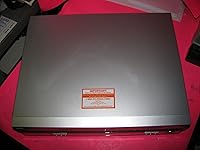
  • Dimensions: The unit measures 10.9″ deep, 16.9″ wide, and 3.1″ tall, requiring a reasonably wide shelf in any entertainment cabinet.
  • Weight: The deck weighs 12.33 pounds, reflecting the solid internal construction typical of mid-2000s Panasonic hardware.
  • Front Inputs: A front-panel composite A/V input allows direct connection of camcorders or other video sources without accessing the rear of the unit.
  • Rear Outputs: Rear connections include composite A/V, S-Video, component video, coaxial audio, and digital audio outputs for broad compatibility with older receivers and televisions.
  • Audio Decoding: Onboard Dolby Digital and DTS decoding allows direct connection to home theater receivers for multichannel surround sound playback.
  • Time-Slip: The time-slip feature enables playback of a recording from the beginning while the unit is still actively recording the remainder of the same program.
  • Remote Power: The included remote control requires two AA batteries, which are included in the original retail package.
  • Power Source: The unit operates on standard AC mains power with no internal battery; the remote is the only battery-dependent component.
  • Availability: Panasonic has officially discontinued this model, and new units are no longer available through standard retail channels.
  • Release Date: The DMR-E75VS was first made available for purchase in March 2004, positioning it as an early-era DVD recorder with integrated VCR.
  • DVD-RAM Use: DVD-RAM discs used with this unit are rewritable and designed for repeated recording and editing, but they are not universally compatible with other DVD players.
  • DVD-R Use: DVD-R discs recorded on this unit can typically be finalized and played back on most standard DVD players and computers.

Related Reviews

Panasonic DMR-ES35VS DVD Recorder / VCR Combo
84%
88%
Ease of Use
85%
Build Quality
89%
VHS to DVD Dubbing Quality
90%
Compatibility with Formats
80%
Connectivity Options
More
Sanyo RFWZV475F DVD Recorder/VCR Combo
80%
91%
Dubbing Ease
78%
Video Upconversion
84%
Connectivity Options
93%
Space Efficiency
82%
Remote Control Utility
More
Toshiba VHS to DVD VCR Combo Recorder
73%
83%
Ease of Use
71%
Transfer Quality
74%
Build Quality
67%
HDMI & Video Output
58%
Value for Money
More
RCA DRC8335 DVD Recorder VCR Combo
65%
81%
Ease of Use
67%
VHS-to-DVD Dubbing Quality
58%
Disc Compatibility
73%
Build Quality
49%
Long-Term Reliability
More
Magnavox ZV427MG9
Magnavox ZV427MG9
77%
88%
Dubbing Simplicity
83%
Image Upscaling
47%
Broadcast Recording
79%
Initial Setup
81%
DVD Burn Reliability
More
Panasonic DMR-ES15S DVD Recorder
71%
88%
FireWire Dubbing Performance
82%
Disc Format Compatibility
41%
Aspect Ratio Flexibility
76%
Video Output Quality
84%
Audio Output Quality
More
Panasonic DMR-EZ485VK DVD VCR Combo Recorder
71%
88%
VHS-to-DVD Dubbing Quality
84%
Build Quality
79%
Ease of Setup
61%
Menu & Interface Usability
76%
ATSC Tuner Performance
More
Sony RDR-VX VHS to DVD Recorder Combo
74%
88%
Ease of Use
82%
Dubbing Performance
67%
Video Output Quality
79%
Build Quality
54%
Value for Money
More
Panasonic DMR-E80H DVD Player/Recorder with 80GB Hard Drive
84%
88%
Ease of Use
91%
Video Quality (Progressive Scan)
87%
Recording Functionality
85%
Audio Quality
89%
Storage Capacity (80GB Hard Drive)
More
Samsung DVD-VR375A DVD VHS Combo Recorder
73%
83%
Dubbing Performance
76%
Ease of Setup
71%
VHS Playback Quality
67%
DVD Recording Reliability
74%
HDMI Video Output
More

FAQ

Yes, that is one of the primary tasks this deck was designed for. You can play a VHS tape through the built-in VCR and record it directly onto a DVD-R disc in the same unit. Just keep in mind that any commercially produced VHS tapes with copy protection will block this process, so it works best for home-recorded content.

DVD-R is a burn-once format — once you record and finalize the disc, it plays like a standard DVD on most players. DVD-RAM is rewritable, meaning you can record over it repeatedly, which is handy for time-shifted viewing or temporary recordings. The trade-off is that DVD-RAM discs are not compatible with most other DVD players, so they are best used within this unit or a similar Panasonic deck.

No, the Panasonic DMR-E75VS DVD/VCR Combo Recorder does not have an HDMI output. It was produced before HDMI became the standard connection for home video equipment. Your best connection options are component video for the highest analog picture quality, or S-Video as a step below that.
Time-slip lets you start watching a recording from the beginning while the deck is still recording the rest of the program. So if you start recording a two-hour movie but sit down 30 minutes late, you can begin watching from the start without waiting for the recording to finish. It is a handy feature that removes the need to wait.

It can be, but condition is everything with discontinued hardware like this. The VHS transport mechanism in particular is prone to wear, and there are no new replacement parts readily available. If you can verify the unit has been lightly used and both the VCR and DVD drive are functioning properly, it can still perform well. Buying blind from an untested listing carries real risk.

In most cases, yes. DVD-R is a widely compatible format, and discs recorded and finalized on this DVD-VCR combo should play on the majority of standard DVD players and computers. Some older or budget players may have compatibility issues, but broadly speaking, finalized DVD-R discs are quite portable.

You can, as long as your television has composite or component video inputs. Many modern TVs have dropped these connections entirely in favor of HDMI only, so you may need an adapter or an AV receiver in the middle. The progressive-scan output will look best on a display that accepts component video input.

It is functional but not particularly intuitive by modern standards. The on-screen menu system works, but users accustomed to newer devices tend to find the remote layout and navigation a bit clunky at first. It is worth setting aside some time with the manual when you first get the unit.

Officially, no — Panasonic no longer supports this model, and authorized service centers will not have access to parts. Your best option if something fails is an independent electronics repair shop with experience in legacy video equipment, though sourcing parts for a unit this old can be a challenge even for experienced technicians.

It depends on the source. Unencrypted signals and older analog cable connections can be recorded without issue using the composite or coaxial inputs. However, most modern cable and satellite providers apply copy protection to their signals, which will prevent recording on this or any consumer recorder. If your source is encrypted or uses Macrovision protection, you will not be able to record from it.